Loukykvět / Návody / How to grow tulips
How to grow tulips
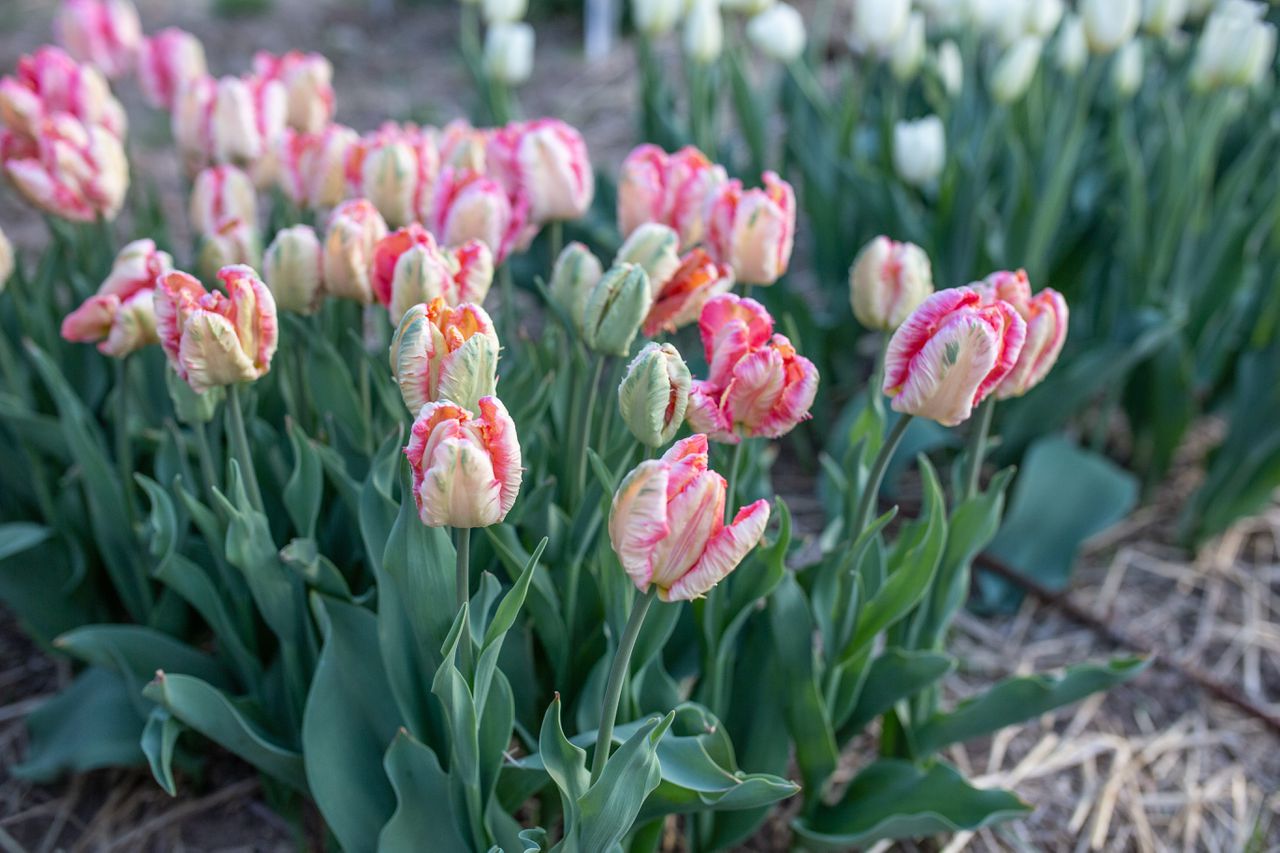
Tulips are spring-flowering bulbs and are among the easiest to grow, so don't worry—the most important thing is to get truly high-quality bulbs and get them into the ground at the right time, then success is guaranteed! The number of varieties and colors is huge, from green, twisted parrot tulips to double-flowering ones resembling peonies or roses.
Tulips are planted differently in a flower garden compared to our flower farm, where we harvest thousands of tulips for cutting, but don't worry, we will show you both methods.
When to plant tulips
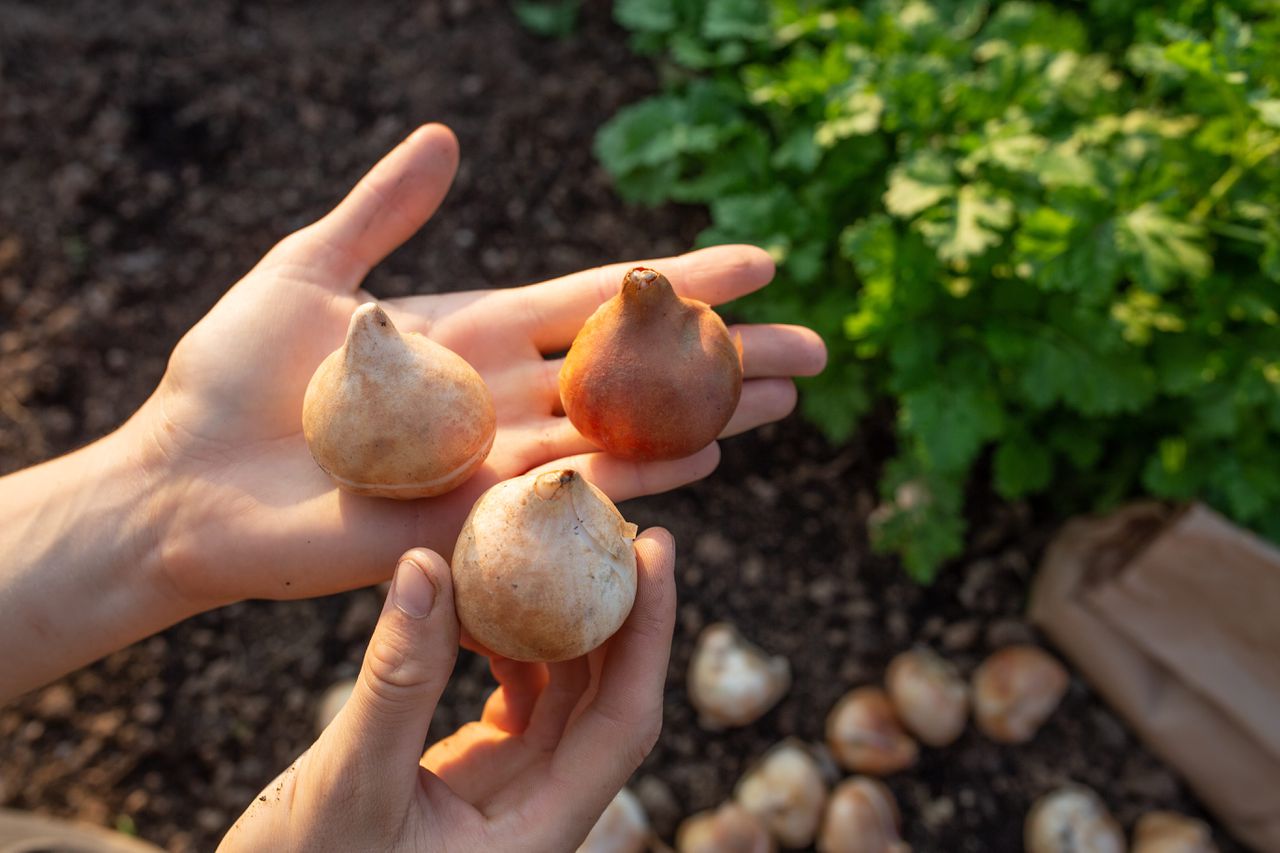
Tulips are planted in the autumn, mid-September to late October is ideal.
We do not recommend planting tulips too late, as there is a risk they won't manage to root before winter; the same applies in reverse—do not plant them earlier than September.
How and where to plant
If you are planning to plant tulips for your own pleasure in the garden, we think they look unequivocally best in larger groups together, so plant the bulbs in clusters rather than individually here and there. Even when selecting, we recommend choosing fewer varieties but a larger number of bulbs so that the planting is as dense as possible. In any case, find a spot that gets full sun in the spring and, most importantly, where water does not stand for long periods.
What you will need
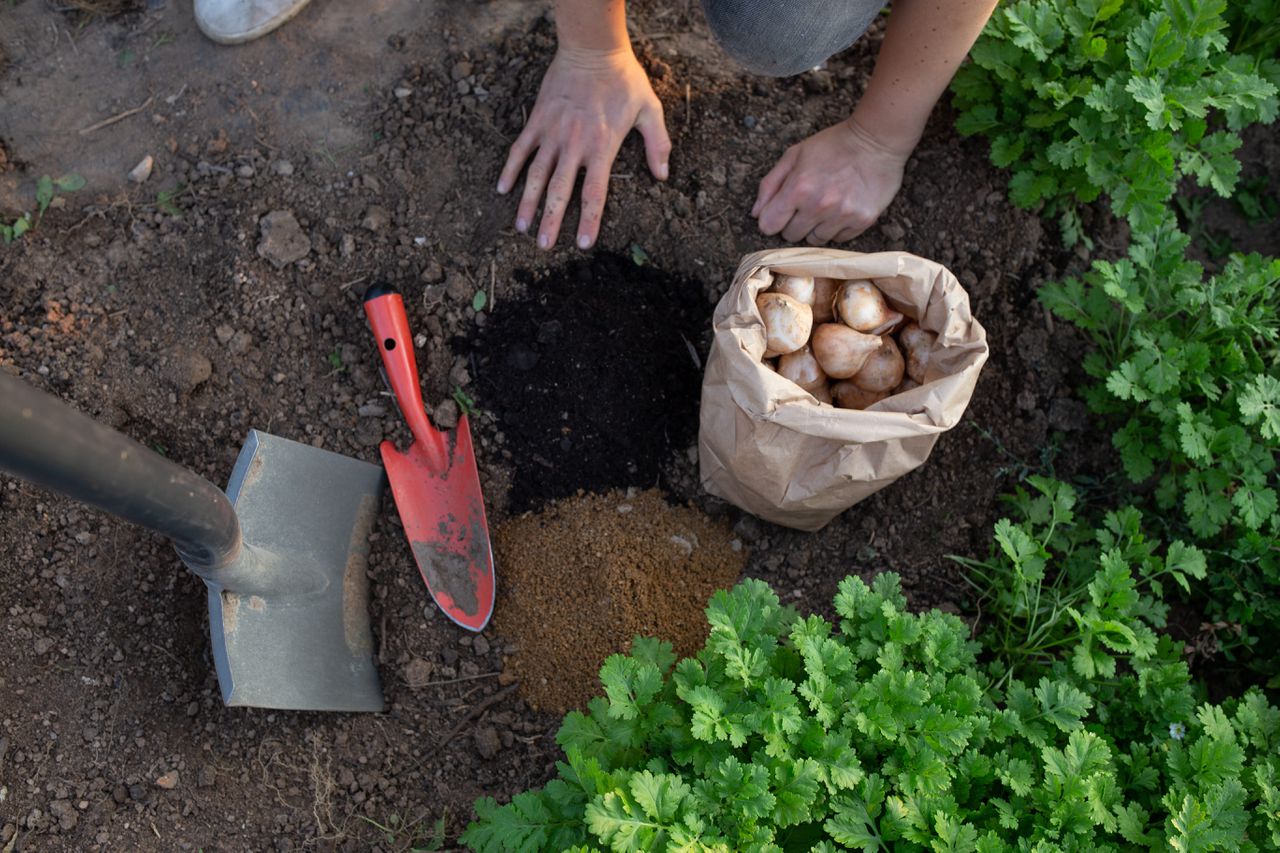
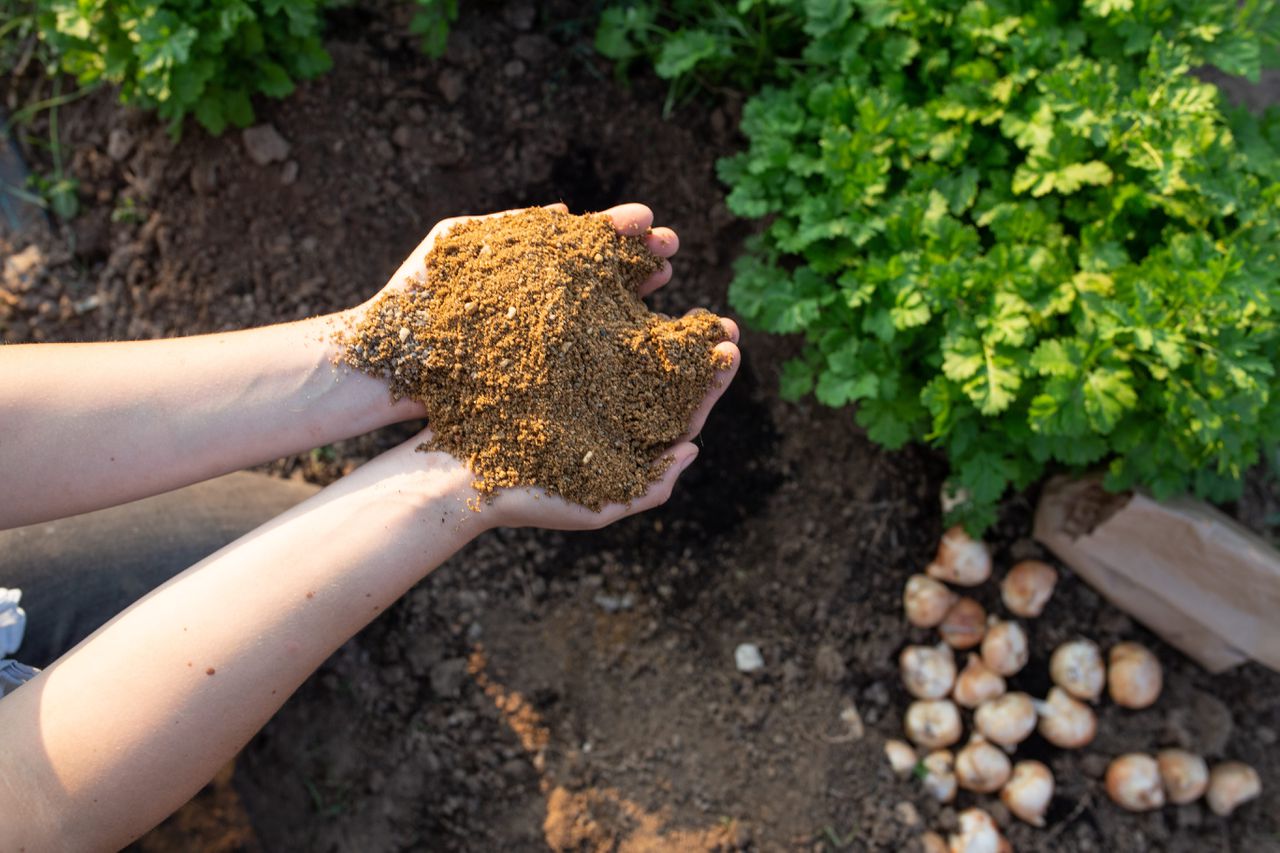
To plant tulips, tools you already have in your garden are more than enough—a spade and a small trowel. There is no need for any bulb planter, baskets, or other gadgets. Besides tools, you will need sand and compost.
Adding sand to flower beds
If you have heavy soil that holds water, we definitely recommend adding plenty of sand to the soil. You don't have to buy expensive silica sand; either take the sand you have on hand (sandbox), or go for the most common type, such as construction sand¹. Mix the sand with the soil so that it becomes permeable, allowing water to drain away rather than staying put. If water were to linger in the beds for long, the tulip bulbs would rot, and we wouldn't see any flowers in the spring.
¹ Construction sand 0 - 4 mm
Compost
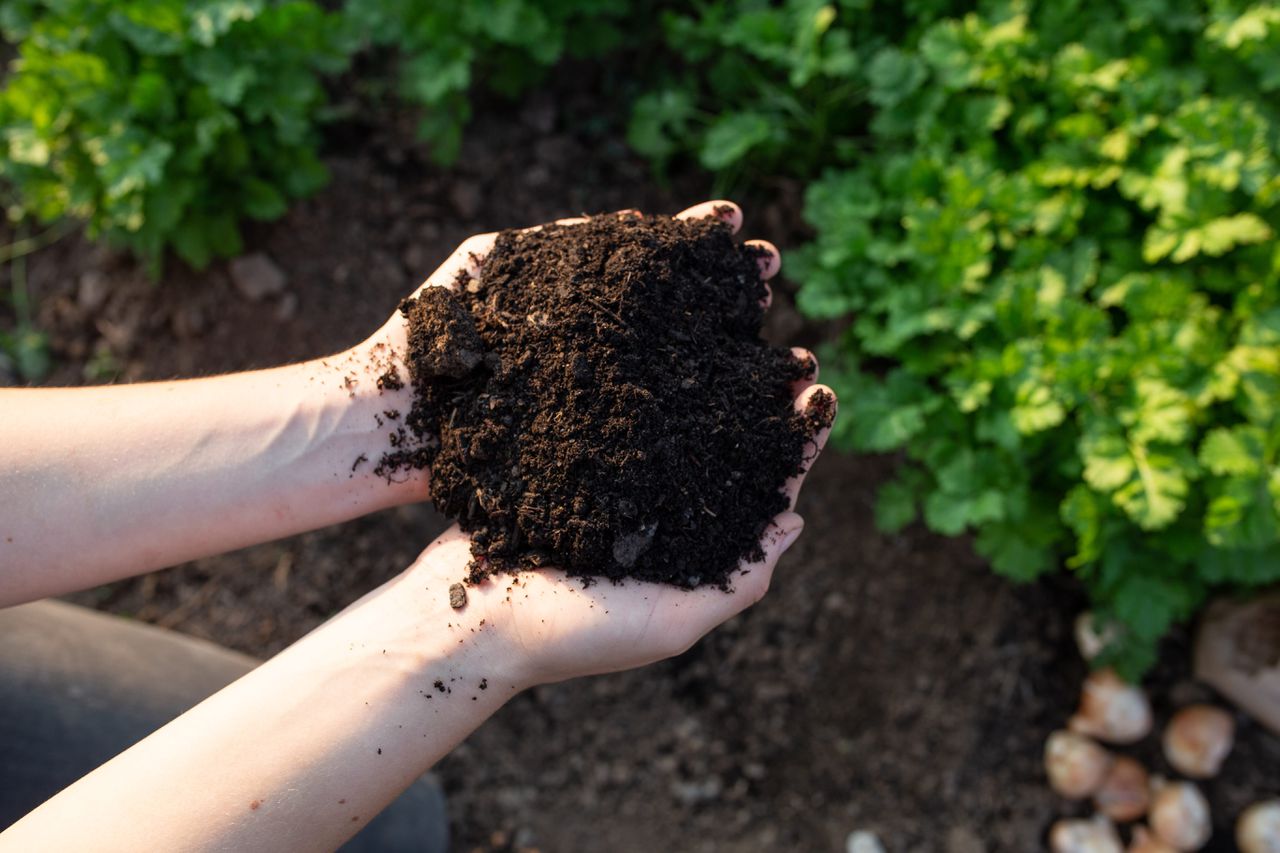
It is good to incorporate a thin layer of compost at the bottom of the bed; it is always better to use your own compost rather than that from an industrial composting plant, and make sure it is at least a year old; do not use fresh manure or fresh chicken droppings.
Procedure
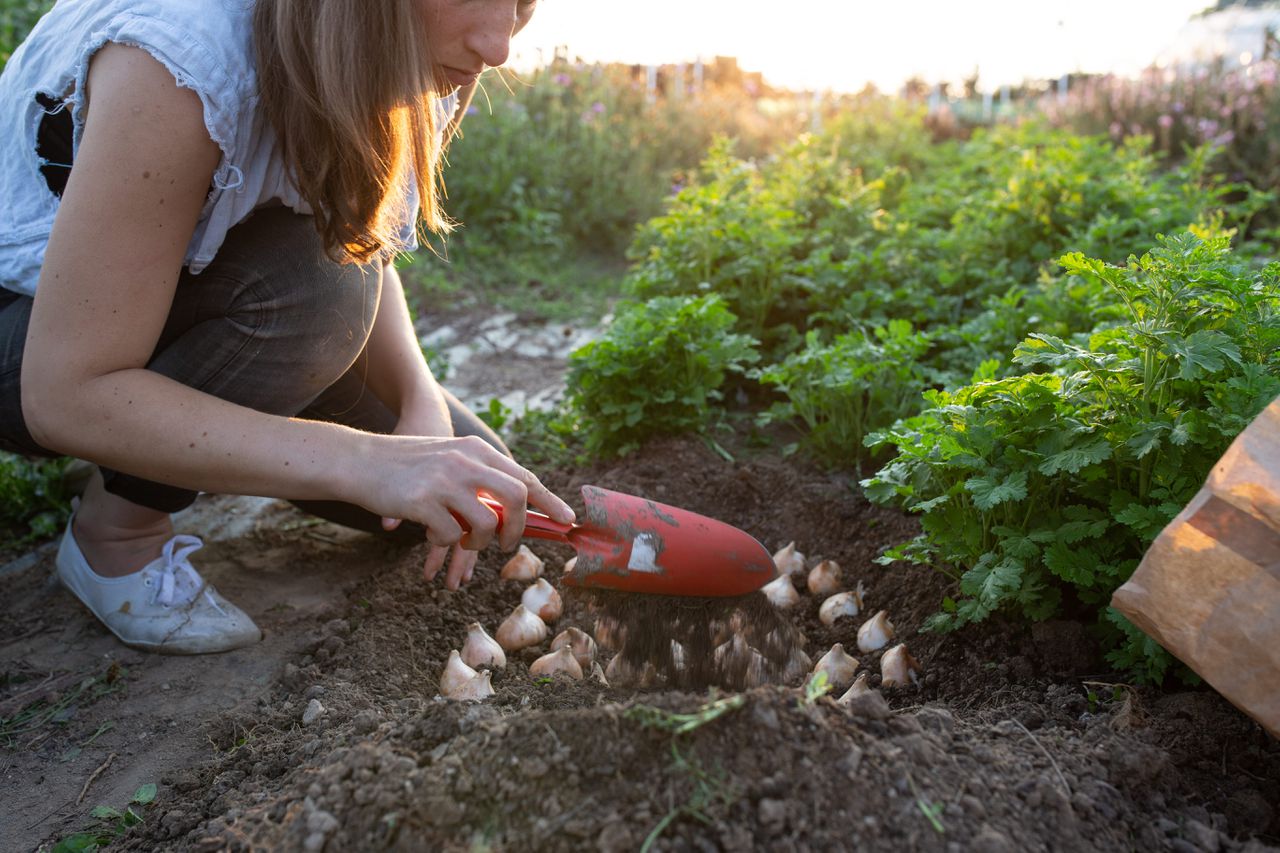
First, dig a hole 10 to 15 cm deep, deep enough to fit 3 bulbs stacked on top of each other.
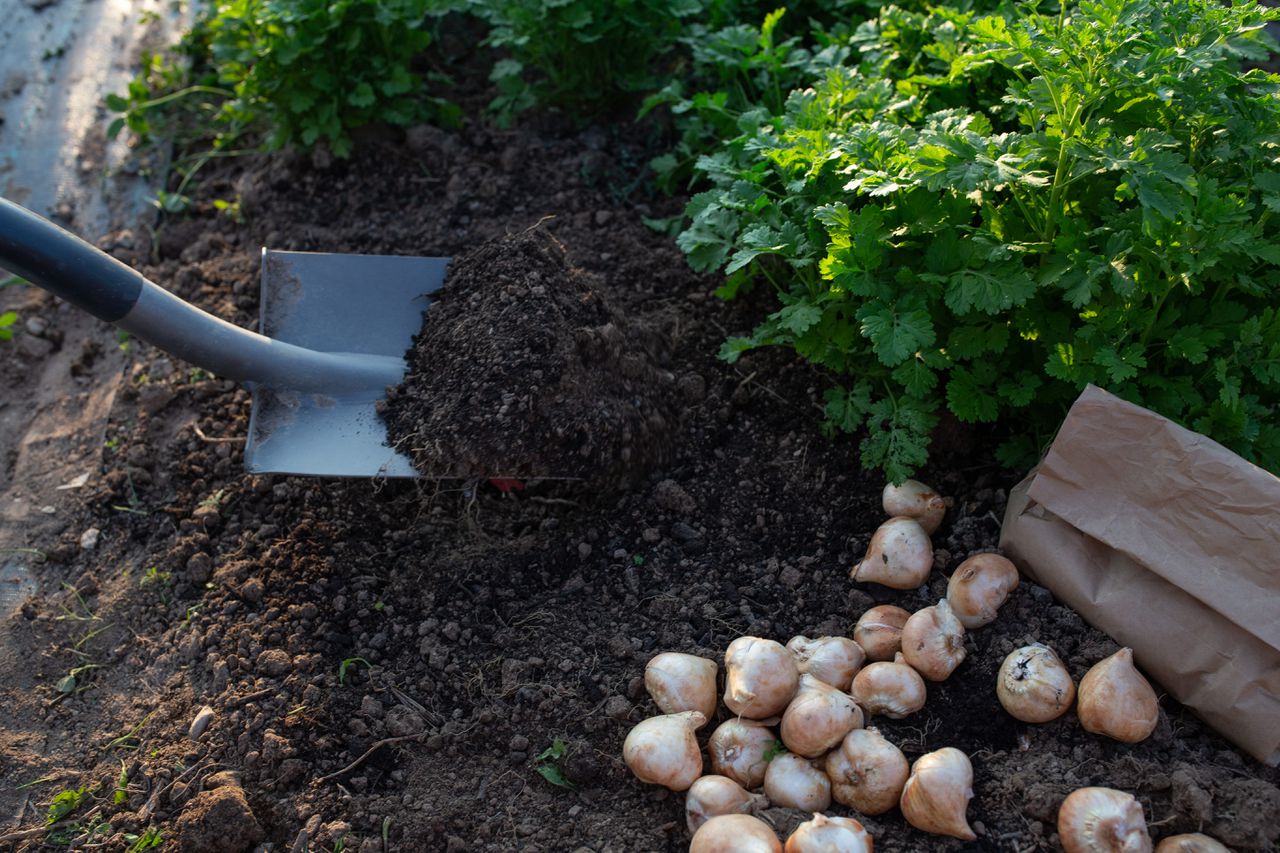
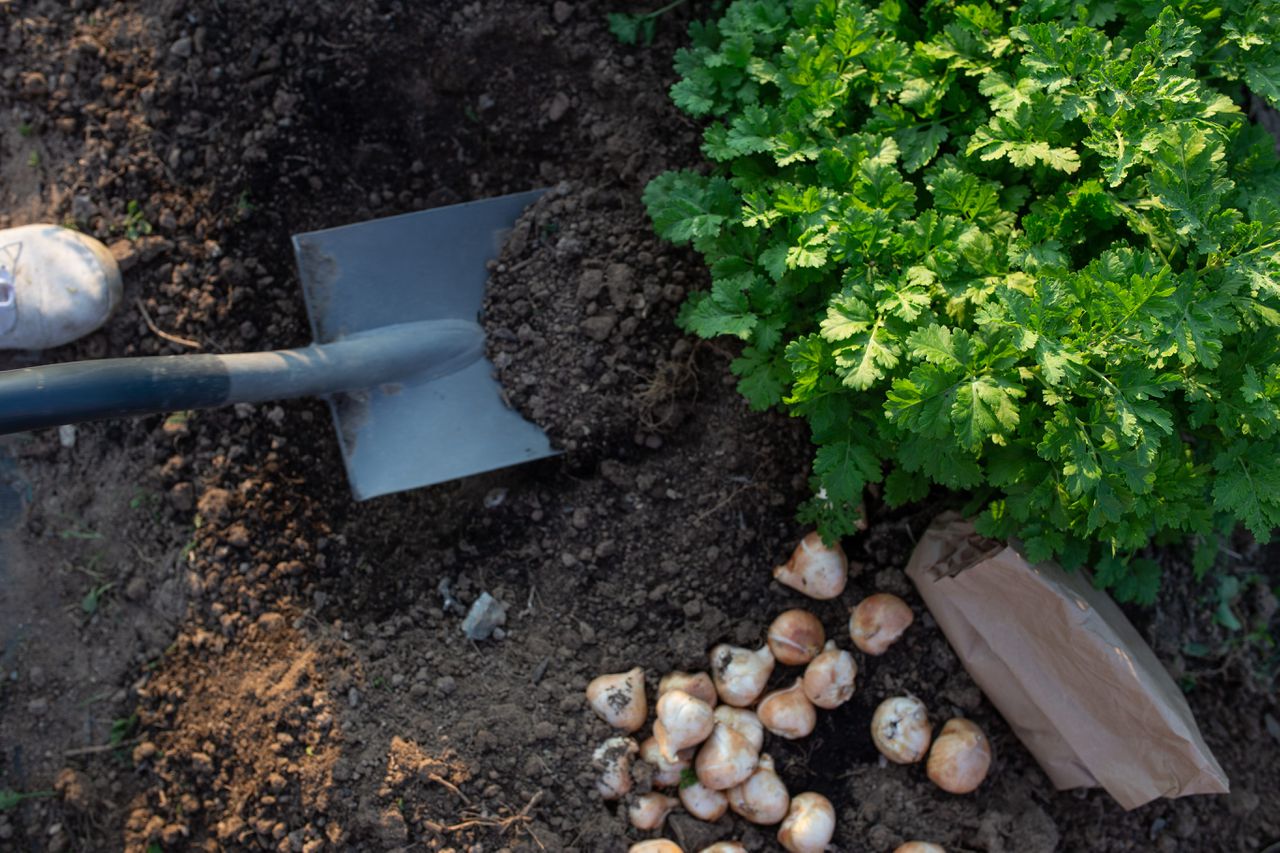
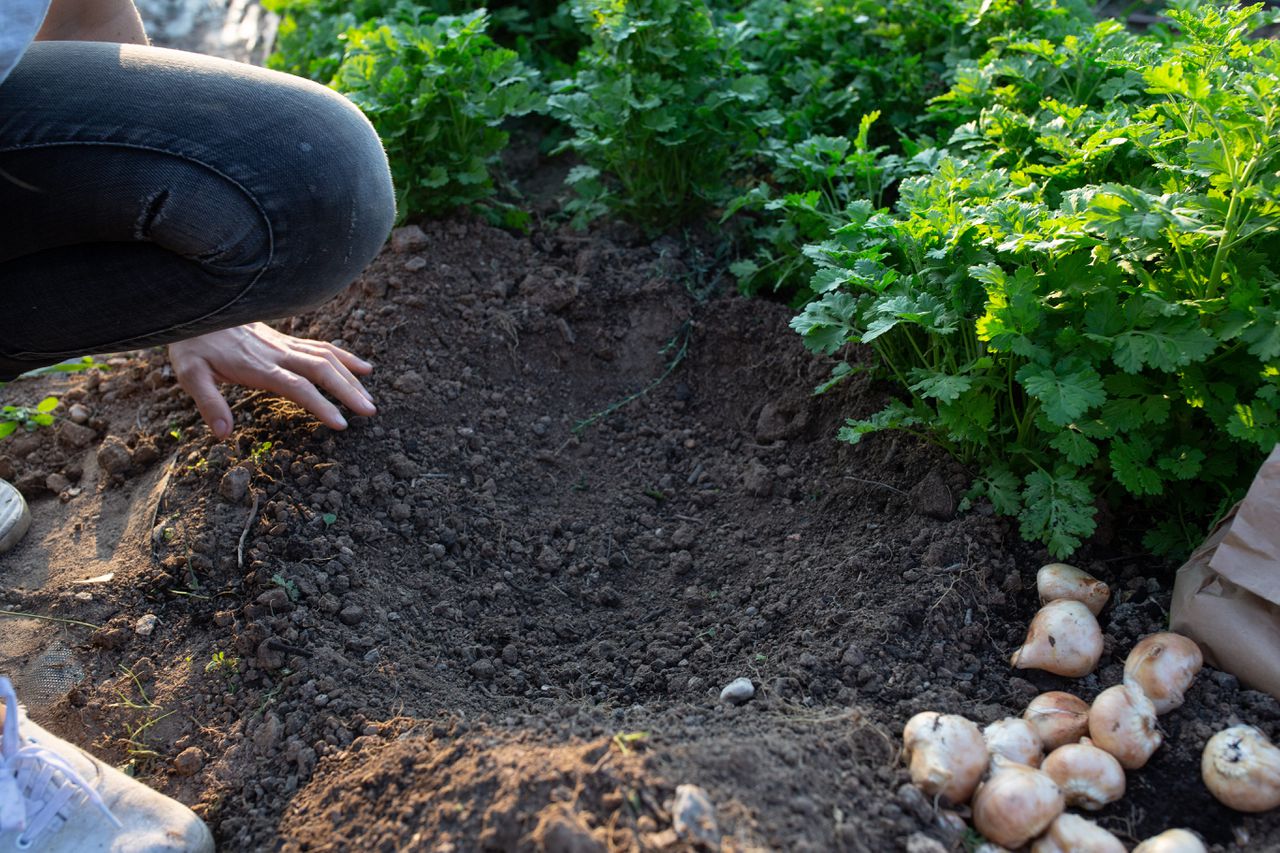
If you have heavy, impermeable soil in your garden, we recommend adding sand to the beds. Simply mix sand with soil in a 1:4 ratio, one part sand to 4 parts soil. We recommend mixing a little compost into the bottom of the dug hole.
You can start planting your tulips into the dug hole, tip pointing up, and press them lightly into the soil. We press the bulbs down so they don't tip over while covering them. No need to worry about the distance between bulbs (2 - 3 cm), just make sure they aren't touching. Similar to an egg carton.
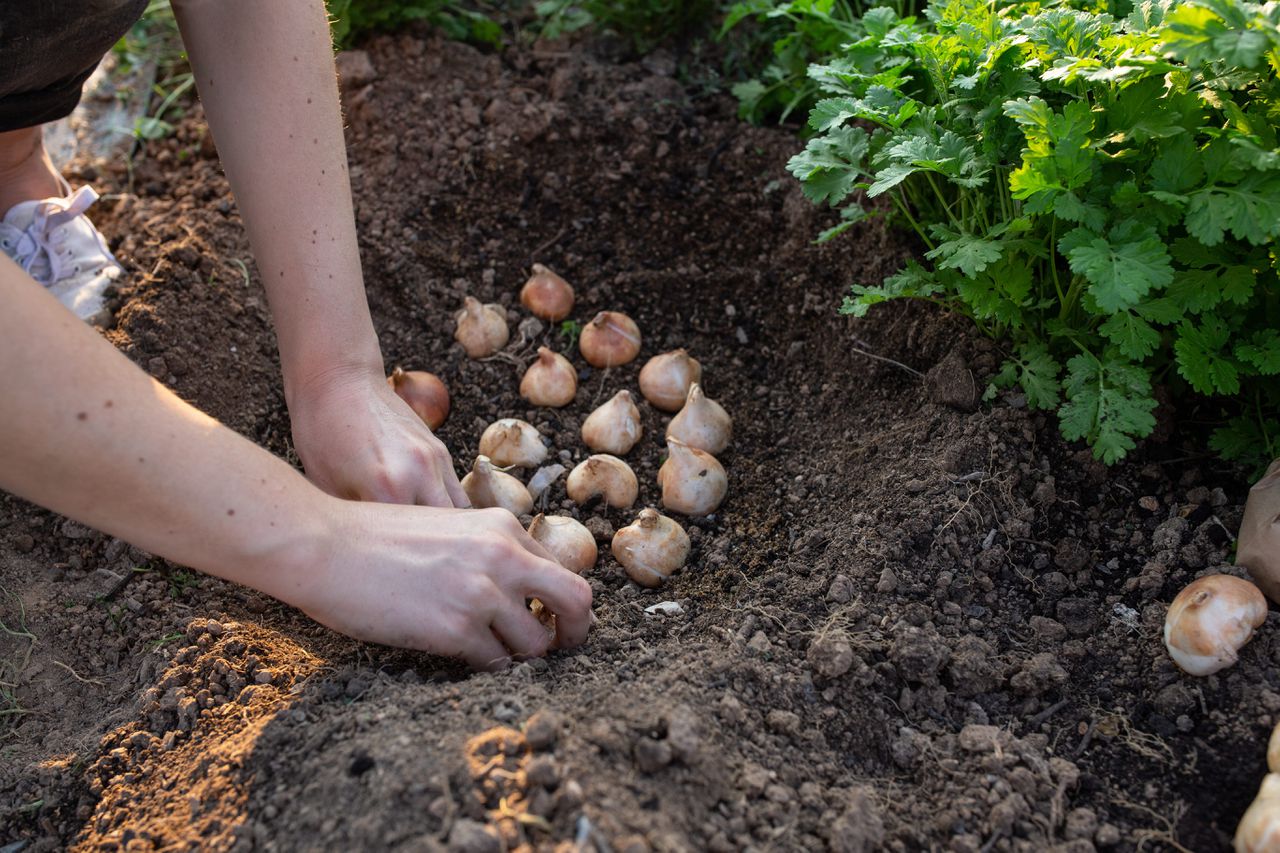
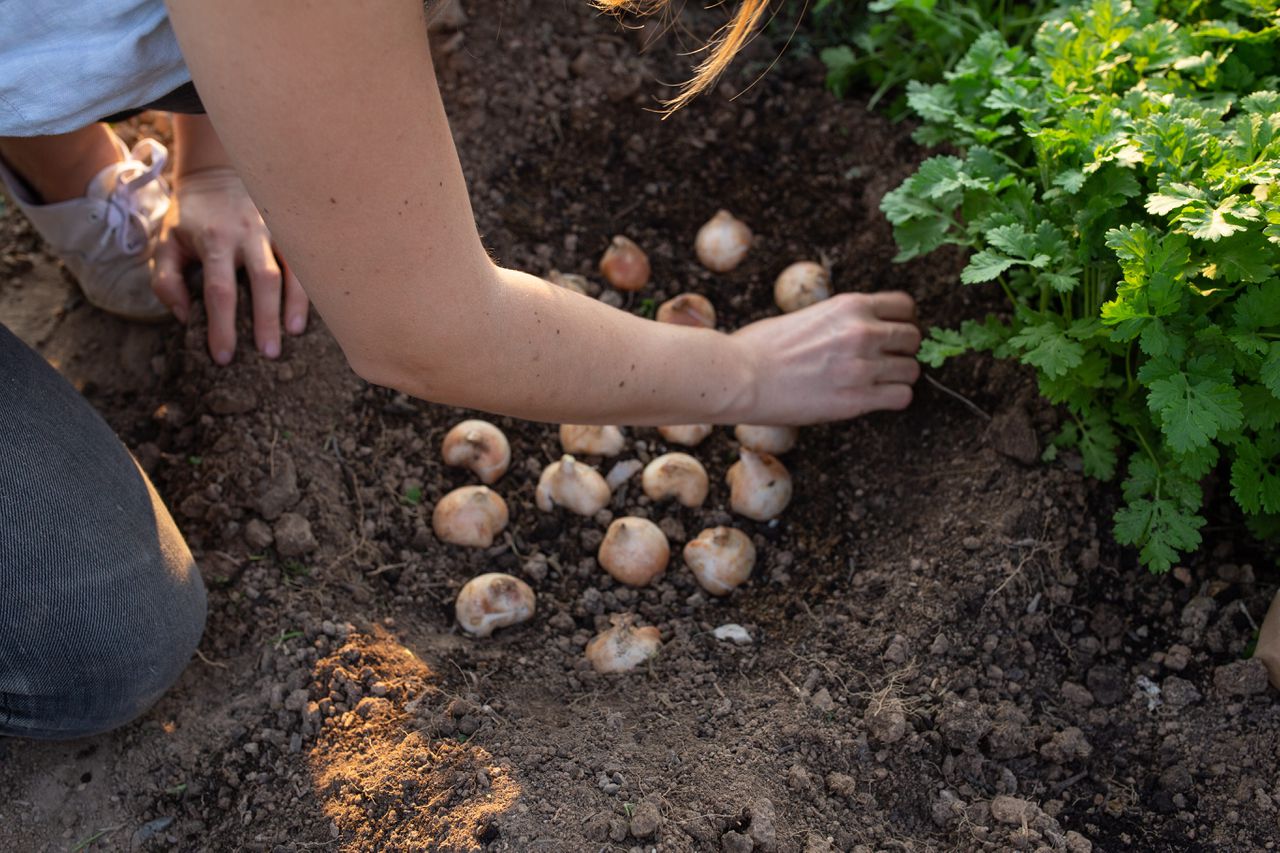
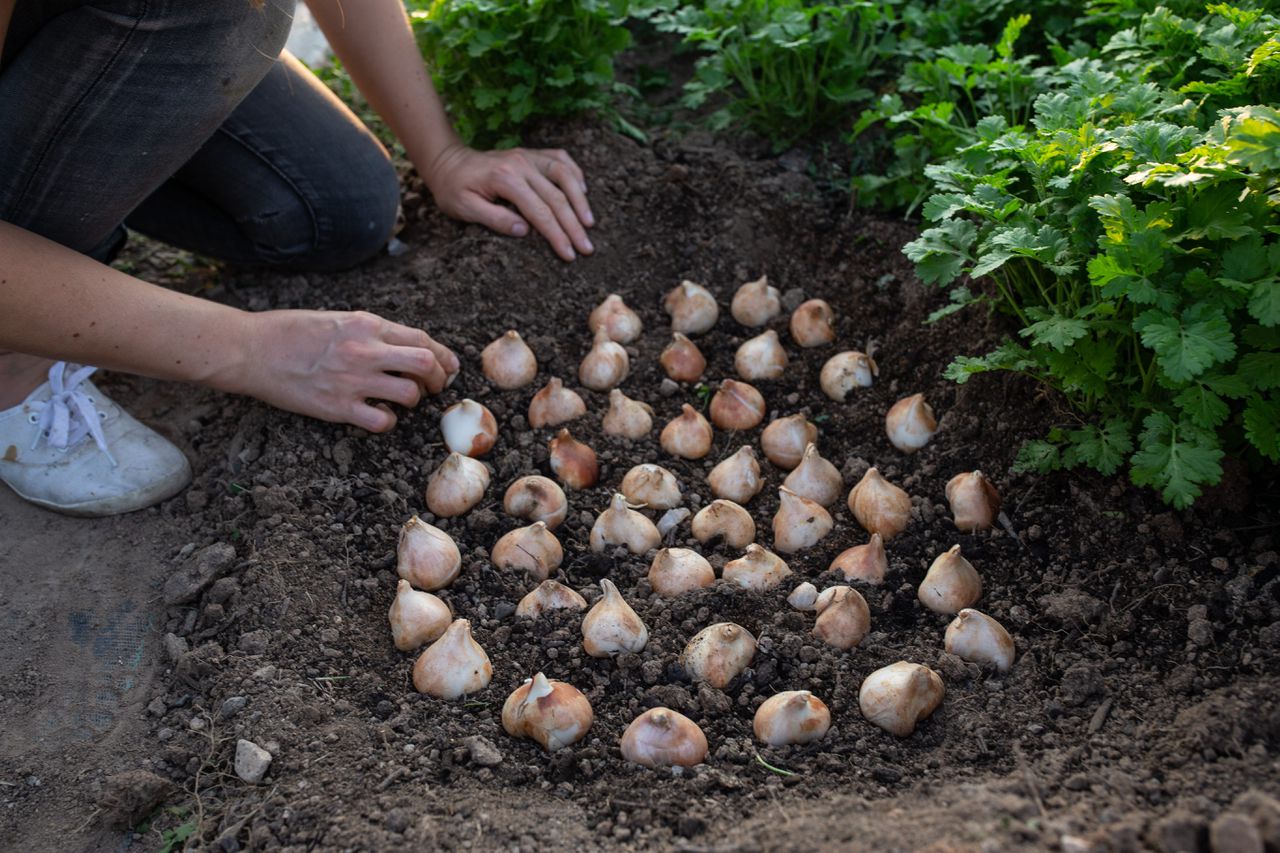
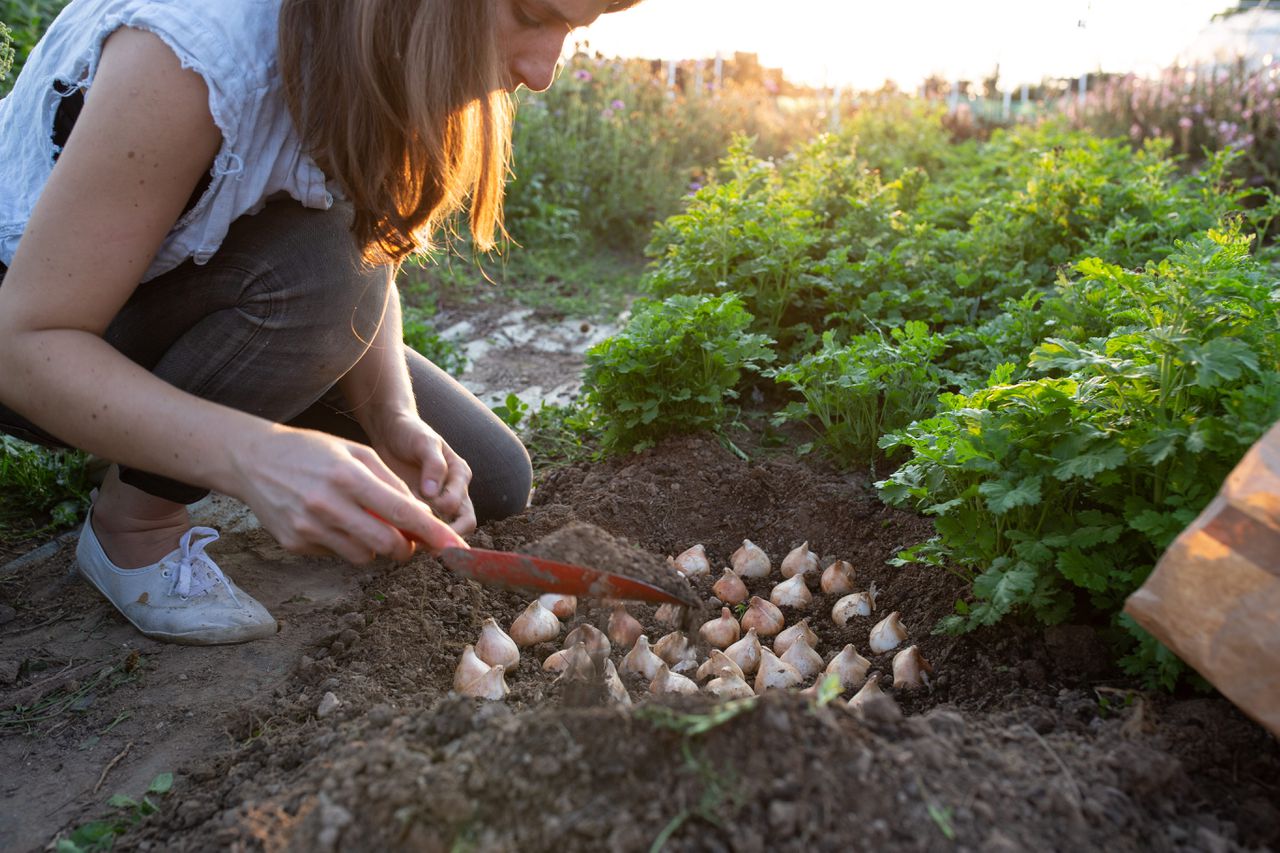
Once the bulbs are in place, a generous watering is in order. Then cover them with the soil you originally removed. Remember that there should be at least 5 - 10 cm of soil over the bulbs. We recommend marking the spot so you know where you can look forward to them in the spring.
If a severe winter is ahead, you can mulch the tulip bed with straw, for example; however, we recommend removing it as soon as the tulips start sprouting in the spring so they don't have to grow through it.
To dig up, or not to dig up
That is the question that divides all gardeners.
Don't dig up
Not digging up tulips and leaving them in the same place for several years is possible; just make sure that when cutting the stem in the spring (for a vase), at least 2 bottom leaves remain. These will die naturally, and the bulb will take the necessary nutrients for the next year. If you let the tulips bloom in your garden and don't harvest them for a vase, cut off the flower after it fades, so the tulip directs its energy into the bulb rather than into seed production. Next year, your tulips will bloom in the same spot again.
Dig up
You can also dig up the bulbs every year after they finish blooming. You will see that the individual bulbs have multiplied, and you can replant them in the autumn. There is less risk of them getting lost or burrowing irrevocably deep in the flower bed. Again, if you are harvesting the tulip for a vase, leave at least 2 bottom leaves; if you are letting the tulips bloom in the garden, cut off the flower so the tulip directs its energy into the bulb, not into the seeds.
The next year
In both cases, you need to count on the fact that the next year the tulips will not bloom as exuberantly as the first. The bulb gradually exhausts itself, and it takes a few years for newly multiplied bulbs to grow to a decent size.
Our tip
For us, the best method is to rotate the tulips, which means digging up the bulbs after they dry out each year, dividing them, and planting them in a new spot in the garden. At the same time, you can also buy new bulbs and plant them together. The following year, do the same: dig up, divide, and plant in a new spot. We recommend returning to the original spot only after 3 years. This way, you avoid diseases and pests. In general, crop rotation in the garden is a good practice, minimizing soil depletion, diseases, and pests.
Frequently asked questions
When to plant tulips?
Tulips are planted in the autumn, mid-September to late October is ideal.
When to dig up tulips?
You can remove tulips as soon as the leaves turn yellow and dry up. Usually, this is in June.
How deep to plant tulips?
We recommend planting tulips 10 - 15 cm deep, simply on the height of 3 bulbs stacked on top of each other.
How far apart?
2 - 3 cm, just make sure they don't touch, similar to an egg carton. If you don't plan to dig the tulips up, choose a larger distance (5 - 10 cm).
How many tulips fit in my garden?
For 1 m², count on approximately 100 tulips.
How to store the bulbs?
Store tulip bulbs at room temperature in a well-ventilated room.
How we grow tulips here — at our flower farm
If you are a flower farm and will grow tulips purely as a cut flower, the instructions are slightly different. They differ in how the bulbs are planted, how the tulips are harvested, and finally, in the stage at which you harvest. Flower farms grow tulips as annuals.
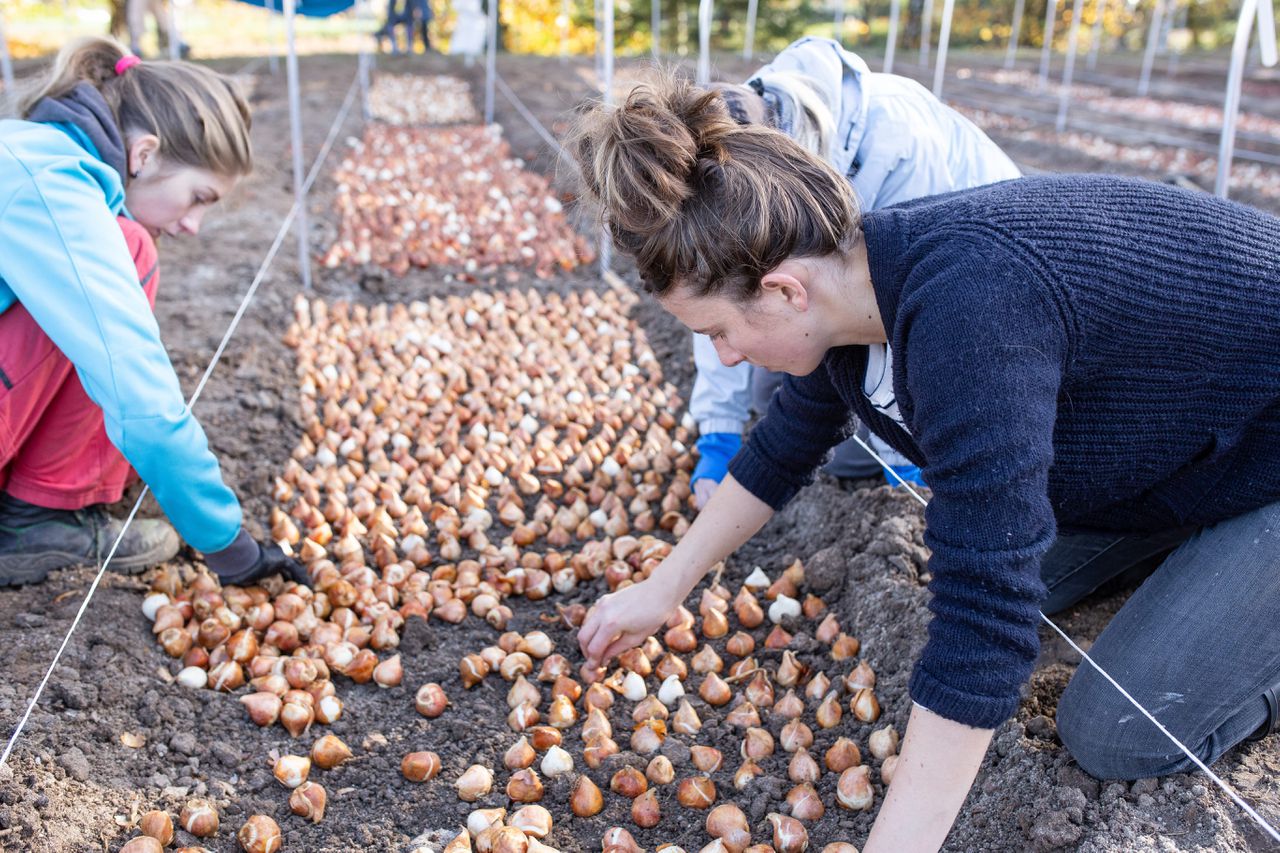
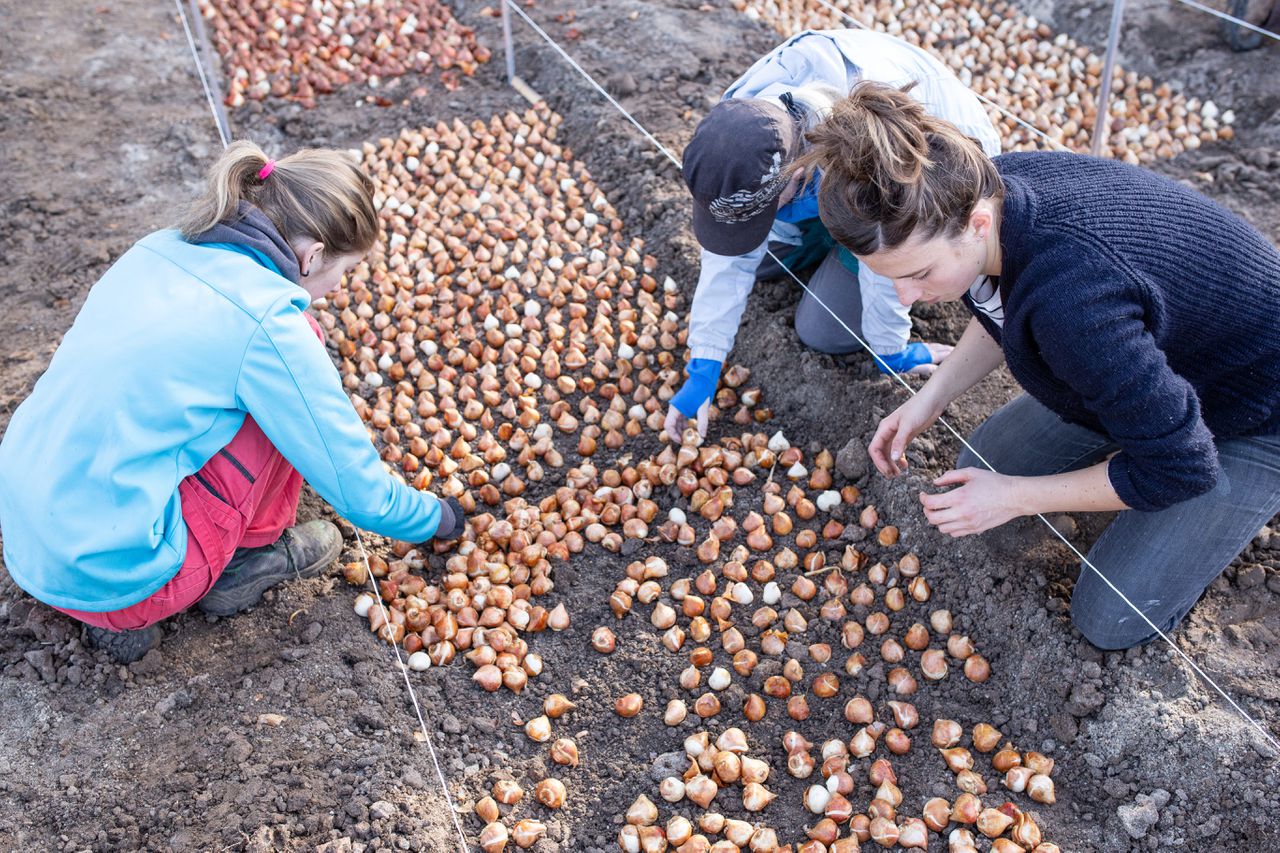
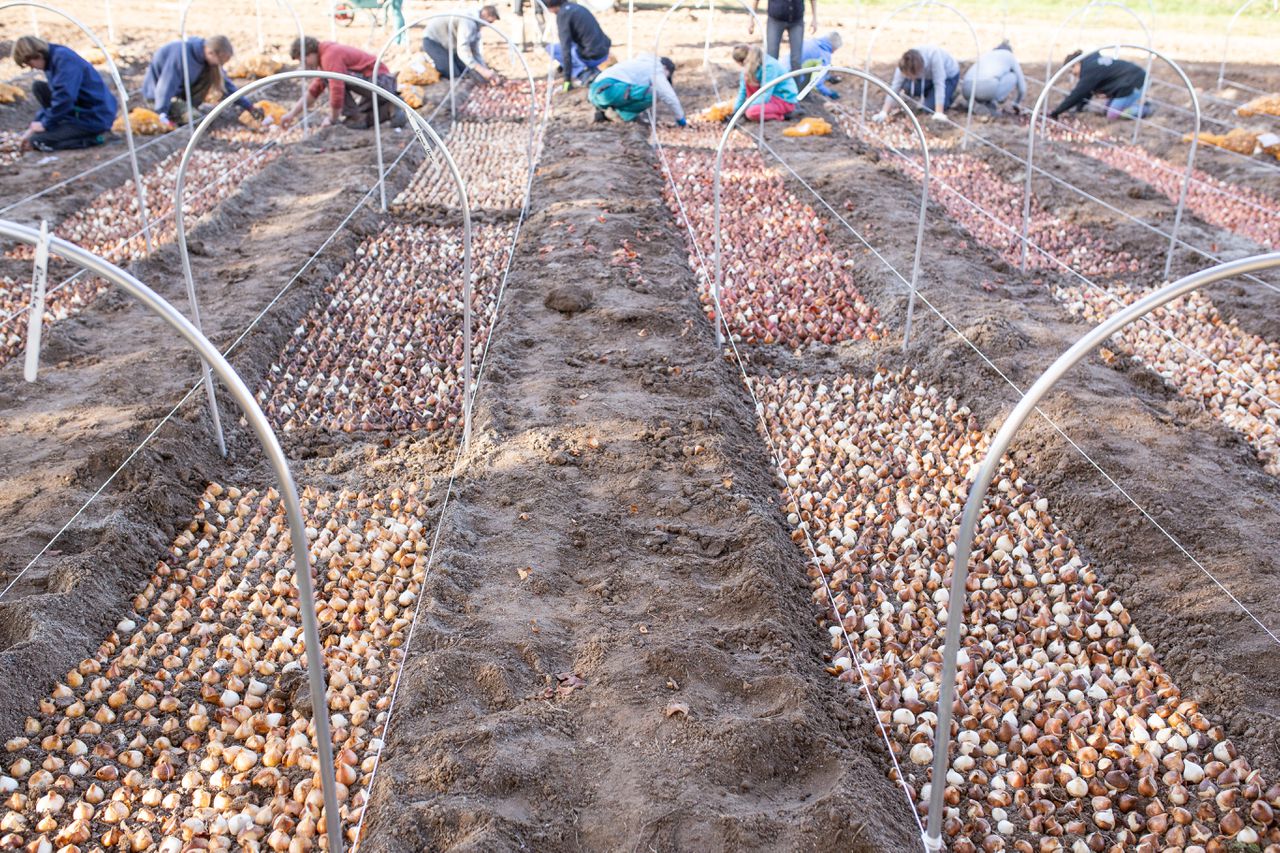
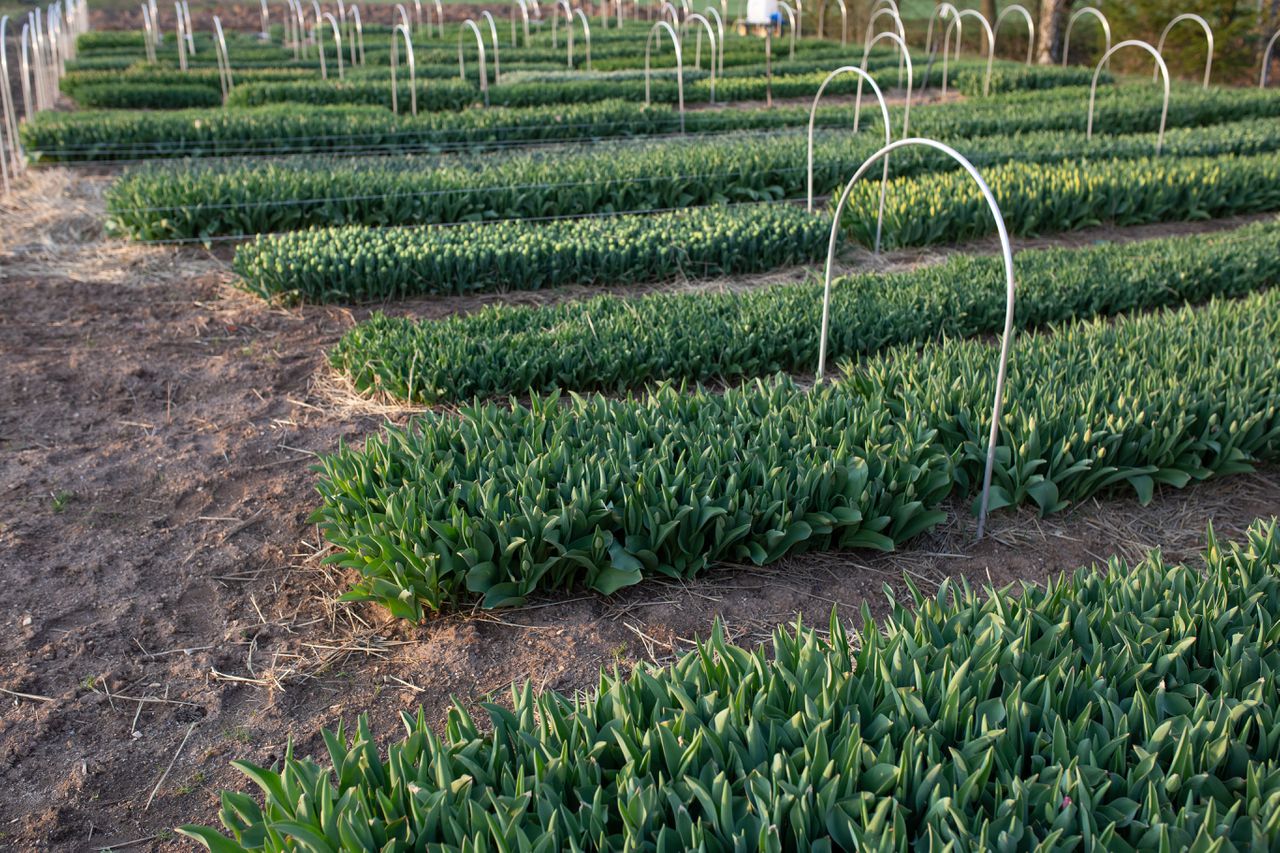
Here at the farm, we plant tens of thousands of tulips every year, and because we have limited space, we plant them very densely. We choose a spot where water doesn't stand and where the soil is beautifully loose. Our farm is slightly sloped, so we never plant tulips in the lowest-lying beds.
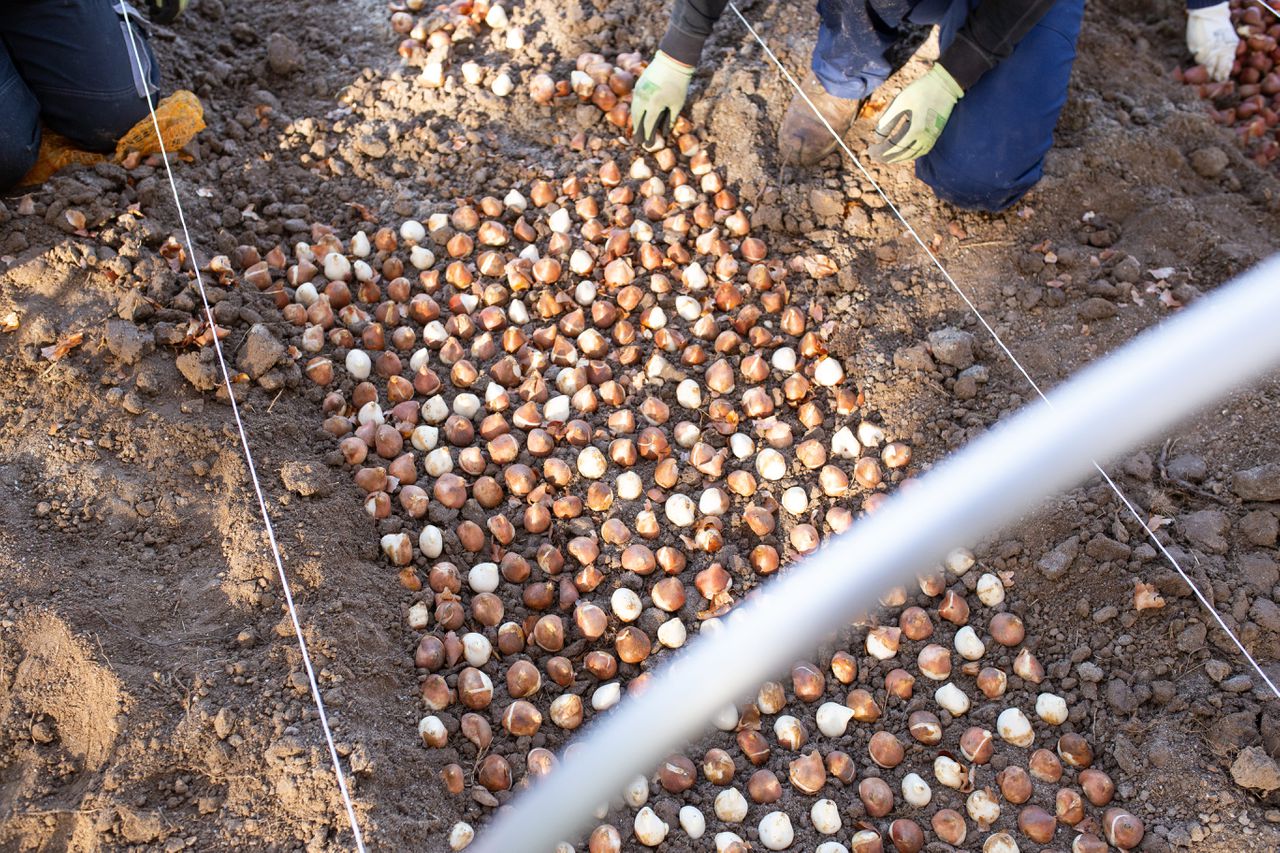
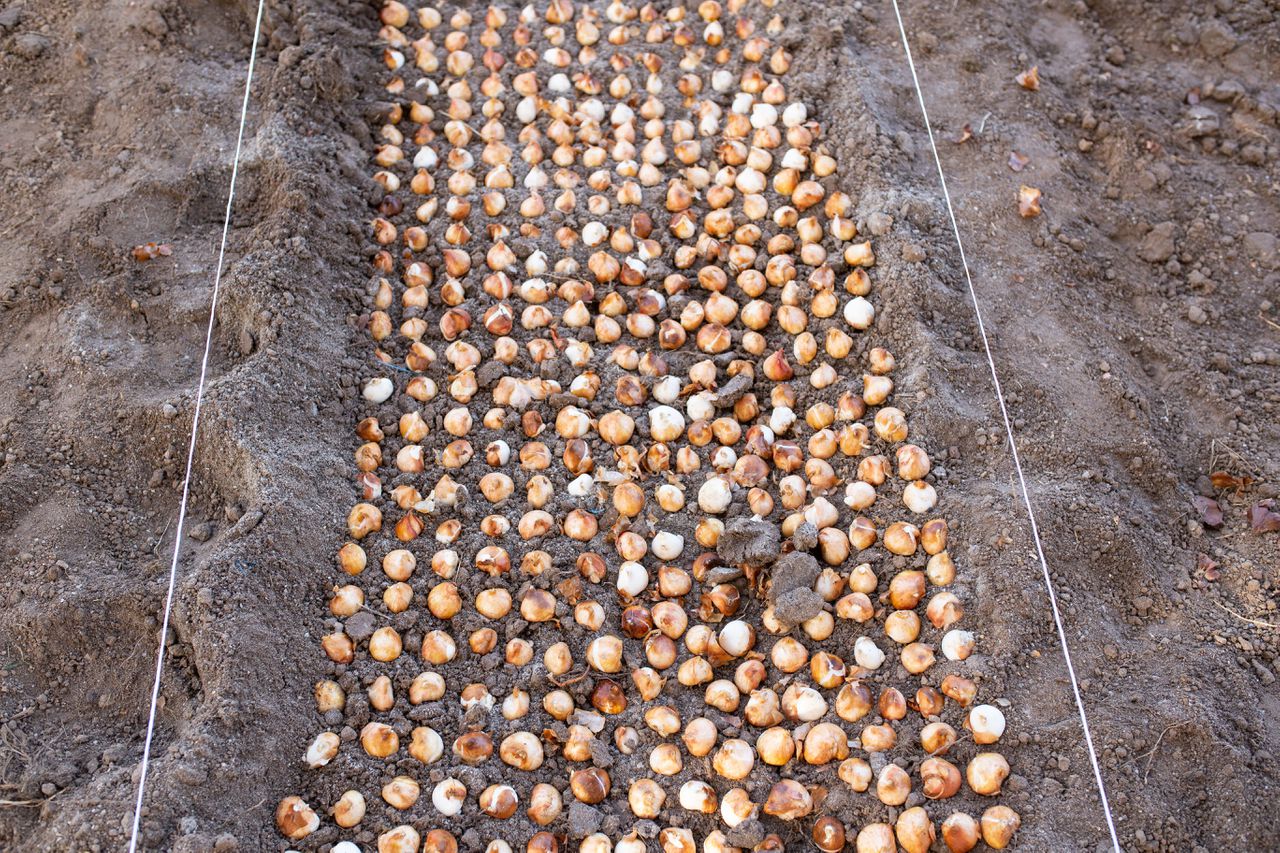
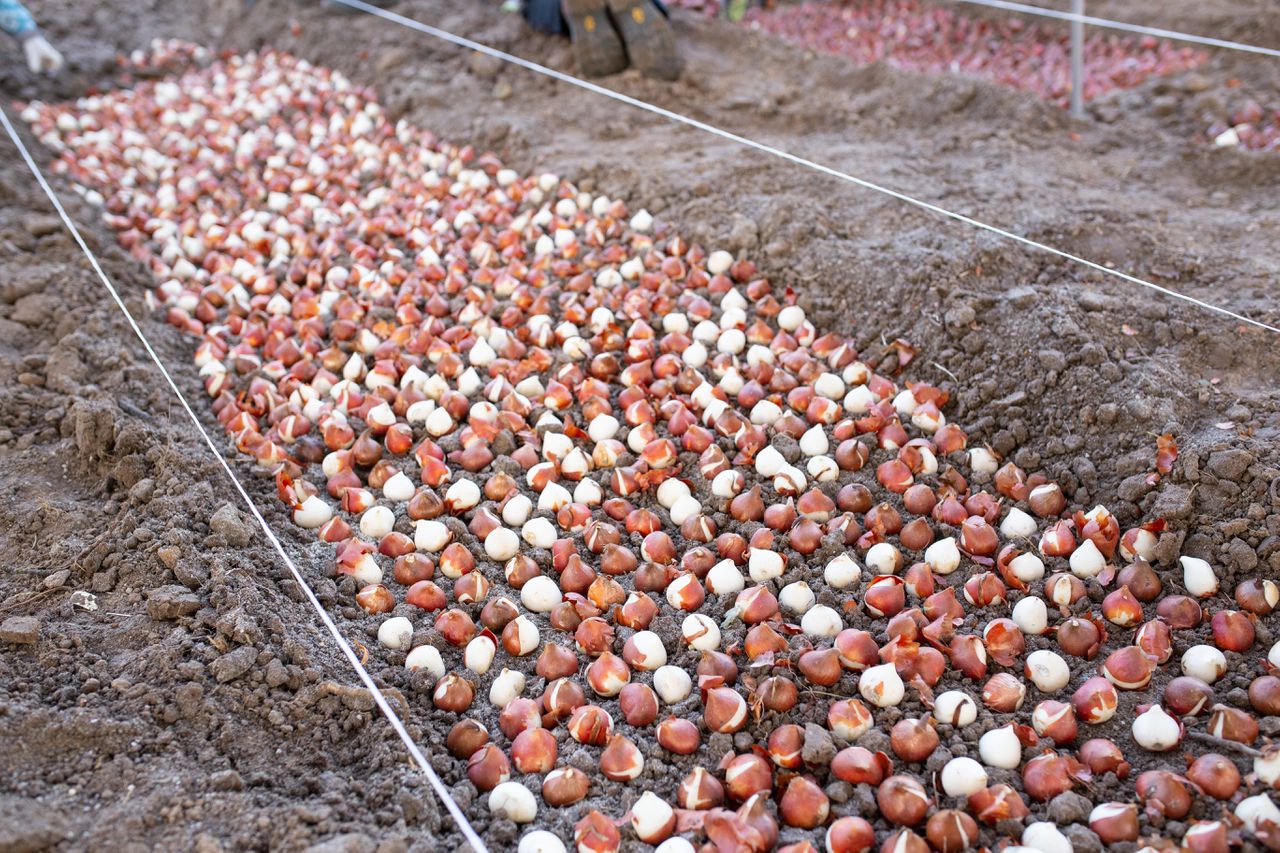
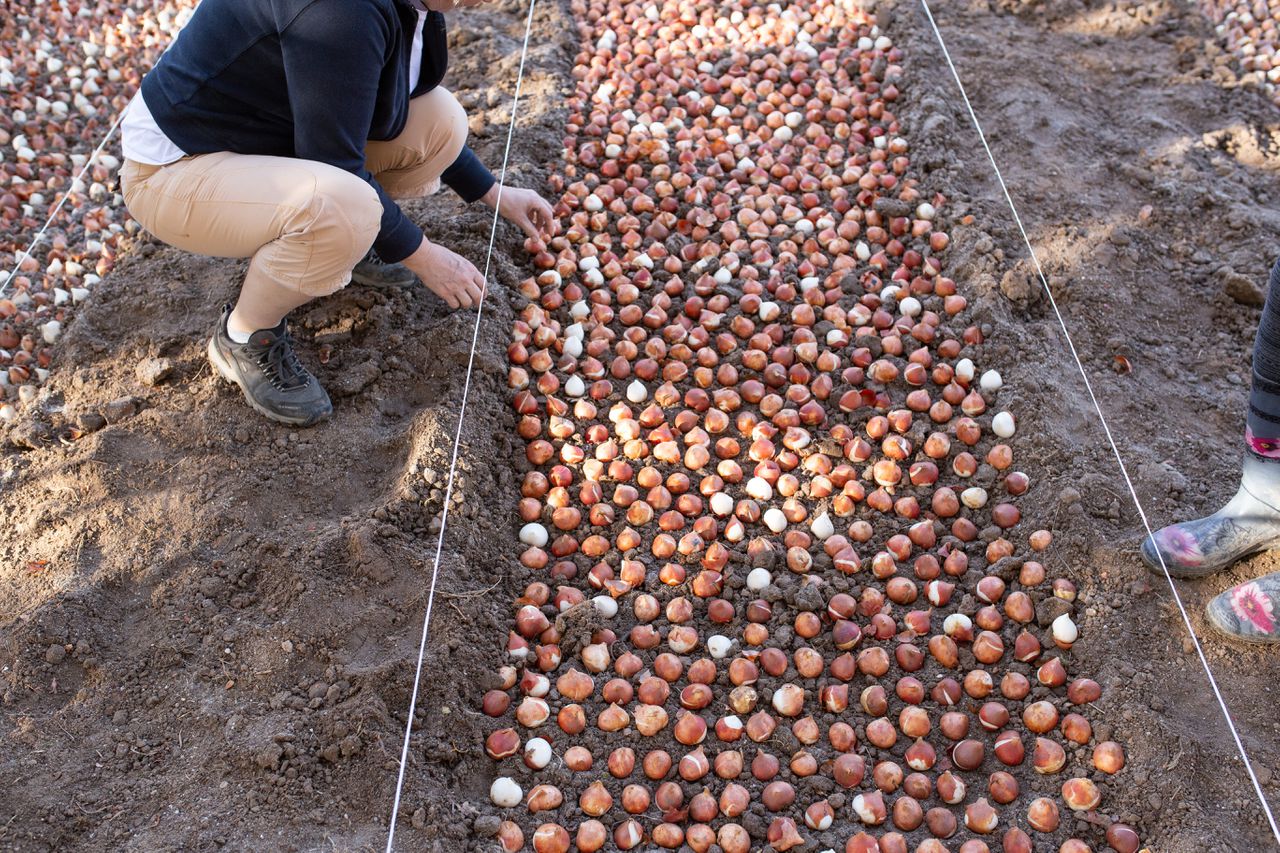
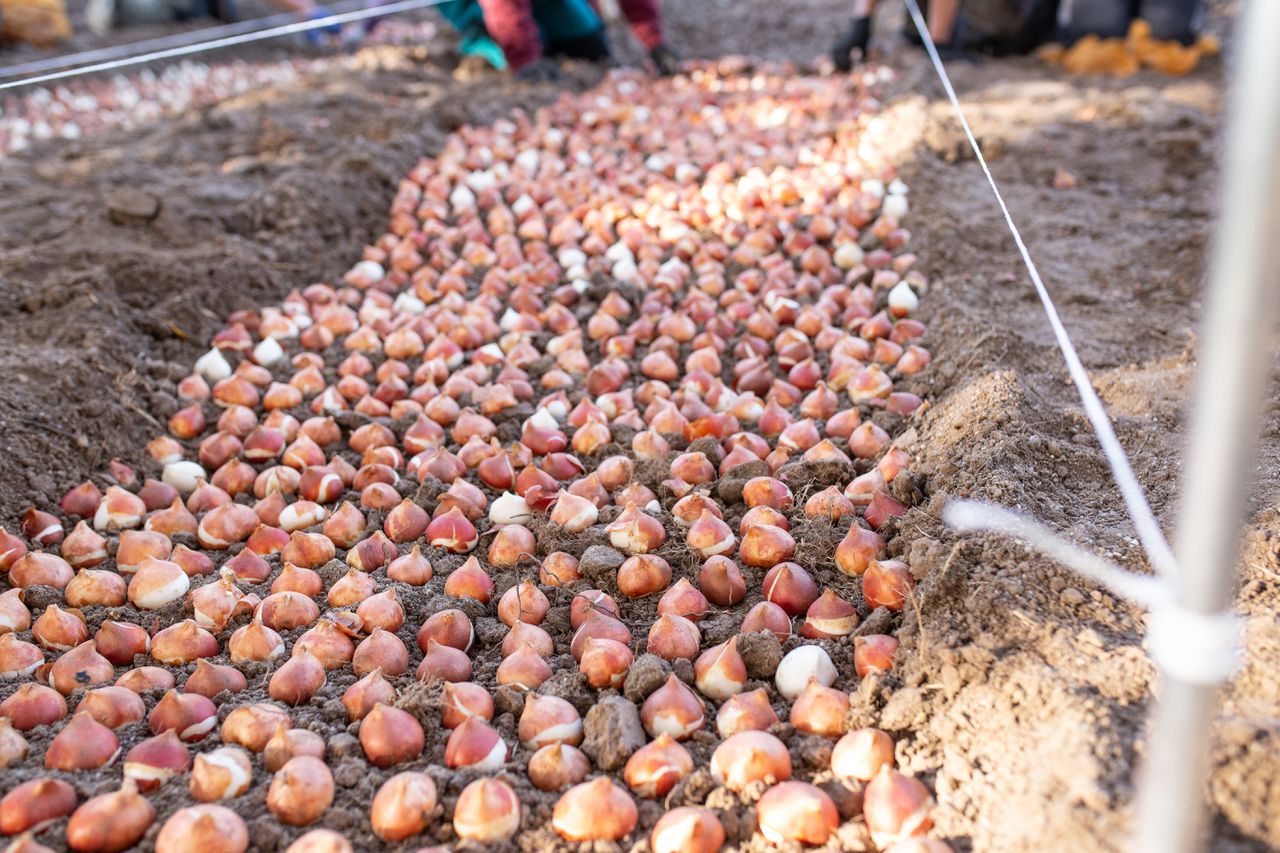
Our beds are 90 cm wide and 14 m long. We dig out the entire length of the bed to a depth of 10 to 15 cm. We plant one tulip after another into the bed dug in this way, at most 2 - 3 cm apart; in a moment, we have a complete tulip carpet.
We generously water all the planted tulips and then cover them with the originally dug soil. Be careful not to cover the bulbs with a thick layer, just the height of one or two bulbs is enough. It will speed up the harvest in the spring. If you have severe winters and fear the tulip bulbs might freeze, you can cover the beds with straw (or non-woven fabric), which you remove in the spring as soon as they start sprouting.
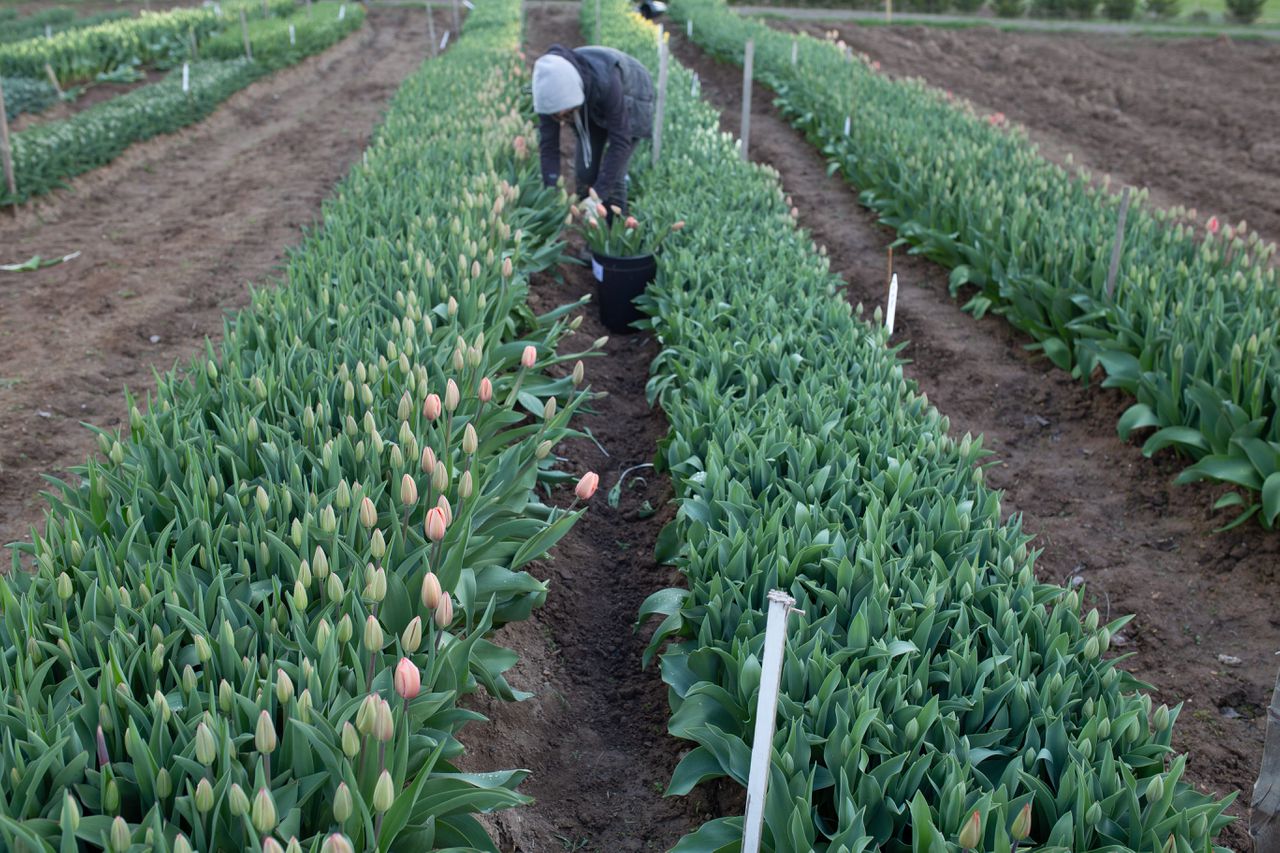
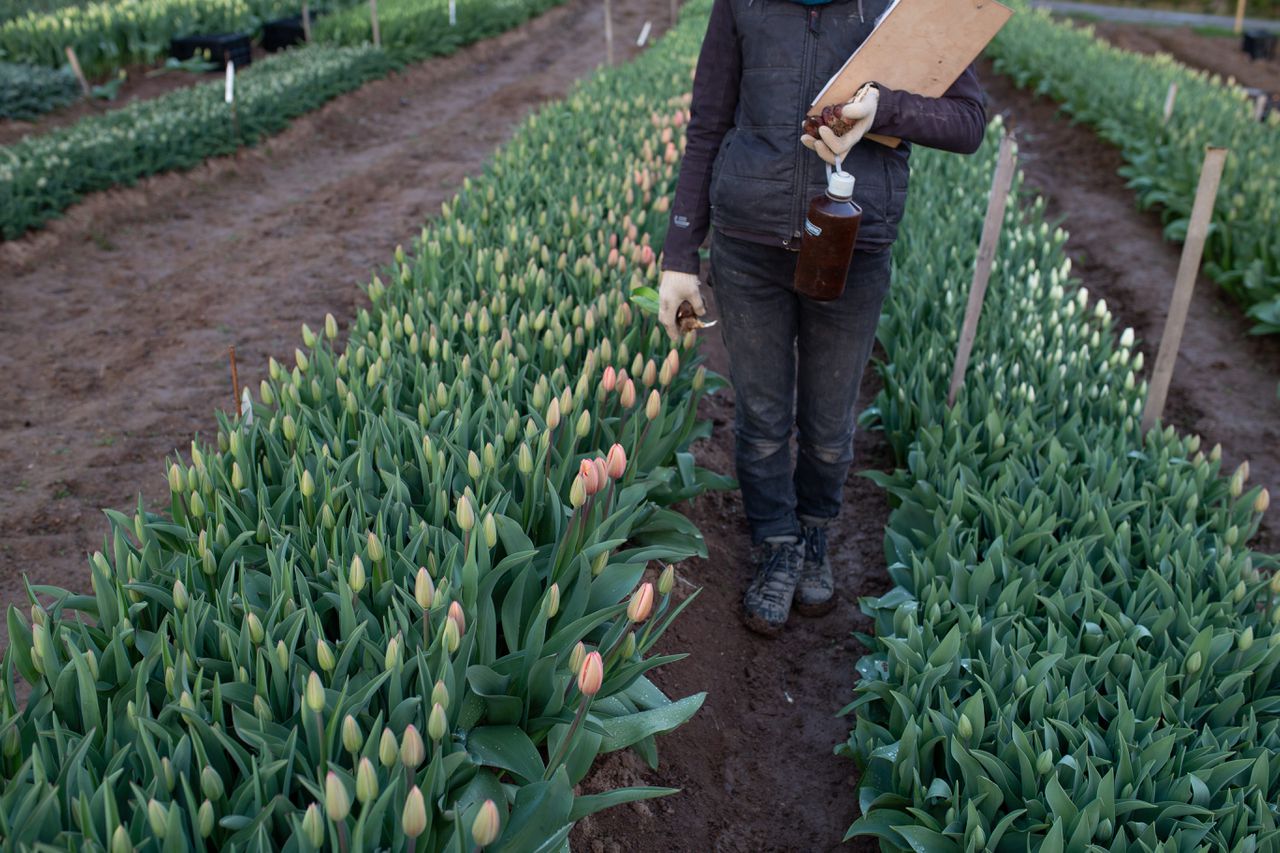
We harvest the tulips along with the bulb, as it will supply nutrients for the entire storage duration of the tulip. As soon as we want to use the tulip in a bouquet, we cut off the bulb and put the stem in water to "drink" (hydrate). We buy new tulip bulbs every year, as these exhausted ones from the cooler will not produce decent flowers. We couldn't resist, and of course, we tested it; indeed, only dwarf tulips bloom from such bulbs the next year.
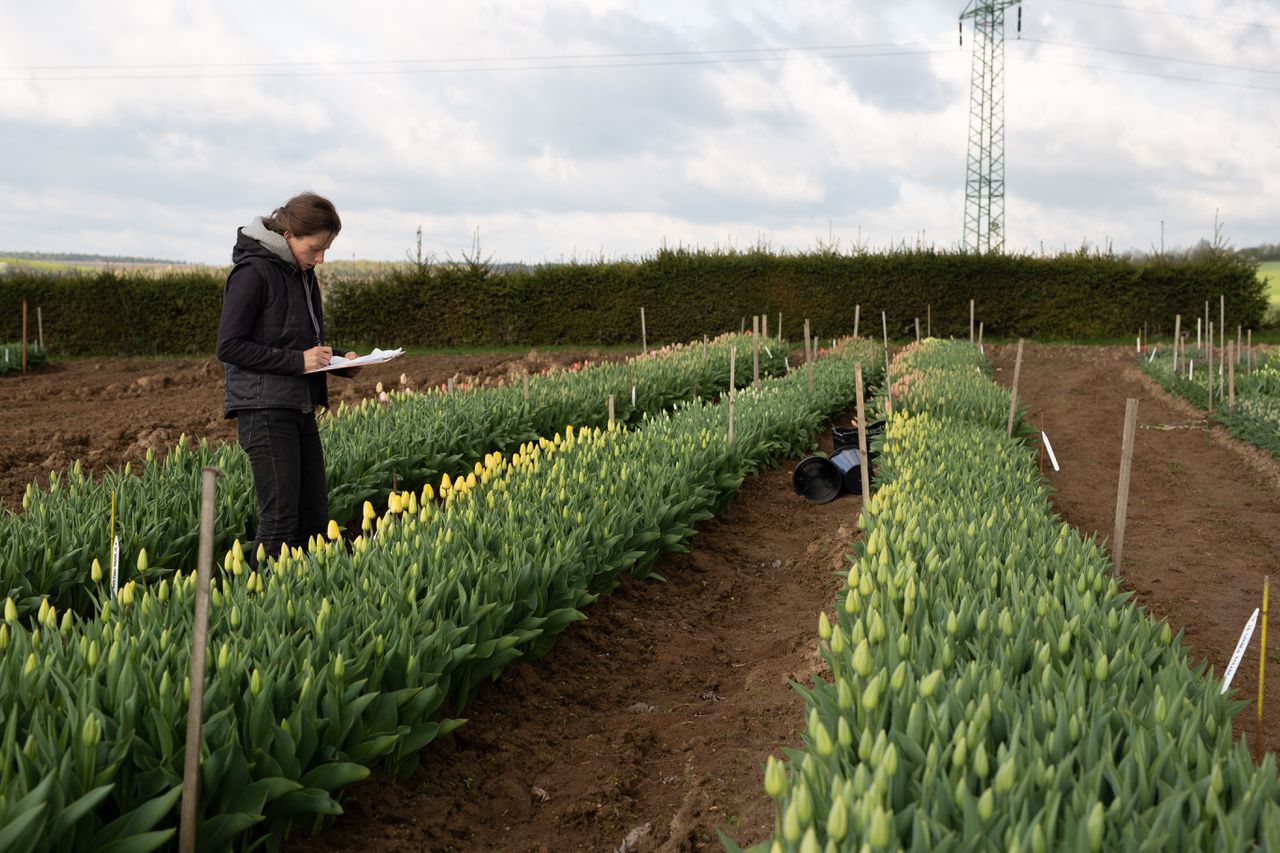
We harvest the tulips as soon as we can see the color in the bud. With double-flowered tulips, it's a bit later. After harvest, we fix the tulip with the bulb in a vertical position, and it travels to a cooling room, where we set the temperature between 0° and 2°C. We can store the tulip this way for several more weeks without it having any effect on its quality.
Nevíte si rady?
Napište nám na kvet@loukykvet.cz nebo přes Facebook, rádi pomůžeme.


