Loukykvět / Návody / How to store dahlias
How to store dahlias
Published: 12/11/2020 · Updated: 12/11/2020
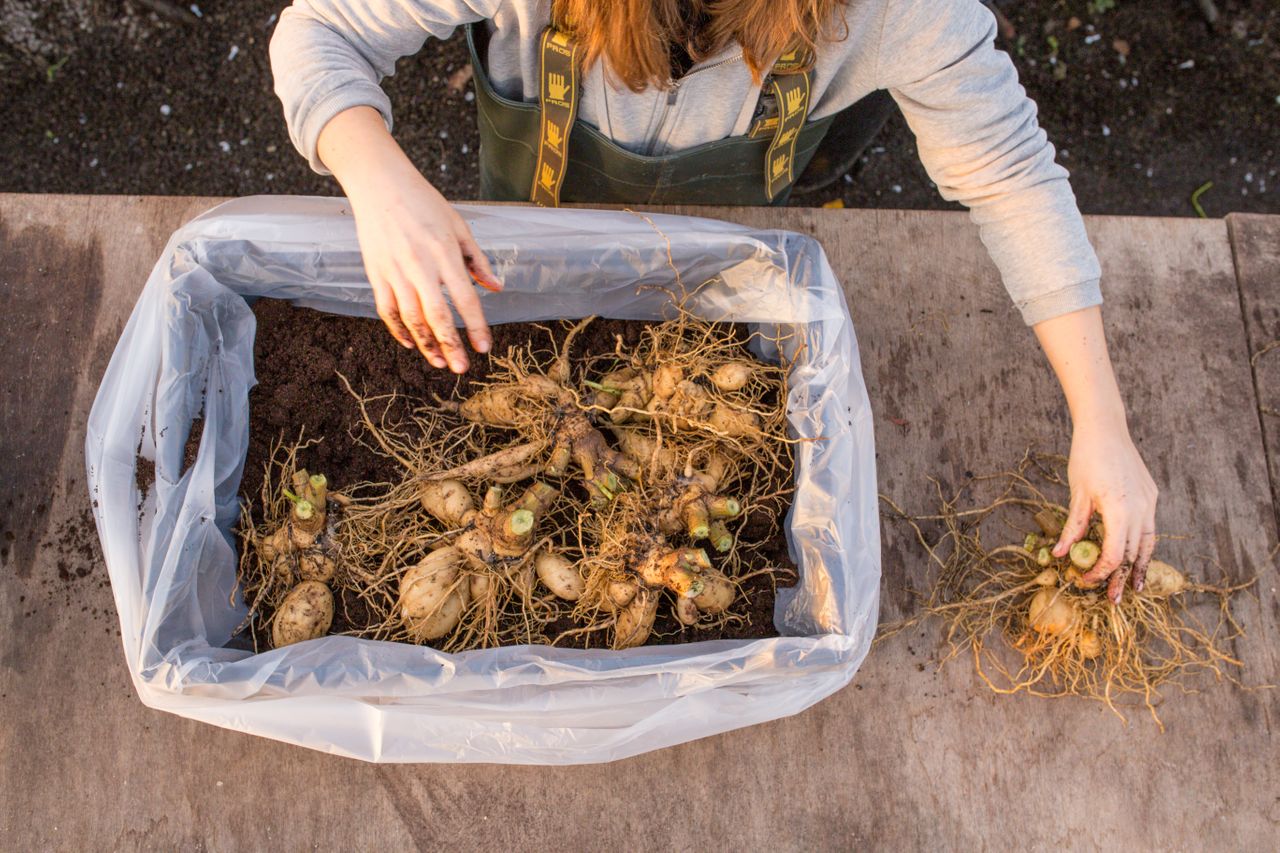
Dahlia tubers do not survive the winter, so they must be dug up in the autumn and stored in a frost-free room. We covered how to dig up dahlias in a previous guide; now we will focus on how to store them. Over the last few years on the farm, we have tried countless ways to store dahlias over the winter. Today, we want to share the most reliable and simple one.
Temperature & humidity
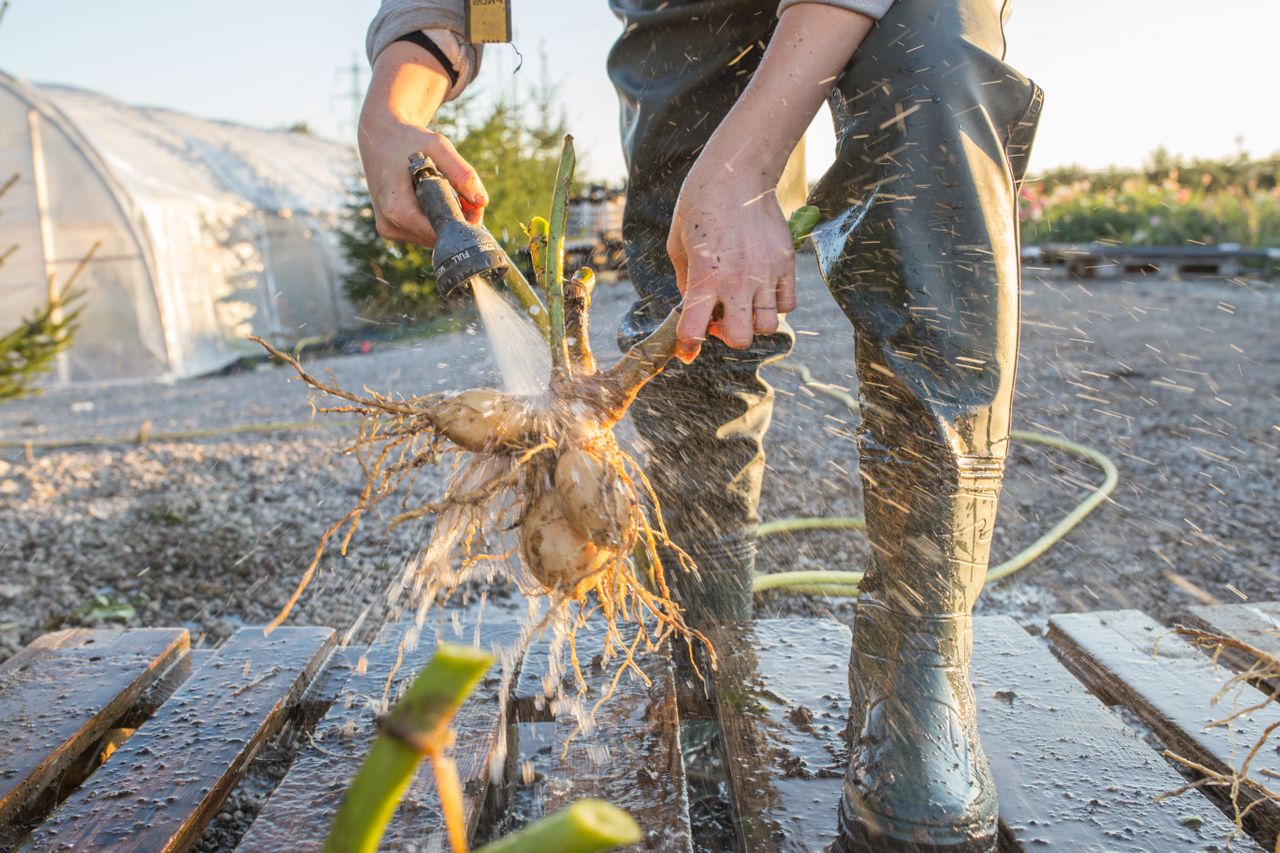
If it were as simple as just putting dahlia tubers in a room that doesn't freeze, we wouldn't be writing this guide at all. It is necessary to focus on temperature and humidity. Right at the start, we will highlight the values we try to achieve.
Temperature
The tubers should be stored at a temperature of 3 °C to 8 °C. At lower temperatures, you risk the tubers freezing; at higher temperatures, the dahlias would begin to sprout.
Humidity
The ideal air humidity is 70 - 85%. With higher humidity, the tubers may start to mold; with lower humidity, they may dry out.
What you will need
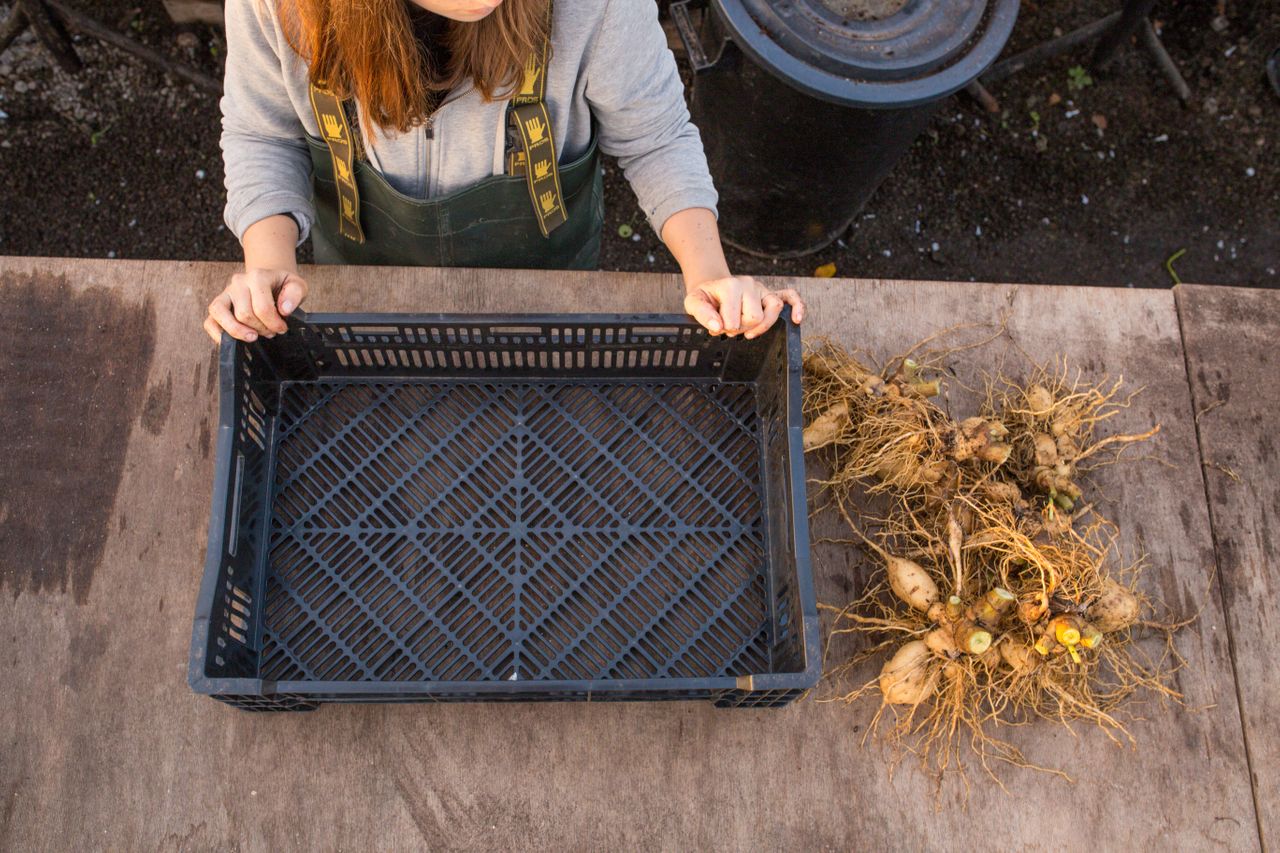
A crate
A standard produce crate measuring 60 × 40 cm will suffice, or any other box, container, or vessel.
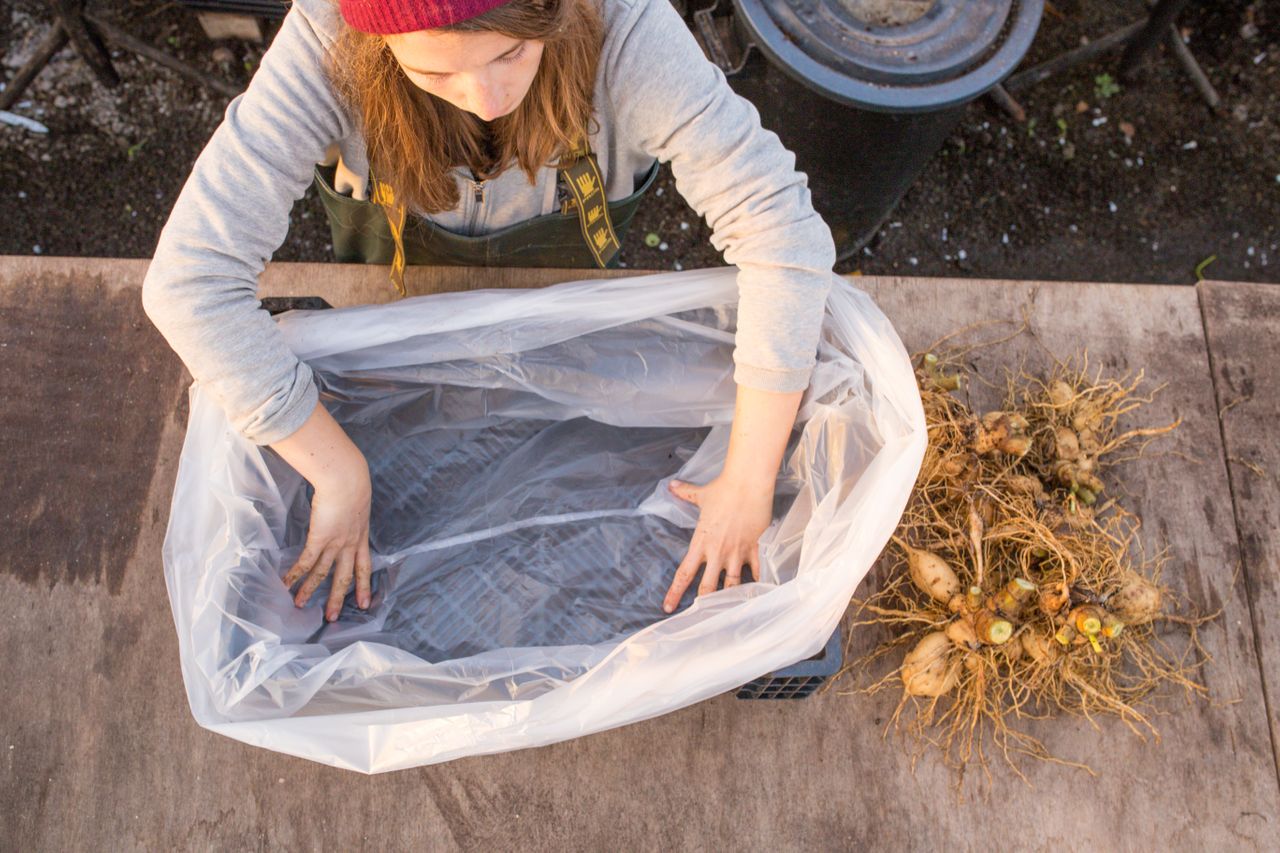
Plastic bag
We use a plastic bag to line the crate. We recommend a bag that fits the crate exactly. You can buy them, for example, at Eobaly, or search Google for “PE bag for boxes and crates”.
Peat
To cover them, we use completely ordinary peat, which can be a mixture of black and white peat. Try to find a package of peat that does not contain wetting agents or basic fertilizers; the most ordinary one is enough for us.
Scissors
Since we will be trimming the stems, we need strong scissors — the ARS scissors for thick stems and branches work well for us. You can use any other scissors for thick branches, bypass pruners, and similar tools; we've even successfully used a machete.
Procedure
It is dreadfully simple — take a crate and line it with a plastic bag.
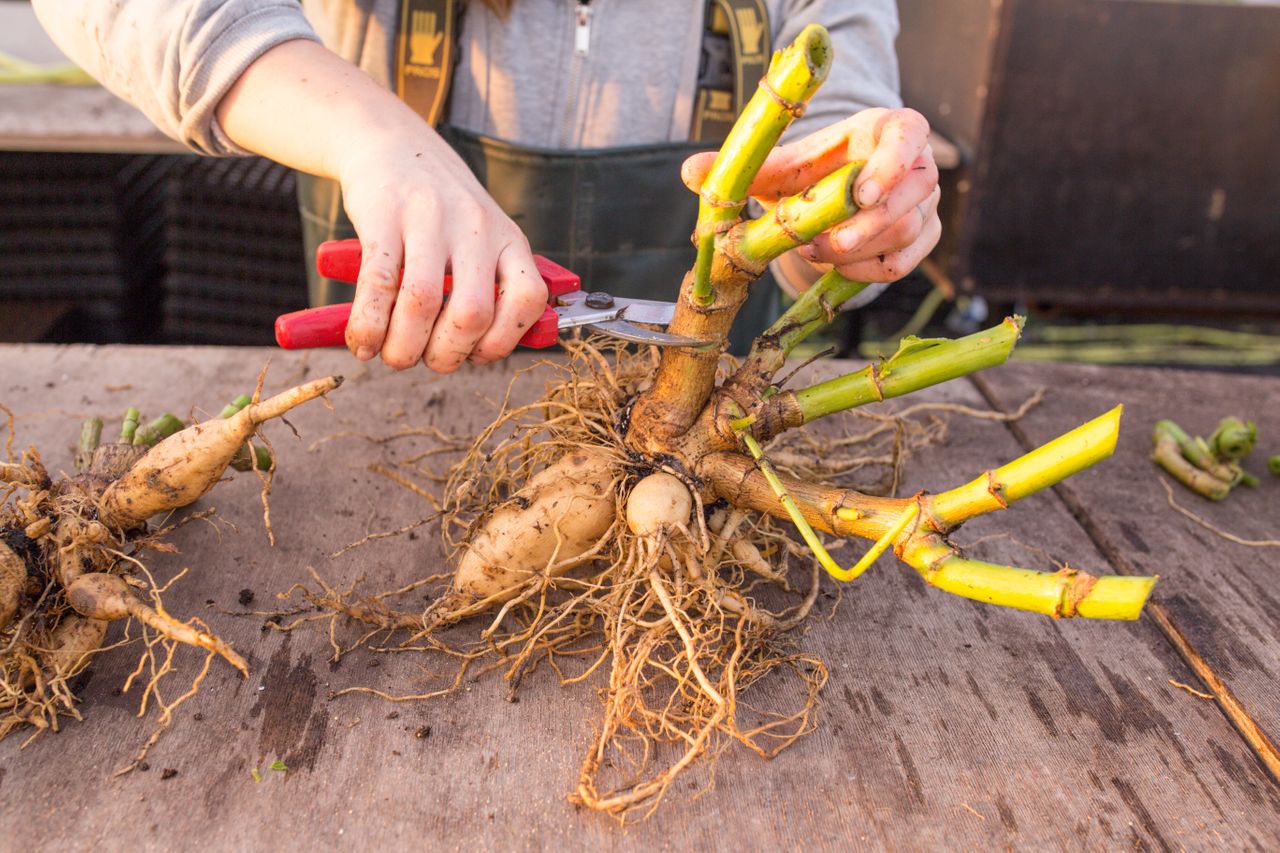
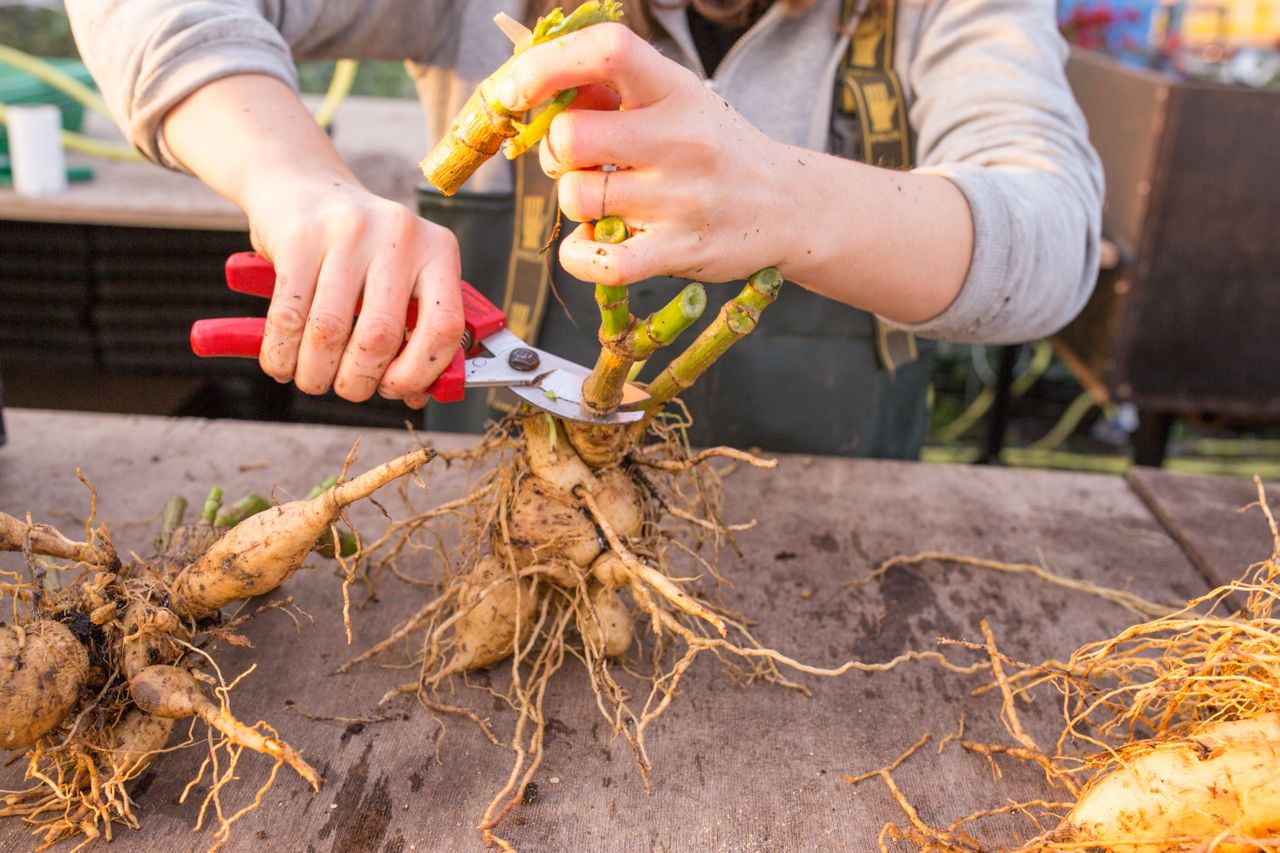
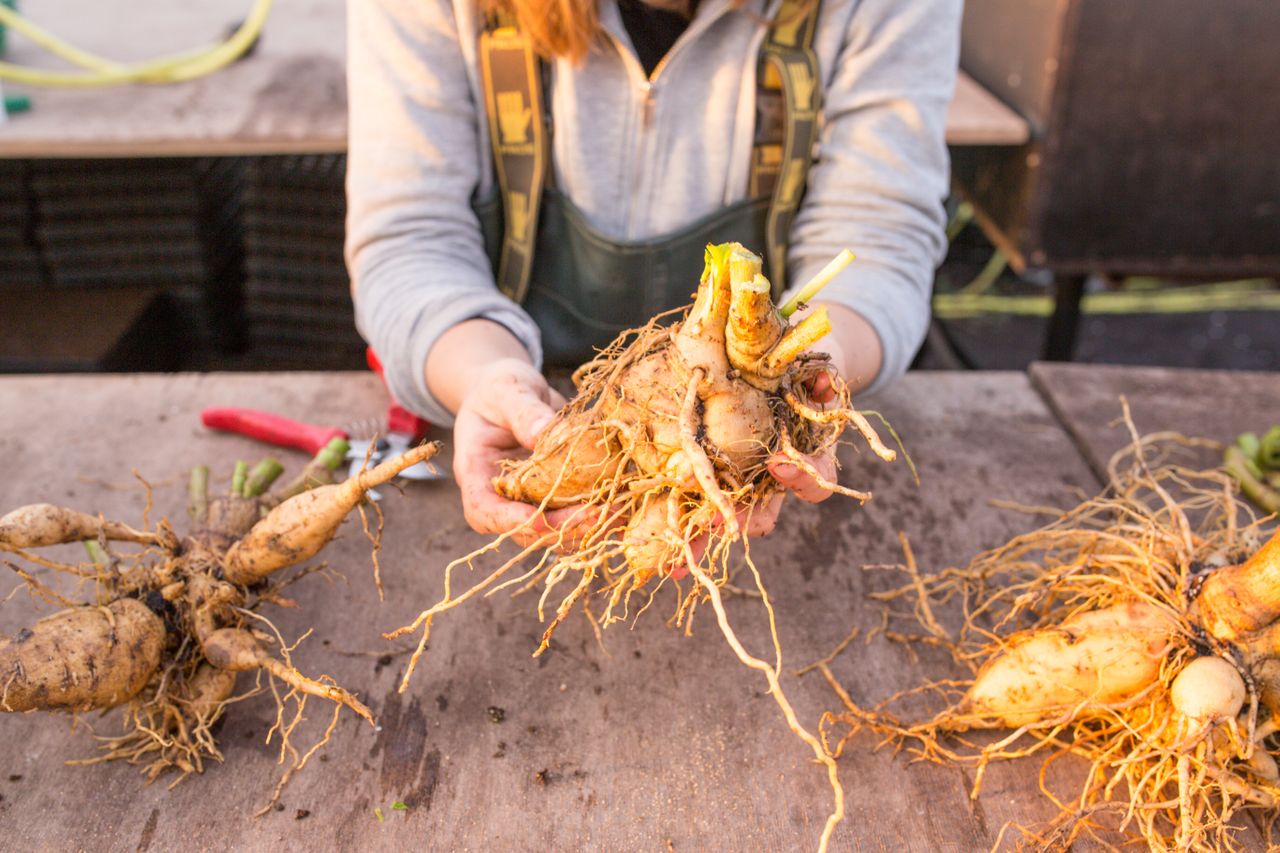
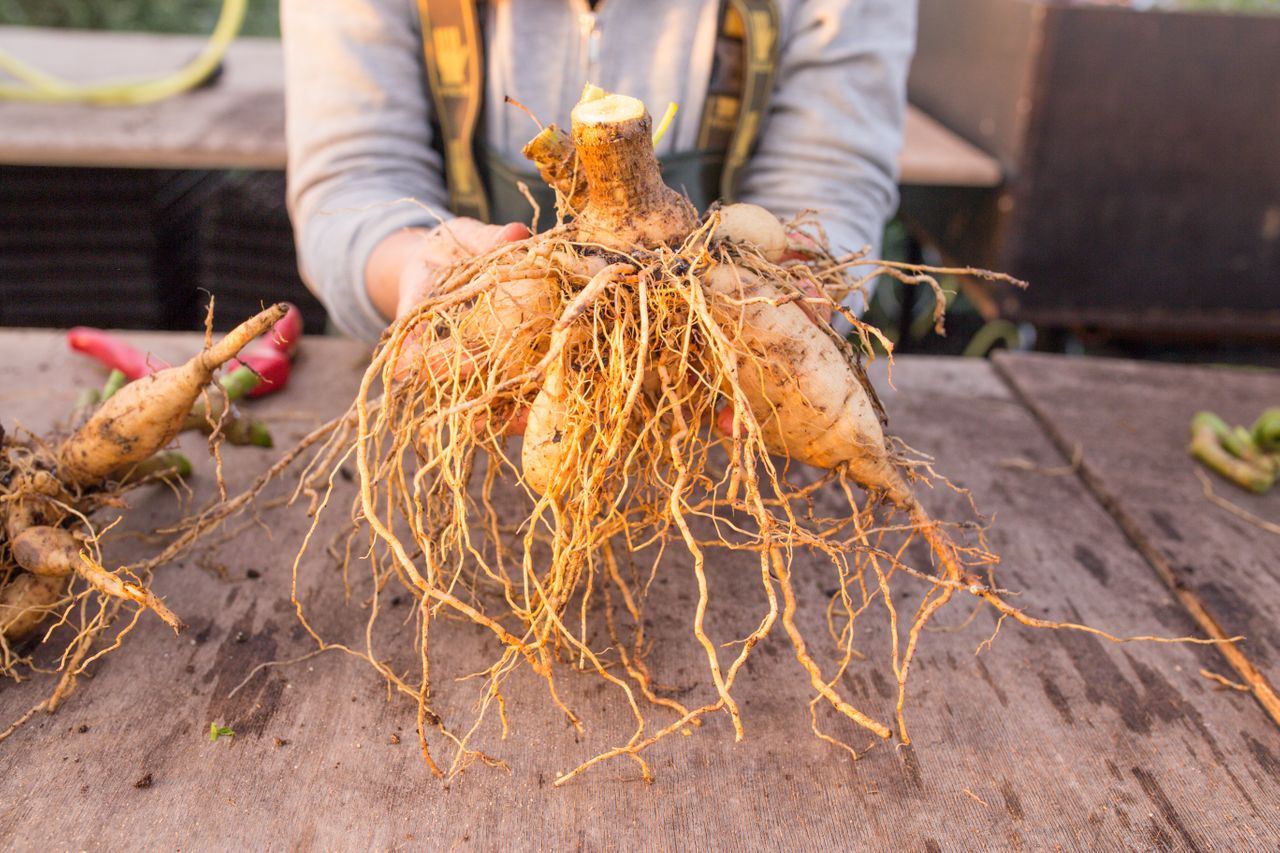
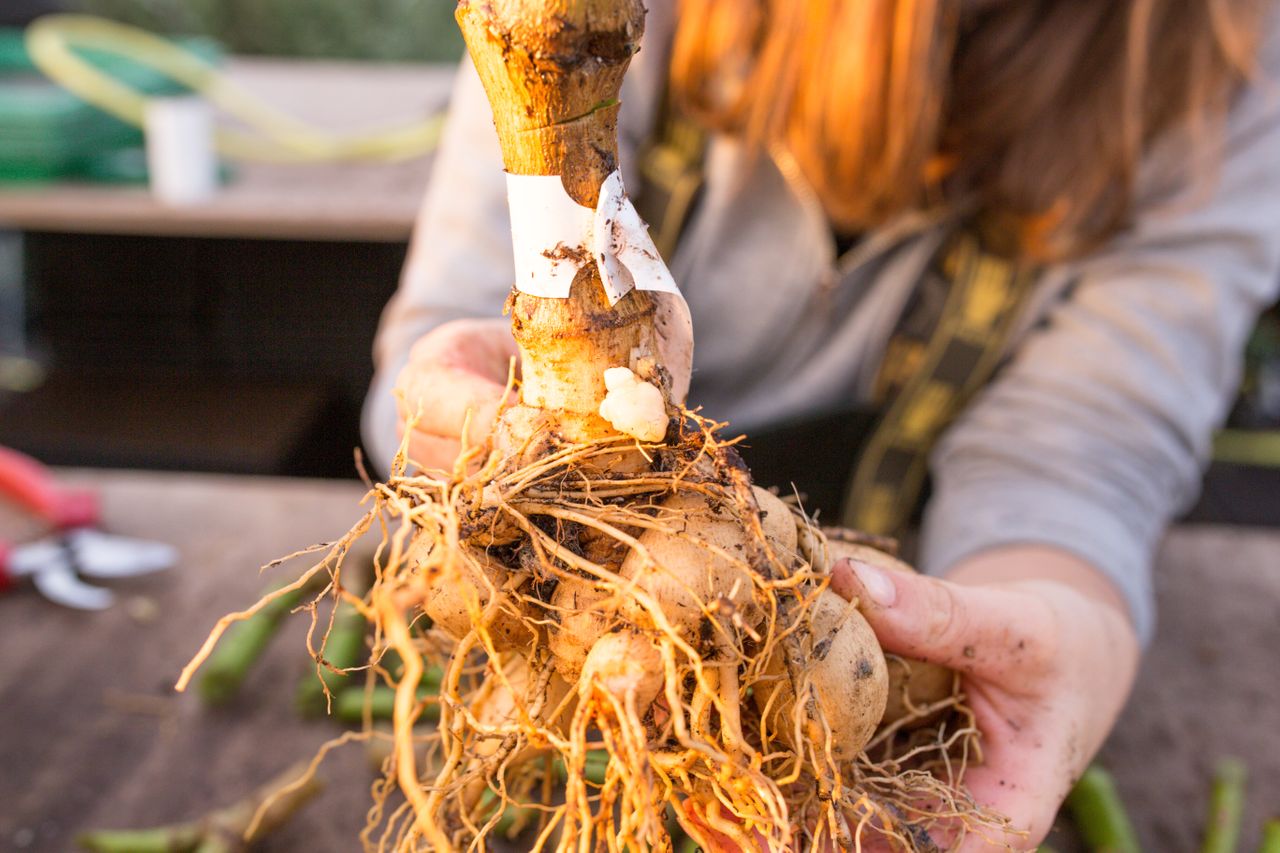
Now trim the stems — leaving 4–8 cm above the tuber is sufficient, there's no need for longer stems. They would just take up space during storage and pose a risk of rotting.
It is not advisable to trim the roots or other parts of the tuber; the fewer cuts, the lower the risk of infection. So, leave the tuber nice and hairy, and ideally, do not make any more cuts just before storage.
Crown gall
There is one thing you need to be especially careful about: crown gall.
If you notice any tumor, small growth, or swelling on the tuber that resembles a cauliflower head, it is crown gall and the tuber must be immediately disposed of—toss it in the trash, not in the compost. On the farm, we call these brains or cauliflower, and such tubers go straight into the trash.
If you do not dispose of the tuber, you risk the bacteria spreading across your entire garden. It spreads through infected plant material and, over short distances, can also be spread by rain, irrigation or soil water, soil, soil animals, and also by machinery.
The bacteria (Rhizobium radiobacter) overwinter mainly in tumors and in the soil. It enters the plant at the site of various injuries (mechanical, animal, frost-related, using infected grafts, or after hail). During the growing season, the incubation period is about 8–15 days. The pathogen has the ability to persist in the plant's vascular system, migrate through it, and thus give rise to so-called secondary tumors, which form at a certain distance from the original site of injury.
Crown gall most often occurs on the root collar and roots. New tumors are spherical, and their surface is whitish, smooth, and soft. Gradually, the tumors enlarge, harden, become woody, turn brown, and their surface becomes wrinkled. Non-specific symptoms of infection include plant stuntedness, chlorotic leaves that later die from the edges, and premature death of the plant.
You can find more about crown gall on the excellent plant health portal from ÚKZÚZ.
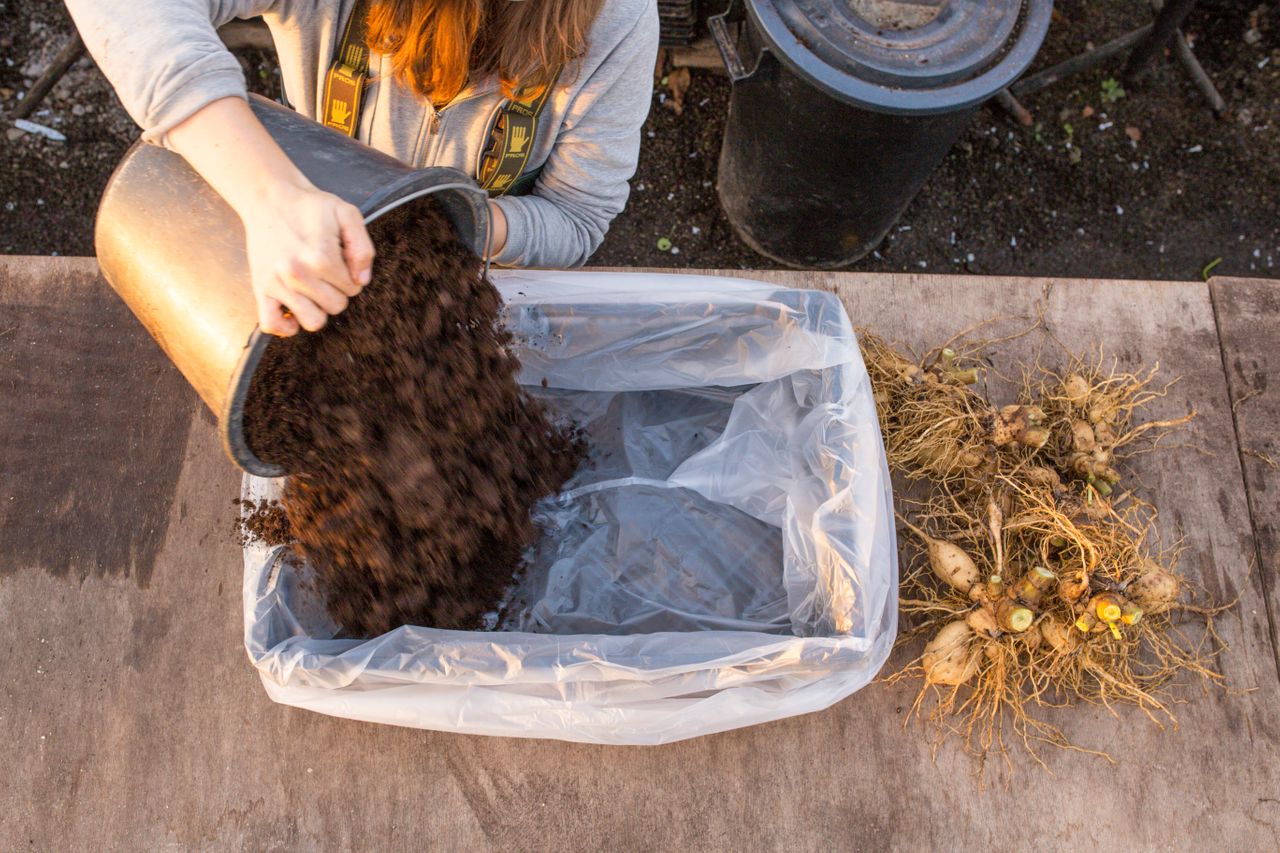
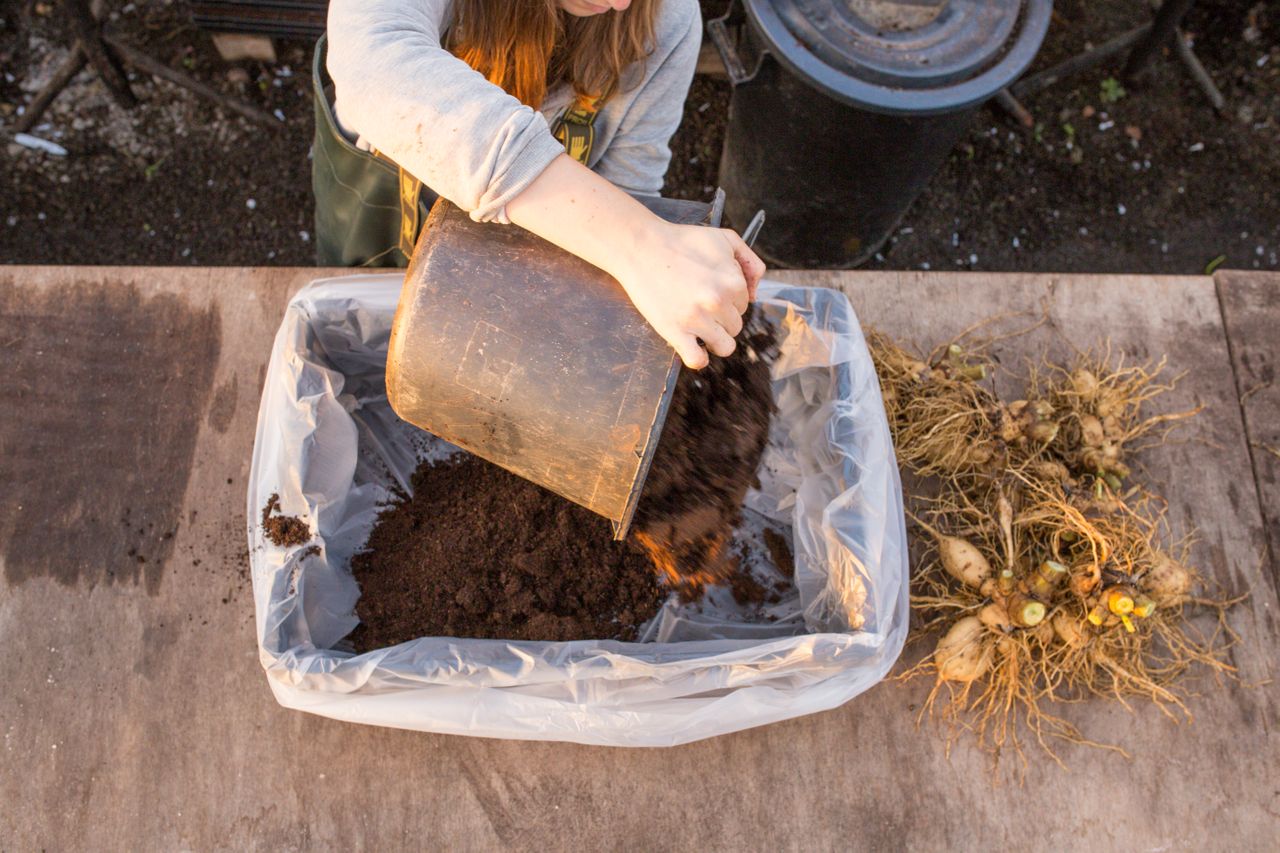
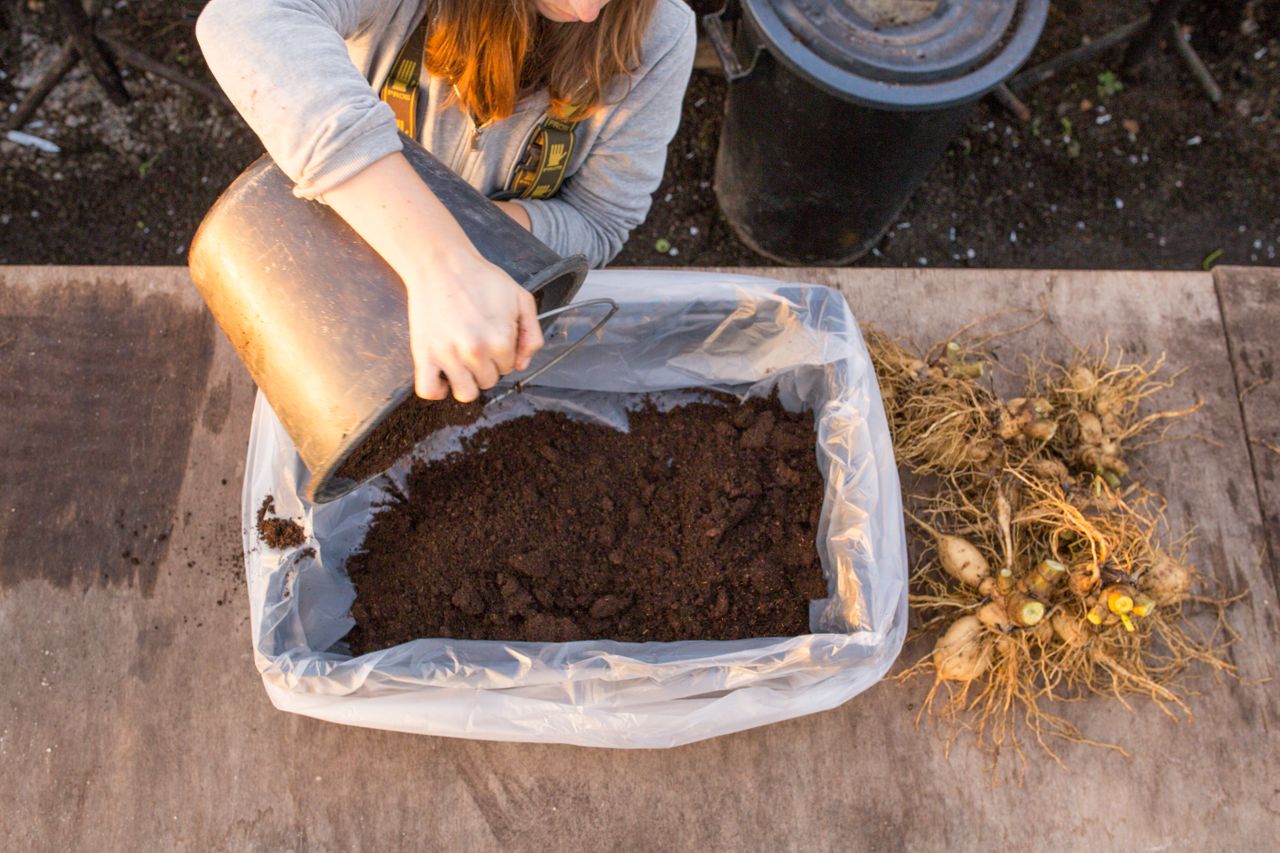
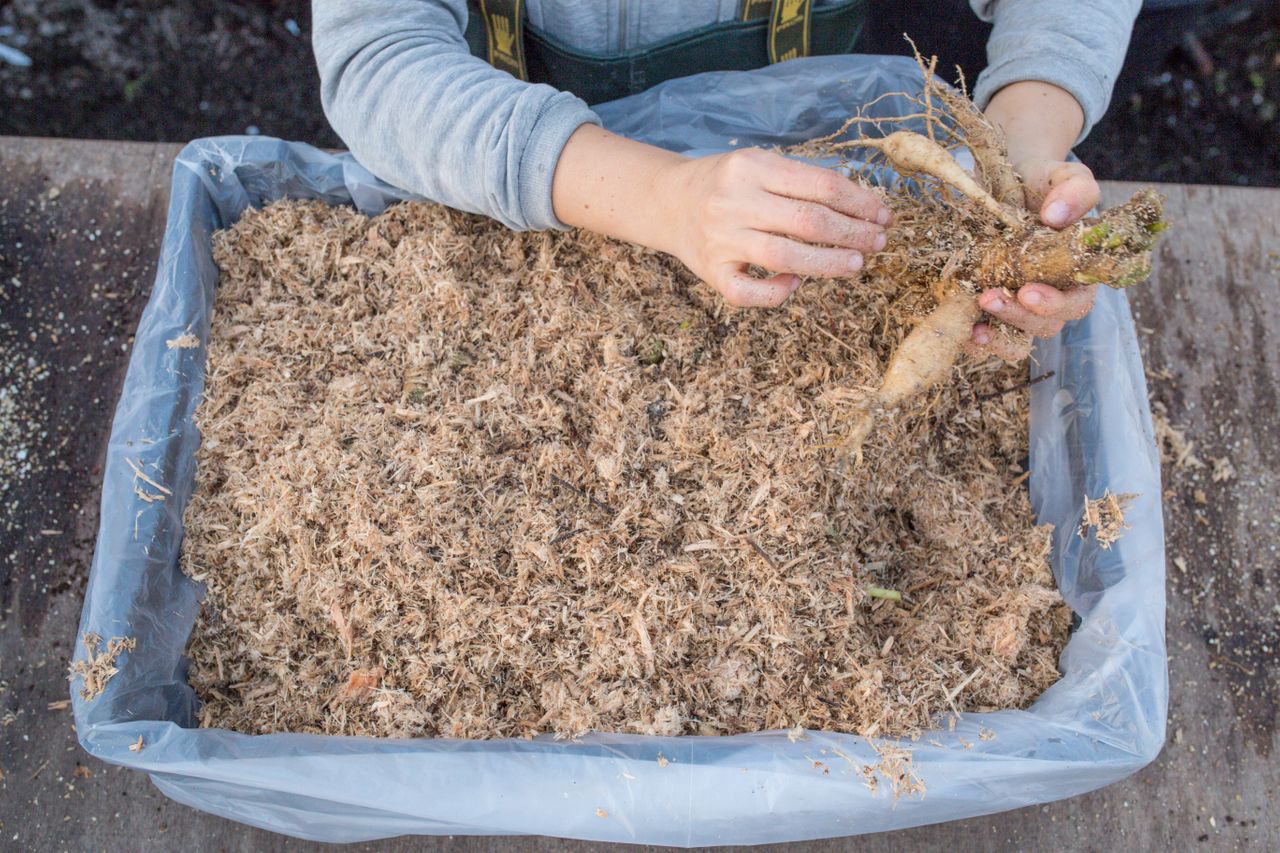
Pour a layer of peat onto the bottom of the crate. The peat prevents the tubers from drying out completely and simultaneously wicks away excess moisture, meaning they won't start to mold.
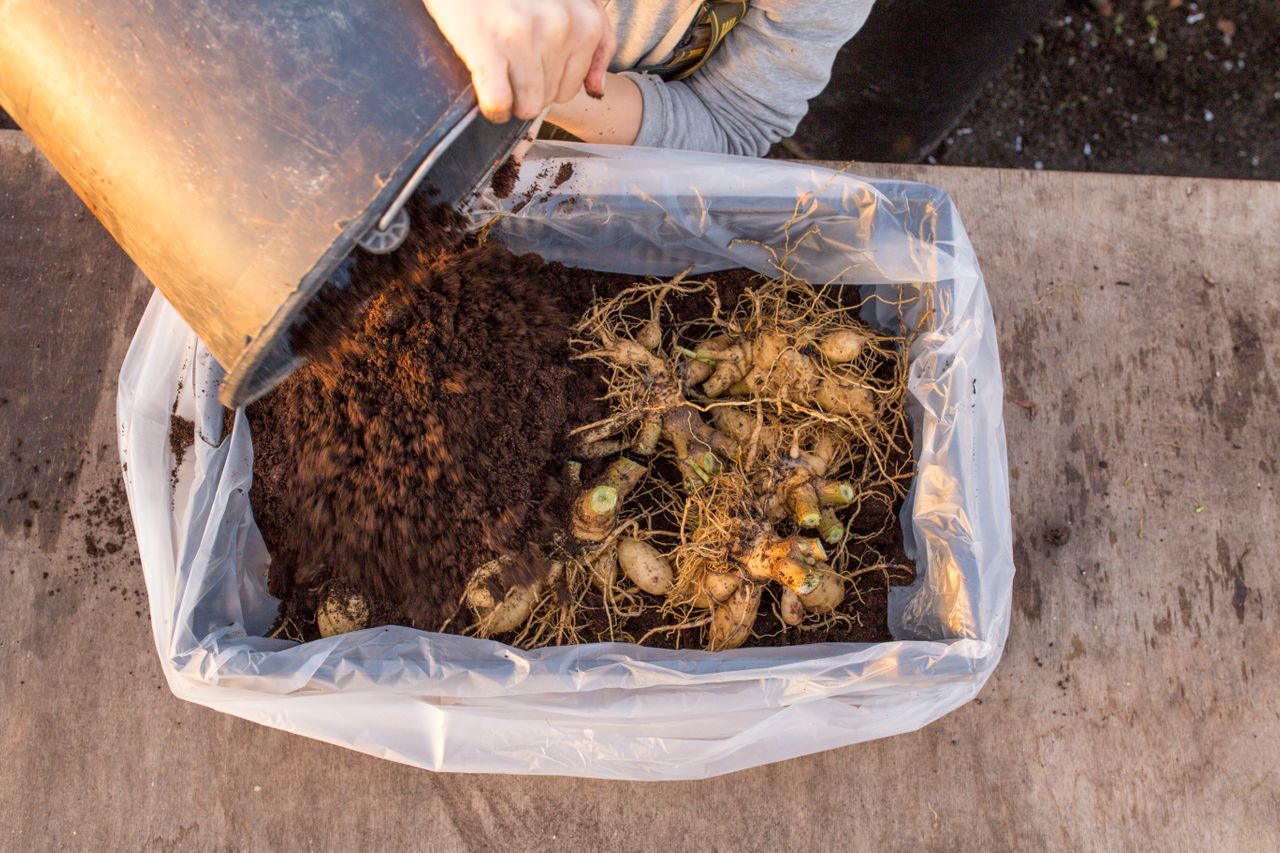
Arrange the dahlias, filling the whole crate; they can touch each other, and it is not a problem to store tubers upside down to fill space. It is a bit like a game of Tetris.
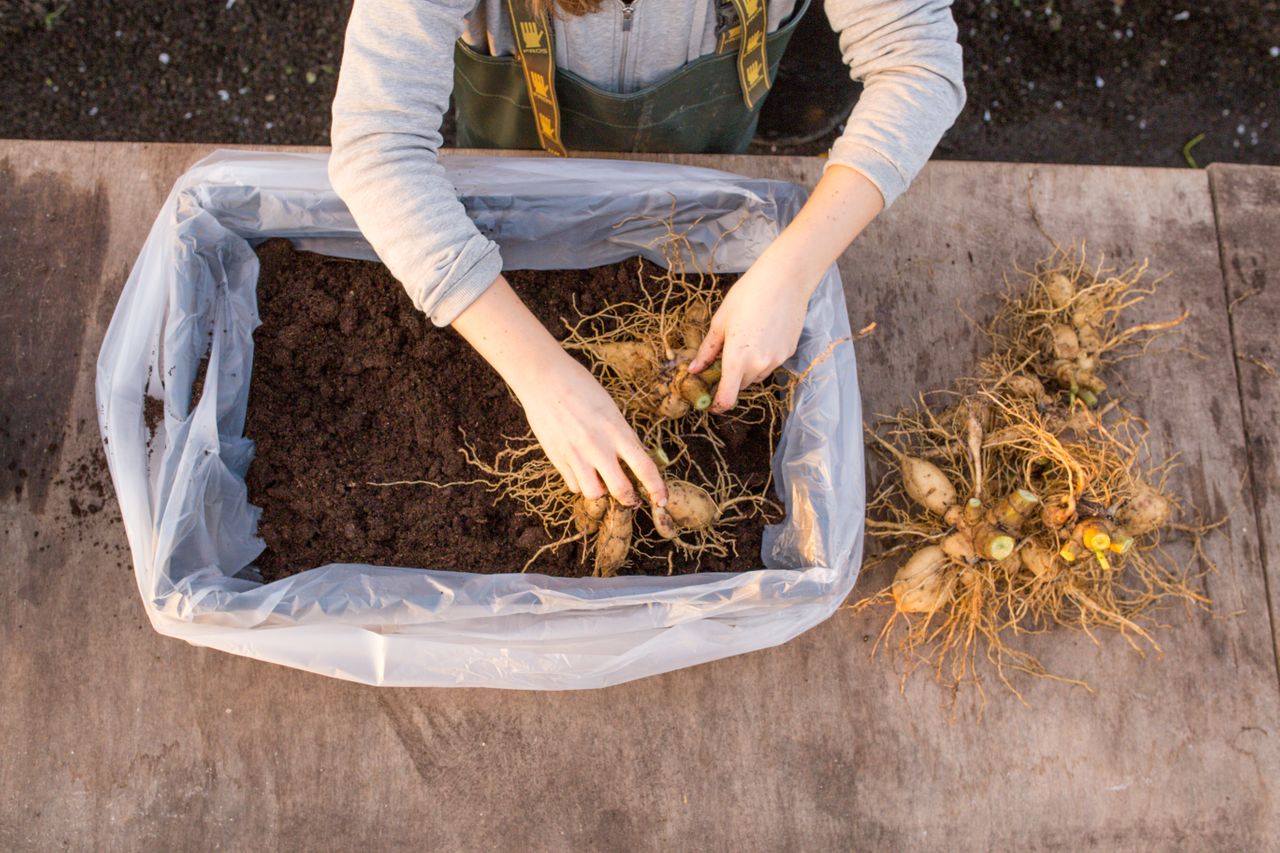
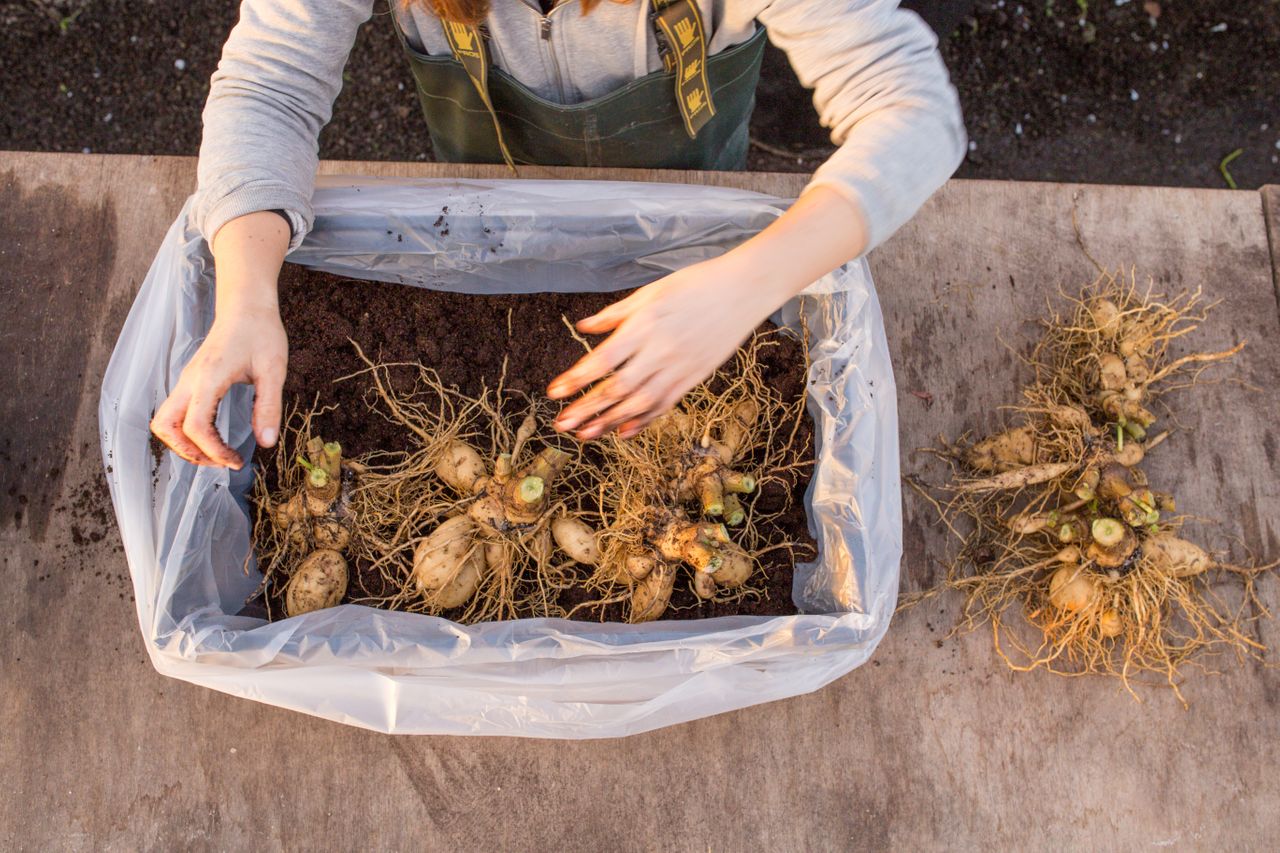
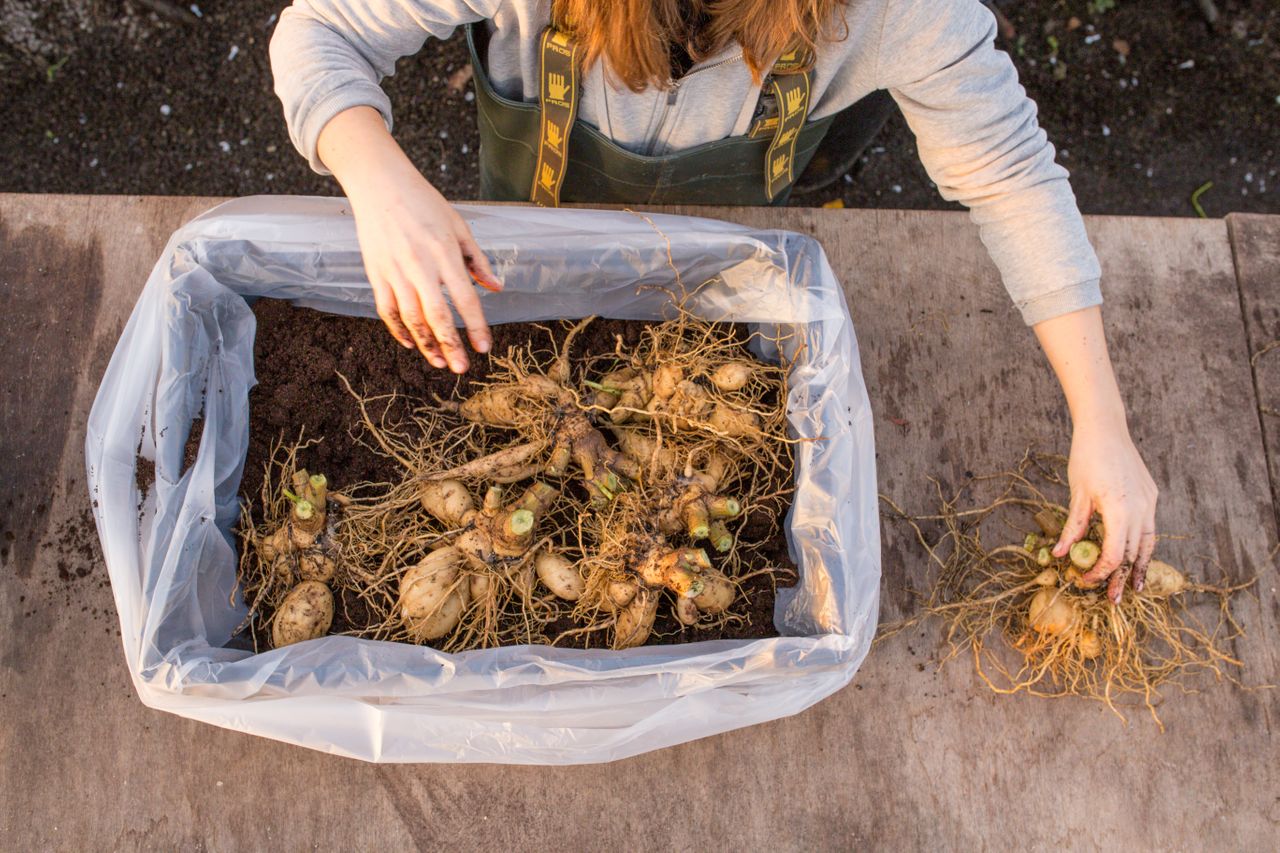
Once you have the dahlias arranged, cover them with peat. All tubers should be covered, with nothing peeking out. Shake the crate to fill in all the gaps, and add more peat if necessary.
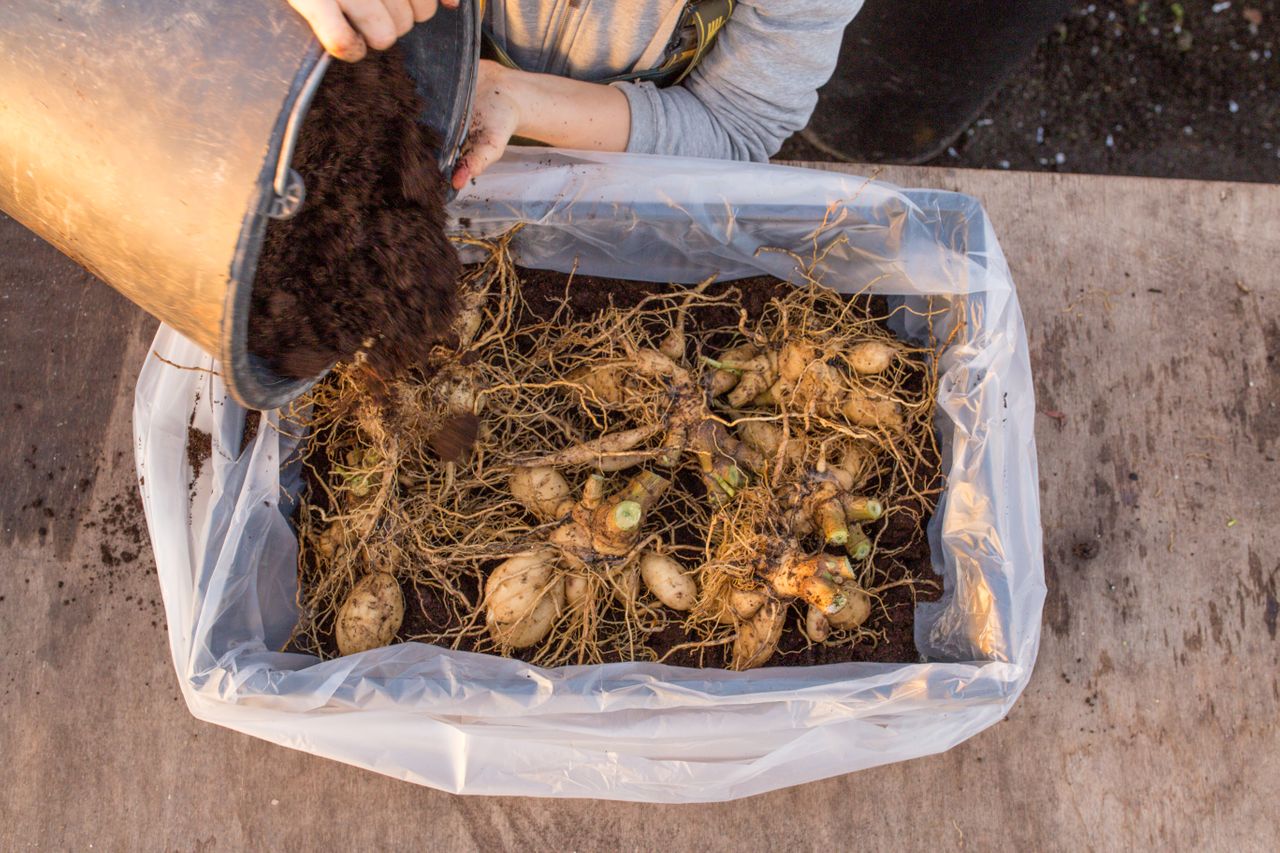
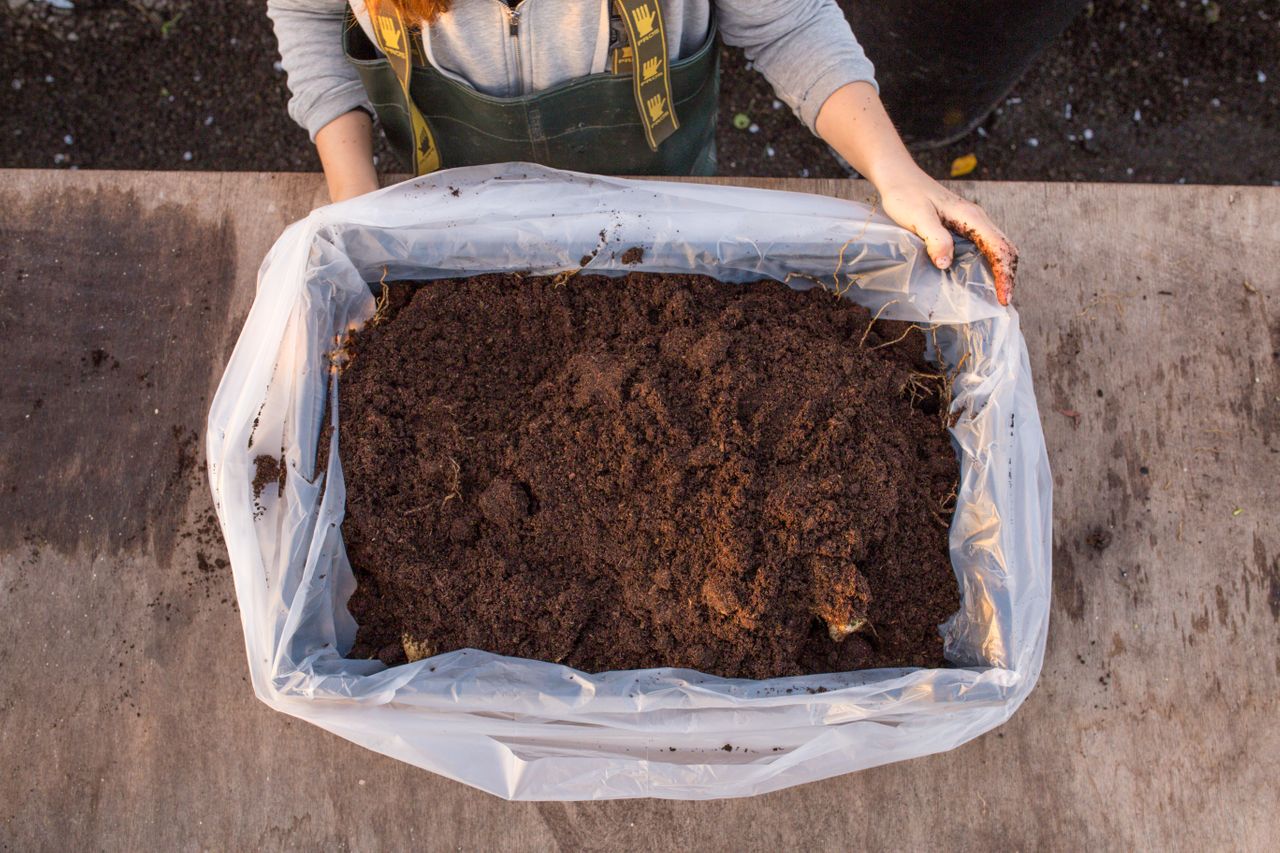
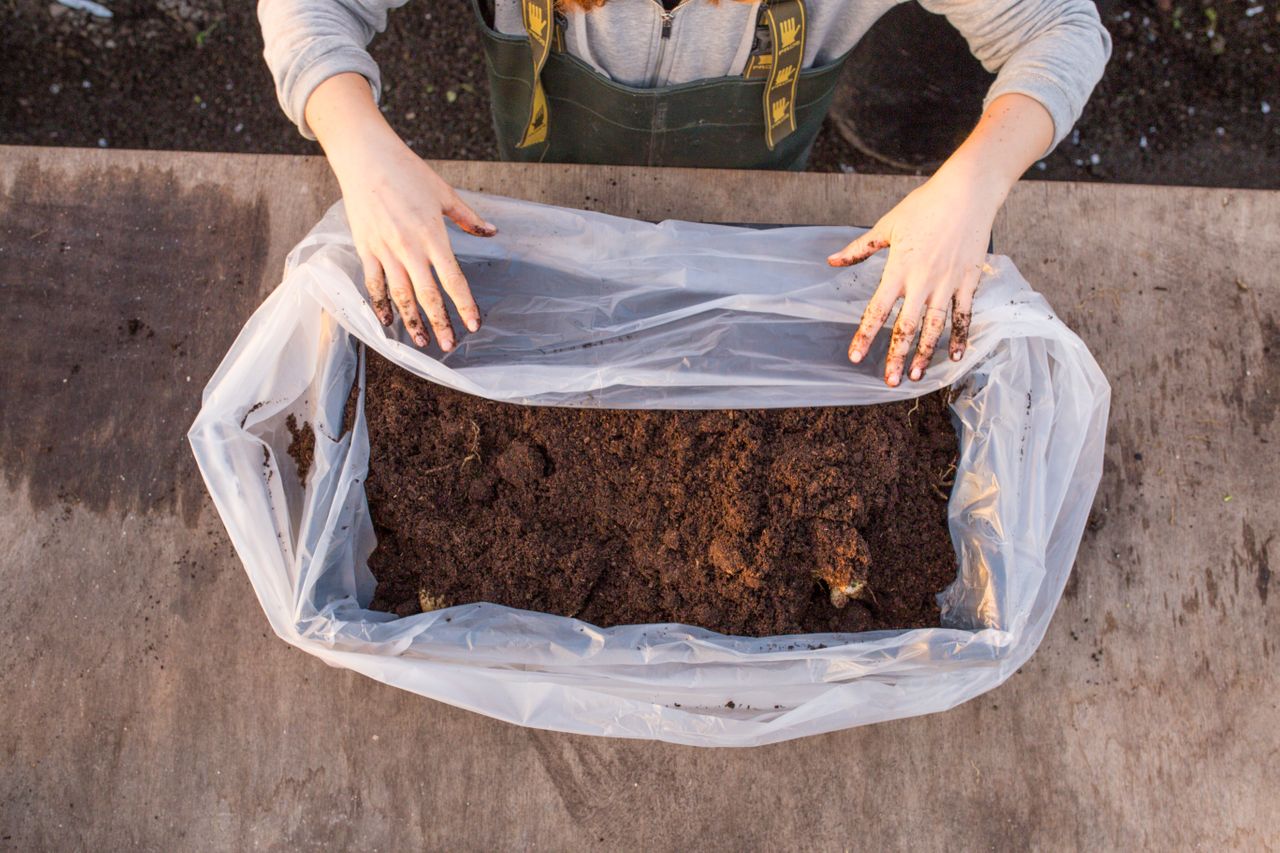
Then it is good to lightly cover the top with plastic. Leave a gap for excess moisture to escape. It is not a problem to leave the crate open like this either.
When you close the crate completely, the dahlias will stew in the plastic and may start to mold. It is therefore important that excess moisture has a way to escape.
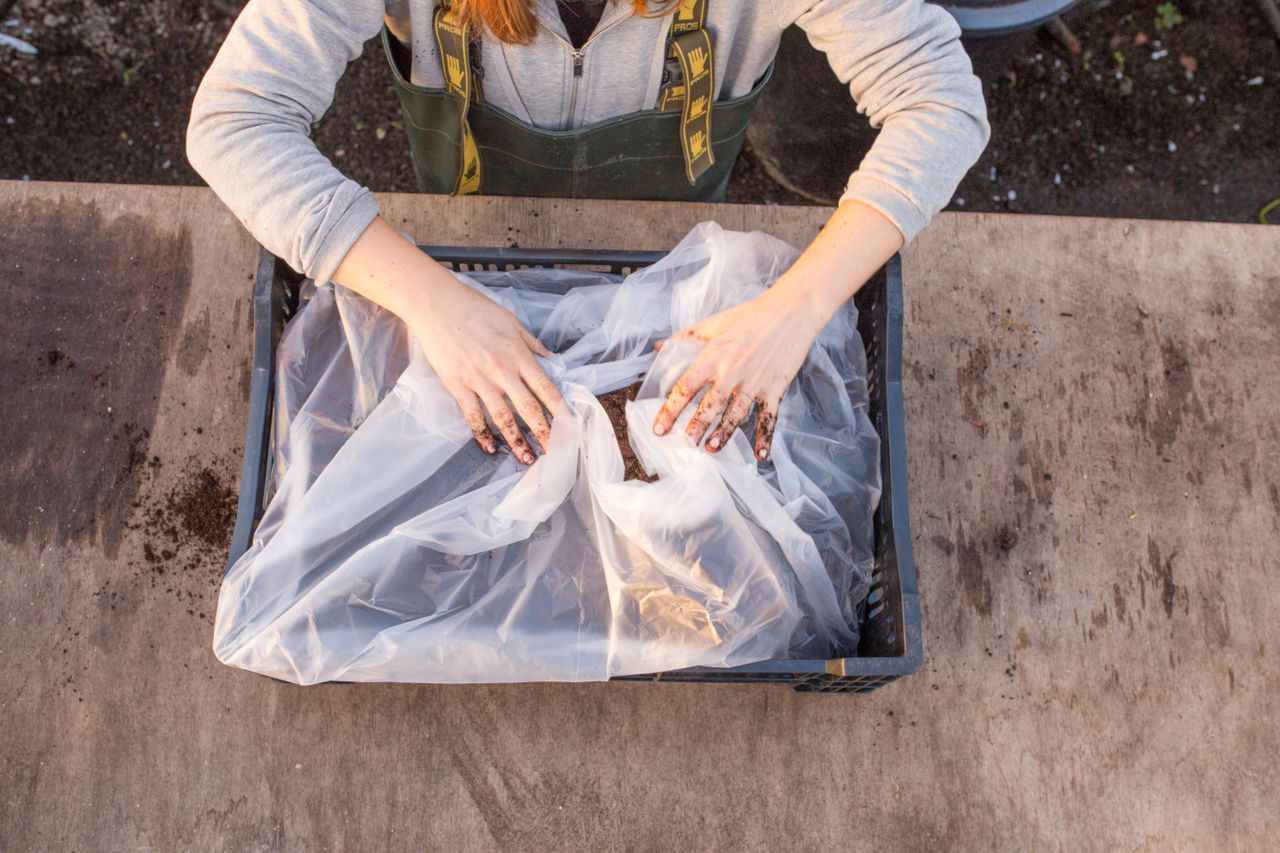
Store the packed crate in a place that does not freeze and where the temperature is between 3 °C and 8 °C. Ideally, a garage, cellar, or a cooler hallway. Light does not play a significant role since we have the tubers covered in peat.
During the winter, it is good to check on the dahlias—take them out once every 14 days and inspect them to see if mold is starting to grow anywhere. If necessary, trim away any moldy spots to prevent it from spreading.
Storing dahlias is not an easy task. Definitely do not expect that the beauties you stored for the winter will be in the same condition in the spring. But the main thing is to give them a chance; often even the worst-looking tubers start to sprout again.
Alternatives to peat
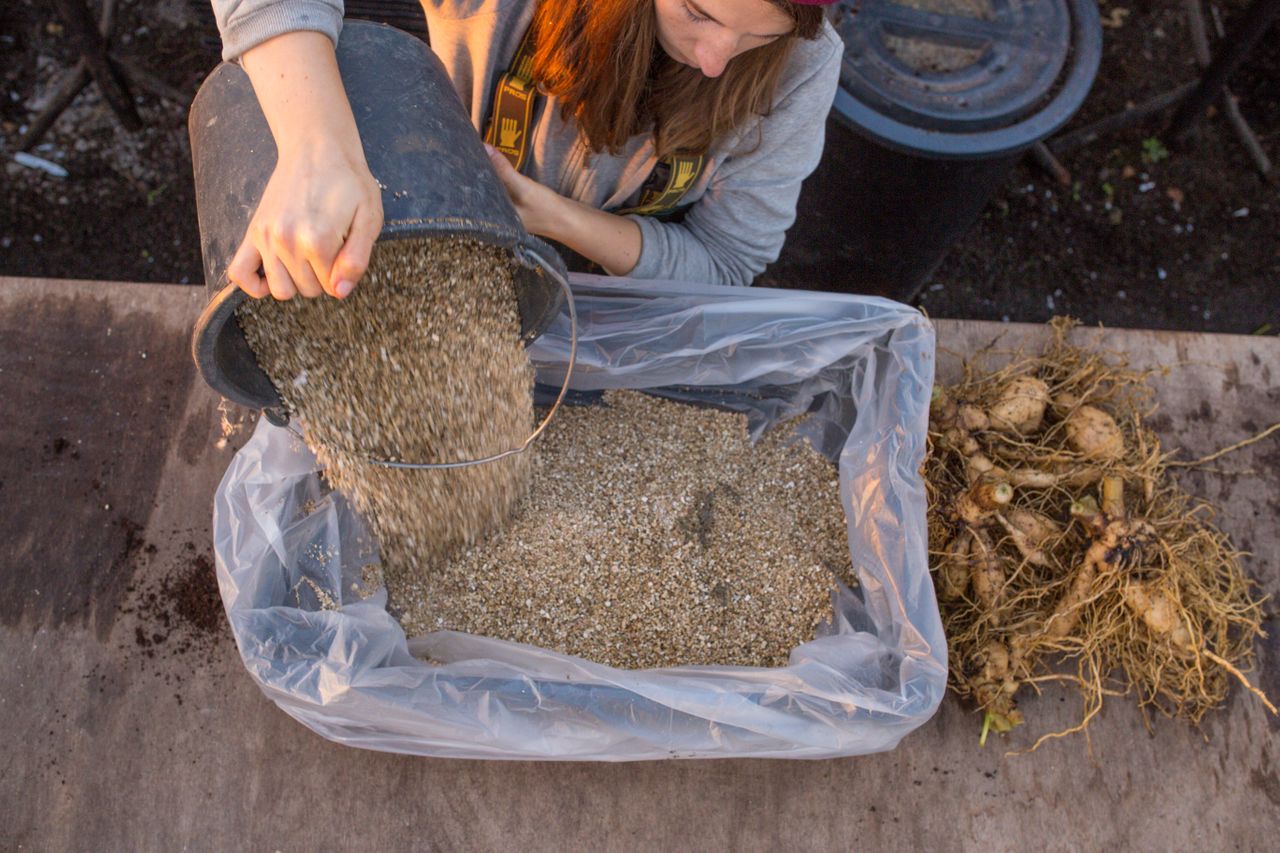
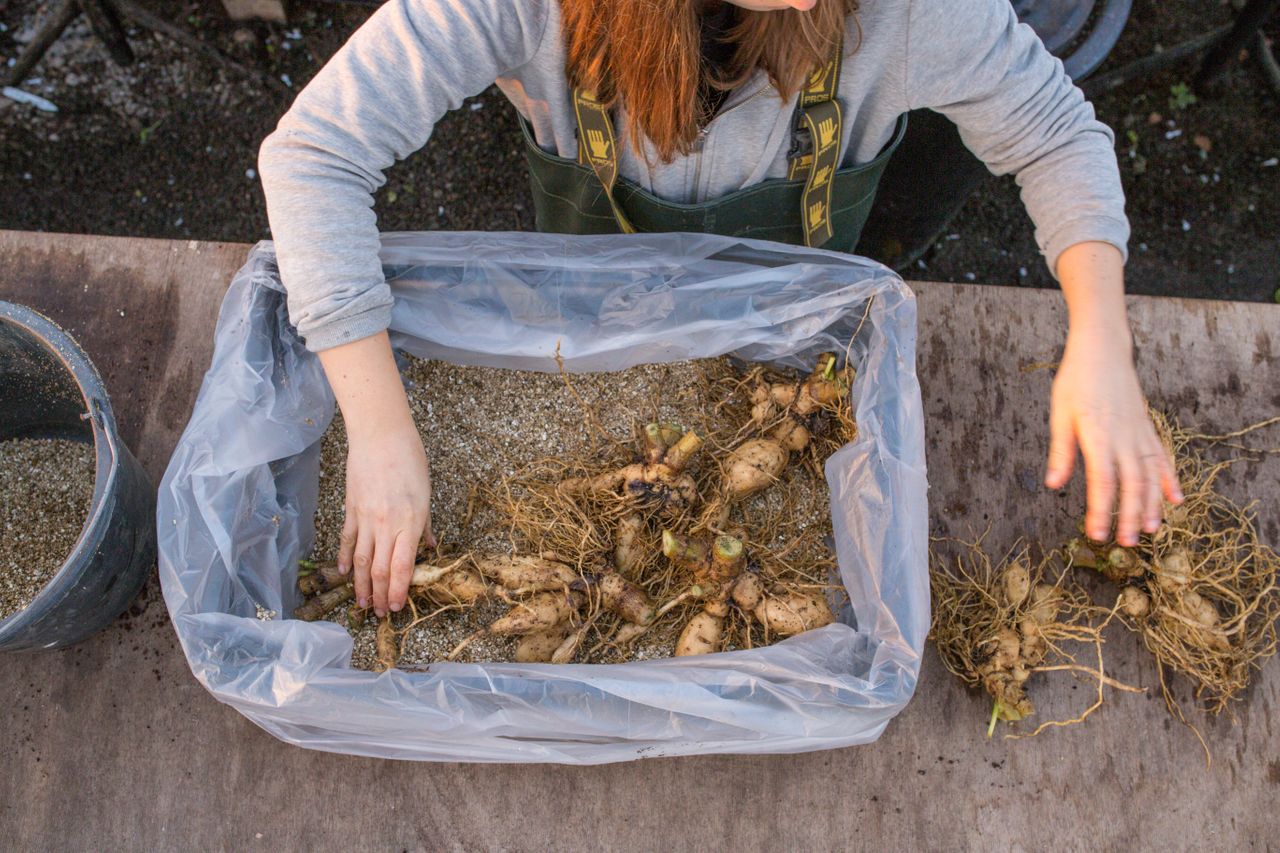
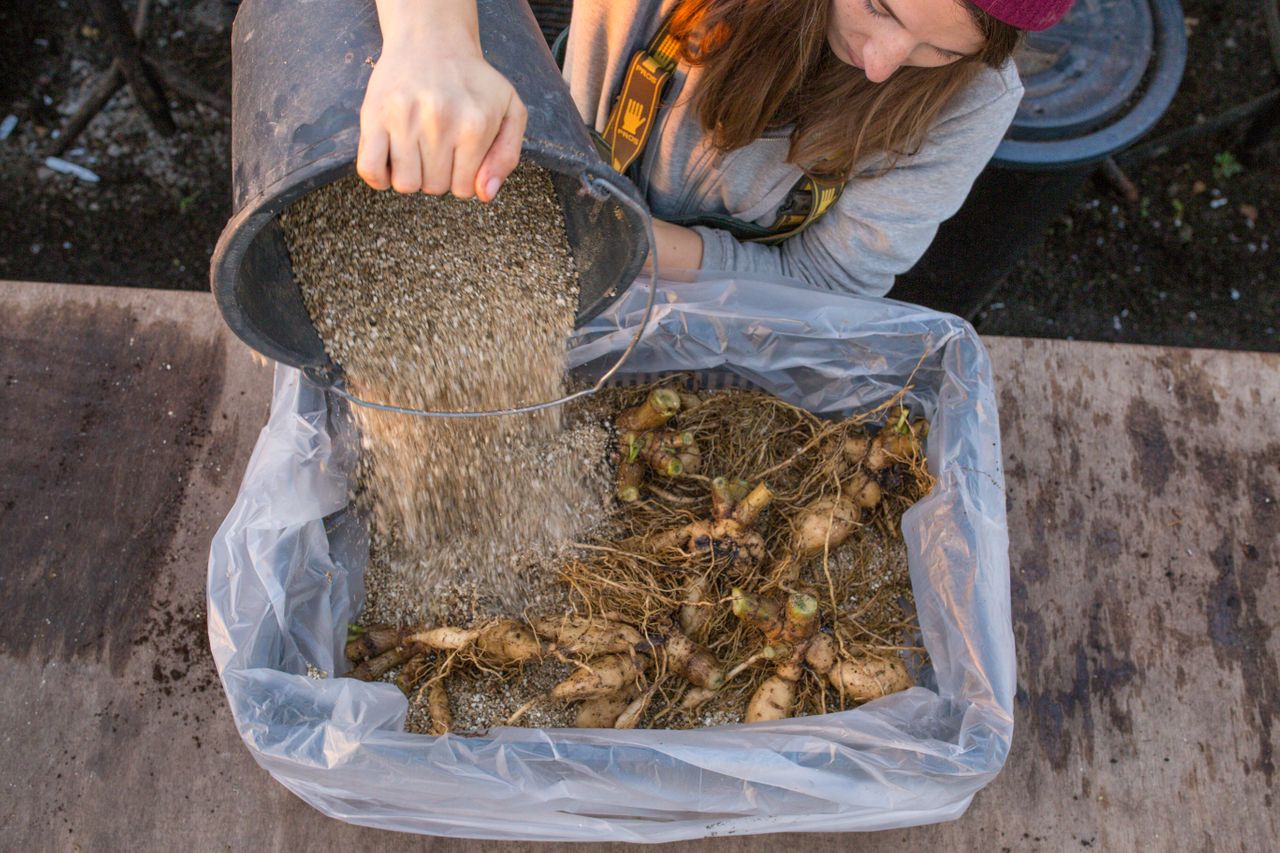
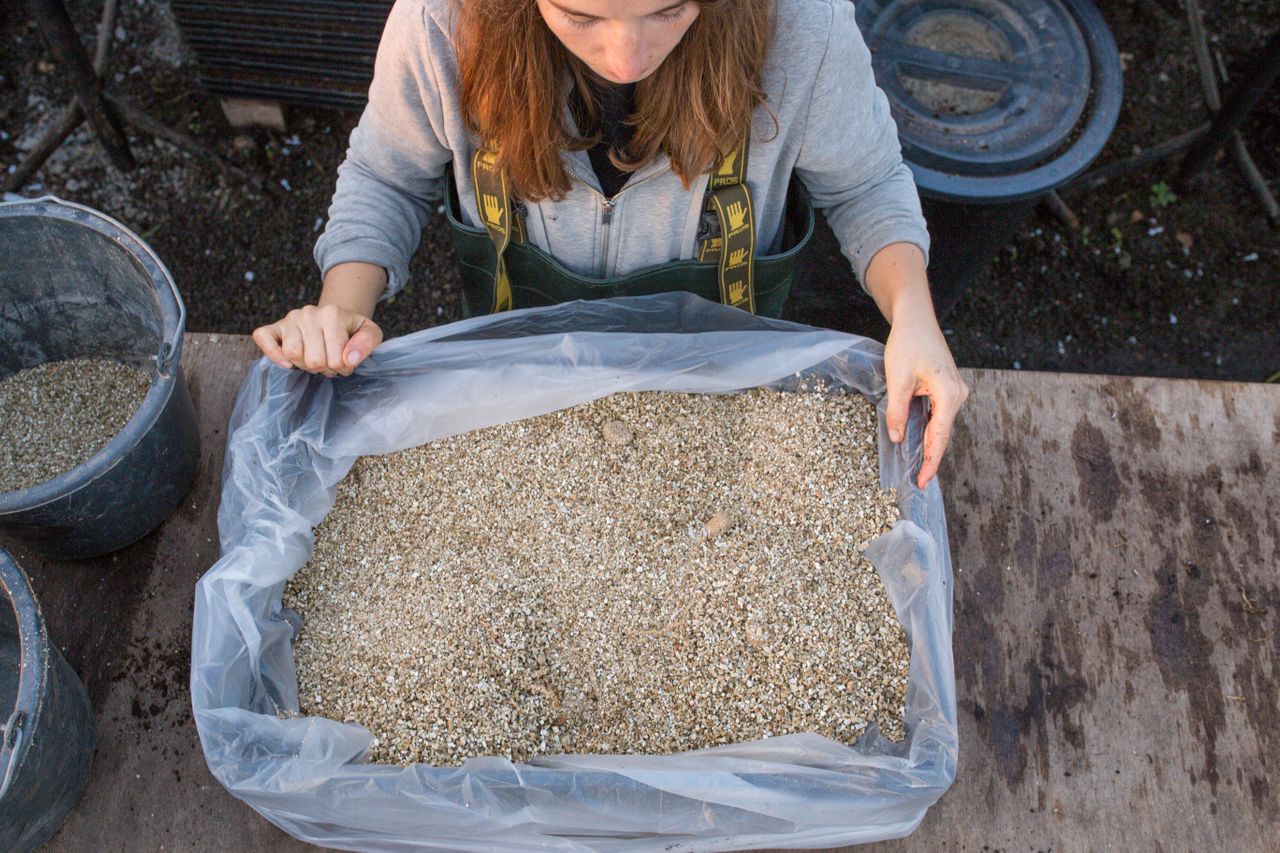
Vermiculite
If you don't want to store dahlias in peat, a (more expensive) alternative is vermiculite—a natural mineral, clean, odorless, and, most importantly, sterile. You can purchase packs of vermiculite directly from the manufacturer, for example at grena.cz.
Sawdust
Another alternative to peat, or vermiculite, can be ordinary sawdust. Again, it fulfills the same function—it prevents the tubers from drying out while simultaneously wicking away excess moisture.
Nevíte si rady?
Napište nám na kvet@loukykvet.cz nebo přes Facebook, rádi pomůžeme.


