


Zinnia elegans
Zinnia Princess Mix
Připravujeme
150 seeds
Attracts pollinators 🐝
Cover seeds
Difficulty
Direct sowing
Diseases
Edible
Flower color
Flower color: Shade
Flower size
Fragrant (aromatic) 👃
Germination temperature
Germination time
Height
Moisture
Pelleted seeds
Pinching
Poisonous
Position
Pre-cultivation period
Seed count
Self-seeding
Soil
Spacing
Species
Suitable for cutting
Suitable for drying
Support
Transplanting
Recommended products

Zinnia elegans
Zinnia Queen Lime Red

Callistephus chinensis
China aster Raspberry Season Mix

Zinnia elegans
Zinnia Oklahoma Salmon

Cosmos bipinnatus
Cosmos Double Click Bicolor Pink

Cosmos bipinnatus
Cosmos Apricotta

Zinnia elegans
Zinnia Benary’s Giant Lime

Cosmos bipinnatus
Cosmos Cupcakes Blush

Zinnia elegans
Zinnia Oklahoma Pink

Cosmos bipinnatus
Cosmos Cupcakes White

Zinnia elegans
Zinnia Cresto Cream

Cosmos bipinnatus
Cosmos Sea Shells

Helianthus annuus
Sunflower ProCut White Lite

Cosmos bipinnatus
Cosmos Double Click Snow Puff

Limonium sinuatum
Statice QIS Pastel

Matthiola incana
Stock StoX Sweetbar Mix


Cosmos bipinnatus
Cosmos Double Click Cranberries

Zinnia elegans
Zinnia Super Cactus Burpee Rose


Callistephus chinensis
China aster Vanilla & Snow Mix

Helichrysum bracteatum
Strawflower Silvery Rose


Cosmos bipinnatus
Cosmos Apricot Lemonade

Orlaya grandiflora
Orlaya White Finch

Zinnia elegans
Zinnia Queen Lime Orange

Zinnia elegans
Zinnia Cresto Peachy Pink

Cosmos bipinnatus
Cosmos Double Click Rose BonBon

Zinnia elegans
Zinnia Queen Lime Blotch
Cultivation
WARNING For an even representation of all colors in the mix, we always recommend sowing the entire packet of seeds!
Zinnias are not frost-hardy and do not like low temperatures, so we recommend not rushing the sowing. More expensive Zinnia types (Zinderella, Cupcakes, Queen...) are better started indoors in a seed tray and then transplanted into beds; cheaper types (Super Yoga, Cresto...) can be sown straight into the bed.
In both cases, however, only after the last frosts (mid-May). Really wait until the risk of frost passes and it warms up a bit. Low temperatures just stress Zinnias unnecessarily and they won't budge for the following weeks. At temperatures below 10 °C, Zinnia leaves just turn yellow. So we learned not to rush with Zinnias and transplant them outside as late as late May/early June.
STARTING INDOORS
For starting in a seed tray, sow 1 seed per cell and cover with 2 - 3 cm of substrate. We recommend choosing the largest seed tray possible; we use a 60-cell tray because Zinnias are very sensitive regarding their root ball, so give them plenty of space.
With Zinnias, definitely do not delay transplanting; ideally, 4 - 5 weeks from sowing, pop them into the bed. If you delay transplanting and let seedlings overgrow, you will disturb the root ball during transplanting and this shock can cause a double-flowered plant to revert to a single one.
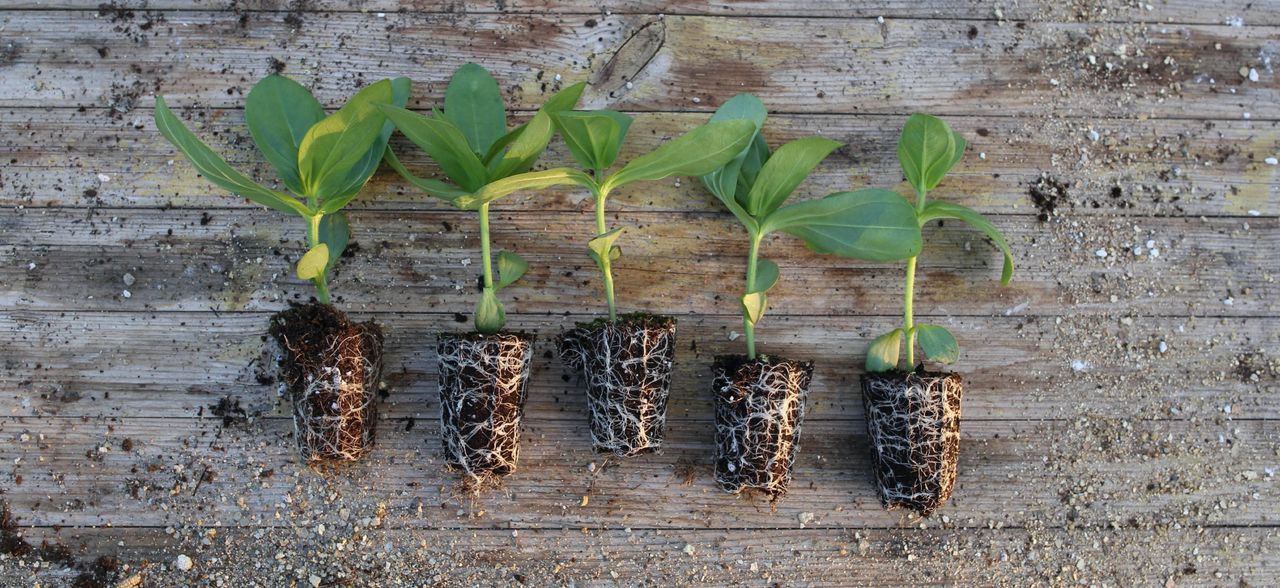
PINCHING
Pinching Zinnias promotes branching and ultimately creates a much denser plant, from which you will also harvest more stems. To save work, pinch Zinnias right in the seed tray and only then transplant.
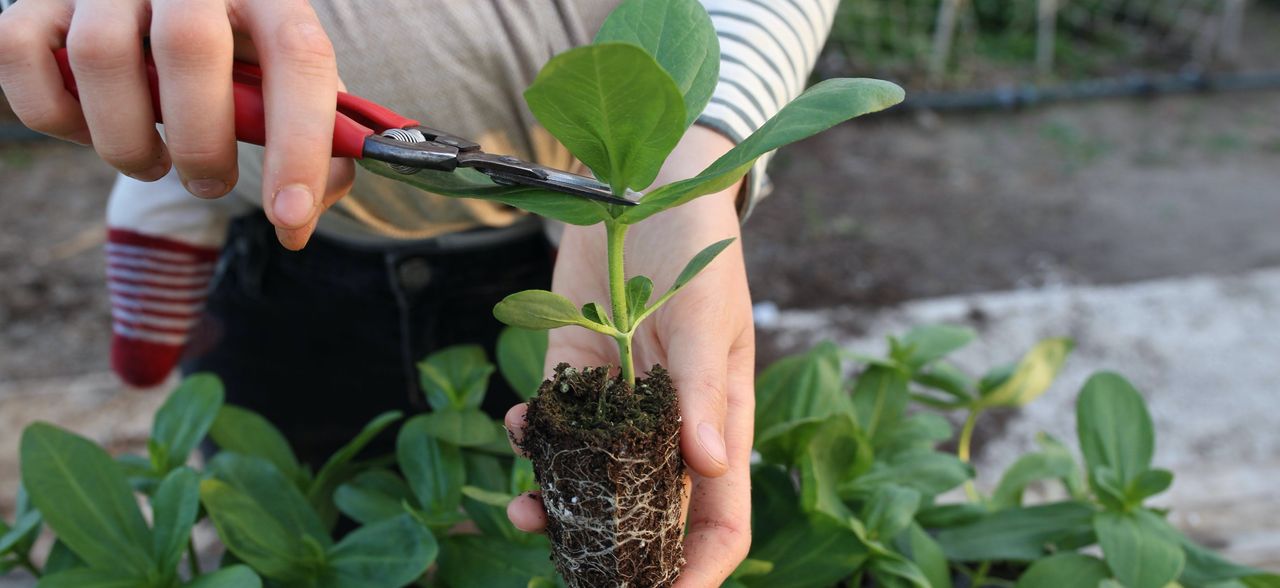
SPACING
We plant Zinnias in the bed at a spacing of 20 cm apart. Do not try to plant Zinnias closer together, as you then increase the risk of fungal diseases.
Choose a spot with the most sun possible for Zinnias. Plant in loamy, sandy, humous soil with good drainage.
If one universal piece of advice applies to Zinnias, it is — try to avoid any stress. Low temperatures, disturbed root ball, or irregular watering, or few nutrients, so don't forget to fertilize regularly.
SUPPORT
We recommend support; it can be netting that the Zinnias will grow through or just twine around the perimeter of the bed.
The information given is based on our experience, please use it as a guide only. Times may vary depending on the season, climate, location, sowing and transplanting dates and possibly also the conditions in the greenhouse/greenhouse. We always recommend testing how the plant performs in your conditions. Please do not take this as a guarantee.


Frequently
asked
questions
Basic information
Can I grow Zinnias from seeds even as a complete beginner?
Why does the instruction manual for Princess Mix recommend sowing the entire packet of seeds at once?
Planting site
What location and soil type suit Zinnias best in the garden?
Growing
Is it necessary to pinch back zinnias while they are growing?
How often should I water the zinnias in the flower bed and do I need to fertilize them?
When is the right time to transplant started seedlings outdoors into the garden?
At what distance (spacing) should I plant Zinnia in the flower bed?
Harvest
Are zinnia flowers suitable for drying, or do they have any uses in the kitchen?
Can Zinnia Princess Mix be used for cutting for vases and summer bouquets?
Sowing
How and when is the best time to sow Princess Mix zinnia seeds?
Characteristics
Do Zinnias attract bees, butterflies, and other pollinators to the garden?
How tall do these Zinnias grow and do they need any form of support?
Are Zinnias poisonous or otherwise dangerous to pets and small children?
Troubleshooting
Why have the leaves on my young Zinnia seedlings suddenly started turning yellow?
Why are my Zinnia blooming only with simple, empty flowers when I bought a double-flowered variety?
Diseases & pests
Which diseases and pests most commonly threaten Zinnia during the season?
More products in category Cínie
Zinnia elegans
Zinnia Queen Lime Red
Zinnia elegans
Zinnia Cresto Peachy Pink
Zinnia elegans
Zinnia Oklahoma Salmon

Zinnia elegans
Zinnia Cresto Peaches & Cream
Zinnia elegans
Zinnia Queen Lime Blotch
Zinnia elegans
Zinnia Queen Lime Orange
Zinnia elegans
Zinnia Super Cactus Burpee Rose
Zinnia elegans
Zinnia Benary’s Giant Lime

Zinnia elegans
Zinnia Cresto Orange

Zinnia elegans
Zinnia Benary’s Giant Salmon Rose

Zinnia elegans
Zinnia Zinderella Lilac
Zinnia elegans
Zinnia Cresto Cream
Zinnia elegans
Zinnia Oklahoma Pink

Zinnia elegans
Zinnia Oklahoma White

Zinnia elegans
Zinnia Zinderella Peach


Zinnia elegans
Zinnia Mazurkia

More products in category Semena
Cosmos bipinnatus
Cosmos Double Click Bicolor Pink
Cosmos bipinnatus
Cosmos Cupcakes Blush
Cosmos bipinnatus
Cosmos Double Click Snow Puff
Cosmos bipinnatus
Cosmos Double Click Cranberries

Daucus carota
Ornamental Carrot Dara
Cosmos bipinnatus
Cosmos Cupcakes White
Cosmos bipinnatus
Cosmos Double Click Rose BonBon

Centaurea cyanus
Cornflower Tall Double Blue Boy
Zinnia elegans
Zinnia Queen Lime Red
Cosmos bipinnatus
Cosmos Apricotta

Centaurea cyanus
Cornflower Tall Double Red Boy

Cosmos bipinnatus
Cosmos Rubenza

Saponaria vaccaria
Vaccaria Pink Beauty

Nigella damascena
Nigella Miss Jekyll Sky Blue

Centaurea cyanus
Cornflower Tall Double Pinkie
Zinnia elegans
Zinnia Cresto Peachy Pink
Helianthus annuus
Sunflower ProCut White Lite

Delphinium consolida
Larkspur QIS White
Limonium sinuatum
Statice QIS Pastel

Centaurea cyanus


