
Matthiola incana
Stock Katz Rose Bright
50 seeds
100 seeds
250 seeds
1000 seeds
Cover seeds
Difficulty
Direct sowing
Diseases
Edible
Flower color
Flower color: Shade
Fragrant (aromatic) 👃
Germination temperature
Germination time
Height
Moisture
Pinching
Position
Pre-cultivation period
Seed count
Spacing
Species
Suitable for cutting
Suitable for drying
Support
Transplanting

Recommended products

Matthiola incana
Stock Katz Cherry Blossom

Matthiola incana
Stock Katz White

Cosmos bipinnatus
Cosmos Double Click Rose BonBon

Matthiola incana
Stock Katz Yellow

Cosmos bipinnatus
Cosmos Double Click Cranberries

Matthiola incana
Stock Katz Apricot

Matthiola incana
Stock Iron Cherry Blossom

Matthiola incana
Stock Katz Light Lavender

Delphinium consolida
Larkspur QIS Carmine

Limonium sinuatum
Statice QIS Pastel


Cosmos bipinnatus
Cosmos Double Click Bicolor Pink

Centaurea cyanus
Cornflower Tall Double Pinkie

Zinnia elegans
Zinnia Queen Lime Red

Zinnia elegans
Zinnia Oklahoma Salmon


Saponaria vaccaria
Vaccaria Pink Beauty


Delphinium consolida
Larkspur QIS White

Cosmos bipinnatus
Cosmos Double Click Snow Puff

Centaurea cyanus
Cornflower Tall Double Red Boy

Cosmos bipinnatus
Cosmos Cupcakes Blush

Zinnia elegans
Zinnia Oklahoma Pink

Cosmos bipinnatus
Cosmos Apricotta

Centaurea cyanus
Cornflower Tall Double Blue Boy

Helianthus annuus
Sunflower ProCut White Lite

Bupleurum rotundifolium
Bupleurum rotundifolium

Callistephus chinensis
China aster King Size Apricot

Cosmos bipinnatus
Cosmos Sea Shells

Matthiola incana
Stock Iron Rose Pink
Cultivation
INTRODUCTION
There are two most important things when growing stock.
First, even though it is summer stock, stock grows in lower temperatures (15 - 20 °C). Therefore, it blooms in spring and autumn. Growing stock during the summer is not really possible.
Second, with stock, the term double-flowered frequently appears, e.g., the Katz series is 50% double-flowered. Ultimately, this means that only 50% of the plants will be double-flowered. Seedlings can be selected, but it is a relatively complicated process and in the past, we haven't been very successful with it on the farm. Therefore, we find it best to expect that some of the stock will bloom with single flowers and to cleverly incorporate those into bouquets.
SOWING
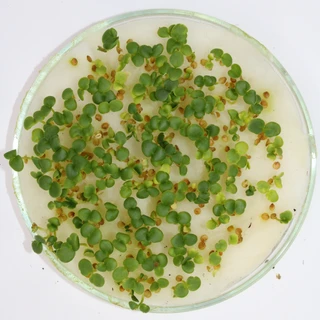
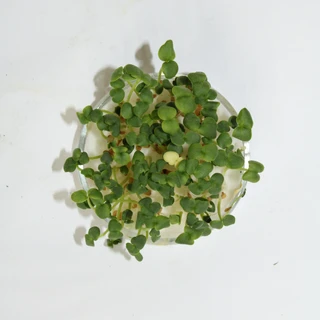
We always start stock indoors. Sow 1 seed per cell of the seed tray. Sow on the surface of the substrate and cover with a layer of vermiculite.
At a temperature of 20 - 22 °C, stock germinates in 3 - 5 days. Beware, excessively high temperatures (over 25 °C) decrease the germination rate of stock.
The stock will spend 4 - 5 weeks in the seed tray before growing into a seedling that you can plant in the garden bed.
Before transplanting, we recommend hardening off the stock seedlings. Move them outside (on a windowsill) along with the seed tray, so they are exposed to outdoor conditions. During hardening off, the seedlings will strengthen beautifully and will then tolerate transplanting better.
PINCHING
Attention, we do not pinch stock! We (currently) only offer single-stem varieties (Katz, Iron) and pinching would cause the stock to not bloom at all. Stocks are therefore grown as single-stem plants, i.e., 1 seed = 1 plant = 1 stem.
SPACING
Because stocks are grown as single stems, more intensive spacing is also used. Seedlings are planted 12 cm apart. Here, our beds are 90 cm wide, so we plant a total of 7 rows per bed, and the seedlings are 12 cm apart in the row.
GROWING
With stocks, the most important thing is to remember that they need lower temperatures (ideally 15 - 20 °C). So if you are growing stocks in a polytunnel, do not forget to ventilate regularly and try to keep the temperature below 20 °C.
Even though stock does not react to day length, higher temperatures and longer days can cause premature blooming in stock. This is also why it is demanding to grow stock in the summer. It will bloom for you but will barely be 15 cm tall.
After transplanting, water the bed thoroughly. Keep a regular watering schedule for stocks so they root properly and at the same time grow taller. Do not forget to fertilize regularly. Once the stocks start blooming, you can reduce watering.
SUPPORT
If you are a professional and growing stock for cut flowers, we recommend support, specifically a net through which the stocks will grow. Otherwise, without support, the stems may end up bent and twisted. For beautifully straight stems, netting is a must.
HARVESTING
If you grow stock for cut flowers, they are harvested with their roots. Simply pull the whole plant out of the bed.
VARIETIES
We offer a total of three series of stock that have proven themselves on our farm and we love growing them.
Stock Iron
More robust stems, more delicate, but ultimately higher quality, higher percentage of double flowers compared to the Katz series.
Stock Cheerful
Very early stock, easy to grow, we recommend it to anyone starting with growing summer stock.
Stock Katz
A great cultivar that offers a wider color palette compared to the Cheerful series. Very easy to grow, survives temperature fluctuations, and irregular watering. We recommend it for beginners.
The information given is based on our experience, please use it as a guide only. Times may vary depending on the season, climate, location, sowing and transplanting dates and possibly also the conditions in the greenhouse/greenhouse. We always recommend testing how the plant performs in your conditions. Please do not take this as a guarantee.


Collections
The product can be found in the following collections.


Playful Color Shades
Flowers in pleasant and warm shades. They will brighten up, bring into play, and enliven the garden and the bed. We composed …


Seed Collection
For Stock Lovers
A collection of our most favorite stocks! You will find simple species to grow in it like the Cheerful series or Katz series,…
More products in category Stock
Matthiola incana
Stock Katz Cherry Blossom
Matthiola incana
Stock Katz Apricot
Matthiola incana
Stock Katz White
Matthiola incana
Stock Katz Light Lavender
Matthiola incana
Stock Iron Cherry Blossom
Matthiola incana
Stock Katz Yellow


Matthiola incana
Stock Iron White

Matthiola incana
Stock Katz Lavender Blue

Matthiola incana
Stock Cheerful Yellow


Matthiola incana
Stock Iron Pink
Matthiola incana
Stock Iron Rose Pink

Matthiola incana
Stock StoX Vexta Bonbons Mix


More products in category Seeds
Cosmos bipinnatus
Cosmos Double Click Bicolor Pink
Cosmos bipinnatus
Cosmos Cupcakes Blush
Cosmos bipinnatus
Cosmos Double Click Snow Puff
Cosmos bipinnatus
Cosmos Double Click Cranberries

Daucus carota
Ornamental Carrot Dara

Cosmos bipinnatus
Cosmos Cupcakes White
Cosmos bipinnatus
Cosmos Double Click Rose BonBon
Centaurea cyanus
Cornflower Tall Double Blue Boy
Zinnia elegans
Zinnia Queen Lime Red
Cosmos bipinnatus
Cosmos Apricotta
Centaurea cyanus
Cornflower Tall Double Red Boy

Cosmos bipinnatus
Cosmos Rubenza
Saponaria vaccaria
Vaccaria Pink Beauty
Centaurea cyanus
Cornflower Tall Double Pinkie

Cosmos bipinnatus
Cosmos Apricot Lemonade

Zinnia elegans
Zinnia Cresto Peachy Pink
Helianthus annuus
Sunflower ProCut White Lite
Delphinium consolida
Larkspur QIS White
Limonium sinuatum
Statice QIS Pastel

Centaurea cyanus


