


Callistephus chinensis
China aster Matsumoto Apricot
100 seeds
Připravujeme
50 seeds
Nedostupné
250 seeds
1000 seeds
Cover seeds
Difficulty
Direct sowing
Flower color
Flower color: Shade
Germination temperature
Germination time
Height
Moisture
Pinching
Position
Pre-cultivation period
Seed count
Spacing
Species
Suitable for cutting
Suitable for drying
Support
Transplanting


Recommended products

Callistephus chinensis
China aster King Size Apricot

Zinnia elegans
Zinnia Queen Lime Red

Cosmos bipinnatus
Cosmos Apricotta

Callistephus chinensis
China aster Lady Coral Chamois

Zinnia elegans
Zinnia Oklahoma Salmon

Cosmos bipinnatus
Cosmos Double Click Bicolor Pink

Helianthus annuus
Sunflower ProCut White Lite

Cosmos bipinnatus
Cosmos Double Click Snow Puff

Cosmos bipinnatus
Cosmos Double Click Cranberries

Cosmos bipinnatus
Cosmos Cupcakes Blush

Zinnia elegans
Zinnia Cresto Peachy Pink

Callistephus chinensis
China aster King Size Appleblossom

Zinnia elegans
Zinnia Queen Lime Orange

Callistephus chinensis
China Aster Matsumoto Pink

Zinnia elegans
Zinnia Benary’s Giant Lime

Cosmos bipinnatus
Cosmos Double Click Rose BonBon

Zinnia elegans
Zinnia Cresto Cream


Daucus carota
Ornamental Carrot Dara

Callistephus chinensis
China aster Matsumoto White

Didiscus caerulea
Didiscus Lacy Pink

Limonium sinuatum
Statice QIS Pastel

Zinnia elegans
Zinnia Super Cactus Burpee Rose

Zinnia elegans
Zinnia Queen Lime Blotch

Bupleurum rotundifolium
Bupleurum rotundifolium

Zinnia elegans
Zinnia Cresto Peaches & Cream

Limonium sinuatum
Statice QIS Apricot

Scabiosa atropurpurea
Scabiosa QIS Salmon Pink

Cosmos bipinnatus
Cosmos Apricot Lemonade

Cosmos bipinnatus
Cosmos Cupcakes White
Cultivation
INTRODUCTION
China asters begin to bloom with short days. Days start shortening from the end of June, so China asters bloom most beautifully towards the end of July, in August, and in September. Therefore, China asters are associated with high summer and autumn.
It is ideal to sow China asters in April and transplant the seedlings out into beds after the last frosts (mid-May); you will harvest the first flowers towards the end of summer.
SOWING
We recommend starting China asters indoors; direct sowing into the bed will not work.
Sow 1 seed per cell of the plug tray. Sow on the surface of the substrate and cover with a layer of vermiculite. Vermiculite helps maintain sufficient moisture for seed germination but also lets light through, which China asters need to germinate.
Until the first sprouts emerge, it is necessary to water only from the bottom by placing the tray in a dish with water and letting the water wick up. You can also water from the top, but use only the finest misting, otherwise you will wash away the sown seeds.
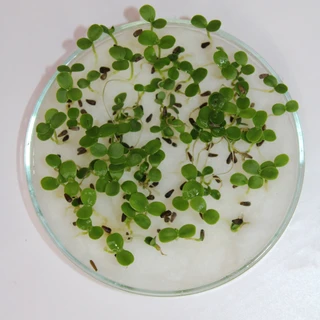
China asters need a relatively high temperature of 20 - 22 °C to germinate. Seeds germinate in roughly 7 - 10 days and spend 4 - 5 weeks in the tray before growing into proper seedlings.
We recommend not keeping China asters in the tray too long, nor transplanting them into small pots; you get the best result if you transplant China asters from the tray straight into the bed.
GROWING
Even though China aster seedlings can handle light frosts (-6 °C), there is no need to rush, and it is plenty sufficient to sow China asters during April and transplant them out after the last frosts.
Do not pinch China asters; they will branch naturally. China asters are grown quite densely; we plant them at a spacing of 12 × 12 cm.
They thrive in humus-rich soil; before planting, you can work mature compost into the beds. Choose a sunny location for them.
Attention: do not grow China asters in the same place as last year. Always try to find a new location for China asters and return to the original spot only after 2 - 3 years.
DISEASES
China asters suffer most often from fusarium wilt, so we recommend either (1) choosing China asters that are resistant, such as Matsumoto White, Matsumoto Pink, or Matsumoto Apricot, or (2) always trying to plant China asters in a new place and returning to the original one only after 2 - 3 years.
SUPPORT
If you are a professional and grow China asters for cutting, we recommend support, or netting, through which the China asters will grow. Without support, it may happen that stems will be bent and otherwise twisted. For beautifully straight stems, netting is a necessity.
The information given is based on our experience, please use it as a guide only. Times may vary depending on the season, climate, location, sowing and transplanting dates and possibly also the conditions in the greenhouse/greenhouse. We always recommend testing how the plant performs in your conditions. Please do not take this as a guarantee.


Collections
The product can be found in the following collections.


For Aster Lovers
If you love these large mid-summer blooms, you've come to the right place! We’ve selected our favorite China asters for this …
More products in category Aster
Callistephus chinensis
China aster King Size Apricot
Callistephus chinensis
China aster King Size Appleblossom

Callistephus chinensis
China aster Lady Coral Lavender
Callistephus chinensis
China aster Lady Coral Chamois
Callistephus chinensis
China aster Matsumoto White

Callistephus chinensis
China Aster Valkyrie Holländer Salmon

Callistephus chinensis
China aster Serenade White

Callistephus chinensis
China aster King Size White
Callistephus chinensis
China aster Valkyrie Elsa Rose
Callistephus chinensis
China Aster Matsumoto Pink


Callistephus chinensis
China Aster Valkyrie Tristan Pink

Callistephus chinensis
China Aster Valkyrie Isolde White

Callistephus chinensis
China aster Violet Mix

Callistephus chinensis
China aster Vanilla & Snow Mix


Callistephus chinensis
China aster Raspberry Season Mix
More products in category Seeds
Cosmos bipinnatus
Cosmos Double Click Bicolor Pink
Cosmos bipinnatus
Cosmos Cupcakes Blush
Cosmos bipinnatus
Cosmos Double Click Snow Puff
Cosmos bipinnatus
Cosmos Double Click Cranberries
Daucus carota
Ornamental Carrot Dara
Cosmos bipinnatus
Cosmos Cupcakes White
Cosmos bipinnatus
Cosmos Double Click Rose BonBon

Centaurea cyanus
Cornflower Tall Double Blue Boy
Zinnia elegans
Zinnia Queen Lime Red
Cosmos bipinnatus
Cosmos Apricotta

Centaurea cyanus
Cornflower Tall Double Red Boy

Cosmos bipinnatus
Cosmos Rubenza

Saponaria vaccaria
Vaccaria Pink Beauty
Zinnia elegans
Zinnia Cresto Peachy Pink

Nigella damascena
Nigella Miss Jekyll Sky Blue

Centaurea cyanus
Cornflower Tall Double Pinkie
Helianthus annuus
Sunflower ProCut White Lite

Centaurea cyanus
Cornflower Tall Double Black Boy

Delphinium consolida
Larkspur QIS White

Cosmos bipinnatus


