

Paeonia
Peony Command Performance
Root

Attracts pollinators 🐝
Difficulty
Diseases
Flower color
Flower color: Shade
Foliage color
Fragrant (aromatic) 👃
Frost resistance
Hardiness zone
Height
Moisture
Pests
Position
Soil
Spacing
Spacing: Plants per m²
Species
Suitable for cutting
Suitable for drying
Recommended products

Paeonia
Peony Coral Sunset

Paeonia
Peony Shirley Temple

Paeonia
Peony Red Sarah Bernhardt

Paeonia
Peony Coral Charm

Paeonia
Peony Red Charm

Paeonia
Peony Blush Queen

Paeonia
Peony Sarah Bernhardt

Paeonia
Peony Duchesse de Nemours

Paeonia
Peony Karl Rosenfield

Paeonia
Peony Mother's Choice

Paeonia
Peony Alexander Fleming

Paeonia
Peony Marie Lemoine

Paeonia
Peony Angel Cheeks

Paeonia
Peony Monsieur Jules Elie

Paeonia
Peony Jacorma

Paeonia
Peony Bridal Shower

Paeonia
Peony Pink Hawaiian Coral

Paeonia
Peony Elsa Sass

Paeonia
Peony Alertie

Cosmos bipinnatus
Cosmos Cupcakes Blush

Saponaria vaccaria
Vaccaria Pink Beauty


Delphinium consolida
Larkspur QIS White

Paeonia
Peony Jan van Leeuwen

Tulipa
Tulip San Luiz

Cosmos bipinnatus
Cosmos Apricotta

Delphinium consolida
Larkspur QIS Rose

Saponaria vaccaria
Vaccaria White Beauty


Cosmos bipinnatus
Cosmos Double Click Cranberries
Cultivation
GENERAL INFO
Peony roots are living material, which is why we store them under specific conditions — we must ensure sufficient moisture for the roots to prevent them from drying out excessively. However, when stored in damp conditions, a light surface mold may appear; this is a cosmetic phenomenon that has no effect on subsequent growth. We pack the roots just before shipping to keep the storage time in sealed packaging as short as possible.
PLANTING
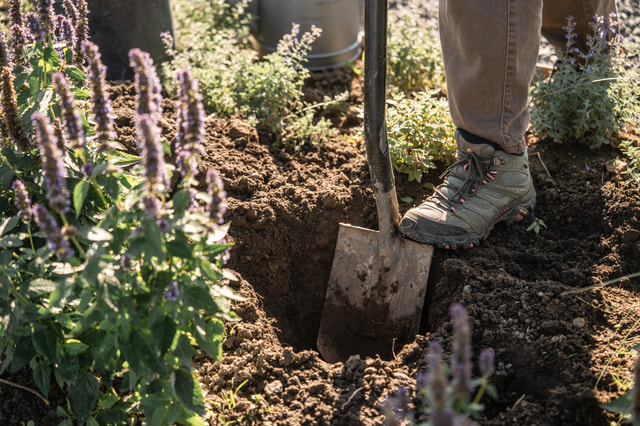
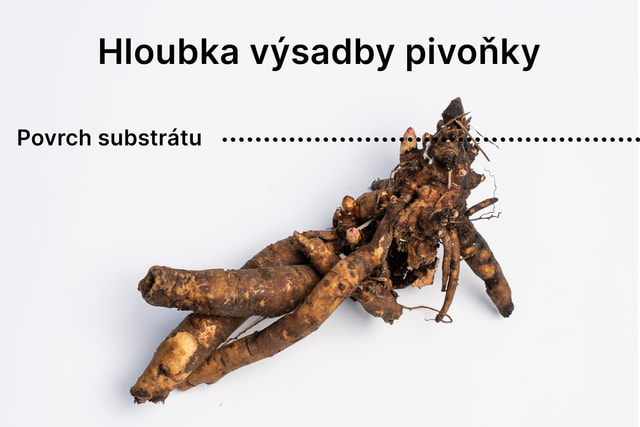
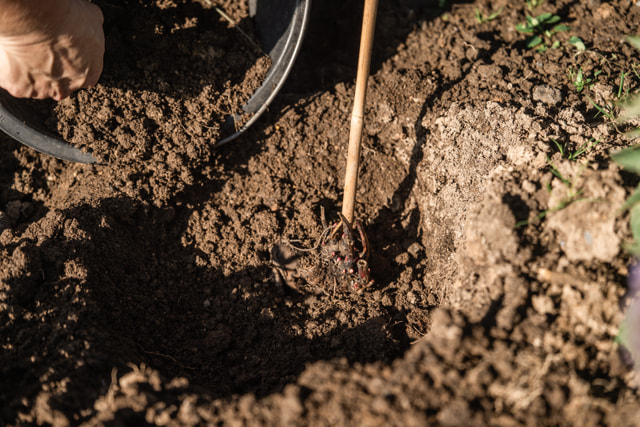
Do not delay planting your peonies so their roots do not dry out too much during storage; as we mentioned, storage is demanding. When planting, it is necessary to pay attention to the correct planting depth and not "drown" the plants, as they would then fail to bloom. Plant them so that, after watering, the tips of the growth buds protrude slightly above the surface of the substrate. The lowest buds should be a maximum of 2–3 centimeters below the surface. The planting hole should be twice as wide and deep as the peony root. Account for soil settling after watering. If planting late in the autumn, you can cover the new plants with brushwood before winter.
LOCATION
Peonies bloom best in a sunny spot. However, they are quite adaptable and can thrive in semi-shaded positions, although they need at least 6 hours of sunshine for abundant flowering. All peonies need plenty of space around them; they do not like competition from shrubs or hedges. You should reserve an area of one square meter for a peony, where they will not be crowded by other vigorously growing perennials.
SOIL CONDITIONS
Peonies need permeable, loamy, and nutrient-rich garden soil that retains adequate moisture well. They do not tolerate waterlogging in overly heavy soil.
WATERING
Newly planted peonies need watering, especially during their first spring during dry spells. Mature peonies are more resilient, and watering is only beneficial in the case of a very dry spring and early summer. After blooming, they usually do not have trouble with summer drought.
FERTILIZING
Peonies need plenty of nutrients; an organic fertilizer rich in potassium is suitable in the spring. Conversely, beware of too much nitrogen, as the plants would be more susceptible to fungal diseases. In the autumn, you can spread a thin, centimeter-thick layer of well-matured compost around the plant.
DISEASE PREVENTION
Maintain sufficient spacing when planting so that air can circulate well between the plants. Regularly remove dead flowers and any diseased leaves. These must not be put in the compost but should be disposed of with regular household waste.
CARE AND MAINTENANCE
In the first few years after planting, remove side buds so the plants grow stronger. At the end of autumn, you can remove the dead leaves. Plan for plant supports, as all herbaceous peonies need them. Watch out for spring frosts, especially if they follow a mild winter. Sprouting flower buds can tolerate temperatures down to -3°C; at lower temperatures, they die. In this case, protect the peonies with non-woven fabric.
(NOT) TRANSPLANTING
Choose the location carefully; peonies prefer undisturbed growth without transplanting. This is possible with older plants by dividing them so that each part has three to seven buds. The best period is from September to October.
The information given is based on our experience, please use it as a guide only. Times may vary depending on the season, climate, location, sowing and transplanting dates and possibly also the conditions in the greenhouse/greenhouse. We always recommend testing how the plant performs in your conditions. Please do not take this as a guarantee.
Do you prefer a different method of growing?
Peony Command Performance is also available in this form.

Paeonia
Peony Command Performance
Frequently
asked
questions
Characteristics
Is this peony frost-resistant?
What color is the 'Command Performance' cultivar?
Growing
How do I care for a peony in the autumn and winter?
What should I fertilize peonies with and when?
When and how deep should I plant a peony root?
Does the plant need support?
Do peonies need a lot of water?
Propagation
Can I transplant peonies?
Planting site
Where should I plant the Command Performance peony in my garden?
What kind of soil should I prepare for peonies?
Diseases & pests
Are peonies prone to any diseases or pests?
Basic information
Are peonies poisonous?
What should I do with the root if it arrives by mail and I cannot plant it right away?
Troubleshooting
Why is my peony not blooming?
Harvest
Are peonies suitable for cutting for a vase?
More products in category Peony
Paeonia
Peony Shirley Temple
Paeonia
Peony Coral Sunset
Paeonia
Peony Sarah Bernhardt
Paeonia
Peony Red Sarah Bernhardt

Paeonia
Peony Raspberry Sundae
Paeonia
Peony Coral Charm
Paeonia
Peony Duchesse de Nemours
Paeonia
Peony Karl Rosenfield
Paeonia
Peony Red Charm
Paeonia
Peony Blush Queen
Paeonia
Peony Mother's Choice
Paeonia
Peony Pink Hawaiian Coral

Paeonia
Peony Gardenia
Paeonia
Peony Alexander Fleming
Paeonia
Peony Jan van Leeuwen
Paeonia
Peony Monsieur Jules Elie
Paeonia
Peony Angel Cheeks

Paeonia
Peony Catharina Fontijn
Paeonia
Peony Marie Lemoine
Paeonia
Peony Elsa Sass
More products in category Peonies
Paeonia
Peony Shirley Temple
Paeonia
Peony Coral Sunset
Paeonia
Peony Sarah Bernhardt
Paeonia
Peony Red Sarah Bernhardt
Paeonia
Peony Raspberry Sundae
Paeonia
Peony Coral Charm
Paeonia
Peony Duchesse de Nemours
Paeonia
Peony Karl Rosenfield
Paeonia
Peony Red Charm
Paeonia
Peony Blush Queen
Paeonia
Peony Mother's Choice
Paeonia
Peony Pink Hawaiian Coral
Paeonia
Peony Gardenia
Paeonia
Peony Alexander Fleming
Paeonia
Peony Jan van Leeuwen
Paeonia
Peony Monsieur Jules Elie
Paeonia
Peony Angel Cheeks
Paeonia
Peony Catharina Fontijn
Paeonia
Peony Marie Lemoine
Paeonia


