


Knautia macedonica
Knautia Melton Pastels
Seedling


Attracts pollinators 🐝
Difficulty
Diseases
Edible
Flower color
Flower color: Shade
Foliage color
Fragrant (aromatic) 👃
Frost resistance
Hardiness zone
Height
Moisture
Pests
Position
Soil
Spacing
Spacing: Plants per m²
Species
Suitable for cutting
Suitable for drying
Recommended products

Knautia macedonica
Knautia Red Knight

Achillea millefolium
Yarrow Summer Pastels

Leucanthemum vulgare
Daisy Maikönigin

Nepeta racemosa
Catmint Walker’s Low

Catananche caerulea
Shoofly plant Blue

Achillea millefolium
Yarrow Cerise Queen

Nepeta faassenii
Catmint Six Hills Giant

Alchemilla mollis
Lady's mantle Irish Silk

Echinops bannaticus
Globe thistle Blue Glow

Calamintha nepeta ssp. nepeta
Calamint

Pennisetum alopecuroides
Fountain grass Hameln

Hesperis matronalis
Sweet Rocket Violet

Achillea millefolium
Yarrow Lilac Beauty

Cephalaria gigantea
Giant scabious

Centaurea montana
Mountain Cornflower

Salvia nemorosa
Salvia Mainacht

Salvia nemorosa
Woodland Sage Schneehügel

Lychnis coronaria
Campion Alba

Achillea millefolium
Yarrow Terracotta

Achillea ptarmica
Yarrow The Pearl

Salvia pratensis
Meadow Sage Rose Rhapsody

Salvia nemorosa
Woodland Sage Ostfriesland

Rudbeckia fulgida
Rudbeckia Goldsturm

Salvia nemorosa
Woodland sage Schwellenburg

Anemone hybrida
Japanese Anemone Whirlwind

Papaver orientale
Oriental Poppy Royal Wedding

Anemone hybrida
Japanese anemone Lorelei

Anemone hybrida
Japanese Anemone Serenade

Echinops bannaticus
Globe thistle Star Frost

Echinacea purpurea
Coneflower Mellow Yellows
Cultivation
Growing scabious from a pre-grown seedling is easy and can be handled by any beginner. Plant the seedling directly into its permanent location in the garden, ideally in a hot, sunny spot or light partial shade. The selection of the right soil is crucial; it must be well-draining, loamy, or sandy. Conversely, avoid heavy and permanently waterlogged soils. Since the plant grows to a height of 80 to 100 centimeters and forms slender stems, provide it with an inconspicuous support right away so that it doesn't break under the wind. When planting, maintain a spacing of about 50 centimeters, which corresponds to four to six plants per square meter. This sufficient spacing ensures free air circulation around the leaves, which serves as the best natural prevention against powdery mildew.
Once the scabious roots well, it becomes a very undemanding perennial. It tolerates drought excellently, so it requires only minimal watering. Fertilizing is not necessary either; rather, poorer soil supports the firmness of the stems. If you want to grow the plant on a balcony, choose a spacious pot or planter box with drainage holes. Place drainage at the bottom and mix the soil with sand. Plants in containers require slightly more regular watering than those in flower beds, but even here they must not stand in water. During the summer, you can regularly remove faded shoots, which will encourage the formation of new buds and the plant will bloom continuously from June to September.
Although scabious is a short-lived perennial, it easily maintains itself in the garden through natural self-seeding. You just need to let the last few flowers ripen at the end of the season. With the arrival of winter, you don't need to worry about the plant; it is fully hardy down to -28 °C and overwinters outdoors without any problems. Before winter or early in the spring, just cut the dry stems to the ground and remove dead leaves. During the growing season, occasionally check the soft tips of the plants to see if aphids have appeared, which can simply be washed off with water in time or treated with a gentle product.
The information given is based on our experience, please use it as a guide only. Times may vary depending on the season, climate, location, sowing and transplanting dates and possibly also the conditions in the greenhouse/greenhouse. We always recommend testing how the plant performs in your conditions. Please do not take this as a guarantee.
Frequently
asked
questions
Is Knautia poisonous to children or pets?
What works well combined with Knautia in a flower bed?
What location should I choose for Knautia 'Melton Pastels'?
When is the best time to plant Knautia seedlings?
Can Knautia flowers be used in a vase?
How do I prepare the plant for winter?
Is this plant beneficial for wildlife?
Does Knautia need support?
What steps should I follow after receiving the seedling and when planting it?
Does this plant need fertilizing?
How often do I need to water the Knautia?
How long will the Knautia last in the flower bed?
Do I need to remove the faded flowers?
What kind of soil does Knautia macedonica need?
Does Knautia suffer from any pests or diseases?
Photos
in time
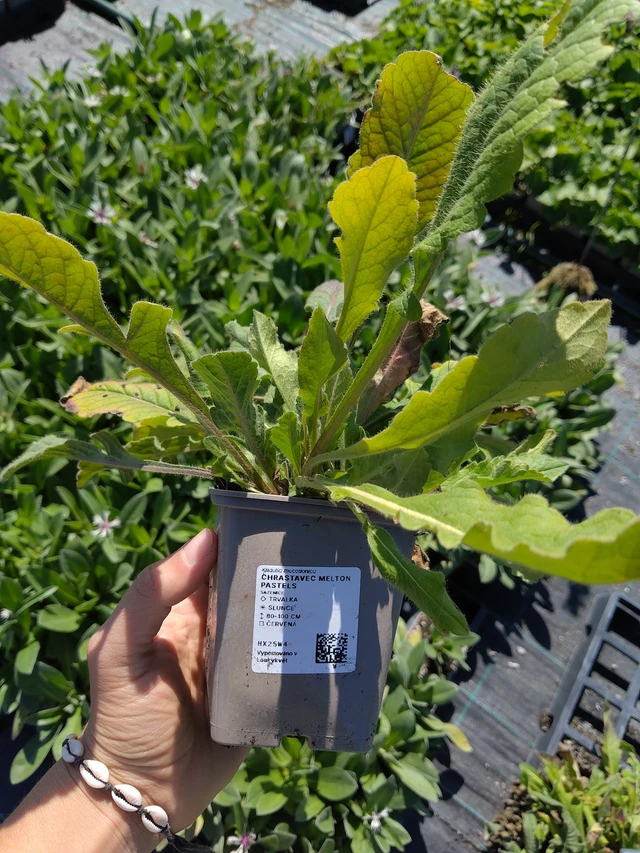
See how the seedling looks over the course of a year.


More products in category Knautia
Knautia macedonica
Knautia Red Knight
More products in category Perennials
Alchemilla mollis
Lady's mantle Irish Silk
Achillea millefolium
Yarrow Summer Pastels

Verbena bonariensis
Verbena

Salvia nemorosa
Woodland Sage Caradonna

Perovskia atriplicifolia
Russian Sage

Gaura lindheimeri
Gaura Siskiyou Pink

Echinacea purpurea
Coneflower Rubinstern

Echinacea pallida
Echinacea pallida

Eryngium planum
Sea Holly

Echinacea purpurea
Coneflower Magnus
Salvia nemorosa
Woodland Sage Ostfriesland

Calamintha nepeta
Calamint Blue Cloud
Rudbeckia fulgida
Rudbeckia Goldsturm
Calamintha nepeta ssp. nepeta
Calamint

Gaura lindheimeri
Gaura Summer Breeze

Salvia nemorosa
Woodland Sage Amethyst
Leucanthemum vulgare
Daisy Maikönigin
Achillea millefolium
Yarrow Terracotta

Perovskia atriplicifolia
Russian sage Little Spire
Salvia nemorosa


