Ireland
🟢 The e-shop for seedlings is open again. 🌱 I also have dahlia seedlings and eucalyptus. 🟢
Ireland
🟢 The e-shop for seedlings is open again. 🌱 I also have dahlia seedlings and eucalyptus. 🟢
Yarrow Summer Pastels, Loukykvět

Achillea millefolium

Yarrow Summer Pastels

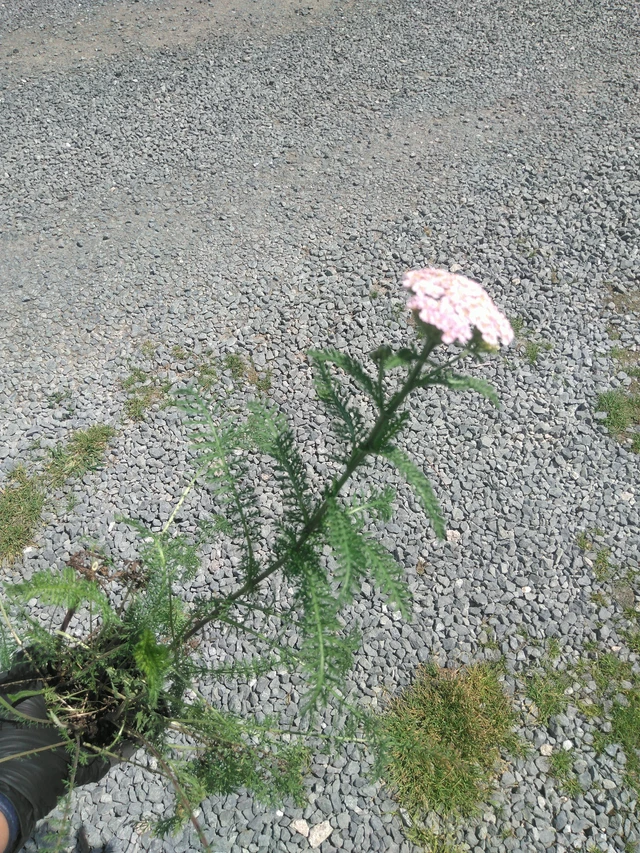
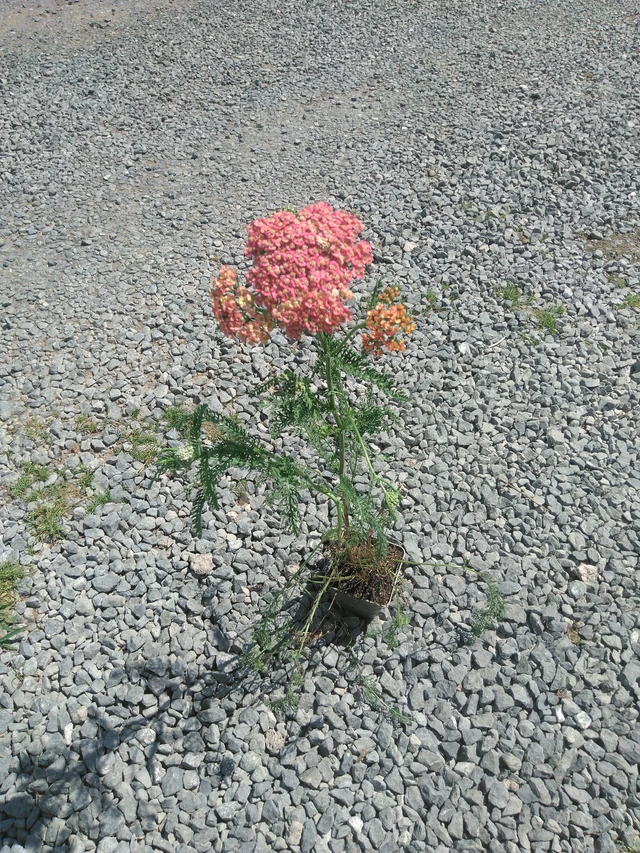
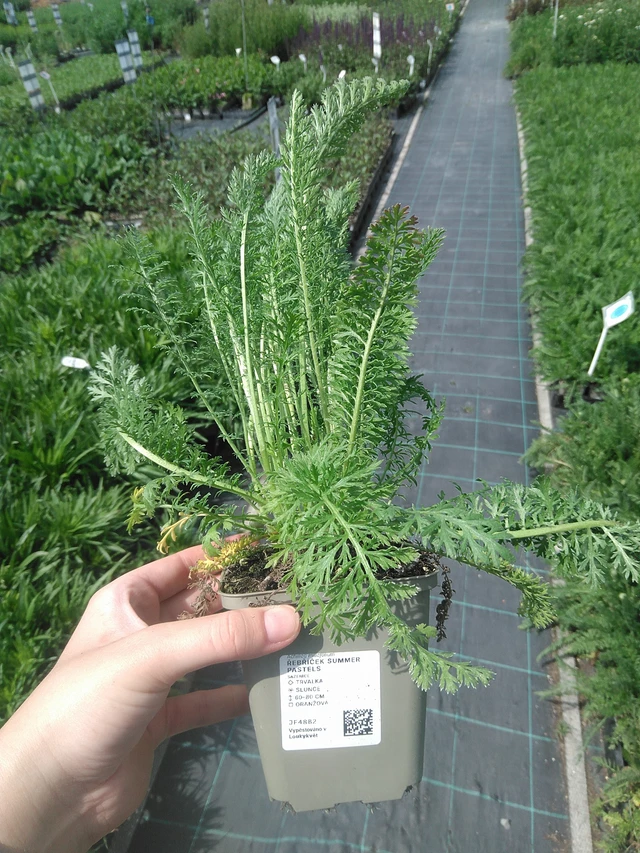
An original wild perennial with a large distribution area from Europe to Siberia. Suitable for natural and wild plantings. It grows in meadows and dry grassy places. A very adaptable and undemanding plant, it grows in clumps and spreads by runners. By cutting back after the first flowering, we encourage a set of new flowers. For bouquets, we harvest when the florets are fully open. It lasts 10 days in a vase. Summer Pastels is characterized by a changeable and soft range of colors from white and vanilla to salmon, brick red, and bronze. Show full description

Seedling

Květináč K9 (9×9×9,5 cm)
1-2 kusy
3,09/ks
3-8 kusů
2,79/ks
9-17 kusů
2,49/ks
18+ kusů
1,99/ks
Add to cart
Skladem 383 ks
Připravujeme 1500 ks

Attracts pollinators 🐝

Ano

Difficulty

Beginner

Diseases

Powdery mildew

Edible

Ano
?
Information on whether the plant is edible.

Flower color

White, orange, yellow, pink

Flower color: Shade

Raspberry, terracotta, lemon, cream, peach, salmon

Foliage color

Grey-green

Fragrant (aromatic) 👃

Ano

Frost resistance

-40
?
The temperature down to which the plant is frost hardy.

Hardiness zone

2b (-42.8 °C to -40 °C)

Height

60-80 cm

Moisture

💧

Pests

Aphids

Position

Sun

Soil

Sandy, loamy, poor, well-drained

Spacing

35-35 cm
?
Recommended planting spacing.

Spacing: Plants per m²

8

Species

Perennial

Suitable for cutting

Ano

Suitable for drying

Ano
1
2
3
4
5
6
7
8
9
10
11
12
Flowering
June
September

Recommended products

Achillea millefolium

A native wild perennial with a large distribution range from Europe to Siberia. Suitable for natural and wild plantings. It grows in meadows and dry grassy places. A very adaptable and undemanding plant, it grows in clumps and spreads via runners. Cutting back after the first bloom encourages a new set of flowers. Harvest for bouquets when the tiny flowers are fully open. It lasts 10 days in a vase. Terracotta features ochre, shades of orange and yellow, and gray-green foliage.
2,99
More from 2,89
In Stock
For drying

Eryngium planum

Sea holly is an indispensable perennial for all lovers of naturally styled gardens. It earned its folk name - male fidelity - in times when it was used in herbal medicine as an aphrodisiac, and its roots were even candied as sweets in France and England. Today, however, you will appreciate it mainly for its low maintenance and unique appearance. Its home is on sunny hillsides and dry meadows, so even in our gardens, it will welcome well-drained, even poorer sandy soil and full sun. It produces upright, sturdy stems topped with blue-purple flowers with prickly bracts, which bring interesting structure and a silvery touch to the flowerbeds. It is literally a magnetic plant for bees, bumblebees, and butterflies, who find a rich food source on it. Floristically, it is extremely valuable, because its flowers are perfectly suited for cutting as well as drying for winter decorations. If you decide not to harvest it, feel free to leave it in the flowerbed all winter. Its silhouette covered in hoarfrost creates a wonderful winter effect. Although it is a short-lived perennial, in a suitable location it reliably self-seeds, so you will enjoy its beauty for many years.
2,79
More from 1,99
Coming Soon

Gaura lindheimeri

Gaura Siskiyou Pink is a charming perennial that brings lightness and airiness to the garden. Its original native area is in the warm regions of Texas and Louisiana, which is why it thrives in full sun and well-drained sandy soil. It grows in clumps and from June until the autumn frosts produces tiny raspberry-pink flowers that resemble fluttering butterflies. An interesting detail of this variety is the green leaves with a bronze tint and red spots. It is an absolutely undemanding plant, does not suffer from diseases or pests, and even beginners can handle its care. You will receive a grown seedling in a pot from us, which you simply need to transplant directly into the flowerbed. Here it complements ornamental grasses perfectly and acts as an attraction for bees and bumblebees. Although it grows more as a short-lived perennial in our climate, in a suitable place it reliably self-seeds. Occasional pinching will encourage richer branching. Gaura is excellent for summer bouquets. We cut the stems for a vase as soon as the first two to three little flowers open.
2,99
More from 2,09
In Stock

Alchemilla mollis

Alchemilla mollis, known as lady's mantle, is an indispensable perennial for anyone who wants to bring harmony and softness to the garden. Its home is the moister environments of mountain meadows and light forests, making it a very adaptable plant that will survive even severe frosts without problems in our climate. The 'Irish Silk' cultivar is prized for its vitality and abundant blooming, where clouds of tiny, yellow-green flowers float above clumps of gray-green leaves. It is precisely this neutral color that can work wonders in a flower bed – it softens overly sharp contrasts between other flowers and beautifully unifies the entire composition. Besides its ornamental function, lady's mantle also has practical uses. Thanks to its clumping growth and ability to quickly fill in, it is ideal for edging pathways or as an underplanting beneath taller shrubs and roses. Water droplets catch on its leaves, creating a magical spectacle in the garden. If you enjoy making bouquets, you will love lady's mantle as versatile filler greenery that matches almost anything. It will last beautiful for about ten days in a vase, and its inflorescences can also be easily dried without losing too much of their color or shape. Moreover, it is a magnet for pollinators, and its young leaves are even edible, so it also finds use in a natural kitchen.
2,99
More from 2,09
In Stock posledních 67 kusů

Achillea millefolium

An original wild perennial with a large distribution area from Europe to Siberia. Suitable for natural and wild plantings. It grows in meadows and dry grassy places. A very adaptable and undemanding plant, it grows in clumps and spreads via runners. Cutting back after the first flowering encourages a new set of flowers. We harvest for bouquets when the florets are fully open. They last 10 days in a vase.
3,49
More from 2,39
In Stock

Echinacea purpurea

A valuable garden and medicinal perennial, native to North America. The spiky flower centers are an irresistible attraction for butterflies. They last 7–10 days in a vase. After removing the petals, the stems with the central disks can be dried or used in fresh bouquets as an interesting element. White Swan blooms with milky white flowers and brownish-orange centers. The petals are not spread entirely horizontally; they bend slightly downwards.
3,79
More from 3,89
In Stock s doručením od 10. 8. 2026

Knautia macedonica

Knautia Melton Pastels is an abundantly and long-blooming, undemanding perennial with which you can easily conjure up a piece of wild nature right behind your house. The original species has its roots in the Balkans, where it grows wildly in sun-drenched thickets and on dry meadows. In flowerbeds, it immediately draws attention with its slender, tall stems. In the Melton Pastels cultivar, from early summer until autumn, they carry a flood of small flowers in pastel pink and burgundy tones. A healthy seedling in a pot will arrive at your home. Once you transplant it in the sun or partial shade with well-drained soil, it will quickly reward you with vigorous growth. It stands out best when you plant about five plants per square meter, with a spacing of half a meter from each other. Care for knautia is completely undemanding; it playfully survives even severe frosts and does not require complex fertilizing. Because it grows up to a meter in height, we recommend providing it with unobtrusive support. Although it belongs among short-lived perennials, nature designed it so that it readily self-seeds without any problems. For lovers of floral decorations, this plant is a literal treasure. The stems are long and sturdy, so they look completely natural in vases and give bouquets a meadow touch. They also apply excellently in the creation of dried arrangements, bringing interesting structure to them. Although it is a strong plant suitable for beginners, a minor ailment can be powdery mildew or aphids, which you just need to catch in time.
2,79
More from 1,99
Unavailable
Pro rok 2026 nedostupné

Stipa tenuissima

Feather grass flowers capture attention in beds and bouquets with their lightness and delicacy. All feather grasses love full sun and dry, stony, well-drained soil. To look most natural in beds, it is good to plant them in loose groups of several pieces together with other drought-loving perennials and bulbs. Only then do their stems and inflorescences, set in motion by the slightest breath of wind, truly stand out. Stipa 'Ponny Tails' is a species native to the steppes of Mexico, Texas, and Patagonia. Airy, dense clumps of hair-like delicate leaves resemble horsehair. The leaves are green, turning up to straw-colored towards the flowers. In a suitable location, it also self-seeds.
3,79
More from 2,69
In Stock

Verbena bonariensis

A verbena species originally from South America. In our country, it is often used as an annual, but in mild winters it can overwinter and reproduce by self-seeding. The firm, airy stems beautifully soften perennial beds and make them special with their purple color. It beautifully complements steppe plantings with grasses and rose beds.
3,29
More from 2,29
In Stock

Achillea millefolium

A native wild perennial with a large distribution range from Europe to Siberia. Suitable for natural and wild plantings. It grows in meadows and dry grassy places. A very adaptable and undemanding plant, it grows in clumps and spreads via runners. Cutting back after the first bloom encourages a new set of flowers. Harvest for bouquets when the tiny flowers are fully open. It lasts 10 days in a vase. Cerise Queen has deep pink to purple-pink flowers that gradually fade to light pink.
2,79
More from 1,99
In Stock

Leucanthemum vulgare

A classic perennial for early summer bouquets and cottage gardens. For bouquets, we harvest flowers with firm, smooth central disks. Then they last 7–10 days in a vase. Maikönigin is an exceptionally abundantly flowering garden form.
2,79
More from 1,99
In Stock

Gaura lindheimeri

The charming Gaura 'Whirling Butterflies' is exactly the perennial that will give any flower bed a relaxed, natural look. It originally comes from the dry and hot plains of southern North America, which clearly suggests that it loves sunshine and well-drained sandy soil. You will receive from us a beautifully grown seedling in a pot, which you can simply transplant straight into the garden. Here, it will soon form a dense clump of green leaves, from which long, thin stems dotted with flowers emerge all summer until October. These flowers open in a pure white color and gradually take on a slight pinkish tone. Furthermore, the abundant blooming reliably attracts pollinators, for whom the plant is a great source of food. It can handle even stronger frosts down to minus eighteen degrees. It looks excellent in mixed plantings next to drought-tolerant grasses or other undemanding species. Although it is a short-lived perennial, it willingly self-seeds, meaning it will stay with you in its location for a very long time. If you like creating fresh summer bouquets, Gaura will definitely not disappoint you. You just need to cut the stems the moment the first small flowers open. It is a completely undemanding species without serious diseases, which needs no support and will forgive even beginner mistakes.
2,99
More from 2,09
Unavailable
Pro rok 2026 nedostupné

Perovskia atriplicifolia

Russian sage reliably brings a touch of sunny steppes into the garden and places almost no demands on care. These sparsely branched subshrubs originally come from harsh, rocky areas from Afghanistan to Tibet, where they grow on open sun-drenched plains. Thanks to its origin, it delights in full sun and poor, well-drained sandy soil with minimal moisture. You will receive from us a well-rooted seedling in a pot, which just needs to be transplanted straight to the chosen spot in the flower bed. It does not need support, is avoided by common pests and diseases, and will survive frosts down to minus twenty-eight degrees. It grows up to one hundred and twenty centimeters and forms striking white felted shoots with silvery grey aromatic leaves. From July to October, it blooms with tiny blue-purple flowers that act as a lure for bees and butterflies and are even edible. Russian sage stands out next to drought-tolerant perennials. The flowers are suitable for cutting and drying for winter arrangements. Moreover, the silvery stems will ensure a beautiful winter effect in the flower bed.
2,99
More from 2,09
In Stock

Echinacea pallida

The pale coneflower is one of the exceptionally interesting prairie perennials of the North American continent. In its natural environment, it grows on open, sunny plains, which is why it thrives best in our gardens in full sun in drier, well-drained soil. You just need to transplant this grown seedling straight into the flower bed, where it will reliably take root. It does not need support, easily withstands severe frosts, and is avoided by common diseases and pests, making it ideal for beginner growers. During June and July, it will reward you with aromatic flowers with unusually narrow and drooping petals in light purple and pink tones. The prominent prickly centers are literally a magnet for bees and bumblebees, and the flowers themselves are surprisingly edible. The plant stands out especially in rustic plantings together with ornamental grasses. Gardeners and florists love it for its versatility. The fresh stems bring joy in a vase for about a week. Moreover, the distinctive central cones hold their shape perfectly, can be perfectly dried for winter decorations, or left in the flower bed, where they will create an eye-catching winter structure under a layer of snow.
2,99
More from 2,09
In Stock s doručením od 24. 8. 2026

Achillea millefolium

Native wild perennial with a large distribution area from Europe to Siberia. Suitable for natural and wild plantings. Grows in meadows and dry grassy places. A very adaptable and undemanding plant, grows in clumps and spreads by runners. Cutting back after the first flowering encourages a new batch of flowers. Harvest for bouquets when the florets are fully open. Lasts 10 days in a vase. The Lachsschönheit cultivar is valued for its perfect transition of tones from salmon-pink to cream.
3,49
More from 2,39
In Stock posledních 85 kusů
For drying

Echinops bannaticus

The 'Blue Glow' globe thistle is an impressive perennial that naturally grows in the region from southern Europe to Turkey and Central Asia. Thanks to its origin, it loves the sun and well-drained, even poorer sandy soils, where it thrives best. In the garden, it captivates with its architectural structure and silvery gray-green leaves, which form an interesting contrast to other plants. The spherical flowers in a royal blue shade are literally a magnet for bees, bumblebees, and butterflies, so with this plant, you will bring a lot of life into the garden. It is a long-lived and undemanding plant that does not need support and easily handles even harsher frosts. It is also very valuable for florists. It lasts very long in a vase, and its blue spherical flowers look wonderful in summer bouquets. If you don't harvest them fresh, they are perfect for drying for winter decorations, or left in the flowerbed, they form a beautiful winter effect, especially when covered in hoarfrost. The 'Blue Glow' cultivar stands out precisely for its intense flower color.
2,79
More from 1,99
In Stock

Echinacea purpurea

A valuable garden and medicinal perennial, native to North America. It blooms in summer with dark purple-pink flowers. The spiky flower centers are an irresistible attraction for butterflies. They last 7–10 days in a vase. After removing the petals, the stems with the central disks can be dried or used in fresh bouquets as an interesting element. Magnus features distinctive deep pink flowers with an orange-brown center.
2,99
More from 2,09
In Stock posledních 89 kusů

Sedum spectabile

A very hardy and long-lived perennial with an almost year-round effect. It forms upright clumps, and the flowers attract bees and butterflies. The cultivar Brilliant is characterized by shrubby growth and a distinct pink color.
2,99
More from 2,89
In Stock s doručením od 20. 7. 2026

Rudbeckia fulgida

Rudbeckia Goldsturm is a reliable and long-lived perennial that will bring the warm tones of late summer and autumn into your garden. It originally comes from the open plains and prairies of North America, so it delights most in sunny locations with common garden soil, whether it is loamy, humus-rich, or clayey. You will receive from us an already grown seedling in a pot, which you just need to transplant to the chosen spot in the flower bed. It is a completely undemanding plant, does not suffer from diseases or pests, and easily survives severe frosts. The Goldsturm cultivar grows to a height of about seventy centimeters and does not need support. From August to October, it produces a flood of golden-yellow flowers with distinctly dark centers. These edible flowers attract pollinators and fit perfectly into both prairie and rustic plantings. Rudbeckia is also great for cutting, lasting around ten days in a vase. In addition, the distinctive dark centers can be easily dried. If you leave them in the flower bed over the winter, they will provide a wonderful spectacle.
2,79
More from 1,99
In Stock

Papaver orientale

Oriental poppy Royal Wedding is an unmissable perennial that brings true elegance to the spring garden. It originally comes from the harsher conditions of the Caucasus, Turkey, and Iran, where it grows on sunny rocky slopes and dry meadows. Because of this, it is exceptionally resilient, easily handling frosts down to minus forty degrees, and can do without complex care. You will receive a grown seedling in a pot from us, which you just need to transplant to a sunny location with well-drained loamy soil. The cultivar Royal Wedding will reward you in May and June with huge bowl-shaped flowers with pure white petals, which hide a distinct dark burgundy spot in their center. Moreover, these enchanting flowers reliably attract pollinators from far and wide. It is typical for Oriental poppies that their strikingly fuzzy green leaves die back soon after flowering. The plant takes a break over the warmest summer to gather strength, and a smaller portion of the leaves often sprouts again only at the end of summer. Therefore, it is ideal to plant the poppy in the flower bed in close proximity to other perennials that sprout slightly later and naturally fill the empty space left by the resting poppy. It avoids diseases and needs no support, reaching a height of around sixty to eighty centimeters. Just watch out for field voles, which might develop a taste for its fleshy roots. Otherwise, it is a long-lived plant that even a complete beginner can handle without worries. Given that the plant is poisonous, it is naturally not intended for consumption. The giant white flowers are also a great attraction for lovers of cut flowers, although they require a little trick. Similar to other poppies, the stems need to be harvested exactly at the moment when the buds begin to color and slightly crack. Right after cutting, we sear the ends of the stems with a flame for about twenty seconds to prevent sap leakage, and then we put them into cold water. Thanks to this procedure, they will stay beautiful for about four days in a vase and add amazing lightness to bouquets. Although these delicate flowers are not suitable for drying, they simply have no competition in fresh spring bouquets.
2,79
More from 1,99
In Stock

Echinacea purpurea

A valuable garden and medicinal perennial, originally from North America. It blooms in summer with dark purple-pink flowers. The spiky flower discs are an irresistible lure for butterflies. Lasts 7–10 days in a vase. After plucking the petals, the stems with the central discs can be dried or used in fresh bouquets as an interesting element. Rubinstern is very similar to the Magnus cultivar; the petals are darker and firmer. As they fade, they gradually pale and droop downwards.
2,99
More from 2,09
In Stock

Salvia nemorosa

This species of sage originates from the steppe regions of Central and Eastern Europe. It forms abundantly flowering small clumps with straight upright stems. In beds, it looks best in groups. Traditionally, it is planted as a companion to roses due to the matching flowering time. However, it will look equally good in mixed drought-loving steppe plantings with grasses. It is an excellent food source for bees. It lasts 7 days in a vase. The cultivar Ostfriesland blooms with a strikingly dark violet-blue color.
2,99
More from 2,09
In Stock

Calamintha nepeta

Lesser calamint Blue Cloud is an undemanding and modest perennial that reliably perfumes any sunny garden. Its original homeland is the sunny and dry slopes of Southern Europe, which is why it thrives best here in direct sun in well-drained, sandy, or poorer loamy soil. It handles winter without problems, tolerating frosts down to minus twenty-three degrees. You will receive a grown seedling in a pot from us, which you just need to transplant straight into the flowerbed, where it will very soon form a compact, airy small shrub reaching a height of up to forty centimeters. It does not suffer from any diseases or pests, so even complete beginners can easily handle caring for it. Throughout late summer and into autumn, it blooms with a record number of tiny blue flowers that are so typical of the Blue Cloud variety. The whole plant emits a pleasant minty-spicy scent, and its flowers, which resemble thyme, act as a literal magnet for bees, bumblebees, and butterflies. It will look great among roses or in naturally designed steppe flowerbeds, where it naturally complements lower ornamental grasses. Additionally, both the blue flowers and green leaves are edible, so you can use them to garnish summer dishes. Lesser calamint is also excellently suited for cutting into smaller fresh bouquets, adding a fine structure to them in a vase.
2,79
More from 1,99
Coming Soon

Hyssopus officinalis

The Roseus hyssop is an aromatic subshrub whose structure and requirements strongly resemble the popular lavender. It originally comes from the sunny and dry regions of the Mediterranean and Asia Minor, so it thrives best in direct sun here as well. It favors well-drained, sandy, and even nutrient-poor soil, where it easily copes with a lack of moisture. You will receive a grown seedling in a pot from us, which you simply transplant straight into the flower bed, where it will very soon form a neat, richly branched bush reaching a height of around fifty centimeters. It is an absolutely undemanding plant that is not bothered by diseases or pests, so its cultivation can be easily handled even by complete beginners. It comfortably withstands severe frosts down to minus twenty-three degrees Celsius. In the garden, hyssop finds wide application. It fits perfectly into steppe-character gravel beds and beautifully complements roses or lower ornamental grasses. During the summer until early autumn, the Roseus variety will delight you with a flood of tiny flowers in a delicate light pink shade. These flowers, as well as the narrow green leaves, emit a pleasant spicy fragrance and reliably act as a huge lure for bees, bumblebees, and butterflies. Since all parts of the plant are edible, you can also use hyssop in the kitchen as a herb to flavor dishes or prepare a medicinal tea from it. You can also cut the long flowering stems for a vase, where they will add a fine texture and lightness to summer bouquets. Although the flowers are not suitable for drying for floral purposes, the plant will please you in the flower bed even out of season. The inflorescences form an interesting structure which, after the leaves fall and are covered by morning frost, creates a beautiful winter effect. Furthermore, if you provide hyssop with ideal conditions, it will reliably self-seed in its location and remain a solid part of your garden for many years.
2,79
More from 1,99
In Stock

Nepeta racemosa

Catmints are ideal companions for roses, suitable for naturalistic gardens, and lower species also for boxes and pots. Some of them are an irresistible attraction for cats, caused by the hallucinogen nepetalactone. This should be present in the highest amount in the species Nepeta cataria. Conversely, lemon-scented catmints reportedly do not attract cats. The botanical name Nepeta likely comes from the name of the ancient Etruscan city Nepet - Nepi in the territory of today's Italian province of Viterbo, where the plant was once cultivated. Nepeta racemosa naturally grows on dry meadows and rocky, stony slopes from the Caucasus to Central Asia. It has aromatic grey-green leaves and forms a tufted semi-spherical bush. Walker’s Low got its name after an Irish estate where it was bred in 1970. It has the most intense blue-violet flower coloration.
2,99
More from 2,09
Coming Soon

Anemone hybrida

Anemones come from the same family as buttercups. With their elegant flowers on long slender stems, they can enliven and brighten up late summer and autumn flowerbeds. They stand out against the darker background of shrub groups and will also appreciate their partial shade. The Czech Perennial Association chose autumn anemones as the perennial of the season for 2022. They last 7 days in a vase. Königin Charlotte is a massive taller variety bred as early as 1898. It has strong, firm stems and semi-double large violet-pink flowers. The outer sides of the silky smooth petals are colored violet.
3,49
More from 3,59
In Stock

Perovskia atriplicifolia

Perovskia are sparsely branched subshrubs, originating from areas ranging from Afghanistan to Tibet. They grow in open, sunny, rocky, and stony habitats. Their white-felted shoots and grayish aromatic leaves are striking. They fit well in sunny flower beds with other drought-loving perennials, where they create interesting structures even in the winter months. Little Spire is a smaller cultivar suitable even for pots with a soil volume of 7 liters or more.
3,49
More from 3,59
In Stock
For drying

Echinops bannaticus

The Star Frost globe thistle is a pure white and compactly growing form of the globe thistle, which is naturally widespread in the region from Southern Europe to Central Asia. Its perfectly spherical flowers, about the size of a golf ball, float on sturdy stems above a clump of indented leaves. These are deep green on top and silvery grey-green on the underside, which gives the plant an interesting visual effect even before blooming. It acts as a striking feature in the garden, which is perfectly suited for natural and drought-tolerant plantings. The flowers are literally a magnet for bees, bumblebees, and butterflies, who find a rich food source on them. If you like creating bouquets, the globe thistle will thrill you with its long vase life. It is also excellent for drying into winter decorations, because it retains its shape and color even after drying. Even if you leave it in the flower bed, its firm structure will adorn the garden even in the winter months.
2,99
More from 2,09
In Stock

Cultivation

Tato oblíbená trvalka, kterou od nás získáte jako silnou sazenici připravenou k výsadbě, je skvělým doplňkem do přírodních, venkovských i moderních štěrkových záhonů. Pro dosažení nejlepších výsledků vyberte stanoviště, kde se po celý den opírá slunce. Řebříček 'Summer Pastels' dorůstá výšky 60–80 cm a jeho stonky jsou pevné pouze tehdy, pokud má dostatek světla a roste v propustné, chudé a sušší půdě. Těžké a mokré půdy nejsou vhodné, protože v nich kořeny v zimě uhnívají. Před výsadbou je tedy vhodné těžší zeminu vylehčit pískem nebo drobným štěrkem. Sazenice sázejte tak, aby byl kořenový bal v rovině s okolním terénem, a dodržujte doporučený rozestup, aby mezi rostlinami proudil vzduch. To je důležité jako prevence proti padlí, které se může objevit ve vlhčím a nevětraném prostředí.

Péče o řebříček je radostná a nezabere mnoho času. Kromě občasné zálivky v době dlouhotrvajícího sucha se nemusíte o vláhu příliš starat. Naopak, tato rostlina je zvyklá hospodařit s málem. Velkou předností odrůdy 'Summer Pastels' je její vhodnost k řezu do čerstvých kytic, kde vydrží až 10 dní, i k sušení do zimních vazeb. Pro sušení sbírejte květy v momentě, kdy jsou plně otevřené a jejich barva je nejsytější. Pokud květy na záhoně ponecháte, přilákáte do zahrady množství užitečných opylovačů a včel. Pro prodloužení doby kvetení a podporu vitality doporučujeme po odkvětu hlavní vlnu květů sestřihnout. Rostlina díky tomu zregeneruje, vytvoří nové husté olistění krásné šedozelené barvy a často vás překvapí druhou vlnou květů na konci léta.

Pokud nemáte zahradu, můžete řebříček úspěšně pěstovat i ve větším květináči nebo truhlíku. Důležité je vybrat nádobu s odtokovými otvory, aby se zabránilo přemokření kořenů, které je pro tuto rostlinu fatální. Použijte zahradnický substrát smíchaný s perlitem nebo pískem pro maximální vzdušnost. Ačkoli je řebříček v záhonu téměř bezúdržbový, v nádobě má omezený prostor pro kořeny, proto jej v horkých dnech zalévejte s citem – substrát by měl mezi zálivkami proschnout. Z hlediska mrazuvzdornosti jde o jednu z nejodolnějších trvalek v naší nabídce, zvládá mrazy hluboko pod -40 °C, takže zimu přečká bez úhony bez jakéhokoliv zakrývání. Jedná se o dlouhověkou trvalku, kterou je vhodné jednou za 3–4 roky na jaře nebo na podzim vyrýt a rozdělit trsy, čímž ji zmladíte a zajistíte si bohaté kvetení i v dalších letech.

The information given is based on our experience, please use it as a guide only. Times may vary depending on the season, climate, location, sowing and transplanting dates and possibly also the conditions in the greenhouse/greenhouse. We always recommend testing how the plant performs in your conditions. Please do not take this as a guarantee.

Show all

Click to view the full growing instructions.

Collections

The product can be found in the following collections.

Kolekce trvalek s cibulovinami a semeny

Nostalgic Cottage Garden

This collection represents a structurally varied base for creating a cottage garden bed with the atmosphere of holidays in th

142,36
In Stock

Frequently
asked
questions

Pěstování

Stanoviště

Vlastnosti

Nemoci & škudci

Množení

Problémy

Sklizeň

Photos
in time

See how the seedling looks over the course of a year.

Yarrow Summer Pastels - 2. 7. 2026
2. 7. 2026
Yarrow Summer Pastels - 2. 7. 2026
2. 7. 2026
Yarrow Summer Pastels - 2. 6. 2026
2. 6. 2026
Yarrow Summer Pastels - 13. 5. 2026
13. 5. 2026
Yarrow Summer Pastels - 31. 3. 2026
31. 3. 2026
Yarrow Summer Pastels - 23. 10. 2025
23. 10. 2025
Yarrow Summer Pastels - 9. 10. 2025
9. 10. 2025
Yarrow Summer Pastels - 10. 9. 2025
10. 9. 2025
Yarrow Summer Pastels - 19. 8. 2025
19. 8. 2025
Yarrow Summer Pastels - 24. 6. 2025
24. 6. 2025
Yarrow Summer Pastels - 9. 6. 2025
9. 6. 2025
Yarrow Summer Pastels - 13. 5. 2025
13. 5. 2025
Yarrow Summer Pastels - 3. 4. 2025
3. 4. 2025
Yarrow Summer Pastels - 2024
2024
Yarrow Summer Pastels - 2024
2024
Yarrow Summer Pastels - 2024
2024
Yarrow Summer Pastels - 2024
2024
Yarrow Summer Pastels - 2024
2024
Yarrow Summer Pastels - 2024
2024

More products in category Yarrow

Achillea millefolium

A native wild perennial with a large distribution range from Europe to Siberia. Suitable for natural and wild plantings. It grows in meadows and dry grassy places. A very adaptable and undemanding plant, it grows in clumps and spreads via runners. Cutting back after the first bloom encourages a new set of flowers. Harvest for bouquets when the tiny flowers are fully open. It lasts 10 days in a vase. Terracotta features ochre, shades of orange and yellow, and gray-green foliage.
2,99
More from 2,89
In Stock
For drying

Achillea filipendulina

Fernleaf Yarrow originates from the Caucasus and Central Asia. Unlike Common Yarrow, it grows in clumps and is also suitable for drying. Cutting back soon after flowering encourages re-blooming. However, if you decide to leave the spent stems in the beds, you gain a perfect structure that remains impressive long into winter. The leaves of this species emit a typical bitter Yarrow aroma. It lasts 10 days in a vase.
2,79
More from 1,99
In Stock

Achillea millefolium

An original wild perennial with a large distribution area from Europe to Siberia. Suitable for natural and wild plantings. It grows in meadows and dry grassy places. A very adaptable and undemanding plant, it grows in clumps and spreads via runners. Cutting back after the first flowering encourages a new set of flowers. We harvest for bouquets when the florets are fully open. They last 10 days in a vase.
3,49
More from 2,39
In Stock

Achillea millefolium

A native wild perennial with a large distribution range from Europe to Siberia. Suitable for natural and wild plantings. It grows in meadows and dry grassy places. A very adaptable and undemanding plant, it grows in clumps and spreads via runners. Cutting back after the first bloom encourages a new set of flowers. Harvest for bouquets when the tiny flowers are fully open. It lasts 10 days in a vase. The Cassis cultivar has flowers colored in shades from cherry-red to burgundy.
2,79
More from 1,99
In Stock

Achillea millefolium

A native wild perennial with a large distribution range from Europe to Siberia. Suitable for natural and wild plantings. It grows in meadows and dry grassy places. A very adaptable and undemanding plant, it grows in clumps and spreads via runners. Cutting back after the first bloom encourages a new set of flowers. Harvest for bouquets when the tiny flowers are fully open. It lasts 10 days in a vase. Cerise Queen has deep pink to purple-pink flowers that gradually fade to light pink.
2,79
More from 1,99
In Stock

Achillea sibirica

A lesser-known species of Yarrow has dark green glossy serrated leaves that remain attractive throughout the growing season, and a sweet pink color of flowers that are larger than the flowers of common Yarrow. It lasts 10 days in a vase.
2,79
More from 1,99
Unavailable
Pro rok 2026 nedostupné

Achillea ptarmica

This Yarrow grows primarily in damp or wet habitats – wet meadows, springs, banks of watercourses and ponds. The flowers are semi-double with a gray-yellow center. They last 10 days in a vase.
2,79
More from 1,99
Coming Soon

Achillea millefolium

Native wild perennial with a large distribution area from Europe to Siberia. Suitable for natural and wild plantings. Grows in meadows and dry grassy places. A very adaptable and undemanding plant, grows in clumps and spreads by runners. Cutting back after the first flowering encourages a new batch of flowers. Harvest for bouquets when the florets are fully open. Lasts 10 days in a vase. The Lachsschönheit cultivar is valued for its perfect transition of tones from salmon-pink to cream.
3,49
More from 2,39
In Stock posledních 85 kusů

Achillea millefolium

An original wild perennial with a large distribution area from Europe to Siberia. Suitable for natural and wild plantings. It grows in meadows and dry grassy places. A very adaptable and undemanding plant, it grows in clumps and spreads by runners. By cutting back after the first flowering, we encourage the production of new flowers. We harvest for bouquets when the florets are fully open. It lasts 10 days in a vase. White Beauty has white flowers like the original species.
2,79
More from 1,99
In Stock

Achillea millefolium

A native wild perennial with a large distribution range from Europe to Siberia. Suitable for natural and wild plantings. It grows in meadows and dry grassy places. A very adaptable and undemanding plant, it grows in clumps and spreads via runners. Cutting back after the first bloom encourages a new set of flowers. Harvest for bouquets when the tiny flowers are fully open. It lasts 10 days in a vase.
3,49
More from 2,39
In Stock

Achillea millefolium

A native wild perennial with a large distribution area from Europe to Siberia. Suitable for natural and wild plantings. It grows in meadows and dry grassy places. A very adaptable and undemanding plant, it grows in clumps and spreads via runners. Cutting back after the first flowering encourages a new batch of flowers. Harvest for bouquets when the florets are fully open. They last 10 days in a vase. Yarrow 'Belle Epoque' has cherry-red flowers with vanilla centers, gradually fading to a more muted pink.
3,49
More from 2,39
Coming Soon
New

Achillea millefolium

Native wild perennial with a large distribution area from Europe to Siberia. Suitable for natural and wild plantings. Grows in meadows and dry grassy places. Very adaptable and undemanding plant, grows in clumps and spreads by runners. Cutting back after the first flowering promotes a new set of flowers. We harvest for bouquets when the florets are fully open. Lasts 10 days in a vase. Cultivar Paprika has flowers in a warm red shade.
3,49
More from 2,39
In Stock

Achillea hybrida

An interesting cultivar of Yarrow with creamy light yellow flowers and grey-green, finely dissected leaves. It combines the appearance and characteristics of common Yarrow and fernleaf Yarrow. Thanks to its grey foliage and moderate flower color, it combines very well in the garden.
2,99
More from 2,09
In Stock posledních 29 kusů

Achillea millefolium

An original wild perennial with a large distribution area from Europe to Siberia. Suitable for natural and wild plantings. It grows in meadows and dry grassy places. A very adaptable and undemanding plant, it grows in clumps and spreads via runners. Cutting back after the first flowering supports the setting of new flowers. Harvest for bouquets when the florets are fully open. It lasts 10 days in a vase. Red Velvet is a deep, warm red flowering cultivar; the long stems are ideal for cutting.
2,79
More from 1,79
Unavailable
Pro rok 2026 nedostupné
New

Achillea hybrida

Yarrow 'Little Moonshine' reliably brightens up every sunny flower bed and will require almost no care from you. The original wild yarrow species grow in dry meadows and rocky slopes, so this hybrid will also primarily appreciate full sun and well-drained, rather dry soil. You will receive an already grown seedling in a pot from us, which just needs to be transplanted into the garden, where it will soon form a dense clump of silvery grey-green aromatic leaves. The 'Little Moonshine' cultivar stands out with its compact, lower growth and blooms abundantly from summer to autumn with flat inflorescences in a brilliant yellow color. These flowers on sturdy stems act as a reliable attractant for butterflies and bees. It fits perfectly in colorful drought-tolerant plantings, where it beautifully complements blue salvias, lavenders, or lower ornamental grasses. It is also an excellent cut flower. In a vase, the fresh flowers will last about ten days and can be very easily dried for use in winter decorations, perfectly retaining their bright shade and firm shape.
3,79
More from 2,69
In Stock s doručením od 20. 7. 2026

Achillea millefolium

Native wild perennial with a large distribution area from Europe to Siberia. Suitable for natural and wild plantings. Grows in meadows and dry grassy places. A very adaptable and undemanding plant, grows in clumps and spreads by runners. Cutting back after the first flowering encourages a new batch of flowers. Harvest for bouquets when the florets are fully open. Lasts 10 days in a vase. The Appleblossom cultivar has pale white-pink flowers.
3,29
More from 2,29
In Stock s doručením od 24. 8. 2026

Achillea millefolium

Native wild perennial with a large distribution area from Europe to Siberia. Suitable for natural and wild plantings. Grows in meadows and dry grassy places. A very adaptable and undemanding plant, grows in clumps and spreads by runners. Cutting back after the first flowering encourages a new batch of flowers. Harvest for bouquets when the florets are fully open. Lasts 10 days in a vase. The flower color of the Red Beauty cultivar transitions from rich dark red-purple, through purple to dark pink.
2,99
More from 2,09
Unavailable
Pro rok 2026 nedostupné

More products in category Perennials

Alchemilla mollis

Alchemilla mollis, known as lady's mantle, is an indispensable perennial for anyone who wants to bring harmony and softness to the garden. Its home is the moister environments of mountain meadows and light forests, making it a very adaptable plant that will survive even severe frosts without problems in our climate. The 'Irish Silk' cultivar is prized for its vitality and abundant blooming, where clouds of tiny, yellow-green flowers float above clumps of gray-green leaves. It is precisely this neutral color that can work wonders in a flower bed – it softens overly sharp contrasts between other flowers and beautifully unifies the entire composition. Besides its ornamental function, lady's mantle also has practical uses. Thanks to its clumping growth and ability to quickly fill in, it is ideal for edging pathways or as an underplanting beneath taller shrubs and roses. Water droplets catch on its leaves, creating a magical spectacle in the garden. If you enjoy making bouquets, you will love lady's mantle as versatile filler greenery that matches almost anything. It will last beautiful for about ten days in a vase, and its inflorescences can also be easily dried without losing too much of their color or shape. Moreover, it is a magnet for pollinators, and its young leaves are even edible, so it also finds use in a natural kitchen.
2,99
More from 2,09
In Stock posledních 67 kusů

Verbena bonariensis

A verbena species originally from South America. In our country, it is often used as an annual, but in mild winters it can overwinter and reproduce by self-seeding. The firm, airy stems beautifully soften perennial beds and make them special with their purple color. It beautifully complements steppe plantings with grasses and rose beds.
3,29
More from 2,29
In Stock

Salvia nemorosa

This species of sage originally comes from the steppe regions of Central and Eastern Europe. It forms profusely flowering small clumps with straight upright stems. In flower beds, it looks best in groups. Traditionally, due to the identical flowering time, it is planted as a companion to roses. However, it will look just as good in mixed drought-loving steppe plantings with grasses. It lasts 7 days in a vase. The cultivar Caradonna stands out with a long flowering period and dark, almost black-purple stems with tiny purple flowers and dark purple bracts. If we cut it back after flowering, it will bloom again in late August and September.
2,99
More from 2,09
In Stock s doručením od 20. 7. 2026

Gaura lindheimeri

Gaura Siskiyou Pink is a charming perennial that brings lightness and airiness to the garden. Its original native area is in the warm regions of Texas and Louisiana, which is why it thrives in full sun and well-drained sandy soil. It grows in clumps and from June until the autumn frosts produces tiny raspberry-pink flowers that resemble fluttering butterflies. An interesting detail of this variety is the green leaves with a bronze tint and red spots. It is an absolutely undemanding plant, does not suffer from diseases or pests, and even beginners can handle its care. You will receive a grown seedling in a pot from us, which you simply need to transplant directly into the flowerbed. Here it complements ornamental grasses perfectly and acts as an attraction for bees and bumblebees. Although it grows more as a short-lived perennial in our climate, in a suitable place it reliably self-seeds. Occasional pinching will encourage richer branching. Gaura is excellent for summer bouquets. We cut the stems for a vase as soon as the first two to three little flowers open.
2,99
More from 2,09
In Stock

Perovskia atriplicifolia

Russian sage reliably brings a touch of sunny steppes into the garden and places almost no demands on care. These sparsely branched subshrubs originally come from harsh, rocky areas from Afghanistan to Tibet, where they grow on open sun-drenched plains. Thanks to its origin, it delights in full sun and poor, well-drained sandy soil with minimal moisture. You will receive from us a well-rooted seedling in a pot, which just needs to be transplanted straight to the chosen spot in the flower bed. It does not need support, is avoided by common pests and diseases, and will survive frosts down to minus twenty-eight degrees. It grows up to one hundred and twenty centimeters and forms striking white felted shoots with silvery grey aromatic leaves. From July to October, it blooms with tiny blue-purple flowers that act as a lure for bees and butterflies and are even edible. Russian sage stands out next to drought-tolerant perennials. The flowers are suitable for cutting and drying for winter arrangements. Moreover, the silvery stems will ensure a beautiful winter effect in the flower bed.
2,99
More from 2,09
In Stock

Echinacea purpurea

A valuable garden and medicinal perennial, native to North America. It blooms in summer with dark purple-pink flowers. The spiky flower centers are an irresistible attraction for butterflies. They last 7–10 days in a vase. After removing the petals, the stems with the central disks can be dried or used in fresh bouquets as an interesting element. Magnus features distinctive deep pink flowers with an orange-brown center.
2,99
More from 2,09
In Stock posledních 89 kusů
For drying

Eryngium planum

Sea holly is an indispensable perennial for all lovers of naturally styled gardens. It earned its folk name - male fidelity - in times when it was used in herbal medicine as an aphrodisiac, and its roots were even candied as sweets in France and England. Today, however, you will appreciate it mainly for its low maintenance and unique appearance. Its home is on sunny hillsides and dry meadows, so even in our gardens, it will welcome well-drained, even poorer sandy soil and full sun. It produces upright, sturdy stems topped with blue-purple flowers with prickly bracts, which bring interesting structure and a silvery touch to the flowerbeds. It is literally a magnetic plant for bees, bumblebees, and butterflies, who find a rich food source on it. Floristically, it is extremely valuable, because its flowers are perfectly suited for cutting as well as drying for winter decorations. If you decide not to harvest it, feel free to leave it in the flowerbed all winter. Its silhouette covered in hoarfrost creates a wonderful winter effect. Although it is a short-lived perennial, in a suitable location it reliably self-seeds, so you will enjoy its beauty for many years.
2,79
More from 1,99
Coming Soon

Echinacea pallida

The pale coneflower is one of the exceptionally interesting prairie perennials of the North American continent. In its natural environment, it grows on open, sunny plains, which is why it thrives best in our gardens in full sun in drier, well-drained soil. You just need to transplant this grown seedling straight into the flower bed, where it will reliably take root. It does not need support, easily withstands severe frosts, and is avoided by common diseases and pests, making it ideal for beginner growers. During June and July, it will reward you with aromatic flowers with unusually narrow and drooping petals in light purple and pink tones. The prominent prickly centers are literally a magnet for bees and bumblebees, and the flowers themselves are surprisingly edible. The plant stands out especially in rustic plantings together with ornamental grasses. Gardeners and florists love it for its versatility. The fresh stems bring joy in a vase for about a week. Moreover, the distinctive central cones hold their shape perfectly, can be perfectly dried for winter decorations, or left in the flower bed, where they will create an eye-catching winter structure under a layer of snow.
2,99
More from 2,09
In Stock s doručením od 24. 8. 2026

Echinacea purpurea

A valuable garden and medicinal perennial, originally from North America. It blooms in summer with dark purple-pink flowers. The spiky flower discs are an irresistible lure for butterflies. Lasts 7–10 days in a vase. After plucking the petals, the stems with the central discs can be dried or used in fresh bouquets as an interesting element. Rubinstern is very similar to the Magnus cultivar; the petals are darker and firmer. As they fade, they gradually pale and droop downwards.
2,99
More from 2,09
In Stock

Gaura lindheimeri

The charming gaura comes from the sun-drenched plains of Texas and Louisiana and represents exactly the plant that can liven up any drought-tolerant planting. It is a naturally profusely blooming perennial that delights in full sun and well-drained, sandy, and nutrient-poor soil. You will receive from us an already grown seedling in a pot, which will quickly form a vigorous clump after being transplanted into the garden. From early summer until late autumn, it will delight you with a flood of tiny flowers in pure white and delicate pink tones. The flowers gently sway in the breeze and with their appearance resemble a flock of tiny butterflies, which also really like to land on the plant, as do bees and bumblebees. Although gaura is known as a short-lived perennial, thanks to its willing self-seeding, it will last for many years in your garden. Caring for it is completely undemanding, it is avoided by most diseases and pests, and it can handle frosts down to eighteen degrees below zero without any problems. It is often used in mixed borders, where it beautifully softens the overall impression, and perfectly matches various types of ornamental grasses. The Summer Breeze variety is popular for its strong and healthy growth as well as its exceptionally generous set of flowers, which grow to about one meter. If you like to create your own bouquets, do not hesitate to cut gaura for a vase. Harvesting is best done the moment the first small flowers on the stem begin to open. These delicate flowers are not suitable for drying into dried arrangements, but they will beautifully lighten up fresh bouquets.
2,99
More from 2,09
Coming Soon

Rudbeckia fulgida

Rudbeckia Goldsturm is a reliable and long-lived perennial that will bring the warm tones of late summer and autumn into your garden. It originally comes from the open plains and prairies of North America, so it delights most in sunny locations with common garden soil, whether it is loamy, humus-rich, or clayey. You will receive from us an already grown seedling in a pot, which you just need to transplant to the chosen spot in the flower bed. It is a completely undemanding plant, does not suffer from diseases or pests, and easily survives severe frosts. The Goldsturm cultivar grows to a height of about seventy centimeters and does not need support. From August to October, it produces a flood of golden-yellow flowers with distinctly dark centers. These edible flowers attract pollinators and fit perfectly into both prairie and rustic plantings. Rudbeckia is also great for cutting, lasting around ten days in a vase. In addition, the distinctive dark centers can be easily dried. If you leave them in the flower bed over the winter, they will provide a wonderful spectacle.
2,79
More from 1,99
In Stock

Salvia nemorosa

This species of sage originates from the steppe regions of Central and Eastern Europe. It forms abundantly flowering small clumps with straight upright stems. In beds, it looks best in groups. Traditionally, it is planted as a companion to roses due to the matching flowering time. However, it will look equally good in mixed drought-loving steppe plantings with grasses. It is an excellent food source for bees. It lasts 7 days in a vase. The cultivar Ostfriesland blooms with a strikingly dark violet-blue color.
2,99
More from 2,09
In Stock

Calamintha nepeta

Lesser calamint Blue Cloud is an undemanding and modest perennial that reliably perfumes any sunny garden. Its original homeland is the sunny and dry slopes of Southern Europe, which is why it thrives best here in direct sun in well-drained, sandy, or poorer loamy soil. It handles winter without problems, tolerating frosts down to minus twenty-three degrees. You will receive a grown seedling in a pot from us, which you just need to transplant straight into the flowerbed, where it will very soon form a compact, airy small shrub reaching a height of up to forty centimeters. It does not suffer from any diseases or pests, so even complete beginners can easily handle caring for it. Throughout late summer and into autumn, it blooms with a record number of tiny blue flowers that are so typical of the Blue Cloud variety. The whole plant emits a pleasant minty-spicy scent, and its flowers, which resemble thyme, act as a literal magnet for bees, bumblebees, and butterflies. It will look great among roses or in naturally designed steppe flowerbeds, where it naturally complements lower ornamental grasses. Additionally, both the blue flowers and green leaves are edible, so you can use them to garnish summer dishes. Lesser calamint is also excellently suited for cutting into smaller fresh bouquets, adding a fine structure to them in a vase.
2,79
More from 1,99
Coming Soon

Salvia nemorosa

This species of sage originates from the steppe regions of Central and Eastern Europe. It forms profusely flowering small clumps with straight, upright stems. In flower beds, it looks best in groups. It is traditionally planted as a companion to roses due to the matching flowering time. However, it looks equally good in mixed drought-tolerant steppe plantings with grasses. It is an excellent food source for bees. Lasts 7 days in a vase. Amethyst is an elegant variety with long stems and a pink flower color that is unusual for sages.
2,99
More from 2,09
In Stock posledních 75 kusů

Leucanthemum vulgare

A classic perennial for early summer bouquets and cottage gardens. For bouquets, we harvest flowers with firm, smooth central disks. Then they last 7–10 days in a vase. Maikönigin is an exceptionally abundantly flowering garden form.
2,79
More from 1,99
In Stock

Achillea millefolium

A native wild perennial with a large distribution range from Europe to Siberia. Suitable for natural and wild plantings. It grows in meadows and dry grassy places. A very adaptable and undemanding plant, it grows in clumps and spreads via runners. Cutting back after the first bloom encourages a new set of flowers. Harvest for bouquets when the tiny flowers are fully open. It lasts 10 days in a vase. Terracotta features ochre, shades of orange and yellow, and gray-green foliage.
2,99
More from 2,89
In Stock

Calamintha nepeta ssp. nepeta

An undemanding and modest perennial that blooms with a large number of tiny flowers. It blooms for a record-breaking length of time throughout late summer and autumn. It forms smaller, compact, airy bushes that release a minty-spicy scent. The thyme-like flowers attract bees, bumblebees, and butterflies. It will look good among roses as well as in naturalistic steppe beds, perhaps with lower grasses. This calamint is generally more vigorous. It differs from other calamints with felted leaves by its record flowering length, stiff and shiny leaves, and also a larger number of flowers that do not form seeds and are therefore maximally durable. Sometimes sold under the cultivar name 'Triumphator'.
2,79
More from 1,99
In Stock

Salvia nemorosa

This species of sage originates from the steppe regions of Central and Eastern Europe. It forms abundantly flowering small clumps with straight upright stems. In beds, it looks best in groups. Traditionally, it is planted as a companion to roses due to the matching flowering time. However, it will look equally good in mixed drought-loving steppe plantings with grasses. It is an excellent food source for bees. It lasts 7 days in a vase. Schneehügel blooms white.
2,99
More from 2,09
In Stock

Anemone hybrida

Anemones come from the same family as buttercups. With their elegant flowers on long slender stems, they can liven up and brighten late summer and autumn beds. They stand out against the darker background of shrub groups and will also be grateful for their partial shade. The Czech Perennial Association chose autumn Anemones as the perennial of the season for 2022. They last 7 days in a vase. Whirlwind is a historical variety bred in 1887 in the USA. It has a semi-double pure white flower, often with inner twisted petals, and compact, strictly upright growth. The flowers are very durable.
3,49
More from 3,59
In Stock

Perovskia atriplicifolia

Perovskia are sparsely branched subshrubs, originating from areas ranging from Afghanistan to Tibet. They grow in open, sunny, rocky, and stony habitats. Their white-felted shoots and grayish aromatic leaves are striking. They fit well in sunny flower beds with other drought-loving perennials, where they create interesting structures even in the winter months. Little Spire is a smaller cultivar suitable even for pots with a soil volume of 7 liters or more.
3,49
More from 3,59
In Stock