

Achillea hybrida
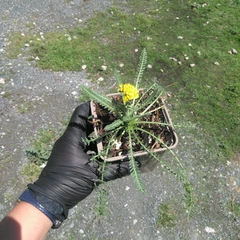
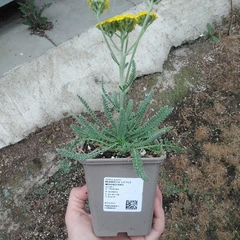
Yarrow Little Moonshine
Seedling
Attracts pollinators 🐝
Difficulty
Diseases
Edible
Flower color
Flower color: Shade
Foliage color
Fragrant (aromatic) 👃
Frost resistance
Hardiness zone
Height
Moisture
Pests
Position
Soil
Spacing
Spacing: Plants per m²
Species
Suitable for cutting
Suitable for drying
Recommended products

Coreopsis verticillata
Coreopsis Moonbeam

Achillea millefolium
Yarrow Lachsschönheit

Achillea millefolium
Yarrow Terracotta

Leucanthemum vulgare
Daisy Maikönigin

Echinops bannaticus
Globe thistle Star Frost

Achillea millefolium
Yarrow Cassis

Calamagrostis acutiflora
Feather Reed Grass Overdam

Achillea millefolium
Yarrow Appleblossom

Achillea millefolium
Yarrow White Beauty

Calamintha nepeta ssp. nepeta
Calamint

Catananche caerulea
Shoofly plant Blue

Rudbeckia fulgida
Rudbeckia Goldsturm

Salvia verticilata
Whorled Sage Purple Rain

Galium odoratum
Sweet woodruff

Rudbeckia fulgida
Rudbeckia Little Goldstar

Sanguisorba officinalis
Great Burnet

Salvia nemorosa
Woodland sage Schwellenburg

Sedum telephium
Sedum Herbstfreude

Sanguisorba
Great Burnet Rock and Roll

Pennisetum alopecuroides
Fountain Grass Hameln Gold

Helleborus orientalis
Hellebore Double Ellen White

Helleborus orientalis
Hellebore Double Ellen Flash

Saponaria vaccaria
Vaccaria Cotton Candy Mix

Callistephus chinensis
China aster Summer Carnival Mix

Matthiola incana
Stock StoX Azaleas Patch Mix

Scabiosa atropurpurea
Scabiosa Cotton Candy Mix

Callistephus chinensis
China aster Vanilla & Snow Mix

Cosmos bipinnatus
Cosmos Vanilla & Snow Mix

Helianthus debilis
Sunflower Soluna Mix

Achillea millefolium
Yarrow Cassis
Cultivation
Yarrow 'Little Moonshine' is a distinctly sun-loving perennial, and growing it is a breeze even for a complete beginner. For successful growth, choose a fully sunny and hot location with well-draining, sandy, and rather poor soil. Definitely avoid heavy, waterlogged, and clay soils; the plant could rot in them. Because you will receive an already beautifully rooted seedling from us, you can plant it straight into the flowerbed, ideally in the spring or early autumn. When planting, maintain a spacing of 30 to 40 centimeters, which corresponds to roughly 7 to 9 plants per square meter. This spacing is important to ensure good air circulation around the silvery-green leaves.
After planting, water the seedling moderately until it fully roots. Once it settles in its new spot, however, it becomes a very drought-tolerant plant that will do fine with just regular rainfall. It really only requires watering during extremely long summer droughts. You don't have to worry about fertilizing at all. In poor soil, the yarrow will maintain its compact growth of around 30 to 45 centimeters, and its stems will be sturdy enough not to need any support. Precisely thanks to its lower growth, this cultivar is also perfectly suited for growing in containers and window boxes on sunny balconies. When planting in a pot, do not forget a generous drainage layer and soil lightened with sand so the water can drain quickly.
During the season, it is a completely maintenance-free plant that is also not troubled by any pests or diseases. Its strongly aromatic leaves naturally repel unwelcome guests, while the bright lemon-yellow flowers magically attract bees and butterflies. To extend the blooming period, which lasts from June to September, we recommend continuously removing faded flower heads. Before the arrival of winter, no special protection is necessary. This perennial is extremely frost-resistant, easily tolerating temperatures down to -34 °C. Moreover, the dried flower heads create a beautiful winter effect in the garden, so it is enough to perform a cutback of the entire clump just above the ground in early spring, before the new leaves start to sprout.
The information given is based on our experience, please use it as a guide only. Times may vary depending on the season, climate, location, sowing and transplanting dates and possibly also the conditions in the greenhouse/greenhouse. We always recommend testing how the plant performs in your conditions. Please do not take this as a guarantee.
Frequently
asked
questions
Planting site
Where is the best place in the garden to plant the seedling?
Characteristics
Does yarrow attract beneficial insects to the garden?
Is Yarrow poisonous to humans or pets?
Does Yarrow have a scent, or are only the flowers aromatic?
When does yarrow 'Little Moonshine' bloom and what do the flowers look like?
Growing
Do I need to cover or protect the plant from frost during winter?
How often do I need to water the Yarrow and is it necessary to fertilize it?
Should I remove faded flower heads after blooming?
Are the Yarrow stems falling over and does it need some support?
What is the recommended planting distance between seedlings?
Can this Yarrow be grown in a pot on a balcony or terrace?
Basic information
What is 'Little Moonshine' Yarrow and who is it suitable for?
Harvest
Can I use Yarrow flowers for cutting in a vase or for drying?
Troubleshooting
Why is my Yarrow wilting, the stems are drooping, and it’s blooming very little?
Propagation
How can I propagate the plant if it doesn't self-seed?
Photos
in time
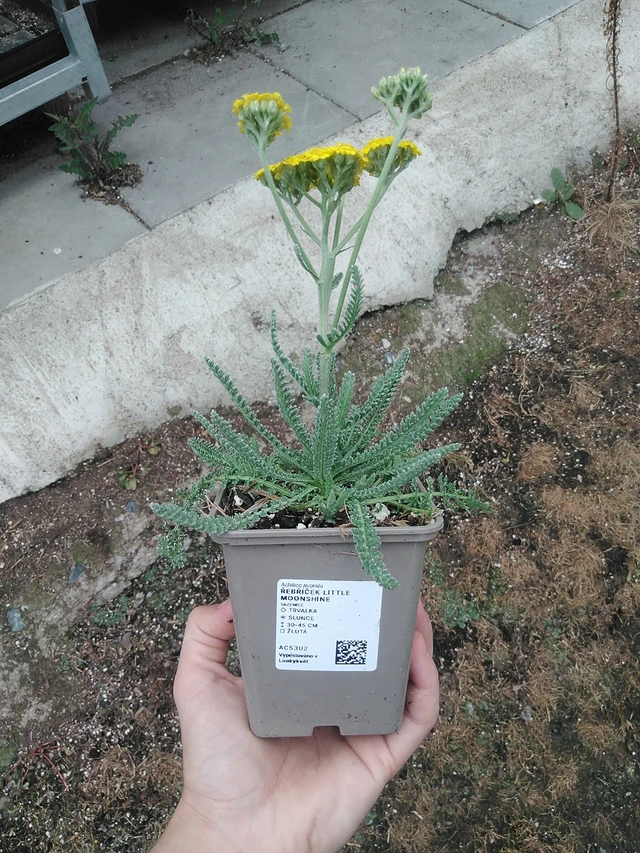
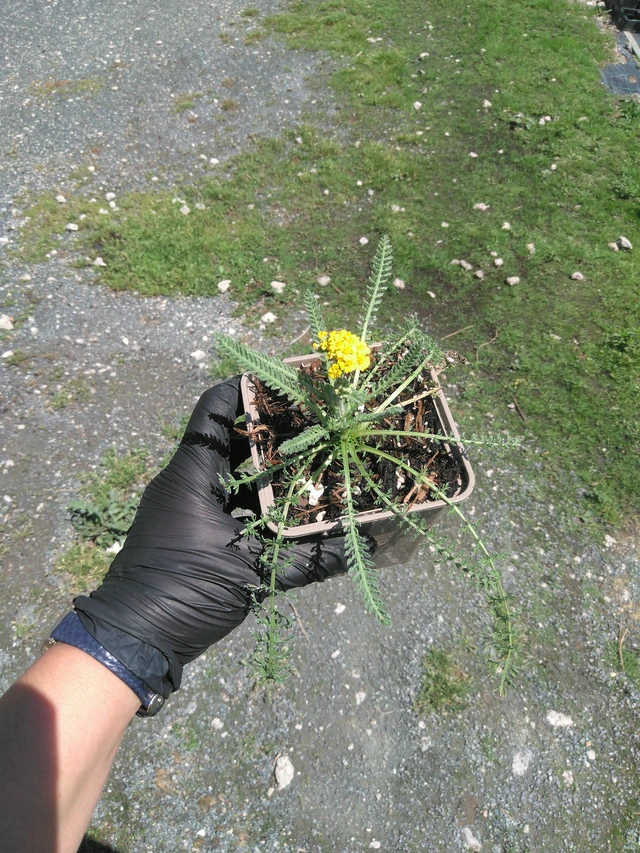
See how the seedling looks over the course of a year.
More products in category Yarrow

Achillea millefolium
Yarrow Summer Pastels
Achillea millefolium
Yarrow Terracotta

Achillea filipendulina
Yarrow Parkers Varietät

Achillea millefolium
Yarrow Lilac Beauty
Achillea millefolium
Yarrow Cassis

Achillea millefolium
Yarrow Cerise Queen

Achillea sibirica
Yarrow Love Parade

Achillea ptarmica
Yarrow The Pearl
Achillea millefolium
Yarrow Lachsschönheit
Achillea millefolium
Yarrow White Beauty

Achillea millefolium
Yarrow Alabaster

Achillea millefolium
Yarrow Belle Epoque

Achillea millefolium
Yarrow Paprika
Achillea millefolium
Yarrow Appleblossom

Achillea hybrida
Yarrow Credo

Achillea millefolium
Yarrow Red Velvet

Achillea millefolium
Yarrow Red Beauty
More products in category Perennials

Alchemilla mollis
Lady's mantle Irish Silk
Achillea millefolium
Yarrow Summer Pastels

Verbena bonariensis
Verbena

Salvia nemorosa
Woodland Sage Caradonna

Perovskia atriplicifolia
Russian Sage

Gaura lindheimeri
Gaura Siskiyou Pink

Echinacea purpurea
Coneflower Rubinstern

Echinacea pallida
Echinacea pallida

Eryngium planum
Sea Holly

Echinacea purpurea
Coneflower Magnus

Salvia nemorosa
Woodland Sage Ostfriesland

Calamintha nepeta
Calamint Blue Cloud
Rudbeckia fulgida
Rudbeckia Goldsturm
Calamintha nepeta ssp. nepeta
Calamint

Gaura lindheimeri
Gaura Summer Breeze

Salvia nemorosa
Woodland Sage Amethyst
Leucanthemum vulgare
Daisy Maikönigin
Achillea millefolium
Yarrow Terracotta

Perovskia atriplicifolia
Russian sage Little Spire

Salvia nemorosa


