Ireland
🌸 Předprodej jiřin spustíme 3. února 2026 v 10.00. 🌸
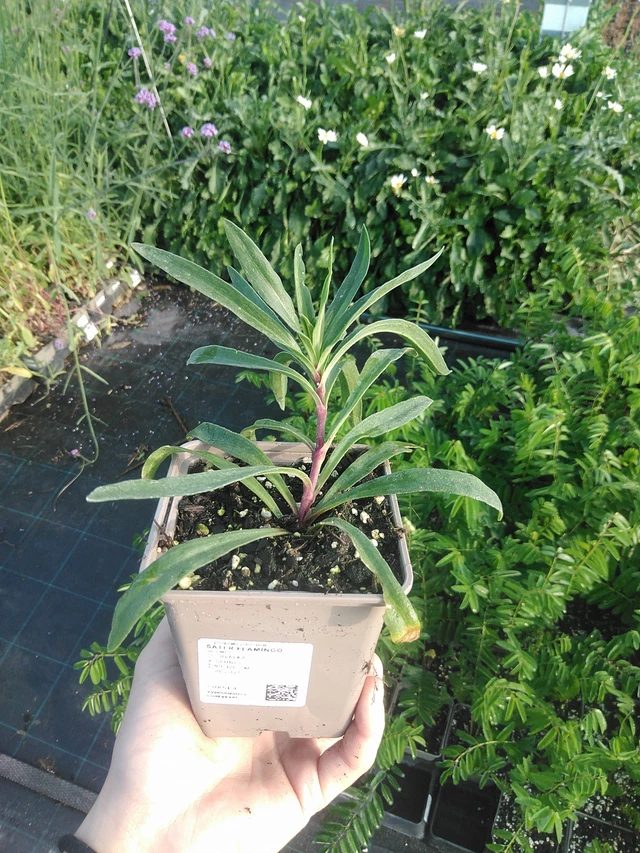
Baby's Breath Flamingo, Loukykvět

Gypsophila paniculata

Baby's Breath Flamingo

Originally a plant from the sandy steppes and slopes of Southern Europe and Central Asia. Cultivated in botanical gardens since the 18th century. Common in private gardens since the mid-19th century. A classic perennial for cutting. In the garden, it can also be used in modern steppe beds with grasses and drought-tolerant perennials. 'Flamingo' has a pink, double flower. Show full description

Vyprodáno

Large Seedling

Vyprodáno
 za where

Seedling

Vyprodáno
 za where

Barva květu

Růžová

Barva listu

Zelená

Druh

Trvalka

Mrazuvzdornost

-34
?
Do jaké teploty daná rostlina odolává mrazům.

Mrazuvzdornost (zóna)

4a (-34.4 °C až -31.7 °C)

Náročnost

Začátečník

Půda

Písčitá, propustná

Spon

70-70 cm
?
Doporučený spon pro pěstování.

Spon: Počet na m2

2

Stanoviště

Slunce

Vhodné k řezu

Ano

Vhodné k sušení

Ano

Vláha

Výška

120 cm
1
2
3
4
5
6
7
8
9
10
11
12
Kvetení
July
September

Recommended products

Gypsophila paniculata

A plant originally from the sandy steppes and slopes of Southern Europe and Central Asia. Cultivated in botanical gardens since the 18th century. Common in private gardens since the mid-19th century. A classic perennial for cutting. In the garden, it can also be used in modern steppe beds with grasses and drought-tolerant perennials. The cultivar Perfecta is characterized by compact growth, firm stems, and an abundant display of white, double flowers.
Sold Out
V prodeji opět na jaře 2026

Stipa tenuissima

Stipa flowers captivate in beds and bouquets with their lightness and delicacy. All stipas love full sun and dry, stony, well-drained soil. To make them look as natural as possible in beds, it is good to plant them in several pieces in loose groups along with other drought-tolerant perennials and bulbs. Only then will their stems and inflorescences come alive with the slightest breath of wind. 'Ponny Tails' is a species native to the steppes of Mexico, Texas, and Patagonia. Airy, dense tufts of hair-like, delicate leaves resemble horsehair. The leaves are green, turning straw-colored towards the flowers. It even self-seeds in a suitable location.
Sold Out
V prodeji opět na jaře 2026

Gaura lindheimeri

Gaura is a clump-forming perennial native to Texas and Louisiana. In our climate, it behaves more like a short-lived perennial. It combines beautifully with grasses and adds lightness and airiness to flowerbeds. It is an excellent food source for insects. Tiny, butterfly-like flowers bloom tirelessly from June until the first frosts. For bouquets, we harvest as soon as the first two to three flowers open on the stem. Siskiyou Pink is a beautiful variety with rose-red flowers on slightly arched stems. Less hardy than white-flowering varieties. The red-spotted leaves are also interesting.
Sold Out
V prodeji opět na jaře 2026

Verbena bonariensis

This South American Verbena species is often grown as an annual here, but in mild winters, it can survive and self-seed. Its sturdy, airy stems beautifully soften perennial beds and add a special touch with their purple color. It perfectly complements steppe plantings with grasses and rose beds.
Sold Out
V prodeji opět na jaře 2026
Lze sušit

Goniolimon tataricum

In nature, it is found in steppes on dry pastures and rocky slopes of Central and Southern Europe. It is a well-known floristically utilized plant. Excellent for use fresh or dried. For drying, select only stems with fully bloomed flowers. Hang flowers upside down in a dry, airy, and dark place.
Sold Out
V prodeji opět na jaře 2026

Achillea millefolium

An original wild perennial with a large distribution area from Europe to Siberia. Suitable for natural and wild plantings. It grows in meadows and dry grassy areas. A very adaptable and undemanding plant, it grows in clumps and spreads by runners. Cutting back after the first bloom will encourage new flowers. For bouquets, harvest when the flowers are fully open. Lasts 10 days in a vase. Summer Pastels features a varied and delicate range of colors from white and vanilla to salmon, brick, and bronze.
Sold Out
V prodeji opět na jaře 2026
Novinka

Gypsophila paniculata

This plant is native to the sandy steppes and slopes of Southern Europe and Central Asia. It has been cultivated in botanical gardens since the 18th century. By the mid-19th century, it was also common in private gardens. A classic perennial for cutting. In the garden, it can also be used in modern steppe beds with grasses and drought-tolerant perennials. Snowflake has white, mostly double flowers.
Sold Out
V prodeji opět na jaře 2026
Lze sušit

Eryngium planum

A perennial that finds its use in naturalistic steppe and gravel beds. It attracts bees, bumblebees, and butterflies. It's floristically valuable for its flowers with striking bracts, which are also perfect for drying. The roots of some species were once candied as sweets in England and France and added to pastries and jellies. In herbal medicine, it was used, among other things, as an aphrodisiac, hence its folk name 'male fidelity'.
Sold Out
V prodeji opět na jaře 2026

Salvia pratensis

Meadow sage occurs in our country primarily in warmer regions, especially in warmer regions, especially in South Moravia and Northern and Central Bohemia. It grows in sunny meadows, hillsides, and along roads. Its fragrant leaves form a basal rosette, from which several less leafy, branched stems emerge. The inflorescences are composed of striking, lipped flowers that are a great attraction for bees and bumblebees. 'Rose Rhapsody' has light pink flowers.
Sold Out
V prodeji opět na jaře 2026

Thalictrum delavayi

This meadow rue originates from western China, where it grows on mountain plains and in scrub with other tall perennials. It is an effective, delicate perennial ornamental not only for its flowers but also for its small, feathery leaves. The flowers grow in loose panicles on thin, purplish-colored stems. Individual florets are very tiny, lilac in color with protruding yellow stamens. In beds and bouquets, they create an airy, lacy effect. Lasts 7 days in a vase.
Sold Out
V prodeji opět na jaře 2026

Papaver orientale

Oriental poppy originates from the Caucasus, Turkey, and Iran, where it grows on rocky slopes and dry meadows. It blooms with large, cup-shaped flowers on tall stems. Like all poppies, for use in bouquets, we harvest them as soon as the buds color and "burst open." Additionally, we briefly (for about 20 seconds) sear the ends of the stems with a flame and immediately place them in cold water. They then last 4 days in a vase. The noticeably fuzzy and large leaves die back shortly after flowering, and the plant must rest until spring to regain strength. Some leaves sprout again in late summer. Therefore, it is advisable to plant other perennials nearby that, on the contrary, sprout later and can draw attention during the poppy's dormant period. Royal Wedding flowers have white petals with a dark burgundy spot in the center of the flower.
Sold Out
V prodeji opět na jaře 2026

Anemone hybrida

Anemones belong to the same family as buttercups. Their elegant flowers on long, slender stems can enliven and brighten late summer and autumn beds. They stand out against a darker background of shrub groups and will also be grateful for their partial shade. The Czech Perennial Society chose autumn anemones as the perennial of the 2022 season. They last 7 days in a vase. Whirlwind is a historic variety bred in 1887 in the USA. It has semi-double pure white flowers, often with inner curled petals, and a compact, strictly upright growth. The flowers are very durable.
Sold Out
V prodeji opět na jaře 2026

Echinacea purpurea

A valuable garden and medicinal perennial, native to North America. The spiky flower cones are an irresistible magnet for butterflies. They last 7–10 days in a vase. After the petals are picked, the stems with the central cones can be dried or used in fresh bouquets as an interesting element. White Swan blooms with milky white flowers with brown-orange centers. The petals are not spread out completely horizontally; they bend slightly downwards.
Sold Out
V prodeji opět na jaře 2026
Lze sušit

Eryngium planum

A perennial that finds its place in naturally designed steppe and gravel beds. It attracts bees, bumblebees, and butterflies. Floristically valuable for its flowers with striking bracts, which are also perfectly suited for drying. The roots of some species were once eaten candied as sweets in England and France and added to pastries and jellies. In herbal medicine, among other things, it was used as an aphrodisiac, hence its folk name 'male fidelity'. Glitter White was bred for abundant flowering and silver-colored flowers.
Sold Out
V prodeji opět na jaře 2026

Leucanthemum vulgare

A classic perennial for early summer bouquets and cottage gardens. For bouquets, we harvest flowers with firm, smooth central discs. They will then last 7–10 days in a vase. 'Maikönigin' is an exceptionally free-flowering garden form.
Sold Out
V prodeji opět na jaře 2026

Gaura lindheimeri

Gaura is a clump-forming perennial native to Texas and Louisiana. Here, it behaves more like a short-lived perennial. It combines beautifully with grasses, adding lightness and airiness to flowerbeds. It is an excellent food source for insects. Tiny flowers, resembling small butterflies, bloom tirelessly from June until the first frosts. For bouquets, harvest as soon as the first two to three flowers open on the stem. Whirling Butterflies blooms with pure white flowers that gradually acquire a pink tint. The buds also tend to be pinkish. It is characterized by compact growth and abundant flowering.
Sold Out
V prodeji opět na jaře 2026

Phlox paniculata

Phlox, also known as flame flower, is originally a perennial native to North America. It quickly gained great popularity in European gardens and has been systematically cultivated since the 19th century. It is a classic perennial for cut bouquets, where in addition to its colorful flowers, it also delights with a delicate fragrance. Harvest when about half of the flowers in the inflorescence have bloomed; it will then last up to 10 days in a vase. Despite efforts to breed the most resilient cultivars, phlox remains exceptionally sensitive to climate and soil conditions, so we carefully ensure the correct site selection. The Sweet Summer series includes cultivars bred for greater resistance to fungal diseases. Sweet Summer Ocean is a very special cultivar introduced to the market in 2012. It is characterized by the color variability of its flowers throughout the day. On cool mornings, the flowers are blue; as temperatures rise, they fade and by noon they turn violet-pink.
Sold Out
V prodeji opět na jaře 2026
Lze sušit

Limonium latifolium

Broadleaf sea lavender, also known as Statice, is a plant originally from the steppe regions of Southern Europe. Leathery leaves form basal rosettes, from which veiled panicles of tiny, light lavender-colored flowers emerge. Perfect for bouquets; for drying, harvest when the flowers are fully colored.
Sold Out
V prodeji opět na jaře 2026

Echinacea pallida

A valuable garden and medicinal perennial, native to North America. It blooms in late summer and captivates with long, hanging petals. Its spiky flower heads are an irresistible magnet for butterflies. Lasts 7–10 days in a vase. After the petals are picked, the stems with the central cones can be dried or used as an interesting element in fresh bouquets.
Sold Out
V prodeji opět na jaře 2026
Novinka

Cosmos atrosanguineus

Cosmos Cherry Chocolate is a garden cultivar of the original wild species originating from Mexico. Due to its striking scent, it is also called chocolate cosmos. Besides its fragrance and unusual coloration, its great advantage is its long flowering period. In our conditions, it will thrive best in a pot on the terrace; we can also embed it with its pot into perennial beds and remove it for winter. Cherry Chocolate has the largest flowers of all chocolate cosmos – they are up to 7 cm in diameter.
Sold Out
V prodeji opět na jaře 2026

Lychnis coronaria

A short-lived perennial with silver, softly felted stems and leaves. It blooms for a very long time, with a new flower opening each day, replacing the previous one. The basic species has simple, purplish-pink flowers.
Sold Out
V prodeji opět na jaře 2026

Achillea sibirica

A lesser-known species of yarrow has dark green, shiny, serrated-lobed leaves that remain attractive throughout the growing season, with sweetly pink flowers that are larger than those of common yarrow. Lasts 10 days in a vase.
Sold Out
V prodeji opět na jaře 2026

Limonium sinensis

Unavailable
Pro rok 2026 nedostupné.

Achillea millefolium

An original wild perennial with a large distribution area from Europe to Siberia. Suitable for natural and wild plantings. It grows in meadows and dry grassy areas. A very adaptable and undemanding plant, it grows in clumps and spreads by runners. Pruning after the first bloom will encourage new flowers. For bouquets, harvest when the florets are fully open. It lasts 10 days in a vase. Terracotta features ochre, shades of orange and yellow, and grey-green leaves.
Sold Out
V prodeji opět na jaře 2026

Helleborus orientalis

Hellebores are evergreen perennials that form slowly spreading clumps of leathery, dark green leaves. Stems typically bear four to five flowers. They bloom very early, in late winter and early spring. They are suitable for vases only after prominent seed pods form in the center of the flower and the flower matures. Before that, they tend to wilt and the stems cannot hold the flower upright. All parts of the plant are poisonous. The semi-double flowers of Hellebore Double Ellen Picotee are colored white and light pink with a purple-burgundy border.
Sold Out
V prodeji opět na jaře 2026

Briza media

An undemanding native grass that forms a dense green cover. In May, long stems emerge with delicate, heart-shaped spikelets resembling small hearts. Their movement with the slightest breeze is very striking. It remains beautiful until August or September. It's a good idea to trim it after flowering. It is perfectly suitable for drying.
Sold Out
V prodeji opět na jaře 2026

Cultivation

Pro dobrý růst je nezbytné dobře odvodněné, slunné místo. Se suchou propustnou půdou. Na těžkých půdách je šater citlivý na přemokření.

The information given is based on our experience, please use it as a guide only. Times may vary depending on the season, climate, location, sowing and transplanting dates and possibly also the conditions in the greenhouse/greenhouse. We always recommend testing how the plant performs in your conditions. Please do not take this as a guarantee.

Show all

Click to view the full growing instructions.

Photos
in time

See how the seedling looks over the course of a year.

Baby's Breath Flamingo - 23. 10. 2025
23. 10. 2025
Baby's Breath Flamingo - 9. 10. 2025
9. 10. 2025
Baby's Breath Flamingo - 11. 9. 2025
11. 9. 2025
Baby's Breath Flamingo - 11. 9. 2025
11. 9. 2025
Baby's Breath Flamingo - 19. 8. 2025
19. 8. 2025
Baby's Breath Flamingo - 19. 8. 2025
19. 8. 2025
Baby's Breath Flamingo - 31. 7. 2025
31. 7. 2025
Baby's Breath Flamingo - 9. 6. 2025
9. 6. 2025
Baby's Breath Flamingo - 13. 5. 2025
13. 5. 2025
Baby's Breath Flamingo - 3. 4. 2025
3. 4. 2025
Baby's Breath Flamingo - 2024
2024
Baby's Breath Flamingo - 2024
2024

More products in category Šáter

Novinka

Gypsophila paniculata

This plant is native to the sandy steppes and slopes of Southern Europe and Central Asia. It has been cultivated in botanical gardens since the 18th century. By the mid-19th century, it was also common in private gardens. A classic perennial for cutting. In the garden, it can also be used in modern steppe beds with grasses and drought-tolerant perennials. Snowflake has white, mostly double flowers.
Sold Out
V prodeji opět na jaře 2026

Gypsophila paniculata

A plant originally from the sandy steppes and slopes of Southern Europe and Central Asia. Cultivated in botanical gardens since the 18th century. Common in private gardens since the mid-19th century. A classic perennial for cutting. In the garden, it can also be used in modern steppe beds with grasses and drought-tolerant perennials. The cultivar Perfecta is characterized by compact growth, firm stems, and an abundant display of white, double flowers.
Sold Out
V prodeji opět na jaře 2026

Gypsophila paniculata

Originally a plant from the sandy steppes and slopes of Southern Europe and Central Asia. Cultivated in botanical gardens since the 18th century. Common in private gardens since the mid-19th century. A classic perennial for cutting. In the garden, it can also be used in modern steppe beds with grasses and drought-tolerant perennials. 'Bristol Fairy' blooms with a large number of white, double flowers.
Sold Out
V prodeji opět na jaře 2026

Gypsophila paniculata

Originally a plant from the sandy steppes and slopes of Southern Europe and Central Asia. Cultivated in botanical gardens since the 18th century. Common in private gardens since the mid-19th century. A classic perennial for cutting. In the garden, it can also be used in modern steppe beds with grasses and drought-tolerant perennials.
Sold Out
V prodeji opět na jaře 2026

More products in category Trvalky

Gaura lindheimeri

Gaura is a clump-forming perennial native to Texas and Louisiana. In our climate, it behaves more like a short-lived perennial. It combines beautifully with grasses and adds lightness and airiness to flowerbeds. It is an excellent food source for insects. Tiny, butterfly-like flowers bloom tirelessly from June until the first frosts. For bouquets, we harvest as soon as the first two to three flowers open on the stem. Siskiyou Pink is a beautiful variety with rose-red flowers on slightly arched stems. Less hardy than white-flowering varieties. The red-spotted leaves are also interesting.
Sold Out
V prodeji opět na jaře 2026

Salvia nemorosa

This species of sage (Salvia nemorosa) originally comes from the steppe regions of Central and Eastern Europe. It forms richly flowering small clumps with straight, upright stems. In flowerbeds, it looks best in groups. Traditionally, it is planted as an accompaniment to roses due to their similar flowering time. However, it will also look great in mixed, drought-tolerant steppe plantings with grasses. It lasts 7 days in a vase. The Caradonna cultivar stands out for its long flowering period and dark, almost black-purple stems with small purple flowers and dark purple bracts. If pruned after flowering, it will bloom again in late August and September.
Sold Out
V prodeji opět na jaře 2026

Achillea millefolium

An original wild perennial with a large distribution area from Europe to Siberia. Suitable for natural and wild plantings. It grows in meadows and dry grassy areas. A very adaptable and undemanding plant, it grows in clumps and spreads by runners. Pruning after the first bloom will encourage new flowers. For bouquets, harvest when the florets are fully open. It lasts 10 days in a vase. Terracotta features ochre, shades of orange and yellow, and grey-green leaves.
Sold Out
V prodeji opět na jaře 2026

Salvia nemorosa

This type of sage originally comes from the steppe regions of Central and Eastern Europe. It forms richly flowering small clumps with straight, upright stems. In beds, it looks best in groups. Traditionally, it is planted, for its coinciding blooming period, as an accompaniment to roses. However, it will look equally good in mixed drought-tolerant steppe plantings with grasses. It is an excellent food source for bees. It lasts 7 days in a vase. The cultivar Ostfriesland blooms in a strikingly dark violet-blue color.
Sold Out
V prodeji opět na jaře 2026

Salvia nemorosa

This species of sage originally comes from the steppe regions of Central and Eastern Europe. It forms richly flowering small clumps with straight, upright stems. In flower beds, it looks best in groups. Traditionally, it is planted as an accompaniment to roses for its coincident flowering time. However, it will also look great in mixed xerophilous steppe plantings with grasses. It is an excellent food source for bees. It lasts 7 days in a vase. Amethyst is an elegant variety with long stems and an unusual pink flower color for sage.
Sold Out
V prodeji opět na jaře 2026

Anemone hybrida

Anemones belong to the same family as buttercups. Their elegant flowers on long, slender stems can enliven and brighten late summer and autumn beds. They stand out against a darker background of shrub groups and will also be grateful for their partial shade. The Czech Perennial Society chose autumn anemones as the perennial of the 2022 season. They last 7 days in a vase. Whirlwind is a historic variety bred in 1887 in the USA. It has semi-double pure white flowers, often with inner curled petals, and a compact, strictly upright growth. The flowers are very durable.
Sold Out
V prodeji opět na jaře 2026

Anemone hybrida

Anemones come from the same family as buttercups. With their elegant flowers on long slender stems, they can brighten and enliven late summer and autumn beds. They stand out against a darker background of shrub groups and will also be grateful for their partial shade. The Czech Perennial Society chose autumn anemones as the perennial of the 2022 season. They last 7 days in a vase. Lorelei has semi-double flowers in a delicate light pink tone.
Sold Out
V prodeji opět na jaře 2026

Scabiosa caucasica

This perennial scabious grows wild on mountain meadows and rocky slopes of the Caucasus, northern Iran, and Turkey. In gardens, it is grown for its charming large bowl-shaped flowers. It has strong, long stems, which makes it a perfect perennial for cutting. We harvest it best while the central florets are still tightly closed, then it will last up to 10 days in a vase. Spent flowerheads can also be dried and are well-suited for use. Fama White has pure white flowers.
Sold Out
V prodeji opět na jaře 2026

Helleborus orientalis

Hellebores are evergreen perennials that form slowly spreading clumps of leathery, dark green leaves. Stems typically bear four to five flowers. They bloom very early, in late winter and early spring. They are suitable for vases only after prominent seed pods form in the center of the flower and the flower matures. Before that, they tend to wilt and the stems cannot hold the flower upright. All parts of the plant are poisonous. Double Ellen White is an almost pure white, double-flowered hellebore. Its petals are slightly wavy, and the lower row of petals is subtly tinted green.
Sold Out
V prodeji opět na jaře 2026

Perovskia atriplicifolia

Perovskia are sparsely branched subshrubs, native to regions from Afghanistan to Tibet. They grow in open, sunny, rocky and stony habitats. Their striking features are their white felted shoots and greyish aromatic leaves. They are suitable for sunny beds with other drought-tolerant perennials, where they create interesting structures even in winter months. Little Spire is a smaller cultivar also suitable for pots with a soil volume of 7 liters or more.
Sold Out
V prodeji opět na jaře 2026

Achillea millefolium

An original wild perennial with a large distribution area from Europe to Siberia. Suitable for natural and wild plantings. It grows in meadows and dry grassy areas. A very adaptable and undemanding plant, it grows in clumps and spreads by runners. Cutting back after the first bloom will encourage new flowers. For bouquets, harvest when the flowers are fully open. Lasts 10 days in a vase. Summer Pastels features a varied and delicate range of colors from white and vanilla to salmon, brick, and bronze.
Sold Out
V prodeji opět na jaře 2026

Sedum spectabile

A very hardy and long-lived perennial with an almost year-round effect. It forms upright clumps, and its flowers attract bees and butterflies. The 'Brilliant' cultivar is characterized by bushy growth and a striking pink color.
Sold Out
V prodeji opět na jaře 2026

Salvia nemorosa

This type of sage originally comes from the steppe regions of Central and Eastern Europe. It forms richly flowering small clumps with straight, upright stems. In beds, it looks best in groups. Traditionally, it is planted as an accompaniment to roses due to its matching blooming period. However, it will also look good in mixed xerophilous steppe plantings with grasses. It is an excellent source of nectar for bees. It lasts 7 days in a vase. Schneehügel blooms white.
Sold Out
V prodeji opět na jaře 2026

Lavandula angustifolia

Lavender is a must-have for every sunny herb garden. Classified as subshrubs, they are valued in gardens for their winter habit. They add not only color and texture to beds but also an unmistakable scent. They will look good with lower drought-tolerant grasses and perennials. A compact cultivar with dark flowers.
Sold Out
V prodeji opět na jaře 2026

Helleborus orientalis

Hellebores are evergreen perennials that form slowly spreading clumps of leathery, dark green leaves. Stems typically bear four to five flowers. They bloom very early, in late winter and early spring. They are suitable for vases only after prominent seed pods form in the center of the flower and the flower matures. Before that, they tend to wilt and the stems cannot hold the flower upright. All parts of the plant are poisonous. Double Ellen Red is a double-flowered hellebore with rounded petals of dark burgundy-red with a lighter undertone on the lower row of petals.
Sold Out
V prodeji opět na jaře 2026
Lze sušit

Eryngium planum

A perennial that finds its use in naturalistic steppe and gravel beds. It attracts bees, bumblebees, and butterflies. It's floristically valuable for its flowers with striking bracts, which are also perfect for drying. The roots of some species were once candied as sweets in England and France and added to pastries and jellies. In herbal medicine, it was used, among other things, as an aphrodisiac, hence its folk name 'male fidelity'.
Sold Out
V prodeji opět na jaře 2026

Scabiosa caucasica

This perennial scabious grows wild on mountain meadows and rocky slopes of the Caucasus, northern Iran, and Turkey. In gardens, it is grown for its charming large bowl-shaped flowers. It has strong, long stems, which makes it a perfect perennial for cutting. We harvest it best while the central florets are still tightly closed, then it will last up to 10 days in a vase. Spent flowerheads can also be dried and are well-suited for use. Fama Deep Blue has violet-blue flowers.
Sold Out
V prodeji opět na jaře 2026

Echinacea purpurea

A valuable garden and medicinal perennial, native to North America. The spiky flower cones are an irresistible magnet for butterflies. They last 7–10 days in a vase. After the petals are picked, the stems with the central cones can be dried or used in fresh bouquets as an interesting element. White Swan blooms with milky white flowers with brown-orange centers. The petals are not spread out completely horizontally; they bend slightly downwards.
Sold Out
V prodeji opět na jaře 2026

Sedum spectabile

A very hardy and long-lived perennial with an almost year-round effect. It forms upright clumps, and its flowers attract bees and butterflies. 'Matrona' tolerates nutritious soil well, provided it is well-drained. It has firm and stable stems.
Sold Out
V prodeji opět na jaře 2026

Anemone hybrida

Anemones belong to the same family as buttercups. With their elegant flowers on long, slender stems, they can brighten and enliven late summer and autumn beds. They stand out against the darker background of shrub groups and will also be grateful for their partial shade. The Czech Perennial Society chose autumn anemones as the perennial of the 2022 season. They last 7 days in a vase. Königin Charlotte is a robust, taller variety bred back in 1898. It has strong, firm stems and semi-double, large, purple-pink flowers. The outer sides of the silky smooth petals are tinged with purple.
Sold Out
V prodeji opět na jaře 2026