Ireland
🟢 The e-shop for seedlings is open again. 🌱 I also have dahlia seedlings and eucalyptus. 🟢
Ireland
🟢 The e-shop for seedlings is open again. 🌱 I also have dahlia seedlings and eucalyptus. 🟢
Sedum Matrona, Loukykvět

Sedum spectabile

Sedum Matrona

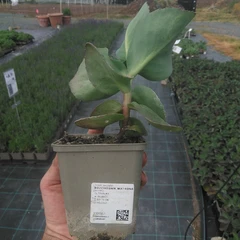
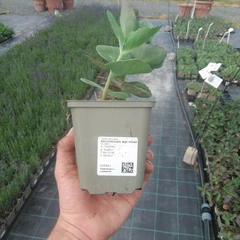
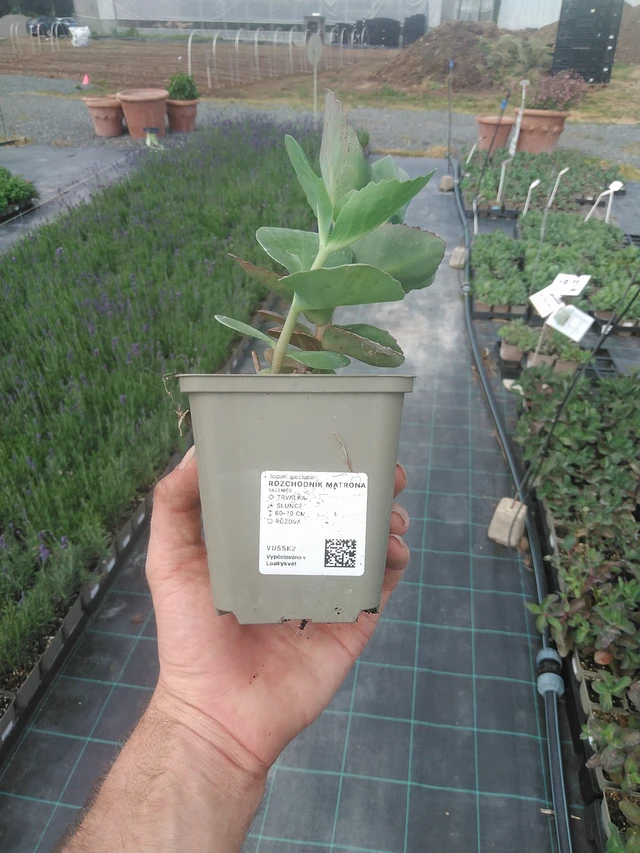
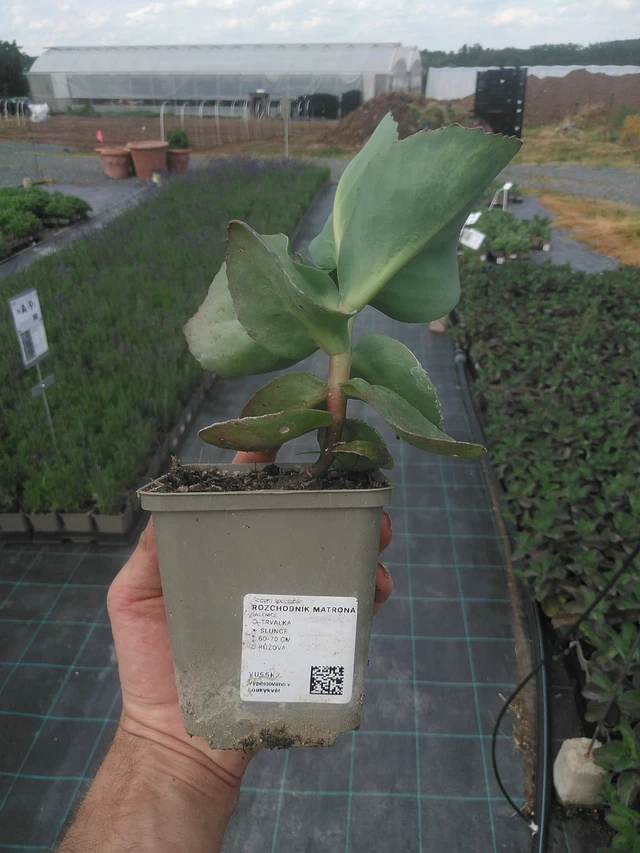
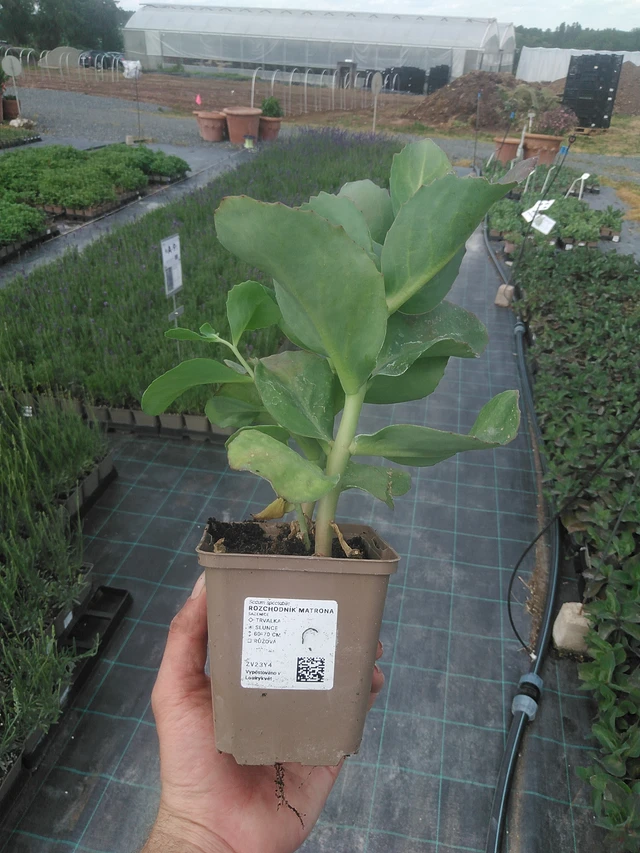
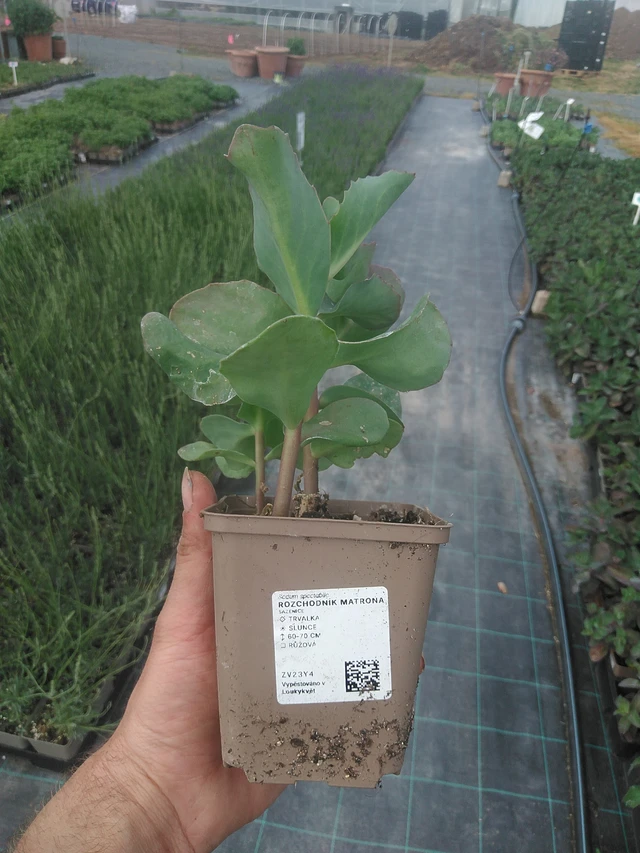
Showy stonecrop is one of the longest-living and hardiest perennials you can treat your garden to. It originally comes from the Far East, where it colonizes sunny and dry slopes. For successful cultivation, you simply need to find it a spot in direct sun with well-drained sandy soil. The 'Matrona' cultivar catches the eye at first glance with its fleshy, grayish-green leaves with a burgundy tinge and sturdy stems that do not break and need no support. We will deliver a mature potted seedling that you can easily transplant straight into the flowerbed after unpacking. We recommend planting five to seven plants per square meter; they will soon join into a solid stand around seventy centimeters tall. From August to October, it will then delight you with rich, flat inflorescences in an old rose color. It is an ideal choice for those looking for beauty without unnecessary effort. This stonecrop easily survives harsh winters with frosts dropping to minus twenty-eight degrees, and pests and diseases avoid it. The 'Matrona' variety differs from others in that it will reliably grow even in more nutritious soil, provided it is not waterlogged. In perennial compositions, it creates a beautiful contrast next to delicate ornamental grasses and other autumn flowers. During sunny days, bees, butterflies, and other pollinators constantly take turns over its flowers. You can boldly use the sturdy stems with pink umbels for cutting. They stay fresh in a vase for quite a long time and will bring a touch of the slowly ending summer into your home. It might surprise you that the leaves of this stonecrop are edible and can be used to garnish dishes. If you decide not to cut the plant back in the autumn, you will get a perfect structure in the flowerbed that will last all winter. Especially when the old flowers are covered in frost, they provide a breathtaking spectacle right until the spring months. Show full description

Seedling

Květináč K9 (9×9×9,5 cm)
Seedling
Seedling
Seedling
1-2 kusy
2,99/ks
3-8 kusů
2,69/ks
9-17 kusů
2,39/ks
18+ kusů
2,09/ks
Add to cart
Skladem 457 ks
Připravujeme 700 ks

Attracts pollinators 🐝

Ano

Difficulty

Beginner

Diseases

Disease-free 🙂

Edible

Ano
?
Information on whether the plant is edible.

Flower color

Pink

Flower color: Shade

Antique pink

Foliage color

Burgundy, green, grey-green

Fragrant (aromatic) 👃

Ne

Frost resistance

-28
?
The temperature down to which the plant is frost hardy.

Hardiness zone

5a (-28.9 °C to -26.1 °C)

Height

60-70 cm

Moisture

💧

Pests

Pest-free 🙂

Position

Sun

Soil

Sandy, well-drained

Spacing

35-45 cm
?
Recommended planting spacing.

Spacing: Plants per m²

5-7

Species

Perennial

Suitable for cutting

Ano

Suitable for drying

Ano
1
2
3
4
5
6
7
8
9
10
11
12
Flowering
August
October

Recommended products

Sedum Brilliant, Loukykvět

Sedum spectabile

A very hardy and long-lived perennial with an almost year-round effect. It forms upright clumps, and the flowers attract bees and butterflies. The cultivar Brilliant is characterized by shrubby growth and a distinct pink color.
2,99
More from 2,89
In Stock s doručením od 3. 8. 2026
Sedum Herbstfreude, Loukykvět

Sedum telephium

Sedum Herbstfreude is a very hardy and long-lived perennial that offers an almost year-round effect. The original sedum species grow in dry, rocky, and sunny habitats, so even in our gardens, it will welcome full sun and well-drained, sandy, or loamy soil. We will deliver a mature seedling in a pot, which you just need to transplant directly into the flowerbed. Thanks to its undemanding nature, it is absolutely ideal for beginners. It perfectly handles drought, does without support, and does not suffer from any diseases or pests. It can withstand even severe frosts dropping to minus twenty-eight degrees. It forms upright clumps with fleshy gray-green leaves, which are decorated with rich inflorescences from August to October. The Herbstfreude variety is one of the hardiest and most robust, blooming in captivating shades of old rose, terracotta, to deep burgundy. These flowers act as a literal magnet for bees, bumblebees, and butterflies, providing them with important food at the end of summer. It fits perfectly into drought-tolerant flowerbeds, country gardens, as well as modern plantings, where it beautifully complements shorter ornamental grasses. Growing it in larger pots on the terrace is also easy. The sturdy stems growing to a height of fifty to seventy centimeters are perfectly usable for cutting into late summer bouquets. They stay fresh for a long time in a vase and add an interesting color to arrangements. In the autumn, after blooming, you don't need to cut it at all. The remaining inflorescences will create a wonderful winter effect, especially when covered with frost in the cold months.
3,49
More from 2,89
In Stock
Lady's mantle Irish Silk, Loukykvět

Alchemilla mollis

Alchemilla mollis, known as lady's mantle, is an indispensable perennial for anyone who wants to bring harmony and softness to the garden. Its home is the moister environments of mountain meadows and light forests, making it a very adaptable plant that will survive even severe frosts without problems in our climate. The 'Irish Silk' cultivar is prized for its vitality and abundant blooming, where clouds of tiny, yellow-green flowers float above clumps of gray-green leaves. It is precisely this neutral color that can work wonders in a flower bed – it softens overly sharp contrasts between other flowers and beautifully unifies the entire composition. Besides its ornamental function, lady's mantle also has practical uses. Thanks to its clumping growth and ability to quickly fill in, it is ideal for edging pathways or as an underplanting beneath taller shrubs and roses. Water droplets catch on its leaves, creating a magical spectacle in the garden. If you enjoy making bouquets, you will love lady's mantle as versatile filler greenery that matches almost anything. It will last beautiful for about ten days in a vase, and its inflorescences can also be easily dried without losing too much of their color or shape. Moreover, it is a magnet for pollinators, and its young leaves are even edible, so it also finds use in a natural kitchen.
2,99
More from 2,09
Coming Soon
Gaura Siskiyou Pink, Loukykvět

Gaura lindheimeri

Gaura Siskiyou Pink is a charming perennial that brings lightness and airiness to the garden. Its original native area is in the warm regions of Texas and Louisiana, which is why it thrives in full sun and well-drained sandy soil. It grows in clumps and from June until the autumn frosts produces tiny raspberry-pink flowers that resemble fluttering butterflies. An interesting detail of this variety is the green leaves with a bronze tint and red spots. It is an absolutely undemanding plant, does not suffer from diseases or pests, and even beginners can handle its care. You will receive a grown seedling in a pot from us, which you simply need to transplant directly into the flowerbed. Here it complements ornamental grasses perfectly and acts as an attraction for bees and bumblebees. Although it grows more as a short-lived perennial in our climate, in a suitable place it reliably self-seeds. Occasional pinching will encourage richer branching. Gaura is excellent for summer bouquets. We cut the stems for a vase as soon as the first two to three little flowers open.
2,99
More from 2,09
In Stock
Sedum Star Dust, Loukykvět

Sedum telephium

A very hardy and long-lived perennial with an almost year-round effect. It creates upright clumps, and the flowers attract bees and butterflies. 'Stardust' has flowers that are, untraditionally for a stonecrop, white.
2,99
More from 2,09
Coming Soon
Russian Sage, Loukykvět

Perovskia atriplicifolia

Russian sage reliably brings a touch of sunny steppes into the garden and places almost no demands on care. These sparsely branched subshrubs originally come from harsh, rocky areas from Afghanistan to Tibet, where they grow on open sun-drenched plains. Thanks to its origin, it delights in full sun and poor, well-drained sandy soil with minimal moisture. You will receive from us a well-rooted seedling in a pot, which just needs to be transplanted straight to the chosen spot in the flower bed. It does not need support, is avoided by common pests and diseases, and will survive frosts down to minus twenty-eight degrees. It grows up to one hundred and twenty centimeters and forms striking white felted shoots with silvery grey aromatic leaves. From July to October, it blooms with tiny blue-purple flowers that act as a lure for bees and butterflies and are even edible. Russian sage stands out next to drought-tolerant perennials. The flowers are suitable for cutting and drying for winter arrangements. Moreover, the silvery stems will ensure a beautiful winter effect in the flower bed.
2,99
More from 2,09
In Stock
Feather grass Pony Tails, Loukykvět

Stipa tenuissima

Feather grass flowers capture attention in beds and bouquets with their lightness and delicacy. All feather grasses love full sun and dry, stony, well-drained soil. To look most natural in beds, it is good to plant them in loose groups of several pieces together with other drought-loving perennials and bulbs. Only then do their stems and inflorescences, set in motion by the slightest breath of wind, truly stand out. Stipa 'Ponny Tails' is a species native to the steppes of Mexico, Texas, and Patagonia. Airy, dense clumps of hair-like delicate leaves resemble horsehair. The leaves are green, turning up to straw-colored towards the flowers. In a suitable location, it also self-seeds.
3,79
More from 2,69
In Stock
Woodland Sage Caradonna, Loukykvět

Salvia nemorosa

This species of sage originally comes from the steppe regions of Central and Eastern Europe. It forms profusely flowering small clumps with straight upright stems. In flower beds, it looks best in groups. Traditionally, due to the identical flowering time, it is planted as a companion to roses. However, it will look just as good in mixed drought-loving steppe plantings with grasses. It lasts 7 days in a vase. The cultivar Caradonna stands out with a long flowering period and dark, almost black-purple stems with tiny purple flowers and dark purple bracts. If we cut it back after flowering, it will bloom again in late August and September.
2,99
More from 2,09
In Stock posledních 65 kusů
Verbena, Loukykvět

Verbena bonariensis

A verbena species originally from South America. In our country, it is often used as an annual, but in mild winters it can overwinter and reproduce by self-seeding. The firm, airy stems beautifully soften perennial beds and make them special with their purple color. It beautifully complements steppe plantings with grasses and rose beds.
3,29
More from 2,29
In Stock
Coneflower White Swan, Loukykvět

Echinacea purpurea

A valuable garden and medicinal perennial, native to North America. The spiky flower centers are an irresistible attraction for butterflies. They last 7–10 days in a vase. After removing the petals, the stems with the central disks can be dried or used in fresh bouquets as an interesting element. White Swan blooms with milky white flowers and brownish-orange centers. The petals are not spread entirely horizontally; they bend slightly downwards.
3,79
More from 3,89
In Stock s doručením od 10. 8. 2026
Autumn Moor Grass, Loukykvět

Sesleria autumnalis

Autumn moor grass is an exceptionally hardy ornamental grass that introduces fresh greenery to the garden right from early spring. Native to the rocky slopes of the Balkans, it is well-adapted to free-draining soils, making it an ideal choice for novice gardeners. It forms neat clumps growing thirty to fifty centimeters tall. Its greatest asset is its bright green foliage, which emerges early and remains in pristine condition in the borders well into winter. The plant is untouched by diseases or pests and handles severe frosts superbly. In August and September, delicate creamy-beige flowers appear above the foliage. These rather subtle spikelets give the plant an elegant, refined look. In the garden, it acts as a perfect filler perennial for sunny or partially shaded spots. It looks absolutely stunning paired with calamint, airy gaura, or flowering oregano. Its delicate flowers and leaves are easily used as foliage filler in fresh bouquets, or they can be dried for small-scale floristry projects.
3,79
More from 2,69
In Stock s doručením od 10. 8. 2026
Yarrow Terracotta, Loukykvět

Achillea millefolium

A native wild perennial with a large distribution range from Europe to Siberia. Suitable for natural and wild plantings. It grows in meadows and dry grassy places. A very adaptable and undemanding plant, it grows in clumps and spreads via runners. Cutting back after the first bloom encourages a new set of flowers. Harvest for bouquets when the tiny flowers are fully open. It lasts 10 days in a vase. Terracotta features ochre, shades of orange and yellow, and gray-green foliage.
2,99
More from 2,89
In Stock
Coneflower Rubinstern, Loukykvět

Echinacea purpurea

A valuable garden and medicinal perennial, originally from North America. It blooms in summer with dark purple-pink flowers. The spiky flower discs are an irresistible lure for butterflies. Lasts 7–10 days in a vase. After plucking the petals, the stems with the central discs can be dried or used in fresh bouquets as an interesting element. Rubinstern is very similar to the Magnus cultivar; the petals are darker and firmer. As they fade, they gradually pale and droop downwards.
2,99
More from 2,09
In Stock
Sea Holly, Loukykvět
For drying

Eryngium planum

Sea holly is an indispensable perennial for all lovers of naturally styled gardens. It earned its folk name - male fidelity - in times when it was used in herbal medicine as an aphrodisiac, and its roots were even candied as sweets in France and England. Today, however, you will appreciate it mainly for its low maintenance and unique appearance. Its home is on sunny hillsides and dry meadows, so even in our gardens, it will welcome well-drained, even poorer sandy soil and full sun. It produces upright, sturdy stems topped with blue-purple flowers with prickly bracts, which bring interesting structure and a silvery touch to the flowerbeds. It is literally a magnetic plant for bees, bumblebees, and butterflies, who find a rich food source on it. Floristically, it is extremely valuable, because its flowers are perfectly suited for cutting as well as drying for winter decorations. If you decide not to harvest it, feel free to leave it in the flowerbed all winter. Its silhouette covered in hoarfrost creates a wonderful winter effect. Although it is a short-lived perennial, in a suitable location it reliably self-seeds, so you will enjoy its beauty for many years.
2,79
More from 1,99
Coming Soon
Woodland Sage Amethyst, Loukykvět

Salvia nemorosa

This species of sage originates from the steppe regions of Central and Eastern Europe. It forms profusely flowering small clumps with straight, upright stems. In flower beds, it looks best in groups. It is traditionally planted as a companion to roses due to the matching flowering time. However, it looks equally good in mixed drought-tolerant steppe plantings with grasses. It is an excellent food source for bees. Lasts 7 days in a vase. Amethyst is an elegant variety with long stems and a pink flower color that is unusual for sages.
2,99
More from 2,09
In Stock s doručením od 3. 8. 2026
Yarrow Summer Pastels, Loukykvět

Achillea millefolium

An original wild perennial with a large distribution area from Europe to Siberia. Suitable for natural and wild plantings. It grows in meadows and dry grassy places. A very adaptable and undemanding plant, it grows in clumps and spreads by runners. By cutting back after the first flowering, we encourage a set of new flowers. For bouquets, we harvest when the florets are fully open. It lasts 10 days in a vase. Summer Pastels is characterized by a changeable and soft range of colors from white and vanilla to salmon, brick red, and bronze.
3,09
More from 1,99
In Stock
Calamint Blue Cloud, Loukykvět

Calamintha nepeta

Lesser calamint Blue Cloud is an undemanding and modest perennial that reliably perfumes any sunny garden. Its original homeland is the sunny and dry slopes of Southern Europe, which is why it thrives best here in direct sun in well-drained, sandy, or poorer loamy soil. It handles winter without problems, tolerating frosts down to minus twenty-three degrees. You will receive a grown seedling in a pot from us, which you just need to transplant straight into the flowerbed, where it will very soon form a compact, airy small shrub reaching a height of up to forty centimeters. It does not suffer from any diseases or pests, so even complete beginners can easily handle caring for it. Throughout late summer and into autumn, it blooms with a record number of tiny blue flowers that are so typical of the Blue Cloud variety. The whole plant emits a pleasant minty-spicy scent, and its flowers, which resemble thyme, act as a literal magnet for bees, bumblebees, and butterflies. It will look great among roses or in naturally designed steppe flowerbeds, where it naturally complements lower ornamental grasses. Additionally, both the blue flowers and green leaves are edible, so you can use them to garnish summer dishes. Lesser calamint is also excellently suited for cutting into smaller fresh bouquets, adding a fine structure to them in a vase.
2,79
More from 1,99
Coming Soon
Fountain grass Hameln, Loukykvět

Pennisetum alopecuroides

Fountain grasses originate from East Asia, where they grow in meadows and light forests. They form hemispherical clumps of narrow leaves which, like the flowers, color up in the autumn. They are suitable for the vase and for drying. The 'Hameln' cultivar is one of the most reliable bloomers in cooler regions. The inflorescences initially have a soft pink tinge, then change color to yellow-brown or reddish-brown.
4,29
More from 3,89
In Stock
Woodland Sage Ostfriesland, Loukykvět

Salvia nemorosa

This species of sage originates from the steppe regions of Central and Eastern Europe. It forms abundantly flowering small clumps with straight upright stems. In beds, it looks best in groups. Traditionally, it is planted as a companion to roses due to the matching flowering time. However, it will look equally good in mixed drought-loving steppe plantings with grasses. It is an excellent food source for bees. It lasts 7 days in a vase. The cultivar Ostfriesland blooms with a strikingly dark violet-blue color.
2,99
More from 2,09
In Stock
Echinacea pallida, Loukykvět

Echinacea pallida

The pale coneflower is one of the exceptionally interesting prairie perennials of the North American continent. In its natural environment, it grows on open, sunny plains, which is why it thrives best in our gardens in full sun in drier, well-drained soil. You just need to transplant this grown seedling straight into the flower bed, where it will reliably take root. It does not need support, easily withstands severe frosts, and is avoided by common diseases and pests, making it ideal for beginner growers. During June and July, it will reward you with aromatic flowers with unusually narrow and drooping petals in light purple and pink tones. The prominent prickly centers are literally a magnet for bees and bumblebees, and the flowers themselves are surprisingly edible. The plant stands out especially in rustic plantings together with ornamental grasses. Gardeners and florists love it for its versatility. The fresh stems bring joy in a vase for about a week. Moreover, the distinctive central cones hold their shape perfectly, can be perfectly dried for winter decorations, or left in the flower bed, where they will create an eye-catching winter structure under a layer of snow.
2,99
More from 2,09
In Stock s doručením od 24. 8. 2026
Gaura Whirling Butterflies, Loukykvět

Gaura lindheimeri

The charming Gaura 'Whirling Butterflies' is exactly the perennial that will give any flower bed a relaxed, natural look. It originally comes from the dry and hot plains of southern North America, which clearly suggests that it loves sunshine and well-drained sandy soil. You will receive from us a beautifully grown seedling in a pot, which you can simply transplant straight into the garden. Here, it will soon form a dense clump of green leaves, from which long, thin stems dotted with flowers emerge all summer until October. These flowers open in a pure white color and gradually take on a slight pinkish tone. Furthermore, the abundant blooming reliably attracts pollinators, for whom the plant is a great source of food. It can handle even stronger frosts down to minus eighteen degrees. It looks excellent in mixed plantings next to drought-tolerant grasses or other undemanding species. Although it is a short-lived perennial, it willingly self-seeds, meaning it will stay with you in its location for a very long time. If you like creating fresh summer bouquets, Gaura will definitely not disappoint you. You just need to cut the stems the moment the first small flowers open. It is a completely undemanding species without serious diseases, which needs no support and will forgive even beginner mistakes.
2,99
More from 2,09
Coming Soon
Catmint Walker’s Low, Loukykvět

Nepeta racemosa

Catmints are ideal companions for roses, suitable for naturalistic gardens, and lower species also for boxes and pots. Some of them are an irresistible attraction for cats, caused by the hallucinogen nepetalactone. This should be present in the highest amount in the species Nepeta cataria. Conversely, lemon-scented catmints reportedly do not attract cats. The botanical name Nepeta likely comes from the name of the ancient Etruscan city Nepet - Nepi in the territory of today's Italian province of Viterbo, where the plant was once cultivated. Nepeta racemosa naturally grows on dry meadows and rocky, stony slopes from the Caucasus to Central Asia. It has aromatic grey-green leaves and forms a tufted semi-spherical bush. Walker’s Low got its name after an Irish estate where it was bred in 1970. It has the most intense blue-violet flower coloration.
2,99
More from 2,09
Coming Soon
Feather Reed Grass Karl Förster, Loukykvět

Calamagrostis acutiflora

A tufted, upright growing grass. It sprouts very early. It is decorative due to its overall vertical habit and fine flower panicles, which bloom silvery-grey, turn yellow in summer, and transition to sandy beige. It decorates the garden until winter. You can plant it in mixed beds or use it as an element to rhythmically divide the space. Usable for bouquets and drying.
4,29
More from 3,89
In Stock
Yarrow Lilac Beauty, Loukykvět

Achillea millefolium

An original wild perennial with a large distribution area from Europe to Siberia. Suitable for natural and wild plantings. It grows in meadows and dry grassy places. A very adaptable and undemanding plant, it grows in clumps and spreads via runners. Cutting back after the first flowering encourages a new set of flowers. We harvest for bouquets when the florets are fully open. They last 10 days in a vase.
3,49
More from 2,39
In Stock
Calamint, Loukykvět

Calamintha nepeta ssp. nepeta

An undemanding and modest perennial that blooms with a large number of tiny flowers. It blooms for a record-breaking length of time throughout late summer and autumn. It forms smaller, compact, airy bushes that release a minty-spicy scent. The thyme-like flowers attract bees, bumblebees, and butterflies. It will look good among roses as well as in naturalistic steppe beds, perhaps with lower grasses. This calamint is generally more vigorous. It differs from other calamints with felted leaves by its record flowering length, stiff and shiny leaves, and also a larger number of flowers that do not form seeds and are therefore maximally durable. Sometimes sold under the cultivar name 'Triumphator'.
2,79
More from 1,99
In Stock
Hyssop Roseus, Loukykvět

Hyssopus officinalis

The Roseus hyssop is an aromatic subshrub whose structure and requirements strongly resemble the popular lavender. It originally comes from the sunny and dry regions of the Mediterranean and Asia Minor, so it thrives best in direct sun here as well. It favors well-drained, sandy, and even nutrient-poor soil, where it easily copes with a lack of moisture. You will receive a grown seedling in a pot from us, which you simply transplant straight into the flower bed, where it will very soon form a neat, richly branched bush reaching a height of around fifty centimeters. It is an absolutely undemanding plant that is not bothered by diseases or pests, so its cultivation can be easily handled even by complete beginners. It comfortably withstands severe frosts down to minus twenty-three degrees Celsius. In the garden, hyssop finds wide application. It fits perfectly into steppe-character gravel beds and beautifully complements roses or lower ornamental grasses. During the summer until early autumn, the Roseus variety will delight you with a flood of tiny flowers in a delicate light pink shade. These flowers, as well as the narrow green leaves, emit a pleasant spicy fragrance and reliably act as a huge lure for bees, bumblebees, and butterflies. Since all parts of the plant are edible, you can also use hyssop in the kitchen as a herb to flavor dishes or prepare a medicinal tea from it. You can also cut the long flowering stems for a vase, where they will add a fine texture and lightness to summer bouquets. Although the flowers are not suitable for drying for floral purposes, the plant will please you in the flower bed even out of season. The inflorescences form an interesting structure which, after the leaves fall and are covered by morning frost, creates a beautiful winter effect. Furthermore, if you provide hyssop with ideal conditions, it will reliably self-seed in its location and remain a solid part of your garden for many years.
2,79
More from 1,99
In Stock
Meadow Sage Rose Rhapsody, Loukykvět

Salvia pratensis

Meadow sage occurs here primarily in warmer regions, especially in southern Moravia and northern and central Bohemia. It grows on sunny meadows and hillsides and along paths. Fragrant leaves form a basal rosette, from which several less leafy branched stems grow. The inflorescences are composed of striking bilabiate flowers, which are a great attraction for bees and bumblebees. Rose Rhapsody has light pink flowers.
2,79
More from 1,99
Coming Soon
Coneflower Magnus, Loukykvět

Echinacea purpurea

A valuable garden and medicinal perennial, native to North America. It blooms in summer with dark purple-pink flowers. The spiky flower centers are an irresistible attraction for butterflies. They last 7–10 days in a vase. After removing the petals, the stems with the central disks can be dried or used in fresh bouquets as an interesting element. Magnus features distinctive deep pink flowers with an orange-brown center.
2,99
More from 2,09
In Stock poslední 1 kus

Cultivation

Sazenice rozchodníku je tou pravou volbou pro slunné záhony, kde se nechcete trápit s náročnou údržbou a složitou péčí. Tato trvalka miluje horké slunné místo a chudou, písčitou či mírně kamenitou půdu. Dobře poroste na plném slunci v sušší propustné půdě. Pokud máte zahradní zeminu příliš těžkou a jílovitou, vylepšete ji pořádnou dávkou písku, protože zadržování vlhkosti u kořenů je to jediné, co této rostlině opravdu vadí. Zásadní je nepřemokřená půda v zimě, kdy by mohlo dojít k fatálnímu uhnívání dužnatých kořenů. Zakoupené sazenice sázejte do sponu zhruba čtyřicet pět centimetrů, což vydá na pět až sedm rostlin na jeden metr čtvereční. Poskytnete jim tak dostatek životního prostoru, aby z nich do srpna vyrostly silné trsy, které díky pevným stonkům nevyžadují vůbec žádné vyvazování ani umělou oporu.

Během celého jara a léta vás rozchodník rozhodně nebude nijak zatěžovat. Vláhu potřebuje jen těsně po výsadbě sazenice, později si díky svým dužnatým šedozeleným listům dokáže vodu bezpečně uchovat i na poměrně dlouhá období sucha. Stejně skromný je tento druh i v požadavcích na výživu, dokonce u něj platí známé pravidlo, že hnojení by mu spíše uškodilo. Při nadbytku živin v půdě se stonky vytahují a nejsou stabilní, celý trs by se pak mohl velice nevzhledně rozklesávat. Obrovskou výhodou je i fakt, že se nemusíte obávat absolutně žádných škůdců ani houbových chorob, rostlina je mimořádně zdravá a vitální po celý svůj dlouhý život. Navíc se v období od srpna do října stává doslova rájem pro včely, čmeláky a motýly, kteří na velkých starorůžových květech hledají cenný nektar před zimou.

Rozchodník najde skvělé uplatnění i při pěstování v okrasném květináči nebo v truhlíku na slunném balkoně. Pro úspěšné pěstování v nádobách stačí dodržet několik jednoduchých pravidel. Vždy zvolte květináč s odtokovým otvorem, na dno nasypte silnou vrstvu drenáže z keramzitu a rostlinu zasaďte do propustného substrátu odlehčeného pískem. Mrazuvzdornost této trvalky dosahuje spolehlivě až k minus osmadvaceti stupňům, takže jedinci na záhoně i v nádobách zimu přečkají naprosto bez úhony. Na podzim se určitě vyhněte jakémukoliv střihání. Odkvetlé stonky nechte stát, jelikož ojíněné mrazem vyčarují na vaší zahradě fantastický zimní efekt. Zpětný řez celého trsu těsně u země proveďte až brzy na jaře jako omlazovací kúru. Tímto krokem zajistíte, aby měly nové dužnaté výhony dostatek místa a světla pro svůj další bujný růst v nové sezóně.

The information given is based on our experience, please use it as a guide only. Times may vary depending on the season, climate, location, sowing and transplanting dates and possibly also the conditions in the greenhouse/greenhouse. We always recommend testing how the plant performs in your conditions. Please do not take this as a guarantee.

Show all

Click to view the full growing instructions.

Frequently
asked
questions

Stanoviště

Základní informace

Pěstování

Vlastnosti

Množení

Nemoci & škudci

Problémy

Sklizeň

Photos
in time

See how the seedling looks over the course of a year.

Sedum Matrona - 13. 7. 2026
13. 7. 2026
Sedum Matrona - 2. 6. 2026
2. 6. 2026
Sedum Matrona - 2. 6. 2026
2. 6. 2026
Sedum Matrona - 2. 6. 2026
2. 6. 2026
Sedum Matrona - 2. 6. 2026
2. 6. 2026
Sedum Matrona - 13. 5. 2026
13. 5. 2026
Sedum Matrona - 21. 4. 2026
21. 4. 2026
Sedum Matrona - 21. 4. 2026
21. 4. 2026
Sedum Matrona - 27. 3. 2026
27. 3. 2026
Sedum Matrona - 27. 3. 2026
27. 3. 2026
Sedum Matrona - 10. 9. 2025
10. 9. 2025
Sedum Matrona - 10. 9. 2025
10. 9. 2025
Sedum Matrona - 10. 9. 2025
10. 9. 2025
Sedum Matrona - 19. 8. 2025
19. 8. 2025
Sedum Matrona - 19. 8. 2025
19. 8. 2025
Sedum Matrona - 28. 7. 2025
28. 7. 2025
Sedum Matrona - 28. 7. 2025
28. 7. 2025
Sedum Matrona - 11. 7. 2025
11. 7. 2025
Sedum Matrona - 11. 7. 2025
11. 7. 2025
Sedum Matrona - 24. 6. 2025
24. 6. 2025
Sedum Matrona - 24. 6. 2025
24. 6. 2025
Sedum Matrona - 9. 6. 2025
9. 6. 2025
Sedum Matrona - 9. 6. 2025
9. 6. 2025
Sedum Matrona - 13. 5. 2025
13. 5. 2025
Sedum Matrona - 13. 5. 2025
13. 5. 2025
Sedum Matrona - 3. 4. 2025
3. 4. 2025
Sedum Matrona - 3. 4. 2025
3. 4. 2025
Sedum Matrona - 3. 4. 2025
3. 4. 2025
Sedum Matrona - 2024
2024
Sedum Matrona - 2024
2024
Sedum Matrona - 2024
2024
Sedum Matrona - 2024
2024
Sedum Matrona - 2024
2024
Sedum Matrona - 2024
2024
Sedum Matrona - 2024
2024
Sedum Matrona - 2024
2024
Sedum Matrona - 2024
2024
Sedum Matrona - 2024
2024

More products in category Sedum

Sedum Brilliant, Loukykvět

Sedum spectabile

A very hardy and long-lived perennial with an almost year-round effect. It forms upright clumps, and the flowers attract bees and butterflies. The cultivar Brilliant is characterized by shrubby growth and a distinct pink color.
2,99
More from 2,89
In Stock s doručením od 3. 8. 2026
Sedum Herbstfreude, Loukykvět

Sedum telephium

Sedum Herbstfreude is a very hardy and long-lived perennial that offers an almost year-round effect. The original sedum species grow in dry, rocky, and sunny habitats, so even in our gardens, it will welcome full sun and well-drained, sandy, or loamy soil. We will deliver a mature seedling in a pot, which you just need to transplant directly into the flowerbed. Thanks to its undemanding nature, it is absolutely ideal for beginners. It perfectly handles drought, does without support, and does not suffer from any diseases or pests. It can withstand even severe frosts dropping to minus twenty-eight degrees. It forms upright clumps with fleshy gray-green leaves, which are decorated with rich inflorescences from August to October. The Herbstfreude variety is one of the hardiest and most robust, blooming in captivating shades of old rose, terracotta, to deep burgundy. These flowers act as a literal magnet for bees, bumblebees, and butterflies, providing them with important food at the end of summer. It fits perfectly into drought-tolerant flowerbeds, country gardens, as well as modern plantings, where it beautifully complements shorter ornamental grasses. Growing it in larger pots on the terrace is also easy. The sturdy stems growing to a height of fifty to seventy centimeters are perfectly usable for cutting into late summer bouquets. They stay fresh for a long time in a vase and add an interesting color to arrangements. In the autumn, after blooming, you don't need to cut it at all. The remaining inflorescences will create a wonderful winter effect, especially when covered with frost in the cold months.
3,49
More from 2,89
In Stock
Stonecrop Iceberg, Loukykvět

Sedum spectabile

A very hardy and long-lived perennial with an almost year-round effect. It forms upright clumps, and the flowers attract bees and butterflies. The white-flowered cultivar Iceberg grows into dense lower clumps.
3,79
More from 3,19
In Stock s doručením od 31. 8. 2026
Sedum Star Dust, Loukykvět

Sedum telephium

A very hardy and long-lived perennial with an almost year-round effect. It creates upright clumps, and the flowers attract bees and butterflies. 'Stardust' has flowers that are, untraditionally for a stonecrop, white.
2,99
More from 2,09
Coming Soon
Stonecrop, Loukykvět

Sedum spectabile

Sedum is an absolute staple that reliably enlivens the garden even at the end of summer when most other plants are fading. Its original homeland is rocky and dry slopes, so it thrives best in full sun and well-drained soil. From the delivered mature seedling in a pot, which you only need to transplant straight into a bed or a larger container, a sturdy clump about fifty to seventy centimeters tall will grow. It already captivates with its fleshy gray-green leaves, but the real feast for the eyes is from August to October when rich inflorescences appear in a beautiful dusty pink shade. The flowers act as a literal magnet for bees, bumblebees, and butterflies, providing them with essential food before the arrival of winter. It is an exceptionally hardy and long-lived perennial that is not bothered by any diseases or pests and easily handles severe frosts down to minus twenty-eight degrees. Even a complete beginner can easily manage its care, and thanks to its sturdy stems, it needs no support. It works perfectly in mixed perennial beds, in rock gardens, and also finds use when grown in a pot. If you like decorating your home, you can use sedum for cutting into fresh bouquets, where the sturdy stems remain fresh for an unexpectedly long time. For winter, we recommend not cutting the faded stems, as covered with frost, they create a wonderful winter effect in the flower bed.
3,29
More from 2,29
Unavailable
Pro rok 2026 nedostupné

More products in category Perennials

Lady's mantle Irish Silk, Loukykvět

Alchemilla mollis

Alchemilla mollis, known as lady's mantle, is an indispensable perennial for anyone who wants to bring harmony and softness to the garden. Its home is the moister environments of mountain meadows and light forests, making it a very adaptable plant that will survive even severe frosts without problems in our climate. The 'Irish Silk' cultivar is prized for its vitality and abundant blooming, where clouds of tiny, yellow-green flowers float above clumps of gray-green leaves. It is precisely this neutral color that can work wonders in a flower bed – it softens overly sharp contrasts between other flowers and beautifully unifies the entire composition. Besides its ornamental function, lady's mantle also has practical uses. Thanks to its clumping growth and ability to quickly fill in, it is ideal for edging pathways or as an underplanting beneath taller shrubs and roses. Water droplets catch on its leaves, creating a magical spectacle in the garden. If you enjoy making bouquets, you will love lady's mantle as versatile filler greenery that matches almost anything. It will last beautiful for about ten days in a vase, and its inflorescences can also be easily dried without losing too much of their color or shape. Moreover, it is a magnet for pollinators, and its young leaves are even edible, so it also finds use in a natural kitchen.
2,99
More from 2,09
Coming Soon
Yarrow Summer Pastels, Loukykvět

Achillea millefolium

An original wild perennial with a large distribution area from Europe to Siberia. Suitable for natural and wild plantings. It grows in meadows and dry grassy places. A very adaptable and undemanding plant, it grows in clumps and spreads by runners. By cutting back after the first flowering, we encourage a set of new flowers. For bouquets, we harvest when the florets are fully open. It lasts 10 days in a vase. Summer Pastels is characterized by a changeable and soft range of colors from white and vanilla to salmon, brick red, and bronze.
3,09
More from 1,99
In Stock
Woodland Sage Caradonna, Loukykvět

Salvia nemorosa

This species of sage originally comes from the steppe regions of Central and Eastern Europe. It forms profusely flowering small clumps with straight upright stems. In flower beds, it looks best in groups. Traditionally, due to the identical flowering time, it is planted as a companion to roses. However, it will look just as good in mixed drought-loving steppe plantings with grasses. It lasts 7 days in a vase. The cultivar Caradonna stands out with a long flowering period and dark, almost black-purple stems with tiny purple flowers and dark purple bracts. If we cut it back after flowering, it will bloom again in late August and September.
2,99
More from 2,09
In Stock posledních 65 kusů
Verbena, Loukykvět

Verbena bonariensis

A verbena species originally from South America. In our country, it is often used as an annual, but in mild winters it can overwinter and reproduce by self-seeding. The firm, airy stems beautifully soften perennial beds and make them special with their purple color. It beautifully complements steppe plantings with grasses and rose beds.
3,29
More from 2,29
In Stock
Russian Sage, Loukykvět

Perovskia atriplicifolia

Russian sage reliably brings a touch of sunny steppes into the garden and places almost no demands on care. These sparsely branched subshrubs originally come from harsh, rocky areas from Afghanistan to Tibet, where they grow on open sun-drenched plains. Thanks to its origin, it delights in full sun and poor, well-drained sandy soil with minimal moisture. You will receive from us a well-rooted seedling in a pot, which just needs to be transplanted straight to the chosen spot in the flower bed. It does not need support, is avoided by common pests and diseases, and will survive frosts down to minus twenty-eight degrees. It grows up to one hundred and twenty centimeters and forms striking white felted shoots with silvery grey aromatic leaves. From July to October, it blooms with tiny blue-purple flowers that act as a lure for bees and butterflies and are even edible. Russian sage stands out next to drought-tolerant perennials. The flowers are suitable for cutting and drying for winter arrangements. Moreover, the silvery stems will ensure a beautiful winter effect in the flower bed.
2,99
More from 2,09
In Stock
Gaura Siskiyou Pink, Loukykvět

Gaura lindheimeri

Gaura Siskiyou Pink is a charming perennial that brings lightness and airiness to the garden. Its original native area is in the warm regions of Texas and Louisiana, which is why it thrives in full sun and well-drained sandy soil. It grows in clumps and from June until the autumn frosts produces tiny raspberry-pink flowers that resemble fluttering butterflies. An interesting detail of this variety is the green leaves with a bronze tint and red spots. It is an absolutely undemanding plant, does not suffer from diseases or pests, and even beginners can handle its care. You will receive a grown seedling in a pot from us, which you simply need to transplant directly into the flowerbed. Here it complements ornamental grasses perfectly and acts as an attraction for bees and bumblebees. Although it grows more as a short-lived perennial in our climate, in a suitable place it reliably self-seeds. Occasional pinching will encourage richer branching. Gaura is excellent for summer bouquets. We cut the stems for a vase as soon as the first two to three little flowers open.
2,99
More from 2,09
In Stock
Coneflower Magnus, Loukykvět

Echinacea purpurea

A valuable garden and medicinal perennial, native to North America. It blooms in summer with dark purple-pink flowers. The spiky flower centers are an irresistible attraction for butterflies. They last 7–10 days in a vase. After removing the petals, the stems with the central disks can be dried or used in fresh bouquets as an interesting element. Magnus features distinctive deep pink flowers with an orange-brown center.
2,99
More from 2,09
In Stock poslední 1 kus
Sea Holly, Loukykvět
For drying

Eryngium planum

Sea holly is an indispensable perennial for all lovers of naturally styled gardens. It earned its folk name - male fidelity - in times when it was used in herbal medicine as an aphrodisiac, and its roots were even candied as sweets in France and England. Today, however, you will appreciate it mainly for its low maintenance and unique appearance. Its home is on sunny hillsides and dry meadows, so even in our gardens, it will welcome well-drained, even poorer sandy soil and full sun. It produces upright, sturdy stems topped with blue-purple flowers with prickly bracts, which bring interesting structure and a silvery touch to the flowerbeds. It is literally a magnetic plant for bees, bumblebees, and butterflies, who find a rich food source on it. Floristically, it is extremely valuable, because its flowers are perfectly suited for cutting as well as drying for winter decorations. If you decide not to harvest it, feel free to leave it in the flowerbed all winter. Its silhouette covered in hoarfrost creates a wonderful winter effect. Although it is a short-lived perennial, in a suitable location it reliably self-seeds, so you will enjoy its beauty for many years.
2,79
More from 1,99
Coming Soon
Echinacea pallida, Loukykvět

Echinacea pallida

The pale coneflower is one of the exceptionally interesting prairie perennials of the North American continent. In its natural environment, it grows on open, sunny plains, which is why it thrives best in our gardens in full sun in drier, well-drained soil. You just need to transplant this grown seedling straight into the flower bed, where it will reliably take root. It does not need support, easily withstands severe frosts, and is avoided by common diseases and pests, making it ideal for beginner growers. During June and July, it will reward you with aromatic flowers with unusually narrow and drooping petals in light purple and pink tones. The prominent prickly centers are literally a magnet for bees and bumblebees, and the flowers themselves are surprisingly edible. The plant stands out especially in rustic plantings together with ornamental grasses. Gardeners and florists love it for its versatility. The fresh stems bring joy in a vase for about a week. Moreover, the distinctive central cones hold their shape perfectly, can be perfectly dried for winter decorations, or left in the flower bed, where they will create an eye-catching winter structure under a layer of snow.
2,99
More from 2,09
In Stock s doručením od 24. 8. 2026
Coneflower Rubinstern, Loukykvět

Echinacea purpurea

A valuable garden and medicinal perennial, originally from North America. It blooms in summer with dark purple-pink flowers. The spiky flower discs are an irresistible lure for butterflies. Lasts 7–10 days in a vase. After plucking the petals, the stems with the central discs can be dried or used in fresh bouquets as an interesting element. Rubinstern is very similar to the Magnus cultivar; the petals are darker and firmer. As they fade, they gradually pale and droop downwards.
2,99
More from 2,09
In Stock
Woodland Sage Ostfriesland, Loukykvět

Salvia nemorosa

This species of sage originates from the steppe regions of Central and Eastern Europe. It forms abundantly flowering small clumps with straight upright stems. In beds, it looks best in groups. Traditionally, it is planted as a companion to roses due to the matching flowering time. However, it will look equally good in mixed drought-loving steppe plantings with grasses. It is an excellent food source for bees. It lasts 7 days in a vase. The cultivar Ostfriesland blooms with a strikingly dark violet-blue color.
2,99
More from 2,09
In Stock
Rudbeckia Goldsturm, Loukykvět

Rudbeckia fulgida

Rudbeckia Goldsturm is a reliable and long-lived perennial that will bring the warm tones of late summer and autumn into your garden. It originally comes from the open plains and prairies of North America, so it delights most in sunny locations with common garden soil, whether it is loamy, humus-rich, or clayey. You will receive from us an already grown seedling in a pot, which you just need to transplant to the chosen spot in the flower bed. It is a completely undemanding plant, does not suffer from diseases or pests, and easily survives severe frosts. The Goldsturm cultivar grows to a height of about seventy centimeters and does not need support. From August to October, it produces a flood of golden-yellow flowers with distinctly dark centers. These edible flowers attract pollinators and fit perfectly into both prairie and rustic plantings. Rudbeckia is also great for cutting, lasting around ten days in a vase. In addition, the distinctive dark centers can be easily dried. If you leave them in the flower bed over the winter, they will provide a wonderful spectacle.
2,79
More from 1,99
In Stock
Gaura Summer Breeze, Loukykvět

Gaura lindheimeri

The charming gaura comes from the sun-drenched plains of Texas and Louisiana and represents exactly the plant that can liven up any drought-tolerant planting. It is a naturally profusely blooming perennial that delights in full sun and well-drained, sandy, and nutrient-poor soil. You will receive from us an already grown seedling in a pot, which will quickly form a vigorous clump after being transplanted into the garden. From early summer until late autumn, it will delight you with a flood of tiny flowers in pure white and delicate pink tones. The flowers gently sway in the breeze and with their appearance resemble a flock of tiny butterflies, which also really like to land on the plant, as do bees and bumblebees. Although gaura is known as a short-lived perennial, thanks to its willing self-seeding, it will last for many years in your garden. Caring for it is completely undemanding, it is avoided by most diseases and pests, and it can handle frosts down to eighteen degrees below zero without any problems. It is often used in mixed borders, where it beautifully softens the overall impression, and perfectly matches various types of ornamental grasses. The Summer Breeze variety is popular for its strong and healthy growth as well as its exceptionally generous set of flowers, which grow to about one meter. If you like to create your own bouquets, do not hesitate to cut gaura for a vase. Harvesting is best done the moment the first small flowers on the stem begin to open. These delicate flowers are not suitable for drying into dried arrangements, but they will beautifully lighten up fresh bouquets.
2,99
More from 2,09
In Stock s doručením od 7. 9. 2026
Woodland Sage Amethyst, Loukykvět

Salvia nemorosa

This species of sage originates from the steppe regions of Central and Eastern Europe. It forms profusely flowering small clumps with straight, upright stems. In flower beds, it looks best in groups. It is traditionally planted as a companion to roses due to the matching flowering time. However, it looks equally good in mixed drought-tolerant steppe plantings with grasses. It is an excellent food source for bees. Lasts 7 days in a vase. Amethyst is an elegant variety with long stems and a pink flower color that is unusual for sages.
2,99
More from 2,09
In Stock s doručením od 3. 8. 2026
Calamint Blue Cloud, Loukykvět

Calamintha nepeta

Lesser calamint Blue Cloud is an undemanding and modest perennial that reliably perfumes any sunny garden. Its original homeland is the sunny and dry slopes of Southern Europe, which is why it thrives best here in direct sun in well-drained, sandy, or poorer loamy soil. It handles winter without problems, tolerating frosts down to minus twenty-three degrees. You will receive a grown seedling in a pot from us, which you just need to transplant straight into the flowerbed, where it will very soon form a compact, airy small shrub reaching a height of up to forty centimeters. It does not suffer from any diseases or pests, so even complete beginners can easily handle caring for it. Throughout late summer and into autumn, it blooms with a record number of tiny blue flowers that are so typical of the Blue Cloud variety. The whole plant emits a pleasant minty-spicy scent, and its flowers, which resemble thyme, act as a literal magnet for bees, bumblebees, and butterflies. It will look great among roses or in naturally designed steppe flowerbeds, where it naturally complements lower ornamental grasses. Additionally, both the blue flowers and green leaves are edible, so you can use them to garnish summer dishes. Lesser calamint is also excellently suited for cutting into smaller fresh bouquets, adding a fine structure to them in a vase.
2,79
More from 1,99
Coming Soon
Daisy Maikönigin, Loukykvět

Leucanthemum vulgare

A classic perennial for early summer bouquets and cottage gardens. For bouquets, we harvest flowers with firm, smooth central disks. Then they last 7–10 days in a vase. Maikönigin is an exceptionally abundantly flowering garden form.
2,79
More from 1,99
In Stock
Yarrow Terracotta, Loukykvět

Achillea millefolium

A native wild perennial with a large distribution range from Europe to Siberia. Suitable for natural and wild plantings. It grows in meadows and dry grassy places. A very adaptable and undemanding plant, it grows in clumps and spreads via runners. Cutting back after the first bloom encourages a new set of flowers. Harvest for bouquets when the tiny flowers are fully open. It lasts 10 days in a vase. Terracotta features ochre, shades of orange and yellow, and gray-green foliage.
2,99
More from 2,89
In Stock
Calamint, Loukykvět

Calamintha nepeta ssp. nepeta

An undemanding and modest perennial that blooms with a large number of tiny flowers. It blooms for a record-breaking length of time throughout late summer and autumn. It forms smaller, compact, airy bushes that release a minty-spicy scent. The thyme-like flowers attract bees, bumblebees, and butterflies. It will look good among roses as well as in naturalistic steppe beds, perhaps with lower grasses. This calamint is generally more vigorous. It differs from other calamints with felted leaves by its record flowering length, stiff and shiny leaves, and also a larger number of flowers that do not form seeds and are therefore maximally durable. Sometimes sold under the cultivar name 'Triumphator'.
2,79
More from 1,99
In Stock
Woodland Sage Schneehügel, Loukykvět

Salvia nemorosa

This species of sage originates from the steppe regions of Central and Eastern Europe. It forms abundantly flowering small clumps with straight upright stems. In beds, it looks best in groups. Traditionally, it is planted as a companion to roses due to the matching flowering time. However, it will look equally good in mixed drought-loving steppe plantings with grasses. It is an excellent food source for bees. It lasts 7 days in a vase. Schneehügel blooms white.
2,99
More from 2,09
In Stock
Japanese Anemone Whirlwind, Loukykvět

Anemone hybrida

Anemones come from the same family as buttercups. With their elegant flowers on long slender stems, they can liven up and brighten late summer and autumn beds. They stand out against the darker background of shrub groups and will also be grateful for their partial shade. The Czech Perennial Association chose autumn Anemones as the perennial of the season for 2022. They last 7 days in a vase. Whirlwind is a historical variety bred in 1887 in the USA. It has a semi-double pure white flower, often with inner twisted petals, and compact, strictly upright growth. The flowers are very durable.
3,49
More from 3,59
In Stock