

Knautia macedonica
Knautia Red Knight
Seedling


Attracts pollinators 🐝
Difficulty
Diseases
Edible
Flower color
Flower color: Shade
Foliage color
Fragrant (aromatic) 👃
Frost resistance
Hardiness zone
Height
Moisture
Pests
Position
Soil
Spacing
Spacing: Plants per m²
Species
Suitable for cutting
Suitable for drying
Recommended products

Verbena bonariensis
Verbena

Catananche caerulea
Shoofly plant Blue

Leucanthemum vulgare
Daisy Maikönigin

Achillea millefolium
Yarrow Terracotta

Achillea millefolium
Yarrow Cerise Queen

Echinops bannaticus
Globe thistle Blue Glow

Nepeta racemosa
Catmint Walker’s Low

Sanguisorba officinalis
Great Burnet

Achillea millefolium
Yarrow Summer Pastels

Alchemilla mollis
Lady's mantle Irish Silk

Achillea millefolium
Yarrow Cassis

Achillea millefolium
Yarrow Lilac Beauty

Rudbeckia fulgida
Rudbeckia Goldsturm

Pennisetum alopecuroides
Fountain grass Hameln

Calamintha nepeta ssp. nepeta
Calamint

Papaver orientale
Oriental Poppy Royal Wedding

Helleborus orientalis
Hellebore Double Ellen Picotee

Nepeta faassenii
Catmint Six Hills Giant

Anemone hybrida
Japanese Anemone Whirlwind

Phlomis russeliana
Phlomis Russeliana

Centaurea montana
Mountain Cornflower

Anemone hybrida
Japanese anemone Lorelei

Cephalaria gigantea
Giant scabious

Coreopsis verticillata
Coreopsis Moonbeam

Lavandula angustifolia
Lavender Rosea

Aquilegia vulgaris
Columbine Rose Barlow

Achillea millefolium
Yarrow Lachsschönheit

Achillea filipendulina
Yarrow Parkers Varietät

Helleborus orientalis
Hellebore Double Ellen White

Gypsophila paniculata
Baby's Breath Snowflake
Cultivation
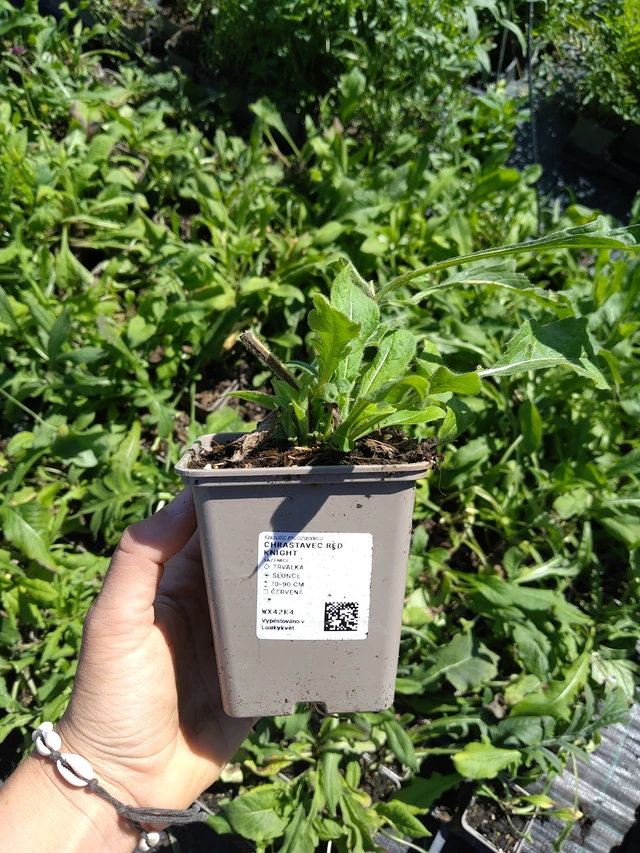
You will receive the Macedonian scabious as an already beautifully rooted seedling in a pot, which you can plant straight away into a pre-selected spot in the garden. It will thrive best in hot, full sun or possibly in light partial shade, where it stands out beautifully. Well-draining soil is essential for successful cultivation – sandy or normal loamy soil is ideal. Avoid heavy, waterlogged, and clayey spots where the seedling's roots could rot, especially in winter. Plant the seedlings at a distance of about 50 cm apart, which corresponds to 4 to 6 plants per square meter. This sufficient spacing ensures good air circulation and gives each plant the necessary space to create a strong and vital clump.
After planting, water the plant regularly until it reliably takes root in the new soil and adapts to the environment. However, once it is safely established in its new place, the scabious becomes an exceptionally undemanding perennial that handles drier periods and long summer heats excellently. Usually, it gets by with just natural rainfall and doesn't even need any special fertilizing to grow. Overly nutritious soil could even cause unwanted stem elongation and flopping. If you want to maximize the production of new burgundy flowers and prolong the blooming period from June to the end of September, we recommend continuously removing old faded stems. This light maintenance pruning saves the plant energy that it would otherwise invest in seed production and supports its overall vitality.
A great advantage of this red-blooming cultivar is its trouble-free nature – in the right location, it does not suffer from any diseases and common pests avoid it entirely. Before winter, you do not need to cover the plant in any complicated way, as it is fully hardy down to minus twenty-eight degrees. At the end of the season, simply cut back the dead above-ground parts. Although scabious overall belongs among the so-called short-lived perennials, if you let a few flowers ripen naturally in autumn, it very willingly self-seeds and will thus provide you with joy in the flowerbed for many years. If you do not have your own garden, you can successfully grow the seedling in a larger container on a bright terrace. Just remember to add gravel drainage to the bottom of the pot and always use a light, well-draining substrate mixed with sand.
The information given is based on our experience, please use it as a guide only. Times may vary depending on the season, climate, location, sowing and transplanting dates and possibly also the conditions in the greenhouse/greenhouse. We always recommend testing how the plant performs in your conditions. Please do not take this as a guarantee.
The plant grows up to 90 cm. Will it need support against the wind?
Can the purchased seedling be permanently planted in a larger pot on the terrace?
Is it necessary to protect the pincushion flower from frost during the winter?
How far apart should I plant the individual seedlings?
What kind of soil should I plant the seedling in, and how often should I water it?
Collections
The product can be found in the following collections.


Perennial collection
Large ornamental grass bed
A large perennial bed with ornamental grasses. It is suitable for sunny spots with good soil and at least occasional irrigati…


Perennial Collection with Bulbs and Annual Seeds
Crème de Cassis for Peonies
This collection in shades of purple and red works as a perfect accompaniment to deep red peonies and large-flowered roses. It…


Perennial Collection
Buzzing Garden
This collection of nectar-producing perennials is suitable for planting in sunny locations. It contains plants that cope well…


Perennial Collection
Red tones in the garden bed
A collection for lovers of red. An effective combination of perennials for sunny spots with good soil and the possibility of …


Perennial and Grass Collection
Colorful Perennial Meadow
This collection is full of colors and shapes, allowing you to create a piece of wild meadow in your garden. It contains low-m…
Frequently asked questions
Characteristics
When and for how long can I expect the pincushion flower to bloom?
We have small children and a dog. Is this pincushion flower toxic?
Is the pincushion flower attractive to insects in my garden?
Propagation
How can I ensure my pincushion flower lasts as long as possible, since it is a short-lived perennial?
Diseases & pests
Is this cultivar prone to any diseases or susceptible to pests?
Troubleshooting
My seedling is starting to wilt and the leaves are turning yellow or rotting. Where am I going wrong?
Harvest
Are the pincushion flower blooms suitable for cutting for vases or for drying?
Planting site
What spot in the garden should I choose for planting the seedling?
Photos in time
See how the seedling looks over the course of a year.


More products in category Knautia
Knautia macedonica
Knautia Melton Pastels
More products in category Perennials
Alchemilla mollis
Lady's mantle Irish Silk
Achillea millefolium
Yarrow Summer Pastels
Verbena bonariensis
Verbena

Salvia nemorosa
Woodland Sage Caradonna

Perovskia atriplicifolia
Russian Sage

Gaura lindheimeri
Gaura Siskiyou Pink

Echinacea purpurea
Coneflower Rubinstern

Echinacea pallida
Echinacea pallida

Eryngium planum
Sea Holly

Echinacea purpurea
Coneflower Magnus

Salvia nemorosa
Woodland Sage Ostfriesland

Calamintha nepeta
Calamint Blue Cloud
Rudbeckia fulgida
Rudbeckia Goldsturm
Calamintha nepeta ssp. nepeta
Calamint

Gaura lindheimeri
Gaura Summer Breeze

Salvia nemorosa
Woodland Sage Amethyst
Leucanthemum vulgare
Daisy Maikönigin
Achillea millefolium
Yarrow Terracotta

Perovskia atriplicifolia
Russian sage Little Spire

Salvia nemorosa


