
Echinops bannaticus
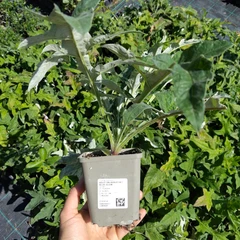
Globe thistle Blue Glow
Seedling


Attracts pollinators 🐝
Difficulty
Diseases
Edible
Flower color
Flower color: Shade
Foliage color
Fragrant (aromatic) 👃
Frost resistance
Hardiness zone
Height
Moisture
Pests
Position
Soil
Spacing
Spacing: Plants per m²
Species
Suitable for cutting
Suitable for drying
Recommended products

Echinops bannaticus
Globe thistle Star Frost

Verbena bonariensis
Verbena

Knautia macedonica
Knautia Red Knight

Achillea millefolium
Yarrow Summer Pastels

Catananche caerulea
Shoofly plant Blue

Achillea millefolium
Yarrow Cerise Queen

Rudbeckia fulgida
Rudbeckia Goldsturm

Achillea millefolium
Yarrow Cassis

Achillea millefolium
Yarrow Lilac Beauty

Leucanthemum vulgare
Daisy Maikönigin

Nepeta racemosa
Catmint Walker’s Low

Alchemilla mollis
Lady's mantle Irish Silk

Achillea millefolium
Yarrow Terracotta

Helleborus orientalis
Hellebore Double Ellen Picotee

Gypsophila paniculata
Baby's Breath Snowflake

Sanguisorba officinalis
Great Burnet

Limonium latifolium
Sea lavender

Papaver orientale
Oriental Poppy Royal Wedding

Anemone hybrida
Japanese Anemone Whirlwind

Lavandula angustifolia
Lavender Rosea

Helleborus orientalis
Hellebore Double Ellen Yellow Spotted

Sedum spectabile
Sedum Matrona

Achillea filipendulina
Yarrow Parkers Varietät

Pennisetum alopecuroides
Fountain grass Hameln

Centaurea montana
Mountain Cornflower

Aquilegia vulgaris
Columbine Nora Barlow

Phlomis russeliana
Phlomis Russeliana

Helleborus orientalis
Hellebore Double Ellen White

Nepeta faassenii
Catmint Six Hills Giant

Calamintha nepeta ssp. nepeta
Calamint
Cultivation
Globe thistle 'Blue Glow' is a plant that literally loves the sun. Choose the warmest and sunniest spot in your garden for it. As for the soil, the rule is that less is sometimes more. This perennial thrives best in well-draining, rather dry, and even poorer soil. If you have heavy, wet, or clay soil in your garden, it is essential to lighten it before planting by mixing in sand, gravel, or fine aggregate. In waterlogged soil, the roots could rot in winter. Plant the seedlings at a spacing of approximately 50–60 cm apart (3–5 plants per m²). Sufficient spacing is important not only for the visual effect but mainly for good air circulation, which acts as prevention against fungal diseases such as powdery mildew.
Care during the season is minimal; Globe thistle is a very undemanding companion. After planting, water the seedling until it is well rooted, but once the plant takes hold, it becomes highly drought-resistant. It only requires watering during prolonged summer heatwaves; otherwise, it can get by on rainfall alone. Be very careful with fertilizing – in overly nutritious soil or when over-fertilized, the plant tends to stretch, the stems are weak, and they can topple over. In poorer soil, it maintains a compact shape and needs no support. Watch out for aphids, which can attack young shoots; if so, intervene in time. The plant is fully frost-resistant down to -34 °C (zone 4a), so it will handle our winters without any problems without any protection, as long as it isn't standing in water.
Regarding pruning and maintenance, you have two options. If you want to use the blue spherical flowers for dried arrangements, cut them in full bloom before they start to fade. If you cut back the faded stems shortly after blooming, you can encourage the plant to flower again in late summer. Many gardeners, however, leave the Globe thistle in the bed until spring. Its sturdy structure and dried flower heads look absolutely magical in winter, especially under a dusting of frost or snow, and serve as food for birds. In spring, simply remove the old leaves and stems at ground level. Growing in containers is possible but requires a specific approach. The pot must be large and deep enough because the Globe thistle has a massive root system, and it must have a thick drainage layer at the bottom so water can drain quickly.
The information given is based on our experience, please use it as a guide only. Times may vary depending on the season, climate, location, sowing and transplanting dates and possibly also the conditions in the greenhouse/greenhouse. We always recommend testing how the plant performs in your conditions. Please do not take this as a guarantee.
Frequently asked questions
When and how should I cut the flowers for drying purposes?
Does Globe Thistle need fertilizing for richer flowering?
What kind of location and soil does Globe Thistle require?
Why is my Globe Thistle falling over in the bed and not keeping an upright shape?
How often do I need to water Globe Thistle?
How do I overwinter Globe Thistle? Is it hardy?
What spacing should I use when planting multiple plants?
Is Globe Thistle poisonous to children or pets?
Is the globe thistle a bee-friendly plant?
How can I propagate the plant if I already have it in my garden?
Do I need to cut the plant back? When should I prune it?
Is this plant susceptible to any pests or diseases?
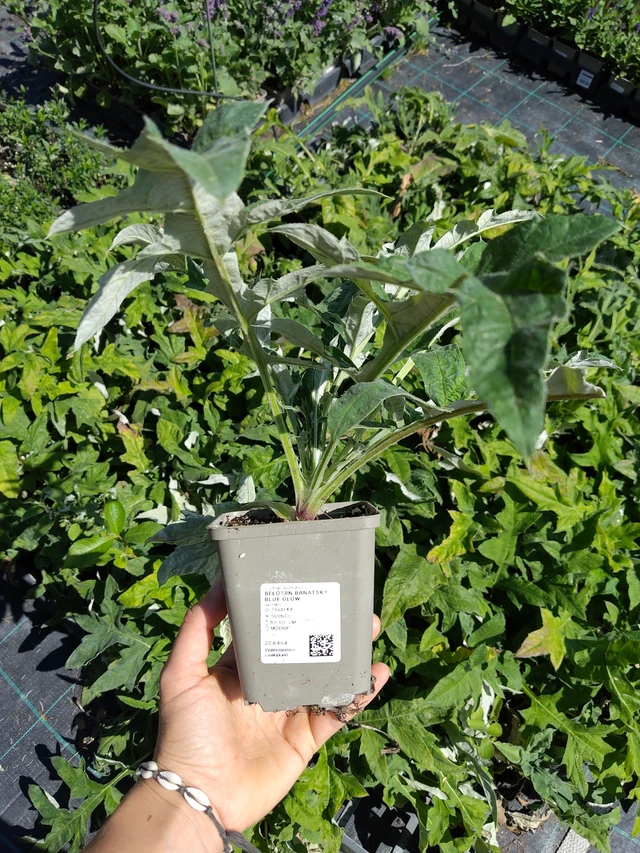
Photos in time
See how the seedling looks over the course of a year.


More products in category Globe thistle
Echinops bannaticus
Globe thistle Star Frost

Echinops ritro
Globe thistle

Echinops niveus
Globe thistle Arctic Glow
More products in category Perennials
Alchemilla mollis
Lady's mantle Irish Silk
Achillea millefolium
Yarrow Summer Pastels
Verbena bonariensis
Verbena

Salvia nemorosa
Woodland Sage Caradonna

Perovskia atriplicifolia
Russian Sage

Gaura lindheimeri
Gaura Siskiyou Pink

Echinacea purpurea
Coneflower Rubinstern

Echinacea pallida
Echinacea pallida

Eryngium planum
Sea Holly

Echinacea purpurea
Coneflower Magnus

Salvia nemorosa
Woodland Sage Ostfriesland

Calamintha nepeta
Calamint Blue Cloud
Rudbeckia fulgida
Rudbeckia Goldsturm
Calamintha nepeta ssp. nepeta
Calamint

Gaura lindheimeri
Gaura Summer Breeze

Salvia nemorosa
Woodland Sage Amethyst
Leucanthemum vulgare
Daisy Maikönigin
Achillea millefolium
Yarrow Terracotta

Perovskia atriplicifolia
Russian sage Little Spire

Salvia nemorosa


