


Aquilegia vulgaris
Columbine Kristall
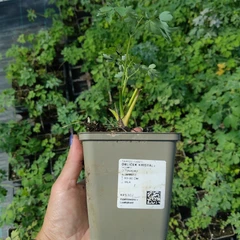
Seedling


Attracts pollinators 🐝
Difficulty
Diseases
Edible
Flower color
Flower color: Shade
Foliage color
Fragrant (aromatic) 👃
Frost resistance
Hardiness zone
Height
Moisture
Pests
Position
Soil
Spacing
Spacing: Plants per m²
Species
Suitable for cutting
Suitable for drying
Recommended products

Aquilegia vulgaris
Columbine Heidi

Aquilegia vulgaris
Columbine Blue Barlow

Achillea millefolium
Yarrow Lachsschönheit

Aquilegia vulgaris
Columbine Black Barlow

Geum chiloense
Avens Tempest Scarlet

Dicentra spectabilis Alba
Bleeding Heart Alba

Geum chiloense
Avens Totally Tangerine

Anemone hybrida
Japanese Anemone Andrea Atkinson

Achillea millefolium
Yarrow Lilac Beauty

Aquilegia vulgaris
Columbine White Barlow

Aquilegia vulgaris
Columbine Nora Barlow

Anemone hybrida
Japanese Anemone Whirlwind

Achillea millefolium
Yarrow Terracotta

Dicentra spectabilis
Bleeding Heart

Achillea millefolium
Yarrow Summer Pastels

Anemone hybrida
Japanese anemone Lorelei

Aquilegia vulgaris
Columbine Rose Barlow

Salvia nemorosa
Woodland Sage Schneehügel

Verbena hastata
Blue Vervain Pink Spires

Papaver orientale
Oriental Poppy Royal Wedding

Sanguisorba officinalis
Great Burnet

Salvia pratensis
Meadow Sage Rose Rhapsody

Helleborus orientalis
Hellebore Double Ellen Picotee

Alchemilla mollis
Lady's mantle Irish Silk

Gypsophila paniculata
Baby's breath Flamingo

Achillea ptarmica
Yarrow The Pearl

Anemone hybrida
Japanese Anemone Serenade

Helleborus orientalis
Hellebore Double Ellen Yellow Spotted

Leucanthemum
Daisy Christine Hagemann

Verbascum chaixii
Mullein Sixteen Candles
Cultivation
We recommend planting the columbine seedling in its permanent location as soon as possible after unpacking and acclimatization. This spring perennial thrives best in sun or partial shade; an ideal spot is one that receives morning sun but is protected by light shade during midday. It requires standard garden soil, preferably loamy and rich in humus. When planting, maintain a spacing of about 30 centimeters, which corresponds to eight to twelve plants per square meter. Sufficient spacing is very important for proper air circulation. Good airflow is also essential for preventing fungal diseases. Therefore, keep the space around the plant clear and always direct water towards the roots.
In terms of watering, columbine is moderately demanding. The soil should ideally be slightly moist but well-drained so that the roots do not sit in water. During dry spring and summer months, provide it with regular doses of water. Fertilizing is not complicated; it is more than enough to add a layer of well-matured compost to the plant in the spring, which will provide it with the nutrients needed for flower production. These appear in May and June and reliably attract bees. If you want to bring a bit of spring home, the flowers are excellent for cutting and will keep you happy in a vase for up to seven days.
From a botanical perspective, the columbine is a short-lived perennial, but it reliably self-seeds in flower beds. If you want to prevent self-seeding or support the vitality of the parent plant, cut off the flowers immediately after blooming and regularly remove dead leaves. If, on the other hand, you are a fan of wild gardening, let your columbines seed freely. Growing in containers is also very popular and frequently used for this plant. Choose a sufficiently deep pot with drainage holes, use high-quality substrate mixed with compost, and don't forget to water more frequently. With the arrival of winter, you don't need to worry about seedlings in the garden bed. The plant is fully hardy down to -34 °C (zone 4a), so it will survive winter and frosts completely without any problems, even without special winter protection.
The information given is based on our experience, please use it as a guide only. Times may vary depending on the season, climate, location, sowing and transplanting dates and possibly also the conditions in the greenhouse/greenhouse. We always recommend testing how the plant performs in your conditions. Please do not take this as a guarantee.
Collections
The product can be found in the following collections.


Perennial, bulb, and annual seed collection
Grandma’s perennial peony companion collection
A nostalgic collection full of early summer flowers. It serves perfectly as a balanced companion to peonies in sunny beds. It…


Perennials, Grasses, Bulbs, and Seeds Collection
Wedding Perennial Bed
Whether your queen of flowers is a rose, a hydrangea, or perhaps a peony, this collection can work perfectly as a dignified a…
Frequently asked questions
What kind of soil does the columbine need?
Does columbine require fertilization?
What should I do immediately after receiving the shipment with the seedling?
Is the columbine hardy, or do I need to cover it for the winter?
Why does my columbine have light, winding trails on its leaves?
If my columbine self-seeds, will the new plants look the same?
How often should I water Columbine after planting?
Are columbines suitable for cutting for a vase?
How long will columbine last in one spot?
Where is the best place to plant Columbine – in the sun or in the shade?
When can I expect flowers on the planted seedling?
The columbine leaves turned yellow or developed a white coating after flowering; what should I do about it?
Is Columbine toxic? Is it safe for children and pets?
What should I do with Columbine after it finishes flowering? Should I cut it back?
Photos in time
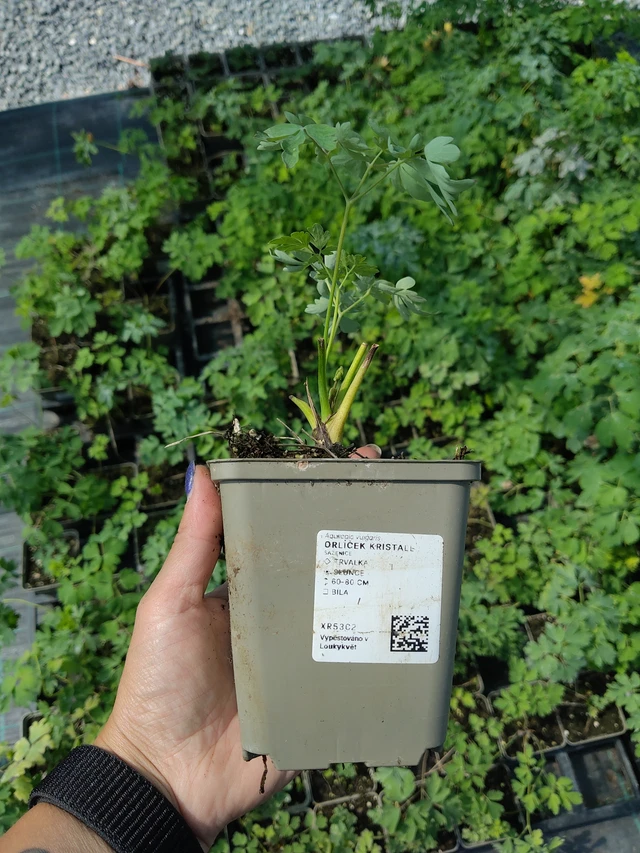
See how the seedling looks over the course of a year.


More products in category Columbine
Aquilegia vulgaris
Columbine Nora Barlow
Aquilegia vulgaris
Columbine Heidi
Aquilegia vulgaris
Columbine Rose Barlow
Aquilegia vulgaris
Columbine White Barlow
Aquilegia vulgaris
Columbine Black Barlow
Aquilegia vulgaris
Columbine Blue Barlow

Aquilegia vulgaris
Columbine Bordeaux Barlow

Aquilegia vulgaris
Columbine Purple Barlow

Aquilegia vulgaris
Columbine Christa Barlow
More products in category Perennials
Alchemilla mollis
Lady's mantle Irish Silk
Achillea millefolium
Yarrow Summer Pastels

Verbena bonariensis
Verbena

Salvia nemorosa
Woodland Sage Caradonna

Perovskia atriplicifolia
Russian Sage

Gaura lindheimeri
Gaura Siskiyou Pink

Echinacea purpurea
Coneflower Rubinstern

Echinacea pallida
Echinacea pallida

Salvia nemorosa
Woodland Sage Ostfriesland

Eryngium planum
Sea Holly

Echinacea purpurea
Coneflower Magnus

Calamintha nepeta
Calamint Blue Cloud

Rudbeckia fulgida
Rudbeckia Goldsturm

Calamintha nepeta ssp. nepeta
Calamint

Gaura lindheimeri
Gaura Summer Breeze

Salvia nemorosa
Woodland Sage Amethyst

Leucanthemum vulgare
Daisy Maikönigin
Achillea millefolium
Yarrow Terracotta

Perovskia atriplicifolia
Russian sage Little Spire
Salvia nemorosa


