

Verbascum chaixii
Mullein Sixteen Candles
Seedling
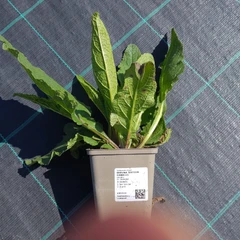
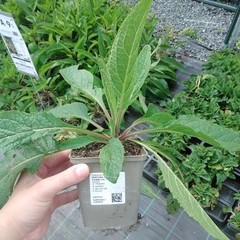
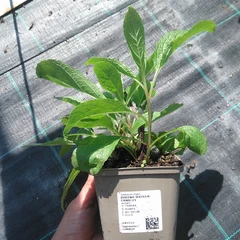
Attracts pollinators 🐝
Difficulty
Diseases
Edible
Flower color
Flower color: Shade
Foliage color
Fragrant (aromatic) 👃
Frost resistance
Hardiness zone
Height
Moisture
Pests
Position
Soil
Spacing
Spacing: Plants per m²
Species
Suitable for cutting
Suitable for drying
Recommended products

Verbascum nigrum var. album
Black Mullein

Salvia pratensis
Meadow Sage Rose Rhapsody

Achillea millefolium
Yarrow Terracotta

Alchemilla mollis
Lady's mantle Irish Silk

Achillea millefolium
Yarrow Cassis

Aquilegia vulgaris
Columbine Kristall

Verbena bonariensis
Verbena

Achillea ptarmica
Yarrow The Pearl

Verbascum chaixii Album
Mullein Wedding Candles

Papaver orientale
Oriental Poppy Royal Wedding

Achillea millefolium
Yarrow Lachsschönheit

Sidalcea
Checkerbloom Brilliant

Achillea millefolium
Yarrow Summer Pastels

Leucanthemum vulgare
Daisy Maikönigin

Geum chiloense
Avens Totally Tangerine

Filipendula hybridum
Meadowsweet Kahome

Rudbeckia subtomentosa
Rudbeckia Henry Eilers

Achillea filipendulina
Yarrow Parkers Varietät

Helleborus orientalis
Hellebore Double Ellen Yellow Spotted

Aster novi-belgii
Aster novi-belgii Fellowship

Catananche caerulea
Shoofly plant Blue

Geum chiloense
Avens Tempest Scarlet

Dicentra spectabilis
Bleeding Heart

Lychnis coronaria
Campion

Nepeta racemosa
Catmint Walker’s Low

Achillea millefolium
Yarrow Lilac Beauty

Digitalis purpurea
Foxglove Dalmatian Rose

Aquilegia vulgaris
Columbine Nora Barlow

Delphinium hybrida
Larkspur Benary’s Pacific Black Knight

Gypsophila paniculata
Baby's Breath Snowflake
Cultivation
The mullein 'Sixteen Candles' seedling is ready for planting in the flowerbed upon delivery. This undemanding perennial will most appreciate a hot and sunny location. The right choice of soil is crucial for it, which must be well-drained, light, and sandy or gravelly. If you have heavy soil in your garden, be sure to add a good dose of sand or fine gravel for lightening when planting. Plant the seedlings at a distance of approximately 40 centimeters from each other, which corresponds to roughly 4 to 6 plants per square meter. This sufficient space will ensure good air circulation between the plants and support their healthy growth without the need for additional support.
Since it is a distinctly drought-loving plant, you do not have to worry about watering almost at all after it roots. It needs water only during periods of truly long and extreme drought. Excessive moisture, especially over winter, is its greatest enemy and can lead to rotting of the roots. Mullein is equally modest when it comes to nutrients. It grows naturally in poorer soils, so it does not require any regular fertilizing. A huge advantage for every grower is the fact that this plant does not suffer from any common diseases and garden pests avoid it, so you can do completely without chemicals.
During May and June, you can look forward to a flood of lemon-yellow flowers. Once the plant finishes blooming, we recommend performing a so-called cut back, i.e., removing the faded shoots. This step will rejuvenate the plant, increase its vitality, and very often provoke it to bloom again in the later part of summer. Mulleins belong among short-lived perennials, which means they will last in the same place for only a few short years. However, it excellently self-seeds on the site, so you will not lose its presence in the garden. You do not have to worry about it before winter, it is fully frost-resistant down to -23 °C and reliably overwinters without any protection.
If you are considering growing on a balcony or terrace, Mullein can also be grown in containers. Given its height of 100 to 120 centimeters and a strong root system, choose a truly deep and stable pot. Do not forget to place a strong drainage layer of expanded clay or gravel at the bottom. As a substrate, use a mixture mixed with sand so that water can always drain quickly after watering. In a pot, the substrate will dry out somewhat faster than in the open ground, so check the moisture occasionally, but make sure that the saucer under the pot never stands in water.
The information given is based on our experience, please use it as a guide only. Times may vary depending on the season, climate, location, sowing and transplanting dates and possibly also the conditions in the greenhouse/greenhouse. We always recommend testing how the plant performs in your conditions. Please do not take this as a guarantee.
How often should I water the seedling?
Should I prune the plant after its first bloom?
What type of soil does this perennial thrive in?
Can I grow mullein in a large container on a balcony or patio?
How far apart should I plant the seedlings in the flower bed?
Frequently asked questions
Basic information
What exactly does it mean that this is a short-lived perennial?
When does the mullein bloom and what do the flowers look like exactly?
Characteristics
How tall does the plant grow and does it need any support?
Is the plant poisonous to children or dangerous for pets?
Does mullein attract pollinators to the garden?
How hardy is it? Will it survive our winters?
Troubleshooting
Why are the lower leaves of my mullein seedling suddenly yellowing and dying?
Propagation
How can I propagate the plant if I know it will likely die after a few years?
Planting site
What is the best location for a mullein?
Diseases & pests
Is this mullein susceptible to any pests or diseases?
Harvest
Are mullein flowers suitable for cutting for vases?
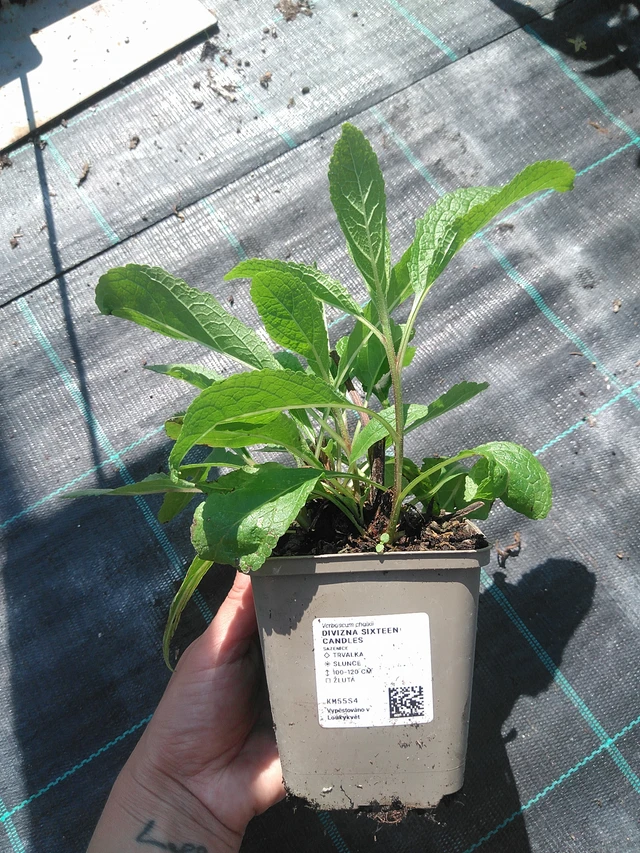
Photos in time
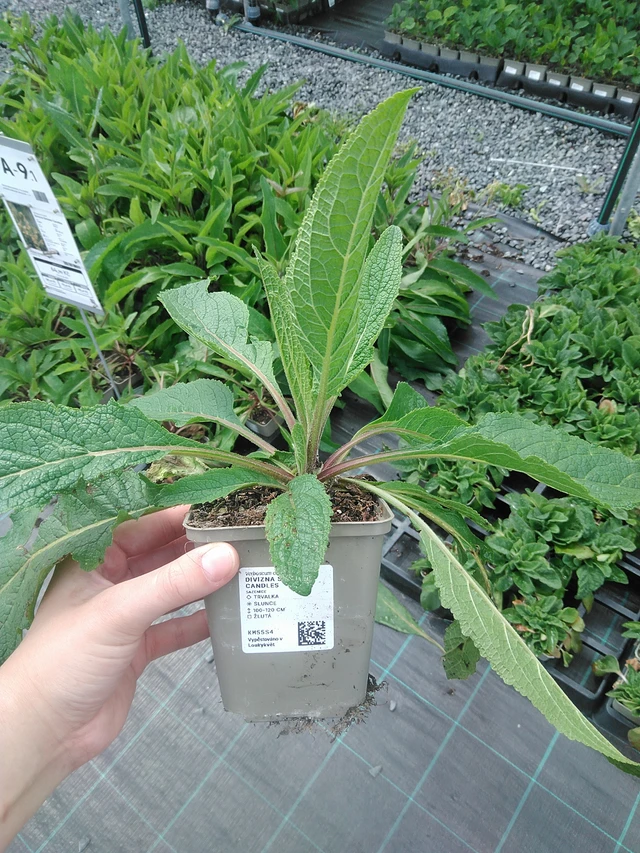
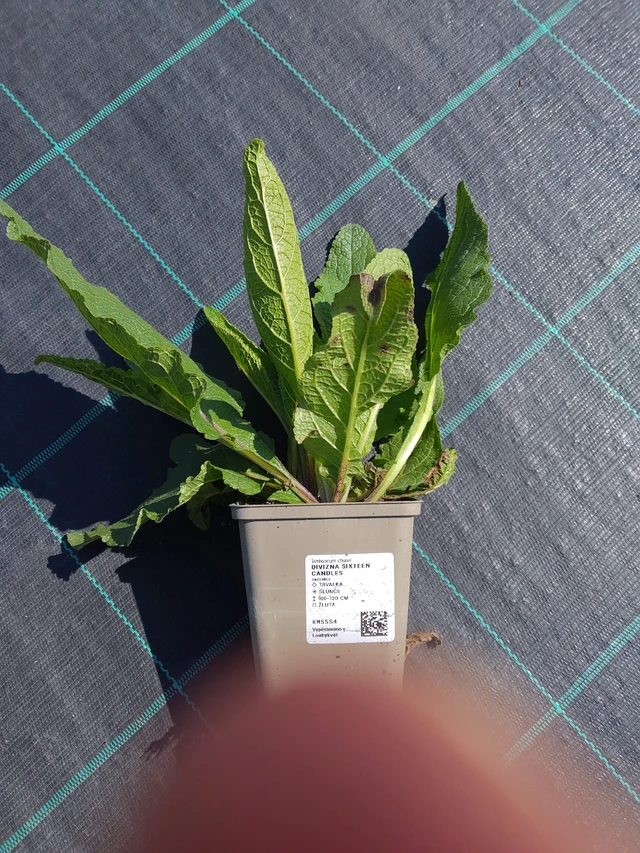
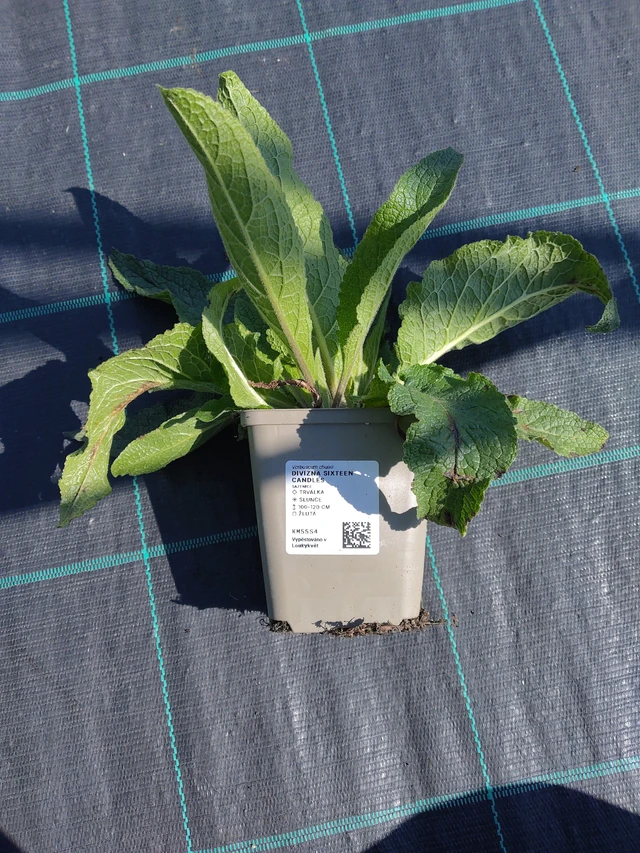
See how the seedling looks over the course of a year.


More products in category Mullein

Verbascum hybridum
Mullein Southern Charm
Verbascum nigrum var. album
Black Mullein

Verbascum hybrida
Mullein Plum Smokey
Verbascum chaixii Album
Mullein Wedding Candles

Verbascum hybrida
Mullein Rosie

Verbascum
Mullein White Domino

Verbascum
Mullein Pink Domino

Verbascum
Mullein Gainsborough

Verbascum hybrida
Mullein Sugar Plum

Verbascum hybrida
Mullein Honey Dijon

Verbascum hybrida
Mullein Dark Eyes

Verbascum
Mullein Clementine

Verbascum
Mullein Cotswold Queen
More products in category Perennials
Alchemilla mollis
Lady's mantle Irish Silk
Achillea millefolium
Yarrow Summer Pastels
Verbena bonariensis
Verbena

Salvia nemorosa
Woodland Sage Caradonna

Perovskia atriplicifolia
Russian Sage

Gaura lindheimeri
Gaura Siskiyou Pink

Echinacea purpurea
Coneflower Rubinstern

Echinacea pallida
Echinacea pallida

Salvia nemorosa
Woodland Sage Ostfriesland

Eryngium planum
Sea Holly

Echinacea purpurea
Coneflower Magnus

Calamintha nepeta
Calamint Blue Cloud

Rudbeckia fulgida
Rudbeckia Goldsturm

Calamintha nepeta ssp. nepeta
Calamint

Salvia nemorosa
Woodland Sage Amethyst

Gaura lindheimeri
Gaura Summer Breeze
Leucanthemum vulgare
Daisy Maikönigin
Achillea millefolium
Yarrow Terracotta

Perovskia atriplicifolia
Russian sage Little Spire

Salvia nemorosa


