

Verbascum
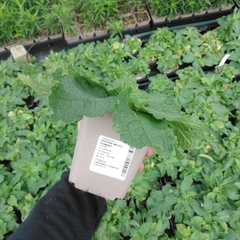
Mullein White Domino
Seedling


Attracts pollinators 🐝
Difficulty
Diseases
Edible
Flower color
Flower color: Shade
Foliage color
Fragrant (aromatic) 👃
Frost resistance
Hardiness zone
Height
Moisture
Pests
Position
Soil
Spacing
Spacing: Plants per m²
Species
Suitable for cutting
Suitable for drying
Recommended products

Leucanthemum
Daisy Christine Hagemann

Andropogon hallii
Big Bluestem JS Purple Konza

Anaphalis margaritacea
Pearly everlasting Neuschnee

Sporobolus heterolepis
Dropseed

Panicum virgatum
Switchgrass Rehbraun

Hydrangea paniculata
Panicle Hydrangea Kyushu

Verbena hastata
Verbena hastata Blue Spires

Deschampsia cespitosa
Tufted Hairgrass Goldschleier

Luzula nivea
Snowy Woodrush

Verbena hastata
Verbena hastata White Spires

Rudbeckia subtomentosa
Rudbeckia Henry Eilers

Deschampsia cespitosa
Tufted hairgrass Tauträger

Geranium maculatum
Geranium Espresso

Deschampsia cespitosa
Tufted hairgrass Palava

Aster ericoides
Aster Pink Cloud

Aster ericoides
Aster Golden Spray

Digitalis purpurea
Foxglove Pam’s Choice

Sidalcea
Checkerbloom Brilliant

Eupatorium rugosum
Eupatorium Braunlaub

Geum
Geum East of Eden

Polemonium caeruleum f. album
Jacob's Ladder White Pearl

Selinum wallichianum
Milk Parsley

Echinacea pallida
Coneflower Hula Dancer

Verbascum hybridum
Mullein Southern Charm

Astrantia major
Astrantia

Euphorbia characias wulfenii
Euphorbia Wulfenii

Schizachyrium scoparium
Little Bluestem Red Frost

Muhlenbergia capillaris
Muhly grass Ruby

Helleborus foetidus
Stinking Hellebore

Acanthus mollis
Bear's Breeches
Cultivation
This plant will thrive best in a hot and fully sunny spot. It requires drier, well-drained, and ideally sandy or gravelly soil. Avoid heavy and waterlogged soil where the roots could rot. Plant the seedlings at a spacing of 40 cm, which comes out to 6 to 7 plants per square meter. Larger spacing will ensure good air circulation. The plant is completely disease-free and pest-free, so it does not require any chemical treatment, and its cultivation can easily be managed even by a complete beginner with no prior experience.
Watering should be rather modest. Mullein is drought-tolerant, so natural rainfall is enough for it, even during warmer summer days. Fertilizing is not necessary; in poorer soil, it better maintains its compact shape and sturdy stems, which grow to a height of 100 to 120 cm and do not need any support. During May and June, you can look forward to pure white flowers that reliably attract bees and butterflies. Since it is a rather short-lived perennial, it is good to let it self-seed naturally after blooming so it remains in the flower bed in subsequent years.
If you want to extend the blooming period, you can cut the faded stalks early, which encourages the plant to set flowers again and increases its overall vitality. The mullein 'White Domino' is excellently frost-hardy down to -23 °C, so it will survive winter in the flower bed without any special protection. Its dry stems additionally create an interesting winter effect. You often ask about growing it in a pot or window box. This option exists, but you must choose a sufficiently deep container with good water drainage. Use light soil mixed with sand as a substrate, and don't forget that the substrate dries out faster in a container, so occasional watering is needed.
The information given is based on our experience, please use it as a guide only. Times may vary depending on the season, climate, location, sowing and transplanting dates and possibly also the conditions in the greenhouse/greenhouse. We always recommend testing how the plant performs in your conditions. Please do not take this as a guarantee.
How often do I need to water the mullein?
What should I do with the plant once it finishes flowering?
What spacing should I use when planting the seedlings?
Does this tall plant need any support?
Frequently asked questions
Basic information
What is Verbascum 'White Domino' and how does it look in the garden?
Troubleshooting
Why didn't my mullein grow back after winter and instead rotted away?
Characteristics
Is this plant toxic to children or pets?
Does Verbascum attract beneficial insects to the garden?
How does mullein handle Czech winters?
When can I look forward to the first blooms?
Propagation
How long will the mullein last in my flower bed?
Diseases & pests
Is the White Domino variety susceptible to any diseases or pests?
Harvest
Can I cut the flowers for a vase and how long will they last?
Planting site
Where is the best place to plant Verbascum seedlings?
What type of soil does this plant require?
Photos in time
See how the seedling looks over the course of a year.


More products in category Mullein
Verbascum hybridum
Mullein Southern Charm

Verbascum nigrum var. album
Black Mullein

Verbascum hybrida
Mullein Plum Smokey

Verbascum chaixii Album
Mullein Wedding Candles

Verbascum chaixii
Mullein Sixteen Candles

Verbascum hybrida
Mullein Rosie

Verbascum
Mullein Pink Domino

Verbascum
Mullein Gainsborough

Verbascum hybrida
Mullein Sugar Plum

Verbascum hybrida
Mullein Honey Dijon

Verbascum hybrida
Mullein Dark Eyes

Verbascum
Mullein Clementine

Verbascum
Mullein Cotswold Queen
More products in category Perennials

Alchemilla mollis
Lady's mantle Irish Silk

Achillea millefolium
Yarrow Summer Pastels

Verbena bonariensis
Verbena

Salvia nemorosa
Woodland Sage Caradonna

Perovskia atriplicifolia
Russian Sage

Gaura lindheimeri
Gaura Siskiyou Pink

Echinacea purpurea
Coneflower Rubinstern

Echinacea pallida
Echinacea pallida

Eryngium planum
Sea Holly

Echinacea purpurea
Coneflower Magnus

Salvia nemorosa
Woodland Sage Ostfriesland

Calamintha nepeta
Calamint Blue Cloud

Rudbeckia fulgida
Rudbeckia Goldsturm

Calamintha nepeta ssp. nepeta
Calamint

Salvia nemorosa
Woodland Sage Amethyst

Gaura lindheimeri
Gaura Summer Breeze

Leucanthemum vulgare
Daisy Maikönigin

Achillea millefolium
Yarrow Terracotta

Perovskia atriplicifolia
Russian sage Little Spire

Salvia nemorosa


