
Verbascum hybrida
Mullein Dark Eyes
Seedling

Attracts pollinators 🐝
Difficulty
Diseases
Edible
Flower color
Flower color: Shade
Foliage color
Fragrant (aromatic) 👃
Frost resistance
Hardiness zone
Height
Moisture
Pests
Position
Soil
Spacing
Spacing: Plants per m²
Species
Suitable for cutting
Suitable for drying
Recommended products

Cosmos bipinnatus
Cosmos Cupcakes Blush

Cosmos bipinnatus
Cosmos Apricot Lemonade


Delphinium consolida
Larkspur QIS Carmine

Scabiosa caucasica
Scabiosa Fama Deep Blue

Nigella damascena
Nigella Miss Jekyll Sky Blue

Verbascum nigrum var. album
Black Mullein

Salvia nemorosa
Woodland Sage Amethyst

Verbascum hybrida
Mullein Honey Dijon

Lavatera olbia
Tree mallow Bredon Springs

Agastache hybrida
Agastache Mango Tango

Achillea millefolium
Yarrow Paprika

Achillea millefolium
Yarrow Summer Pastels

Helleborus orientalis
Hellebore Double Ellen Yellow Spotted

Phlomis russeliana
Phlomis Russeliana

Filipendula hybridum
Meadowsweet Kahome

Phlomis tuberosa
Phlomis Tuberosa

Eryngium yuccifolium
Eryngium yuccifolium

Achillea millefolium
Yarrow Cassis

Eryngium planum
Sea holly Silver Salentino

Digitalis purpurea
Foxglove Dalmatian Rose

Verbascum hybrida
Mullein Rosie

Phlox paniculata
Phlox Sweet Summer Compact Purple Bicolor

Sedum spectabile
Sedum Brilliant

Gaura lindheimeri
Gaura Siskiyou Pink

Perovskia atriplicifolia
Russian Sage

Leucanthemum
Daisy Polaris

Achillea millefolium
Yarrow Lachsschönheit

Geranium pratense
Geranium Summer Skies

Delphinium elatum
Delphinium Highlander Cha Cha
Cultivation
Ideal conditions for successful growth
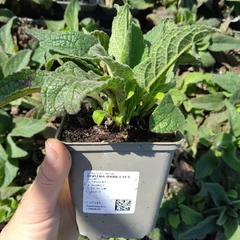
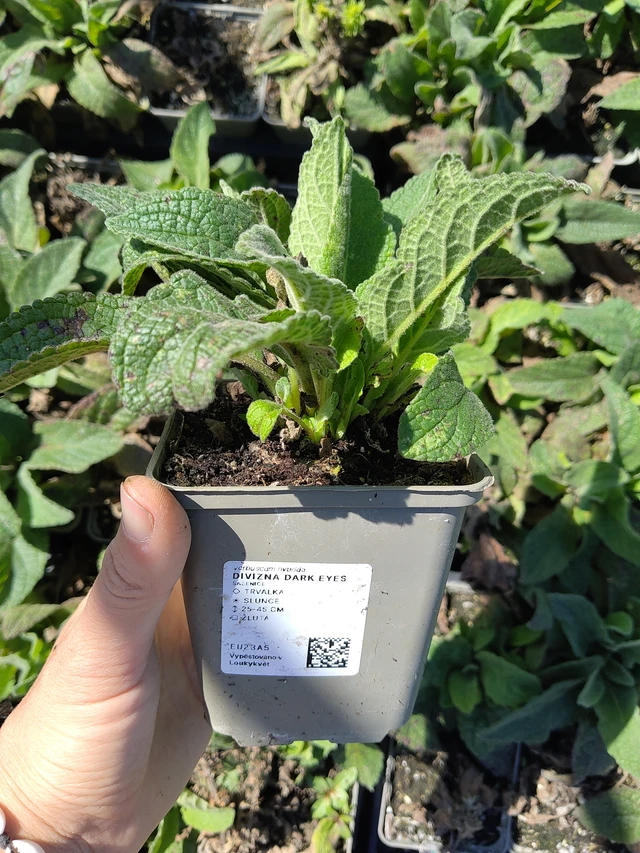
It is best to plant your new Dark Eyes mullein seedling in its permanent location early in the spring or early in the autumn, when the best conditions for taking root prevail. This charming perennial embodies steppe elegance, which gives you a hint of the habitat it will need. Find a spot for it that is bathed in direct sunlight all day long. As for soil conditions, mullein loves poor, sandy, and perfectly permeable soils. It will not thrive in rich, heavy, or permanently wet soils, and its roots would soon start to suffer. When planting, carefully maintain a spacing of 30 to 40 centimeters to ensure you get a healthy and airy stand. Ideally, seven to nine seedlings can fit in one square meter. Proper spacing between plants allows the leaves to dry quickly after rain, which naturally strengthens the overall health and vitality of these low-growing gray-green rosettes.
Watering, pruning, and maintenance during the season
During the growing season, caring for this cultivar is surprisingly easy and time-saving. Mullein is naturally adapted to dry and hot periods, so once well-rooted, it can get by with regular rainfall. Additional watering is necessary only during periods of extreme drought. It is similar with nutrition, no fertilization is needed; rich soil would only reduce the firmness of the stems and shorten the overall lifespan of the mullein. From May to July, the plant will reward you with beautiful pastel yellow flowers, which magically attract bees and bumblebees, and can also be safely consumed. Although it is a short-lived perennial, if you immediately cut the stems down to the leaf rosette after flowering, the plant will not unnecessarily exhaust itself by producing seeds and will retain much more energy for the coming summer months.
Frost resistance, hardiness, and balcony life
In terms of protection and health, you can look forward to completely hassle-free growing, as Dark Eyes mullein excels in amazing natural hardiness. The plant is also fully frost-resistant and can easily handle winter temperature drops down to -23 degrees Celsius. It does not need any complicated covering; it is only critically important to ensure that it does not stand in waterlogged soil in winter. If you dream of growing this charming mullein but lack a garden bed, you can very easily grow it in outdoor containers and planter boxes. Just choose a sufficiently deep pot with large drainage holes, pour a generous layer of gravel at the bottom, and use a light substrate with a significant mixture of sand. Then place the pot in the sunniest spot.
The information given is based on our experience, please use it as a guide only. Times may vary depending on the season, climate, location, sowing and transplanting dates and possibly also the conditions in the greenhouse/greenhouse. We always recommend testing how the plant performs in your conditions. Please do not take this as a guarantee.
Does the plant need any support against the wind while growing and flowering?
What kind of soil does this plant require?
How hardy is it to frost? Do I need to protect the plant in any special way for the winter?
How often and how should I water the mullein?
How far apart should I plant the seedlings?
Frequently asked questions
Planting site
Where is the best place to plant a Verbascum 'Dark Eyes' seedling?
Can Verbascum 'Dark Eyes' be grown in a container on a balcony, or does it have to be in a flower bed?
Characteristics
When exactly does the Verbascum bloom and what do the flowers look like?
Is this Verbascum toxic? Can I grow it in a garden with children and pets?
Does mullein attract pollinators to the garden with its flowers?
Are the flowers edible? Can they be used in the kitchen in any way?
Does this plant have a scent? Can I use it for aromatherapy in my garden?
Harvest
Can I cut the flowers for a vase, or is the plant also suitable for drying?
Troubleshooting
What should I do if the leaves on my mullein start turning yellow and rotting from the bottom?
Diseases & pests
Is mullein prone to any specific pests or diseases?
Basic information
What does the term short-lived perennial mean for this mullein?
Photos in time
See how the seedling looks over the course of a year.

More products in category Mullein

Verbascum hybridum
Mullein Southern Charm
Verbascum nigrum var. album
Black Mullein

Verbascum hybrida
Mullein Plum Smokey

Verbascum chaixii Album
Mullein Wedding Candles

Verbascum chaixii
Mullein Sixteen Candles
Verbascum hybrida
Mullein Rosie

Verbascum
Mullein White Domino

Verbascum
Mullein Pink Domino

Verbascum
Mullein Gainsborough

Verbascum hybrida
Mullein Sugar Plum
Verbascum hybrida
Mullein Honey Dijon

Verbascum
Mullein Clementine

Verbascum
Mullein Cotswold Queen
More products in category Perennials

Alchemilla mollis
Lady's mantle Irish Silk
Achillea millefolium
Yarrow Summer Pastels

Verbena bonariensis
Verbena

Salvia nemorosa
Woodland Sage Caradonna
Perovskia atriplicifolia
Russian Sage
Gaura lindheimeri
Gaura Siskiyou Pink

Echinacea purpurea
Coneflower Rubinstern

Echinacea pallida
Echinacea pallida

Eryngium planum
Sea Holly

Echinacea purpurea
Coneflower Magnus

Salvia nemorosa
Woodland Sage Ostfriesland

Calamintha nepeta
Calamint Blue Cloud

Rudbeckia fulgida
Rudbeckia Goldsturm

Calamintha nepeta ssp. nepeta
Calamint

Gaura lindheimeri
Gaura Summer Breeze
Salvia nemorosa
Woodland Sage Amethyst

Leucanthemum vulgare
Daisy Maikönigin

Achillea millefolium
Yarrow Terracotta

Perovskia atriplicifolia
Russian sage Little Spire

Salvia nemorosa


