
Phlox paniculata
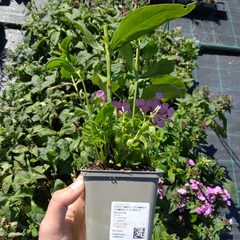
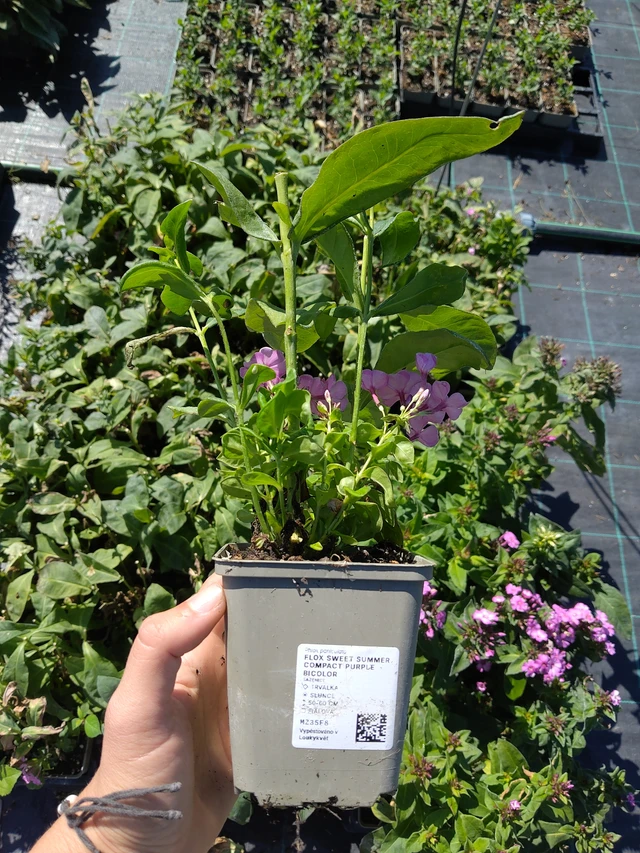
Phlox Sweet Summer Compact Purple Bicolor
Seedling


Attracts pollinators 🐝
Difficulty
Diseases
Edible
Flower color
Flower color: Shade
Foliage color
Fragrant (aromatic) 👃
Frost resistance
Hardiness zone
Height
Moisture
Pests
Position
Soil
Spacing
Spacing: Plants per m²
Species
Suitable for cutting
Suitable for drying
Recommended products

Phlox paniculata
Phlox Franz Schubert

Phlox paniculata
Phlox Sweet Summer Fragrance

Achillea millefolium
Yarrow Summer Pastels

Helleborus orientalis
Hellebore Double Ellen Yellow Spotted

Aquilegia vulgaris
Columbine Kristall

Papaver orientale
Oriental Poppy Royal Wedding

Leucanthemum
Daisy Polaris

Helleborus orientalis
Hellebore Double Ellen Picotee

Phlox paniculata
Phlox Sweet Summer Sensation

Helleborus orientalis
Hellebore Pretty Ellen Spotted

Filipendula hybridum
Meadowsweet Kahome

Potentilla nepalensis
Nepal Cinquefoil Miss Willmott

Achillea millefolium
Yarrow Terracotta

Knautia macedonica
Knautia Red Knight

Achillea millefolium
Yarrow Lilac Beauty

Achillea millefolium
Yarrow Lachsschönheit

Phlox paniculata
Phlox Sweet Summer Melody

Phlox amplifolia
Phlox White Clouds

Dicentra spectabilis
Bleeding Heart

Clematis heracleifolia
Clematis Mrs R. Brydon

Achillea millefolium
Yarrow Cassis

Delphinium hybrida
Larkspur Benary’s Pacific Galahad

Hydrangea arborescens
Smooth Hydrangea Annabelle

Helleborus orientalis
Hellebore Double Ellen White

Phlox paniculata
Phlox Sternhimmel

Geranium pratense
Cranesbill Midnight Reiter

Phlox paniculata
Phlox Fujiyama

Lobelia fulgens
Lobelia Queen Victoria

Gypsophila paniculata
Baby's Breath Snowflake

Helleborus orientalis
Hellebore Double Ellen Flash
Cultivation
This compact phlox variety is an ideal choice for the front and middle parts of perennial beds, where its two-colored flower will stand out. Plant the seedlings in deeply loosened soil enriched with humus. Phlox are plants that love the sun but also need plenty of moisture. If you have heavier clay soil in your garden, loosen it with sand and compost. Conversely, in sandy soils, the addition of organic matter is a necessity so that water does not drain away too quickly. When planting, ensure that the plants are not too crowded; air circulation is the best prevention against powdery mildew, which can manifest as a white coating on the leaves if the plants are stressed by drought or excessive moisture on the leaves. Care during the season consists mainly of monitoring soil moisture. Once the phlox roots dry out, they begin to shed their lower leaves and lose their attractiveness. Therefore, copious watering at the roots is necessary in summer. If you want to support the plant's vitality and extend the flowering period until September, don't be afraid to cut off the faded flower panicles. You will often then be rewarded with a second wave of flowers, which are also beautifully fragrant and attract pollinators. The flowers are even edible and suitable for cutting into a vase, where they remain fresh for up to ten days; harvest them when about half of the flowers in the inflorescence are open. Container cultivation is very popular with the 'Sweet Summer Compact' cultivar due to its smaller growth. Choose a sufficiently large pot with a drainage hole so that the roots do not sit in water but also have enough space to grow. Plants in containers are entirely dependent on your supply of nutrients, so it is advisable to apply fertilizer in the irrigation once every fourteen days during flowering. In winter, this phlox is fully frost-hardy in open ground (down to -34 °C) and does not require covering. If you grow it in a container, it is advisable to wrap it in jute or polystyrene for the winter so that the root ball does not freeze through the pot walls, or possibly sink the entire container into the ground in a bed. In the spring, then trim the dead above-ground parts, and the plant will regrow.
The information given is based on our experience, please use it as a guide only. Times may vary depending on the season, climate, location, sowing and transplanting dates and possibly also the conditions in the greenhouse/greenhouse. We always recommend testing how the plant performs in your conditions. Please do not take this as a guarantee.
How often and in what way should I water this phlox?
Should I prune the plant after it finishes blooming?
Frequently asked questions
Planting site
What kind of soil does Phlox paniculata need for good growth?
Can this cultivar be grown in a container on a balcony?
Where is the best place to plant Phlox Sweet Summer Compact?
Characteristics
When can I expect flowers and what do they look like?
How tall does this variety grow and how much space does it need?
How long will the phlox last in my garden?
Basic information
Is this plant toxic to children or pets?
Is this phlox variety frost-hardy, or do I need to cover it for the winter?
Are these phlox attractive to insects?
Diseases & pests
A white film has appeared on the leaves; what is it and how should I treat it?
Are phloxes affected by any pests?
Harvest
Is this phlox suitable for cutting for a vase?
Photos in time
See how the seedling looks over the course of a year.


More products in category Phlox

Phlox paniculata
Phlox Sweet Summer Ocean

Phlox paniculata
Phlox Sweet Summer Dream
Phlox paniculata
Phlox Fujiyama
Phlox paniculata
Phlox Franz Schubert

Phlox paniculata
Phlox Nora Leight
Phlox paniculata
Phlox Sternhimmel
Phlox paniculata
Phlox Sweet Summer Sensation
Phlox amplifolia
Phlox White Clouds

Phlox amplifolia
Phlox Winnetou
Phlox paniculata
Phlox Sweet Summer Fragrance
Phlox paniculata
Phlox Sweet Summer Melody

Phlox paniculata
Phlox Sweet Summer Fantasy

Phlox paniculata
Phlox Duchess of York

Phlox paniculata
Phlox Sweet Summer Wine

Phlox paniculata
Phlox Sweet Summer Compact Rose Dark Eye

Phlox douglasii
Phlox Lilac Cloud

Phlox paniculata
Phlox Sweet Summer Compact White

Phlox amplifolia
Phlox Minnehaha

Phlox amplifolia
Phlox Waupee

Phlox amplifolia
Phlox Tecumseh
More products in category Perennials

Alchemilla mollis
Lady's mantle Irish Silk
Achillea millefolium
Yarrow Summer Pastels

Verbena bonariensis
Verbena

Salvia nemorosa
Woodland Sage Caradonna

Perovskia atriplicifolia
Russian Sage

Gaura lindheimeri
Gaura Siskiyou Pink

Echinacea purpurea
Coneflower Rubinstern

Echinacea pallida
Echinacea pallida

Eryngium planum
Sea Holly

Echinacea purpurea
Coneflower Magnus

Salvia nemorosa
Woodland Sage Ostfriesland

Calamintha nepeta
Calamint Blue Cloud

Rudbeckia fulgida
Rudbeckia Goldsturm

Calamintha nepeta ssp. nepeta
Calamint

Gaura lindheimeri
Gaura Summer Breeze

Salvia nemorosa
Woodland Sage Amethyst

Leucanthemum vulgare
Daisy Maikönigin
Achillea millefolium
Yarrow Terracotta

Perovskia atriplicifolia
Russian sage Little Spire

Salvia nemorosa


