
Phlomis tuberosa
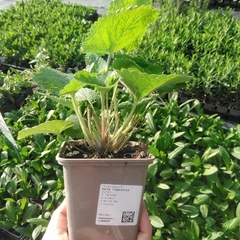
Phlomis Tuberosa
Seedling


Attracts pollinators 🐝
Difficulty
Diseases
Edible
Flower color
Flower color: Shade
Foliage color
Fragrant (aromatic) 👃
Frost resistance
Hardiness zone
Height
Moisture
Pests
Position
Soil
Spacing
Spacing: Plants per m²
Species
Suitable for cutting
Suitable for drying
Recommended products

Phlomis russeliana
Phlomis Russeliana

Knautia macedonica
Knautia Red Knight

Catananche caerulea
Shoofly plant Blue

Verbena bonariensis
Verbena

Calamintha nepeta ssp. nepeta
Calamint

Alchemilla mollis
Lady's mantle Irish Silk

Achillea millefolium
Yarrow Terracotta

Achillea millefolium
Yarrow Lilac Beauty

Sedum spectabile
Sedum Matrona

Nepeta racemosa
Catmint Walker’s Low

Achillea millefolium
Yarrow Summer Pastels

Gypsophila paniculata
Baby's Breath Snowflake

Leucanthemum vulgare
Daisy Maikönigin

Coreopsis verticillata
Coreopsis Moonbeam

Rudbeckia fulgida
Rudbeckia Goldsturm

Calamagrostis acutiflora
Feather Reed Grass Karl Förster

Achillea filipendulina
Yarrow Parkers Varietät

Papaver orientale
Oriental Poppy Royal Wedding

Anemone hybrida
Japanese anemone Lorelei

Sanguisorba officinalis
Great Burnet

Cephalaria gigantea
Giant scabious

Achillea millefolium
Yarrow Lachsschönheit

Helleborus orientalis
Hellebore Double Ellen Yellow Spotted

Nepeta faassenii
Catmint Six Hills Giant

Helleborus orientalis
Hellebore Double Ellen White

Salvia nemorosa
Woodland sage Schwellenburg

Gypsophila paniculata
Baby's breath Flamingo

Lavandula angustifolia
Lavender Rosea

Anemone tomentosa
Anemone Robustissima

Verbena hastata
Blue Vervain Pink Spires
Cultivation
This stout perennial unconditionally requires full sun and a warm place where it will thrive best. As for the soil, Phlomis is not too picky, but it is crucial that the soil is well-drained and loamy. It cannot stand winter waterlogging, which could cause its tuberous roots to rot. If you have heavy clay soil in your garden, we recommend adding a drainage layer of gravel to the bottom of the hole when planting. Plant the seedlings with a spacing of approximately 50 cm, so they have enough space for air circulation in adulthood and their majestic silhouette stands out. After planting, water the plant so the roots connect with the surrounding soil, but in the following weeks and years, watering will be minimal – Phlomis downright loves drought.
Growing Phlomis is a rewarding affair even for complete beginners because the plant does not suffer from any specific pests or diseases. However, it is good to know that after planting it can take one to two years before it fully adapts to the new place and shows off its tiered inflorescences in full beauty. In the first year, it often creates only a dense carpet of green leaves that works as a great ground cover. If the plant expands too much in width over time, it can be easily restricted by root barriers. As for winter maintenance, we recommend not cutting the dry stems in autumn. Not only are they sturdy and frost-resistant down to -28 °C, but their silhouettes look absolutely magical in the winter garden under a cap of snow. Perform the cut only early in the spring, the plant will then quickly and vigorously sprout again.
You often ask us about growing Phlomis in containers. Although it is a large plant reaching a height of 80–120 cm, growing it in a pot is possible if you choose a sufficiently large and deep container. The pot should have high-quality drainage at the bottom and holes for water runoff, because the risk of waterlogging is higher in a container than in the open ground. Use a substrate for Mediterranean plants or a mixture of garden soil and sand. Bear in mind that in a container the plant may require more frequent moisture checks than in the flowerbed, but the rule still applies: rather drier than waterlogged. Thanks to its resilience and attractive appearance, it will become the dominant feature of sunny terraces or balconies.
The information given is based on our experience, please use it as a guide only. Times may vary depending on the season, climate, location, sowing and transplanting dates and possibly also the conditions in the greenhouse/greenhouse. We always recommend testing how the plant performs in your conditions. Please do not take this as a guarantee.
Does Phlomis spread in the garden?
How do I care for Phlomis in winter? Should I prune it?
How often do I need to water the Phlomis?
At what spacing should I plant the seedlings?
Frequently asked questions
Characteristics
Is the plant toxic to children or pets?
Is Phlomis frost-hardy, or do I need to cover it for the winter?
Is this plant beneficial to bees?
Planting site
What kind of soil does Phlomis need?
Where is the best place to plant Phlomis?
Diseases & pests
Does Phlomis suffer from any diseases or pests?
Basic information
Can a beginner handle growing Phlomis?
When and in what color does Phlomis bloom?
How tall does the plant get and does it need support?
Troubleshooting
Why is my plant not blooming immediately after planting?
Harvest
Is this plant suitable for cutting for a vase?
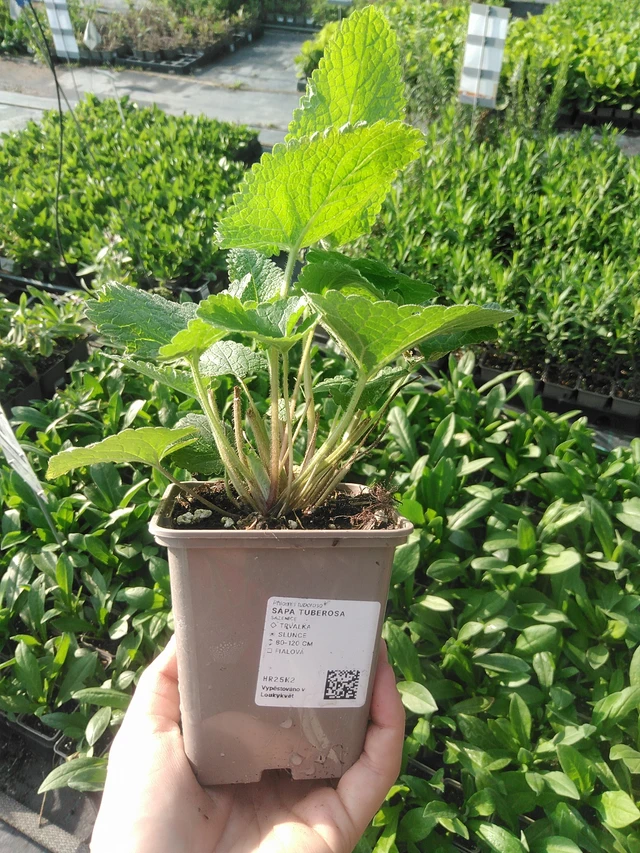
Photos in time
See how the seedling looks over the course of a year.



More products in category Jerusalem Sage
Phlomis russeliana
Phlomis Russeliana
More products in category Perennials
Alchemilla mollis
Lady's mantle Irish Silk
Achillea millefolium
Yarrow Summer Pastels
Verbena bonariensis
Verbena

Salvia nemorosa
Woodland Sage Caradonna

Perovskia atriplicifolia
Russian Sage

Gaura lindheimeri
Gaura Siskiyou Pink

Echinacea purpurea
Coneflower Rubinstern

Echinacea pallida
Echinacea pallida

Eryngium planum
Sea Holly

Echinacea purpurea
Coneflower Magnus

Salvia nemorosa
Woodland Sage Ostfriesland

Calamintha nepeta
Calamint Blue Cloud
Rudbeckia fulgida
Rudbeckia Goldsturm
Calamintha nepeta ssp. nepeta
Calamint

Gaura lindheimeri
Gaura Summer Breeze

Salvia nemorosa
Woodland Sage Amethyst
Leucanthemum vulgare
Daisy Maikönigin
Achillea millefolium
Yarrow Terracotta

Perovskia atriplicifolia
Russian sage Little Spire

Salvia nemorosa


