Ireland
€
The shop is closed for this season 🔴, it is only possible to collect orders placed via the e-shop.
Ireland
€
The shop is closed for this season 🔴, it is only possible to collect orders placed via the e-shop.
Bleeding Heart Alba, Loukykvět

Dicentra spectabilis Alba

Bleeding Heart Alba

The original home of bleeding hearts is Korea and China, where they grow in light deciduous forests. They are classic garden perennials. They will look perfect in nostalgically styled flower beds; the white variant fits well even into naturalistic woodland gardens. They are popular for their heart-shaped flowers hanging on horizontal or arching stems. These weaken and die back some time after flowering; all the plant's energy then concentrates in the roots, and at that moment, we can cut the above-ground part back completely. For the rest of the year, we won't even know the bleeding heart is in the garden. It will remind us of its charm again in the spring. Perfect vase life, at least 7 days. Harvest when the first 3–4 flowers open on the stem. Alba has beautiful pure white flowers; the shoots sprouting in spring are light lime green. Show full description

Seedling K13

K13 pot (13×13×13 cm)
Seedling K13
Seedling K13
Seedling K13
1-2 pieces
€4,79each
3-8 pieces
€4,29each
9-14 pieces
€3,79each
15+ pieces
€3,29each
Watch availability
Unfortunately, this product cannot be ordered for delivery to your country.
To ensure the plants arrive in perfect condition, we only ship those that can withstand transport. Therefore, these seedlings are available for personal pickup at our store only.
Coming in 2027

Attracts pollinators 🐝

Yes

Difficulty

Beginner

Diseases

Disease-free 🙂

Edible

No
?
Information on whether the plant can be used in floristry for decorating food.

Flower color

White

Flower color: Shade

Pure white

Foliage color

Light green

Fragrant (aromatic) 👃

No

Frost resistance

-28
?
The temperature down to which the plant is frost hardy.

Hardiness zone

5a (-28.9 °C to -26.1 °C)

Height

50-70 cm

Moisture

💧💧

Pests

Slugs

Position

Partial shade

Soil

Loamy, humus-rich, well-drained

Spacing

40-60 cm
?
Recommended planting spacing.

Spacing: Plants per m²

3-5

Species

Perennial

Suitable for cutting

Yes

Suitable for drying

No
1
2
3
4
5
6
7
8
9
10
11
12
Flowering
½ April
June

Recommended products

Cornflower Tall Double Blue Boy, Loukykvět

Centaurea cyanus

The blue cornflower is an absolute classic of our fields and meadows, which probably needs no lengthy introduction. However, the 'Tall Double Blue Boy' variety brings something extra. Compared to its wild relatives that we see along roads, it boasts rich flowers in an unmistakable, deep blue shade, sometimes with a purple tone. You can hardly imagine anything more meadow-like. Thanks to its strong stems growing up to eighty centimeters tall, this annual is perfectly suited for cutting, adding true rustic charm to bouquets. But its use doesn't end in the vase. The flowers keep their fantastic color even after drying! At weddings, we loved using them in flower crowns and corsages, where they have excellent stamina! The petals are edible. They serve perfectly as an original garnish for summer salads, desserts, or festive cakes. Moreover, in the garden, it functions as a reliable magnet for bees and bumblebees, who simply go crazy for its nectar.
€5,19
In Stock
Chinese Forget-me-not Firmament, Loukykvět

Cynoglossum amabile

Although correctly it is the Chinese hound's tongue, on the farm we don't call it anything other than forget-me-not! Unlike the classic water forget-me-not that we all know, this species has massive and long stems perfectly suited for binding. The color is a very fresh and distinct blue. Each plant produces 6-8 stems, and if you let some fade and ripen, seeds are easily collected.
€5,19
In Stock
Bleeding Heart, Loukykvět

Dicentra spectabilis

The original home of bleeding hearts is Korea and China, where they grow in light deciduous forests. They are classic garden perennials. They will look perfect in nostalgically styled flower beds; the white variant fits well even into naturalistic woodland gardens. They are popular for their heart-shaped flowers hanging on horizontal or arching stems. These weaken and die back some time after flowering; all the plant's energy then concentrates in the roots, and at that moment, we can cut the above-ground part back completely. For the rest of the year, we won't even know the bleeding heart is in the garden. It will remind us of its charm again in the spring. Perfect vase life, at least 7 days. Harvest when the first 3–4 flowers open on the stem. The basic species has pink-white flowers. In spring, the sprouting shoots have a pink tinge.
€2,99
More from €2,89
Coming in 2027
Brunnera macrophylla, Loukykvět

Brunnera macrophylla

The largeleaf brunnera comes from the moist mountain forests of the Caucasus, where it forms dense undergrowth. It is an ideal perennial for shady and semi-shady corners of your garden, where it will thrive in humus-rich, moist soil. It resembles classic forget-me-nots in appearance, but don't be fooled, its leaves are much larger, heart-shaped, and rough to the touch. Thanks to them, it acts as a great groundcover plant that sprouts early in the spring and reliably covers bare soil with its leaves until late autumn. It thus forms a natural contrasting background for the delicate, tiny flowers. Tiny sky-blue flowers appear in April, May, and June, creating a beautiful delicate veil over the green carpet of leaves. The flower clusters are also suitable for cutting into spring hand-tied bouquets, where they look very tender. Just watch out for snails and slugs, who like to feast on the juicy leaves of the brunnera, so it's a good idea to check the plants regularly. It is a long-lived and hardy perennial that handles severe frosts without problems and will bring you joy in one place for many years.
€3,89
More from €3,59
Coming in 2027
Feather grass Pony Tails, Loukykvět

Stipa tenuissima

Feather grass flowers capture attention in beds and bouquets with their lightness and delicacy. All feather grasses love full sun and dry, stony, well-drained soil. To look most natural in beds, it is good to plant them in loose groups of several pieces together with other drought-loving perennials and bulbs. Only then do their stems and inflorescences, set in motion by the slightest breath of wind, truly stand out. Stipa 'Ponny Tails' is a species native to the steppes of Mexico, Texas, and Patagonia. Airy, dense clumps of hair-like delicate leaves resemble horsehair. The leaves are green, turning up to straw-colored towards the flowers. In a suitable location, it also self-seeds.
€3,79
More from €2,69
Coming in 2027
Gaura Siskiyou Pink, Loukykvět
Special offer

Gaura lindheimeri

Gaura Siskiyou Pink is a charming perennial that brings lightness and airiness to the garden. Its original native area is in the warm regions of Texas and Louisiana, which is why it thrives in full sun and well-drained sandy soil. It grows in clumps and from June until the autumn frosts produces tiny raspberry-pink flowers that resemble fluttering butterflies. An interesting detail of this variety is the green leaves with a bronze tint and red spots. It is an absolutely undemanding plant, does not suffer from diseases or pests, and even beginners can handle its care. You will receive a grown seedling in a pot from us, which you simply need to transplant directly into the flowerbed. Here it complements ornamental grasses perfectly and acts as an attraction for bees and bumblebees. Although it grows more as a short-lived perennial in our climate, in a suitable place it reliably self-seeds. Occasional pinching will encourage richer branching. Gaura is excellent for summer bouquets. We cut the stems for a vase as soon as the first two to three little flowers open.
€3,03
€2,59
More from €1,79
Coming in 2027
Columbine Kristall, Loukykvět

Aquilegia vulgaris

The common columbine is a versatile perennial that will reliably inhabit both rural and modern flowerbeds. In the wild, it grows on the edges of forests and in light groves across all of Europe, which is why it thrives best in the garden in full sun to partial shade and ordinary loamy soil rich in humus. Its main charm lies in its unusually shaped flowers, but it is also valuable for its very early sprouting green leaves, which awaken the garden after winter. You will receive a beautifully grown seedling in a pot from us, which you just need to transplant to your chosen spot. Although the plant is poisonous, it represents a huge asset for gardeners. Even complete beginners can manage growing it, pests avoid it, and it easily survives severe frosts dropping to minus thirty-four degrees. During May and June, delicate flowers bloom on sturdy, sixty to eighty-centimeter-tall stems, bringing typical airiness and lightness to the planting. The 'Kristall' cultivar is a large-flowered variety that stands out with pure white flowers and prominent spurs. These act as a reliable magnet for bees, bumblebees, and other beneficial pollinators. Keep in mind that in a favorable location, columbine very willingly self-seeds, taking care of natural-looking wild stands. It works well in perennial beds and as an undergrowth beneath taller shrubs. If you like bringing a piece of the garden home, columbine certainly won't disappoint you. It is perfectly suited for cutting and will bring a novel structure to spring bouquets. Fresh flowers will bring you joy in a vase for about seven days. If you leave some of the flowers to finish blooming on the flowerbed, they will form interesting seed pods, which are highly popular among florists for creating various natural decorations and can also be dried well. Just watch out for the occasional occurrence of powdery mildew during the drier months, but otherwise, the plant needs almost no care.
€2,79
More from €1,99
Coming in 2027
Baby's breath Flamingo, Loukykvět

Gypsophila paniculata

Paniculate baby's breath is originally a plant from the sandy steppes and slopes of southern Europe and central Asia, which has been grown in botanical gardens since the 18th century. Since the mid-19th century, it has also become naturalized in private gardens and became a classic cut perennial. In the garden, it applies excellently in modern-style steppe beds with grasses and drought-tolerant perennials, to which it adds airiness and lightness. The 'Flamingo' cultivar boasts a flood of tiny double flowers in a tender pink color, which last on the plant from July to September. The plant requires full sun and very well-drained, ideally sandy soil, because its deep taproots cannot stand winter dampness. Thanks to them, however, it resists drought excellently and is fully frost-resistant. For florists, baby's breath is indispensable, whether for fresh summer bouquets or for drying, as it retains its shape and color even after drying.
€3,89
More from €3,59
Coming in 2027
Gaura Whirling Butterflies, Loukykvět

Gaura lindheimeri

The charming Gaura 'Whirling Butterflies' is exactly the perennial that will give any flower bed a relaxed, natural look. It originally comes from the dry and hot plains of southern North America, which clearly suggests that it loves sunshine and well-drained sandy soil. You will receive from us a beautifully grown seedling in a pot, which you can simply transplant straight into the garden. Here, it will soon form a dense clump of green leaves, from which long, thin stems dotted with flowers emerge all summer until October. These flowers open in a pure white color and gradually take on a slight pinkish tone. Furthermore, the abundant blooming reliably attracts pollinators, for whom the plant is a great source of food. It can handle even stronger frosts down to minus eighteen degrees. It looks excellent in mixed plantings next to drought-tolerant grasses or other undemanding species. Although it is a short-lived perennial, it willingly self-seeds, meaning it will stay with you in its location for a very long time. If you like creating fresh summer bouquets, Gaura will definitely not disappoint you. You just need to cut the stems the moment the first small flowers open. It is a completely undemanding species without serious diseases, which needs no support and will forgive even beginner mistakes.
€2,99
More from €2,09
Coming in 2027
Meadow Sage Rose Rhapsody, Loukykvět

Salvia pratensis

Meadow sage occurs here primarily in warmer regions, especially in southern Moravia and northern and central Bohemia. It grows on sunny meadows and hillsides and along paths. Fragrant leaves form a basal rosette, from which several less leafy branched stems grow. The inflorescences are composed of striking bilabiate flowers, which are a great attraction for bees and bumblebees. Rose Rhapsody has light pink flowers.
€2,79
More from €1,99
Coming in 2027
Hellebore Double Ellen White, Loukykvět

Helleborus orientalis

Hellebores are evergreen perennials that form slowly spreading clumps of leathery, dark green leaves. The stems usually bear four to five flowers. They bloom very early, as early as late winter and early spring. They are usable for vases only after conspicuous seed pods form in the center of the flower and the flower matures. Earlier, they tend to wilt and the stems cannot hold the flower in an upright position. All parts of the plant are poisonous. Double Ellen White is an almost pure white, double-flowered hellebore. The petals are slightly wavy and the bottom row of petals is lightly tinged with green.
€4,79
More from €4,69
Coming in 2027
Hellebore Double Ellen Picotee, Loukykvět

Helleborus orientalis

Hellebores are evergreen perennials that form slowly spreading clumps of leathery, dark green leaves. The stems usually carry four to five flowers. They bloom very early, as early as late winter and early spring. They can be used in a vase only after conspicuous seed pods form in the center of the flower and the flower matures. Picked earlier, they tend to wilt and the stems cannot hold the flower upright. All parts of the plant are poisonous. The semi-double flowers of the Double Ellen Picotee hellebore take on white and light pink hues with a purplish-burgundy edging.
€4,79
More from €4,69
Coming in 2027
Avens Tempest Scarlet, Loukykvět

Geum chiloense

Avens Tempest Scarlet brings a flood of vibrant colors and spring freshness to the garden. The original species of avens grow in moister but well-drained meadows and light forest edges, which is why they thrive best here in sun or partial shade in humus-rich loamy soil. You will receive an already rooted seedling in a pot from us, which you can easily transplant straight to your chosen spot. Avens are generally very undemanding plants, do not need any support, and effortlessly withstand frosts down to minus twenty-eight degrees. The Tempest Scarlet cultivar was bred in Scotland and stands out with the deep scarlet color of its semi-double, slightly ruffled flowers, which bloom on long branched stems from May to July. After a summer break, it will often delight you with another blooming in the autumn. With its clumping growth, it will eventually form a nice ground cover, and its flowers attract bees and butterflies. It is an excellent perennial for mixed flowerbeds as well as for cutting. We harvest the stems for bouquets as soon as about a quarter to half of the flowers are open. It will stay beautiful in a vase for about seven days, but it is not suitable for drying. Common pests and diseases avoid it, making it an ideal choice for complete beginners.
€3,89
More from €2,89
Coming in 2027
Bleeding Heart Gold Heart, Loukykvět

Dicentra spectabilis

The original home of Bleeding Hearts is Korea and China, where they grow in light deciduous forests. They are classic garden perennials. They look perfect in nostalgic flower beds, and the white variety fits well into naturalistic woodland gardens. They are popular for their heart-shaped flowers hanging on horizontal or arching stems. Some time after flowering, these weaken and die back; all the plant's strength concentrates in the roots, and at that point, we can cut the above-ground part back completely. We won't even know the Bleeding Heart is in the garden for the rest of the year. It will remind us of its charm again in spring. Perfect vase life, at least 7 days. Harvest when the first 3–4 flowers open on the stem. The basic species has pink-white flowers. Shoots sprouting in spring have a pink tinge.
€4,79
More from €3,59
Unavailable
Pro rok 2026 nedostupné
Lady's mantle Irish Silk, Loukykvět

Alchemilla mollis

Alchemilla mollis, known as lady's mantle, is an indispensable perennial for anyone who wants to bring harmony and softness to the garden. Its home is the moister environments of mountain meadows and light forests, making it a very adaptable plant that will survive even severe frosts without problems in our climate. The 'Irish Silk' cultivar is prized for its vitality and abundant blooming, where clouds of tiny, yellow-green flowers float above clumps of gray-green leaves. It is precisely this neutral color that can work wonders in a flower bed – it softens overly sharp contrasts between other flowers and beautifully unifies the entire composition. Besides its ornamental function, lady's mantle also has practical uses. Thanks to its clumping growth and ability to quickly fill in, it is ideal for edging pathways or as an underplanting beneath taller shrubs and roses. Water droplets catch on its leaves, creating a magical spectacle in the garden. If you enjoy making bouquets, you will love lady's mantle as versatile filler greenery that matches almost anything. It will last beautiful for about ten days in a vase, and its inflorescences can also be easily dried without losing too much of their color or shape. Moreover, it is a magnet for pollinators, and its young leaves are even edible, so it also finds use in a natural kitchen.
€2,99
More from €2,09
Coming in 2027
Avens Totally Tangerine, Loukykvět

Geum chiloense

Avens Totally Tangerine will brighten any garden with its cup-shaped flowers in warm shades that resemble the color of ripe tangerines. The original botanical species of this cute avens originate from the mountainous regions of Chile, which is why it thrives best even in our conditions in well-drained, humus-rich, and loamy soil. It handles frosts down to minus twenty-eight degrees without problems, and even complete beginners can easily handle caring for it, as it does not suffer from diseases or pests. You will get an already grown seedling in a pot from us, which you simply transplant straight into the flowerbed in sun or partial shade. It is ideal to plant the plants about half a meter apart. Here it will soon form a dense clump of green leaves, from which sturdy stems up to ninety centimeters tall emerge, and they do not need any support. Although it is a short-lived perennial, it will make up for everything with its incredible persistence in blooming. Unlike other avens, the Totally Tangerine variety starts its blooming season a little later, but in return, it will delight you without a break from May to September. The semi-double flowers also gradually transition into a deep salmon to dark peach color and are a literal magnet for bees, bumblebees, and butterflies. In a flowerbed, it functions excellently as a filler plant, nicely connecting other perennials with its neutral structure. You will also enjoy the blooming avens at home. It is excellently suited for cutting into summer bouquets. We recommend cutting the stems when a quarter to half of the flowers on the branch are already open. They will then last about a week in a vase and gently liven up any arrangement. Although it is not suitable for drying, it will do a lot of work in the flowerbed even through winter, when its foliage and remains of stems create an interesting winter effect under frost or snow.
€3,89
More from €2,89
Coming in 2027
Tartarian statice, Loukykvět
For drying

Goniolimon tataricum

In nature, we find it in steppes on dry pastures and stony slopes of Central and Southern Europe. It is a well-known plant used in floristry. Excellently usable in both fresh and dried states. For drying, we select only stems with fully opened flowers. We hang them flowers-down in a dry, airy, and dark place.
€3,29
More from €2,29
Unavailable
Pro rok 2026 nedostupné
Echinacea pallida, Loukykvět

Echinacea pallida

The pale coneflower is one of the exceptionally interesting prairie perennials of the North American continent. In its natural environment, it grows on open, sunny plains, which is why it thrives best in our gardens in full sun in drier, well-drained soil. You just need to transplant this grown seedling straight into the flower bed, where it will reliably take root. It does not need support, easily withstands severe frosts, and is avoided by common diseases and pests, making it ideal for beginner growers. During June and July, it will reward you with aromatic flowers with unusually narrow and drooping petals in light purple and pink tones. The prominent prickly centers are literally a magnet for bees and bumblebees, and the flowers themselves are surprisingly edible. The plant stands out especially in rustic plantings together with ornamental grasses. Gardeners and florists love it for its versatility. The fresh stems bring joy in a vase for about a week. Moreover, the distinctive central cones hold their shape perfectly, can be perfectly dried for winter decorations, or left in the flower bed, where they will create an eye-catching winter structure under a layer of snow.
€2,99
More from €2,09
Coming in 2027
Yarrow Summer Pastels, Loukykvět

Achillea millefolium

An original wild perennial with a large distribution area from Europe to Siberia. Suitable for natural and wild plantings. It grows in meadows and dry grassy places. A very adaptable and undemanding plant, it grows in clumps and spreads by runners. By cutting back after the first flowering, we encourage a set of new flowers. For bouquets, we harvest when the florets are fully open. It lasts 10 days in a vase. Summer Pastels is characterized by a changeable and soft range of colors from white and vanilla to salmon, brick red, and bronze.
€3,09
More from €1,99
Coming in 2027
Geum Mai Tai, Loukykvět

Geum rivale

Avens Mai Tai is a charming spring perennial that brings a romantic touch to the garden with its adorable cup-shaped flowers. The original species often grows near streams and in moister meadows, so it will easily settle in our gardens in sun or partial shade, where well-drained, loamy, and slightly humous soil will suit it best. You will receive a rooted seedling in a pot from us, which you just need to transplant into the flowerbed. Avens forms nice basal clumps of green leaves, which over time function as an excellent ground cover. Its growth is reliable and its care is downright undemanding, because the plant is not bothered by pests or diseases and withstands frosts down to minus twenty-eight degrees. It stands out best when you plant it in smaller groups about thirty centimeters apart. From May to July, richly branched stems bearing semi-double flowers with gently ruffled petals appear above the foliage. The Mai Tai cultivar, which was bred in the USA in 2005, is characterized by its amazing color variability. It blooms in peach tones with a pink tint and gradually transitions into more muted pastel, salmon, and apricot shades. Blooming avens is a huge attraction for insects, especially for butterflies. We cut the stems for a vase when roughly a quarter to half of the flowers on the stem are open. They will stay beautiful in water for approximately seven days and add lightness and movement to an arrangement. However, its flowers are not suitable for drying. Although it is more of a short-lived perennial, it will bring you a lot of joy in the flowerbed with its rich flowers and undemanding nature.
€3,89
More from €2,89
Coming in 2027
Japanese Anemone Königin Charlotte, Loukykvět

Anemone hybrida

Anemone hupehensis 'Königin Charlotte' will reliably brighten up any autumn garden. These autumn anemones belong to the same family as buttercups and originally come from the light forests and semi-shaded thickets of East Asia. Here, they thrive best in partial shade or in the sun, provided they have sufficiently moist, loamy, and humus-rich soil. We ship a well-grown plant in a pot to customers, which simply needs to be transplanted directly to the chosen spot. It will soon develop into a long-lived perennial with dark green leaves, which becomes unmistakable in the autumn. It is completely undemanding, manageable even for beginners, and avoids common diseases and pests. It is excellent for mixed perennial beds, where it stands out against the darker background of shrubs. Despite its height of seventy to one hundred centimeters, it does not need any support. The historical 'Königin Charlotte' variety, bred as early as 1898, boasts large semi-double flowers in light pink shades. The outer sides of these silky-smooth petals are tinted faintly purple. The flowers on long, slender stems bloom from August to October and serve as a great attraction for bees and other pollinators. If you enjoy decorating your home, you can easily use the anemone for cutting; it will stay beautiful in a vase for about seven days. Although it is not suitable for drying and the entire plant is poisonous, it will please you in the garden even in winter, when its remnants create an interesting winter effect.
€3,49
More from €3,59
Coming in 2027
Hellebore Double Ellen Yellow Spotted, Loukykvět

Helleborus orientalis

Hellebores are evergreen perennials that form slowly expanding clumps of leathery, dark green leaves. The stems usually bear four to five flowers. They bloom very early, already at the end of winter and the beginning of spring. They are usable for a vase only after conspicuous seed pods form in the center of the flower and the flower matures. Earlier, they tend to wilt, and the stems cannot hold the flower upright. All parts of the plant are poisonous. The 'Double Ellen Yellow Spotted' hellebore has light yellow-green semi-double flowers with striking, dark burgundy spotting.
€5,19
More from €3,89
Coming in 2027
Columbine Black Barlow, Loukykvět

Aquilegia vulgaris

The common columbine is a popular and versatile perennial that inherently belongs in both rustic and modern gardens. In the wild, it grows on forest edges and clearings throughout Europe, so a sunny or partially shaded spot with slightly moist, loamy, and humus-rich soil will suit it best in your garden. You will receive a grown seedling in a pot from us, which you simply need to transplant into a flowerbed. There, it will become a valuable element early in the spring thanks to its early sprouting green leaves. The flowers themselves then enter the scene in May and June. Although it is a short-lived perennial, it reliably self-seeds in a suitable location, so you definitely won't lose it in your garden. Columbine flowers act as a great attraction for bees and bumblebees, and the entire plant is absolutely low-maintenance, making it easy to grow even for beginners. It does not require support and can withstand very severe frosts dropping below thirty degrees. For cutting, it is best to choose freshly opened blooms, and they will last about seven days in a vase. Since the plant is not suitable for drying, it will bring you joy primarily outdoors in the garden or in the aforementioned spring vases. During the season, just occasionally check if it is bothered by aphids or powdery mildew; otherwise, it needs no special attention. The 'Black Barlow' variety catches the eye with double flowers in an unconventional shade of very dark purple. They look fantastic both in the flowerbed and in bouquets.
€2,79
More from €1,99
Coming in 2027
Sweet pea Mixed colors, Loukykvět

Lathyrus odoratus

Sweet pea is the uncrowned king of summer scents, bringing the romance of cottage gardens to your own. Originally from sunny Sicily, it thrives best here in the sun or partial shade. It requires humus-rich, loamy, and well-drained soil with adequate moisture. Our pre-grown potted seedling just needs to be transplanted directly to your chosen spot. Note that the sweet pea is a vigorously climbing annual that can reach a height of two and a half meters. You must definitely provide it with sturdy support. It is a plant for more advanced gardeners, and it is important to pinch it occasionally during growth to encourage richer flowering. Throughout the summer, it will reward you with flowers in a palette ranging from pure white and light pink to lilac, royal blue, and deep purple. The flowers emit a strong scent that attracts pollinators. Sweet pea is ideal for cutting into summer bouquets; however, it is not suitable for drying. Please remember that the entire plant is poisonous. Watch out for common pests like aphids and slugs.
€2,16
€1,69
More from €1,19
Unavailable
Pro rok 2026 nedostupné
Yarrow Lachsschönheit, Loukykvět

Achillea millefolium

Native wild perennial with a large distribution area from Europe to Siberia. Suitable for natural and wild plantings. Grows in meadows and dry grassy places. A very adaptable and undemanding plant, grows in clumps and spreads by runners. Cutting back after the first flowering encourages a new batch of flowers. Harvest for bouquets when the florets are fully open. Lasts 10 days in a vase. The Lachsschönheit cultivar is valued for its perfect transition of tones from salmon-pink to cream.
€3,49
More from €2,39
Coming in 2027
Verbena, Loukykvět
Special offer

Verbena bonariensis

A verbena species originally from South America. In our country, it is often used as an annual, but in mild winters it can overwinter and reproduce by self-seeding. The firm, airy stems beautifully soften perennial beds and make them special with their purple color. It beautifully complements steppe plantings with grasses and rose beds.
€3,03
€2,59
More from €1,79
Coming in 2027
Autumn Moor Grass, Loukykvět

Sesleria autumnalis

Autumn moor grass is an exceptionally hardy ornamental grass that introduces fresh greenery to the garden right from early spring. Native to the rocky slopes of the Balkans, it is well-adapted to free-draining soils, making it an ideal choice for novice gardeners. It forms neat clumps growing thirty to fifty centimeters tall. Its greatest asset is its bright green foliage, which emerges early and remains in pristine condition in the borders well into winter. The plant is untouched by diseases or pests and handles severe frosts superbly. In August and September, delicate creamy-beige flowers appear above the foliage. These rather subtle spikelets give the plant an elegant, refined look. In the garden, it acts as a perfect filler perennial for sunny or partially shaded spots. It looks absolutely stunning paired with calamint, airy gaura, or flowering oregano. Its delicate flowers and leaves are easily used as foliage filler in fresh bouquets, or they can be dried for small-scale floristry projects.
€3,79
More from €2,69
Coming in 2027
Liatris, Loukykvět

Liatris spicata

Blazing star, also known by the fitting folk name 'top-down flower', is a fascinating perennial that brings an unusual vertical structure to the garden. Originally from the North American prairies, it will appreciate a sunny spot and well-draining, humus-rich soil here as well. It handles winter without any problems, withstanding frosts down to minus thirty-four degrees. You will receive a grown seedling in a pot from us, which you can simply transplant straight into the flowerbed. It is exceptional in the way it blooms. Unlike most plants, its striking purple flower spikes open from the top down. From July to September, these tall spikes become a magnet for bees, bumblebees, and butterflies. In flowerbeds, it works excellently in mixed plantings with ornamental grasses. It does not need support and does not suffer from diseases, just watch out for voles. Blazing star flowers are great for cutting into summer bouquets, adding an original shape and a lilac to purple color. Moreover, the left-over stems will create a beautiful winter effect.
€3,09
More from €2,19
Coming in 2027
Knautia Melton Pastels, Loukykvět

Knautia macedonica

Knautia Melton Pastels is an abundantly and long-blooming, undemanding perennial with which you can easily conjure up a piece of wild nature right behind your house. The original species has its roots in the Balkans, where it grows wildly in sun-drenched thickets and on dry meadows. In flowerbeds, it immediately draws attention with its slender, tall stems. In the Melton Pastels cultivar, from early summer until autumn, they carry a flood of small flowers in pastel pink and burgundy tones. A healthy seedling in a pot will arrive at your home. Once you transplant it in the sun or partial shade with well-drained soil, it will quickly reward you with vigorous growth. It stands out best when you plant about five plants per square meter, with a spacing of half a meter from each other. Care for knautia is completely undemanding; it playfully survives even severe frosts and does not require complex fertilizing. Because it grows up to a meter in height, we recommend providing it with unobtrusive support. Although it belongs among short-lived perennials, nature designed it so that it readily self-seeds without any problems. For lovers of floral decorations, this plant is a literal treasure. The stems are long and sturdy, so they look completely natural in vases and give bouquets a meadow touch. They also apply excellently in the creation of dried arrangements, bringing interesting structure to them. Although it is a strong plant suitable for beginners, a minor ailment can be powdery mildew or aphids, which you just need to catch in time.
€2,79
More from €1,99
Unavailable
Pro rok 2026 nedostupné
Woodland Sage Schneehügel, Loukykvět

Salvia nemorosa

This species of sage originates from the steppe regions of Central and Eastern Europe. It forms abundantly flowering small clumps with straight upright stems. In beds, it looks best in groups. Traditionally, it is planted as a companion to roses due to the matching flowering time. However, it will look equally good in mixed drought-loving steppe plantings with grasses. It is an excellent food source for bees. It lasts 7 days in a vase. Schneehügel blooms white.
€2,99
More from €2,09
Coming in 2027

Cultivation

It requires fresh, humus-rich, yet well-drained soil in light shade. In early spring, it is good to protect fresh shoots with a light cover, such as evergreen boughs. Conversely, after flowering, it is recommended to completely cut off the fading and retreating leaves of the bleeding heart and allow the plant to rest. The entire plant, including the roots, is very fragile. It is very vital and long-lived in the right location.

The information given is based on our experience, please use it as a guide only. Times may vary depending on the season, climate, location, sowing and transplanting dates and possibly also the conditions in the greenhouse/greenhouse. We always recommend testing how the plant performs in your conditions. Please do not take this as a guarantee.

Show all

Click to view the full growing instructions.

Frequently asked questions

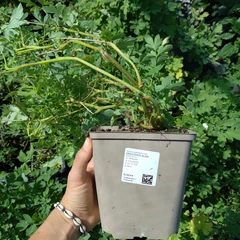
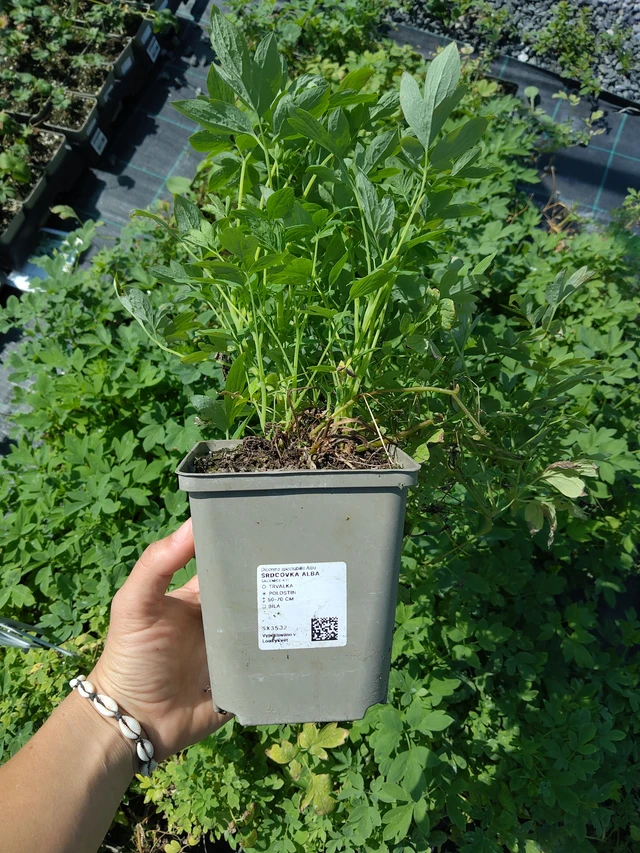
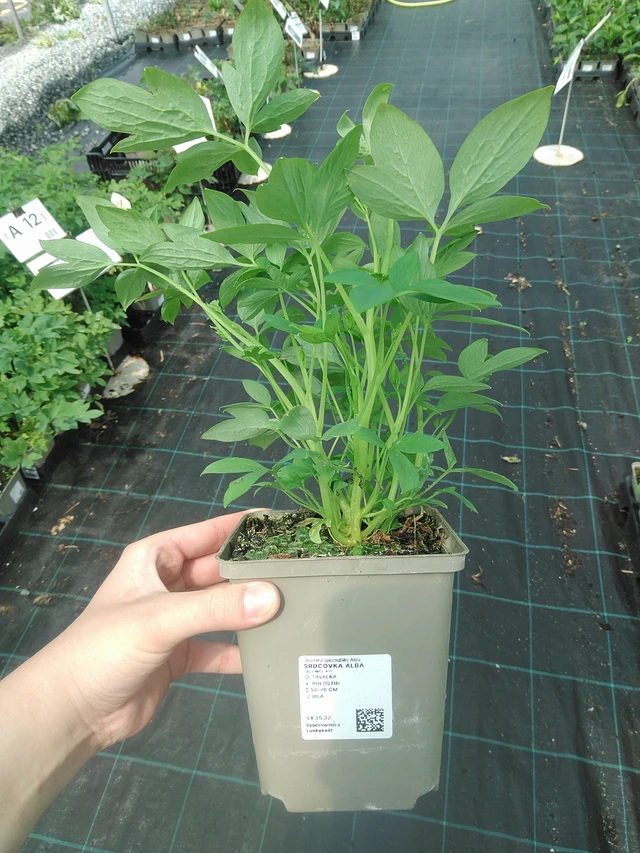
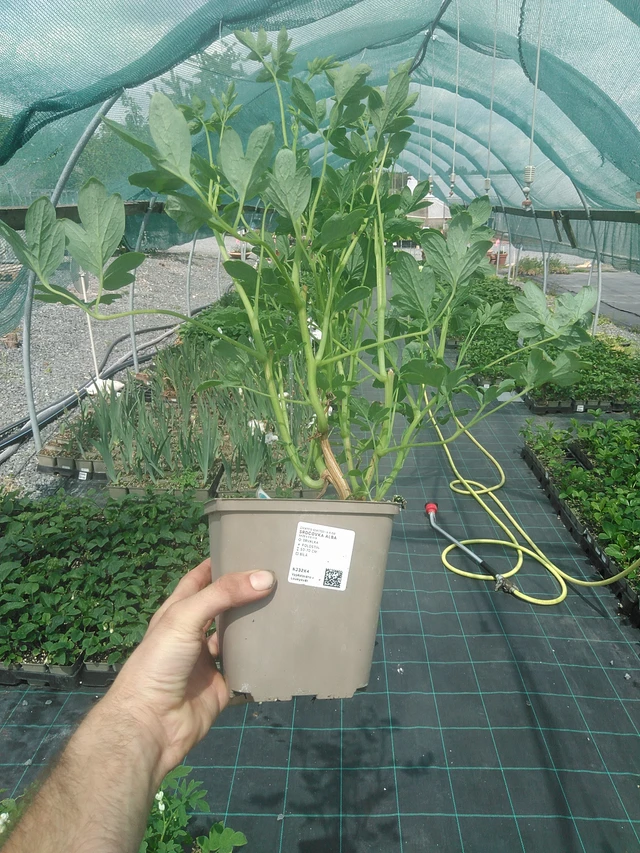
Photos in time

See how the seedling looks over the course of a year.
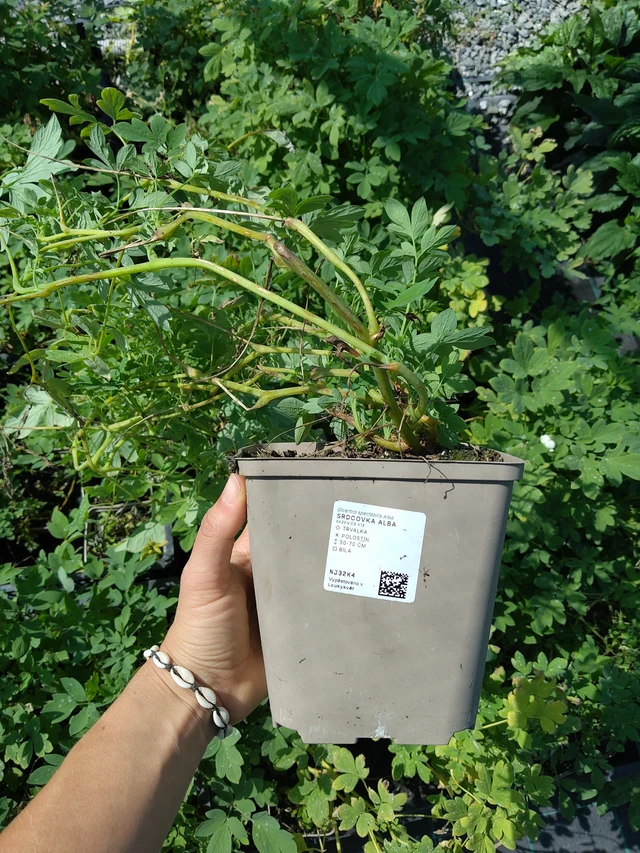
Bleeding Heart Alba - 11. 8. 2026
11. 8. 2026
Bleeding Heart Alba - 11. 8. 2026
11. 8. 2026
Bleeding Heart Alba - 13. 7. 2026
13. 7. 2026
Bleeding Heart Alba - 13. 7. 2026
13. 7. 2026
Bleeding Heart Alba - 13. 7. 2026
13. 7. 2026
Bleeding Heart Alba - 2. 6. 2026
2. 6. 2026
Bleeding Heart Alba - 2. 6. 2026
2. 6. 2026
Bleeding Heart Alba - 13. 5. 2026
13. 5. 2026
Bleeding Heart Alba - 13. 5. 2026
13. 5. 2026
Bleeding Heart Alba - 13. 5. 2026
13. 5. 2026
Bleeding Heart Alba - 13. 5. 2026
13. 5. 2026
Bleeding Heart Alba - 20. 4. 2026
20. 4. 2026
Bleeding Heart Alba - 1. 4. 2026
1. 4. 2026
Bleeding Heart Alba - 31. 10. 2025
31. 10. 2025
Bleeding Heart Alba - 13. 10. 2025
13. 10. 2025
Bleeding Heart Alba - 17. 9. 2025
17. 9. 2025
Bleeding Heart Alba - 10. 9. 2025
10. 9. 2025
Bleeding Heart Alba - 1. 9. 2025
1. 9. 2025
Bleeding Heart Alba - 19. 8. 2025
19. 8. 2025
Bleeding Heart Alba - 19. 8. 2025
19. 8. 2025
Bleeding Heart Alba - 24. 6. 2025
24. 6. 2025
Bleeding Heart Alba - 9. 6. 2025
9. 6. 2025
Bleeding Heart Alba - 13. 5. 2025
13. 5. 2025
Bleeding Heart Alba - 3. 4. 2025
3. 4. 2025

More products in category Bleeding heart

Bleeding Heart, Loukykvět

Dicentra spectabilis

The original home of bleeding hearts is Korea and China, where they grow in light deciduous forests. They are classic garden perennials. They will look perfect in nostalgically styled flower beds; the white variant fits well even into naturalistic woodland gardens. They are popular for their heart-shaped flowers hanging on horizontal or arching stems. These weaken and die back some time after flowering; all the plant's energy then concentrates in the roots, and at that moment, we can cut the above-ground part back completely. For the rest of the year, we won't even know the bleeding heart is in the garden. It will remind us of its charm again in the spring. Perfect vase life, at least 7 days. Harvest when the first 3–4 flowers open on the stem. The basic species has pink-white flowers. In spring, the sprouting shoots have a pink tinge.
€2,99
More from €2,89
Coming in 2027
Bleeding Heart Gold Heart, Loukykvět

Dicentra spectabilis

The original home of Bleeding Hearts is Korea and China, where they grow in light deciduous forests. They are classic garden perennials. They look perfect in nostalgic flower beds, and the white variety fits well into naturalistic woodland gardens. They are popular for their heart-shaped flowers hanging on horizontal or arching stems. Some time after flowering, these weaken and die back; all the plant's strength concentrates in the roots, and at that point, we can cut the above-ground part back completely. We won't even know the Bleeding Heart is in the garden for the rest of the year. It will remind us of its charm again in spring. Perfect vase life, at least 7 days. Harvest when the first 3–4 flowers open on the stem. The basic species has pink-white flowers. Shoots sprouting in spring have a pink tinge.
€4,79
More from €3,59
Unavailable
Pro rok 2026 nedostupné
Bleeding Heart Valentine, Loukykvět

Dicentra spectabilis

The original home of Bleeding Hearts is Korea and China, where they grow in light deciduous forests. They are classic garden perennials. They look perfect in nostalgic flower beds, and the white variety fits well into naturalistic woodland gardens. They are popular for their heart-shaped flowers hanging on horizontal or arching stems. Some time after flowering, these weaken and die back; all the plant's strength concentrates in the roots, and at that point, we can cut the above-ground part back completely. We won't even know the Bleeding Heart is in the garden for the rest of the year. It will remind us of its charm again in spring. Perfect vase life, at least 7 days. Harvest when the first 3–4 flowers open on the stem. The basic species has pink-white flowers. Shoots sprouting in spring have a pink tinge.
€5,29
More from €3,89
Coming in 2027
Bleeding Heart White Gold, Loukykvět

Dicentra spectabilis

The original home of Bleeding Hearts is Korea and China, where they grow in light deciduous forests. They are classic garden perennials. They look perfect in nostalgic flower beds, and the white variety fits well into naturalistic woodland gardens. They are popular for their heart-shaped flowers hanging on horizontal or arching stems. Some time after flowering, these weaken and die back; all the plant's strength concentrates in the roots, and at that point, we can cut the above-ground part back completely. We won't even know the Bleeding Heart is in the garden for the rest of the year. It will remind us of its charm again in spring. Perfect vase life, at least 7 days. Harvest when the first 3–4 flowers open on the stem. The basic species has pink-white flowers. Shoots sprouting in spring have a pink tinge.
€4,79
More from €3,59
Unavailable
Pro rok 2026 nedostupné
Bleeding Heart Alba, Loukykvět

More products in category Perennials

Lady's mantle Irish Silk, Loukykvět

Alchemilla mollis

Alchemilla mollis, known as lady's mantle, is an indispensable perennial for anyone who wants to bring harmony and softness to the garden. Its home is the moister environments of mountain meadows and light forests, making it a very adaptable plant that will survive even severe frosts without problems in our climate. The 'Irish Silk' cultivar is prized for its vitality and abundant blooming, where clouds of tiny, yellow-green flowers float above clumps of gray-green leaves. It is precisely this neutral color that can work wonders in a flower bed – it softens overly sharp contrasts between other flowers and beautifully unifies the entire composition. Besides its ornamental function, lady's mantle also has practical uses. Thanks to its clumping growth and ability to quickly fill in, it is ideal for edging pathways or as an underplanting beneath taller shrubs and roses. Water droplets catch on its leaves, creating a magical spectacle in the garden. If you enjoy making bouquets, you will love lady's mantle as versatile filler greenery that matches almost anything. It will last beautiful for about ten days in a vase, and its inflorescences can also be easily dried without losing too much of their color or shape. Moreover, it is a magnet for pollinators, and its young leaves are even edible, so it also finds use in a natural kitchen.
€2,99
More from €2,09
Coming in 2027
Yarrow Summer Pastels, Loukykvět

Achillea millefolium

An original wild perennial with a large distribution area from Europe to Siberia. Suitable for natural and wild plantings. It grows in meadows and dry grassy places. A very adaptable and undemanding plant, it grows in clumps and spreads by runners. By cutting back after the first flowering, we encourage a set of new flowers. For bouquets, we harvest when the florets are fully open. It lasts 10 days in a vase. Summer Pastels is characterized by a changeable and soft range of colors from white and vanilla to salmon, brick red, and bronze.
€3,09
More from €1,99
Coming in 2027
Verbena, Loukykvět
Special offer

Verbena bonariensis

A verbena species originally from South America. In our country, it is often used as an annual, but in mild winters it can overwinter and reproduce by self-seeding. The firm, airy stems beautifully soften perennial beds and make them special with their purple color. It beautifully complements steppe plantings with grasses and rose beds.
€3,03
€2,59
More from €1,79
Coming in 2027
Woodland Sage Caradonna, Loukykvět

Salvia nemorosa

This species of sage originally comes from the steppe regions of Central and Eastern Europe. It forms profusely flowering small clumps with straight upright stems. In flower beds, it looks best in groups. Traditionally, due to the identical flowering time, it is planted as a companion to roses. However, it will look just as good in mixed drought-loving steppe plantings with grasses. It lasts 7 days in a vase. The cultivar Caradonna stands out with a long flowering period and dark, almost black-purple stems with tiny purple flowers and dark purple bracts. If we cut it back after flowering, it will bloom again in late August and September.
€2,99
More from €2,09
Coming in 2027
Russian Sage, Loukykvět

Perovskia atriplicifolia

Russian sage reliably brings a touch of sunny steppes into the garden and places almost no demands on care. These sparsely branched subshrubs originally come from harsh, rocky areas from Afghanistan to Tibet, where they grow on open sun-drenched plains. Thanks to its origin, it delights in full sun and poor, well-drained sandy soil with minimal moisture. You will receive from us a well-rooted seedling in a pot, which just needs to be transplanted straight to the chosen spot in the flower bed. It does not need support, is avoided by common pests and diseases, and will survive frosts down to minus twenty-eight degrees. It grows up to one hundred and twenty centimeters and forms striking white felted shoots with silvery grey aromatic leaves. From July to October, it blooms with tiny blue-purple flowers that act as a lure for bees and butterflies and are even edible. Russian sage stands out next to drought-tolerant perennials. The flowers are suitable for cutting and drying for winter arrangements. Moreover, the silvery stems will ensure a beautiful winter effect in the flower bed.
€2,99
More from €2,09
Coming in 2027
Gaura Siskiyou Pink, Loukykvět
Special offer

Gaura lindheimeri

Gaura Siskiyou Pink is a charming perennial that brings lightness and airiness to the garden. Its original native area is in the warm regions of Texas and Louisiana, which is why it thrives in full sun and well-drained sandy soil. It grows in clumps and from June until the autumn frosts produces tiny raspberry-pink flowers that resemble fluttering butterflies. An interesting detail of this variety is the green leaves with a bronze tint and red spots. It is an absolutely undemanding plant, does not suffer from diseases or pests, and even beginners can handle its care. You will receive a grown seedling in a pot from us, which you simply need to transplant directly into the flowerbed. Here it complements ornamental grasses perfectly and acts as an attraction for bees and bumblebees. Although it grows more as a short-lived perennial in our climate, in a suitable place it reliably self-seeds. Occasional pinching will encourage richer branching. Gaura is excellent for summer bouquets. We cut the stems for a vase as soon as the first two to three little flowers open.
€3,03
€2,59
More from €1,79
Coming in 2027
Coneflower Rubinstern, Loukykvět

Echinacea purpurea

A valuable garden and medicinal perennial, originally from North America. It blooms in summer with dark purple-pink flowers. The spiky flower discs are an irresistible lure for butterflies. Lasts 7–10 days in a vase. After plucking the petals, the stems with the central discs can be dried or used in fresh bouquets as an interesting element. Rubinstern is very similar to the Magnus cultivar; the petals are darker and firmer. As they fade, they gradually pale and droop downwards.
€2,99
More from €2,09
Unavailable
Pro rok 2026 nedostupné
Echinacea pallida, Loukykvět

Echinacea pallida

The pale coneflower is one of the exceptionally interesting prairie perennials of the North American continent. In its natural environment, it grows on open, sunny plains, which is why it thrives best in our gardens in full sun in drier, well-drained soil. You just need to transplant this grown seedling straight into the flower bed, where it will reliably take root. It does not need support, easily withstands severe frosts, and is avoided by common diseases and pests, making it ideal for beginner growers. During June and July, it will reward you with aromatic flowers with unusually narrow and drooping petals in light purple and pink tones. The prominent prickly centers are literally a magnet for bees and bumblebees, and the flowers themselves are surprisingly edible. The plant stands out especially in rustic plantings together with ornamental grasses. Gardeners and florists love it for its versatility. The fresh stems bring joy in a vase for about a week. Moreover, the distinctive central cones hold their shape perfectly, can be perfectly dried for winter decorations, or left in the flower bed, where they will create an eye-catching winter structure under a layer of snow.
€2,99
More from €2,09
Coming in 2027
Sea Holly, Loukykvět
For drying

Eryngium planum

Sea holly is an indispensable perennial for all lovers of naturally styled gardens. It earned its folk name - male fidelity - in times when it was used in herbal medicine as an aphrodisiac, and its roots were even candied as sweets in France and England. Today, however, you will appreciate it mainly for its low maintenance and unique appearance. Its home is on sunny hillsides and dry meadows, so even in our gardens, it will welcome well-drained, even poorer sandy soil and full sun. It produces upright, sturdy stems topped with blue-purple flowers with prickly bracts, which bring interesting structure and a silvery touch to the flowerbeds. It is literally a magnetic plant for bees, bumblebees, and butterflies, who find a rich food source on it. Floristically, it is extremely valuable, because its flowers are perfectly suited for cutting as well as drying for winter decorations. If you decide not to harvest it, feel free to leave it in the flowerbed all winter. Its silhouette covered in hoarfrost creates a wonderful winter effect. Although it is a short-lived perennial, in a suitable location it reliably self-seeds, so you will enjoy its beauty for many years.
€2,79
More from €1,99
Unavailable
Pro rok 2026 nedostupné
Coneflower Magnus, Loukykvět

Echinacea purpurea

A valuable garden and medicinal perennial, native to North America. It blooms in summer with dark purple-pink flowers. The spiky flower centers are an irresistible attraction for butterflies. They last 7–10 days in a vase. After removing the petals, the stems with the central disks can be dried or used in fresh bouquets as an interesting element. Magnus features distinctive deep pink flowers with an orange-brown center.
€2,99
More from €2,09
Coming in 2027
Woodland Sage Ostfriesland, Loukykvět

Salvia nemorosa

This species of sage originates from the steppe regions of Central and Eastern Europe. It forms abundantly flowering small clumps with straight upright stems. In beds, it looks best in groups. Traditionally, it is planted as a companion to roses due to the matching flowering time. However, it will look equally good in mixed drought-loving steppe plantings with grasses. It is an excellent food source for bees. It lasts 7 days in a vase. The cultivar Ostfriesland blooms with a strikingly dark violet-blue color.
€2,99
More from €2,09
Coming in 2027
Calamint Blue Cloud, Loukykvět

Calamintha nepeta

Lesser calamint Blue Cloud is an undemanding and modest perennial that reliably perfumes any sunny garden. Its original homeland is the sunny and dry slopes of Southern Europe, which is why it thrives best here in direct sun in well-drained, sandy, or poorer loamy soil. It handles winter without problems, tolerating frosts down to minus twenty-three degrees. You will receive a grown seedling in a pot from us, which you just need to transplant straight into the flowerbed, where it will very soon form a compact, airy small shrub reaching a height of up to forty centimeters. It does not suffer from any diseases or pests, so even complete beginners can easily handle caring for it. Throughout late summer and into autumn, it blooms with a record number of tiny blue flowers that are so typical of the Blue Cloud variety. The whole plant emits a pleasant minty-spicy scent, and its flowers, which resemble thyme, act as a literal magnet for bees, bumblebees, and butterflies. It will look great among roses or in naturally designed steppe flowerbeds, where it naturally complements lower ornamental grasses. Additionally, both the blue flowers and green leaves are edible, so you can use them to garnish summer dishes. Lesser calamint is also excellently suited for cutting into smaller fresh bouquets, adding a fine structure to them in a vase.
€2,79
More from €1,99
Coming in 2027
Rudbeckia Goldsturm, Loukykvět

Rudbeckia fulgida

Rudbeckia Goldsturm is a reliable and long-lived perennial that will bring the warm tones of late summer and autumn into your garden. It originally comes from the open plains and prairies of North America, so it delights most in sunny locations with common garden soil, whether it is loamy, humus-rich, or clayey. You will receive from us an already grown seedling in a pot, which you just need to transplant to the chosen spot in the flower bed. It is a completely undemanding plant, does not suffer from diseases or pests, and easily survives severe frosts. The Goldsturm cultivar grows to a height of about seventy centimeters and does not need support. From August to October, it produces a flood of golden-yellow flowers with distinctly dark centers. These edible flowers attract pollinators and fit perfectly into both prairie and rustic plantings. Rudbeckia is also great for cutting, lasting around ten days in a vase. In addition, the distinctive dark centers can be easily dried. If you leave them in the flower bed over the winter, they will provide a wonderful spectacle.
€2,79
More from €1,99
Coming in 2027
Calamint, Loukykvět

Calamintha nepeta ssp. nepeta

An undemanding and modest perennial that blooms with a large number of tiny flowers. It blooms for a record-breaking length of time throughout late summer and autumn. It forms smaller, compact, airy bushes that release a minty-spicy scent. The thyme-like flowers attract bees, bumblebees, and butterflies. It will look good among roses as well as in naturalistic steppe beds, perhaps with lower grasses. This calamint is generally more vigorous. It differs from other calamints with felted leaves by its record flowering length, stiff and shiny leaves, and also a larger number of flowers that do not form seeds and are therefore maximally durable. Sometimes sold under the cultivar name 'Triumphator'.
€2,79
More from €1,99
Coming in 2027
Gaura Summer Breeze, Loukykvět

Gaura lindheimeri

The charming gaura comes from the sun-drenched plains of Texas and Louisiana and represents exactly the plant that can liven up any drought-tolerant planting. It is a naturally profusely blooming perennial that delights in full sun and well-drained, sandy, and nutrient-poor soil. You will receive from us an already grown seedling in a pot, which will quickly form a vigorous clump after being transplanted into the garden. From early summer until late autumn, it will delight you with a flood of tiny flowers in pure white and delicate pink tones. The flowers gently sway in the breeze and with their appearance resemble a flock of tiny butterflies, which also really like to land on the plant, as do bees and bumblebees. Although gaura is known as a short-lived perennial, thanks to its willing self-seeding, it will last for many years in your garden. Caring for it is completely undemanding, it is avoided by most diseases and pests, and it can handle frosts down to eighteen degrees below zero without any problems. It is often used in mixed borders, where it beautifully softens the overall impression, and perfectly matches various types of ornamental grasses. The Summer Breeze variety is popular for its strong and healthy growth as well as its exceptionally generous set of flowers, which grow to about one meter. If you like to create your own bouquets, do not hesitate to cut gaura for a vase. Harvesting is best done the moment the first small flowers on the stem begin to open. These delicate flowers are not suitable for drying into dried arrangements, but they will beautifully lighten up fresh bouquets.
€2,99
More from €2,09
Unavailable
Pro rok 2026 nedostupné
Woodland Sage Amethyst, Loukykvět

Salvia nemorosa

This species of sage originates from the steppe regions of Central and Eastern Europe. It forms profusely flowering small clumps with straight, upright stems. In flower beds, it looks best in groups. It is traditionally planted as a companion to roses due to the matching flowering time. However, it looks equally good in mixed drought-tolerant steppe plantings with grasses. It is an excellent food source for bees. Lasts 7 days in a vase. Amethyst is an elegant variety with long stems and a pink flower color that is unusual for sages.
€2,99
More from €2,09
Coming in 2027
Daisy Maikönigin, Loukykvět

Leucanthemum vulgare

A classic perennial for early summer bouquets and cottage gardens. For arrangements, harvest the blooms with firm, smooth central disks, which allows them to last 7–10 days in a vase. Maikönigin is an exceptionally prolific flowering garden cultivar of Daisy.
€2,79
More from €1,99
Coming in 2027
Yarrow Terracotta, Loukykvět

Achillea millefolium

A native wild perennial with a large distribution range from Europe to Siberia. Suitable for natural and wild plantings. It grows in meadows and dry grassy places. A very adaptable and undemanding plant, it grows in clumps and spreads via runners. Cutting back after the first bloom encourages a new set of flowers. Harvest for bouquets when the tiny flowers are fully open. It lasts 10 days in a vase. Terracotta features ochre, shades of orange and yellow, and gray-green foliage.
€2,99
More from €2,89
Coming in 2027
Russian sage Little Spire, Loukykvět

Perovskia atriplicifolia

Perovskia are sparsely branched subshrubs, originating from areas ranging from Afghanistan to Tibet. They grow in open, sunny, rocky, and stony habitats. Their white-felted shoots and grayish aromatic leaves are striking. They fit well in sunny flower beds with other drought-loving perennials, where they create interesting structures even in the winter months. Little Spire is a smaller cultivar suitable even for pots with a soil volume of 7 liters or more.
€3,49
More from €3,59
Coming in 2027
Woodland Sage Schneehügel, Loukykvět

Salvia nemorosa

This species of sage originates from the steppe regions of Central and Eastern Europe. It forms abundantly flowering small clumps with straight upright stems. In beds, it looks best in groups. Traditionally, it is planted as a companion to roses due to the matching flowering time. However, it will look equally good in mixed drought-loving steppe plantings with grasses. It is an excellent food source for bees. It lasts 7 days in a vase. Schneehügel blooms white.
€2,99
More from €2,09
Coming in 2027