
Alcea rosea plena
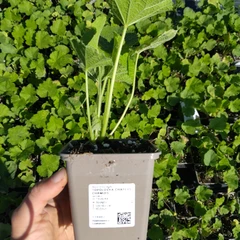
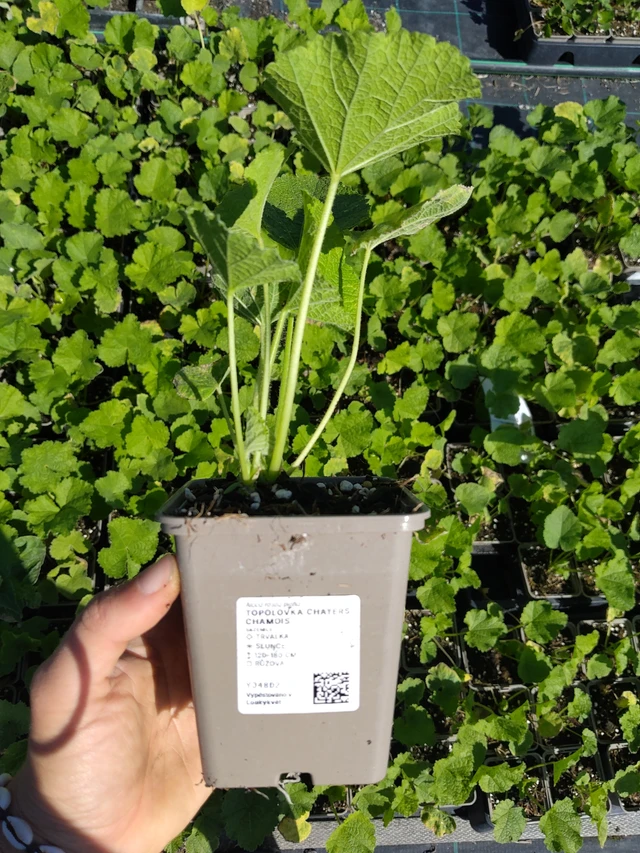
Hollyhock Chaters Chamois
Seedling


Attracts pollinators 🐝
Difficulty
Diseases
Edible
Flower color
Flower color: Shade
Foliage color
Frost resistance
Hardiness zone
Height
Moisture
Pests
Position
Soil
Spacing
Spacing: Plants per m²
Species
Suitable for cutting
Recommended products

Alcea rosea plena
Hollyhock Chaters Rosa

Alcea rosea hybr.
Hollyhock Spotlight Radiant Rose

Gypsophila paniculata
Baby's breath Flamingo

Achillea millefolium
Yarrow Summer Pastels

Dicentra spectabilis Alba
Bleeding Heart Alba

Aquilegia vulgaris
Columbine Kristall

Hesperis matronalis
Sweet Rocket White

Lychnis coronaria
Campion Alba

Geum chiloense
Avens Totally Tangerine

Lychnis coronaria
Campion

Achillea millefolium
Yarrow Lachsschönheit

Papaver orientale
Oriental Poppy Royal Wedding

Digitalis purpurea
Foxglove Dalmatian Rose

Anemone hybrida
Japanese Anemone Andrea Atkinson

Achillea millefolium
Yarrow Terracotta

Dicentra spectabilis
Bleeding Heart

Alcea rosea plena
Hollyhock Chaters White

Anemone tomentosa
Anemone Robustissima

Achillea millefolium
Yarrow Lilac Beauty

Lupinus
Lupine Band of Nobles Fräulein

Echinacea purpurea
Coneflower White Swan

Filipendula rubra
Meadowsweet Venusta

Alchemilla mollis
Lady's mantle Irish Silk

Sedum telephium
Sedum Herbstfreude

Anemone hybrida
Japanese Anemone Serenade

Leucanthemum
Daisy Christine Hagemann

Physostegia virginiana
Obedient plant Alba

Filipendula hybridum
Meadowsweet Kahome

Achillea ptarmica
Yarrow The Pearl

Verbena hastata
Blue Vervain Pink Spires
Cultivation
A natural characteristic of hollyhocks is their short lifespan. To ensure the longest life possible, select the most suitable site. It should be a sunny, warm spot protected from the wind. The soil must be well-drained, sandy-loam. When planting, leave larger gaps between plants and combine them with lower-growing species to naturally prevent the spread of rust. If diseased leaves appear, remove them. At the end of September, hollyhocks can be cut back; this strengthens them and helps form strong shoots for the next year.
The information given is based on our experience, please use it as a guide only. Times may vary depending on the season, climate, location, sowing and transplanting dates and possibly also the conditions in the greenhouse/greenhouse. We always recommend testing how the plant performs in your conditions. Please do not take this as a guarantee.
Photos in time
See how the seedling looks over the course of a year.


More products in category Hollyhock
Alcea rosea plena
Hollyhock Chaters Rosa
Alcea rosea hybr.
Hollyhock Spotlight Radiant Rose
Alcea rosea plena
Hollyhock Chaters White

Alcea rosea hybr.
Hollyhock Spotlight Polarstar
More products in category Perennials
Alchemilla mollis
Lady's mantle Irish Silk
Achillea millefolium
Yarrow Summer Pastels

Verbena bonariensis
Verbena

Salvia nemorosa
Woodland Sage Caradonna

Perovskia atriplicifolia
Russian Sage

Gaura lindheimeri
Gaura Siskiyou Pink

Echinacea purpurea
Coneflower Rubinstern

Echinacea pallida
Echinacea pallida

Eryngium planum
Sea Holly

Echinacea purpurea
Coneflower Magnus

Salvia nemorosa
Woodland Sage Ostfriesland

Calamintha nepeta
Calamint Blue Cloud

Rudbeckia fulgida
Rudbeckia Goldsturm

Calamintha nepeta ssp. nepeta
Calamint

Salvia nemorosa
Woodland Sage Amethyst

Gaura lindheimeri
Gaura Summer Breeze

Leucanthemum vulgare
Daisy Maikönigin
Achillea millefolium
Yarrow Terracotta

Perovskia atriplicifolia
Russian sage Little Spire

Salvia nemorosa


