
Sesleria caerulea
Blue Moor Grass
Seedling
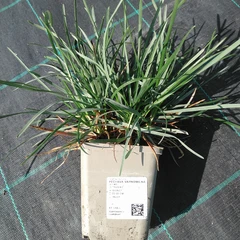
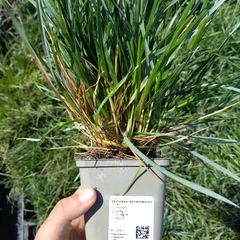
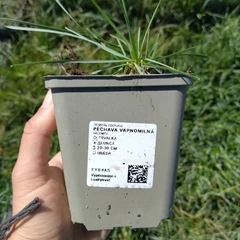
Difficulty
Diseases
Flower color
Flower color: Shade
Foliage color
Fragrant (aromatic) 👃
Frost resistance
Hardiness zone
Height
Moisture
Pests
Position
Soil
Spacing
Spacing: Plants per m²
Species
Suitable for cutting
Suitable for drying
Recommended products

Pennisetum alopecuroides
Fountain grass Hameln

Alchemilla mollis
Lady's mantle Irish Silk

Nepeta racemosa
Catmint Walker’s Low

Seslaria heufleriana
Sesleria sadleriana

Salvia nemorosa
Woodland Sage Ostfriesland

Echinacea purpurea
Coneflower White Swan

Salvia nemorosa
Salvia Mainacht

Salvia pratensis
Meadow Sage Rose Rhapsody

Salvia nemorosa
Woodland Sage Adrian

Salvia nemorosa
Woodland Sage Schneehügel

Sedum spectabile
Sedum Matrona

Sporobolus heterolepis
Dropseed

Briza media
Quaking grass Tinkerbell

Calamintha nepeta ssp. nepeta
Calamint

Nepeta faassenii
Catmint Six Hills Giant

Deschampsia cespitosa
Tufted hairgrass Palava

Echinacea purpurea
Coneflower Rubinstern

Achillea millefolium
Yarrow Summer Pastels

Briza media
Quaking grass Limouzi

Lavandula angustifolia
Lavender Hidcote

Knautia macedonica
Knautia Red Knight

Achillea ptarmica
Yarrow The Pearl

Achillea millefolium
Yarrow Lilac Beauty

Sanguisorba officinalis
Great Burnet

Deschampsia cespitosa
Tufted Hairgrass Goldschleier

Luzula nivea
Snowy Woodrush

Coreopsis verticillata
Coreopsis Moonbeam

Phlomis russeliana
Phlomis Russeliana

Anemone hybrida
Japanese Anemone Whirlwind

Leucanthemum vulgare
Daisy Maikönigin
Cultivation
Location and growing requirements
This elegant grass is an ideal choice for novice gardeners because its requirements are minimal and success in cultivation is almost guaranteed. Blue moor grass loves the sun, but unlike many other grasses, it also thrives excellently in partial shade, where the two-tone effect of its leaves beautifully stands out. The key to success is the right soil, which must be primarily well-drained. The plant thrives in soil that is sandy, loamy with an admixture of stones, or gravelly. It is important that water does not pool in the planting location, because waterlogging is a greater enemy to this drought-loving plant than frost. Thanks to its modesty, it requires almost no fertilizing; on the contrary, in overly nutritious soil, it could lose its compact shape and lodge. It is enough to plant the supplied seedling at ground level and initially keep it slightly moist until it roots properly.
Pruning and year-round maintenance
One of the greatest advantages of blue moor grass is its winter effect and early spring awakening. Because it is often evergreen or semi-evergreen in our conditions, it is not intervened with at all in the autumn. Dry inflorescences and leaves form a beautiful structure in the garden even during the winter months. Only in early spring, usually in March, devote a moment of care to the plant. It is not necessary to perform a radical cutting back to the ground as with miscanthus. Often, it is enough just to "comb" the clump with your fingers and thus remove dry and damaged leaves to make room for new shoots. If the clump is unsightly after a harsh winter, you can trim it to a height of about five to ten centimeters. Blooming starts very early, already in April, and you can leave the faded spikelets on the plant for decoration, or cut them and use them in dried arrangements.
Growing in containers and pots
Thanks to its low growth (20–30 cm) and compact shape, blue moor grass is an absolutely ideal plant for growing in containers on terraces or balconies. When planting in a pot, it is absolutely essential to ensure perfect water drainage so that the roots do not stand in mud. Pour a sufficient layer of drainage from small stones or expanded clay at the bottom of the container. The substrate should be light and well-drained, ideally mixed with coarser sand in a one-to-one ratio. While in open soil the blue moor grass usually finds water itself after rooting, in a pot it depends on you. Water it regularly, but always only after the top layer of the substrate dries out. The plant is frost-hardy even in a container, but since its roots are less protected than in a flowerbed, it is advisable to place the container in a protected spot by an outer wall for the winter and possibly wrap it with insulating material.
The information given is based on our experience, please use it as a guide only. Times may vary depending on the season, climate, location, sowing and transplanting dates and possibly also the conditions in the greenhouse/greenhouse. We always recommend testing how the plant performs in your conditions. Please do not take this as a guarantee.
Frequently
asked
questions
Basic information
Is moor grass poisonous? I have small children and a dog in the garden.
Characteristics
How frost-hardy is this grass? Will it need covering for the winter?
How and in which months does *Sesleria* bloom?
Is there a risk that *Sesleria* will spread uncontrollably all over my garden?
Growing
Does moor grass require a radical spring cutback, like other ornamental grasses?
How far apart should I plant the seedlings in the flowerbed?
Does the purple moor grass require regular fertilization?
Do I need to water the moor grass regularly?
Harvest
Can the flowers be used for bouquets or dried for winter?
Propagation
Can I propagate the plant into multiple seedlings in the future?
Planting site
What kind of location is best for calciphilous Sesleria seedlings?
Can I grow Sesleria seedlings in a pot on a balcony or terrace?
Diseases & pests
Is Sesleria prone to any diseases or is there a risk of it being attacked by pests?
Troubleshooting
What should I do if the leaves of my Sesleria start yellowing and rotting from the bottom?
Photos
in time
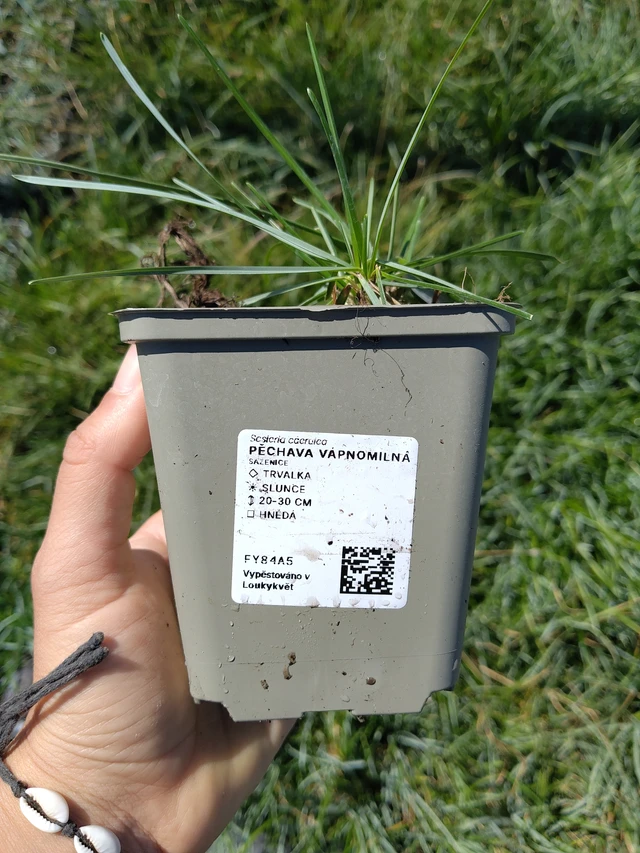
See how the seedling looks over the course of a year.
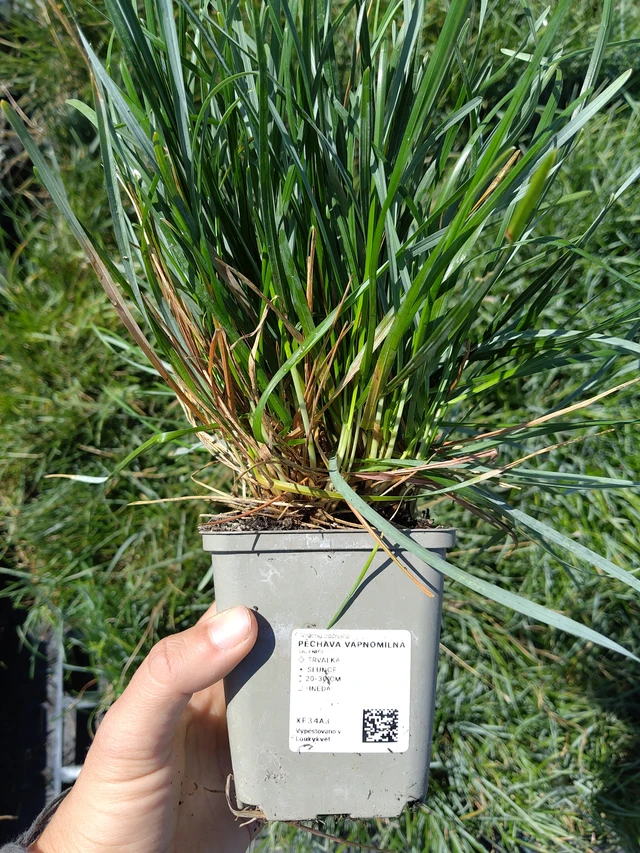
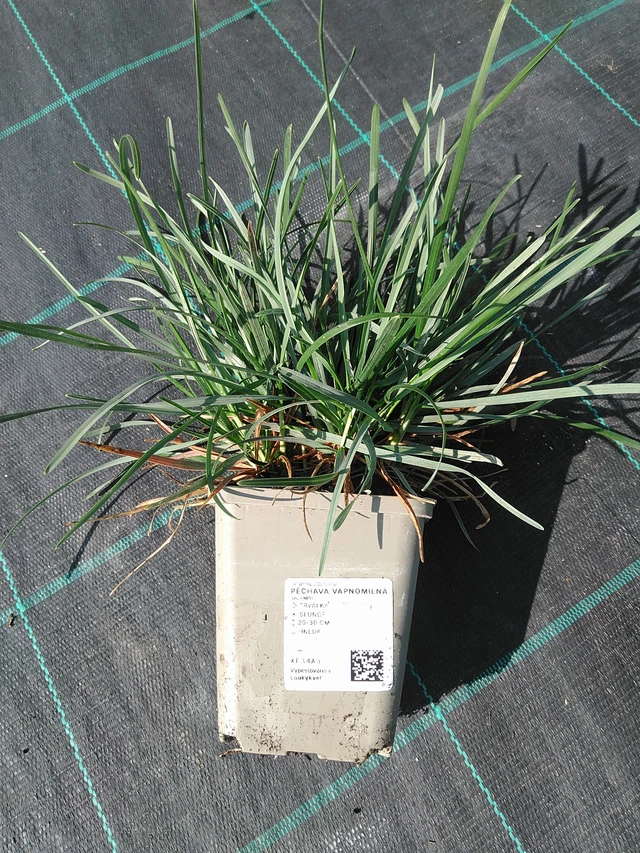
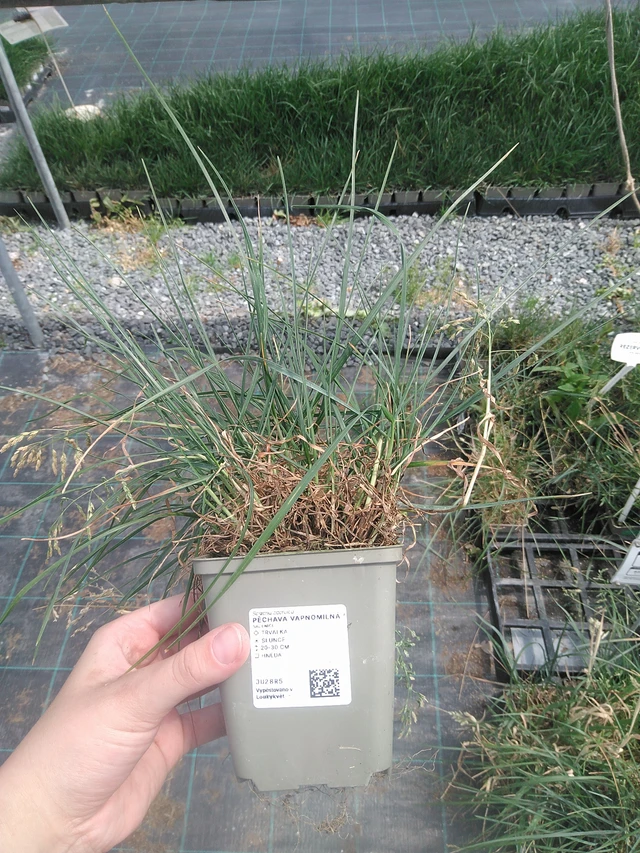


More products in category Sesleria

Sesleria autumnalis
Autumn Moor Grass
Seslaria heufleriana
Sesleria sadleriana

Sesleria argentea
Moor grass
More products in category Ornamental grasses

Stipa tenuissima
Feather grass Pony Tails
Sesleria autumnalis
Autumn Moor Grass

Calamagrostis acutiflora
Feather Reed Grass Karl Förster
Pennisetum alopecuroides
Fountain grass Hameln
Sporobolus heterolepis
Dropseed
Deschampsia cespitosa
Tufted Hairgrass Goldschleier
Deschampsia cespitosa
Tufted hairgrass Palava

Panicum virgatum
Switchgrass Northwind

Calamagrostis acutiflora
Feather Reed Grass Overdam

Pennisetum alopecuroides
Fountain Grass Hameln Gold

Stipa pennata
European feather grass

Stipa capillata
Feather grass

Eragrostis spectabilis
Lovegrass

Muhlenbergia capillaris
Muhly grass Ruby

Melica ciliata
Melic grass Silky
Briza media
Quaking grass Tinkerbell
Briza media
Quaking grass Limouzi

Deschampsia cespitosa
Tufted hairgrass Tardiflora

Muhlenbergia reverchonii
Muhly grass Rosy

Deschampsia cespitosa


