Ireland
€
🟢 The Loukykvět shop for seedlings is open once again. 🟢
Ireland
€
🟢 The Loukykvět shop for seedlings is open once again. 🟢
European feather grass, Loukykvět

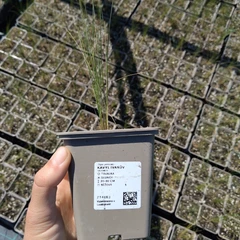
Stipa pennata

European feather grass

The flowers of feather grasses catch the eye in beds and bouquets with their lightness and delicacy. All feather grasses love full sun and dry, stony, well-drained soil. To look most natural in flower beds, it is good to plant them in loose groups of a few pieces together with other drought-loving perennials and bulbs. Only then will their stems and inflorescences, set in motion by the slightest breeze, stand out. A grass naturally distributed in Europe, Central Asia, and North Africa. It forms sturdy grey-green clumps with upright stems. The flowers, in the form of silvery-white awns, resemble long hair. Show full description

Seedling

K9 pot (9×9×9.5 cm)
Seedling
Seedling
Seedling
1-2 pieces
€4,29each
3-8 pieces
€3,89each
9-17 pieces
€3,39each
18+ pieces
€3,19each
Watch availability
0 pcs in stock

Difficulty

Beginner

Diseases

Disease-free 🙂

Flower color

Beige

Flower color: Shade

Silver

Foliage color

Green

Fragrant (aromatic) 👃

No

Frost resistance

-23
?
The temperature down to which the plant is frost hardy.

Hardiness zone

6a (-23.3 °C to -20.6 °C)

Height

30-80 cm

Moisture

💧

Pests

Pest-free 🙂

Position

Sun

Soil

Sandy, well-drained

Spacing

30-40 cm
?
Recommended planting spacing.

Spacing: Plants per m²

5-9

Species

Perennial

Suitable for cutting

Yes

Suitable for drying

Yes
1
2
3
4
5
6
7
8
9
10
11
12
Flowering
July
August

Recommended products

Feather grass, Loukykvět

Stipa capillata

Feather grass flowers captivate in beds and bouquets with their lightness and delicacy. All Feather grasses love full sun and dry, stony, well-drained soil. To look most natural in beds, it is good to plant them in several pieces in loose groups together with other drought-loving perennials and bulbs. Only then will their stems and inflorescences, set in motion by the slightest breeze, stand out. *Stipa capillata* is a native steppe grass also widespread elsewhere in southern, central, and eastern Europe. It forms solid grey-green clumps with upright stems. The flowers, in the form of beige awns, stand almost horizontally away from the stem when ripening and twist interestingly.
€4,29
More from €2,99
In stock with delivery from 19. 4. 2027
This product can only be purchased in our store.
Verbena, Loukykvět
Special offer

Verbena bonariensis

A verbena species originally from South America. In our country, it is often used as an annual, but in mild winters it can overwinter and reproduce by self-seeding. The firm, airy stems beautifully soften perennial beds and make them special with their purple color. It beautifully complements steppe plantings with grasses and rose beds.
€3,03
€2,59
More from €1,79
In StockIn stock – only 22 left
Quaking grass Tinkerbell, Loukykvět

Briza media

Quaking grass 'Tinkerbell' is an undemanding native grass whose delicate appearance will enchant in any natural garden. It naturally grows in drier meadows across Europe, where it seeks poorer and well-drained soils. It easily handles less nutritious substrates, does not suffer from diseases, and effortlessly survives severe frosts. It forms dense green clumps from which thin stalks carrying unmistakable inflorescences sprout from May to July. The tiny spikelets in the shape of small plump hearts play with yellow and brown tones. They are famous for their trembling at the slightest breeze, which adds dynamics and lightness to flower beds. The compact 'Tinkerbell' variety grows to a height of fifty centimeters and behaves as a short-lived perennial. It perfectly complements drought-tolerant perennials in full sun. It remains very attractive until August, when it is good to trim it after blooming. For florists, it is an absolute treasure. The stalks are beautiful in fresh summer bouquets and are perfectly suited for drying, retaining their shape long-term in floristry arrangements.
€3,49
More from €2,39
In Stock
Feather Reed Grass Karl Förster, Loukykvět

Calamagrostis acutiflora

A tufted, upright growing grass. It sprouts very early. It is decorative due to its overall vertical habit and fine flower panicles, which bloom silvery-grey, turn yellow in summer, and transition to sandy beige. It decorates the garden until winter. You can plant it in mixed beds or use it as an element to rhythmically divide the space. Usable for bouquets and drying.
€4,29
More from €3,89
In Stock
Shoofly plant Blue, Loukykvět
Special offer

Catananche caerulea

Catananche caerulea, commonly known as Cupid's dart, is a charming plant that will win you over with its lightness and airiness. Its scientific name refers to ancient Greek legends, according to which it was used in love potions; today, however, you will appreciate it more for its undemanding nature and unique appearance. It is excellently suited for natural-style gardens, gravel beds, and drought-tolerant plantings, where it beautifully complements other perennials or ornamental grasses. It grows up to ninety centimeters tall and, despite its height, needs no support. The flowers have a lavender-blue color with a darker center and toothed petals at the ends. They bloom gradually from June to September. Cupid's dart loves drought and heat, but on the contrary, it cannot stand winter dampness, which harms it more than frost. If you provide it with a well-drained spot, it will survive temperatures down to -18 °C. It is a rewarding plant for beginner growers and experienced florists alike. Fresh flowers last a week in a vase, but they will bring you the most joy when dried. Harvest them fully open in dry weather and hang them upside down. They will keep their shape and remind you of summer all winter long.
€2,81
€2,59
More from €1,79
In Stock
Northern Sea Oats, Loukykvět

Chasmanthium latifolium

Chasmanthium is one of the most charming ornamental grasses, bringing movement and a gentle rustling sound to the garden. It originates from the eastern part of North America, where it naturally grows in light, damp forests or on the banks of streams, so it is best suited to partial shade and humous, non-drying soil. Its greatest adornments are the flat spikelets resembling small fish, which hang from arched, drooping stems and change color throughout the season from fresh green through beige to warm copper tones, while the leaves turn golden-yellow in autumn. Chasmanthium is an excellent choice for cutting into fresh bouquets, where it adds airiness, and it looks even better dried, retaining its shape and color for a long time. Furthermore, it is a fully frost-hardy perennial that easily handles winters and will please any grower with its low-maintenance nature.
€3,79
More from €2,69
In Stock
Quaking grass Limouzi, Loukykvět

Briza media

Quaking grass 'Limouzi' is an undemanding and very charming native grass that naturally grows in sunny meadows and pastures with poorer and well-drained soil. From May onwards, long thin stalks sprout from its dense green clumps, carrying delicate spikelets in the shape of small hearts swaying on them. They are colored in inconspicuous green and brown tones. It is their constant movement and rustling at the slightest breeze that gives the flower beds extraordinary dynamics and lightness. This short-lived perennial, growing to a height of around half a meter, is perfectly suited to complement colorful steppe plantings, where it creates a soft filler between more prominently flowering species. It will also find its use among beginner growers, as it does not suffer from diseases or pests and handles strong frosts without problems. The airy inflorescences of quaking grass are perfect for cutting into summer bouquets and for drying for various floristry purposes. After blooming, roughly at the end of summer, it is good to trim the clumps, which will encourage their fresh appearance. The 'Limouzi' cultivar is characterized by its abundant flower set and slightly more compact growth, which maintains its shape even in more demanding conditions.
€3,49
More from €2,39
In Stock
Knautia Red Knight, Loukykvět

Knautia macedonica

Macedonian scabious is an abundantly and long-blooming, undemanding perennial that will bring the untamed charm of summer meadows to the garden. Its wild form originates from the sun-drenched Balkans, where it naturally grows on sunny hillsides and in warm thickets. You will receive from us a mature seedling in a pot, which just needs to be transplanted into well-drained loamy or sandy soil in the sun or partial shade. Here it will quickly take root and form a vigorous clump. The Red Knight cultivar enchants with slender stems up to ninety centimeters tall, which all summer from June to September carry a flood of dark burgundy to deep wine-red flowers. These edible flowers act as a huge attraction for bees, bumblebees, and other insects. The plant is an ideal choice for beginners because it reliably resists frosts down to minus twenty-eight degrees and does not suffer from any pests or diseases. Although it belongs to short-lived perennials, in a suitable place it gladly self-seeds. It will fit perfectly into naturalistically designed plantings with ornamental grasses and is popularly used in sweeping meadow bouquets. We recommend cutting the flowers fully open; they will then stay beautifully fresh in a vase for several days.
€2,79
More from €1,99
In Stock
Snowy Woodrush, Loukykvět

Luzula nivea

A beautiful, delicate woodland grass with evergreen overwintering leaves and interesting white inflorescences. An interesting element for spring beds. The flowers are suitable for fresh bouquets as well as for drying.
€3,79
More from €2,69
In Stock
Globe thistle Blue Glow, Loukykvět
For drying

Echinops bannaticus

The 'Blue Glow' globe thistle is an impressive perennial that naturally grows in the region from southern Europe to Turkey and Central Asia. Thanks to its origin, it loves the sun and well-drained, even poorer sandy soils, where it thrives best. In the garden, it captivates with its architectural structure and silvery gray-green leaves, which form an interesting contrast to other plants. The spherical flowers in a royal blue shade are literally a magnet for bees, bumblebees, and butterflies, so with this plant, you will bring a lot of life into the garden. It is a long-lived and undemanding plant that does not need support and easily handles even harsher frosts. It is also very valuable for florists. It lasts very long in a vase, and its blue spherical flowers look wonderful in summer bouquets. If you don't harvest them fresh, they are perfect for drying for winter decorations, or left in the flowerbed, they form a beautiful winter effect, especially when covered in hoarfrost. The 'Blue Glow' cultivar stands out precisely for its intense flower color.
€2,79
More from €1,99
In Stock
Fountain grass Hameln, Loukykvět

Pennisetum alopecuroides

Fountain grasses originate from East Asia, where they grow in meadows and light forests. They form hemispherical clumps of narrow leaves which, like the flowers, color up in the autumn. They are suitable for the vase and for drying. The 'Hameln' cultivar is one of the most reliable bloomers in cooler regions. The inflorescences initially have a soft pink tinge, then change color to yellow-brown or reddish-brown.
€4,29
More from €3,89
In Stock
Mosquito Grass, Loukykvět

Bouteloua gracilis

A delicate, drought-resistant steppe grass grown for its unusual inflorescences. The horizontally positioned spikelets look like small flags and resemble a buzzing swarm of mosquitoes. Mosquito grass fits well in natural gardens with other drought-loving plants. It will grow very well even in a larger pot. It lasts up to 14 days in a vase.
€3,79
More from €2,69
In Stock
Daisy Maikönigin, Loukykvět

Leucanthemum vulgare

A classic perennial for early summer bouquets and cottage gardens. For bouquets, we harvest flowers with firm, smooth central disks. Then they last 7–10 days in a vase. Maikönigin is an exceptionally abundantly flowering garden form.
€2,79
More from €1,99
In Stock
Baby's Breath Snowflake, Loukykvět
For drying

Gypsophila paniculata

Baby's breath Snowflake is an absolute classic that should not be missing in any traditional or modern garden. This perennial plant originally comes from the sandy steppes and sunny slopes of southern Europe and Central Asia, which predestines it to love full sun and well-drained, even sandy soil. It has been grown in botanical gardens since the eighteenth century, and thanks to its low maintenance, it quickly found its way into private gardens as well. It forms rich, airy clumps that look like white clouds when in bloom and bring a unique lightness to flower beds. The Snowflake variety stands out with a flood of pure white, mostly double flowers that appear from June to August. It is an ideal plant for modern steppe plantings, where it perfectly complements ornamental grasses and drought-tolerant perennials, but it is also traditionally planted as a delicate companion to roses. For florists, baby's breath is indispensable. It is excellent for cutting into fresh bouquets, where it adds volume and softens the overall impression, and it can just as well be dried for winter decorations. The plant is frost-hardy and long-lived, so it will bring you joy in the garden for many years.
€3,09
More from €2,19
In Stock
Lovegrass, Loukykvět

Eragrostis spectabilis

Lovegrass originates from the sun-drenched plains of North America, where it naturally grows on dry and well-drained soils. This undemanding tufted grass is an ideal choice for beginner growers, as it does not suffer from any diseases or pests and easily handles frosts down to minus twenty-three degrees. During the season, its green leaves will catch your eye, gradually acquiring a warm orange to wine-red hue as autumn approaches. It stands out primarily in group plantings or in combination with drought-tolerant perennials, where it can beautifully soften and visually connect the entire composition. The real magic, however, lies in its blooming. During August and September, it creates literal clouds of tiny pink flower panicles above the leaf clumps, hovering at a height of around fifty centimeters. For its airiness and elegance, lovegrass is also exceptionally popular for cutting. Florists love to use it in summer and autumn bouquets, to which it adds lightness and volume. It is also perfect for drying, so you can preserve its charm for winter arrangements as well.
€3,79
More from €2,69
In StockIn stock – only 64 left
Yarrow Summer Pastels, Loukykvět

Achillea millefolium

An original wild perennial with a large distribution area from Europe to Siberia. Suitable for natural and wild plantings. It grows in meadows and dry grassy places. A very adaptable and undemanding plant, it grows in clumps and spreads by runners. By cutting back after the first flowering, we encourage a set of new flowers. For bouquets, we harvest when the florets are fully open. It lasts 10 days in a vase. Summer Pastels is characterized by a changeable and soft range of colors from white and vanilla to salmon, brick red, and bronze.
€3,09
More from €1,99
In Stock
Rudbeckia Henry Eilers, Loukykvět

Rudbeckia subtomentosa

Rudbeckia Henry Eilers is an extraordinary perennial that will bring the magic of late summer and the wild North American prairies into the garden. As a native species, it grows wild on sunny plains, so even here it thrives best in full sun in loamy, clayey, and well-drained soil. You will receive a grown seedling in a pot from us, which you simply transplant straight into the flower bed. It is a very reliable and long-lived plant that does not suffer from diseases or pests and easily handles harsh frosts down to minus twenty-eight degrees. Even complete beginners can playfully manage caring for it. The Henry Eilers cultivar, named after its discoverer, catches the eye at first glance. Bright yellow petals, which are unconventionally rolled into narrow tubes, grow out of prominent brown centers. The flowers on sturdy stems grow over one meter tall and do not need any support. In the garden, this rudbeckia is perfectly suited for prairie plantings alongside ornamental grasses or in country gardens, where its flowers attract bees and butterflies. Florists love using it for cutting. We cut the stems for a vase as soon as the flowers open, and they will bring you joy for seven to ten days. The faded dark cones look great in dry arrangements, and if you leave them in the flower bed, they will create a beautiful spectacle during the winter, especially when covered in frost.
€3,89
More from €2,89
In StockIn stock – only 98 left
Yarrow Terracotta, Loukykvět

Achillea millefolium

A native wild perennial with a large distribution range from Europe to Siberia. Suitable for natural and wild plantings. It grows in meadows and dry grassy places. A very adaptable and undemanding plant, it grows in clumps and spreads via runners. Cutting back after the first bloom encourages a new set of flowers. Harvest for bouquets when the tiny flowers are fully open. It lasts 10 days in a vase. Terracotta features ochre, shades of orange and yellow, and gray-green foliage.
€2,99
More from €2,89
In Stock
Anemone Robustissima, Loukykvět

Anemone tomentosa

Anemones come from the same family as buttercups. With their elegant flowers on long slender stems, they can enliven and brighten late summer and autumn beds. They stand out against the darker background of shrub groups and will be grateful for their partial shade. The Czech Perennial Association chose autumn Anemones as the perennial of the 2022 season. They last 7 days in a vase. Anemone 'Robustissima' is a proven, vital, vigorous, and richly flowering species bred in 1900. It forms strong clumps and blooms with light pink, large flowers in late summer to early autumn. 'Robustissima' is, as the name suggests, one of the most resilient autumn Anemones and spreads very well and vigorously.
€3,49
More from €3,59
In Stock
Lady's mantle Irish Silk, Loukykvět

Alchemilla mollis

Alchemilla mollis, known as lady's mantle, is an indispensable perennial for anyone who wants to bring harmony and softness to the garden. Its home is the moister environments of mountain meadows and light forests, making it a very adaptable plant that will survive even severe frosts without problems in our climate. The 'Irish Silk' cultivar is prized for its vitality and abundant blooming, where clouds of tiny, yellow-green flowers float above clumps of gray-green leaves. It is precisely this neutral color that can work wonders in a flower bed – it softens overly sharp contrasts between other flowers and beautifully unifies the entire composition. Besides its ornamental function, lady's mantle also has practical uses. Thanks to its clumping growth and ability to quickly fill in, it is ideal for edging pathways or as an underplanting beneath taller shrubs and roses. Water droplets catch on its leaves, creating a magical spectacle in the garden. If you enjoy making bouquets, you will love lady's mantle as versatile filler greenery that matches almost anything. It will last beautiful for about ten days in a vase, and its inflorescences can also be easily dried without losing too much of their color or shape. Moreover, it is a magnet for pollinators, and its young leaves are even edible, so it also finds use in a natural kitchen.
€2,99
More from €2,09
In StockIn stock – only 1 left
Switchgrass Northwind, Loukykvět

Panicum virgatum

A perennial grass native to North American prairies. Switchgrass is very adaptable and long-lived. It adds clear structure to flower beds while also functioning as a softening element. This happens mainly after the veil-like flowers appear above the clumps of leaves. Northwind is a cultivar with an upright and slender growth habit. Its grey-blue-green leaves turn bright golden in the autumn.
€4,29
More from €2,99
In Stock
Switchgrass Squaw, Loukykvět

Panicum virgatum

A perennial grass native to North American prairies. Switchgrass is very adaptable and long-lived. It adds clear structure to flower beds and simultaneously functions as a softening element. This is especially true after veil-like flowers appear above the clumps of leaves. The cultivar Squaw attracts attention at first glance with wine-red colored leaves and brown-pink flowers.
€4,29
More from €2,99
In StockIn stock – only 80 left
Hellebore Double Ellen White, Loukykvět

Helleborus orientalis

Hellebores are evergreen perennials that form slowly spreading clumps of leathery, dark green leaves. The stems usually bear four to five flowers. They bloom very early, as early as late winter and early spring. They are usable for vases only after conspicuous seed pods form in the center of the flower and the flower matures. Earlier, they tend to wilt and the stems cannot hold the flower in an upright position. All parts of the plant are poisonous. Double Ellen White is an almost pure white, double-flowered hellebore. The petals are slightly wavy and the bottom row of petals is lightly tinged with green.
€4,79
More from €4,69
In Stock
Coreopsis Moonbeam, Loukykvět

Coreopsis verticillata

If you are looking for a delicate and long-blooming plant for full sun, whorled tickseed is a great choice. The basic species originates from North America, and here it thrives best in a sunny spot and well-drained, rather drier loamy soil. Although it is a short-lived perennial, with the right care and a well-chosen location, it can bring joy for several years. A distinctive feature of this species is its rich foliage of very tiny leaves, which form low, about forty-centimeter-tall bushes. After transplanting from the pot, the mature seedling is perfectly suited for the edges of flower beds or mixed drought-tolerant compositions, where it beautifully softens the overall look. In addition, the plant is fully frost-hardy, requires no special care, and is free from diseases. The 'Moonbeam' variety stands out with countless smaller, creamy-yellow flowers. These appear in mid-summer and continue to decorate the garden until early autumn, providing rich pasture for pollinators. You can easily cut the delicate stems with flowers to bring home. They will add an informal meadow touch to bouquets and will maintain their freshness in a vase for about seven days.
€2,99
More from €2,09
In stock with delivery from 19. 4. 2027
Sedum Matrona, Loukykvět

Sedum spectabile

Showy stonecrop is one of the longest-living and hardiest perennials you can treat your garden to. It originally comes from the Far East, where it colonizes sunny and dry slopes. For successful cultivation, you simply need to find it a spot in direct sun with well-drained sandy soil. The 'Matrona' cultivar catches the eye at first glance with its fleshy, grayish-green leaves with a burgundy tinge and sturdy stems that do not break and need no support. We will deliver a mature potted seedling that you can easily transplant straight into the flowerbed after unpacking. We recommend planting five to seven plants per square meter; they will soon join into a solid stand around seventy centimeters tall. From August to October, it will then delight you with rich, flat inflorescences in an old rose color. It is an ideal choice for those looking for beauty without unnecessary effort. This stonecrop easily survives harsh winters with frosts dropping to minus twenty-eight degrees, and pests and diseases avoid it. The 'Matrona' variety differs from others in that it will reliably grow even in more nutritious soil, provided it is not waterlogged. In perennial compositions, it creates a beautiful contrast next to delicate ornamental grasses and other autumn flowers. During sunny days, bees, butterflies, and other pollinators constantly take turns over its flowers. You can boldly use the sturdy stems with pink umbels for cutting. They stay fresh in a vase for quite a long time and will bring a touch of the slowly ending summer into your home. It might surprise you that the leaves of this stonecrop are edible and can be used to garnish dishes. If you decide not to cut the plant back in the autumn, you will get a perfect structure in the flowerbed that will last all winter. Especially when the old flowers are covered in frost, they provide a breathtaking spectacle right until the spring months.
€2,99
More from €2,89
In Stock
Hellebore Double Ellen Picotee, Loukykvět

Helleborus orientalis

Hellebores are evergreen perennials that form slowly spreading clumps of leathery, dark green leaves. The stems usually carry four to five flowers. They bloom very early, as early as late winter and early spring. They can be used in a vase only after conspicuous seed pods form in the center of the flower and the flower matures. Picked earlier, they tend to wilt and the stems cannot hold the flower upright. All parts of the plant are poisonous. The semi-double flowers of the Double Ellen Picotee hellebore take on white and light pink hues with a purplish-burgundy edging.
€4,79
More from €4,69
In Stock
Sedum Star Dust, Loukykvět

Sedum telephium

A very hardy and long-lived perennial with an almost year-round effect. It creates upright clumps, and the flowers attract bees and butterflies. 'Stardust' has flowers that are, untraditionally for a stonecrop, white.
€2,99
More from €2,09
In Stock
Oriental Poppy Royal Wedding, Loukykvět

Papaver orientale

Oriental poppy Royal Wedding is an unmissable perennial that brings true elegance to the spring garden. It originally comes from the harsher conditions of the Caucasus, Turkey, and Iran, where it grows on sunny rocky slopes and dry meadows. Because of this, it is exceptionally resilient, easily handling frosts down to minus forty degrees, and can do without complex care. You will receive a grown seedling in a pot from us, which you just need to transplant to a sunny location with well-drained loamy soil. The cultivar Royal Wedding will reward you in May and June with huge bowl-shaped flowers with pure white petals, which hide a distinct dark burgundy spot in their center. Moreover, these enchanting flowers reliably attract pollinators from far and wide. It is typical for Oriental poppies that their strikingly fuzzy green leaves die back soon after flowering. The plant takes a break over the warmest summer to gather strength, and a smaller portion of the leaves often sprouts again only at the end of summer. Therefore, it is ideal to plant the poppy in the flower bed in close proximity to other perennials that sprout slightly later and naturally fill the empty space left by the resting poppy. It avoids diseases and needs no support, reaching a height of around sixty to eighty centimeters. Just watch out for field voles, which might develop a taste for its fleshy roots. Otherwise, it is a long-lived plant that even a complete beginner can handle without worries. Given that the plant is poisonous, it is naturally not intended for consumption. The giant white flowers are also a great attraction for lovers of cut flowers, although they require a little trick. Similar to other poppies, the stems need to be harvested exactly at the moment when the buds begin to color and slightly crack. Right after cutting, we sear the ends of the stems with a flame for about twenty seconds to prevent sap leakage, and then we put them into cold water. Thanks to this procedure, they will stay beautiful for about four days in a vase and add amazing lightness to bouquets. Although these delicate flowers are not suitable for drying, they simply have no competition in fresh spring bouquets.
€2,79
More from €1,99
In StockIn stock – only 65 left
Great Burnet, Loukykvět
Perennial of the Season 2026

Sanguisorba officinalis

Great burnet is a native meadow plant that naturally grows in wet meadows, where it forms dense clumps of dark green pinnate leaves. In the middle of summer, tall, richly branched stems grow from them, topped with tiny dark red to burgundy flower heads that gently sway in the breeze. This perennial is absolutely indispensable for the life cycle of the rare scarce large blue butterfly, which it will reliably attract to your garden with its flowers. In perennial beds, it stands out especially in naturalistic compositions, where in combination with ornamental grasses it creates an airy and light effect. The inflorescences are also an excellent material for florists, adding an unusual structure and color accent to bouquets, while staying fresh for seven to ten days in a vase. If you don't harvest them fresh, you can dry them for winter decorations, as they hold their shape for a long time.
€2,79
More from €1,99
In Stock
Hellebore Double Ellen Yellow Spotted, Loukykvět

Helleborus orientalis

Hellebores are evergreen perennials that form slowly expanding clumps of leathery, dark green leaves. The stems usually bear four to five flowers. They bloom very early, already at the end of winter and the beginning of spring. They are usable for a vase only after conspicuous seed pods form in the center of the flower and the flower matures. Earlier, they tend to wilt, and the stems cannot hold the flower upright. All parts of the plant are poisonous. The 'Double Ellen Yellow Spotted' hellebore has light yellow-green semi-double flowers with striking, dark burgundy spotting.
€5,19
More from €3,89
In Stock

Cultivation

It requires a sunny, dry spot with well-drained, stony or sandy soil that is poor in nutrients. It overwinters well but is sensitive to winter waterlogging.

The information given is based on our experience, please use it as a guide only. Times may vary depending on the season, climate, location, sowing and transplanting dates and possibly also the conditions in the greenhouse/greenhouse. We always recommend testing how the plant performs in your conditions. Please do not take this as a guarantee.

Show all

Click to view the full growing instructions.

Frequently asked questions

Planting site

Troubleshooting

Basic information

Propagation

Characteristics

Harvest

Interesting facts

Diseases & pests

Photos in time

See how the seedling looks over the course of a year.
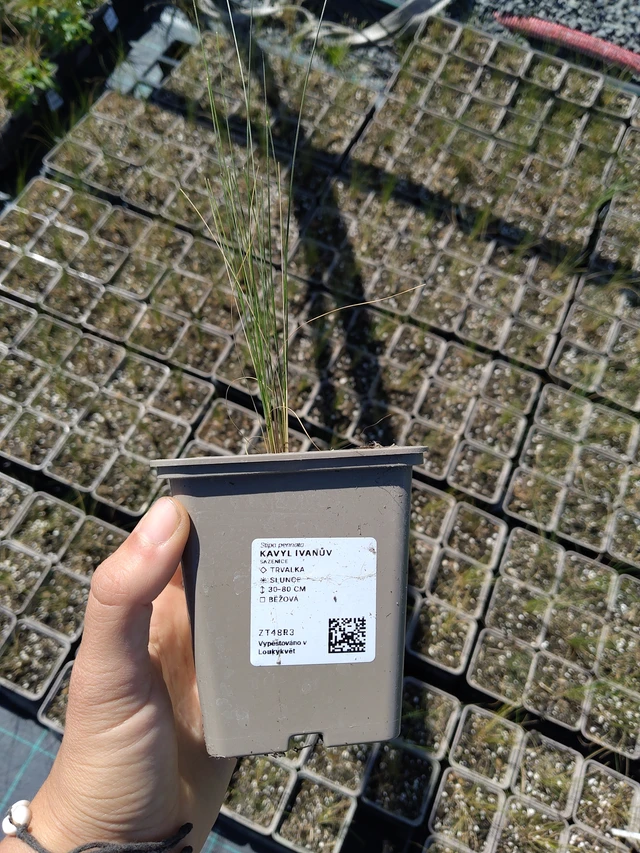
European feather grass - 12. 8. 2026
12. 8. 2026
European feather grass - 16. 7. 2026
16. 7. 2026
European feather grass - 2. 6. 2026
2. 6. 2026
European feather grass - 31. 10. 2025
31. 10. 2025
European feather grass - 10. 10. 2025
10. 10. 2025
European feather grass - 12. 9. 2025
12. 9. 2025
European feather grass - 10. 9. 2025
10. 9. 2025
European feather grass - 24. 6. 2025
24. 6. 2025
European feather grass - 9. 6. 2025
9. 6. 2025
European feather grass - 13. 5. 2025
13. 5. 2025
European feather grass - 2024
2024

More products in category Feather grass

Feather grass Pony Tails, Loukykvět

Stipa tenuissima

Feather grass flowers capture attention in beds and bouquets with their lightness and delicacy. All feather grasses love full sun and dry, stony, well-drained soil. To look most natural in beds, it is good to plant them in loose groups of several pieces together with other drought-loving perennials and bulbs. Only then do their stems and inflorescences, set in motion by the slightest breath of wind, truly stand out. Stipa 'Ponny Tails' is a species native to the steppes of Mexico, Texas, and Patagonia. Airy, dense clumps of hair-like delicate leaves resemble horsehair. The leaves are green, turning up to straw-colored towards the flowers. In a suitable location, it also self-seeds.
€3,79
More from €2,69
Unavailable
Pro rok 2026 nedostupné
Feather grass, Loukykvět

Stipa capillata

Feather grass flowers captivate in beds and bouquets with their lightness and delicacy. All Feather grasses love full sun and dry, stony, well-drained soil. To look most natural in beds, it is good to plant them in several pieces in loose groups together with other drought-loving perennials and bulbs. Only then will their stems and inflorescences, set in motion by the slightest breeze, stand out. *Stipa capillata* is a native steppe grass also widespread elsewhere in southern, central, and eastern Europe. It forms solid grey-green clumps with upright stems. The flowers, in the form of beige awns, stand almost horizontally away from the stem when ripening and twist interestingly.
€4,29
More from €2,99
In stock with delivery from 19. 4. 2027
This product can only be purchased in our store.
Feather grass Allgäu, Loukykvět

Stipa calamagrostis

Feather grass 'Allgäu' is a reliable ornamental grass that will bring lightness and constant movement to the garden. As a native species, it grows on dry, sunny slopes in Central Europe. Thanks to its origin, it is extremely resilient, loves full sun, and well-drained sandy or loamy soil. It tolerates drought excellently, and even a beginner can easily manage its cultivation. You can simply transplant our grown seedling into your flower bed, and soon you will delight in dense clumps of green leaves. These grow 60 to 80 centimeters tall and require a space of 70 centimeters around them. From June to September, it forms creamy and silver inflorescences changing into beige tones. Feather grass beautifully complements drought-loving perennials and readily self-seeds in a suitable location. The long stalks are excellent for cutting into vases and drying for decorations. It avoids diseases and pests and withstands frosts down to -28 °C. Do not cut it before winter, as the frosted stalks create a wonderful winter effect.
€3,89
More from €2,89
Unavailable
Pro rok 2026 nedostupné
Feather grass, Loukykvět

Achnatherum (Stipa) calamagrostis

Feather grass is an ornamental grass that brings incredible lightness and movement to your garden. Its original home is the sunny and gravelly slopes of Southern and Central Europe. It loves the sun and well-drained sandy or loamy soil. It grows in neat clumps reaching a height of around seventy centimeters and is among the longest-blooming grasses. As early as June, it produces feathery inflorescences in silver and beige shades that bend into graceful arches and react to every gust of wind. It works as a perfect filler plant in flowerbeds. It is an absolutely undemanding perennial ideal for beginners, does not suffer from pests or diseases, and handles even deep frosts. In a suitable location, it readily self-seeds, and a huge advantage is its wonderful winter effect under a layer of frost. For florists, feather grass is a tremendous asset. The stems with blooming panicles are perfectly suited for cutting into fresh bouquets as well as drying for winter decorations, where they hold their shape. We send you a beautifully grown seedling in a pot, which you just need to transplant into the ground and watch it grow.
€4,29
More from €2,99
In stock with delivery from 19. 4. 2027
Feather grass, Loukykvět

Stipa tirsa

Feather grass flowers captivate in beds and bouquets with their lightness and delicacy. All Feather grasses love full sun and dry, stony, well-drained soil. To look most natural in beds, it is good to plant them in several pieces in loose groups together with other drought-loving perennials and bulbs. Only then will their stems and inflorescences, set in motion by the slightest breeze, stand out. Narrow-leaved feather grass is a warmth-loving grass growing on sunny slopes. In our country, especially in the Central Bohemian Uplands and southern Moravia. Its caryopses are equipped with a long hairy awn. This species has the thinnest leaves of all domestic Feather grasses.
€4,29
More from €2,99
Unavailable
Pro rok 2026 nedostupné

More products in category Ornamental grasses

Autumn Moor Grass, Loukykvět

Sesleria autumnalis

Autumn moor grass is an exceptionally hardy ornamental grass that introduces fresh greenery to the garden right from early spring. Native to the rocky slopes of the Balkans, it is well-adapted to free-draining soils, making it an ideal choice for novice gardeners. It forms neat clumps growing thirty to fifty centimeters tall. Its greatest asset is its bright green foliage, which emerges early and remains in pristine condition in the borders well into winter. The plant is untouched by diseases or pests and handles severe frosts superbly. In August and September, delicate creamy-beige flowers appear above the foliage. These rather subtle spikelets give the plant an elegant, refined look. In the garden, it acts as a perfect filler perennial for sunny or partially shaded spots. It looks absolutely stunning paired with calamint, airy gaura, or flowering oregano. Its delicate flowers and leaves are easily used as foliage filler in fresh bouquets, or they can be dried for small-scale floristry projects.
€3,79
More from €2,69
Sold Out
Feather grass Pony Tails, Loukykvět

Stipa tenuissima

Feather grass flowers capture attention in beds and bouquets with their lightness and delicacy. All feather grasses love full sun and dry, stony, well-drained soil. To look most natural in beds, it is good to plant them in loose groups of several pieces together with other drought-loving perennials and bulbs. Only then do their stems and inflorescences, set in motion by the slightest breath of wind, truly stand out. Stipa 'Ponny Tails' is a species native to the steppes of Mexico, Texas, and Patagonia. Airy, dense clumps of hair-like delicate leaves resemble horsehair. The leaves are green, turning up to straw-colored towards the flowers. In a suitable location, it also self-seeds.
€3,79
More from €2,69
Unavailable
Pro rok 2026 nedostupné
Feather Reed Grass Karl Förster, Loukykvět

Calamagrostis acutiflora

A tufted, upright growing grass. It sprouts very early. It is decorative due to its overall vertical habit and fine flower panicles, which bloom silvery-grey, turn yellow in summer, and transition to sandy beige. It decorates the garden until winter. You can plant it in mixed beds or use it as an element to rhythmically divide the space. Usable for bouquets and drying.
€4,29
More from €3,89
In Stock
Fountain grass Hameln, Loukykvět

Pennisetum alopecuroides

Fountain grasses originate from East Asia, where they grow in meadows and light forests. They form hemispherical clumps of narrow leaves which, like the flowers, color up in the autumn. They are suitable for the vase and for drying. The 'Hameln' cultivar is one of the most reliable bloomers in cooler regions. The inflorescences initially have a soft pink tinge, then change color to yellow-brown or reddish-brown.
€4,29
More from €3,89
In Stock
Dropseed, Loukykvět

Sporobolus heterolepis

Prairie dropseed originates from the vast North American prairies, where it forms a natural part of the wild and unbridled landscape. This ornamental grass grows in neat and very dense clumps of fresh green leaves, which turn bright yellow shades in autumn. During August and September, delicate clouds of pink and beige flowers hover above the clumps on sturdy stalks, reaching a height of up to seventy centimeters. The flowers also spread a very pleasant and unmistakable fragrance into their surroundings. In the garden, prairie dropseed stands out best when planted in a sunny spot in groups of multiple plants accompanied by other drought-tolerant perennials, with which it will create an impressive steppe scenery. The seedlings do not require any complicated care, they easily handle frosts down to minus twenty-eight degrees, and do not suffer from any diseases or pests. The airy and fragrant inflorescences are also perfectly suited for cutting into summer bouquets, to which they add unusual lightness and texture.
€4,29
More from €2,99
In Stock
Tufted Hairgrass Goldschleier, Loukykvět

Deschampsia cespitosa

Tufted hairgrass is an undemanding native grass that remains green even in winter. In nature, it grows in meadows and forest clearings. It forms a compact tuft of leaves, from which grow fine, thin stems with transparent clouds of flowers. It adapts even to more difficult conditions, such as dry shade or compacted soil, and can handle waterlogging. Goldschleier has very tiny spikelets in light yellow panicles. The inflorescence forms a fluffy light yellow cloud above the tuft of leaves.
€3,79
More from €2,69
In Stock
Tufted hairgrass Palava, Loukykvět

Deschampsia cespitosa

Tufted hairgrass is an undemanding native grass that remains green even in winter. In nature, it grows in meadows and forest clearings. It forms a neat clump of leaves, from which grow delicate thin stems with transparent clouds of flowers. It adapts even to more difficult conditions, such as dry shade or compacted soil, and can handle waterlogging too. The Czech cultivar 'Pálava' is valuable for its extra-long flowering time from July to October. Unlike other cultivars, its flowers are sterile and do not create any seedlings. It is stated that it resists drought best of all tufted hairgrasses.
€3,49
More from €2,39
In Stock
Blue Moor Grass, Loukykvět

Sesleria caerulea

Blue moor grass is an elegant and undemanding native grass that livens up the spring garden at a time when other plants are just waking up. In the wild, it naturally grows in warmer areas on rocks and sunny slopes with well-drained soil. It forms dense, neat clumps growing to a height of about thirty centimeters. Its main advantage is its striking grayish-green and dark green leaves, which, with sufficient moisture, remain evergreen all year round. During April and May, the moor grass blooms with interesting brown spikelets. Over time, these flowers naturally fade into soft beige tones, and when dried, they are perfectly suited as a delicate addition to small dry arrangements. In flowerbeds, it represents an ideal companion for spring bulbs, with which it forms very harmonious compositions. Cultivation can easily be managed even by a beginner, as the plant does not suffer from any diseases or pests and can withstand frosts down to minus twenty-eight degrees without damage. Simply transplant the supplied mature seedling to a sunny or partially shaded location, ideally maintaining a planting distance of around forty centimeters.
€4,29
More from €2,99
In Stock
Switchgrass Northwind, Loukykvět

Panicum virgatum

A perennial grass native to North American prairies. Switchgrass is very adaptable and long-lived. It adds clear structure to flower beds while also functioning as a softening element. This happens mainly after the veil-like flowers appear above the clumps of leaves. Northwind is a cultivar with an upright and slender growth habit. Its grey-blue-green leaves turn bright golden in the autumn.
€4,29
More from €2,99
In Stock
Feather Reed Grass Overdam, Loukykvět

Calamagrostis acutiflora

A tufted, upright growing grass. It sprouts very early. Decorative with its overall vertical habit and fine panicles of flowers, which bloom silvery grey. Striking with its white variegated leaves. It adorns the garden until winter. You can plant it in mixed beds or use it as an element rhythmically dividing the space. Usable for bouquets and drying.
€4,29
More from €3,89
In Stock
Fountain Grass Hameln Gold, Loukykvět

Pennisetum alopecuroides

Fountain grasses originate from East Asia, where they grow in meadows and light forests. They form semi-spherical clumps of narrow leaves which, like the flowers, color up in autumn. They are suitable for vases and for drying. The cultivar Hameln Gold turns golden yellow in autumn.
€4,29
More from €2,99
In Stock
Feather grass, Loukykvět

Stipa capillata

Feather grass flowers captivate in beds and bouquets with their lightness and delicacy. All Feather grasses love full sun and dry, stony, well-drained soil. To look most natural in beds, it is good to plant them in several pieces in loose groups together with other drought-loving perennials and bulbs. Only then will their stems and inflorescences, set in motion by the slightest breeze, stand out. *Stipa capillata* is a native steppe grass also widespread elsewhere in southern, central, and eastern Europe. It forms solid grey-green clumps with upright stems. The flowers, in the form of beige awns, stand almost horizontally away from the stem when ripening and twist interestingly.
€4,29
More from €2,99
In stock with delivery from 19. 4. 2027
This product can only be purchased in our store.
Lovegrass, Loukykvět

Eragrostis spectabilis

Lovegrass originates from the sun-drenched plains of North America, where it naturally grows on dry and well-drained soils. This undemanding tufted grass is an ideal choice for beginner growers, as it does not suffer from any diseases or pests and easily handles frosts down to minus twenty-three degrees. During the season, its green leaves will catch your eye, gradually acquiring a warm orange to wine-red hue as autumn approaches. It stands out primarily in group plantings or in combination with drought-tolerant perennials, where it can beautifully soften and visually connect the entire composition. The real magic, however, lies in its blooming. During August and September, it creates literal clouds of tiny pink flower panicles above the leaf clumps, hovering at a height of around fifty centimeters. For its airiness and elegance, lovegrass is also exceptionally popular for cutting. Florists love to use it in summer and autumn bouquets, to which it adds lightness and volume. It is also perfect for drying, so you can preserve its charm for winter arrangements as well.
€3,79
More from €2,69
In StockIn stock – only 64 left
Muhly grass Ruby, Loukykvět

Muhlenbergia capillaris

A beautiful fine grass originating from the southern parts of North America. It has narrow gray-green leaves. The flowers bloom in fluffy clouds of deep pink color, creating the impression of a light haze over the flower bed. Beautiful for bouquets too.
€3,79
More from €2,69
Unavailable
Pro rok 2026 nedostupné
Melic grass Silky, Loukykvět

Melica ciliata

Melica ciliata grows wild on sunny and warm stony slopes. It blooms as early as May to June with creamy to silvery-white panicles; as they fade, they turn gray and thus harmonize with the gray-green leaves. Valuable for florists due to its early flowering and usability in both fresh and dried states.
€3,79
More from €2,69
In Stock
Quaking grass Tinkerbell, Loukykvět

Briza media

Quaking grass 'Tinkerbell' is an undemanding native grass whose delicate appearance will enchant in any natural garden. It naturally grows in drier meadows across Europe, where it seeks poorer and well-drained soils. It easily handles less nutritious substrates, does not suffer from diseases, and effortlessly survives severe frosts. It forms dense green clumps from which thin stalks carrying unmistakable inflorescences sprout from May to July. The tiny spikelets in the shape of small plump hearts play with yellow and brown tones. They are famous for their trembling at the slightest breeze, which adds dynamics and lightness to flower beds. The compact 'Tinkerbell' variety grows to a height of fifty centimeters and behaves as a short-lived perennial. It perfectly complements drought-tolerant perennials in full sun. It remains very attractive until August, when it is good to trim it after blooming. For florists, it is an absolute treasure. The stalks are beautiful in fresh summer bouquets and are perfectly suited for drying, retaining their shape long-term in floristry arrangements.
€3,49
More from €2,39
In Stock
Quaking grass Limouzi, Loukykvět

Briza media

Quaking grass 'Limouzi' is an undemanding and very charming native grass that naturally grows in sunny meadows and pastures with poorer and well-drained soil. From May onwards, long thin stalks sprout from its dense green clumps, carrying delicate spikelets in the shape of small hearts swaying on them. They are colored in inconspicuous green and brown tones. It is their constant movement and rustling at the slightest breeze that gives the flower beds extraordinary dynamics and lightness. This short-lived perennial, growing to a height of around half a meter, is perfectly suited to complement colorful steppe plantings, where it creates a soft filler between more prominently flowering species. It will also find its use among beginner growers, as it does not suffer from diseases or pests and handles strong frosts without problems. The airy inflorescences of quaking grass are perfect for cutting into summer bouquets and for drying for various floristry purposes. After blooming, roughly at the end of summer, it is good to trim the clumps, which will encourage their fresh appearance. The 'Limouzi' cultivar is characterized by its abundant flower set and slightly more compact growth, which maintains its shape even in more demanding conditions.
€3,49
More from €2,39
In Stock
Tufted hairgrass Tardiflora, Loukykvět

Deschampsia cespitosa

Tufted hairgrass is an undemanding native grass that remains green even in winter. In nature, it grows in meadows and forest clearings. It forms a neat clump of leaves, from which grow delicate thin stems with transparent clouds of flowers. It adapts even to more difficult conditions, such as dry shade or compacted soil, and can handle waterlogging too. 'Tardiflora' is, after 'Pálava', one of the most richly flowering tufted hairgrasses. It blooms a bit later than the others.
€3,49
More from €2,39
In Stock
Muhly grass Rosy, Loukykvět

Muhlenbergia reverchonii

A beautiful fine grass originating from Oklahoma and Texas. It has narrow gray-green leaves. The flowers bloom in fluffy clouds of pink color, creating the impression of a light haze over the flower bed. Beautiful for bouquets too.
€3,79
More from €2,69
Unavailable
Pro rok 2026 nedostupné
Tufted hairgrass Schottland, Loukykvět

Deschampsia cespitosa

Tufted hairgrass is an undemanding native grass that remains green even in winter. In nature, it grows in meadows and forest clearings. It forms a neat clump of leaves, from which grow delicate thin stems with transparent clouds of flowers. It adapts even to more difficult conditions, such as dry shade or compacted soil, and can handle waterlogging too. The flowers of the 'Schottland' cultivar are brown at the beginning of flowering, later turning gold. The leaf clumps grow up to 60 centimeters, the flower stems up to 120.
€3,49
More from €2,39
In Stock