Ireland
🟢 The e-shop for seedlings is open again. 🌱 I also have dahlia seedlings and eucalyptus. 🟢
Ireland
🟢 The e-shop for seedlings is open again. 🌱 I also have dahlia seedlings and eucalyptus. 🟢
Northern Sea Oats, Loukykvět

Chasmanthium latifolium

Northern Sea Oats

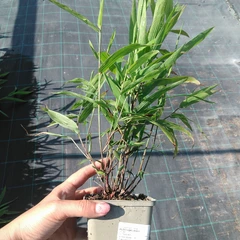
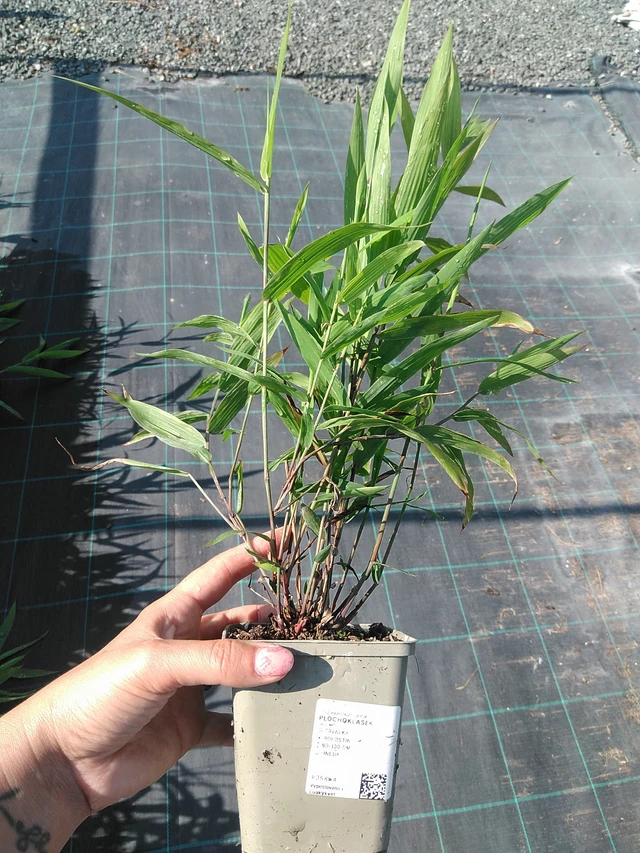
Chasmanthium is one of the most charming ornamental grasses, bringing movement and a gentle rustling sound to the garden. It originates from the eastern part of North America, where it naturally grows in light, damp forests or on the banks of streams, so it is best suited to partial shade and humous, non-drying soil. Its greatest adornments are the flat spikelets resembling small fish, which hang from arched, drooping stems and change color throughout the season from fresh green through beige to warm copper tones, while the leaves turn golden-yellow in autumn. Chasmanthium is an excellent choice for cutting into fresh bouquets, where it adds airiness, and it looks even better dried, retaining its shape and color for a long time. Furthermore, it is a fully frost-hardy perennial that easily handles winters and will please any grower with its low-maintenance nature. Show full description

Seedling

Květináč K9 (9×9×9,5 cm)
1-2 kusy
3,79/ks
3-8 kusů
3,39/ks
9-17 kusů
3,09/ks
18+ kusů
2,69/ks
Add to cart
Skladem 340 ks
Připravujeme 500 ks

Difficulty

Beginner

Diseases

Disease-free 🙂

Flower color

Green, brown

Flower color: Shade

Terracotta, pea green, beige

Foliage color

Yellow, green

Fragrant (aromatic) 👃

Ne

Frost resistance

-34
?
The temperature down to which the plant is frost hardy.

Hardiness zone

4a (-34.4 °C to -31.7 °C)

Height

80-100 cm

Moisture

💧💧

Pests

Pest-free 🙂

Position

Partial shade, shade

Soil

Loamy, humus-rich

Spacing

60-60 cm
?
Recommended planting spacing.

Spacing: Plants per m²

3-5

Spacing: Plants per m²

2

Species

Perennial

Suitable for cutting

Ano

Suitable for drying

Ano
1
2
3
4
5
6
7
8
9
10
11
12
Flowering
August
½ October

Recommended products

Briza media

Quaking grass 'Tinkerbell' is an undemanding native grass whose delicate appearance will enchant in any natural garden. It naturally grows in drier meadows across Europe, where it seeks poorer and well-drained soils. It easily handles less nutritious substrates, does not suffer from diseases, and effortlessly survives severe frosts. It forms dense green clumps from which thin stalks carrying unmistakable inflorescences sprout from May to July. The tiny spikelets in the shape of small plump hearts play with yellow and brown tones. They are famous for their trembling at the slightest breeze, which adds dynamics and lightness to flower beds. The compact 'Tinkerbell' variety grows to a height of fifty centimeters and behaves as a short-lived perennial. It perfectly complements drought-tolerant perennials in full sun. It remains very attractive until August, when it is good to trim it after blooming. For florists, it is an absolute treasure. The stalks are beautiful in fresh summer bouquets and are perfectly suited for drying, retaining their shape long-term in floristry arrangements.
3,49
More from 2,39
Coming Soon

Alchemilla mollis

Alchemilla mollis, known as lady's mantle, is an indispensable perennial for anyone who wants to bring harmony and softness to the garden. Its home is the moister environments of mountain meadows and light forests, making it a very adaptable plant that will survive even severe frosts without problems in our climate. The 'Irish Silk' cultivar is prized for its vitality and abundant blooming, where clouds of tiny, yellow-green flowers float above clumps of gray-green leaves. It is precisely this neutral color that can work wonders in a flower bed – it softens overly sharp contrasts between other flowers and beautifully unifies the entire composition. Besides its ornamental function, lady's mantle also has practical uses. Thanks to its clumping growth and ability to quickly fill in, it is ideal for edging pathways or as an underplanting beneath taller shrubs and roses. Water droplets catch on its leaves, creating a magical spectacle in the garden. If you enjoy making bouquets, you will love lady's mantle as versatile filler greenery that matches almost anything. It will last beautiful for about ten days in a vase, and its inflorescences can also be easily dried without losing too much of their color or shape. Moreover, it is a magnet for pollinators, and its young leaves are even edible, so it also finds use in a natural kitchen.
2,99
More from 2,09
In Stock posledních 74 kusů
For drying

Goniolimon tataricum

In nature, we find it in steppes on dry pastures and stony slopes of Central and Southern Europe. It is a well-known plant used in floristry. Excellently usable in both fresh and dried states. For drying, we select only stems with fully opened flowers. We hang them flowers-down in a dry, airy, and dark place.
3,29
More from 2,29
In Stock

Anemone hybrida

Anemones come from the same family as buttercups. With their elegant flowers on long slender stems, they can enliven and brighten late summer and autumn beds. They stand out against the darker background of shrub groups and will be grateful for their partial shade. The Czech Perennial Association chose autumn Anemones as the perennial of the 2022 season. They last 7 days in a vase. 'Lorelei' has semi-double flowers in a tender light pink tone.
3,49
More from 3,59
In Stock

Echinacea pallida

The pale coneflower is one of the exceptionally interesting prairie perennials of the North American continent. In its natural environment, it grows on open, sunny plains, which is why it thrives best in our gardens in full sun in drier, well-drained soil. You just need to transplant this grown seedling straight into the flower bed, where it will reliably take root. It does not need support, easily withstands severe frosts, and is avoided by common diseases and pests, making it ideal for beginner growers. During June and July, it will reward you with aromatic flowers with unusually narrow and drooping petals in light purple and pink tones. The prominent prickly centers are literally a magnet for bees and bumblebees, and the flowers themselves are surprisingly edible. The plant stands out especially in rustic plantings together with ornamental grasses. Gardeners and florists love it for its versatility. The fresh stems bring joy in a vase for about a week. Moreover, the distinctive central cones hold their shape perfectly, can be perfectly dried for winter decorations, or left in the flower bed, where they will create an eye-catching winter structure under a layer of snow.
2,99
More from 2,09
In Stock s doručením od 24. 8. 2026

Anemone hybrida

Anemones come from the same family as buttercups. With their elegant flowers on long slender stems, they can liven up and brighten late summer and autumn beds. They stand out against the darker background of shrub groups and will also be grateful for their partial shade. The Czech Perennial Association chose autumn Anemones as the perennial of the season for 2022. They last 7 days in a vase. Whirlwind is a historical variety bred in 1887 in the USA. It has a semi-double pure white flower, often with inner twisted petals, and compact, strictly upright growth. The flowers are very durable.
3,49
More from 3,59
In Stock

Bouteloua gracilis

A delicate, drought-resistant steppe grass grown for its unusual inflorescences. The horizontally positioned spikelets look like small flags and resemble a buzzing swarm of mosquitoes. Mosquito grass fits well in natural gardens with other drought-loving plants. It will grow very well even in a larger pot. It lasts up to 14 days in a vase.
3,79
More from 2,69
In Stock

Echinacea pallida

The pale coneflower originally comes from the vast and sunny North American prairies, where it grows as a hardy and long-lived perennial. The Hula Dancer cultivar brings softness and elegance to gardens thanks to its pastel pink to white petals, which hang gracefully downwards and resemble dancing figures when blown by the wind. You will receive from us a grown seedling in a pot, which you just need to transplant into loamy or sandy well-drained soil in a sunny location. The coneflower is completely undemanding, easily handles severe frosts, and is avoided by most diseases and pests. During the summer, it blooms on sturdy stems about eighty centimeters high, and its fragrant, prickly centers reliably attract pollinators from far and wide. It fits perfectly into naturally styled and gravel flower beds, where it finds use alongside grasses and other sun-loving species. The flowers are also edible and are perfectly suited for summer bouquets. Harvest them fully open, and they will bring you joy in a vase for up to ten days. The flower cones without petals look very original in arrangements, and you can also easily dry them for winter decorations. In the flower bed, it pays to leave a few stems over the winter, because the snow-covered cones create a wonderful spectacle.
2,99
More from 2,09
In Stock

Achillea millefolium

A native wild perennial with a large distribution range from Europe to Siberia. Suitable for natural and wild plantings. It grows in meadows and dry grassy places. A very adaptable and undemanding plant, it grows in clumps and spreads via runners. Cutting back after the first bloom encourages a new set of flowers. Harvest for bouquets when the tiny flowers are fully open. It lasts 10 days in a vase. Terracotta features ochre, shades of orange and yellow, and gray-green foliage.
2,99
More from 2,89
In Stock

Achillea millefolium

An original wild perennial with a large distribution area from Europe to Siberia. Suitable for natural and wild plantings. It grows in meadows and dry grassy places. A very adaptable and undemanding plant, it grows in clumps and spreads by runners. By cutting back after the first flowering, we encourage a set of new flowers. For bouquets, we harvest when the florets are fully open. It lasts 10 days in a vase. Summer Pastels is characterized by a changeable and soft range of colors from white and vanilla to salmon, brick red, and bronze.
3,09
More from 1,99
In Stock

Stipa tenuissima

Feather grass flowers capture attention in beds and bouquets with their lightness and delicacy. All feather grasses love full sun and dry, stony, well-drained soil. To look most natural in beds, it is good to plant them in loose groups of several pieces together with other drought-loving perennials and bulbs. Only then do their stems and inflorescences, set in motion by the slightest breath of wind, truly stand out. Stipa 'Ponny Tails' is a species native to the steppes of Mexico, Texas, and Patagonia. Airy, dense clumps of hair-like delicate leaves resemble horsehair. The leaves are green, turning up to straw-colored towards the flowers. In a suitable location, it also self-seeds.
3,79
More from 2,69
In Stock

Gaura lindheimeri

Gaura Siskiyou Pink is a charming perennial that brings lightness and airiness to the garden. Its original native area is in the warm regions of Texas and Louisiana, which is why it thrives in full sun and well-drained sandy soil. It grows in clumps and from June until the autumn frosts produces tiny raspberry-pink flowers that resemble fluttering butterflies. An interesting detail of this variety is the green leaves with a bronze tint and red spots. It is an absolutely undemanding plant, does not suffer from diseases or pests, and even beginners can handle its care. You will receive a grown seedling in a pot from us, which you simply need to transplant directly into the flowerbed. Here it complements ornamental grasses perfectly and acts as an attraction for bees and bumblebees. Although it grows more as a short-lived perennial in our climate, in a suitable place it reliably self-seeds. Occasional pinching will encourage richer branching. Gaura is excellent for summer bouquets. We cut the stems for a vase as soon as the first two to three little flowers open.
2,99
More from 2,09
In Stock
For drying

Limonium latifolium

Broad-leaved statice, also known as sea lavender, is a plant originally from the steppe regions of southern Europe. Leathery leaves form a basal rosette. From these, veil-like panicles formed by tiny light lavender flowers grow. Perfect for bouquets; for drying, harvest when the flowers are fully colored.
3,29
More from 2,29
Coming Soon

Aquilegia vulgaris

The common columbine is a versatile perennial that will reliably inhabit both rural and modern flowerbeds. In the wild, it grows on the edges of forests and in light groves across all of Europe, which is why it thrives best in the garden in full sun to partial shade and ordinary loamy soil rich in humus. Its main charm lies in its unusually shaped flowers, but it is also valuable for its very early sprouting green leaves, which awaken the garden after winter. You will receive a beautifully grown seedling in a pot from us, which you just need to transplant to your chosen spot. Although the plant is poisonous, it represents a huge asset for gardeners. Even complete beginners can manage growing it, pests avoid it, and it easily survives severe frosts dropping to minus thirty-four degrees. During May and June, delicate flowers bloom on sturdy, sixty to eighty-centimeter-tall stems, bringing typical airiness and lightness to the planting. The 'Kristall' cultivar is a large-flowered variety that stands out with pure white flowers and prominent spurs. These act as a reliable magnet for bees, bumblebees, and other beneficial pollinators. Keep in mind that in a favorable location, columbine very willingly self-seeds, taking care of natural-looking wild stands. It works well in perennial beds and as an undergrowth beneath taller shrubs. If you like bringing a piece of the garden home, columbine certainly won't disappoint you. It is perfectly suited for cutting and will bring a novel structure to spring bouquets. Fresh flowers will bring you joy in a vase for about seven days. If you leave some of the flowers to finish blooming on the flowerbed, they will form interesting seed pods, which are highly popular among florists for creating various natural decorations and can also be dried well. Just watch out for the occasional occurrence of powdery mildew during the drier months, but otherwise, the plant needs almost no care.
2,79
More from 1,99
In Stock

Briza media

Quaking grass 'Limouzi' is an undemanding and very charming native grass that naturally grows in sunny meadows and pastures with poorer and well-drained soil. From May onwards, long thin stalks sprout from its dense green clumps, carrying delicate spikelets in the shape of small hearts swaying on them. They are colored in inconspicuous green and brown tones. It is their constant movement and rustling at the slightest breeze that gives the flower beds extraordinary dynamics and lightness. This short-lived perennial, growing to a height of around half a meter, is perfectly suited to complement colorful steppe plantings, where it creates a soft filler between more prominently flowering species. It will also find its use among beginner growers, as it does not suffer from diseases or pests and handles strong frosts without problems. The airy inflorescences of quaking grass are perfect for cutting into summer bouquets and for drying for various floristry purposes. After blooming, roughly at the end of summer, it is good to trim the clumps, which will encourage their fresh appearance. The 'Limouzi' cultivar is characterized by its abundant flower set and slightly more compact growth, which maintains its shape even in more demanding conditions.
3,49
More from 2,39
Coming Soon

Gaura lindheimeri

The charming Gaura 'Whirling Butterflies' is exactly the perennial that will give any flower bed a relaxed, natural look. It originally comes from the dry and hot plains of southern North America, which clearly suggests that it loves sunshine and well-drained sandy soil. You will receive from us a beautifully grown seedling in a pot, which you can simply transplant straight into the garden. Here, it will soon form a dense clump of green leaves, from which long, thin stems dotted with flowers emerge all summer until October. These flowers open in a pure white color and gradually take on a slight pinkish tone. Furthermore, the abundant blooming reliably attracts pollinators, for whom the plant is a great source of food. It can handle even stronger frosts down to minus eighteen degrees. It looks excellent in mixed plantings next to drought-tolerant grasses or other undemanding species. Although it is a short-lived perennial, it willingly self-seeds, meaning it will stay with you in its location for a very long time. If you like creating fresh summer bouquets, Gaura will definitely not disappoint you. You just need to cut the stems the moment the first small flowers open. It is a completely undemanding species without serious diseases, which needs no support and will forgive even beginner mistakes.
2,99
More from 2,09
Unavailable
Pro rok 2026 nedostupné

Helleborus orientalis

Hellebores are evergreen perennials that form slowly spreading clumps of leathery, dark green leaves. The stems usually carry four to five flowers. They bloom very early, as early as late winter and early spring. They can be used in a vase only after conspicuous seed pods form in the center of the flower and the flower matures. Picked earlier, they tend to wilt and the stems cannot hold the flower upright. All parts of the plant are poisonous. The semi-double flowers of the Double Ellen Picotee hellebore take on white and light pink hues with a purplish-burgundy edging.
4,79
More from 4,69
In Stock

Anemone hybrida

Anemones come from the same family as buttercups. With their elegant flowers on long slender stems, they can enliven and brighten up late summer and autumn flowerbeds. They stand out against the darker background of shrub groups and will also appreciate their partial shade. The Czech Perennial Association chose autumn anemones as the perennial of the season for 2022. They last 7 days in a vase. Serenade is a tender and vigorously growing cultivar. The flowers are semi-double, light pink with a center formed by distinct yellow stamens. The stems are firm and upright; it does not tend to lodge.
3,49
More from 3,59
In Stock

Verbena hastata

A perennial species of Verbena native to North America. In natural habitats, it grows in wet meadows, pastures, and along water bodies. It is a great attractant for bees and butterflies. Although not very long-lived, it can maintain itself by self-seeding in good conditions. It blooms gradually over a long period with many tiny flowers. The spent flower heads are also effective, both in beds and bouquets. The cultivar Pink Spires stands out with a sturdy upright habit and flowers in a soft pink color.
3,09
More from 2,19
In Stock
For drying

Eryngium planum

Sea holly is an indispensable perennial for all lovers of naturally styled gardens. It earned its folk name - male fidelity - in times when it was used in herbal medicine as an aphrodisiac, and its roots were even candied as sweets in France and England. Today, however, you will appreciate it mainly for its low maintenance and unique appearance. Its home is on sunny hillsides and dry meadows, so even in our gardens, it will welcome well-drained, even poorer sandy soil and full sun. It produces upright, sturdy stems topped with blue-purple flowers with prickly bracts, which bring interesting structure and a silvery touch to the flowerbeds. It is literally a magnetic plant for bees, bumblebees, and butterflies, who find a rich food source on it. Floristically, it is extremely valuable, because its flowers are perfectly suited for cutting as well as drying for winter decorations. If you decide not to harvest it, feel free to leave it in the flowerbed all winter. Its silhouette covered in hoarfrost creates a wonderful winter effect. Although it is a short-lived perennial, in a suitable location it reliably self-seeds, so you will enjoy its beauty for many years.
2,79
More from 1,99
Coming Soon

Salvia nemorosa

This species of sage originally comes from the steppe regions of Central and Eastern Europe. It forms profusely flowering small clumps with straight upright stems. In flower beds, it looks best in groups. Traditionally, due to the identical flowering time, it is planted as a companion to roses. However, it will look just as good in mixed drought-loving steppe plantings with grasses. It lasts 7 days in a vase. The cultivar Caradonna stands out with a long flowering period and dark, almost black-purple stems with tiny purple flowers and dark purple bracts. If we cut it back after flowering, it will bloom again in late August and September.
2,99
More from 2,09
In Stock s doručením od 20. 7. 2026

Hyssopus officinalis

The Roseus hyssop is an aromatic subshrub whose structure and requirements strongly resemble the popular lavender. It originally comes from the sunny and dry regions of the Mediterranean and Asia Minor, so it thrives best in direct sun here as well. It favors well-drained, sandy, and even nutrient-poor soil, where it easily copes with a lack of moisture. You will receive a grown seedling in a pot from us, which you simply transplant straight into the flower bed, where it will very soon form a neat, richly branched bush reaching a height of around fifty centimeters. It is an absolutely undemanding plant that is not bothered by diseases or pests, so its cultivation can be easily handled even by complete beginners. It comfortably withstands severe frosts down to minus twenty-three degrees Celsius. In the garden, hyssop finds wide application. It fits perfectly into steppe-character gravel beds and beautifully complements roses or lower ornamental grasses. During the summer until early autumn, the Roseus variety will delight you with a flood of tiny flowers in a delicate light pink shade. These flowers, as well as the narrow green leaves, emit a pleasant spicy fragrance and reliably act as a huge lure for bees, bumblebees, and butterflies. Since all parts of the plant are edible, you can also use hyssop in the kitchen as a herb to flavor dishes or prepare a medicinal tea from it. You can also cut the long flowering stems for a vase, where they will add a fine texture and lightness to summer bouquets. Although the flowers are not suitable for drying for floral purposes, the plant will please you in the flower bed even out of season. The inflorescences form an interesting structure which, after the leaves fall and are covered by morning frost, creates a beautiful winter effect. Furthermore, if you provide hyssop with ideal conditions, it will reliably self-seed in its location and remain a solid part of your garden for many years.
2,79
More from 1,99
In Stock

Echinacea purpurea

A valuable garden and medicinal perennial, native to North America. The spiky flower centers are an irresistible attraction for butterflies. They last 7–10 days in a vase. After removing the petals, the stems with the central disks can be dried or used in fresh bouquets as an interesting element. White Swan blooms with milky white flowers and brownish-orange centers. The petals are not spread entirely horizontally; they bend slightly downwards.
3,79
More from 3,89
In Stock s doručením od 10. 8. 2026

Panicum virgatum

A perennial grass native to North American prairies. Switchgrass is very adaptable and long-lived. It adds clear structure to flower beds and simultaneously functions as a softening element. This is especially true after veil-like flowers appear above the clumps of leaves. Heavy Metal is characterized by firm upright growth and blue-green, metallic grey-green foliage. The strict austerity is beautifully balanced and softened by airy inflorescences.
4,29
More from 2,99
In Stock

Delphinium hybrida

Larkspur Benary’s Pacific Galahad is an unmissable classic and a true dominant feature among border perennials. Its wild ancestors originate from the mountain meadows and light forests of the Northern Hemisphere, so even in the garden, it will appreciate a sunny location and well-drained, yet nutrient-rich loamy and humous soil with plenty of moisture. You will receive a mature seedling in a pot from us, which just needs to be transplanted directly into the flowerbed, ideally at a spacing of sixty centimeters, so that it has enough clear space around it for growth. It belongs among plants for intermediate growers, because for its majestic growth to a height of one hundred to one hundred and fifty centimeters, it needs regular fertilizing and copious watering. It is also good to watch out for snails and slugs, which like to feast on its young leaves, and throughout the season to protect the plant from powdery mildew. Larkspur is fully frost-resistant and can handle temperatures dropping to minus thirty-four degrees without difficulty. The entire plant is poisonous, which is good to keep in mind when choosing its spot. You will often see it in the company of roses and peonies, where its pure white flowers form a perfect color contrast. It blooms first in June and, after being cut back in time, usually repeats blooming during August and September. The snow-white flowers reliably attract bees as well as other beneficial pollinators and are an excellent choice for cutting into vases. They will last about seven days in clean water, one just needs to pay attention to the proximity of ripening fruit, because the plant is very sensitive to the released ethylene and would fade faster. If you dry the flowers, they serve excellently for floristic purposes and will retain their shape and fresh color for a long time.
3,79
More from 2,69
Coming Soon

Achillea millefolium

Native wild perennial with a large distribution area from Europe to Siberia. Suitable for natural and wild plantings. Grows in meadows and dry grassy places. A very adaptable and undemanding plant, grows in clumps and spreads by runners. Cutting back after the first flowering encourages a new batch of flowers. Harvest for bouquets when the florets are fully open. Lasts 10 days in a vase. The Lachsschönheit cultivar is valued for its perfect transition of tones from salmon-pink to cream.
3,49
More from 2,39
In Stock posledních 85 kusů

Brunnera macrophylla

The largeleaf brunnera comes from the moist mountain forests of the Caucasus, where it forms dense undergrowth. It is an ideal perennial for shady and semi-shady corners of your garden, where it will thrive in humus-rich, moist soil. It resembles classic forget-me-nots in appearance, but don't be fooled, its leaves are much larger, heart-shaped, and rough to the touch. Thanks to them, it acts as a great groundcover plant that sprouts early in the spring and reliably covers bare soil with its leaves until late autumn. It thus forms a natural contrasting background for the delicate, tiny flowers. Tiny sky-blue flowers appear in April, May, and June, creating a beautiful delicate veil over the green carpet of leaves. The flower clusters are also suitable for cutting into spring hand-tied bouquets, where they look very tender. Just watch out for snails and slugs, who like to feast on the juicy leaves of the brunnera, so it's a good idea to check the plants regularly. It is a long-lived and hardy perennial that handles severe frosts without problems and will bring you joy in one place for many years.
3,89
More from 3,59
In Stock s doručením od 20. 7. 2026

Scabiosa caucasica

The abundantly blooming scabiosa will brighten up any sunny garden and bring a lot of life to it. Its original home is the mountain meadows and rocky slopes in the Caucasus and Turkey regions. As a result, it is very hardy and revels in full sun in well-drained loamy-sandy soil. After transplanting into the flowerbed, the seedling will quickly take root and form a vigorous clump. The plant is completely undemanding, does not suffer from pests, and reliably attracts bees and butterflies with its flowers from early summer to autumn. It will fit perfectly into both rustic and modern gravel plantings. If you like to decorate your home with fresh flowers, scabiosa will certainly thrill you. Long and sturdy stems carry large cup-shaped flowers that are made for a vase. Harvest them when the centers are just beginning to open, and they will bring you joy for about ten days. The interesting faded inflorescences are also excellent for floristic purposes. They dry into a firm shape and enliven any dried arrangement. The Fama Deep Blue variety stands out with its unmistakable blue-violet shade of flowers, and moreover, it offers an unconventional bonus in the form of edible petals.
2,79
More from 1,99
Unavailable
Pro rok 2026 nedostupné

Cultivation

Plochoklásek je ideální volbou pro ty části zahrady, kam slunce svítí méně intenzivně. Nejlépe se mu daří v polostínu až stínu, kde vynikne jeho přirozená lesní elegance. Pokud mu zajistíte dostatečnou vlhkost, snese i světlejší místa, ale vyloženě horkým a suchým úpalům se raději vyhněte. Klíčová je pro něj kvalita půdy. Na rozdíl od mnoha jiných okrasných trav tento druh nemá rád písčitou a vysychavou zeminu. Vyžaduje půdu hlinitou, výživnou a především humózní, která dokáže dobře zadržovat vláhu, ale zároveň není trvale rozbahněná. Před výsadbou sazenice je vhodné půdu vylepšit zapravením vyzrálého kompostu nebo listovky, což rostlině zajistí potřebné živiny a strukturu pro kořenění.
Protože obdržíte již vzrostlou sazenici, můžete ji vysazovat prakticky kdykoliv během vegetační sezóny, pokud půda není zamrzlá. Při výsadbě do volné půdy dodržujte spon přibližně 60 cm, což odpovídá zhruba 3 až 5 rostlinám na metr čtvereční. Tento rozestup zajistí, že rostliny budou mít dostatek prostoru pro své trsy, které dorůstají výšky 80 až 100 cm, a zároveň vytvoří pěkný zapojený porost. Plochoklásek lze s úspěchem pěstovat i v nádobách či truhlíku, což je skvělá zpráva pro majitele stinných teras. Nádoba musí být dostatečně velká a hluboká, s kvalitní drenáží na dně. Počítejte však s tím, že v květináči substrát rychleji vysychá, proto bude nutná častější a pravidelná zálivka, aby kořenový bal nikdy zcela neproschll.
Tato tráva je velmi vděčná a nenáročná. Vzhledem k tomu, že je hodnocena jako bez škůdců a chorob, nemusíte se obávat složité chemické ochrany. Hlavní péčí během léta je zajištění vláhy (💧💧). Půda by měla být stále mírně vlhká, zejména v prvním roce po výsadbě a během horkých letních dnů. Pokud chcete využít okrasné klásky do suchých vazeb, stříhejte je v době, kdy začínají měnit barvu na bronzovou, ale dříve, než se začnou rozpadat.
Plochoklásek je plně mrazuvzdorná trvalka (zóna 4a, až do -34 °C), takže české zimy zvládá naprosto bez problémů. I když listy na podzim zhnědnou a zaschnou, nikdy je nestříhejte před zimou. Suché trsy plní dvě funkce: chrání střed rostliny před mrazem a nadměrnou vlhkostí a zároveň poskytují nádherný zimní efekt, kdy se ojíněné ploché klásky třepetají ve větru. Řez provádíme až brzy na jaře, kdy celý trs sestřihneme cca 5–10 cm nad zemí. Buďte trpěliví, plochoklásek na jaře raší později než ostatní trávy, často až když se půda prohřeje, takže mu dopřejte čas k probuzení.

The information given is based on our experience, please use it as a guide only. Times may vary depending on the season, climate, location, sowing and transplanting dates and possibly also the conditions in the greenhouse/greenhouse. We always recommend testing how the plant performs in your conditions. Please do not take this as a guarantee.

Show all

Click to view the full growing instructions.

Collections

The product can be found in the following collections.

Kolekce trvalek s travinami a narcisy

Summer at the Cottage

Pokud v létě rádi utíkáte z horkého města do chladivých koutů zahrady a toužíte po vhodné trvalkové společnosti, je tato kole

205,83
In Stock

Kolekce trvalek s travinami a cibulovinami

Taller Varieties for Light Shade

A collection of taller plants designed for semi-shaded beds with good soil. It will be well suited for gardens with a forest

112,04
In Stock

kolekce trvalek s trávami, cibulovinami a semeny

Perennial Wedding Bouquet

The largest collection, that is Queen size Loukykvět. Whether the queen of flowers for you is the rose, hydrangea, or perhaps

353,99
In Stock

Kolekce trvalek s cibulovinami a semeny letniček

Wedding Entourage for Peonies

Kolekce v jemných neutrálních tónech pro místa na slunci i v lehkém polostínu. Obsahuje druhy, které mají rády dobrou a vlhko

102,64
In Stock

Frequently
asked
questions

Vlastnosti

Pěstování

Sklizeň

Problémy

Nemoci & škudci

Základní informace

Stanoviště

Množení

Photos
in time

See how the seedling looks over the course of a year.

Northern Sea Oats - 16. 7. 2026
16. 7. 2026
Northern Sea Oats - 11. 9. 2025
11. 9. 2025
Northern Sea Oats - 28. 7. 2025
28. 7. 2025
Northern Sea Oats - 11. 7. 2025
11. 7. 2025
Northern Sea Oats - 24. 6. 2025
24. 6. 2025
Northern Sea Oats - 9. 6. 2025
9. 6. 2025
Northern Sea Oats - 13. 5. 2025
13. 5. 2025
Northern Sea Oats - 8. 4. 2025
8. 4. 2025
Northern Sea Oats - 2024
2024
Northern Sea Oats - 2024
2024
Northern Sea Oats - 2024
2024

More products in category Ornamental grasses

Stipa tenuissima

Feather grass flowers capture attention in beds and bouquets with their lightness and delicacy. All feather grasses love full sun and dry, stony, well-drained soil. To look most natural in beds, it is good to plant them in loose groups of several pieces together with other drought-loving perennials and bulbs. Only then do their stems and inflorescences, set in motion by the slightest breath of wind, truly stand out. Stipa 'Ponny Tails' is a species native to the steppes of Mexico, Texas, and Patagonia. Airy, dense clumps of hair-like delicate leaves resemble horsehair. The leaves are green, turning up to straw-colored towards the flowers. In a suitable location, it also self-seeds.
3,79
More from 2,69
In Stock

Sesleria autumnalis

Autumn moor grass is an exceptionally hardy ornamental grass that introduces fresh greenery to the garden right from early spring. Native to the rocky slopes of the Balkans, it is well-adapted to free-draining soils, making it an ideal choice for novice gardeners. It forms neat clumps growing thirty to fifty centimeters tall. Its greatest asset is its bright green foliage, which emerges early and remains in pristine condition in the borders well into winter. The plant is untouched by diseases or pests and handles severe frosts superbly. In August and September, delicate creamy-beige flowers appear above the foliage. These rather subtle spikelets give the plant an elegant, refined look. In the garden, it acts as a perfect filler perennial for sunny or partially shaded spots. It looks absolutely stunning paired with calamint, airy gaura, or flowering oregano. Its delicate flowers and leaves are easily used as foliage filler in fresh bouquets, or they can be dried for small-scale floristry projects.
3,79
More from 2,69
Coming Soon

Calamagrostis acutiflora

A tufted, upright growing grass. It sprouts very early. It is decorative due to its overall vertical habit and fine flower panicles, which bloom silvery-grey, turn yellow in summer, and transition to sandy beige. It decorates the garden until winter. You can plant it in mixed beds or use it as an element to rhythmically divide the space. Usable for bouquets and drying.
4,29
More from 3,89
In Stock s doručením od 20. 7. 2026

Pennisetum alopecuroides

Fountain grasses originate from East Asia, where they grow in meadows and light forests. They form hemispherical clumps of narrow leaves which, like the flowers, color up in the autumn. They are suitable for the vase and for drying. The 'Hameln' cultivar is one of the most reliable bloomers in cooler regions. The inflorescences initially have a soft pink tinge, then change color to yellow-brown or reddish-brown.
4,29
More from 3,89
In Stock

Deschampsia cespitosa

Tufted hairgrass is an undemanding native grass that remains green even in winter. In nature, it grows in meadows and forest clearings. It forms a compact tuft of leaves, from which grow fine, thin stems with transparent clouds of flowers. It adapts even to more difficult conditions, such as dry shade or compacted soil, and can handle waterlogging. Goldschleier has very tiny spikelets in light yellow panicles. The inflorescence forms a fluffy light yellow cloud above the tuft of leaves.
3,79
More from 2,69
In Stock

Sporobolus heterolepis

Prairie dropseed originates from the vast North American prairies, where it forms a natural part of the wild and unbridled landscape. This ornamental grass grows in neat and very dense clumps of fresh green leaves, which turn bright yellow shades in autumn. During August and September, delicate clouds of pink and beige flowers hover above the clumps on sturdy stalks, reaching a height of up to seventy centimeters. The flowers also spread a very pleasant and unmistakable fragrance into their surroundings. In the garden, prairie dropseed stands out best when planted in a sunny spot in groups of multiple plants accompanied by other drought-tolerant perennials, with which it will create an impressive steppe scenery. The seedlings do not require any complicated care, they easily handle frosts down to minus twenty-eight degrees, and do not suffer from any diseases or pests. The airy and fragrant inflorescences are also perfectly suited for cutting into summer bouquets, to which they add unusual lightness and texture.
4,29
More from 2,99
Coming Soon

Deschampsia cespitosa

Tufted hairgrass is an undemanding native grass that remains green even in winter. In nature, it grows in meadows and forest clearings. It forms a neat clump of leaves, from which grow delicate thin stems with transparent clouds of flowers. It adapts even to more difficult conditions, such as dry shade or compacted soil, and can handle waterlogging too. The Czech cultivar 'Pálava' is valuable for its extra-long flowering time from July to October. Unlike other cultivars, its flowers are sterile and do not create any seedlings. It is stated that it resists drought best of all tufted hairgrasses.
3,49
More from 2,39
In Stock

Sesleria caerulea

Blue moor grass is an elegant and undemanding native grass that livens up the spring garden at a time when other plants are just waking up. In the wild, it naturally grows in warmer areas on rocks and sunny slopes with well-drained soil. It forms dense, neat clumps growing to a height of about thirty centimeters. Its main advantage is its striking grayish-green and dark green leaves, which, with sufficient moisture, remain evergreen all year round. During April and May, the moor grass blooms with interesting brown spikelets. Over time, these flowers naturally fade into soft beige tones, and when dried, they are perfectly suited as a delicate addition to small dry arrangements. In flowerbeds, it represents an ideal companion for spring bulbs, with which it forms very harmonious compositions. Cultivation can easily be managed even by a beginner, as the plant does not suffer from any diseases or pests and can withstand frosts down to minus twenty-eight degrees without damage. Simply transplant the supplied mature seedling to a sunny or partially shaded location, ideally maintaining a planting distance of around forty centimeters.
4,29
More from 2,99
In Stock posledních 85 kusů

Calamagrostis acutiflora

A tufted, upright growing grass. It sprouts very early. Decorative with its overall vertical habit and fine panicles of flowers, which bloom silvery grey. Striking with its white variegated leaves. It adorns the garden until winter. You can plant it in mixed beds or use it as an element rhythmically dividing the space. Usable for bouquets and drying.
4,29
More from 3,89
In Stock

Muhlenbergia capillaris

A beautiful fine grass originating from the southern parts of North America. It has narrow gray-green leaves. The flowers bloom in fluffy clouds of deep pink color, creating the impression of a light haze over the flower bed. Beautiful for bouquets too.
3,79
More from 2,69
In Stock

Panicum virgatum

A perennial grass native to North American prairies. Switchgrass is very adaptable and long-lived. It adds clear structure to flower beds while also functioning as a softening element. This happens mainly after the veil-like flowers appear above the clumps of leaves. Northwind is a cultivar with an upright and slender growth habit. Its grey-blue-green leaves turn bright golden in the autumn.
4,29
More from 2,99
In Stock

Eragrostis spectabilis

Lovegrass originates from the sun-drenched plains of North America, where it naturally grows on dry and well-drained soils. This undemanding tufted grass is an ideal choice for beginner growers, as it does not suffer from any diseases or pests and easily handles frosts down to minus twenty-three degrees. During the season, its green leaves will catch your eye, gradually acquiring a warm orange to wine-red hue as autumn approaches. It stands out primarily in group plantings or in combination with drought-tolerant perennials, where it can beautifully soften and visually connect the entire composition. The real magic, however, lies in its blooming. During August and September, it creates literal clouds of tiny pink flower panicles above the leaf clumps, hovering at a height of around fifty centimeters. For its airiness and elegance, lovegrass is also exceptionally popular for cutting. Florists love to use it in summer and autumn bouquets, to which it adds lightness and volume. It is also perfect for drying, so you can preserve its charm for winter arrangements as well.
3,79
More from 2,69
In Stock

Melica ciliata

Melica ciliata grows wild on sunny and warm stony slopes. It blooms as early as May to June with creamy to silvery-white panicles; as they fade, they turn gray and thus harmonize with the gray-green leaves. Valuable for florists due to its early flowering and usability in both fresh and dried states.
3,79
More from 2,69
In Stock

Pennisetum alopecuroides

Fountain grasses originate from East Asia, where they grow in meadows and light forests. They form semi-spherical clumps of narrow leaves which, like the flowers, color up in autumn. They are suitable for vases and for drying. The cultivar Hameln Gold turns golden yellow in autumn.
4,29
More from 2,99
In Stock

Muhlenbergia reverchonii

A beautiful fine grass originating from Oklahoma and Texas. It has narrow gray-green leaves. The flowers bloom in fluffy clouds of pink color, creating the impression of a light haze over the flower bed. Beautiful for bouquets too.
3,79
More from 2,69
Unavailable
Pro rok 2026 nedostupné

Stipa capillata

Feather grass flowers captivate in beds and bouquets with their lightness and delicacy. All Feather grasses love full sun and dry, stony, well-drained soil. To look most natural in beds, it is good to plant them in several pieces in loose groups together with other drought-loving perennials and bulbs. Only then will their stems and inflorescences, set in motion by the slightest breeze, stand out. *Stipa capillata* is a native steppe grass also widespread elsewhere in southern, central, and eastern Europe. It forms solid grey-green clumps with upright stems. The flowers, in the form of beige awns, stand almost horizontally away from the stem when ripening and twist interestingly.
4,29
More from 2,99
Coming Soon

Deschampsia cespitosa

Tufted hairgrass is an undemanding native grass that remains green even in winter. In nature, it grows in meadows and forest clearings. It forms a neat clump of leaves, from which grow delicate thin stems with transparent clouds of flowers. It adapts even to more difficult conditions, such as dry shade or compacted soil, and can handle waterlogging too. 'Tardiflora' is, after 'Pálava', one of the most richly flowering tufted hairgrasses. It blooms a bit later than the others.
3,49
More from 2,39
In Stock

Deschampsia cespitosa

Tufted hairgrass is an undemanding native grass that remains green even in winter. In nature, it grows in meadows and forest clearings. It forms a neat clump of leaves, from which grow delicate thin stems with transparent clouds of flowers. It adapts even to more difficult conditions, such as dry shade or compacted soil, and can handle waterlogging too. The flowers of the 'Schottland' cultivar are brown at the beginning of flowering, later turning gold. The leaf clumps grow up to 60 centimeters, the flower stems up to 120.
3,49
More from 2,39
In Stock

Briza media

Quaking grass 'Limouzi' is an undemanding and very charming native grass that naturally grows in sunny meadows and pastures with poorer and well-drained soil. From May onwards, long thin stalks sprout from its dense green clumps, carrying delicate spikelets in the shape of small hearts swaying on them. They are colored in inconspicuous green and brown tones. It is their constant movement and rustling at the slightest breeze that gives the flower beds extraordinary dynamics and lightness. This short-lived perennial, growing to a height of around half a meter, is perfectly suited to complement colorful steppe plantings, where it creates a soft filler between more prominently flowering species. It will also find its use among beginner growers, as it does not suffer from diseases or pests and handles strong frosts without problems. The airy inflorescences of quaking grass are perfect for cutting into summer bouquets and for drying for various floristry purposes. After blooming, roughly at the end of summer, it is good to trim the clumps, which will encourage their fresh appearance. The 'Limouzi' cultivar is characterized by its abundant flower set and slightly more compact growth, which maintains its shape even in more demanding conditions.
3,49
More from 2,39
Coming Soon

Briza media

Quaking grass 'Tinkerbell' is an undemanding native grass whose delicate appearance will enchant in any natural garden. It naturally grows in drier meadows across Europe, where it seeks poorer and well-drained soils. It easily handles less nutritious substrates, does not suffer from diseases, and effortlessly survives severe frosts. It forms dense green clumps from which thin stalks carrying unmistakable inflorescences sprout from May to July. The tiny spikelets in the shape of small plump hearts play with yellow and brown tones. They are famous for their trembling at the slightest breeze, which adds dynamics and lightness to flower beds. The compact 'Tinkerbell' variety grows to a height of fifty centimeters and behaves as a short-lived perennial. It perfectly complements drought-tolerant perennials in full sun. It remains very attractive until August, when it is good to trim it after blooming. For florists, it is an absolute treasure. The stalks are beautiful in fresh summer bouquets and are perfectly suited for drying, retaining their shape long-term in floristry arrangements.
3,49
More from 2,39
Coming Soon