Ireland
€
🌸 We currently have a 25% discount on all peony roots. It is still the perfect time for autumn planting! 🌸
Ireland
€
🌸 We currently have a 25% discount on all peony roots. It is still the perfect time for autumn planting! 🌸
Nepal Cinquefoil Helen Jane, Loukykvět

Potentilla nepalensis

Nepal Cinquefoil Helen Jane

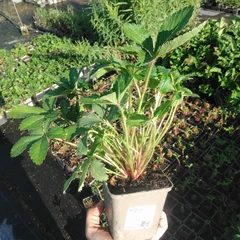
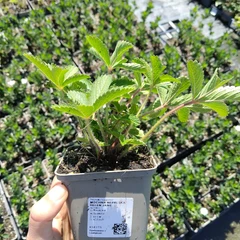
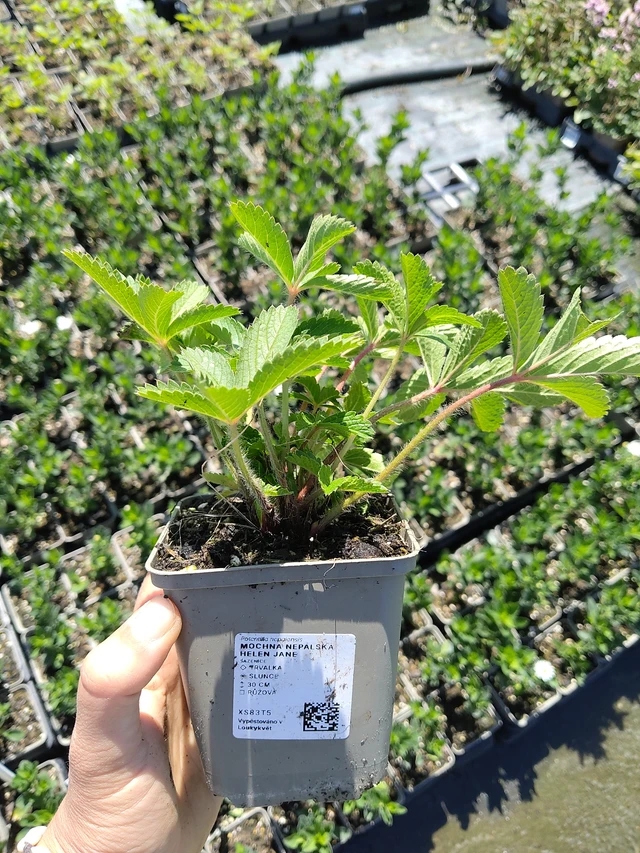
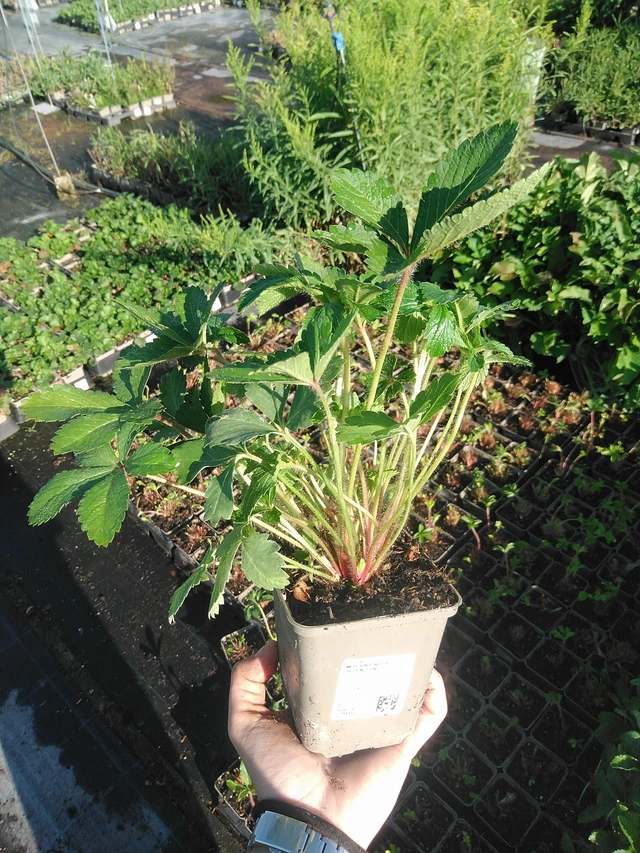
*Potentilla nepalensis* is a wild mountain plant native to the western regions of the Himalayas. It has also captured the attention of gardeners and breeders. There once existed a large number of garden varieties, which are unfortunately lost and unavailable today. Potentilla fits well into mixed perennial beds. Helen Jane has bright pink flowers with a dark, cherry-red eye. Compared to Miss Willmott, it is more compact and the flower colors are softer. Show full description

Seedling

K9 pot (9×9×9.5 cm)
Seedling
Seedling
Seedling
1-2 pieces
€3,29each
3-8 pieces
€2,99each
9-17 pieces
€2,69each
18+ pieces
€2,29each
Watch availability
Coming in 2027

Attracts pollinators 🐝

Yes

Difficulty

Beginner

Diseases

Disease-free 🙂

Edible

No
?
Information on whether the plant can be used in floristry for decorating food.

Flower color

Pink

Flower color: Shade

Fuchsia, cherry

Foliage color

Green

Fragrant (aromatic) 👃

No

Frost resistance

-28 °C
?
The temperature down to which the plant is frost hardy.

Hardiness zone

5a (-28.9 °C to -26.1 °C)

Height

30-40 cm

Moisture

💧💧

Pests

Pest-free 🙂

Position

Sun

Soil

Loamy, well-drained

Spacing

35 cm
?
Recommended planting spacing.

Spacing: Plants per m²

9

Species

Perennial

Suitable for cutting

Yes

Suitable for drying

No
1
2
3
4
5
6
7
8
9
10
11
12
Flowering
June
August

Recommended products

Larkspur QIS Carmine, Loukykvět

Delphinium consolida

Larkspurs are spring beauties that nothing compares to. However, if you want to harvest them for cut flowers, you must be vigilant and harvest quickly before all the buds open. They finish blooming quickly, especially during the warm springs of recent years, so we sow several batches 14 days apart just to keep up with the harvest. Larkspur QIS White is a soft white that fits beautifully into wedding floristry. You harvest one stronger stem and 4-5 smaller side stems from a single plant.
€2,39
In Stock
Zinnia Cresto Orange, Loukykvět

Zinnia elegans

The Cresto series has mostly double, scabious-flowered blooms. Orange is colored in a warm, tangerine orange; the centers are brown to burgundy. We think it's a beautiful autumn shade!
€2,49
In Stock
Columbine Rose Barlow, Loukykvět

Aquilegia vulgaris

The Barlow series is our favorite columbine because the flowers are double-flowered! We grow columbines on our farm as annuals, so we sow new ones every year. This saves space and we achieve longer stems. We grow part of the columbines in a polytunnel so we catch the harvest for Mother's Day, when flowers are scarce. Rose Barlow is a beautiful color combination where the flower centers are sweet pink and the outsides and stems are slightly purplish.
€2,09
In Stock
Cosmos Cupcakes Blush, Loukykvět

Cosmos bipinnatus

Cosmos is one of the most used items on our farm. In season, we cut hundreds of stems every day. Hats off to it, it is a super cut flower! Cupcakes is a series of Cosmos where the flowers are shaped like cupcake wrappers. This creates a unique effect in both bouquets and flower beds. Cupcakes Blush comes in shades of soft pink.
€2,39
In Stock
Feverfew Lima, Loukykvět

Tanacetum parthenium

Bred feverfew, the inflorescence consists only of tubular florets, i.e., a center without ray florets or petals. Lima is a commonly grown species in Holland and sells great at the flower exchange. It is therefore professional seed, but don't worry, we tested it and it can be grown both outdoors and in a polytunnel; both work perfectly. Lima has round-cut flowers with a yellowish dot in the center. The color is creamy white.
€2,59
In Stock
Snapdragon Potomac Orange, Loukykvět

Antirrhinum majus

Snapdragons of the Potomac series are stalwarts, which is why we are including more colors in our offer! In this case, a salmon-orange combination. Potomac is a fairly classic series of Snapdragons; the stems are long and robust. It blooms later than the similar Snapdragon series, Maryland, and fits better into higher temperatures here.
€5,19
In Stock
Nepal Cinquefoil Miss Willmott, Loukykvět

Potentilla nepalensis

Himalayan cinquefoil catches the eye at first glance with its vibrant flowers and is a great choice even for absolute beginners. The original wild species has its home in the mountain regions of the western Himalayas, which makes this perennial exceptionally hardy, easily handling even severe frosts down to minus twenty-eight degrees. The 'Miss Willmott' cultivar will delight you from June to August with a profusion of cherry-pink flowers adorned with a striking raspberry-red center. These blooms stand on sturdy stems, requiring no support, at a height of forty to sixty centimeters above clumps of green leaves. They are edible and are regularly visited by bees for food. We send customers a beautifully rooted potted seedling ready for transplanting into a flower bed, spaced about thirty-five centimeters apart. It is ideal for a sunny spot and ordinary loamy, well-drained soil. It is a long-lived perennial that is not bothered by any diseases or pests. It readily reseeds in the flower bed and fits beautifully into mixed plantings. You can boldly cut the pink flowers for a vase to brighten up summer bouquets, but they are not suitable for dried arrangements.
€3,29
More from €2,29
Coming in 2027
Hyssop Roseus, Loukykvět

Hyssopus officinalis

The Roseus hyssop is an aromatic subshrub whose structure and requirements strongly resemble the popular lavender. It originally comes from the sunny and dry regions of the Mediterranean and Asia Minor, so it thrives best in direct sun here as well. It favors well-drained, sandy, and even nutrient-poor soil, where it easily copes with a lack of moisture. You will receive a grown seedling in a pot from us, which you simply transplant straight into the flower bed, where it will very soon form a neat, richly branched bush reaching a height of around fifty centimeters. It is an absolutely undemanding plant that is not bothered by diseases or pests, so its cultivation can be easily handled even by complete beginners. It comfortably withstands severe frosts down to minus twenty-three degrees Celsius. In the garden, hyssop finds wide application. It fits perfectly into steppe-character gravel beds and beautifully complements roses or lower ornamental grasses. During the summer until early autumn, the Roseus variety will delight you with a flood of tiny flowers in a delicate light pink shade. These flowers, as well as the narrow green leaves, emit a pleasant spicy fragrance and reliably act as a huge lure for bees, bumblebees, and butterflies. Since all parts of the plant are edible, you can also use hyssop in the kitchen as a herb to flavor dishes or prepare a medicinal tea from it. You can also cut the long flowering stems for a vase, where they will add a fine texture and lightness to summer bouquets. Although the flowers are not suitable for drying for floral purposes, the plant will please you in the flower bed even out of season. The inflorescences form an interesting structure which, after the leaves fall and are covered by morning frost, creates a beautiful winter effect. Furthermore, if you provide hyssop with ideal conditions, it will reliably self-seed in its location and remain a solid part of your garden for many years.
€2,79
More from €1,99
Unavailable
Pro rok 2026 nedostupné
Nepal Cinquefoil Ron McBeath, Loukykvět

Potentilla nepalensis

*Potentilla nepalensis* is a wild mountain plant native to the western regions of the Himalayas. It has also captured the attention of gardeners and breeders. There once existed a large number of garden varieties, which are unfortunately lost and unavailable today. Potentilla fits well into mixed perennial beds. Ron McBeath is more compact than the cultivar Miss Willmott and has carmine-pink flowers.
€3,29
More from €2,29
Coming in 2027
Woodland Sage Amethyst, Loukykvět

Salvia nemorosa

This species of sage originates from the steppe regions of Central and Eastern Europe. It forms profusely flowering small clumps with straight, upright stems. In flower beds, it looks best in groups. It is traditionally planted as a companion to roses due to the matching flowering time. However, it looks equally good in mixed drought-tolerant steppe plantings with grasses. It is an excellent food source for bees. Lasts 7 days in a vase. Amethyst is an elegant variety with long stems and a pink flower color that is unusual for sages.
€2,99
More from €2,09
Coming in 2027
Pearly Everlasting, Loukykvět

Anaphalis triplinervis

Tiny white buttons of flowers that look like small Strawflowers make the three-veined everlasting an unmissable part of any drought-tolerant garden. This adaptable perennial naturally grows on the mountain slopes of the Himalayas, which is why a sunny location with well-drained sandy soil suits it best. It is exceptionally tough, tolerates drought and frosts well, and will please you with the fact that diseases and pests avoid it. The silvery-grey leaves bring a sense of calm to the plantings and harmonize beautifully with summer flowers. Bees love to feast on its flowers, and it is literally a treasure for florists. Fresh stems with blooming edible flowers perfectly liven up summer bouquets, where they stay fresh for a long time. However, you will fully utilize its beauty when drying it. Dried everlasting does not lose its radiant white color and will become a great foundation for your winter dry arrangements and wreaths.
€3,29
More from €2,29
Coming in 2027
Feather grass Pony Tails, Loukykvět

Stipa tenuissima

Feather grass flowers capture attention in beds and bouquets with their lightness and delicacy. All feather grasses love full sun and dry, stony, well-drained soil. To look most natural in beds, it is good to plant them in loose groups of several pieces together with other drought-loving perennials and bulbs. Only then do their stems and inflorescences, set in motion by the slightest breath of wind, truly stand out. Stipa 'Ponny Tails' is a species native to the steppes of Mexico, Texas, and Patagonia. Airy, dense clumps of hair-like delicate leaves resemble horsehair. The leaves are green, turning up to straw-colored towards the flowers. In a suitable location, it also self-seeds.
€3,79
More from €2,69
Coming in 2027
Nepal Cinquefoil Roxana, Loukykvět

Potentilla nepalensis

Himalayan cinquefoil once gained great attention from gardeners and breeders, thanks to which there was a plethora of varieties. Today, most of them are unfortunately lost, but fortunately the 'Roxana' cultivar remains, bringing a piece of mountain wilderness to gardens. Its homeland is the western regions of the Himalayas, which gave it immense resilience. It enjoys loamy, well-drained soil and does not mind sun or partial shade. It is a long-lived perennial that is not bothered by severe frosts down to minus twenty-eight degrees. You will receive a rooted potted seedling from us, which just needs to be transplanted. During the summer, specifically from June to August, 'Roxana' will reward you with a profusion of flowers. These have a fascinating salmon color, blending warm pink with tones of yellow and orange. The green leafy clumps grow to a height of forty to sixty centimeters, hold their shape firmly, and do not need support. It is not troubled by pests or diseases in the flower bed and readily reseeds itself in the right place. If you are planting multiple pieces, the ideal distance is thirty-five centimeters apart. It easily attracts bees and other useful pollinators to your garden. With its natural look, it fits beautifully into mixed perennial plantings, where it complements other flowering species. The cinquefoil is not intended for drying because it cannot retain its color or shape, but it works absolutely perfectly as a fresh flower. You can cut it without worry and add it to summer bouquets; furthermore, its delicate, edible flowers will easily brighten up your plate. In short, it is an undemanding and rewarding plant that can be grown even by those who are just starting to create a garden.
€3,29
More from €2,29
Coming in 2027
Lavender Rosea, Loukykvět

Lavandula angustifolia

Lavenders are a must for every sunny herb garden. We classify them as sub-shrubs, and they are valuable for gardens due to their winter habit. They add not only color and structure to flower beds but also an unmistakable fragrance. They will look good with lower-growing drought-loving grasses and perennials. Rosea blooms a sweet pink.
€4,29
More from €3,89
Coming in 2027
Meadowsweet Kahome, Loukykvět

Filipendula hybridum

Fluffy deep pink clouds of flowers are the main distinguishing feature of this meadowsweet. The 'Kahome' cultivar is a compact perennial reaching a height of around 40 to 50 centimeters, making it a great addition to the foreground of damper flowerbeds. The entire plant, including the dark green leaves, smells pleasant, and the flowers also spread an irresistible honey aroma around them. It is a rewarding and low-maintenance plant suitable even for beginners, you just need to keep in mind that it requires plenty of moisture for its happy growth. It is perfectly suited for waterlogged parts of gardens and the edges of ponds, where it naturally thrives. You can also use the inflorescences in summer bouquets; they will stay fresh in a vase for about seven days.
€3,49
More from €2,89
Coming in 2027
Nepal Cinquefoil Shogran, Loukykvět

Potentilla nepalensis

*Potentilla nepalensis* is a wild mountain plant native to the western regions of the Himalayas. It has also captured the attention of gardeners and breeders. There once existed a large number of garden varieties, which are unfortunately lost and unavailable today. Potentilla fits well into mixed perennial beds. Shogran is a low-growing cultivar with pink flowers and a contrasting raspberry-red eye.
€3,29
More from €2,29
Coming in 2027
Yarrow Lachsschönheit, Loukykvět

Achillea millefolium

Native wild perennial with a large distribution area from Europe to Siberia. Suitable for natural and wild plantings. Grows in meadows and dry grassy places. A very adaptable and undemanding plant, grows in clumps and spreads by runners. Cutting back after the first flowering encourages a new batch of flowers. Harvest for bouquets when the florets are fully open. Lasts 10 days in a vase. The Lachsschönheit cultivar is valued for its perfect transition of tones from salmon-pink to cream.
€3,49
More from €2,39
Coming in 2027
Smooth Hydrangea Annabelle, Loukykvět

Hydrangea arborescens

A dense hemispherical shrub with smooth fresh green leaves that are lighter on the underside. Flowers in convex to hemispherical inflorescences with a diameter of 15–30 cm gradually change color from pale green and cream to pure white.
€4,29
More from €3,89
Coming in 2027
Coneflower Rubinstern, Loukykvět

Echinacea purpurea

A valuable garden and medicinal perennial, originally from North America. It blooms in summer with dark purple-pink flowers. The spiky flower discs are an irresistible lure for butterflies. Lasts 7–10 days in a vase. After plucking the petals, the stems with the central discs can be dried or used in fresh bouquets as an interesting element. Rubinstern is very similar to the Magnus cultivar; the petals are darker and firmer. As they fade, they gradually pale and droop downwards.
€2,99
More from €2,09
Coming in 2027
Cranesbill Midnight Reiter, Loukykvět

Geranium pratense

A clump-forming species of hardy geranium. The original species is a native perennial with striking blue flowers. The garden cultivar Midnight Reiter also meets this description, but the leaves have an unusual dark wine-purple color.
€3,89
More from €2,89
Coming in 2027
Woodland Sage Ostfriesland, Loukykvět

Salvia nemorosa

This species of sage originates from the steppe regions of Central and Eastern Europe. It forms abundantly flowering small clumps with straight upright stems. In beds, it looks best in groups. Traditionally, it is planted as a companion to roses due to the matching flowering time. However, it will look equally good in mixed drought-loving steppe plantings with grasses. It is an excellent food source for bees. It lasts 7 days in a vase. The cultivar Ostfriesland blooms with a strikingly dark violet-blue color.
€2,99
More from €2,09
Coming in 2027
Lady's mantle Irish Silk, Loukykvět

Alchemilla mollis

Alchemilla mollis, known as lady's mantle, is an indispensable perennial for anyone who wants to bring harmony and softness to the garden. Its home is the moister environments of mountain meadows and light forests, making it a very adaptable plant that will survive even severe frosts without problems in our climate. The 'Irish Silk' cultivar is prized for its vitality and abundant blooming, where clouds of tiny, yellow-green flowers float above clumps of gray-green leaves. It is precisely this neutral color that can work wonders in a flower bed – it softens overly sharp contrasts between other flowers and beautifully unifies the entire composition. Besides its ornamental function, lady's mantle also has practical uses. Thanks to its clumping growth and ability to quickly fill in, it is ideal for edging pathways or as an underplanting beneath taller shrubs and roses. Water droplets catch on its leaves, creating a magical spectacle in the garden. If you enjoy making bouquets, you will love lady's mantle as versatile filler greenery that matches almost anything. It will last beautiful for about ten days in a vase, and its inflorescences can also be easily dried without losing too much of their color or shape. Moreover, it is a magnet for pollinators, and its young leaves are even edible, so it also finds use in a natural kitchen.
€2,99
More from €2,09
Coming in 2027
Geum Mai Tai, Loukykvět

Geum rivale

Avens Mai Tai is a charming spring perennial that brings a romantic touch to the garden with its adorable cup-shaped flowers. The original species often grows near streams and in moister meadows, so it will easily settle in our gardens in sun or partial shade, where well-drained, loamy, and slightly humous soil will suit it best. You will receive a rooted seedling in a pot from us, which you just need to transplant into the flowerbed. Avens forms nice basal clumps of green leaves, which over time function as an excellent ground cover. Its growth is reliable and its care is downright undemanding, because the plant is not bothered by pests or diseases and withstands frosts down to minus twenty-eight degrees. It stands out best when you plant it in smaller groups about thirty centimeters apart. From May to July, richly branched stems bearing semi-double flowers with gently ruffled petals appear above the foliage. The Mai Tai cultivar, which was bred in the USA in 2005, is characterized by its amazing color variability. It blooms in peach tones with a pink tint and gradually transitions into more muted pastel, salmon, and apricot shades. Blooming avens is a huge attraction for insects, especially for butterflies. We cut the stems for a vase when roughly a quarter to half of the flowers on the stem are open. They will stay beautiful in water for approximately seven days and add lightness and movement to an arrangement. However, its flowers are not suitable for drying. Although it is more of a short-lived perennial, it will bring you a lot of joy in the flowerbed with its rich flowers and undemanding nature.
€3,89
More from €2,89
Coming in 2027
Devil's-bit scabious, Loukykvět

Succisa pratensis

Devil's-bit scabious is a beautiful and delicate perennial, whose name is accompanied by a very strange legend. According to it, the devil, in anger over the protective power of this herb, bit off its rhizome. In the wild, it grows most often in damp meadows and pastures, but in the garden, it will thrive perfectly in a sunny spot with well-draining soil. You will receive a grown seedling in a pot from us, which you can simply transplant straight into the chosen flowerbed. It is an ideal plant for beginners, reliably withstanding frosts and not suffering from any pests or diseases. It grows to a height of thirty to eighty centimeters and from July to September forms magical spherical flowers of a blue-purple color. These act as a literal magnet for bees, hoverflies, and rare butterfly species, providing them with a rich pasture. In the garden, the devil's-bit scabious stands out perfectly in naturalistic plantings, where you will appreciate it alongside loose ornamental grasses. The sturdy stems with flowers can also be successfully used for cutting into summer bouquets, where they create a soft and playful structure, or you can dry them for winter decorations.
€2,99
More from €2,09
Coming in 2027
Agastache Mango Tango, Loukykvět

Agastache hybrida

Most hybrids available here come from plants originating in North America and Mexico. It is characterized by a delicate overall appearance. An elegant plant with small fragrant leaves, it blooms continuously during the summer with plenty of tiny florets and attracts butterflies and bees.
€2,99
More from €2,09
Coming in 2027
Gaura Siskiyou Pink, Loukykvět

Gaura lindheimeri

Gaura Siskiyou Pink is a charming perennial that brings lightness and airiness to the garden. Its original native area is in the warm regions of Texas and Louisiana, which is why it thrives in full sun and well-drained sandy soil. It grows in clumps and from June until the autumn frosts produces tiny raspberry-pink flowers that resemble fluttering butterflies. An interesting detail of this variety is the green leaves with a bronze tint and red spots. It is an absolutely undemanding plant, does not suffer from diseases or pests, and even beginners can handle its care. You will receive a grown seedling in a pot from us, which you simply need to transplant directly into the flowerbed. Here it complements ornamental grasses perfectly and acts as an attraction for bees and bumblebees. Although it grows more as a short-lived perennial in our climate, in a suitable place it reliably self-seeds. Occasional pinching will encourage richer branching. Gaura is excellent for summer bouquets. We cut the stems for a vase as soon as the first two to three little flowers open.
€3,29
More from €2,29
Coming in 2027
Hyssop Albus, Loukykvět

Hyssopus officinalis

The Albus hyssop is an aromatic subshrub that will bring a Mediterranean atmosphere and a flood of pure white flowers to your garden. Its original home is the sunny and rocky slopes of Southern Europe, so it will appreciate full sun and well-drained, even poorer sandy soil here as well. You will receive a grown seedling in a pot from us, which you simply transplant straight into the flower bed, where it will quickly form a dense, fragrant bush about half a meter tall. It does not suffer from diseases or pests, effortlessly handles drought and severe frosts, and even beginners can manage its care. With its appearance, it resembles lavender and looks great as an accompaniment to roses or in steppe-character gravel beds. From July to September, it is covered in tiny flowers that act as a huge lure for bees, bumblebees, and butterflies. In addition, the whole plant smells pleasantly, and its leaves and flowers are edible. Hyssop is excellent for cutting into summer bouquets, and during the winter, it creates a beautiful detail in the flower bed when its woody stems are covered in frost.
€2,79
More from €1,99
Coming in 2027
Loosestrife Blush, Loukykvět

Lythrum salicaria

Originally a native wild perennial that can be found in moist meadows, in shallow waters, or marshy edges of water bodies. In autumn, the leaves turn orange-red. Blush is a lower cultivar among loosestrifes. The flowers are pure light pink and combine well with other perennials.
€4,29
More from €2,99
Coming in 2027
Speedwell First Love, Loukykvět

Veronica longifolia

The long-lived Speedwell 'First Love' perennial will breathe fresh life into your flowerbeds thanks to a flood of tiny flowers in an unconventional bubblegum-pink color. In the wild, you would find its relatives in light and slightly moist meadows, so it will do best in your garden in sun or partial shade in common loamy soil full of nutrients. You don't have to worry about freezing winters; the plant easily handles temperatures dropping to minus thirty-four degrees. From the beginning of summer until the end of August, striking pink inflorescences tower over the foliage, acting as a reliable magnet for pollinators. It looks best in the garden alongside other perennials; it is ideal to keep a spacing of about forty centimeters. Be sure to cut the sturdy stems for a vase as well, where they will make a wonderful display as a fresh bouquet, but this species is not suitable for florists looking for dried flowers.
€5,19
More from €3,69
Coming in 2027
Calamint Blue Cloud, Loukykvět

Calamintha nepeta

Lesser calamint Blue Cloud is an undemanding and modest perennial that reliably perfumes any sunny garden. Its original homeland is the sunny and dry slopes of Southern Europe, which is why it thrives best here in direct sun in well-drained, sandy, or poorer loamy soil. It handles winter without problems, tolerating frosts down to minus twenty-three degrees. You will receive a grown seedling in a pot from us, which you just need to transplant straight into the flowerbed, where it will very soon form a compact, airy small shrub reaching a height of up to forty centimeters. It does not suffer from any diseases or pests, so even complete beginners can easily handle caring for it. Throughout late summer and into autumn, it blooms with a record number of tiny blue flowers that are so typical of the Blue Cloud variety. The whole plant emits a pleasant minty-spicy scent, and its flowers, which resemble thyme, act as a literal magnet for bees, bumblebees, and butterflies. It will look great among roses or in naturally designed steppe flowerbeds, where it naturally complements lower ornamental grasses. Additionally, both the blue flowers and green leaves are edible, so you can use them to garnish summer dishes. Lesser calamint is also excellently suited for cutting into smaller fresh bouquets, adding a fine structure to them in a vase.
€2,79
More from €1,99
Coming in 2027

Cultivation

Potentilla appreciates a spot in the sun or partial shade with free-draining, nutrient-rich soil. It is good to cut it back after flowering. To increase vitality, the individual clumps can be dug up, divided, and replanted after some time.

The information given is based on our experience, please use it as a guide only. Times may vary depending on the season, climate, location, sowing and transplanting dates and possibly also the conditions in the greenhouse/greenhouse. We always recommend testing how the plant performs in your conditions. Please do not take this as a guarantee.

Show all

Click to view the full growing instructions.

Photos in time

See how the seedling looks over the course of a year.

Nepal Cinquefoil Helen Jane - 30. 10. 2026
30. 10. 2026
Nepal Cinquefoil Helen Jane - 12. 8. 2026
12. 8. 2026
Nepal Cinquefoil Helen Jane - 22. 7. 2026
22. 7. 2026

More products in category Cinquefoil

Nepal Cinquefoil Miss Willmott, Loukykvět

Potentilla nepalensis

Himalayan cinquefoil catches the eye at first glance with its vibrant flowers and is a great choice even for absolute beginners. The original wild species has its home in the mountain regions of the western Himalayas, which makes this perennial exceptionally hardy, easily handling even severe frosts down to minus twenty-eight degrees. The 'Miss Willmott' cultivar will delight you from June to August with a profusion of cherry-pink flowers adorned with a striking raspberry-red center. These blooms stand on sturdy stems, requiring no support, at a height of forty to sixty centimeters above clumps of green leaves. They are edible and are regularly visited by bees for food. We send customers a beautifully rooted potted seedling ready for transplanting into a flower bed, spaced about thirty-five centimeters apart. It is ideal for a sunny spot and ordinary loamy, well-drained soil. It is a long-lived perennial that is not bothered by any diseases or pests. It readily reseeds in the flower bed and fits beautifully into mixed plantings. You can boldly cut the pink flowers for a vase to brighten up summer bouquets, but they are not suitable for dried arrangements.
€3,29
More from €2,29
Coming in 2027
Nepal Cinquefoil Ron McBeath, Loukykvět

Potentilla nepalensis

*Potentilla nepalensis* is a wild mountain plant native to the western regions of the Himalayas. It has also captured the attention of gardeners and breeders. There once existed a large number of garden varieties, which are unfortunately lost and unavailable today. Potentilla fits well into mixed perennial beds. Ron McBeath is more compact than the cultivar Miss Willmott and has carmine-pink flowers.
€3,29
More from €2,29
Coming in 2027
Nepal Cinquefoil Shogran, Loukykvět

Potentilla nepalensis

*Potentilla nepalensis* is a wild mountain plant native to the western regions of the Himalayas. It has also captured the attention of gardeners and breeders. There once existed a large number of garden varieties, which are unfortunately lost and unavailable today. Potentilla fits well into mixed perennial beds. Shogran is a low-growing cultivar with pink flowers and a contrasting raspberry-red eye.
€3,29
More from €2,29
Coming in 2027
Nepal Cinquefoil Roxana, Loukykvět

Potentilla nepalensis

Himalayan cinquefoil once gained great attention from gardeners and breeders, thanks to which there was a plethora of varieties. Today, most of them are unfortunately lost, but fortunately the 'Roxana' cultivar remains, bringing a piece of mountain wilderness to gardens. Its homeland is the western regions of the Himalayas, which gave it immense resilience. It enjoys loamy, well-drained soil and does not mind sun or partial shade. It is a long-lived perennial that is not bothered by severe frosts down to minus twenty-eight degrees. You will receive a rooted potted seedling from us, which just needs to be transplanted. During the summer, specifically from June to August, 'Roxana' will reward you with a profusion of flowers. These have a fascinating salmon color, blending warm pink with tones of yellow and orange. The green leafy clumps grow to a height of forty to sixty centimeters, hold their shape firmly, and do not need support. It is not troubled by pests or diseases in the flower bed and readily reseeds itself in the right place. If you are planting multiple pieces, the ideal distance is thirty-five centimeters apart. It easily attracts bees and other useful pollinators to your garden. With its natural look, it fits beautifully into mixed perennial plantings, where it complements other flowering species. The cinquefoil is not intended for drying because it cannot retain its color or shape, but it works absolutely perfectly as a fresh flower. You can cut it without worry and add it to summer bouquets; furthermore, its delicate, edible flowers will easily brighten up your plate. In short, it is an undemanding and rewarding plant that can be grown even by those who are just starting to create a garden.
€3,29
More from €2,29
Coming in 2027

More products in category Perennials

Lady's mantle Irish Silk, Loukykvět

Alchemilla mollis

Alchemilla mollis, known as lady's mantle, is an indispensable perennial for anyone who wants to bring harmony and softness to the garden. Its home is the moister environments of mountain meadows and light forests, making it a very adaptable plant that will survive even severe frosts without problems in our climate. The 'Irish Silk' cultivar is prized for its vitality and abundant blooming, where clouds of tiny, yellow-green flowers float above clumps of gray-green leaves. It is precisely this neutral color that can work wonders in a flower bed – it softens overly sharp contrasts between other flowers and beautifully unifies the entire composition. Besides its ornamental function, lady's mantle also has practical uses. Thanks to its clumping growth and ability to quickly fill in, it is ideal for edging pathways or as an underplanting beneath taller shrubs and roses. Water droplets catch on its leaves, creating a magical spectacle in the garden. If you enjoy making bouquets, you will love lady's mantle as versatile filler greenery that matches almost anything. It will last beautiful for about ten days in a vase, and its inflorescences can also be easily dried without losing too much of their color or shape. Moreover, it is a magnet for pollinators, and its young leaves are even edible, so it also finds use in a natural kitchen.
€2,99
More from €2,09
Coming in 2027
Yarrow Summer Pastels, Loukykvět

Achillea millefolium

An original wild perennial with a large distribution area from Europe to Siberia. Suitable for natural and wild plantings. It grows in meadows and dry grassy places. A very adaptable and undemanding plant, it grows in clumps and spreads by runners. By cutting back after the first flowering, we encourage a set of new flowers. For bouquets, we harvest when the florets are fully open. It lasts 10 days in a vase. Summer Pastels is characterized by a changeable and soft range of colors from white and vanilla to salmon, brick red, and bronze.
€3,09
More from €1,99
Coming in 2027
Verbena, Loukykvět

Verbena bonariensis

A verbena species originally from South America. In our country, it is often used as an annual, but in mild winters it can overwinter and reproduce by self-seeding. The firm, airy stems beautifully soften perennial beds and make them special with their purple color. It beautifully complements steppe plantings with grasses and rose beds.
€3,29
More from €2,29
Coming in 2027
Woodland Sage Caradonna, Loukykvět

Salvia nemorosa

This species of sage originally comes from the steppe regions of Central and Eastern Europe. It forms profusely flowering small clumps with straight upright stems. In flower beds, it looks best in groups. Traditionally, due to the identical flowering time, it is planted as a companion to roses. However, it will look just as good in mixed drought-loving steppe plantings with grasses. It lasts 7 days in a vase. The cultivar Caradonna stands out with a long flowering period and dark, almost black-purple stems with tiny purple flowers and dark purple bracts. If we cut it back after flowering, it will bloom again in late August and September.
€2,99
More from €2,09
Coming in 2027
Russian Sage, Loukykvět

Perovskia atriplicifolia

Russian sage reliably brings a touch of sunny steppes into the garden and places almost no demands on care. These sparsely branched subshrubs originally come from harsh, rocky areas from Afghanistan to Tibet, where they grow on open sun-drenched plains. Thanks to its origin, it delights in full sun and poor, well-drained sandy soil with minimal moisture. You will receive from us a well-rooted seedling in a pot, which just needs to be transplanted straight to the chosen spot in the flower bed. It does not need support, is avoided by common pests and diseases, and will survive frosts down to minus twenty-eight degrees. It grows up to one hundred and twenty centimeters and forms striking white felted shoots with silvery grey aromatic leaves. From July to October, it blooms with tiny blue-purple flowers that act as a lure for bees and butterflies and are even edible. Russian sage stands out next to drought-tolerant perennials. The flowers are suitable for cutting and drying for winter arrangements. Moreover, the silvery stems will ensure a beautiful winter effect in the flower bed.
€2,99
More from €2,09
Coming in 2027
Gaura Siskiyou Pink, Loukykvět

Gaura lindheimeri

Gaura Siskiyou Pink is a charming perennial that brings lightness and airiness to the garden. Its original native area is in the warm regions of Texas and Louisiana, which is why it thrives in full sun and well-drained sandy soil. It grows in clumps and from June until the autumn frosts produces tiny raspberry-pink flowers that resemble fluttering butterflies. An interesting detail of this variety is the green leaves with a bronze tint and red spots. It is an absolutely undemanding plant, does not suffer from diseases or pests, and even beginners can handle its care. You will receive a grown seedling in a pot from us, which you simply need to transplant directly into the flowerbed. Here it complements ornamental grasses perfectly and acts as an attraction for bees and bumblebees. Although it grows more as a short-lived perennial in our climate, in a suitable place it reliably self-seeds. Occasional pinching will encourage richer branching. Gaura is excellent for summer bouquets. We cut the stems for a vase as soon as the first two to three little flowers open.
€3,29
More from €2,29
Coming in 2027
Coneflower Rubinstern, Loukykvět

Echinacea purpurea

A valuable garden and medicinal perennial, originally from North America. It blooms in summer with dark purple-pink flowers. The spiky flower discs are an irresistible lure for butterflies. Lasts 7–10 days in a vase. After plucking the petals, the stems with the central discs can be dried or used in fresh bouquets as an interesting element. Rubinstern is very similar to the Magnus cultivar; the petals are darker and firmer. As they fade, they gradually pale and droop downwards.
€2,99
More from €2,09
Coming in 2027
Echinacea pallida, Loukykvět

Echinacea pallida

The pale coneflower is one of the exceptionally interesting prairie perennials of the North American continent. In its natural environment, it grows on open, sunny plains, which is why it thrives best in our gardens in full sun in drier, well-drained soil. You just need to transplant this grown seedling straight into the flower bed, where it will reliably take root. It does not need support, easily withstands severe frosts, and is avoided by common diseases and pests, making it ideal for beginner growers. During June and July, it will reward you with aromatic flowers with unusually narrow and drooping petals in light purple and pink tones. The prominent prickly centers are literally a magnet for bees and bumblebees, and the flowers themselves are surprisingly edible. The plant stands out especially in rustic plantings together with ornamental grasses. Gardeners and florists love it for its versatility. The fresh stems bring joy in a vase for about a week. Moreover, the distinctive central cones hold their shape perfectly, can be perfectly dried for winter decorations, or left in the flower bed, where they will create an eye-catching winter structure under a layer of snow.
€2,99
More from €2,09
Coming in 2027
Sea Holly, Loukykvět

Eryngium planum

Sea holly is an indispensable perennial for all lovers of naturally styled gardens. It earned its folk name - male fidelity - in times when it was used in herbal medicine as an aphrodisiac, and its roots were even candied as sweets in France and England. Today, however, you will appreciate it mainly for its low maintenance and unique appearance. Its home is on sunny hillsides and dry meadows, so even in our gardens, it will welcome well-drained, even poorer sandy soil and full sun. It produces upright, sturdy stems topped with blue-purple flowers with prickly bracts, which bring interesting structure and a silvery touch to the flowerbeds. It is literally a magnetic plant for bees, bumblebees, and butterflies, who find a rich food source on it. Floristically, it is extremely valuable, because its flowers are perfectly suited for cutting as well as drying for winter decorations. If you decide not to harvest it, feel free to leave it in the flowerbed all winter. Its silhouette covered in hoarfrost creates a wonderful winter effect. Although it is a short-lived perennial, in a suitable location it reliably self-seeds, so you will enjoy its beauty for many years.
€2,79
More from €1,99
Unavailable
Pro rok 2026 nedostupné
Coneflower Magnus, Loukykvět

Echinacea purpurea

A valuable garden and medicinal perennial, native to North America. It blooms in summer with dark purple-pink flowers. The spiky flower centers are an irresistible attraction for butterflies. They last 7–10 days in a vase. After removing the petals, the stems with the central disks can be dried or used in fresh bouquets as an interesting element. Magnus features distinctive deep pink flowers with an orange-brown center.
€2,99
More from €2,09
Coming in 2027
Woodland Sage Ostfriesland, Loukykvět

Salvia nemorosa

This species of sage originates from the steppe regions of Central and Eastern Europe. It forms abundantly flowering small clumps with straight upright stems. In beds, it looks best in groups. Traditionally, it is planted as a companion to roses due to the matching flowering time. However, it will look equally good in mixed drought-loving steppe plantings with grasses. It is an excellent food source for bees. It lasts 7 days in a vase. The cultivar Ostfriesland blooms with a strikingly dark violet-blue color.
€2,99
More from €2,09
Coming in 2027
Calamint Blue Cloud, Loukykvět

Calamintha nepeta

Lesser calamint Blue Cloud is an undemanding and modest perennial that reliably perfumes any sunny garden. Its original homeland is the sunny and dry slopes of Southern Europe, which is why it thrives best here in direct sun in well-drained, sandy, or poorer loamy soil. It handles winter without problems, tolerating frosts down to minus twenty-three degrees. You will receive a grown seedling in a pot from us, which you just need to transplant straight into the flowerbed, where it will very soon form a compact, airy small shrub reaching a height of up to forty centimeters. It does not suffer from any diseases or pests, so even complete beginners can easily handle caring for it. Throughout late summer and into autumn, it blooms with a record number of tiny blue flowers that are so typical of the Blue Cloud variety. The whole plant emits a pleasant minty-spicy scent, and its flowers, which resemble thyme, act as a literal magnet for bees, bumblebees, and butterflies. It will look great among roses or in naturally designed steppe flowerbeds, where it naturally complements lower ornamental grasses. Additionally, both the blue flowers and green leaves are edible, so you can use them to garnish summer dishes. Lesser calamint is also excellently suited for cutting into smaller fresh bouquets, adding a fine structure to them in a vase.
€2,79
More from €1,99
Coming in 2027
Rudbeckia Goldsturm, Loukykvět

Rudbeckia fulgida

Rudbeckia Goldsturm is a reliable and long-lived perennial that will bring the warm tones of late summer and autumn into your garden. It originally comes from the open plains and prairies of North America, so it delights most in sunny locations with common garden soil, whether it is loamy, humus-rich, or clayey. You will receive from us an already grown seedling in a pot, which you just need to transplant to the chosen spot in the flower bed. It is a completely undemanding plant, does not suffer from diseases or pests, and easily survives severe frosts. The Goldsturm cultivar grows to a height of about seventy centimeters and does not need support. From August to October, it produces a flood of golden-yellow flowers with distinctly dark centers. These edible flowers attract pollinators and fit perfectly into both prairie and rustic plantings. Rudbeckia is also great for cutting, lasting around ten days in a vase. In addition, the distinctive dark centers can be easily dried. If you leave them in the flower bed over the winter, they will provide a wonderful spectacle.
€2,79
More from €1,99
Coming in 2027
Calamint, Loukykvět

Calamintha nepeta ssp. nepeta

An undemanding and modest perennial that blooms with a large number of tiny flowers. It blooms for a record-breaking length of time throughout late summer and autumn. It forms smaller, compact, airy bushes that release a minty-spicy scent. The thyme-like flowers attract bees, bumblebees, and butterflies. It will look good among roses as well as in naturalistic steppe beds, perhaps with lower grasses. This calamint is generally more vigorous. It differs from other calamints with felted leaves by its record flowering length, stiff and shiny leaves, and also a larger number of flowers that do not form seeds and are therefore maximally durable. Sometimes sold under the cultivar name 'Triumphator'.
€2,79
More from €1,99
Coming in 2027
Gaura Summer Breeze, Loukykvět

Gaura lindheimeri

The charming gaura comes from the sun-drenched plains of Texas and Louisiana and represents exactly the plant that can liven up any drought-tolerant planting. It is a naturally profusely blooming perennial that delights in full sun and well-drained, sandy, and nutrient-poor soil. You will receive from us an already grown seedling in a pot, which will quickly form a vigorous clump after being transplanted into the garden. From early summer until late autumn, it will delight you with a flood of tiny flowers in pure white and delicate pink tones. The flowers gently sway in the breeze and with their appearance resemble a flock of tiny butterflies, which also really like to land on the plant, as do bees and bumblebees. Although gaura is known as a short-lived perennial, thanks to its willing self-seeding, it will last for many years in your garden. Caring for it is completely undemanding, it is avoided by most diseases and pests, and it can handle frosts down to eighteen degrees below zero without any problems. It is often used in mixed borders, where it beautifully softens the overall impression, and perfectly matches various types of ornamental grasses. The Summer Breeze variety is popular for its strong and healthy growth as well as its exceptionally generous set of flowers, which grow to about one meter. If you like to create your own bouquets, do not hesitate to cut gaura for a vase. Harvesting is best done the moment the first small flowers on the stem begin to open. These delicate flowers are not suitable for drying into dried arrangements, but they will beautifully lighten up fresh bouquets.
€2,99
More from €2,09
Unavailable
Pro rok 2026 nedostupné
Woodland Sage Amethyst, Loukykvět

Salvia nemorosa

This species of sage originates from the steppe regions of Central and Eastern Europe. It forms profusely flowering small clumps with straight, upright stems. In flower beds, it looks best in groups. It is traditionally planted as a companion to roses due to the matching flowering time. However, it looks equally good in mixed drought-tolerant steppe plantings with grasses. It is an excellent food source for bees. Lasts 7 days in a vase. Amethyst is an elegant variety with long stems and a pink flower color that is unusual for sages.
€2,99
More from €2,09
Coming in 2027
Daisy Maikönigin, Loukykvět

Leucanthemum vulgare

A classic perennial for early summer bouquets and cottage gardens. For arrangements, harvest the blooms with firm, smooth central disks, which allows them to last 7–10 days in a vase. Maikönigin is an exceptionally prolific flowering garden cultivar of Daisy.
€2,79
More from €1,99
Coming in 2027
Yarrow Terracotta, Loukykvět

Achillea millefolium

A native wild perennial with a large distribution range from Europe to Siberia. Suitable for natural and wild plantings. It grows in meadows and dry grassy places. A very adaptable and undemanding plant, it grows in clumps and spreads via runners. Cutting back after the first bloom encourages a new set of flowers. Harvest for bouquets when the tiny flowers are fully open. It lasts 10 days in a vase. Terracotta features ochre, shades of orange and yellow, and gray-green foliage.
€2,99
More from €2,89
Coming in 2027
Russian sage Little Spire, Loukykvět

Perovskia atriplicifolia

Perovskia are sparsely branched subshrubs, originating from areas ranging from Afghanistan to Tibet. They grow in open, sunny, rocky, and stony habitats. Their white-felted shoots and grayish aromatic leaves are striking. They fit well in sunny flower beds with other drought-loving perennials, where they create interesting structures even in the winter months. Little Spire is a smaller cultivar suitable even for pots with a soil volume of 7 liters or more.
€3,49
More from €3,59
Coming in 2027
Woodland Sage Schneehügel, Loukykvět

Salvia nemorosa

This species of sage originates from the steppe regions of Central and Eastern Europe. It forms abundantly flowering small clumps with straight upright stems. In beds, it looks best in groups. Traditionally, it is planted as a companion to roses due to the matching flowering time. However, it will look equally good in mixed drought-loving steppe plantings with grasses. It is an excellent food source for bees. It lasts 7 days in a vase. Schneehügel blooms white.
€2,99
More from €2,09
Coming in 2027