


Dahlia
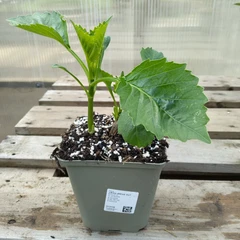
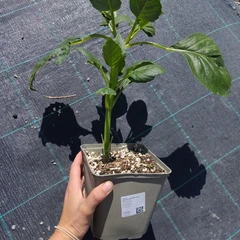
Dahlia Break Out
Seedling K13
Diseases
Flower color
Flower color: Shade
Height
Moisture
Pests
Pinching
Position
Soil
Spacing
Spacing: Plants per m²
Species
Suitable for cutting
Support
Recommended products

Cosmos bipinnatus
Cosmos Cupcakes Blush

Cosmos bipinnatus
Cosmos Double Click Bicolor Pink

Cosmos bipinnatus
Cosmos Apricot Lemonade

Zinnia elegans
Zinnia Queen Lime Red

Cosmos bipinnatus
Cosmos Apricotta

Zinnia elegans
Zinnia Cresto Peachy Pink

Cosmos bipinnatus
Cosmos Double Click Snow Puff

Helianthus annuus
Sunflower ProCut White Lite

Cosmos bipinnatus
Cosmos Cupcakes White

Limonium sinuatum
Statice QIS Pastel

Bupleurum rotundifolium
Bupleurum rotundifolium

Daucus carota
Ornamental Carrot Dara

Cosmos bipinnatus
Cosmos Double Click Cranberries

Callistephus chinensis
China aster King Size Apricot

Centaurea cyanus
Cornflower Tall Double Blue Boy

Delphinium consolida
Larkspur QIS White

Zinnia elegans
Zinnia Cresto Peaches & Cream

Saponaria vaccaria
Vaccaria Pink Beauty

Lagurus ovatus
Bunny Tails

Didiscus caerulea
Didiscus Lacy Pink

Centaurea cyanus
Cornflower Tall Double Red Boy

Cosmos bipinnatus
Cosmos Sea Shells

Calendula officinalis
Marigold Pacific Beauty Apricot

Callistephus chinensis
China aster King Size Appleblossom


Rudbeckia hirta
Rudbeckia Cherry Brandy

Centaurea cyanus
Cornflower Tall Double Pinkie

Zinnia elegans
Zinnia Cresto Cream

Phalaris canariensis
Canary grass

Matthiola incana
Stock Katz Apricot
Cultivation
Growing Dahlia Break Out can be easily managed even by a beginner if a few basic rules are followed. The ideal location for this variety must be fully sunny, and the soil should be sufficiently humus-rich and well-draining. The tubers are planted outside only during May or June, when there is reliably no risk of ground frosts. When planting, place them at a depth of 10-15 cm, always horizontally so that the eye faces upward. There should be about 5 cm of soil above the neck of the tuber. Maintain a spacing between 30-50 cm, which corresponds to approximately 1-4 plants per square meter. For earlier blooming and a stronger start, the tubers can be started indoors in a pot in a bright and frost-free place right from early March.
This breathtaking variety reaches an impressive height of 80-160 cm and produces truly giant flowers. Therefore, it is absolutely essential to provide the plants with sturdy support so the stems do not break under the weight of the flowers or the force of the wind. Watering should be moderate and balanced; dahlias like moisture but absolutely cannot stand waterlogged roots. Very important is pinching – as soon as the young plant has several pairs of true leaves, do not hesitate to remove the top shoot. This will encourage rich lateral branching. Early in the season, use fertilizers with a higher nitrogen content to support leaf and stem growth. Right before bud formation, switch to fertilizers with a higher potassium content, which will provide the plant with huge flowers in gorgeous colors resembling strawberries and cream. Among potential pests, pay the most attention to slugs, which absolutely love young shoots, and also be cautious of thrips or viral mosaic.
Dahlia Break Out is an excellent choice for cutting into vases. Always harvest when the flowers are about three-quarters open, because they will not open much further after cutting. Always carefully check the back petals – they should feel firm and fresh. To prolong the lifespan of the cut flower, we recommend dipping the ends of the stems immediately after cutting into hot water at 70-80 °C for 15 minutes. Thanks to this trick, it will stay beautiful in the vase for about one week. Directly in the garden bed, do not forget to regularly remove old and dead flowers, stimulating the plant to form more buds. Once the autumn frosts burn the above-ground part of the plant, it is time to carefully dig up the tubers. Clean them and store them in a dark and cool place, ideally buried in sawdust or sand. In the spring, you can then divide the clumps to easily propagate the plant, or use cuttings from sprouted tubers.
The information given is based on our experience, please use it as a guide only. Times may vary depending on the season, climate, location, sowing and transplanting dates and possibly also the conditions in the greenhouse/greenhouse. We always recommend testing how the plant performs in your conditions. Please do not take this as a guarantee.
Frequently
asked
questions
Basic information
What is the 'Break Out' variety and what are its characteristics?
Growing
Will a plant this tall need support?
What is the best way to water and fertilize?
When and how should I properly plant tubers in the garden bed?
Can I start the tubers indoors to get flowers sooner?
Can this variety also be grown in a larger pot on the patio?
How can I ensure the plant produces new buds and blooms for as long as possible?
What should I do with the bulbs after the season? How are they properly overwintered?
Why and how do Dahlias need to be pinched back?
Harvest
How do I know when the flowers are ready to be cut for a vase?
Is there a trick to make cut flowers last as long as possible?
Diseases & pests
How can I effectively protect young Dahlias from slugs?
What other diseases or pests can threaten the Break Out variety?
Propagation
How can I divide and propagate Dahlias in the spring?
Are there any other ways to propagate Dahlias besides dividing them?
Planting site
What kind of location and soil does this Dahlia need?
Troubleshooting
Why didn't my tuber sprout at all after planting it in the flower bed?
More products in category Dahlia

Dahlia
Dahlia Linda’s Baby

Dahlia
Dahlia Sweet Nathalie

Dahlia
Dahlia Evanah

Dahlia
Dahlia Stolze von Berlin

Dahlia
Dahlia White Perfection

Dahlia
Dahlia Genova

Dahlia
Dahlia Esli

Dahlia
Dahlia Cornel Brons

Dahlia
Dahlia Wine Eyed Jill

Dahlia
Dahlia Ivanetti

Dahlia
Dahlia Zundert Mystery Fox


Dahlia
Dahlia Souvenir D’eté

Dahlia
Dahlia Black Jack


Dahlia
Dahlia Platinum Blonde

Dahlia
Dahlia Natal

Dahlia
Dahlia Lavender Perfection


Dahlia
Dahlia Teesbrooke Audrey
More products in category Dahlias
Dahlia
Dahlia Linda’s Baby
Dahlia
Dahlia Sweet Nathalie
Dahlia
Dahlia Evanah
Dahlia
Dahlia Stolze von Berlin
Dahlia
Dahlia White Perfection
Dahlia
Dahlia Genova
Dahlia
Dahlia Esli
Dahlia
Dahlia Cornel Brons
Dahlia
Dahlia Wine Eyed Jill
Dahlia
Dahlia Ivanetti
Dahlia
Dahlia Zundert Mystery Fox
Dahlia
Dahlia Souvenir D’eté
Dahlia
Dahlia Black Jack
Dahlia
Dahlia Platinum Blonde
Dahlia
Dahlia Natal
Dahlia
Dahlia Lavender Perfection
Dahlia


