Ireland
🌷 Pre-orders for bulbs are in full swing! Check out this year's selection. 🌷
Ireland
🌷 Pre-orders for bulbs are in full swing! Check out this year's selection. 🌷
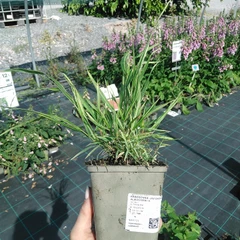
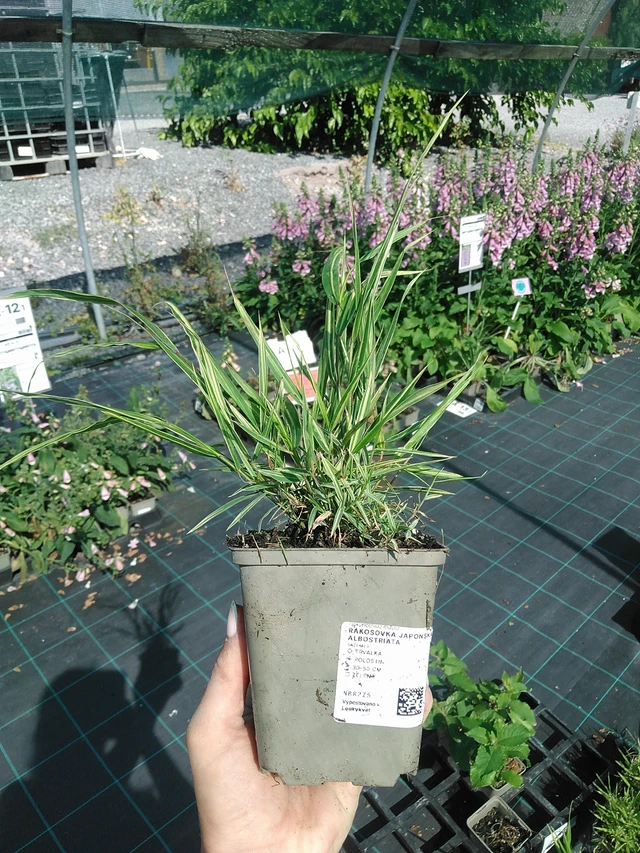
Japanese forest grass Albostriata, Loukykvět

Hakonechloa macra

Japanese forest grass Albostriata

Jiné latinské názvyHakonechloa macra 'Albo-striata', Hakonechloa macra 'Albovariegata', Hakonechloa macra f. albostriata, Hakonechloa macra var. albostriata
Jiné kultivaryAlbo-striata, Albovariegata
Jiné rodyPhragmites, Rákosník
Známá též jakoRákosovka japonská Albo-striata, Rákosovka japonská Albovariegata, Rákosník japonský Albostriata
Japanese forest grass Albostriata is a true gem for the shady corners of your garden. This elegant ornamental grass comes from the moist mountain slopes of Japan, where it grows in the undergrowth of light forests and on rocky cliffs. Thanks to its cascading growth, it resembles flowing water and brings unparalleled movement and lightness to the flowerbeds whenever the wind blows. The Albostriata cultivar is prized primarily for its striking leaves, which are decorated with longitudinal white stripes on a fresh green background. This color combination can perfectly brighten up even the darkest spots under trees or taller shrubs. Although it is not suitable for cutting into vases, it fulfills its ornamental function in the garden all year round. In autumn, the leaves turn into warm golden and beige shades, creating a beautiful winter effect that stands out even under a dusting of snow. Japanese forest grass is a long-lived perennial that grows more slowly at first, but over the years forms dense and impressive clumps. It requires humus-rich, well-drained soil with plenty of moisture, but does not tolerate winter waterlogging. Show full description

Seedling

Květináč K9 (9×9×9,5 cm)
Seedling
Seedling
1-2 kusy
4,29/ks
3-8 kusů
3,89/ks
9-17 kusů
3,39/ks
18+ kusů
3,19/ks
Add to cart
Skladem 16 ks

Difficulty

Beginner

Diseases

Disease-free 🙂

Flower color

Green, brown

Flower color: Shade

Beige, golden

Foliage color

White, green

Fragrant (aromatic) 👃

Ne

Frost resistance

-25 °C
?
The temperature down to which the plant is frost hardy.

Hardiness zone

5b (-26.1 °C to -23.3 °C)

Height

30-50 cm

Moisture

💧💧

Pests

Pest-free 🙂

Position

Partial shade, shade

Soil

Loamy, humus-rich, well-drained

Spacing

40-50 cm
?
Recommended planting spacing.

Spacing: Plants per m²

5-7

Species

Perennial

Suitable for cutting

Ne

Suitable for drying

Ne
1
2
3
4
5
6
7
8
9
10
11
12
Flowering
August
October

Recommended products

Feather Reed Grass Overdam, Loukykvět

Calamagrostis acutiflora

A tufted, upright growing grass. It sprouts very early. Decorative with its overall vertical habit and fine panicles of flowers, which bloom silvery grey. Striking with its white variegated leaves. It adorns the garden until winter. You can plant it in mixed beds or use it as an element rhythmically dividing the space. Usable for bouquets and drying.
4,29
More from 3,89
In Stock
Woodland Sage Amethyst, Loukykvět

Salvia nemorosa

This species of sage originates from the steppe regions of Central and Eastern Europe. It forms profusely flowering small clumps with straight, upright stems. In flower beds, it looks best in groups. It is traditionally planted as a companion to roses due to the matching flowering time. However, it looks equally good in mixed drought-tolerant steppe plantings with grasses. It is an excellent food source for bees. Lasts 7 days in a vase. Amethyst is an elegant variety with long stems and a pink flower color that is unusual for sages.
2,99
More from 2,09
In Stock
Russian Sage, Loukykvět

Perovskia atriplicifolia

Russian sage reliably brings a touch of sunny steppes into the garden and places almost no demands on care. These sparsely branched subshrubs originally come from harsh, rocky areas from Afghanistan to Tibet, where they grow on open sun-drenched plains. Thanks to its origin, it delights in full sun and poor, well-drained sandy soil with minimal moisture. You will receive from us a well-rooted seedling in a pot, which just needs to be transplanted straight to the chosen spot in the flower bed. It does not need support, is avoided by common pests and diseases, and will survive frosts down to minus twenty-eight degrees. It grows up to one hundred and twenty centimeters and forms striking white felted shoots with silvery grey aromatic leaves. From July to October, it blooms with tiny blue-purple flowers that act as a lure for bees and butterflies and are even edible. Russian sage stands out next to drought-tolerant perennials. The flowers are suitable for cutting and drying for winter arrangements. Moreover, the silvery stems will ensure a beautiful winter effect in the flower bed.
2,99
More from 2,09
Coming Soon
Japanese forest grass Greenhills, Loukykvět
New

Hakonechloa macra

Japanese forest grass Greenhills is one of the most elegant ornamental grasses you can plant in the shady corners of your garden. It originates from the moist rocky slopes of the Japanese island of Honshu, which predestines its growing requirements. It loves humus-rich, well-draining soil that does not dry out, and it thrives best in partial shade or shade, where its leaves won't be burned by the sharp midday sun. In gardens, it is valued for its cascading growth that resembles flowing water, thus bringing much-desired movement and lightness to static plantings under trees. The Greenhills cultivar stands out with a fresh, bright green leaf color that literally lights up the darker areas under tree canopies. Unlike variegated varieties, it looks very natural and calm, creating a perfect background for other perennials. This long-lived grass does not spread by aggressive runners and keeps its compact clumping shape. Although it is not used much for cutting, it fulfills its ornamental function until late autumn, when the leaves turn warm beige and golden tones. We leave the dry clumps in the bed throughout the whole winter, when they are decorated with frost, and cut them back only in the spring.
4,29
More from 3,89
Unavailable
Pro rok 2026 nedostupné
Woodland Sage Caradonna, Loukykvět

Salvia nemorosa

This species of sage originally comes from the steppe regions of Central and Eastern Europe. It forms profusely flowering small clumps with straight upright stems. In flower beds, it looks best in groups. Traditionally, due to the identical flowering time, it is planted as a companion to roses. However, it will look just as good in mixed drought-loving steppe plantings with grasses. It lasts 7 days in a vase. The cultivar Caradonna stands out with a long flowering period and dark, almost black-purple stems with tiny purple flowers and dark purple bracts. If we cut it back after flowering, it will bloom again in late August and September.
2,99
More from 2,09
In Stock s doručením od 31. 8. 2026
Hellebore Double Ellen White, Loukykvět

Helleborus orientalis

Hellebores are evergreen perennials that form slowly spreading clumps of leathery, dark green leaves. The stems usually bear four to five flowers. They bloom very early, as early as late winter and early spring. They are usable for vases only after conspicuous seed pods form in the center of the flower and the flower matures. Earlier, they tend to wilt and the stems cannot hold the flower in an upright position. All parts of the plant are poisonous. Double Ellen White is an almost pure white, double-flowered hellebore. The petals are slightly wavy and the bottom row of petals is lightly tinged with green.
4,79
More from 4,69
In Stock
Japanese Anemone Whirlwind, Loukykvět

Anemone hybrida

Anemones come from the same family as buttercups. With their elegant flowers on long slender stems, they can liven up and brighten late summer and autumn beds. They stand out against the darker background of shrub groups and will also be grateful for their partial shade. The Czech Perennial Association chose autumn Anemones as the perennial of the season for 2022. They last 7 days in a vase. Whirlwind is a historical variety bred in 1887 in the USA. It has a semi-double pure white flower, often with inner twisted petals, and compact, strictly upright growth. The flowers are very durable.
4,79
More from 3,59
In Stock
Gaura Siskiyou Pink, Loukykvět

Gaura lindheimeri

Gaura Siskiyou Pink is a charming perennial that brings lightness and airiness to the garden. Its original native area is in the warm regions of Texas and Louisiana, which is why it thrives in full sun and well-drained sandy soil. It grows in clumps and from June until the autumn frosts produces tiny raspberry-pink flowers that resemble fluttering butterflies. An interesting detail of this variety is the green leaves with a bronze tint and red spots. It is an absolutely undemanding plant, does not suffer from diseases or pests, and even beginners can handle its care. You will receive a grown seedling in a pot from us, which you simply need to transplant directly into the flowerbed. Here it complements ornamental grasses perfectly and acts as an attraction for bees and bumblebees. Although it grows more as a short-lived perennial in our climate, in a suitable place it reliably self-seeds. Occasional pinching will encourage richer branching. Gaura is excellent for summer bouquets. We cut the stems for a vase as soon as the first two to three little flowers open.
2,99
More from 2,09
In Stock posledních 45 kusů
Gaura Summer Breeze, Loukykvět

Gaura lindheimeri

The charming gaura comes from the sun-drenched plains of Texas and Louisiana and represents exactly the plant that can liven up any drought-tolerant planting. It is a naturally profusely blooming perennial that delights in full sun and well-drained, sandy, and nutrient-poor soil. You will receive from us an already grown seedling in a pot, which will quickly form a vigorous clump after being transplanted into the garden. From early summer until late autumn, it will delight you with a flood of tiny flowers in pure white and delicate pink tones. The flowers gently sway in the breeze and with their appearance resemble a flock of tiny butterflies, which also really like to land on the plant, as do bees and bumblebees. Although gaura is known as a short-lived perennial, thanks to its willing self-seeding, it will last for many years in your garden. Caring for it is completely undemanding, it is avoided by most diseases and pests, and it can handle frosts down to eighteen degrees below zero without any problems. It is often used in mixed borders, where it beautifully softens the overall impression, and perfectly matches various types of ornamental grasses. The Summer Breeze variety is popular for its strong and healthy growth as well as its exceptionally generous set of flowers, which grow to about one meter. If you like to create your own bouquets, do not hesitate to cut gaura for a vase. Harvesting is best done the moment the first small flowers on the stem begin to open. These delicate flowers are not suitable for drying into dried arrangements, but they will beautifully lighten up fresh bouquets.
2,99
More from 2,09
In Stock s doručením od 17. 8. 2026
Brunnera macrophylla, Loukykvět

Brunnera macrophylla

The largeleaf brunnera comes from the moist mountain forests of the Caucasus, where it forms dense undergrowth. It is an ideal perennial for shady and semi-shady corners of your garden, where it will thrive in humus-rich, moist soil. It resembles classic forget-me-nots in appearance, but don't be fooled, its leaves are much larger, heart-shaped, and rough to the touch. Thanks to them, it acts as a great groundcover plant that sprouts early in the spring and reliably covers bare soil with its leaves until late autumn. It thus forms a natural contrasting background for the delicate, tiny flowers. Tiny sky-blue flowers appear in April, May, and June, creating a beautiful delicate veil over the green carpet of leaves. The flower clusters are also suitable for cutting into spring hand-tied bouquets, where they look very tender. Just watch out for snails and slugs, who like to feast on the juicy leaves of the brunnera, so it's a good idea to check the plants regularly. It is a long-lived and hardy perennial that handles severe frosts without problems and will bring you joy in one place for many years.
3,89
More from 3,59
In Stock
Autumn Moor Grass, Loukykvět

Sesleria autumnalis

Autumn moor grass is an exceptionally hardy ornamental grass that introduces fresh greenery to the garden right from early spring. Native to the rocky slopes of the Balkans, it is well-adapted to free-draining soils, making it an ideal choice for novice gardeners. It forms neat clumps growing thirty to fifty centimeters tall. Its greatest asset is its bright green foliage, which emerges early and remains in pristine condition in the borders well into winter. The plant is untouched by diseases or pests and handles severe frosts superbly. In August and September, delicate creamy-beige flowers appear above the foliage. These rather subtle spikelets give the plant an elegant, refined look. In the garden, it acts as a perfect filler perennial for sunny or partially shaded spots. It looks absolutely stunning paired with calamint, airy gaura, or flowering oregano. Its delicate flowers and leaves are easily used as foliage filler in fresh bouquets, or they can be dried for small-scale floristry projects.
3,79
More from 2,69
In Stock s doručením od 24. 8. 2026
Shoofly plant Blue, Loukykvět

Catananche caerulea

Catananche caerulea, commonly known as Cupid's dart, is a charming plant that will win you over with its lightness and airiness. Its scientific name refers to ancient Greek legends, according to which it was used in love potions; today, however, you will appreciate it more for its undemanding nature and unique appearance. It is excellently suited for natural-style gardens, gravel beds, and drought-tolerant plantings, where it beautifully complements other perennials or ornamental grasses. It grows up to ninety centimeters tall and, despite its height, needs no support. The flowers have a lavender-blue color with a darker center and toothed petals at the ends. They bloom gradually from June to September. Cupid's dart loves drought and heat, but on the contrary, it cannot stand winter dampness, which harms it more than frost. If you provide it with a well-drained spot, it will survive temperatures down to -18 °C. It is a rewarding plant for beginner growers and experienced florists alike. Fresh flowers last a week in a vase, but they will bring you the most joy when dried. Harvest them fully open in dry weather and hang them upside down. They will keep their shape and remind you of summer all winter long.
2,79
More from 1,99
Coming Soon
Feather grass Pony Tails, Loukykvět

Stipa tenuissima

Feather grass flowers capture attention in beds and bouquets with their lightness and delicacy. All feather grasses love full sun and dry, stony, well-drained soil. To look most natural in beds, it is good to plant them in loose groups of several pieces together with other drought-loving perennials and bulbs. Only then do their stems and inflorescences, set in motion by the slightest breath of wind, truly stand out. Stipa 'Ponny Tails' is a species native to the steppes of Mexico, Texas, and Patagonia. Airy, dense clumps of hair-like delicate leaves resemble horsehair. The leaves are green, turning up to straw-colored towards the flowers. In a suitable location, it also self-seeds.
3,79
More from 2,69
In Stock
Woodland Sage Adrian, Loukykvět

Salvia nemorosa

This species of sage originates from the steppe regions of Central and Eastern Europe. It forms profusely flowering small clumps with straight, upright stems. In flower beds, it looks best in groups. It is traditionally planted as a companion to roses due to the matching flowering time. However, it looks equally good in mixed drought-tolerant steppe plantings with grasses. It is an excellent food source for bees. Lasts 7 days in a vase. Adrian is a white-flowering cultivar.
2,99
More from 2,09
In Stock posledních 37 kusů
Japanese forest grass Beni-kaze, Loukykvět
New

Hakonechloa macra

Japanese forest grass is a true jewel for shady and semi-shady corners of gardens, bringing an unrepeatable lightness. This elegant ornamental grass originates from the moist rocky cliffs of Japan, where it naturally forms cascading stands. Thanks to its origin, it loves well-draining, humus-rich soil that does not dry out, and appreciates protection from the harsh midday sun. In the garden, it works great as undergrowth beneath trees and shrubs or as an edging element along paths, where its stems wave beautifully in even the gentlest breeze. The Beni-kaze cultivar, whose name poetically translates to red wind, does justice to its name and is sought after for its color variability. While the plant is fresh green and resembles a small bamboo in the spring and summer, with the arrival of cooler autumn days, its leaves begin to turn into deep tones of red, burgundy, and bronze. This color show continues into winter, when the plant dries out, but thanks to its sturdy stems, it keeps its attractive shape even under a dusting of snow. It is a long-lived perennial that does not suffer from diseases or pests, and is an ideal choice for beginners. You just need to cut it low to the ground in the spring and it will sprout back into beauty.
4,29
More from 3,89
Unavailable
Pro rok 2026 nedostupné
Bloody Cranesbill Elsbeth, Loukykvět

Geranium sanguineum

Bloody cranesbill is a vigorous and undemanding perennial suitable for sunny spots. In addition to the flowers, the finely divided leaves have ornamental value, coloring up spectacularly in autumn. Elsbeth stands out with deep purple-pink flowers and red autumn foliage in sunny locations.
3,49
More from 2,39
In Stock
Japanese Anemone Königin Charlotte, Loukykvět

Anemone hybrida

Anemones come from the same family as buttercups. With their elegant flowers on long slender stems, they can enliven and brighten up late summer and autumn flowerbeds. They stand out against the darker background of shrub groups and will also appreciate their partial shade. The Czech Perennial Association chose autumn anemones as the perennial of the season for 2022. They last 7 days in a vase. Königin Charlotte is a massive taller variety bred as early as 1898. It has strong, firm stems and semi-double large violet-pink flowers. The outer sides of the silky smooth petals are colored violet.
4,79
More from 3,59
In Stock
Phlox Sweet Summer Ocean, Loukykvět

Phlox paniculata

Phlox is originally a perennial native to North America. It soon achieved great popularity in European gardens and has been systematically bred since the 19th century. It is a classic perennial for cutting into bouquets, where, in addition to colorful flowers, it also delights with a gentle fragrance. We harvest as soon as roughly half the flowers in the inflorescence have bloomed; then they last up to 10 days in a vase. Despite efforts to breed the most resistant cultivars, it remains true that Phlox reacts extremely sensitively to climate and soil conditions, so we carefully pay attention to the correct choice of site. The Sweet Summer series includes cultivars bred for greater resistance to fungal diseases. Sweet Summer Ocean is a very special cultivar introduced to the market in 2012. It is characterized by the color variability of flowers during the day. In cool mornings, the flowers are blue; as temperatures rise, they fade, and by noon they transition to purple-pink.
3,49
More from 2,89
Unavailable
Pro rok 2026 nedostupné
Geranium Philippe Vapelle, Loukykvět
New

Geranium renardii

The original natural species comes from the Caucasus. The Philippe Vapelle cultivar is valuable for its evergreen and distinctive gray leaves. It combines excellently with drought-loving and gray-leaved perennials and grasses. It spreads via rhizomes and forms dense velvety carpets over time. The flowers are large, blue-violet with darker veining. It is suitable for rock gardens, troughs, and tolerates hot flowerbed edges.
3,49
More from 2,39
In Stock s doručením od 31. 8. 2026
Geranium Wargrave Pink, Loukykvět
New

Geranium endressii

Geranium Wargrave Pink is an energetically growing geranium cultivar with a very long flowering period. The flowers are pink and appear from May until August. It needs plenty of space, and once it roots well, it can spread into wide clumps and effectively cover the ground. On suitable sites, it can even self-seed and is suitable for naturalistic gardens.
2,99
More from 2,09
Unavailable
Pro rok 2026 nedostupné
Tufted Hairgrass Goldschleier, Loukykvět

Deschampsia cespitosa

Tufted hairgrass is an undemanding native grass that remains green even in winter. In nature, it grows in meadows and forest clearings. It forms a compact tuft of leaves, from which grow fine, thin stems with transparent clouds of flowers. It adapts even to more difficult conditions, such as dry shade or compacted soil, and can handle waterlogging. Goldschleier has very tiny spikelets in light yellow panicles. The inflorescence forms a fluffy light yellow cloud above the tuft of leaves.
3,79
More from 2,69
In Stock
Yarrow Summer Pastels, Loukykvět

Achillea millefolium

An original wild perennial with a large distribution area from Europe to Siberia. Suitable for natural and wild plantings. It grows in meadows and dry grassy places. A very adaptable and undemanding plant, it grows in clumps and spreads by runners. By cutting back after the first flowering, we encourage a set of new flowers. For bouquets, we harvest when the florets are fully open. It lasts 10 days in a vase. Summer Pastels is characterized by a changeable and soft range of colors from white and vanilla to salmon, brick red, and bronze.
3,09
More from 1,99
In Stock
Navelwort Alba, Loukykvět
New

Omphalodes verna

Navelwort Alba is a charming spring perennial that resembles white forget-me-nots with its flowers. It originally comes from the mountain forests of Southern and Central Europe, where it forms extensive carpets in the undergrowth of trees. Thanks to its origin, it is perfectly suited for shady and semi-shady places in the garden, where many other plants fail to thrive. It grows in clumps and gradually spreads by means of short runners, thereby effectively suppressing weed growth and functioning as a reliable groundcover. The Alba cultivar is characterized by bright white tiny flowers that literally light up the darker corners of the garden in April and May. Although the plant is tiny, it looks very impressive and fresh in an area. It is a long-lived and completely undemanding perennial, ideal even for beginner gardeners, which furthermore does not suffer from diseases or pests. During the blooming period, it is also a welcome food source for bees and other early pollinators.
3,49
More from 2,39
Coming Soon
Calamint Blue Cloud, Loukykvět

Calamintha nepeta

Lesser calamint Blue Cloud is an undemanding and modest perennial that reliably perfumes any sunny garden. Its original homeland is the sunny and dry slopes of Southern Europe, which is why it thrives best here in direct sun in well-drained, sandy, or poorer loamy soil. It handles winter without problems, tolerating frosts down to minus twenty-three degrees. You will receive a grown seedling in a pot from us, which you just need to transplant straight into the flowerbed, where it will very soon form a compact, airy small shrub reaching a height of up to forty centimeters. It does not suffer from any diseases or pests, so even complete beginners can easily handle caring for it. Throughout late summer and into autumn, it blooms with a record number of tiny blue flowers that are so typical of the Blue Cloud variety. The whole plant emits a pleasant minty-spicy scent, and its flowers, which resemble thyme, act as a literal magnet for bees, bumblebees, and butterflies. It will look great among roses or in naturally designed steppe flowerbeds, where it naturally complements lower ornamental grasses. Additionally, both the blue flowers and green leaves are edible, so you can use them to garnish summer dishes. Lesser calamint is also excellently suited for cutting into smaller fresh bouquets, adding a fine structure to them in a vase.
2,79
More from 1,99
In Stock s doručením od 31. 8. 2026
Woodland Sage Schneehügel, Loukykvět

Salvia nemorosa

This species of sage originates from the steppe regions of Central and Eastern Europe. It forms abundantly flowering small clumps with straight upright stems. In beds, it looks best in groups. Traditionally, it is planted as a companion to roses due to the matching flowering time. However, it will look equally good in mixed drought-loving steppe plantings with grasses. It is an excellent food source for bees. It lasts 7 days in a vase. Schneehügel blooms white.
2,99
More from 2,09
In Stock
Meadow Sage Swan Lake, Loukykvět

Salvia pratensis

Meadow Sage occurs in our country primarily in warmer regions, especially in southern Moravia and northern and central Bohemia. It grows on sunny meadows, slopes, and along roadsides. The fragrant leaves form a basal rosette, from which several sparsely leafy, branched stems grow. The inflorescences consist of striking lipped flowers, which are a huge attraction for bees and bumblebees. Swan Lake blooms white.
2,79
More from 1,99
In Stock
Verbena, Loukykvět

Verbena bonariensis

A verbena species originally from South America. In our country, it is often used as an annual, but in mild winters it can overwinter and reproduce by self-seeding. The firm, airy stems beautifully soften perennial beds and make them special with their purple color. It beautifully complements steppe plantings with grasses and rose beds.
3,29
More from 2,29
In Stock posledních 75 kusů
Eryngium yuccifolium, Loukykvět
For drying

Eryngium yuccifolium

Eryngium yuccifolium catches the eye at first glance with its exotic appearance, which resembles a desert yucca more than a classic perennial. It originates from the steppe regions and light forests of the eastern USA, where it has learned to manage water excellently. Thanks to this, it is an ideal choice for sunny and dry locations with well-drained, even poorer sandy soil. It forms a basal rosette of stiff, blue-green to gray-green leaves, from which tall stems topped with spherical inflorescences grow in summer. The flowers are up to 2.5 cm in diameter and their color transitions from silvery white to greenish. The plant is very hardy and does not suffer from pests or diseases. Its flowers are literally a magnet for pollinators, especially bees and butterflies, who find plenty of food on them. In the garden, it acts as a striking structural element that, thanks to its evergreen leaves and sturdy stems, decorates the bed even in the winter months. For florists, this eryngium is a valuable material. The sturdy stems are easy to arrange, and the spherical flowers look great in fresh summer bouquets as well as in dried decorations, where they hold their shape for a long time.
2,79
More from 1,99
In Stock
Phlomis Tuberosa, Loukykvět

Phlomis tuberosa

Phlomis tuberosa, known in Czech as tuberous Jerusalem sage, brings an unmistakable silhouette to perennial plantings. This robust plant, originally from the European steppes, is perfectly suited for lovers of natural gardens looking for something novel. Its dark purple stems form an interesting contrast to the light pinkish-lilac flowers, which are arranged in regular whorls one above the other. This tiered structure appears very decorative and looks interesting in the bed, especially in combination with finer plants. For florists, Phlomis is a literal treasure. You can cut it for fresh summer bouquets, but its true moment comes when dried. The faded seed pods hold their shape perfectly and will continue to look spectacular in a vase all winter. If you leave it in the bed, it will provide a beautiful spectacle even in the months when the garden is sleeping. It is a completely undemanding and frost-resistant perennial that loves the sun and well-drained soil. In nature here, it belongs to the critically endangered species, so growing it in the garden is also a small contribution to the protection of biodiversity.
2,99
More from 2,09
In Stock
Fountain grass viridescens, Loukykvět

Pennisetum alopecuroides var. viridescens

Fountain grasses originate from East Asia, where they grow in meadows and light forests. They form hemispherical clumps of narrow leaves which, like the flowers, color up in the autumn. They are suitable for the vase and for drying. We grow this cultivar for its distinctively dark flowers, which appear in large numbers especially after warm summers.
4,29
More from 2,99
In Stock

Cultivation

Pro úspěšné pěstování rákosovky 'Albostriata' je naprosto klíčový výběr správného stanoviště. Tato tráva miluje polostín až stín; na přímém poledním slunci by se její krásně panašované listy mohly popálit a zhnědnout, zatímco v hlubokém stínu může být zbarvení méně výrazné. Ideálním místem je podrost pod vyššími stromy nebo stinná strana domu, kde vynikne její schopnost prosvětlit tmavší kouty. Půda by měla být humózní, hlinitá a stále mírně vlhká, ale nikdy ne přemokřená. Těžké jílovité půdy je nutné před výsadbou vylehčit přidáním písku a kompostu, aby kořeny mohly dýchat a nezahnívaly, což je pro tuto rostlinu fatální zejména v zimě.

Sazenice vysazujeme tak, aby horní část kořenového balu byla v rovině s okolním terénem. Pokud plánujete plošnou výsadbu, dodržujte spon 40–50 cm (přibližně 5–7 rostlin na m2), aby měly jednotlivé trsy dostatek prostoru pro svůj kaskádovitý růst. Po výsadbě rostliny důkladně zalijte a v prvním roce dbejte na pravidelnou zálivku, aby půda nikdy zcela nevyschla. Rákosovka koření poměrně mělce, proto je vhodné okolí rostliny zamulčovat kůrou nebo štěpkou, což pomůže udržet potřebnou vlhkost u kořenů a omezí růst plevele.

Péče během roku je u této trávy velmi snadná, protože netrpí na žádné choroby ani škůdce. Nejdůležitějším úkonem je jarní řez. Na podzim listy neostříhávejte – sychravé počasí je zbarví do krásných bronzových až zlatavých odstínů a suché listy navíc chrání střed rostliny (srdíčko) před mrazem a nadměrnou vlhkostí. Teprve na jaře (březen/duben), kdy pominou silné mrazy, sestřihněte celý trs nízko nad zemí, přibližně 5 cm nad povrchem. Poté můžete rostlinu přihnojit kvalitním organickým hnojivem nebo kompostem pro podporu nového bujného růstu.

Rákosovka 'Albostriata' je také vynikající volbou pro pěstování v nádobách a truhlících. Díky svému převislému habitu krásně přepadává přes okraje květináče a zjemňuje linie terasy či balkonu. Při pěstování v nádobě je však nutné zajistit dokonalou drenáž (vrstva štěrku nebo keramzitu na dně) a pravidelnou zálivku, protože substrát v květináči vysychá rychleji než ve volné půdě. Na zimu doporučujeme nádobu obalit jutou nebo polystyrenem a umístit ji na chráněné místo, aby kořenový bal nepromrzl, jelikož v nádobě je rostlina vůči mrazu citlivější než v záhonu.

The information given is based on our experience, please use it as a guide only. Times may vary depending on the season, climate, location, sowing and transplanting dates and possibly also the conditions in the greenhouse/greenhouse. We always recommend testing how the plant performs in your conditions. Please do not take this as a guarantee.

Show all

Click to view the full growing instructions.

Frequently
asked
questions

Stanoviště

Pěstování

Vlastnosti

Problémy

Základní informace

Nemoci & škudci

Množení

Photos
in time

See how the seedling looks over the course of a year.

Japanese forest grass Albostriata - 11. 8. 2026
11. 8. 2026
Japanese forest grass Albostriata - 13. 7. 2026
13. 7. 2026

More products in category Rákosník

Japanese forest grass Greenhills, Loukykvět
New

Hakonechloa macra

Japanese forest grass Greenhills is one of the most elegant ornamental grasses you can plant in the shady corners of your garden. It originates from the moist rocky slopes of the Japanese island of Honshu, which predestines its growing requirements. It loves humus-rich, well-draining soil that does not dry out, and it thrives best in partial shade or shade, where its leaves won't be burned by the sharp midday sun. In gardens, it is valued for its cascading growth that resembles flowing water, thus bringing much-desired movement and lightness to static plantings under trees. The Greenhills cultivar stands out with a fresh, bright green leaf color that literally lights up the darker areas under tree canopies. Unlike variegated varieties, it looks very natural and calm, creating a perfect background for other perennials. This long-lived grass does not spread by aggressive runners and keeps its compact clumping shape. Although it is not used much for cutting, it fulfills its ornamental function until late autumn, when the leaves turn warm beige and golden tones. We leave the dry clumps in the bed throughout the whole winter, when they are decorated with frost, and cut them back only in the spring.
4,29
More from 3,89
Unavailable
Pro rok 2026 nedostupné
Japanese forest grass Beni-kaze, Loukykvět
New

Hakonechloa macra

Japanese forest grass is a true jewel for shady and semi-shady corners of gardens, bringing an unrepeatable lightness. This elegant ornamental grass originates from the moist rocky cliffs of Japan, where it naturally forms cascading stands. Thanks to its origin, it loves well-draining, humus-rich soil that does not dry out, and appreciates protection from the harsh midday sun. In the garden, it works great as undergrowth beneath trees and shrubs or as an edging element along paths, where its stems wave beautifully in even the gentlest breeze. The Beni-kaze cultivar, whose name poetically translates to red wind, does justice to its name and is sought after for its color variability. While the plant is fresh green and resembles a small bamboo in the spring and summer, with the arrival of cooler autumn days, its leaves begin to turn into deep tones of red, burgundy, and bronze. This color show continues into winter, when the plant dries out, but thanks to its sturdy stems, it keeps its attractive shape even under a dusting of snow. It is a long-lived perennial that does not suffer from diseases or pests, and is an ideal choice for beginners. You just need to cut it low to the ground in the spring and it will sprout back into beauty.
4,29
More from 3,89
Unavailable
Pro rok 2026 nedostupné

More products in category Ornamental grasses

Feather grass Pony Tails, Loukykvět

Stipa tenuissima

Feather grass flowers capture attention in beds and bouquets with their lightness and delicacy. All feather grasses love full sun and dry, stony, well-drained soil. To look most natural in beds, it is good to plant them in loose groups of several pieces together with other drought-loving perennials and bulbs. Only then do their stems and inflorescences, set in motion by the slightest breath of wind, truly stand out. Stipa 'Ponny Tails' is a species native to the steppes of Mexico, Texas, and Patagonia. Airy, dense clumps of hair-like delicate leaves resemble horsehair. The leaves are green, turning up to straw-colored towards the flowers. In a suitable location, it also self-seeds.
3,79
More from 2,69
In Stock
Autumn Moor Grass, Loukykvět

Sesleria autumnalis

Autumn moor grass is an exceptionally hardy ornamental grass that introduces fresh greenery to the garden right from early spring. Native to the rocky slopes of the Balkans, it is well-adapted to free-draining soils, making it an ideal choice for novice gardeners. It forms neat clumps growing thirty to fifty centimeters tall. Its greatest asset is its bright green foliage, which emerges early and remains in pristine condition in the borders well into winter. The plant is untouched by diseases or pests and handles severe frosts superbly. In August and September, delicate creamy-beige flowers appear above the foliage. These rather subtle spikelets give the plant an elegant, refined look. In the garden, it acts as a perfect filler perennial for sunny or partially shaded spots. It looks absolutely stunning paired with calamint, airy gaura, or flowering oregano. Its delicate flowers and leaves are easily used as foliage filler in fresh bouquets, or they can be dried for small-scale floristry projects.
3,79
More from 2,69
In Stock s doručením od 24. 8. 2026
Feather Reed Grass Karl Förster, Loukykvět

Calamagrostis acutiflora

A tufted, upright growing grass. It sprouts very early. It is decorative due to its overall vertical habit and fine flower panicles, which bloom silvery-grey, turn yellow in summer, and transition to sandy beige. It decorates the garden until winter. You can plant it in mixed beds or use it as an element to rhythmically divide the space. Usable for bouquets and drying.
4,29
More from 3,89
In Stock s doručením od 7. 9. 2026
Fountain grass Hameln, Loukykvět

Pennisetum alopecuroides

Fountain grasses originate from East Asia, where they grow in meadows and light forests. They form hemispherical clumps of narrow leaves which, like the flowers, color up in the autumn. They are suitable for the vase and for drying. The 'Hameln' cultivar is one of the most reliable bloomers in cooler regions. The inflorescences initially have a soft pink tinge, then change color to yellow-brown or reddish-brown.
4,29
More from 3,89
In Stock
Tufted Hairgrass Goldschleier, Loukykvět

Deschampsia cespitosa

Tufted hairgrass is an undemanding native grass that remains green even in winter. In nature, it grows in meadows and forest clearings. It forms a compact tuft of leaves, from which grow fine, thin stems with transparent clouds of flowers. It adapts even to more difficult conditions, such as dry shade or compacted soil, and can handle waterlogging. Goldschleier has very tiny spikelets in light yellow panicles. The inflorescence forms a fluffy light yellow cloud above the tuft of leaves.
3,79
More from 2,69
In Stock
Dropseed, Loukykvět

Sporobolus heterolepis

Prairie dropseed originates from the vast North American prairies, where it forms a natural part of the wild and unbridled landscape. This ornamental grass grows in neat and very dense clumps of fresh green leaves, which turn bright yellow shades in autumn. During August and September, delicate clouds of pink and beige flowers hover above the clumps on sturdy stalks, reaching a height of up to seventy centimeters. The flowers also spread a very pleasant and unmistakable fragrance into their surroundings. In the garden, prairie dropseed stands out best when planted in a sunny spot in groups of multiple plants accompanied by other drought-tolerant perennials, with which it will create an impressive steppe scenery. The seedlings do not require any complicated care, they easily handle frosts down to minus twenty-eight degrees, and do not suffer from any diseases or pests. The airy and fragrant inflorescences are also perfectly suited for cutting into summer bouquets, to which they add unusual lightness and texture.
4,29
More from 2,99
In Stock s doručením od 31. 8. 2026
Tufted hairgrass Palava, Loukykvět

Deschampsia cespitosa

Tufted hairgrass is an undemanding native grass that remains green even in winter. In nature, it grows in meadows and forest clearings. It forms a neat clump of leaves, from which grow delicate thin stems with transparent clouds of flowers. It adapts even to more difficult conditions, such as dry shade or compacted soil, and can handle waterlogging too. The Czech cultivar 'Pálava' is valuable for its extra-long flowering time from July to October. Unlike other cultivars, its flowers are sterile and do not create any seedlings. It is stated that it resists drought best of all tufted hairgrasses.
3,49
More from 2,39
In Stock s doručením od 24. 8. 2026
Blue Moor Grass, Loukykvět

Sesleria caerulea

Blue moor grass is an elegant and undemanding native grass that livens up the spring garden at a time when other plants are just waking up. In the wild, it naturally grows in warmer areas on rocks and sunny slopes with well-drained soil. It forms dense, neat clumps growing to a height of about thirty centimeters. Its main advantage is its striking grayish-green and dark green leaves, which, with sufficient moisture, remain evergreen all year round. During April and May, the moor grass blooms with interesting brown spikelets. Over time, these flowers naturally fade into soft beige tones, and when dried, they are perfectly suited as a delicate addition to small dry arrangements. In flowerbeds, it represents an ideal companion for spring bulbs, with which it forms very harmonious compositions. Cultivation can easily be managed even by a beginner, as the plant does not suffer from any diseases or pests and can withstand frosts down to minus twenty-eight degrees without damage. Simply transplant the supplied mature seedling to a sunny or partially shaded location, ideally maintaining a planting distance of around forty centimeters.
4,29
More from 2,99
In Stock posledních 79 kusů
Feather Reed Grass Overdam, Loukykvět

Calamagrostis acutiflora

A tufted, upright growing grass. It sprouts very early. Decorative with its overall vertical habit and fine panicles of flowers, which bloom silvery grey. Striking with its white variegated leaves. It adorns the garden until winter. You can plant it in mixed beds or use it as an element rhythmically dividing the space. Usable for bouquets and drying.
4,29
More from 3,89
In Stock
Switchgrass Northwind, Loukykvět

Panicum virgatum

A perennial grass native to North American prairies. Switchgrass is very adaptable and long-lived. It adds clear structure to flower beds while also functioning as a softening element. This happens mainly after the veil-like flowers appear above the clumps of leaves. Northwind is a cultivar with an upright and slender growth habit. Its grey-blue-green leaves turn bright golden in the autumn.
4,29
More from 2,99
In Stock
Muhly grass Ruby, Loukykvět

Muhlenbergia capillaris

A beautiful fine grass originating from the southern parts of North America. It has narrow gray-green leaves. The flowers bloom in fluffy clouds of deep pink color, creating the impression of a light haze over the flower bed. Beautiful for bouquets too.
3,79
More from 2,69
In Stock posledních 73 kusů
Fountain Grass Hameln Gold, Loukykvět

Pennisetum alopecuroides

Fountain grasses originate from East Asia, where they grow in meadows and light forests. They form semi-spherical clumps of narrow leaves which, like the flowers, color up in autumn. They are suitable for vases and for drying. The cultivar Hameln Gold turns golden yellow in autumn.
4,29
More from 2,99
In Stock
Lovegrass, Loukykvět

Eragrostis spectabilis

Lovegrass originates from the sun-drenched plains of North America, where it naturally grows on dry and well-drained soils. This undemanding tufted grass is an ideal choice for beginner growers, as it does not suffer from any diseases or pests and easily handles frosts down to minus twenty-three degrees. During the season, its green leaves will catch your eye, gradually acquiring a warm orange to wine-red hue as autumn approaches. It stands out primarily in group plantings or in combination with drought-tolerant perennials, where it can beautifully soften and visually connect the entire composition. The real magic, however, lies in its blooming. During August and September, it creates literal clouds of tiny pink flower panicles above the leaf clumps, hovering at a height of around fifty centimeters. For its airiness and elegance, lovegrass is also exceptionally popular for cutting. Florists love to use it in summer and autumn bouquets, to which it adds lightness and volume. It is also perfect for drying, so you can preserve its charm for winter arrangements as well.
3,79
More from 2,69
In Stock
Melic grass Silky, Loukykvět

Melica ciliata

Melica ciliata grows wild on sunny and warm stony slopes. It blooms as early as May to June with creamy to silvery-white panicles; as they fade, they turn gray and thus harmonize with the gray-green leaves. Valuable for florists due to its early flowering and usability in both fresh and dried states.
3,79
More from 2,69
In Stock
Muhly grass Rosy, Loukykvět

Muhlenbergia reverchonii

A beautiful fine grass originating from Oklahoma and Texas. It has narrow gray-green leaves. The flowers bloom in fluffy clouds of pink color, creating the impression of a light haze over the flower bed. Beautiful for bouquets too.
3,79
More from 2,69
Unavailable
Pro rok 2026 nedostupné
Tufted hairgrass Tardiflora, Loukykvět

Deschampsia cespitosa

Tufted hairgrass is an undemanding native grass that remains green even in winter. In nature, it grows in meadows and forest clearings. It forms a neat clump of leaves, from which grow delicate thin stems with transparent clouds of flowers. It adapts even to more difficult conditions, such as dry shade or compacted soil, and can handle waterlogging too. 'Tardiflora' is, after 'Pálava', one of the most richly flowering tufted hairgrasses. It blooms a bit later than the others.
3,49
More from 2,39
In Stock posledních 78 kusů
Tall Moor Grass Karl Foerster, Loukykvět

Molinia arundinacea

Karl Foerster tall moor grass is an architectural gem among ornamental grasses, which has gained popularity due to its elegant and airy growth. The original species naturally occurs in wet meadows and light forests across Europe, so in the garden, it prefers moister, humus-rich soils in full sun or partial shade. The plant forms dense, low hemispherical clumps of narrow green leaves, from which strikingly tall flower stalks emerge at the beginning of summer. These can grow up to 180 cm in height, with the Karl Foerster cultivar standing out for its sturdy, upright growth that won't break even in the wind. During autumn, the entire plant turns into beautiful golden-yellow shades that literally glow on gloomy days. Thanks to its height and transparency, it makes a perfect specimen plant or a great addition to the back of perennial borders, adding dynamic movement without shading other plants. The sturdy stalks are also excellent material for florists, whether for fresh bouquets or dried arrangements, and if left in the border over winter, they provide a beautiful winter silhouette, especially when frosted.
4,29
More from 2,99
In Stock
Feather grass, Loukykvět

Stipa capillata

Feather grass flowers captivate in beds and bouquets with their lightness and delicacy. All Feather grasses love full sun and dry, stony, well-drained soil. To look most natural in beds, it is good to plant them in several pieces in loose groups together with other drought-loving perennials and bulbs. Only then will their stems and inflorescences, set in motion by the slightest breeze, stand out. *Stipa capillata* is a native steppe grass also widespread elsewhere in southern, central, and eastern Europe. It forms solid grey-green clumps with upright stems. The flowers, in the form of beige awns, stand almost horizontally away from the stem when ripening and twist interestingly.
4,29
More from 2,99
In Stock s doručením od 17. 8. 2026
Tufted hairgrass Schottland, Loukykvět

Deschampsia cespitosa

Tufted hairgrass is an undemanding native grass that remains green even in winter. In nature, it grows in meadows and forest clearings. It forms a neat clump of leaves, from which grow delicate thin stems with transparent clouds of flowers. It adapts even to more difficult conditions, such as dry shade or compacted soil, and can handle waterlogging too. The flowers of the 'Schottland' cultivar are brown at the beginning of flowering, later turning gold. The leaf clumps grow up to 60 centimeters, the flower stems up to 120.
3,49
More from 2,39
Coming Soon
Quaking grass Limouzi, Loukykvět

Briza media

Quaking grass 'Limouzi' is an undemanding and very charming native grass that naturally grows in sunny meadows and pastures with poorer and well-drained soil. From May onwards, long thin stalks sprout from its dense green clumps, carrying delicate spikelets in the shape of small hearts swaying on them. They are colored in inconspicuous green and brown tones. It is their constant movement and rustling at the slightest breeze that gives the flower beds extraordinary dynamics and lightness. This short-lived perennial, growing to a height of around half a meter, is perfectly suited to complement colorful steppe plantings, where it creates a soft filler between more prominently flowering species. It will also find its use among beginner growers, as it does not suffer from diseases or pests and handles strong frosts without problems. The airy inflorescences of quaking grass are perfect for cutting into summer bouquets and for drying for various floristry purposes. After blooming, roughly at the end of summer, it is good to trim the clumps, which will encourage their fresh appearance. The 'Limouzi' cultivar is characterized by its abundant flower set and slightly more compact growth, which maintains its shape even in more demanding conditions.
3,49
More from 2,39
In Stock s doručením od 17. 8. 2026