Ireland
🌸 Předprodej jiřin spustíme 3. února 2026 v 10.00. 🌸
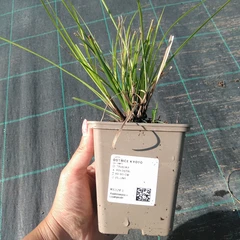
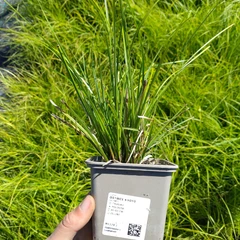
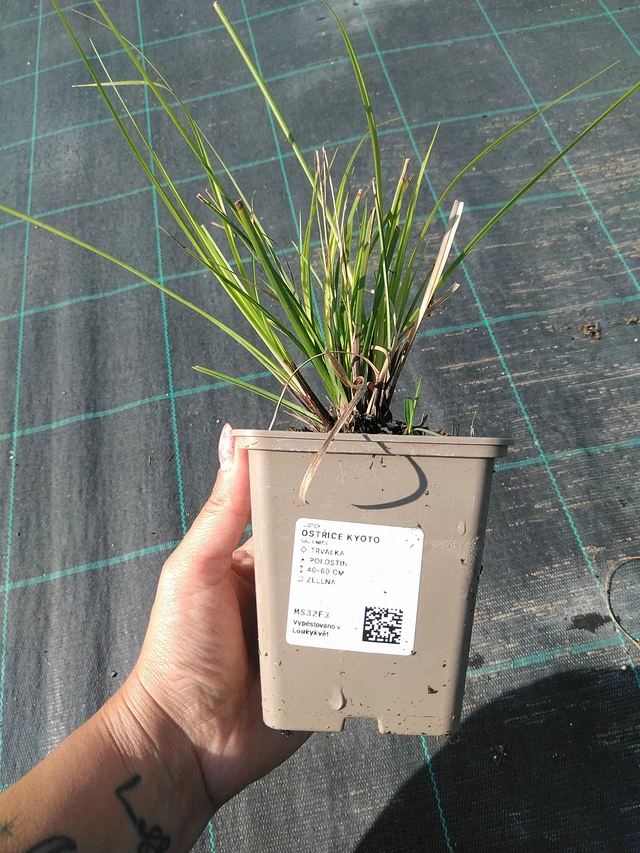
Sedge Kyoto, Loukykvět

Carex

Sedge Kyoto

Vyprodáno

Seedling

Vyprodáno
 za where

Barva květu

Zelená

Barva listu

Zelená

Druh

Trvalka

Mrazuvzdornost

-23
?
Do jaké teploty daná rostlina odolává mrazům.

Mrazuvzdornost (zóna)

6a (-23.3 °C až -20.6 °C)

Náročnost

Začátečník

Půda

Hlinitá, propustná

Spon

35-35 cm
?
Doporučený spon pro pěstování.

Spon: Počet na m2

8

Stanoviště

Polostín, stín

Vláha

💧💧

Výška

40-60 cm
1
2
3
4
5
6
7
8
9
10
11
12
Kvetení
April
May

Recommended products

Gaura lindheimeri

Gaura is a clump-forming perennial native to Texas and Louisiana. Here, it behaves more like a short-lived perennial. It combines beautifully with grasses, adding lightness and airiness to beds. It is an excellent food source for insects. Tiny flowers, resembling small butterflies, bloom tirelessly from June until the first frosts. For bouquets, harvest as soon as the first two to three flowers on the stem open.
Sold Out
V prodeji opět na jaře 2026

Verbena bonariensis

This South American Verbena species is often grown as an annual here, but in mild winters, it can survive and self-seed. Its sturdy, airy stems beautifully soften perennial beds and add a special touch with their purple color. It perfectly complements steppe plantings with grasses and rose beds.
Sold Out
V prodeji opět na jaře 2026

Sesleria autumnalis

A beautiful lower grass, valued for its early sprouting and long-lasting foliage well into winter. The flowers are rather inconspicuous, beige, and appear in green clumps later in summer and autumn. The leaf color is bright green. A great combination with species such as savory, gaura, or oregano.
Sold Out
V prodeji opět na jaře 2026

Epimedium youngianum

Epimediums bring true fairy-tale magic to shady and semi-shady corners of the garden. They are a perfect plant for lovers of details and observers of subtle changes throughout the season. They are effective with their ethereal flowers and interesting leaves with color variations and an almost year-round aesthetic effect. The delicate stems can also be used in floral arrangements. Beni Kujaku has semi-double, widely open flowers with a lighter interior. The flower color is lilac pink with a darker edge along the petals.
Sold Out
V prodeji opět na jaře 2026

Helleborus orientalis

Hellebores are evergreen perennials that form slowly spreading clumps of leathery, dark green leaves. Stems typically bear four to five flowers. They bloom very early, in late winter and early spring. They are suitable for vases only after prominent seed pods form in the center of the flower and the flower matures. Before that, they tend to wilt and the stems cannot hold the flower upright. All parts of the plant are poisonous. Double Ellen White is an almost pure white, double-flowered hellebore. Its petals are slightly wavy, and the lower row of petals is subtly tinted green.
Sold Out
V prodeji opět na jaře 2026

Pennisetum alopecuroides

Dochany pochází z východní Asie, kde rostou na loukách a ve světlých lesích. Tvoří polokulovité trsy úzkých listů, které se na podzim, stejně jako květy ještě vybarvují. Jsou vhodné do vázy i k usušení. Kultivar Hameln patří mezi nejspolehlivěji kvetoucí v chladnějších oblastech. Květenství mají zpočátku jemný růžový nádech, pak se přebarvují do žlutohnědé až červenohnědé.
Sold Out
V prodeji opět na jaře 2026

Echinacea purpurea

A valuable garden and medicinal perennial, native to North America. It blooms in summer with dark purplish-pink flowers. The spiky flower heads are an irresistible magnet for butterflies. Lasts 7–10 days in a vase. After the petals are picked, the stems with the central heads can be dried or used in fresh bouquets as an interesting element. Rubinstern is very similar to the Magnus cultivar; the petals are darker and firmer. As they fade, they gradually lighten and bend downwards.
Sold Out
V prodeji opět na jaře 2026

Salvia nemorosa

This type of sage originally comes from the steppe regions of Central and Eastern Europe. It forms richly flowering small clumps with straight, upright stems. In beds, it looks best in groups. Traditionally, it is planted as an accompaniment to roses due to its matching blooming period. However, it will also look good in mixed xerophilous steppe plantings with grasses. It is an excellent source of nectar for bees. It lasts 7 days in a vase. Schneehügel blooms white.
Sold Out
V prodeji opět na jaře 2026

Helleborus orientalis

Hellebores are evergreen perennials that form slowly spreading clumps of leathery, dark green leaves. Stems typically bear four to five flowers. They bloom very early, in late winter and early spring. They are suitable for cutting for a vase only after conspicuous seed pods form in the center of the flower and the flower matures. Before this, they tend to wilt, and the stems cannot hold the flower upright. All parts of the plant are poisonous. Helleborus Pretty Ellen Purple has single, rich wine-purple flowers with creamy stamens.
Sold Out
V prodeji opět na jaře 2026

Deschampsia cespitosa

This undemanding native grass stays green even in winter. In nature, it grows in meadows and forest clearings. It forms a neat clump of leaves, from which delicate thin stems with transparent clouds of flowers emerge. It adapts to more difficult conditions, such as dry shade or compacted soil, and can even handle waterlogging. The Czech cultivar Pálava is valued for its extra-long flowering period from July to October. Compared to other cultivars, its flowers are sterile and do not form any seedlings. It is said to be the most drought-resistant of all Deschampsia.
Sold Out
V prodeji opět na jaře 2026

Calamintha nepeta ssp. nepeta

An undemanding and modest perennial that blooms with a large number of small flowers. It flowers for a record long time throughout late summer and autumn. It forms smaller, compact, airy bushes that emit a minty, spicy fragrance. The thyme-like flowers attract bees, bumblebees, and butterflies. It will look good among roses and in naturalistic steppe beds, perhaps with lower grasses. This Marjoram is generally taller. Unlike other Marjorams with felted leaves, it stands out for its record-breaking flowering duration, stiff and shiny leaves, and also a larger number of flowers that do not form seeds and are therefore maximally durable. It is sometimes sold under the cultivar name 'Triumphator'.
Sold Out
V prodeji opět na jaře 2026

Aster ericoides

Fine, tiny leaves and well-branched long stems with a large number of small star-shaped flowers make this aster an ideal autumn cut flower. In beds, it serves as a fluffy, delicate filler and brightens the garden after the summer perennials have finished blooming. It will look good in combination with roses as well as in wild plantings with grasses. It is important for bees and butterflies as the last pasture before winter. It lasts 7 to 10 days in a vase. 'Lovely' is characterized by countless small, delicate pink flowers in loose panicles on strong, wiry stems.
Sold Out
V prodeji opět na jaře 2026

Helleborus orientalis

Hellebores are evergreen perennials that form slowly spreading clumps of leathery, dark green leaves. Stems typically bear four to five flowers. They bloom very early, in late winter and early spring. They are suitable for vases only after prominent seed pods form in the center of the flower and the flower matures. Before that, they tend to wilt and the stems cannot hold the flower upright. All parts of the plant are poisonous. Hellebore Pretty Ellen White has simple white flowers, with a subtle burgundy hue in the center, which beautifully highlights the white stamens.
Sold Out
V prodeji opět na jaře 2026

Agastache rugosa f. albiflora

Agastache rugosa originates from areas of China and Japan. Its serrated leaves resemble nettle leaves, but they do not sting and, when crushed between the fingers, emit a minty-anise scent. It is a stable, upright-growing plant. Hardy and robust, it successfully withstands our winters. Interesting for cutting even after flowering. Lasts 7 days in a vase. With its white color, Agastache Alabaster is well-suited for any color combination.
Sold Out
V prodeji opět na jaře 2026
Novinka

Pennisetum

A fast-growing ornamental grass with strikingly colored dark burgundy leaves. It blooms from July to October with pink to burgundy spikes that gradually fade to beige. Interesting not only for its flowers, but also for its overall habit and striking contrasting color.
Sold Out
V prodeji opět na jaře 2026
VONÍ

Origanum vulgare

Oregano is an ancient medicinal plant that works perfectly in modern gardens as a reliable partner in drought-tolerant perennial communities. Its culinary use is widely known, and lovers of Italian cuisine, in particular, cannot do without it. In aromatherapy, it is considered an essence of good mood and harmony.
Sold Out
V prodeji opět na jaře 2026

Stipa tenuissima

Stipa flowers captivate in beds and bouquets with their lightness and delicacy. All stipas love full sun and dry, stony, well-drained soil. To make them look as natural as possible in beds, it is good to plant them in several pieces in loose groups along with other drought-tolerant perennials and bulbs. Only then will their stems and inflorescences come alive with the slightest breath of wind. 'Ponny Tails' is a species native to the steppes of Mexico, Texas, and Patagonia. Airy, dense tufts of hair-like, delicate leaves resemble horsehair. The leaves are green, turning straw-colored towards the flowers. It even self-seeds in a suitable location.
Sold Out
V prodeji opět na jaře 2026
VONÍ

Thymus citriodorus

A groundcover variety of thyme that immediately catches the eye with its yellow-green variegated leaves. From June, pink flowers will complement the color palette. In addition to its characteristic scent, another plus of this thyme is its winter appearance. Due to low temperatures, the entire plant changes to old rose tones.
Sold Out
V prodeji opět na jaře 2026

Anemone hybrida

Anemones come from the same family as buttercups. With their elegant flowers on long slender stems, they can brighten and enliven late summer and autumn beds. They stand out against a darker background of shrub groups and will also be grateful for their partial shade. The Czech Perennial Society chose autumn anemones as the perennial of the 2022 season. They last 7 days in a vase. Lorelei has semi-double flowers in a delicate light pink tone.
Sold Out
V prodeji opět na jaře 2026

Verbena bonariensis

Původem jihoamerický druh sporýše. U nás se často využívá jako letnička, ale v mírných zimách dokáže přezimovat a rozmnožit se samovýsevem. Pevné vzdušné stonky krásně zjemní trvalkové záhony a ozvláštní je svou fialovou barvou. Krásně doplní stepní výsadby s trávami i záhony růží. Severoamerické šlechtění známé verbeny zaměřené na kopaktní růst a bohaté kvetení. Jméno Lollipop přesně vystihuje habitus této rostliny. Vzpřímené kratší stonky a fialový obláček květů. Vhodná do sezónních výsadeb v nádobách. 
Sold Out
V prodeji opět na jaře 2026

Molinia caerulea

A very adaptable grass that naturally grows in pastures and heaths. It is primarily planted in gardens for its exceptional autumn effect, when its leaves turn golden to orange tones. Heidezwerg is cultivated for its dark purple to purplish inflorescences.
Sold Out
V prodeji opět na jaře 2026

Salvia nemorosa

This species of sage (Salvia nemorosa) originally comes from the steppe regions of Central and Eastern Europe. It forms richly flowering small clumps with straight, upright stems. In flowerbeds, it looks best in groups. Traditionally, it is planted as an accompaniment to roses due to their similar flowering time. However, it will also look great in mixed, drought-tolerant steppe plantings with grasses. It lasts 7 days in a vase. The Caradonna cultivar stands out for its long flowering period and dark, almost black-purple stems with small purple flowers and dark purple bracts. If pruned after flowering, it will bloom again in late August and September.
Sold Out
V prodeji opět na jaře 2026

Rudbeckia fulgida

Coneflowers (Rudbeckia) originate from North America and are robust and profusely flowering perennials of late summer and autumn. They are suitable for prairie plantings with tall grasses and for country gardens by cottages. The central cones, after the seeds ripen, look very effective and adorn perennial beds even through winter. For vases, harvest them as soon as they bloom. Vase life is 7 to 10 days. Dry central cones can also be used. Goldsturm is its most famous cultivar. It has bright golden-yellow flowers with dark centers.
Sold Out
V prodeji opět na jaře 2026

Persicaria amplexicaulis

This species of knotweed originates from the Himalayas and China, where it grows in shrubs and mountain meadows along streams at high altitudes. It forms sturdy clumps of fresh green, pointed leaves. Above them, from summer onwards, upright, narrow, candle-like inflorescences appear, composed of individual small flowers. It is a very popular perennial, recently bred into many cultivars and used in Western Europe in larger park and garden designs. It excels with a long flowering period in late summer and good vase life. It was chosen as the perennial of the season 2023 by the Czech Perennial Society. The cultivar Fat Domino was bred in Belgium and has dark red flowers.
Sold Out
V prodeji opět na jaře 2026

Brunnera macrophylla

Brunnera is a long-lived perennial native to the mountain meadows and forests of the Caucasus. It is interesting not only when in bloom. The leaves are large, heart-shaped, and light green. They form a contrasting background for the delicate and small flowers that appear above the carpet of leaves from April to May. It sprouts early and retracts late, making it a valuable groundcover perennial.
Sold Out
V prodeji opět na jaře 2026

Helleborus orientalis

Hellebores are evergreen perennials that form slowly spreading clumps of leathery, dark green leaves. Stems typically bear four to five flowers. They bloom very early, in late winter and early spring. They are suitable for cutting for a vase only after conspicuous seed pods form in the center of the flower and the flower matures. Before this, they tend to wilt, and the stems cannot hold the flower upright. All parts of the plant are poisonous. Double Ellen Pink Spotted has full, delicate pink flowers with dark burgundy spots.
Sold Out
V prodeji opět na jaře 2026

Pennisetum alopecuroides var. viridescens

Dochany pochází z východní Asie, kde rostou na loukách a ve světlých lesích. Tvoří polokulovité trsy úzkých listů, které se na podzim, stejně jako květy ještě vybarvují. Jsou vhodné do vázy i k usušení. Tento kultivar pěstujeme pro výrazně tmavé květy, které se ve velkém množství objevují zejména po teplých létech.
Sold Out
V prodeji opět na jaře 2026

Liatris spicata

An interesting tuberous perennial with flowers that bloom from the top down. This unique characteristic also gave it its secondary Czech name – shorakvět (top-flower) – as most plants bloom in the opposite direction, from bottom to top. Its unusually shaped purple flowers attract bees, bumblebees, and butterflies. Also interesting for bouquets.
Sold Out
V prodeji opět na jaře 2026

Papaver orientale

Oriental poppy originates from the Caucasus, Turkey, and Iran, where it grows on rocky slopes and dry meadows. It blooms with large, cup-shaped flowers on tall stems. Like all poppies, for use in bouquets, we harvest them as soon as the buds color and "burst open." Additionally, we briefly (for about 20 seconds) sear the ends of the stems with a flame and immediately place them in cold water. They then last 4 days in a vase. The noticeably fuzzy and large leaves die back shortly after flowering, and the plant must rest until spring to regain strength. Some leaves sprout again in late summer. Therefore, it is advisable to plant other perennials nearby that, on the contrary, sprout later and can draw attention during the poppy's dormant period. Coral Reef is a variety with salmon-pink flowers and black spots at the base of the petals.
Sold Out
V prodeji opět na jaře 2026

Cultivation

Photos
in time

See how the seedling looks over the course of a year.
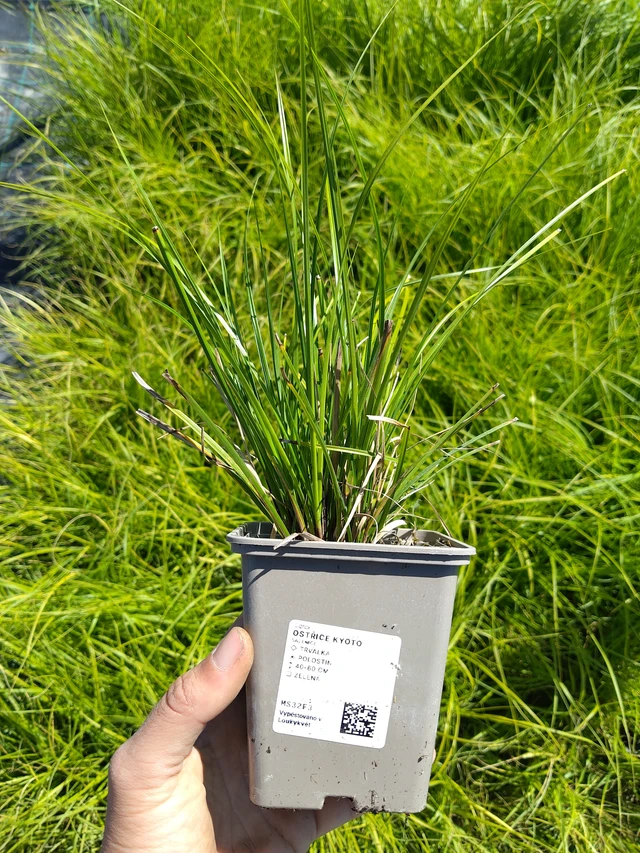
Sedge Kyoto - 11. 9. 2025
11. 9. 2025
Sedge Kyoto - 19. 8. 2025
19. 8. 2025

More products in category Okrasné trávy

Stipa tenuissima

Stipa flowers captivate in beds and bouquets with their lightness and delicacy. All stipas love full sun and dry, stony, well-drained soil. To make them look as natural as possible in beds, it is good to plant them in several pieces in loose groups along with other drought-tolerant perennials and bulbs. Only then will their stems and inflorescences come alive with the slightest breath of wind. 'Ponny Tails' is a species native to the steppes of Mexico, Texas, and Patagonia. Airy, dense tufts of hair-like, delicate leaves resemble horsehair. The leaves are green, turning straw-colored towards the flowers. It even self-seeds in a suitable location.
Sold Out
V prodeji opět na jaře 2026

Sesleria autumnalis

A beautiful lower grass, valued for its early sprouting and long-lasting foliage well into winter. The flowers are rather inconspicuous, beige, and appear in green clumps later in summer and autumn. The leaf color is bright green. A great combination with species such as savory, gaura, or oregano.
Sold Out
V prodeji opět na jaře 2026

Calamagrostis acutiflora

A clumping, upright-growing grass. It sprouts very early. Decorative for its overall vertical habit and delicate flower panicles that bloom silvery-grey, turn yellow in summer, and transition to sandy beige. It adorns the garden until winter. You can plant it in mixed beds or use it as an element that rhythmically divides space. Useful for bouquets and drying.
Sold Out
V prodeji opět na jaře 2026

Pennisetum alopecuroides

Dochany pochází z východní Asie, kde rostou na loukách a ve světlých lesích. Tvoří polokulovité trsy úzkých listů, které se na podzim, stejně jako květy ještě vybarvují. Jsou vhodné do vázy i k usušení. Kultivar Hameln patří mezi nejspolehlivěji kvetoucí v chladnějších oblastech. Květenství mají zpočátku jemný růžový nádech, pak se přebarvují do žlutohnědé až červenohnědé.
Sold Out
V prodeji opět na jaře 2026

Sporobolus heterolepis

Grass native to North American prairie regions. It grows in dense clumps, with delicate, fragrant flower stalks notably rising above the foliage in summer. Best showcased when planted in groups with accompanying perennials.
Sold Out
V prodeji opět na jaře 2026

Deschampsia cespitosa

Hair Grass is an undemanding native grass that remains green even in winter. In nature, it grows in meadows and forest clearings. It forms a compact clump of leaves from which delicate thin stems with transparent clouds of flowers emerge. It adapts to more difficult conditions such as dry shade or compacted soil and can even handle waterlogging. Goldschleier has very tiny spikelets in light yellow panicles. The inflorescence forms a fluffy, light yellow cloud above the clump of leaves.
Sold Out
V prodeji opět na jaře 2026

Deschampsia cespitosa

This undemanding native grass stays green even in winter. In nature, it grows in meadows and forest clearings. It forms a neat clump of leaves, from which delicate thin stems with transparent clouds of flowers emerge. It adapts to more difficult conditions, such as dry shade or compacted soil, and can even handle waterlogging. The Czech cultivar Pálava is valued for its extra-long flowering period from July to October. Compared to other cultivars, its flowers are sterile and do not form any seedlings. It is said to be the most drought-resistant of all Deschampsia.
Sold Out
V prodeji opět na jaře 2026

Sesleria caerulea

Pěchava (Sesleria) is our native grass, growing in warmer regions on rocks and sunny slopes. Its advantages are evergreen leaves when there's enough moisture, and early spring flowering. The leaves are grayish-blue. Its strikingly dark flowers gradually fade to beige. It combines well with spring bulbs.
Sold Out
V prodeji opět na jaře 2026

Pennisetum alopecuroides

Dochany (Pennisetum) originates from East Asia, where it grows in meadows and light forests. It forms hemispherical clumps of narrow leaves that, like the flowers, gain color in autumn. They are suitable for vases and for drying. The cultivar Hameln Gold turns golden-yellow in autumn.
Sold Out
V prodeji opět na jaře 2026

Briza media

An undemanding native grass that forms a dense green cover. In May, long stems emerge with delicate, heart-shaped spikelets resembling small hearts. Their movement with the slightest breeze is very striking. It remains beautiful until August or September. It's a good idea to trim it after flowering. It is perfectly suitable for drying.
Sold Out
V prodeji opět na jaře 2026

Deschampsia cespitosa

This undemanding native grass stays green even in winter. In nature, it grows in meadows and forest clearings. It forms a neat clump of leaves, from which delicate thin stems with transparent clouds of flowers emerge. It adapts to more difficult conditions, such as dry shade or compacted soil, and can even handle waterlogging. The flowers of the Schottland cultivar are brown at the beginning of flowering, later turning golden. Leaf clumps grow up to 60 centimeters, flower stalks up to 120.
Sold Out
V prodeji opět na jaře 2026

Calamagrostis acutiflora

A clump-forming, upright-growing grass. It sprouts very early. Decorative with its overall vertical habit and delicate silvery-grey flower panicles. Striking with its white variegated leaves. It adorns the garden until winter. You can plant it in mixed beds, or use it as an element to rhythmically divide space. Suitable for bouquets and drying.
Sold Out
V prodeji opět na jaře 2026

Briza media

An undemanding native grass that forms a dense green cover. In May, long stems emerge with delicate, heart-shaped spikelets resembling small hearts. Their movement with the slightest breeze is very striking. It remains beautiful until August or September. It's a good idea to trim it after flowering. It is perfectly suitable for drying.
Sold Out
V prodeji opět na jaře 2026

Deschampsia cespitosa

This undemanding native grass stays green even in winter. In nature, it grows in meadows and forest clearings. It forms a neat clump of leaves, from which delicate thin stems with transparent clouds of flowers emerge. It adapts to more difficult conditions, such as dry shade or compacted soil, and can even handle waterlogging. Tardiflora is, after Pálava, one of the most profusely flowering Deschampsia. It blooms a little later than others.
Sold Out
V prodeji opět na jaře 2026

Chasmanthium latifolium

Northern sea oats (Chasmanthium latifolium) originates from the eastern part of North America, where it grows in bright, moist forests. The flat spikelets hang from arching, pendulous stems and change colour from beige to pink, eventually taking on a warm copper tone. The leaves are fresh green and turn golden yellow in autumn. Besides being used fresh, it is also well-suited for drying.
Sold Out
V prodeji opět na jaře 2026

Luzula nivea

A beautiful, delicate woodland grass with evergreen, overwintering leaves and interesting white inflorescences. An intriguing element for spring beds. Flowers are suitable for fresh bouquets and for drying.
Sold Out
V prodeji opět na jaře 2026

Pennisetum alopecuroides

Pennisetums originate from East Asia, where they grow in meadows and light forests. They form hemispherical clumps of narrow leaves which, like the flowers, gain color in autumn. They are suitable for vases and for drying.
Sold Out
V prodeji opět na jaře 2026

Muhlenbergia reverchonii

A beautiful delicate grass native to Oklahoma and Texas. It has narrow, grey-green leaves. The flowers bloom in fluffy clouds of pink, creating the impression of a light mist over the flowerbed. Also beautiful in bouquets.
Sold Out
V prodeji opět na jaře 2026

Deschampsia cespitosa

This undemanding native grass stays green even in winter. In nature, it grows in meadows and forest clearings. It forms a neat clump of leaves, from which delicate thin stems with transparent clouds of flowers emerge. It adapts to more difficult conditions, such as dry shade or compacted soil, and can even handle waterlogging. Tauträger forms airy and upright clumps.
Sold Out
V prodeji opět na jaře 2026
Novinka

Pennisetum

A fast-growing ornamental grass with strikingly colored dark burgundy leaves. It blooms from July to October with pink to burgundy spikes that gradually fade to beige. Interesting not only for its flowers, but also for its overall habit and striking contrasting color.
Sold Out
V prodeji opět na jaře 2026