Ireland
🌸 Předprodej jiřin spustíme 3. února 2026 v 10.00. 🌸
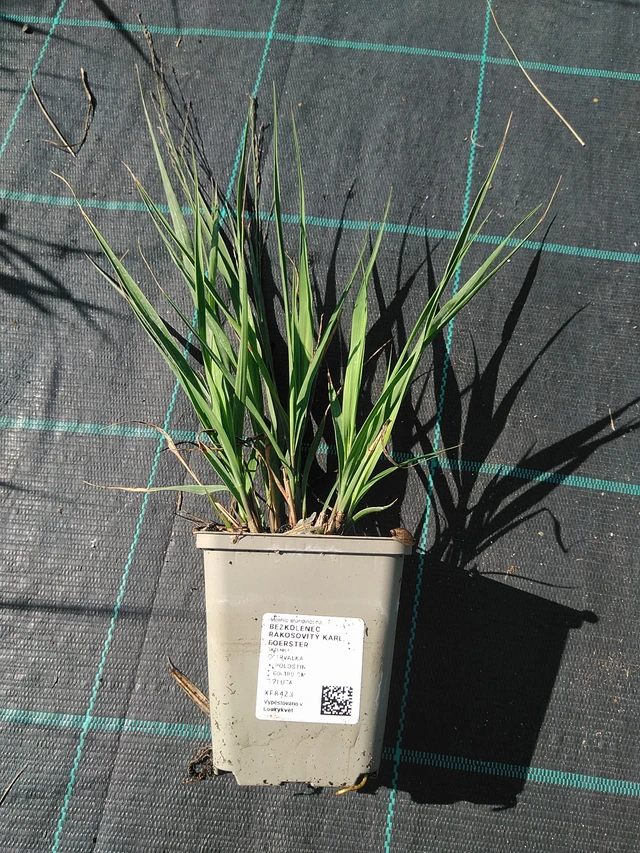
Molinia arundinacea Karl Foerster, Loukykvět

Molinia arundinacea

Molinia arundinacea Karl Foerster

Molinia forms low, hemispherical clumps of narrow leaves, from which strikingly tall flower stalks emerge in early summer. These can grow up to 180 cm and, like the leaves, change color in autumn to beautiful golden-yellow shades. The cultivar Karl Foerster stands out for its rigidly upright growth. Show full description

Vyprodáno

Seedling

Vyprodáno
 za where

Barva květu

Žlutá, hnědá

Barva listu

Žlutá, zelená

Druh

Trvalka

Mrazuvzdornost

-34
?
Do jaké teploty daná rostlina odolává mrazům.

Mrazuvzdornost (zóna)

4a (-34.4 °C až -31.7 °C)

Náročnost

Začátečník

Půda

Hlinitá, humózní, jílovitá

Spon

1-1 m
?
Doporučený spon pro pěstování.

Spon: Počet na m2

1

Stanoviště

Slunce, polostín

Vhodné k řezu

Ano

Vláha

💧💧

Výška

60-180 cm
1
2
3
4
5
6
7
8
9
10
11
12
Kvetení
August
October

Recommended products

Calamagrostis acutiflora

A clumping, upright-growing grass. It sprouts very early. Decorative for its overall vertical habit and delicate flower panicles that bloom silvery-grey, turn yellow in summer, and transition to sandy beige. It adorns the garden until winter. You can plant it in mixed beds or use it as an element that rhythmically divides space. Useful for bouquets and drying.
Sold Out
V prodeji opět na jaře 2026

Deschampsia cespitosa

Hair Grass is an undemanding native grass that remains green even in winter. In nature, it grows in meadows and forest clearings. It forms a compact clump of leaves from which delicate thin stems with transparent clouds of flowers emerge. It adapts to more difficult conditions such as dry shade or compacted soil and can even handle waterlogging. Goldschleier has very tiny spikelets in light yellow panicles. The inflorescence forms a fluffy, light yellow cloud above the clump of leaves.
Sold Out
V prodeji opět na jaře 2026

Stipa tenuissima

Stipa flowers captivate in beds and bouquets with their lightness and delicacy. All stipas love full sun and dry, stony, well-drained soil. To make them look as natural as possible in beds, it is good to plant them in several pieces in loose groups along with other drought-tolerant perennials and bulbs. Only then will their stems and inflorescences come alive with the slightest breath of wind. 'Ponny Tails' is a species native to the steppes of Mexico, Texas, and Patagonia. Airy, dense tufts of hair-like, delicate leaves resemble horsehair. The leaves are green, turning straw-colored towards the flowers. It even self-seeds in a suitable location.
Sold Out
V prodeji opět na jaře 2026

Echinacea pallida

A valuable garden and medicinal perennial, native to North America. It blooms in late summer and captivates with long, hanging petals. Its spiky flower heads are an irresistible magnet for butterflies. Lasts 7–10 days in a vase. After the petals are picked, the stems with the central cones can be dried or used as an interesting element in fresh bouquets.
Sold Out
V prodeji opět na jaře 2026

Luzula nivea

A beautiful, delicate woodland grass with evergreen, overwintering leaves and interesting white inflorescences. An intriguing element for spring beds. Flowers are suitable for fresh bouquets and for drying.
Sold Out
V prodeji opět na jaře 2026

Gaura lindheimeri

Gaura is a clump-forming perennial native to Texas and Louisiana. In our climate, it behaves more like a short-lived perennial. It combines beautifully with grasses and adds lightness and airiness to flowerbeds. It is an excellent food source for insects. Tiny, butterfly-like flowers bloom tirelessly from June until the first frosts. For bouquets, we harvest as soon as the first two to three flowers open on the stem. Siskiyou Pink is a beautiful variety with rose-red flowers on slightly arched stems. Less hardy than white-flowering varieties. The red-spotted leaves are also interesting.
Sold Out
V prodeji opět na jaře 2026

Echinacea purpurea

A valuable garden and medicinal perennial, native to North America. The spiky flower cones are an irresistible magnet for butterflies. They last 7–10 days in a vase. After the petals are picked, the stems with the central cones can be dried or used in fresh bouquets as an interesting element. White Swan blooms with milky white flowers with brown-orange centers. The petals are not spread out completely horizontally; they bend slightly downwards.
Sold Out
V prodeji opět na jaře 2026

Eragrostis spectabilis

Muhly grass is native to North America. The leaves of this clumping grass have a warm orange-red hue. But the true magic lies in the clouds of fragrant purplish-pink flower panicles. It excels in group plantings, where it can soften and connect elements. We use it in bouquets for the same effect.
Sold Out
V prodeji opět na jaře 2026

Verbena bonariensis

This South American Verbena species is often grown as an annual here, but in mild winters, it can survive and self-seed. Its sturdy, airy stems beautifully soften perennial beds and add a special touch with their purple color. It perfectly complements steppe plantings with grasses and rose beds.
Sold Out
V prodeji opět na jaře 2026

Anemone hybrida

Anemones belong to the same family as buttercups. With their elegant flowers on long, slender stems, they can brighten and enliven late summer and autumn beds. They stand out against the darker background of shrub groups and will also be grateful for their partial shade. The Czech Perennial Society chose autumn anemones as the perennial of the 2022 season. They last 7 days in a vase. Andrea Atkinson is a delicate autumn anemone cultivar with white petals.
Sold Out
V prodeji opět na jaře 2026

Panicum virgatum

A perennial grass native to the North American prairies. Switchgrass is very adaptable and long-lived. It provides clear structure to flower beds and simultaneously acts as a softening element, especially after its veil-like flowers appear above the clumps of leaves. The cultivar Rehbraun is characterized by fluffy reddish-brown spikes and leaf tips, colored copper and reddish-brown from August.
Sold Out
V prodeji opět na jaře 2026

Echinacea purpurea

A valuable garden and medicinal perennial, native to North America. It blooms in summer with dark purplish-pink flowers. The spiky flower heads are an irresistible magnet for butterflies. Lasts 7–10 days in a vase. After the petals are picked, the stems with the central heads can be dried or used in fresh bouquets as an interesting element. Rubinstern is very similar to the Magnus cultivar; the petals are darker and firmer. As they fade, they gradually lighten and bend downwards.
Sold Out
V prodeji opět na jaře 2026

Sesleria autumnalis

A beautiful lower grass, valued for its early sprouting and long-lasting foliage well into winter. The flowers are rather inconspicuous, beige, and appear in green clumps later in summer and autumn. The leaf color is bright green. A great combination with species such as savory, gaura, or oregano.
Sold Out
V prodeji opět na jaře 2026

Panicum virgatum

A perennial grass native to the North American prairies. Switchgrass is very adaptable and long-lived. It provides clear structure to beds while also acting as a softening element, especially after its veil-like flowers appear above the clumps of leaves. Heavy Metal is characterized by its rigidly upright growth and blue-green, metallic grey-green leaves. The strict austerity is beautifully balanced and softened by the airy inflorescences.
Sold Out
V prodeji opět na jaře 2026

Anemone hybrida

Anemones come from the same family as buttercups. With their elegant flowers on long slender stems, they can brighten and enliven late summer and autumn beds. They stand out against a darker background of shrub groups and will also be grateful for their partial shade. The Czech Perennial Society chose autumn anemones as the perennial of the 2022 season. They last 7 days in a vase. Lorelei has semi-double flowers in a delicate light pink tone.
Sold Out
V prodeji opět na jaře 2026

Achillea millefolium

An original wild perennial with a large distribution area from Europe to Siberia. Suitable for natural and wild plantings. It grows in meadows and dry grassy areas. A very adaptable and undemanding plant, it grows in clumps and spreads by runners. Cutting back after the first bloom will encourage new flowers. For bouquets, harvest when the flowers are fully open. Lasts 10 days in a vase. Summer Pastels features a varied and delicate range of colors from white and vanilla to salmon, brick, and bronze.
Sold Out
V prodeji opět na jaře 2026

Hyssopus officinalis

Hyssop, similar to lavender, is classified as a low woody subshrub. It can be used in similar types of plantings, with roses or in gravel beds of a steppe character. It also has culinary and medicinal uses. A great attraction for bees, bumblebees, and butterflies. Sweet pink flower color.
Sold Out
V prodeji opět na jaře 2026

Knautia macedonica

Chrastavec makedonský je bohatě a dlouze kvetoucí nenáročná trvalka. Jeho divoká forma pochází z Balkánu, kde roste na loukách a v křovinách. V záhonech okouzluje štíhlými vysokými stonky, které nesou pastelově vínové a růžové květy. Hodí se do přírodně pojatých slunných až polostinných záhonů a do lučních kytic. 
Sold Out
V prodeji opět na jaře 2026

Perovskia atriplicifolia

Perovskia are sparsely branched subshrubs, native to regions from Afghanistan to Tibet. They grow in open, sunny, rocky, and stony habitats. Their white-felted shoots and grayish, aromatic leaves are striking. They are suitable for sunny flower beds with other drought-tolerant perennials, where they create interesting structures even in winter months.
Sold Out
V prodeji opět na jaře 2026

Pennisetum alopecuroides

Dochany pochází z východní Asie, kde rostou na loukách a ve světlých lesích. Tvoří polokulovité trsy úzkých listů, které se na podzim, stejně jako květy ještě vybarvují. Jsou vhodné do vázy i k usušení. Kultivar Hameln patří mezi nejspolehlivěji kvetoucí v chladnějších oblastech. Květenství mají zpočátku jemný růžový nádech, pak se přebarvují do žlutohnědé až červenohnědé.
Sold Out
V prodeji opět na jaře 2026

Calamintha nepeta

Nenáročná a skromná trvalka, která vykvétá velkým množstvím drobných kvítků. Kvete rekordně dlouhou dobu po celé pozdní léto a podzim. Tvoří menší kompaktní vzdušné keříky, které vydávají mátově kořenitou vůní. Květy podobné tymiánu lákají včely, čmeláky a motýly. Dobře bude vypadat mezi růžemi i v přírodně pojatých stepních záhonech třeba s nižšími trávami. 
Sold Out
V prodeji opět na jaře 2026

Anemone hybrida

Anemones belong to the same family as buttercups. Their elegant flowers on long, slender stems can enliven and brighten late summer and autumn beds. They stand out against a darker background of shrub groups and will also be grateful for their partial shade. The Czech Perennial Society chose autumn anemones as the perennial of the 2022 season. They last 7 days in a vase. Whirlwind is a historic variety bred in 1887 in the USA. It has semi-double pure white flowers, often with inner curled petals, and a compact, strictly upright growth. The flowers are very durable.
Sold Out
V prodeji opět na jaře 2026
Lze sušit

Echinops bannaticus

Naturally growing from Southern Europe to Turkey and Central Asia, these are decorative and undemanding plants suitable for natural perennial gardens. The spherical flowers attract bees and butterflies. They last a very long time in a vase and look gorgeous in summer bouquets; they are also suitable for drying. Blue Glow has intensely blue flowers.
Sold Out
V prodeji opět na jaře 2026

Salvia nemorosa

This type of sage originally comes from the steppe regions of Central and Eastern Europe. It forms richly flowering small clumps with straight, upright stems. In beds, it looks best in groups. Traditionally, it is planted, for its coinciding blooming period, as an accompaniment to roses. However, it will look equally good in mixed drought-tolerant steppe plantings with grasses. It is an excellent food source for bees. It lasts 7 days in a vase. The cultivar Ostfriesland blooms in a strikingly dark violet-blue color.
Sold Out
V prodeji opět na jaře 2026

Briza media

An undemanding native grass that forms a dense green cover. In May, long stems emerge with delicate, heart-shaped spikelets resembling small hearts. Their movement with the slightest breeze is very striking. It remains beautiful until August or September. It's a good idea to trim it after flowering. It is perfectly suitable for drying.
Sold Out
V prodeji opět na jaře 2026

Deschampsia cespitosa

This undemanding native grass stays green even in winter. In nature, it grows in meadows and forest clearings. It forms a neat clump of leaves, from which delicate thin stems with transparent clouds of flowers emerge. It adapts to more difficult conditions, such as dry shade or compacted soil, and can even handle waterlogging. The flowers of the Schottland cultivar are brown at the beginning of flowering, later turning golden. Leaf clumps grow up to 60 centimeters, flower stalks up to 120.
Sold Out
V prodeji opět na jaře 2026

Achillea millefolium

An original wild perennial with a large distribution area from Europe to Siberia. Suitable for natural and wild plantings. It grows in meadows and dry grassy areas. A very adaptable and undemanding plant, it grows in clumps and spreads by runners. Pruning after the first bloom will encourage new flowers. For bouquets, harvest when the florets are fully open. It lasts 10 days in a vase. Terracotta features ochre, shades of orange and yellow, and grey-green leaves.
Sold Out
V prodeji opět na jaře 2026
Lze sušit

Limonium latifolium

Broadleaf sea lavender, also known as Statice, is a plant originally from the steppe regions of Southern Europe. Leathery leaves form basal rosettes, from which veiled panicles of tiny, light lavender-colored flowers emerge. Perfect for bouquets; for drying, harvest when the flowers are fully colored.
Sold Out
V prodeji opět na jaře 2026

Salvia pratensis

Meadow sage occurs in our country primarily in warmer regions, especially in warmer regions, especially in South Moravia and Northern and Central Bohemia. It grows in sunny meadows, hillsides, and along roads. Its fragrant leaves form a basal rosette, from which several less leafy, branched stems emerge. The inflorescences are composed of striking, lipped flowers that are a great attraction for bees and bumblebees. 'Rose Rhapsody' has light pink flowers.
Sold Out
V prodeji opět na jaře 2026

Cultivation

Tento bezkolenec dává přednost vlhkým půdám s dostakem živin. Dobře poroste na slunci i v polostínu.

The information given is based on our experience, please use it as a guide only. Times may vary depending on the season, climate, location, sowing and transplanting dates and possibly also the conditions in the greenhouse/greenhouse. We always recommend testing how the plant performs in your conditions. Please do not take this as a guarantee.

Show all

Click to view the full growing instructions.

Photos
in time

See how the seedling looks over the course of a year.

Molinia arundinacea Karl Foerster - 31. 10. 2025
31. 10. 2025
Molinia arundinacea Karl Foerster - 10. 10. 2025
10. 10. 2025
Molinia arundinacea Karl Foerster - 11. 9. 2025
11. 9. 2025
Molinia arundinacea Karl Foerster - 19. 8. 2025
19. 8. 2025
Molinia arundinacea Karl Foerster - 4. 8. 2025
4. 8. 2025
Molinia arundinacea Karl Foerster - 21. 7. 2025
21. 7. 2025
Molinia arundinacea Karl Foerster - 10. 7. 2025
10. 7. 2025
Molinia arundinacea Karl Foerster - 24. 6. 2025
24. 6. 2025
Molinia arundinacea Karl Foerster - 9. 6. 2025
9. 6. 2025
Molinia arundinacea Karl Foerster - 13. 5. 2025
13. 5. 2025
Molinia arundinacea Karl Foerster - 8. 4. 2025
8. 4. 2025
Molinia arundinacea Karl Foerster - 3. 4. 2025
3. 4. 2025
Molinia arundinacea Karl Foerster - 2024
2024
Molinia arundinacea Karl Foerster - 2024
2024
Molinia arundinacea Karl Foerster - 2024
2024
Molinia arundinacea Karl Foerster - 2024
2024

More products in category Bezkolenec

Molinia caerulea

A very adaptable grass that grows naturally in pastures and heathlands. It is planted in gardens primarily for its exceptional autumn effect, when the leaves change to golden and orange tones. Heidebraut has brownish-purple inflorescences. During autumn, the stems turn golden and spread in arching, airy fans.
Sold Out
V prodeji opět na jaře 2026

Molinia caerulea

A very adaptable grass that naturally grows in pastures and heaths. It is primarily planted in gardens for its exceptional autumn effect, when its leaves turn golden to orange tones. Heidezwerg is cultivated for its dark purple to purplish inflorescences.
Sold Out
V prodeji opět na jaře 2026

Molinia caerulea

A very adaptable grass that grows naturally in pastures and heathlands. It is planted in gardens primarily for its exceptional autumn effect, when the leaves change to golden and orange tones. Edith Dudszus is grown for its dark purple to black inflorescences.
Sold Out
V prodeji opět na jaře 2026

More products in category Okrasné trávy

Stipa tenuissima

Stipa flowers captivate in beds and bouquets with their lightness and delicacy. All stipas love full sun and dry, stony, well-drained soil. To make them look as natural as possible in beds, it is good to plant them in several pieces in loose groups along with other drought-tolerant perennials and bulbs. Only then will their stems and inflorescences come alive with the slightest breath of wind. 'Ponny Tails' is a species native to the steppes of Mexico, Texas, and Patagonia. Airy, dense tufts of hair-like, delicate leaves resemble horsehair. The leaves are green, turning straw-colored towards the flowers. It even self-seeds in a suitable location.
Sold Out
V prodeji opět na jaře 2026

Sesleria autumnalis

A beautiful lower grass, valued for its early sprouting and long-lasting foliage well into winter. The flowers are rather inconspicuous, beige, and appear in green clumps later in summer and autumn. The leaf color is bright green. A great combination with species such as savory, gaura, or oregano.
Sold Out
V prodeji opět na jaře 2026

Calamagrostis acutiflora

A clumping, upright-growing grass. It sprouts very early. Decorative for its overall vertical habit and delicate flower panicles that bloom silvery-grey, turn yellow in summer, and transition to sandy beige. It adorns the garden until winter. You can plant it in mixed beds or use it as an element that rhythmically divides space. Useful for bouquets and drying.
Sold Out
V prodeji opět na jaře 2026

Pennisetum alopecuroides

Dochany pochází z východní Asie, kde rostou na loukách a ve světlých lesích. Tvoří polokulovité trsy úzkých listů, které se na podzim, stejně jako květy ještě vybarvují. Jsou vhodné do vázy i k usušení. Kultivar Hameln patří mezi nejspolehlivěji kvetoucí v chladnějších oblastech. Květenství mají zpočátku jemný růžový nádech, pak se přebarvují do žlutohnědé až červenohnědé.
Sold Out
V prodeji opět na jaře 2026

Sporobolus heterolepis

Grass native to North American prairie regions. It grows in dense clumps, with delicate, fragrant flower stalks notably rising above the foliage in summer. Best showcased when planted in groups with accompanying perennials.
Sold Out
V prodeji opět na jaře 2026

Deschampsia cespitosa

Hair Grass is an undemanding native grass that remains green even in winter. In nature, it grows in meadows and forest clearings. It forms a compact clump of leaves from which delicate thin stems with transparent clouds of flowers emerge. It adapts to more difficult conditions such as dry shade or compacted soil and can even handle waterlogging. Goldschleier has very tiny spikelets in light yellow panicles. The inflorescence forms a fluffy, light yellow cloud above the clump of leaves.
Sold Out
V prodeji opět na jaře 2026

Deschampsia cespitosa

This undemanding native grass stays green even in winter. In nature, it grows in meadows and forest clearings. It forms a neat clump of leaves, from which delicate thin stems with transparent clouds of flowers emerge. It adapts to more difficult conditions, such as dry shade or compacted soil, and can even handle waterlogging. The Czech cultivar Pálava is valued for its extra-long flowering period from July to October. Compared to other cultivars, its flowers are sterile and do not form any seedlings. It is said to be the most drought-resistant of all Deschampsia.
Sold Out
V prodeji opět na jaře 2026

Sesleria caerulea

Pěchava (Sesleria) is our native grass, growing in warmer regions on rocks and sunny slopes. Its advantages are evergreen leaves when there's enough moisture, and early spring flowering. The leaves are grayish-blue. Its strikingly dark flowers gradually fade to beige. It combines well with spring bulbs.
Sold Out
V prodeji opět na jaře 2026

Pennisetum alopecuroides

Dochany (Pennisetum) originates from East Asia, where it grows in meadows and light forests. It forms hemispherical clumps of narrow leaves that, like the flowers, gain color in autumn. They are suitable for vases and for drying. The cultivar Hameln Gold turns golden-yellow in autumn.
Sold Out
V prodeji opět na jaře 2026

Briza media

An undemanding native grass that forms a dense green cover. In May, long stems emerge with delicate, heart-shaped spikelets resembling small hearts. Their movement with the slightest breeze is very striking. It remains beautiful until August or September. It's a good idea to trim it after flowering. It is perfectly suitable for drying.
Sold Out
V prodeji opět na jaře 2026

Deschampsia cespitosa

This undemanding native grass stays green even in winter. In nature, it grows in meadows and forest clearings. It forms a neat clump of leaves, from which delicate thin stems with transparent clouds of flowers emerge. It adapts to more difficult conditions, such as dry shade or compacted soil, and can even handle waterlogging. The flowers of the Schottland cultivar are brown at the beginning of flowering, later turning golden. Leaf clumps grow up to 60 centimeters, flower stalks up to 120.
Sold Out
V prodeji opět na jaře 2026

Calamagrostis acutiflora

A clump-forming, upright-growing grass. It sprouts very early. Decorative with its overall vertical habit and delicate silvery-grey flower panicles. Striking with its white variegated leaves. It adorns the garden until winter. You can plant it in mixed beds, or use it as an element to rhythmically divide space. Suitable for bouquets and drying.
Sold Out
V prodeji opět na jaře 2026

Briza media

An undemanding native grass that forms a dense green cover. In May, long stems emerge with delicate, heart-shaped spikelets resembling small hearts. Their movement with the slightest breeze is very striking. It remains beautiful until August or September. It's a good idea to trim it after flowering. It is perfectly suitable for drying.
Sold Out
V prodeji opět na jaře 2026

Deschampsia cespitosa

This undemanding native grass stays green even in winter. In nature, it grows in meadows and forest clearings. It forms a neat clump of leaves, from which delicate thin stems with transparent clouds of flowers emerge. It adapts to more difficult conditions, such as dry shade or compacted soil, and can even handle waterlogging. Tardiflora is, after Pálava, one of the most profusely flowering Deschampsia. It blooms a little later than others.
Sold Out
V prodeji opět na jaře 2026

Chasmanthium latifolium

Northern sea oats (Chasmanthium latifolium) originates from the eastern part of North America, where it grows in bright, moist forests. The flat spikelets hang from arching, pendulous stems and change colour from beige to pink, eventually taking on a warm copper tone. The leaves are fresh green and turn golden yellow in autumn. Besides being used fresh, it is also well-suited for drying.
Sold Out
V prodeji opět na jaře 2026

Luzula nivea

A beautiful, delicate woodland grass with evergreen, overwintering leaves and interesting white inflorescences. An intriguing element for spring beds. Flowers are suitable for fresh bouquets and for drying.
Sold Out
V prodeji opět na jaře 2026

Pennisetum alopecuroides

Pennisetums originate from East Asia, where they grow in meadows and light forests. They form hemispherical clumps of narrow leaves which, like the flowers, gain color in autumn. They are suitable for vases and for drying.
Sold Out
V prodeji opět na jaře 2026

Muhlenbergia reverchonii

A beautiful delicate grass native to Oklahoma and Texas. It has narrow, grey-green leaves. The flowers bloom in fluffy clouds of pink, creating the impression of a light mist over the flowerbed. Also beautiful in bouquets.
Sold Out
V prodeji opět na jaře 2026

Deschampsia cespitosa

This undemanding native grass stays green even in winter. In nature, it grows in meadows and forest clearings. It forms a neat clump of leaves, from which delicate thin stems with transparent clouds of flowers emerge. It adapts to more difficult conditions, such as dry shade or compacted soil, and can even handle waterlogging. Tauträger forms airy and upright clumps.
Sold Out
V prodeji opět na jaře 2026
Novinka

Pennisetum

A fast-growing ornamental grass with strikingly colored dark burgundy leaves. It blooms from July to October with pink to burgundy spikes that gradually fade to beige. Interesting not only for its flowers, but also for its overall habit and striking contrasting color.
Sold Out
V prodeji opět na jaře 2026