
Liatris spicata
Liatris Kobold
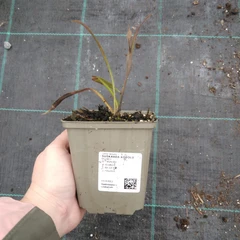
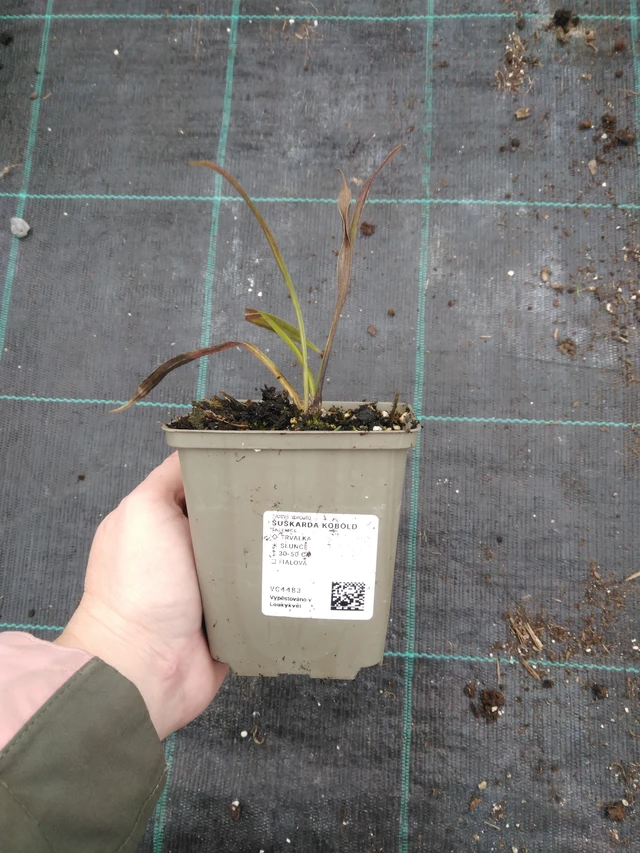
Seedling


Attracts pollinators 🐝
Difficulty
Diseases
Edible
Flower color
Flower color: Shade
Foliage color
Fragrant (aromatic) 👃
Frost resistance
Hardiness zone
Height
Moisture
Pests
Position
Soil
Spacing
Spacing: Plants per m²
Species
Suitable for cutting
Suitable for drying
Recommended products

Liatris spicata
Liatris Floristan White

Liatris spicata
Liatris Floristan Violett

Achillea millefolium
Yarrow Lilac Beauty

Helleborus orientalis
Hellebore Double Ellen Yellow Spotted

Echinops bannaticus
Globe thistle Blue Glow

Lavandula angustifolia
Lavender Rosea

Achillea millefolium
Yarrow Summer Pastels

Knautia macedonica
Knautia Red Knight

Veronicastrum virginicum
Culver's Root Album

Leucanthemum
Daisy Christine Hagemann

Nepeta racemosa
Catmint Walker’s Low

Helleborus orientalis
Hellebore Double Ellen White

Rudbeckia fulgida
Rudbeckia Goldsturm

Salvia nemorosa
Woodland Sage Schneehügel

Centaurea montana
Mountain Cornflower

Salvia nemorosa
Woodland sage Schwellenburg

Briza media
Quaking grass Limouzi

Perovskia
Russian Sage Blue Spire

Echinops bannaticus
Globe thistle Star Frost

Nepeta faassenii
Catmint Six Hills Giant

Sedum spectabile
Sedum Matrona

Lobelia fulgens
Lobelia Queen Victoria

Leucanthemum vulgare
Daisy Maikönigin

Anemone hybrida
Japanese anemone Lorelei

Achillea millefolium
Yarrow Cerise Queen

Aquilegia vulgaris
Columbine White Barlow

Delphinium hybrida
Larkspur Benary’s Pacific Black Knight

Delphinium hybrida
Larkspur Benary’s Pacific Galahad

Salvia pratensis
Meadow Sage Rose Rhapsody

Calamintha nepeta ssp. nepeta
Calamint
Cultivation
If you are looking for an original and maintenance-free perennial for sunny places, growing Liatris will definitely thrill you. Since we deliver high-quality and well-rooted seedlings in pots, you don't have to worry about demanding germination and you can confidently plant the plant directly into the flowerbed. It thrives best in a hot, sunny location and permeable, humus-rich soil. It also excellently tolerates drier soil conditions, but you must be careful about places where water stands in the autumn or spring. In waterlogged, heavy clay soil, its tuberous roots could quickly rot. Plant the plants with a spacing of twenty-five centimeters apart, which makes roughly nine to twelve pieces per square meter. In this spacing, they will not crowd each other and will create a dense but airy stand.
Caring for Liatris throughout the year does not require any expert knowledge, making it an ideal choice for beginners. For successful cultivation, stick to a few basic rules:
Watering: Supply water to the plant sensibly; medium watering is absolutely ideal. Once the seedling roots well, it can handle even longer periods without rain.
Fertilizing: For an abundant set of flowers, you can add a little common garden compost in the spring, but further fertilizing during the summer is no longer necessary.
Support and maintenance: The inflorescences unusually open from the top down, and the sturdy stems do not need any support.
Plant health: Liatris is also very resilient; it does not struggle with any unpleasant diseases. The only enemy in the garden might be the field vole.
Wintering this hardy herb is completely carefree. Liatris excels in extreme frost resistance, easily withstanding temperatures dropping to minus thirty-four degrees Celsius. In the fall, you don't have to worry about any cutting; on the contrary, leave the dry stems with the faded spikes in the flowerbed. They create a very engaging winter effect, especially when a frosty morning decorates them with ice crystals. Spring cleanup then consists only of cutting the dead above-ground parts close to the ground, thereby clearing the way for fresh green leaves. If you wish to grow Liatris in a container, that is also a great choice. Just choose a larger pot with drainage holes at the bottom and ensure more regular watering, as the substrate on a sunny balcony dries out much faster than open soil in the garden.
The information given is based on our experience, please use it as a guide only. Times may vary depending on the season, climate, location, sowing and transplanting dates and possibly also the conditions in the greenhouse/greenhouse. We always recommend testing how the plant performs in your conditions. Please do not take this as a guarantee.
Do I need to protect the Liatris for the winter?
How far apart should I plant the seedlings?
Will it need support?
How often does the Liatris need watering?
Frequently asked questions
Characteristics
Does this plant attract beneficial pollinators to the garden?
What does the term "winter interest" mean for this plant?
When does Liatris bloom and what makes it special?
Is Liatris poisonous or dangerous for children and pets?
Planting site
Where is the best place to plant Liatris?
What kind of soil does this plant need?
Basic information
How should I care for the Liatris seedling after it arrives?
Propagation
Is there a way to propagate this perennial if it doesn't self-seed?
Diseases & pests
Is Liatris prone to any diseases or pests?
Harvest
Are these flowers suitable for cutting and placing in a vase?
Troubleshooting
Why did my plant die unexpectedly over the winter?
Photos in time
See how the seedling looks over the course of a year.


More products in category Blazing star
Liatris spicata
Liatris Floristan Violett

Liatris spicata
Liatris
Liatris spicata
Liatris Floristan White
More products in category Perennials

Alchemilla mollis
Lady's mantle Irish Silk
Achillea millefolium
Yarrow Summer Pastels

Verbena bonariensis
Verbena

Salvia nemorosa
Woodland Sage Caradonna

Perovskia atriplicifolia
Russian Sage

Gaura lindheimeri
Gaura Siskiyou Pink

Echinacea purpurea
Coneflower Rubinstern

Echinacea pallida
Echinacea pallida

Salvia nemorosa
Woodland Sage Ostfriesland

Eryngium planum
Sea Holly

Echinacea purpurea
Coneflower Magnus

Calamintha nepeta
Calamint Blue Cloud
Rudbeckia fulgida
Rudbeckia Goldsturm
Calamintha nepeta ssp. nepeta
Calamint

Gaura lindheimeri
Gaura Summer Breeze

Salvia nemorosa
Woodland Sage Amethyst
Leucanthemum vulgare
Daisy Maikönigin

Achillea millefolium
Yarrow Terracotta

Perovskia atriplicifolia
Russian sage Little Spire
Salvia nemorosa


