Ireland
🌷 Pre-orders for bulbs are in full swing! Check out this year's selection. 🌷
Ireland
🌷 Pre-orders for bulbs are in full swing! Check out this year's selection. 🌷
Goat's beard Porzellan, Loukykvět

Aruncus aethusifolius

Goat's beard Porzellan

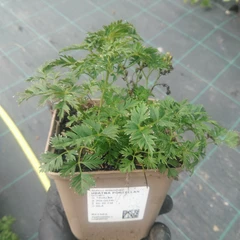
Aruncus aethusifolius 'Porzellan' represents a perfect solution for livening up darker places where other plants might not thrive. It is a very undemanding and long-lived perennial that does not suffer from diseases or pests, and even a complete beginner can manage its care. It features a low growth of around 35 centimeters and dense foliage, thanks to which it works wonderfully as groundcover greenery in smaller groups. White airy flowers appear in early summer and bring a delicate texture to the flower beds, similar to astilbes. The plant loves partial shade and plenty of moisture, so it will thrive near water features or in shady rockeries. The seedling is fully frost-hardy, and you can boldly use its flowers in a vase, where they stay fresh and add lightness to the arrangement. Show full description

Seedling

Květináč K9 (9×9×9,5 cm)
Seedling
Seedling
Seedling
1-2 kusy
3,89/ks
3-8 kusů
3,49/ks
9-17 kusů
3,09/ks
18+ kusů
2,89/ks
Watch availability
Skladem 0 ks

Attracts pollinators 🐝

Ano

Difficulty

Beginner

Diseases

Disease-free 🙂

Edible

Ne
?
Information on whether the plant is edible.

Flower color

White

Flower color: Shade

Cream

Foliage color

Orange, green, red

Fragrant (aromatic) 👃

Ne

Frost resistance

-34
?
The temperature down to which the plant is frost hardy.

Hardiness zone

4a (-34.4 °C to -31.7 °C)

Height

35-40 cm

Moisture

💧💧

Pests

Pest-free 🙂

Position

Partial shade, shade

Soil

Loamy, humus-rich, well-drained

Spacing

35-35 cm
?
Recommended planting spacing.

Spacing: Plants per m²

9-12

Species

Perennial

Suitable for cutting

Ano

Suitable for drying

Ne
1
2
3
4
5
6
7
8
9
10
11
12
Flowering
May
June

Recommended products

Cupid's Dart Alba, Loukykvět

Catananche caerulea

Silvery bracts and pure white flowers make Cupid's dart 'Alba' an unmissable beauty for drought-tolerant beds. Although its botanical name carries the epithet 'blue', this cultivar will delight you with its radiant whiteness, which stands out beautifully above clumps of grayish-green leaves. It is a plant native to the Mediterranean, so for happy growth, it requires plenty of sun and, most importantly, well-drained, sandy soil. In our conditions, it behaves as a short-lived perennial, but in a suitable spot, it gladly self-seeds and renews itself. A great advantage of Cupid's dart is its versatility for florists. Its strong stems make it predestined for cutting into summer bouquets, lasting about a week, and thanks to the interesting texture of its flowers and buds, it is also excellent for dried arrangements and winter decorations.
2,79
More from 1,99
In Stock s doručením od 31. 8. 2026
Hellebore Double Ellen Picotee, Loukykvět

Helleborus orientalis

Hellebores are evergreen perennials that form slowly spreading clumps of leathery, dark green leaves. The stems usually carry four to five flowers. They bloom very early, as early as late winter and early spring. They can be used in a vase only after conspicuous seed pods form in the center of the flower and the flower matures. Picked earlier, they tend to wilt and the stems cannot hold the flower upright. All parts of the plant are poisonous. The semi-double flowers of the Double Ellen Picotee hellebore take on white and light pink hues with a purplish-burgundy edging.
4,79
More from 4,69
In Stock
Sweet Rocket Violet, Loukykvět

Hesperis matronalis

Hesperis matronalis, commonly known as sweet rocket, is popular for its rich inflorescences in purple and lilac shades, which appear from May to July. This robust plant grows up to one meter tall and functions in gardens as a short-lived perennial or biennial. Its flowers are a magnet for pollinators, especially nocturnal ones, which are attracted by its specific fragrance that intensifies after dark. It looks very natural in flowerbeds and perfectly complements perennial compositions, where it often self-seeds in suitable spots. If you love creating floral arrangements, sweet rocket will not disappoint you. We cut the stems the moment the first blooms open, and they will bring us joy in a vase for up to a week. A specific feature of this plant is that even after cutting, the stems can still grow slightly in water, which adds an interesting dynamic to bouquets.
2,79
More from 1,99
Coming Soon
Giant scabious, Loukykvět

Cephalaria gigantea

Giant scabious is an imposing solitary perennial that will bring a striking vertical structure and natural wild charm to the garden. It comes from the mountain meadows of the Caucasus, which dictates its growing requirements. From the delivered seedling, a highly noticeable plant with a massive, sparsely branched growth will quickly grow in full sun or partial shade and humus-rich loamy soil. Given its dimensions, we recommend planting one piece per square meter. It commonly reaches a height of up to two and a half meters, yet it needs no support at all. From June to August, it forms scabiosa-like flowers in pastel yellow to lime colors on long stems. This creates a very effective contrast between the relatively massive bulk of green leaves and the airy, wiry stems with small flower heads. It resists frosts down to minus thirty-four degrees without any problems, does not suffer from diseases or pests, and easily self-seeds. It is a highly attractive lure for bees and other pollinators. The unusual flowers are perfectly suited for cutting; they last about five days in a vase. The faded inflorescences are also interesting, useful for drying and floristry purposes. If you leave them in the flower bed, they will provide a beautiful winter effect.
3,79
More from 2,89
In Stock s doručením od 24. 8. 2026
Aster Schneetanne, Loukykvět

Aster ericoides

Fine tiny leaves and well-branched long stems with a large number of tiny star-shaped flowers make this Aster an ideal autumn cut flower. In beds, it serves as a fluffy delicate filler and brightens up the garden after summer perennials have finished blooming. It will look good in combination with roses and in wild plantings with grasses. It is important for bees and butterflies as the last pasture before winter. It lasts 7 to 10 days in a vase. 'Schneetanne' is an old reliable, white-flowering variety bred by Karl Förster.
2,99
More from 2,09
In Stock
Rudbeckia Henry Eilers, Loukykvět

Rudbeckia subtomentosa

Rudbeckia Henry Eilers is an extraordinary perennial that will bring the magic of late summer and the wild North American prairies into the garden. As a native species, it grows wild on sunny plains, so even here it thrives best in full sun in loamy, clayey, and well-drained soil. You will receive a grown seedling in a pot from us, which you simply transplant straight into the flower bed. It is a very reliable and long-lived plant that does not suffer from diseases or pests and easily handles harsh frosts down to minus twenty-eight degrees. Even complete beginners can playfully manage caring for it. The Henry Eilers cultivar, named after its discoverer, catches the eye at first glance. Bright yellow petals, which are unconventionally rolled into narrow tubes, grow out of prominent brown centers. The flowers on sturdy stems grow over one meter tall and do not need any support. In the garden, this rudbeckia is perfectly suited for prairie plantings alongside ornamental grasses or in country gardens, where its flowers attract bees and butterflies. Florists love using it for cutting. We cut the stems for a vase as soon as the flowers open, and they will bring you joy for seven to ten days. The faded dark cones look great in dry arrangements, and if you leave them in the flower bed, they will create a beautiful spectacle during the winter, especially when covered in frost.
3,89
More from 2,89
In Stock
Patrinia scabiosifolia, Loukykvět

Patrinia scabiosifolia

Patrinia is originally a wild East Asian perennial and herb, similar in appearance to our valerian. However, its flowers are chrome yellow, and the leaves resemble those of scabious. An interesting effect is the reddish coloring of the leaves in autumn. It combines beautifully with late summer and autumn perennials as well as grasses. It has its uses in traditional Chinese medicine. Due to its long vase life, it is excellent for cutting. It is also attractive to butterflies and bees and remains interesting even after flowering.
2,79
More from 1,99
In Stock posledních 67 kusů
Goat's beard Bronze, Loukykvět
New

Aruncus aethusifolius

Goatsbeard 'Bronze' is a small gem for shady corners that you will fall in love with for its changeable coloring and fine texture. This tiny perennial originally comes from Korean mountain slopes and rocky stream banks, where it naturally seeks out moister and cooler places. Unlike its massive relative, the standard goatsbeard, it grows to very compact dimensions, resembling more of a finely cut fern or a miniature astilbe. In the garden, it is perfectly suited as an underplanting beneath trees and shrubs, in rockeries located in partial shade, or as an elegant border for shady beds. Thanks to its low growth and dense habit, it works excellently as a groundcover plant that reliably suppresses weeds and keeps the soil moist. The 'Bronze' cultivar truly lives up to its name, especially in spring and autumn, when its finely divided leaves turn into gorgeous bronze and reddish hues. In summer, the color changes to deep green, forming a perfect dark background for the creamy-white inflorescences. These fluffy panicles appear in June and July, bringing lightness and airiness to the planting with their structure. The flowers are also suitable for cutting into smaller vases, where they stay fresh for several days and add a gentle touch to arrangements. It is an exceptionally undemanding and frost-hardy perennial that does not suffer from diseases or pests, making it an ideal choice even for novice growers who want to liven up the shady parts of their garden.
3,89
More from 2,89
In Stock
Goldenrod Romantic Glory, Loukykvět

Solidago canadensis

The 'Romantic Glory' goldenrod is a highly attractive and completely undemanding perennial that will bring a flood of soft colors to your late summer and autumn beds. Its original wild ancestors come from North America, where they grow in sunny and open spaces. This modern garden cultivar has retained the indomitable hardiness of its ancestors, but unlike them, it is not invasive and does not spread uncontrollably around the garden. It thrives excellently in full sun in well-drained loamy soil, and even complete beginners will easily manage its care. It does not suffer from any diseases or pests and handles even severe frosts without difficulty. It forms sturdy, upright stems up to one meter tall, which do perfectly well without any support. From August to October, it is covered with delicate pastel yellow flowers that are literally a magnet for bees, bumblebees, and butterflies. The customer will receive from us a grown seedling in a pot, which just needs to be transplanted straight into the flower bed. Goldenrod is specially bred for cutting and is highly sought after by florists. For harvesting into summer and autumn bouquets, you can use both fully blooming plants and stems with still-closed buds. They will stay fresh in your vase for approximately ten days. If you do not harvest it, it also serves beautifully for drying into winter decorations, or it creates a beautiful winter effect in the bed when its silhouette is covered by frost. Moreover, the pastel yellow shade of the 'Romantic Glory' variety combines exceptionally well with other colors, and interestingly, its flowers are even edible.
2,79
More from 1,99
In Stock
Coneflower Hula Dancer, Loukykvět

Echinacea pallida

The pale coneflower originally comes from the vast and sunny North American prairies, where it grows as a hardy and long-lived perennial. The Hula Dancer cultivar brings softness and elegance to gardens thanks to its pastel pink to white petals, which hang gracefully downwards and resemble dancing figures when blown by the wind. You will receive from us a grown seedling in a pot, which you just need to transplant into loamy or sandy well-drained soil in a sunny location. The coneflower is completely undemanding, easily handles severe frosts, and is avoided by most diseases and pests. During the summer, it blooms on sturdy stems about eighty centimeters high, and its fragrant, prickly centers reliably attract pollinators from far and wide. It fits perfectly into naturally styled and gravel flower beds, where it finds use alongside grasses and other sun-loving species. The flowers are also edible and are perfectly suited for summer bouquets. Harvest them fully open, and they will bring you joy in a vase for up to ten days. The flower cones without petals look very original in arrangements, and you can also easily dry them for winter decorations. In the flower bed, it pays to leave a few stems over the winter, because the snow-covered cones create a wonderful spectacle.
2,99
More from 2,09
Coming Soon
Milk Parsley, Loukykvět

Selinum wallichianum

Milk parsley originates from the distant regions of the Himalayas and Nepal, where it grows as a long-lived and hardy perennial. It stands out with exceptionally decorative, finely pinnate leaves of a fresh green color, which at first glance resemble a tiny fern. These leaves form rich basal clumps, from which sturdy reddish stems grow during July and August, reaching a height of up to one hundred and twenty centimeters. At their tops, fluffy white umbels of flowers up to twenty centimeters wide open, bringing softness and lightness to the flower beds. You will receive a grown seedling in a pot from us, which you simply transplant into the garden, where it will soon become a prominent feature from spring to autumn. In the garden, it is best suited to a sunny location and regular, well-drained soil. It is an absolutely undemanding plant that is avoided by pests and diseases, so even complete beginners can easily handle its cultivation. Milk parsley handles Czech winters without difficulty and tolerates frosts down to minus twenty-three degrees Celsius. Because it is a more vigorous species, we recommend maintaining a spacing of around eighty centimeters when planting. In perennial beds, it perfectly complements other sun-loving species and ornamental grasses, to which it adds a natural meadow touch. In addition, the wide white flowers act as a reliable lure for bees and other beneficial insects from the wide surroundings during the summer. If you like to create fresh bouquets, milk parsley will certainly please you in the summer months. Its striking inflorescences on sturdy reddish stems bring a beautiful meadow character to vases and add airy volume to every floral arrangement. It is best to cut the flowers for a vase early in the morning or in the evening when the tiny little flowers are fully open. With regular changes of clean water, they will stay fresh at home for seven to ten days and retain their radiant color. Experienced florists like to dry these flowers for winter decorations, while they also look interesting as original greenery in bouquets, for which you can cut its fine leaves from as early as spring.
4,29
More from 2,99
Unavailable
Pro rok 2026 nedostupné
Coneflower Mellow Yellows, Loukykvět

Echinacea purpurea

A valuable garden and medicinal perennial, native to North America. The spiky central discs are an irresistible attraction for butterflies. They last 7–10 days in a vase. After removing the petals, the stems with the central discs can be dried or used in fresh bouquets as an interesting feature. Flowers in shades of yellow.
2,99
More from 2,09
In Stock s doručením od 7. 9. 2026
Baby's breath Bristol Fairy, Loukykvět

Gypsophila paniculata

Baby's breath 'Bristol Fairy' is an absolute classic that you might know from many bouquets under the folk name bridal veil. Originally a plant from the sandy steppes and slopes of southern Europe and central Asia, it is accustomed to full sun and well-drained, even poorer soil. It has been grown in botanical gardens since the 18th century and became domesticated in private ones a century later. Thanks to its origin, it handles drought excellently and does not require too much care, it just cannot stand winter wetness. In the garden, it creates a fluffy white cloud that perfectly complements other drought-tolerant perennials or ornamental grasses in modern steppe plantings. For florists, baby's breath is an indispensable material. The 'Bristol Fairy' cultivar stands out with a large number of fully double, pure white flowers that add lightness to any arrangement. The stems are sturdy and stay fresh for a long time in a vase. If you don't use them all fresh, you can easily dry them. Just hang them upside down in a dark and ventilated place. Once dried, they will retain their color and shape and make a great display in dried arrangements or wreaths all winter long. It is a long-lived perennial that will last for many years in one place.
3,89
More from 2,89
In Stock s doručením od 24. 8. 2026
Catmint Dawn to Dusk, Loukykvět

Nepeta grandiflora

Large-flowered catmint comes from the Caucasus and Eastern Europe, where it naturally grows in open meadows and pastures. It is a vigorously and uprightly growing clumping perennial that will bring a pleasant aromatic scent to the garden. It thrives best in full sun or light partial shade, in well-drained loamy-sandy soil. It is an absolutely undemanding plant that does not suffer from diseases or pests, requires no support, and playfully handles even severe frosts down to -34 °C. Therefore, even complete beginners can easily manage its care. The Dawn to Dusk cultivar stands out with its delicate flowers in shades of light and old rose. In the garden, it grows to a height of about one meter and reliably attracts bees and other pollinators. It is excellently suited for flowerbeds as a traditional companion to roses, but it also fits beautifully into wilder meadow compositions with ornamental grasses. It blooms profusely from June to September. After the first wave of blooming, we recommend cutting the plant back, which will encourage further growth and the catmint will bloom once more. Furthermore, its flowers are edible and you can successfully cut them for summer bouquets.
2,99
More from 2,09
In Stock s doručením od 31. 8. 2026
Snowberry Magical Temptation, Loukykvět

Symphoricarpos doornsbosii

These snowberries are specially bred for floristry purposes. Their shoots are upright, sufficiently long and strong, and carry a rich abundance of flowers and fruits. Besides using them in bouquets, we can plant them like other snowberries in shrub groups, as lower hedges, or in mixed beds with taller perennials and grasses. The flowers are good pasture for bees. The fruits are poisonous. They bloom later in late spring and form fruits in late summer.
6,29
More from 4,69
Unavailable
Pro rok 2026 nedostupné
Epimedium Orangekönigin, Loukykvět

Epimedium pubigerum

Epimediums bring true fairytale magic to shady and semi-shady corners of the garden. They are the perfect plant for lovers of detail and observers of subtle variability throughout the season. They are effective with their ethereal flowers and interesting leaves with color variability and almost year-round aesthetic effect. The fine stems can also be used in flower arrangements. Orangekönigin is a proven, profusely flowering variety with soft orange flowers. Its great advantage is its ability to adapt over time even to drier conditions.
3,89
More from 4,09
In Stock
Snowberry Magical Red Riding Hood, Loukykvět

Symphoricarpos doornsbosii

These snowberries are specially bred for floristic purposes. Their shoots are upright, sufficiently long and strong, and carry a rich abundance of flowers and berries. In addition to use in bouquets, we can plant them like other snowberries in shrub groups, as lower hedges, or in mixed beds with taller perennials and grasses. The flowers are good forage for bees. The berries are poisonous. They bloom later in late spring and form berries in late summer.
6,29
More from 4,69
Unavailable
Pro rok 2026 nedostupné
Tartarian statice, Loukykvět
For drying

Goniolimon tataricum

In nature, we find it in steppes on dry pastures and stony slopes of Central and Southern Europe. It is a well-known plant used in floristry. Excellently usable in both fresh and dried states. For drying, we select only stems with fully opened flowers. We hang them flowers-down in a dry, airy, and dark place.
3,29
More from 2,29
In Stock poslední 1 kus
Feather grass Allgäu, Loukykvět

Stipa calamagrostis

Feather grass 'Allgäu' is a reliable ornamental grass that will bring lightness and constant movement to the garden. As a native species, it grows on dry, sunny slopes in Central Europe. Thanks to its origin, it is extremely resilient, loves full sun, and well-drained sandy or loamy soil. It tolerates drought excellently, and even a beginner can easily manage its cultivation. You can simply transplant our grown seedling into your flower bed, and soon you will delight in dense clumps of green leaves. These grow 60 to 80 centimeters tall and require a space of 70 centimeters around them. From June to September, it forms creamy and silver inflorescences changing into beige tones. Feather grass beautifully complements drought-loving perennials and readily self-seeds in a suitable location. The long stalks are excellent for cutting into vases and drying for decorations. It avoids diseases and pests and withstands frosts down to -28 °C. Do not cut it before winter, as the frosted stalks create a wonderful winter effect.
3,89
More from 2,89
In Stock
False indigo Pink Truffles, Loukykvět

Baptisia Decadence

Baptisia originates from North America, belongs to the legume family, and resembles the lupine in appearance. Unlike it, however, it does not suffer from fungal diseases and does not taste as good to slugs. Besides the blue flowers, the large pods are interesting, decorating the plant long after flowering. North American Indians used Baptisia roots to disinfect wounds and lower fever, and leaves to dye fabrics. Patience is most important with Baptisia; it takes some time to fully establish and create a massive root system adapted for surviving long periods of drought and fires. Then it is very long-lived.
4,79
More from 3,59
In Stock s doručením od 24. 8. 2026
Meadow Cranesbill Rose Queen, Loukykvět
New

Geranium pratense

A clump-forming species of geranium. Originally a native perennial with striking blue flowers in the natural species. Upright flowering stems up to 50 cm tall grow from a clump of rich green, deeply cut leaves. In good conditions, it is a hardy and long-lived plant. An exception among the commonly blue-flowering meadow cranesbills. Rose Queen has soft pastel pink flowers with darker veining.
2,99
More from 2,09
Unavailable
Pro rok 2026 nedostupné
Cambridge Geranium Lohfelden, Loukykvět
New

Geranium cantabrigiense

Cambridge cranesbill is an indispensable perennial for anyone looking for a reliable and beautiful ground cover plant. It originally arose by crossing mountain species from the region of southern Europe and the Balkans, and therefore it is naturally very hardy. It will thrive wonderfully in sun and partial shade and is content with regular, well-drained, and loamy soil. It quickly forms dense carpets of aromatic green leaves, which remain green throughout the season in milder winters. The customer will receive a grown seedling in a pot from us, which just needs to be transplanted straight to the prepared spot in the garden. Upright stems with tiny flowers start to grow from the dense foliage from May to July. The Lohfelden cultivar stands out with delicate white flowers decorated with interesting pink veining. It is excellent as a border for walkways or underplanting beneath taller shrubs. Although the plant grows to a height of around thirty centimeters, its flowers are very well suited for cutting into a vase. The cranesbill is completely undemanding, does not suffer from diseases, and easily handles even severe frosts.
2,99
More from 2,09
In Stock
Hellebore Double Ellen Purple, Loukykvět

Helleborus orientalis

Hellebores are evergreen perennials that form slowly spreading clumps of leathery, dark green leaves. Stems usually bear four to five flowers. They bloom very early, as early as late winter and the beginning of spring. They are suitable for vases only after conspicuous seed pods form in the center of the flower and the flower matures. Before that, they tend to wilt and the stems cannot hold the flower in an upright position. All parts of the plant are poisonous. The flowers of Hellebore Double Ellen Purple are semi-double to double, deep purple in color with contrasting white stamens. As the flowers mature, the dark color fades and the edges of the petals remain distinctly colored.
4,79
More from 3,59
In Stock
Persicaria Dark Red, Loukykvět

Persicaria amplexicaulis

This species of Persicaria originates from the Himalayas and China, where it grows in thickets and on mountain meadows along streams at high altitudes. It creates robust clumps of fresh green pointed leaves. Above them, upright, narrow, candle-like inflorescences composed of individual tiny flowers appear from summer onwards. It is a very popular perennial, recently bred into many cultivars and used in Western Europe in larger park and garden arrangements. The cultivar Dark Red stands out for its long and abundant flowering in late summer and good vase life. The flower color is a distinct rich red.
3,49
More from 2,89
Unavailable
Pro rok 2026 nedostupné
Astilbe Europa, Loukykvět

Astilbe japonica

Delicate decorative, long-lived shade-loving perennials with pinnate leaves and magnificent feathery inflorescences. They originate primarily from East Asia, but also from eastern North America. They look best in large-scale plantings. Due to relatively late sprouting, it is good to combine them with early-flowering bulbs. They last 4–10 days in a vase. We harvest as soon as half of the inflorescence is in bloom. They are very sensitive to ethylene released from ripening fruit. Europa blooms light pink.
2,99
More from 2,89
In Stock
Dropseed, Loukykvět

Sporobolus heterolepis

Prairie dropseed originates from the vast North American prairies, where it forms a natural part of the wild and unbridled landscape. This ornamental grass grows in neat and very dense clumps of fresh green leaves, which turn bright yellow shades in autumn. During August and September, delicate clouds of pink and beige flowers hover above the clumps on sturdy stalks, reaching a height of up to seventy centimeters. The flowers also spread a very pleasant and unmistakable fragrance into their surroundings. In the garden, prairie dropseed stands out best when planted in a sunny spot in groups of multiple plants accompanied by other drought-tolerant perennials, with which it will create an impressive steppe scenery. The seedlings do not require any complicated care, they easily handle frosts down to minus twenty-eight degrees, and do not suffer from any diseases or pests. The airy and fragrant inflorescences are also perfectly suited for cutting into summer bouquets, to which they add unusual lightness and texture.
4,29
More from 2,99
In Stock s doručením od 31. 8. 2026
Coneflower Rubinstern, Loukykvět

Echinacea purpurea

A valuable garden and medicinal perennial, originally from North America. It blooms in summer with dark purple-pink flowers. The spiky flower discs are an irresistible lure for butterflies. Lasts 7–10 days in a vase. After plucking the petals, the stems with the central discs can be dried or used in fresh bouquets as an interesting element. Rubinstern is very similar to the Magnus cultivar; the petals are darker and firmer. As they fade, they gradually pale and droop downwards.
2,99
More from 2,09
In Stock
Lady's mantle Irish Silk, Loukykvět

Alchemilla mollis

Alchemilla mollis, known as lady's mantle, is an indispensable perennial for anyone who wants to bring harmony and softness to the garden. Its home is the moister environments of mountain meadows and light forests, making it a very adaptable plant that will survive even severe frosts without problems in our climate. The 'Irish Silk' cultivar is prized for its vitality and abundant blooming, where clouds of tiny, yellow-green flowers float above clumps of gray-green leaves. It is precisely this neutral color that can work wonders in a flower bed – it softens overly sharp contrasts between other flowers and beautifully unifies the entire composition. Besides its ornamental function, lady's mantle also has practical uses. Thanks to its clumping growth and ability to quickly fill in, it is ideal for edging pathways or as an underplanting beneath taller shrubs and roses. Water droplets catch on its leaves, creating a magical spectacle in the garden. If you enjoy making bouquets, you will love lady's mantle as versatile filler greenery that matches almost anything. It will last beautiful for about ten days in a vase, and its inflorescences can also be easily dried without losing too much of their color or shape. Moreover, it is a magnet for pollinators, and its young leaves are even edible, so it also finds use in a natural kitchen.
2,99
More from 2,09
In Stock s doručením od 31. 8. 2026
Yarrow The Pearl, Loukykvět

Achillea ptarmica

This Yarrow grows primarily in damp or wet habitats – wet meadows, springs, banks of watercourses and ponds. The flowers are semi-double with a gray-yellow center. They last 10 days in a vase.
2,79
More from 1,99
Coming Soon

Cultivation

Umístění v zahradě a nároky na půdu

Pro tuto kompaktní trvalku hledejte v zahradě chladnější a vlhčí kouty. Nejlépe se jí bude dařit jako podsadbě pod stromy, keři nebo na stinných skalkách. Vyžaduje stinné či polostinné stanoviště, na přímém slunci by trpěla suchem a úpalem. Půda by měla být kyprá, humózní a hlinitá, s dobrou schopností zadržovat vodu. Pokud máte na zahradě spíše chudou zeminu, před zasazením sazenice do ní zapracujte organickou hmotu, například kompost. Díky svému nízkému vzrůstu (20–40 cm) a hustému růstu funguje skvěle jako půdopokryvná rostlina, která efektivně zakryje prázdná místa a dodá záhonu strukturu podobnou kapradinám s efektním bronzovým zbarvením listů na jaře a na podzim.

Výsadba a celoroční péče

Sazenice sázejte tak, aby krček rostliny nebyl utopen příliš hluboko, ale ani nevyčníval nad povrch. Ideální hustota výsadby je 9–12 rostlin na m², což odpovídá rozestupům cca 35 cm. Zásadním faktorem pro prosperitu udatny je vláha. Půda by měla být stále mírně vlhká, nikoliv však bahnitá. V období sucha nebo při pěstování na sušších místech je nutná pravidelná zálivka. Co se týče údržby, jde o dlouhověkou trvalku, která vás nebude zatěžovat bojem se škůdci či chorobami, neboť je vůči nim přirozeně odolná. Na jaře doporučujeme odstranit staré odumřelé listy z minulé sezóny, aby udělaly místo pro nové, svěží rašení.

Pěstování v květináči a zimování

Udatna Bronze je díky svým miniaturním rozměrům excelentní volbou pro pěstování v nádobách. Pokud se rozhodnete pro tuto variantu, vyberte květináč s odtokovým otvorem a na dno dejte drenážní vrstvu ze štěrku nebo keramzitu, aby kořeny nestály ve vodě. Použijte kvalitní substrát pro trvalky a nádobu umístěte do stínu. Nezapomínejte, že rostliny v květináčích jsou zcela závislé na vaší zálivce a živinách, proto v sezóně pravidelně přihnojujte. Z hlediska mrazuvzdornosti je rostlina extrémně odolná (zóna 4a, snese až -34 °C) a v zemi bez problémů přečká i tuhé zimy bez zakrývání. U rostlin v nádobách je však vhodné na zimu květináč obalit jutou nebo polystyrenem, neboť mráz působí na kořeny ze všech stran intenzivněji než v půdě.

The information given is based on our experience, please use it as a guide only. Times may vary depending on the season, climate, location, sowing and transplanting dates and possibly also the conditions in the greenhouse/greenhouse. We always recommend testing how the plant performs in your conditions. Please do not take this as a guarantee.

Show all

Click to view the full growing instructions.

Frequently
asked
questions

Nemoci & škudci

Vlastnosti

Pěstování

Základní informace

Sklizeň

Množení

Stanoviště

Photos
in time

See how the seedling looks over the course of a year.

Goat's beard Porzellan - 31. 10. 2025
31. 10. 2025
Goat's beard Porzellan - 13. 10. 2025
13. 10. 2025
Goat's beard Porzellan - 10. 9. 2025
10. 9. 2025
Goat's beard Porzellan - 19. 8. 2025
19. 8. 2025
Goat's beard Porzellan - 25. 7. 2025
25. 7. 2025
Goat's beard Porzellan - 17. 7. 2025
17. 7. 2025
Goat's beard Porzellan - 24. 6. 2025
24. 6. 2025

More products in category Goat's beard

Goat's beard Bronze, Loukykvět
New

Aruncus aethusifolius

Goatsbeard 'Bronze' is a small gem for shady corners that you will fall in love with for its changeable coloring and fine texture. This tiny perennial originally comes from Korean mountain slopes and rocky stream banks, where it naturally seeks out moister and cooler places. Unlike its massive relative, the standard goatsbeard, it grows to very compact dimensions, resembling more of a finely cut fern or a miniature astilbe. In the garden, it is perfectly suited as an underplanting beneath trees and shrubs, in rockeries located in partial shade, or as an elegant border for shady beds. Thanks to its low growth and dense habit, it works excellently as a groundcover plant that reliably suppresses weeds and keeps the soil moist. The 'Bronze' cultivar truly lives up to its name, especially in spring and autumn, when its finely divided leaves turn into gorgeous bronze and reddish hues. In summer, the color changes to deep green, forming a perfect dark background for the creamy-white inflorescences. These fluffy panicles appear in June and July, bringing lightness and airiness to the planting with their structure. The flowers are also suitable for cutting into smaller vases, where they stay fresh for several days and add a gentle touch to arrangements. It is an exceptionally undemanding and frost-hardy perennial that does not suffer from diseases or pests, making it an ideal choice even for novice growers who want to liven up the shady parts of their garden.
3,89
More from 2,89
In Stock
Goat's beard Opulenz, Loukykvět
New

Aruncus aethusifolius

Goatsbeard 'Opulenz' represents an ideal choice for livening up the shadier corners of the garden, where it will form a dense and compact mound. This tiny perennial, originally from Korea, is actually a miniature version of our native standard goatsbeard. It grows to a height of only 20 to 30 centimeters and stands out with its finely divided, fern-like leaves, which form a fresh green undergrowth. In May and June, airy panicles of tiny creamy-white flowers, resembling astilbes, rise above the leaves. A great advantage of this undemanding plant is its all-season effect. After blooming, it decorates the flower bed with its interesting structure, and in autumn, its leaves turn beautiful shades of bronze to orange-red. It loves humous and moister soil in partial shade, so it fits perfectly on the edges of beds, in shady rockeries, or as an underplanting beneath shrubs and trees. It is fully frost-hardy and does not suffer from pests or diseases. The inflorescences can also be used in smaller bouquets, adding lightness and elegance.
3,89
More from 2,89
In Stock s doručením od 7. 9. 2026
Goat's beard Charakter, Loukykvět
New

Aruncus aethusifolius

Goatsbeard 'Charakter' is a cute miniature of its better-known and much larger relative, the standard goatsbeard. This tiny perennial comes from the wooded areas of Korea and Japan, where it decorates the undergrowth of trees with its fine, deeply cut leaves resembling ferns. In May and June, airy panicles of creamy-white flowers appear above the compact clump of fresh green leaves. Thanks to its low growth, it is an ideal choice for shady rockeries, bed borders, or as an underplanting beneath taller shrubs, where it reliably suppresses weeds. It is an absolutely undemanding plant suitable even for novice growers, free from pests, and excellently handles even severe frosts. Its inflorescences can be used in small arrangements and retain their shape after drying, making them perfect for dry binding as well. In autumn, it will additionally delight you when its leaves turn beautiful orange to red shades.
3,89
More from 2,89
In Stock
Goat's beard Elegance, Loukykvět
New

Aruncus aethusifolius

Goatsbeard 'Elegance' is a smaller relative of its spectacular sister, the standard goatsbeard, and comes from the moist forests of Korea. This compact perennial is valued in gardens for its neat, clumping growth resembling a fern. The fresh green, finely divided leaves form low mounds, above which airy panicles of creamy-white flowers rise in May and June. It is an ideal plant for shady and semi-shady corners, where the soil does not dry out and remains moist and humous. Thanks to its low growth, it is perfectly suited for the edges of flower beds, shady rockeries, or even containers on north-facing terraces. In autumn, it will additionally surprise you when its leaves turn bronze to orange shades. The inflorescences can also be used in smaller bouquets, adding tenderness and lightness to them.
3,89
More from 2,89
In Stock

More products in category Perennials

Lady's mantle Irish Silk, Loukykvět

Alchemilla mollis

Alchemilla mollis, known as lady's mantle, is an indispensable perennial for anyone who wants to bring harmony and softness to the garden. Its home is the moister environments of mountain meadows and light forests, making it a very adaptable plant that will survive even severe frosts without problems in our climate. The 'Irish Silk' cultivar is prized for its vitality and abundant blooming, where clouds of tiny, yellow-green flowers float above clumps of gray-green leaves. It is precisely this neutral color that can work wonders in a flower bed – it softens overly sharp contrasts between other flowers and beautifully unifies the entire composition. Besides its ornamental function, lady's mantle also has practical uses. Thanks to its clumping growth and ability to quickly fill in, it is ideal for edging pathways or as an underplanting beneath taller shrubs and roses. Water droplets catch on its leaves, creating a magical spectacle in the garden. If you enjoy making bouquets, you will love lady's mantle as versatile filler greenery that matches almost anything. It will last beautiful for about ten days in a vase, and its inflorescences can also be easily dried without losing too much of their color or shape. Moreover, it is a magnet for pollinators, and its young leaves are even edible, so it also finds use in a natural kitchen.
2,99
More from 2,09
In Stock s doručením od 31. 8. 2026
Yarrow Summer Pastels, Loukykvět

Achillea millefolium

An original wild perennial with a large distribution area from Europe to Siberia. Suitable for natural and wild plantings. It grows in meadows and dry grassy places. A very adaptable and undemanding plant, it grows in clumps and spreads by runners. By cutting back after the first flowering, we encourage a set of new flowers. For bouquets, we harvest when the florets are fully open. It lasts 10 days in a vase. Summer Pastels is characterized by a changeable and soft range of colors from white and vanilla to salmon, brick red, and bronze.
3,09
More from 1,99
In Stock
Verbena, Loukykvět

Verbena bonariensis

A verbena species originally from South America. In our country, it is often used as an annual, but in mild winters it can overwinter and reproduce by self-seeding. The firm, airy stems beautifully soften perennial beds and make them special with their purple color. It beautifully complements steppe plantings with grasses and rose beds.
3,29
More from 2,29
Coming Soon
Woodland Sage Caradonna, Loukykvět

Salvia nemorosa

This species of sage originally comes from the steppe regions of Central and Eastern Europe. It forms profusely flowering small clumps with straight upright stems. In flower beds, it looks best in groups. Traditionally, due to the identical flowering time, it is planted as a companion to roses. However, it will look just as good in mixed drought-loving steppe plantings with grasses. It lasts 7 days in a vase. The cultivar Caradonna stands out with a long flowering period and dark, almost black-purple stems with tiny purple flowers and dark purple bracts. If we cut it back after flowering, it will bloom again in late August and September.
2,99
More from 2,09
In Stock s doručením od 31. 8. 2026
Russian Sage, Loukykvět

Perovskia atriplicifolia

Russian sage reliably brings a touch of sunny steppes into the garden and places almost no demands on care. These sparsely branched subshrubs originally come from harsh, rocky areas from Afghanistan to Tibet, where they grow on open sun-drenched plains. Thanks to its origin, it delights in full sun and poor, well-drained sandy soil with minimal moisture. You will receive from us a well-rooted seedling in a pot, which just needs to be transplanted straight to the chosen spot in the flower bed. It does not need support, is avoided by common pests and diseases, and will survive frosts down to minus twenty-eight degrees. It grows up to one hundred and twenty centimeters and forms striking white felted shoots with silvery grey aromatic leaves. From July to October, it blooms with tiny blue-purple flowers that act as a lure for bees and butterflies and are even edible. Russian sage stands out next to drought-tolerant perennials. The flowers are suitable for cutting and drying for winter arrangements. Moreover, the silvery stems will ensure a beautiful winter effect in the flower bed.
2,99
More from 2,09
Coming Soon
Gaura Siskiyou Pink, Loukykvět

Gaura lindheimeri

Gaura Siskiyou Pink is a charming perennial that brings lightness and airiness to the garden. Its original native area is in the warm regions of Texas and Louisiana, which is why it thrives in full sun and well-drained sandy soil. It grows in clumps and from June until the autumn frosts produces tiny raspberry-pink flowers that resemble fluttering butterflies. An interesting detail of this variety is the green leaves with a bronze tint and red spots. It is an absolutely undemanding plant, does not suffer from diseases or pests, and even beginners can handle its care. You will receive a grown seedling in a pot from us, which you simply need to transplant directly into the flowerbed. Here it complements ornamental grasses perfectly and acts as an attraction for bees and bumblebees. Although it grows more as a short-lived perennial in our climate, in a suitable place it reliably self-seeds. Occasional pinching will encourage richer branching. Gaura is excellent for summer bouquets. We cut the stems for a vase as soon as the first two to three little flowers open.
2,99
More from 2,09
Coming Soon
Coneflower Magnus, Loukykvět

Echinacea purpurea

A valuable garden and medicinal perennial, native to North America. It blooms in summer with dark purple-pink flowers. The spiky flower centers are an irresistible attraction for butterflies. They last 7–10 days in a vase. After removing the petals, the stems with the central disks can be dried or used in fresh bouquets as an interesting element. Magnus features distinctive deep pink flowers with an orange-brown center.
2,99
More from 2,09
Coming Soon
Sea Holly, Loukykvět
For drying

Eryngium planum

Sea holly is an indispensable perennial for all lovers of naturally styled gardens. It earned its folk name - male fidelity - in times when it was used in herbal medicine as an aphrodisiac, and its roots were even candied as sweets in France and England. Today, however, you will appreciate it mainly for its low maintenance and unique appearance. Its home is on sunny hillsides and dry meadows, so even in our gardens, it will welcome well-drained, even poorer sandy soil and full sun. It produces upright, sturdy stems topped with blue-purple flowers with prickly bracts, which bring interesting structure and a silvery touch to the flowerbeds. It is literally a magnetic plant for bees, bumblebees, and butterflies, who find a rich food source on it. Floristically, it is extremely valuable, because its flowers are perfectly suited for cutting as well as drying for winter decorations. If you decide not to harvest it, feel free to leave it in the flowerbed all winter. Its silhouette covered in hoarfrost creates a wonderful winter effect. Although it is a short-lived perennial, in a suitable location it reliably self-seeds, so you will enjoy its beauty for many years.
2,79
More from 1,99
Coming Soon
Echinacea pallida, Loukykvět

Echinacea pallida

The pale coneflower is one of the exceptionally interesting prairie perennials of the North American continent. In its natural environment, it grows on open, sunny plains, which is why it thrives best in our gardens in full sun in drier, well-drained soil. You just need to transplant this grown seedling straight into the flower bed, where it will reliably take root. It does not need support, easily withstands severe frosts, and is avoided by common diseases and pests, making it ideal for beginner growers. During June and July, it will reward you with aromatic flowers with unusually narrow and drooping petals in light purple and pink tones. The prominent prickly centers are literally a magnet for bees and bumblebees, and the flowers themselves are surprisingly edible. The plant stands out especially in rustic plantings together with ornamental grasses. Gardeners and florists love it for its versatility. The fresh stems bring joy in a vase for about a week. Moreover, the distinctive central cones hold their shape perfectly, can be perfectly dried for winter decorations, or left in the flower bed, where they will create an eye-catching winter structure under a layer of snow.
2,99
More from 2,09
In Stock
Coneflower Rubinstern, Loukykvět

Echinacea purpurea

A valuable garden and medicinal perennial, originally from North America. It blooms in summer with dark purple-pink flowers. The spiky flower discs are an irresistible lure for butterflies. Lasts 7–10 days in a vase. After plucking the petals, the stems with the central discs can be dried or used in fresh bouquets as an interesting element. Rubinstern is very similar to the Magnus cultivar; the petals are darker and firmer. As they fade, they gradually pale and droop downwards.
2,99
More from 2,09
In Stock
Woodland Sage Amethyst, Loukykvět

Salvia nemorosa

This species of sage originates from the steppe regions of Central and Eastern Europe. It forms profusely flowering small clumps with straight, upright stems. In flower beds, it looks best in groups. It is traditionally planted as a companion to roses due to the matching flowering time. However, it looks equally good in mixed drought-tolerant steppe plantings with grasses. It is an excellent food source for bees. Lasts 7 days in a vase. Amethyst is an elegant variety with long stems and a pink flower color that is unusual for sages.
2,99
More from 2,09
Unavailable
Pro rok 2026 nedostupné
Woodland Sage Ostfriesland, Loukykvět

Salvia nemorosa

This species of sage originates from the steppe regions of Central and Eastern Europe. It forms abundantly flowering small clumps with straight upright stems. In beds, it looks best in groups. Traditionally, it is planted as a companion to roses due to the matching flowering time. However, it will look equally good in mixed drought-loving steppe plantings with grasses. It is an excellent food source for bees. It lasts 7 days in a vase. The cultivar Ostfriesland blooms with a strikingly dark violet-blue color.
2,99
More from 2,09
In Stock
Rudbeckia Goldsturm, Loukykvět

Rudbeckia fulgida

Rudbeckia Goldsturm is a reliable and long-lived perennial that will bring the warm tones of late summer and autumn into your garden. It originally comes from the open plains and prairies of North America, so it delights most in sunny locations with common garden soil, whether it is loamy, humus-rich, or clayey. You will receive from us an already grown seedling in a pot, which you just need to transplant to the chosen spot in the flower bed. It is a completely undemanding plant, does not suffer from diseases or pests, and easily survives severe frosts. The Goldsturm cultivar grows to a height of about seventy centimeters and does not need support. From August to October, it produces a flood of golden-yellow flowers with distinctly dark centers. These edible flowers attract pollinators and fit perfectly into both prairie and rustic plantings. Rudbeckia is also great for cutting, lasting around ten days in a vase. In addition, the distinctive dark centers can be easily dried. If you leave them in the flower bed over the winter, they will provide a wonderful spectacle.
2,79
More from 1,99
In Stock
Gaura Summer Breeze, Loukykvět

Gaura lindheimeri

The charming gaura comes from the sun-drenched plains of Texas and Louisiana and represents exactly the plant that can liven up any drought-tolerant planting. It is a naturally profusely blooming perennial that delights in full sun and well-drained, sandy, and nutrient-poor soil. You will receive from us an already grown seedling in a pot, which will quickly form a vigorous clump after being transplanted into the garden. From early summer until late autumn, it will delight you with a flood of tiny flowers in pure white and delicate pink tones. The flowers gently sway in the breeze and with their appearance resemble a flock of tiny butterflies, which also really like to land on the plant, as do bees and bumblebees. Although gaura is known as a short-lived perennial, thanks to its willing self-seeding, it will last for many years in your garden. Caring for it is completely undemanding, it is avoided by most diseases and pests, and it can handle frosts down to eighteen degrees below zero without any problems. It is often used in mixed borders, where it beautifully softens the overall impression, and perfectly matches various types of ornamental grasses. The Summer Breeze variety is popular for its strong and healthy growth as well as its exceptionally generous set of flowers, which grow to about one meter. If you like to create your own bouquets, do not hesitate to cut gaura for a vase. Harvesting is best done the moment the first small flowers on the stem begin to open. These delicate flowers are not suitable for drying into dried arrangements, but they will beautifully lighten up fresh bouquets.
2,99
More from 2,09
Coming Soon
Calamint Blue Cloud, Loukykvět

Calamintha nepeta

Lesser calamint Blue Cloud is an undemanding and modest perennial that reliably perfumes any sunny garden. Its original homeland is the sunny and dry slopes of Southern Europe, which is why it thrives best here in direct sun in well-drained, sandy, or poorer loamy soil. It handles winter without problems, tolerating frosts down to minus twenty-three degrees. You will receive a grown seedling in a pot from us, which you just need to transplant straight into the flowerbed, where it will very soon form a compact, airy small shrub reaching a height of up to forty centimeters. It does not suffer from any diseases or pests, so even complete beginners can easily handle caring for it. Throughout late summer and into autumn, it blooms with a record number of tiny blue flowers that are so typical of the Blue Cloud variety. The whole plant emits a pleasant minty-spicy scent, and its flowers, which resemble thyme, act as a literal magnet for bees, bumblebees, and butterflies. It will look great among roses or in naturally designed steppe flowerbeds, where it naturally complements lower ornamental grasses. Additionally, both the blue flowers and green leaves are edible, so you can use them to garnish summer dishes. Lesser calamint is also excellently suited for cutting into smaller fresh bouquets, adding a fine structure to them in a vase.
2,79
More from 1,99
In Stock s doručením od 31. 8. 2026
Daisy Maikönigin, Loukykvět

Leucanthemum vulgare

A classic perennial for early summer bouquets and cottage gardens. For bouquets, we harvest flowers with firm, smooth central disks. Then they last 7–10 days in a vase. Maikönigin is an exceptionally abundantly flowering garden form.
2,79
More from 1,99
In Stock
Calamint, Loukykvět

Calamintha nepeta ssp. nepeta

An undemanding and modest perennial that blooms with a large number of tiny flowers. It blooms for a record-breaking length of time throughout late summer and autumn. It forms smaller, compact, airy bushes that release a minty-spicy scent. The thyme-like flowers attract bees, bumblebees, and butterflies. It will look good among roses as well as in naturalistic steppe beds, perhaps with lower grasses. This calamint is generally more vigorous. It differs from other calamints with felted leaves by its record flowering length, stiff and shiny leaves, and also a larger number of flowers that do not form seeds and are therefore maximally durable. Sometimes sold under the cultivar name 'Triumphator'.
2,79
More from 1,99
In Stock posledních 30 kusů
Yarrow Terracotta, Loukykvět

Achillea millefolium

A native wild perennial with a large distribution range from Europe to Siberia. Suitable for natural and wild plantings. It grows in meadows and dry grassy places. A very adaptable and undemanding plant, it grows in clumps and spreads via runners. Cutting back after the first bloom encourages a new set of flowers. Harvest for bouquets when the tiny flowers are fully open. It lasts 10 days in a vase. Terracotta features ochre, shades of orange and yellow, and gray-green foliage.
2,99
More from 2,89
In Stock
Russian sage Little Spire, Loukykvět

Perovskia atriplicifolia

Perovskia are sparsely branched subshrubs, originating from areas ranging from Afghanistan to Tibet. They grow in open, sunny, rocky, and stony habitats. Their white-felted shoots and grayish aromatic leaves are striking. They fit well in sunny flower beds with other drought-loving perennials, where they create interesting structures even in the winter months. Little Spire is a smaller cultivar suitable even for pots with a soil volume of 7 liters or more.
3,49
More from 3,59
In Stock s doručením od 7. 9. 2026
Woodland Sage Schneehügel, Loukykvět

Salvia nemorosa

This species of sage originates from the steppe regions of Central and Eastern Europe. It forms abundantly flowering small clumps with straight upright stems. In beds, it looks best in groups. Traditionally, it is planted as a companion to roses due to the matching flowering time. However, it will look equally good in mixed drought-loving steppe plantings with grasses. It is an excellent food source for bees. It lasts 7 days in a vase. Schneehügel blooms white.
2,99
More from 2,09
In Stock