


Geranium cantabrigiense
Cranesbill Cambridge
Seedling


Attracts pollinators 🐝
Difficulty
Diseases
Edible
Flower color
Flower color: Shade
Foliage color
Fragrant (aromatic) 👃
Frost resistance
Hardiness zone
Height
Moisture
Pests
Position
Soil
Spacing
Spacing: Plants per m²
Species
Suitable for cutting
Suitable for drying
Recommended products

Alchemilla mollis
Lady's mantle Irish Silk

Nepeta racemosa
Catmint Walker’s Low

Calamintha nepeta ssp. nepeta
Calamint

Leucanthemum vulgare
Daisy Maikönigin

Salvia nemorosa
Woodland Sage Schneehügel

Nepeta faassenii
Catmint Six Hills Giant

Verbena bonariensis
Verbena

Geranium sanguineum
Bloody Cranesbill Apfelblüte

Anemone hybrida
Japanese Anemone Whirlwind

Achillea millefolium
Yarrow Lilac Beauty

Knautia macedonica
Knautia Red Knight

Achillea millefolium
Yarrow Summer Pastels

Salvia nemorosa
Salvia Mainacht

Geranium sanguineum
Bloody cranesbill

Perovskia
Russian Sage Blue Spire

Deschampsia cespitosa
Tufted hairgrass Palava

Rudbeckia fulgida
Rudbeckia Goldsturm

Pennisetum alopecuroides
Fountain grass Hameln

Anemone hybrida
Japanese Anemone Serenade

Anemone hybrida
Japanese anemone Lorelei

Phlomis russeliana
Phlomis Russeliana

Geranium oxonianum
Geranium Claridge Druce

Gaura lindheimeri
Gaura

Catananche caerulea
Shoofly plant Blue

Coreopsis verticillata
Coreopsis Moonbeam

Helleborus orientalis
Hellebore Double Ellen White

Lavandula angustifolia
Lavender Rosea

Papaver orientale
Oriental Poppy Royal Wedding

Luzula nivea
Snowy Woodrush

Achillea millefolium
Yarrow Terracotta
Cultivation
Cantabrian cranesbill will arrive to you as a beautifully rooted seedling in a pot, which you can plant straight into its permanent location. This undemanding perennial will thrive best in the sun as well as in light partial shade. A great advantage is its extraordinary adaptability, as it is satisfied with normal, well-drained and loamy soil. It also tolerates drier places excellently, so it finds its use, for example, as underplanting beneath taller shrubs or trees, where other plants often suffer from a lack of moisture. Due to its origin in mountainous areas, it is a very resilient species that even a complete beginner can reliably grow.
When planting in a garden bed, we recommend keeping a spacing of about thirty centimeters, which corresponds to roughly eight to twelve plants per square meter. The plants spread quickly and soon form a dense, continuous carpet of green leaves, which smell very pleasant when rubbed. This dense growth also naturally suppresses unwanted weed growth. If you want to grow cranesbill in pots or window boxes on a terrace, it is an excellent choice. Simply pour a drainage layer at the bottom of the pot to drain excess water and use a high-quality substrate so the roots don't rot unnecessarily.
During the gardening season, the cranesbill will delight you not only with beautiful flowers suitable for cutting, but also with its absolute zero-maintenance nature. It is a reliable and long-lived perennial that is naturally free of diseases and pests, so it requires no chemical treatment. Moreover, from May to July, its flowers act as a huge magnet for bees and other beneficial pollinators. After the main flowering period, you can lightly cut back the entire plant and remove dead leaves. This simple intervention will encourage the formation of new, fresh green leaves and keep the clump in perfect condition.
With the arrival of autumn and winter, you don't have to worry about this plant at all. Cantabrian cranesbill is fully frost-hardy down to very severe frosts around -28 °C and requires no special winter protection in the flower bed. Furthermore, in milder winters, its aromatic leaves remain on the plant and provide a very nice winter effect for the garden. For plants grown in pots, just make sure that the pot does not stand in water during winter. Frozen water in a saucer could cause irreversible damage to the more sensitive roots.
The information given is based on our experience, please use it as a guide only. Times may vary depending on the season, climate, location, sowing and transplanting dates and possibly also the conditions in the greenhouse/greenhouse. We always recommend testing how the plant performs in your conditions. Please do not take this as a guarantee.
How often does this plant need to be watered?
Do I need to prune the geranium in the spring or autumn?
Is the Geranium hardy, and how should I prepare it for winter?
At what spacing should I plant the geranium seedlings?
Can this geranium also be grown in containers on a balcony or patio?
Collections
The product can be found in the following collections.


Perennial Collection with Bulbs and Annual Seeds
Soft Tones for Peonies
A collection of perennials designed for sunny beds and good soil. You can use it just as we suggest, as a classic and time-te…


Perennials, Grasses, and Bulbs Collection
Little Woodland Garden
A selection of plants designed for humus-rich and well-drained soil in light shade. It contains perennials that appreciate wa…


Collection of perennials, grasses, and bulbs
For a Shady Balcony
A collection for planting containers as well as flower beds in fresh partial shade and shade. For all the lucky owners of eas…


Perennial Collection
Under-Tree Perennial Collection
Places under trees are considered the most difficult to solve in a garden. But with our collection of hardy perennials, you c…


Perennial Collection with Bulbs and Annual Seeds
Rich Colors for Peonies
Lupines, irises, columbines, and larkspurs – these are tried-and-true classics that never disappoint when paired with peonies…
Frequently asked questions
Diseases & pests
Does Geranium cantabrigiense suffer from any diseases or pests?
Planting site
What kind of soil does this perennial require?
Will geraniums thrive better in the sun or partial shade?
Characteristics
How fast does it grow and what height can I expect in the flower bed?
Does this plant attract pollinators like bees and butterflies to the garden?
Does the geranium lose its leaves in autumn, or does it stay evergreen?
Basic information
Can I manage growing geraniums even if I am a complete beginner at gardening?
Harvest
Can I use the flowers of this Geranium for a vase bouquet?
Propagation
How can I propagate an established plant in the future?
Troubleshooting
What should I do if brown edges appear on the leaves or they start to wilt?
Photos in time
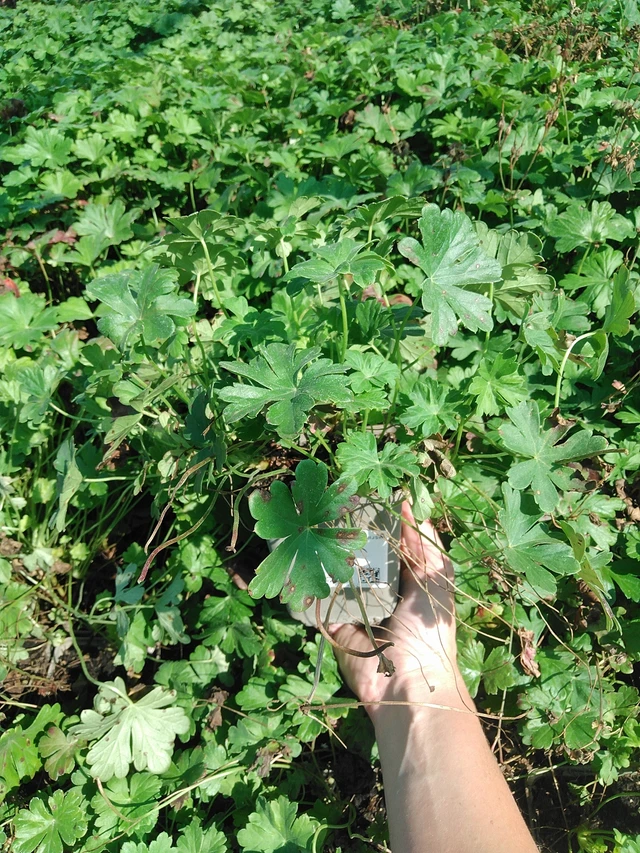
See how the seedling looks over the course of a year.


More products in category Cranesbill

Geranium hybrida
Geranium Rozanne

Geranium cantabrigiense
Cranesbill Biokovo

Geranium sanguineum
Bloody Cranesbill Elsbeth

Geranium oxonianum
Geranium Rose Claire
Geranium sanguineum
Bloody cranesbill

Geranium renardii
Geranium Philippe Vapelle

Geranium pratense
Geranium Summer Skies

Geranium endressii
Geranium Wargrave Pink

Geranium cantabrigiense
Cambridge Geranium Saint Ola
Geranium oxonianum
Geranium Claridge Druce

Geranium pratense
Cranesbill Midnight Reiter

Geranium himalayense
Geranium Johnson's Blue
Geranium sanguineum
Bloody Cranesbill Apfelblüte

Geranium himalayense
Geranium Gravetye

Geranium pratense
Geranium Azure Skies

Geranium pratense
Geranium Cloud Nine

Geranium versicolor
Pencilled cranesbill

Geranium sylvaticum
Wood Cranesbill Album

Geranium phaeum
Cranesbill Samobor

Geranium cantabrigiense
Cambridge Geranium Berggarten
More products in category Perennials
Alchemilla mollis
Lady's mantle Irish Silk
Achillea millefolium
Yarrow Summer Pastels
Verbena bonariensis
Verbena

Salvia nemorosa
Woodland Sage Caradonna

Perovskia atriplicifolia
Russian Sage

Gaura lindheimeri
Gaura Siskiyou Pink

Echinacea purpurea
Coneflower Rubinstern

Echinacea pallida
Echinacea pallida

Salvia nemorosa
Woodland Sage Ostfriesland

Eryngium planum
Sea Holly

Echinacea purpurea
Coneflower Magnus

Calamintha nepeta
Calamint Blue Cloud
Rudbeckia fulgida
Rudbeckia Goldsturm
Calamintha nepeta ssp. nepeta
Calamint
Salvia nemorosa
Woodland Sage Amethyst

Gaura lindheimeri
Gaura Summer Breeze
Leucanthemum vulgare
Daisy Maikönigin
Achillea millefolium
Yarrow Terracotta

Perovskia atriplicifolia
Russian sage Little Spire
Salvia nemorosa


