
Melissa officinalis
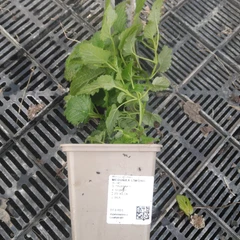
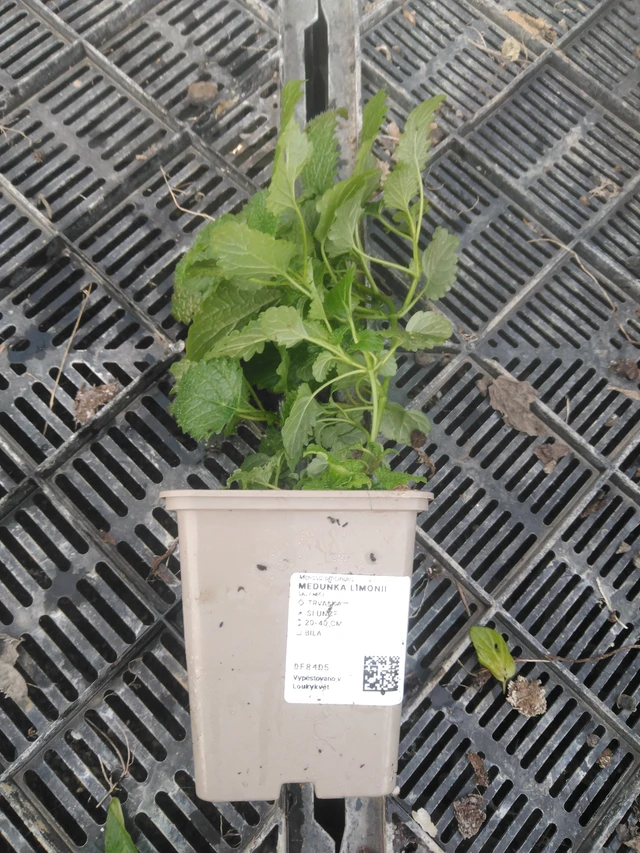
Lemon balm Limonii
Seedling


Attracts pollinators 🐝
Difficulty
Diseases
Edible
Flower color
Flower color: Shade
Foliage color
Fragrant (aromatic) 👃
Frost resistance
Hardiness zone
Height
Moisture
Pests
Position
Soil
Spacing
Spacing: Plants per m²
Recommended products

Centaurea cyanus
Cornflower Tall Double Blue Boy

Cosmos bipinnatus
Cosmos Cupcakes Blush

Ocimum basilicum
Basil Cinamonette

Cosmos bipinnatus
Cosmos Double Click Rose BonBon

Carthamus tinctorius
Safflower Zanzibar

Calendula officinalis
Marigold Pacific Beauty Apricot

Talinum paniculatum
Talinum Jewels of Opar

Centaurea cyanus
Cornflower Tall Double Snowman

Callistephus chinensis
China aster Summer Carnival Mix

Cosmos bipinnatus
Cosmos Palette Brush Mix


Rudbeckia hirta
Rudbeckia Sahara

Zinnia elegans
Zinnia Cresto Peachy Pink

Nigella papillosa
Nigella Midnight

Ocimum basilicum
Basil Mrs Burns

Zinnia elegans
Zinnia Super Cactus Burpee Rose

Saponaria vaccaria
Vaccaria Pink Beauty

Carthamus tinctorius
Safflower Orange Grenade

Bupleurum rotundifolium
Bupleurum rotundifolium

Eschscholzia californica
California Poppy Rose Chiffon


Tropaeolum majus
Nasturtium Troika Orange

Nigella papillosa
Nigella Delft Blue

Calendula officinalis
Marigold Ollioules Orange

Calendula officinalis
Marigold Ollioules Yellow


Zinnia elegans
Zinnia Oklahoma Salmon

Helianthus annuus
Sunflower ProCut Plum

Cosmos bipinnatus
Cosmos Rubenza

Tagetes erecta
Marigold Imperiale Yellow
Cultivation
After unpacking, ideally plant the Limonii lemon balm (Melissa officinalis) seedling in full sun or light partial shade, where its refreshing lemon aroma with a clear hint of lime will fully develop. This herb naturally originates from the warm Mediterranean, so it best suits a well-warmed location protected from strong winds. The proven rule also applies that lemon balm will be grateful for warm, loose, and lime-rich soil. The soil should primarily be loamy, humus-rich, and sufficiently well-draining, so that excess water never sits at the roots. When planting in a flower bed, observe the recommended spacing of approximately 50 centimeters apart. This sufficient space will ensure proper air circulation between the plants, which is always very beneficial for their overall vitality and healthy growth throughout the season.
Although lemon balm is an undemanding perennial, during the drier summer months it requires regular, but always moderate watering. Try to keep the soil slightly moist, but not heavy and waterlogged. At the same time, the plant is also great for popular cultivation in containers and window boxes on balconies or terraces. For successful cultivation in a pot, we recommend following a few basic rules:
- Always place a thick drainage layer of stones or expanded clay at the bottom, which will reliably prevent root rot.
- In containers, the soil dries out noticeably faster, so check the moisture of the substrate regularly.
- For fertilizing, high-quality compost worked into the soil in early spring will be plenty sufficient, or a mild dose of natural organic fertilizer. Since this is a useful herb with edible leaves intended for consumption, definitely avoid any unnecessary chemical products and sprays.
The cultivar Limonii is extremely resilient; during cultivation, it does not suffer from any common diseases and pests naturally avoid it, making it an ideal choice for complete beginners. You will get the most intense flavor if you harvest the aromatic green leaves just before blooming. During the summer, the plant blooms with tiny white flowers, which act as a huge attraction for bees, bumblebees, and other useful pollinators. An intensive cutback after blooming promotes new growth and prevents self-seeding. Moreover, with a cutback, you will beautifully keep the plant in a compact shape of around 20 to 40 centimeters. With the arrival of winter, you do not need to worry at all, because lemon balm is fully frost hardy down to a respectable -34 °C. In autumn, just shorten the dying above-ground part and leave the roots to overwinter in peace outdoors until the next spring.
The information given is based on our experience, please use it as a guide only. Times may vary depending on the season, climate, location, sowing and transplanting dates and possibly also the conditions in the greenhouse/greenhouse. We always recommend testing how the plant performs in your conditions. Please do not take this as a guarantee.
How often does the plant need to be watered?
At what spacing should I plant the seedlings?
Do I need to cover the lemon balm before winter?
I am a complete beginner. Will I be able to grow this herb?
What kind of soil does this herb require?
Frequently asked questions
Planting site
Which spot in the garden should I choose for the seedling?
Can I also grow lemon balm in a pot on the balcony?
Characteristics
What can I use Limonii lemon balm for in the kitchen?
Will this herb attract beneficial insects to my garden?
Is lemon balm safe for children and pets?
Propagation
Can I propagate the plant myself in the future?
Harvest
How can I preserve lemon balm for the winter months?
When and how is the best way to harvest the leaves to ensure they have the most flavor?
Diseases & pests
Is lemon balm prone to any pests or diseases?
Growing
Does the plant need to be pruned during the year?
Basic information
What makes the Limonii lemon balm special compared to common varieties?
Troubleshooting
My lemon balm has lost its lime aroma. What is the reason for this?
Photos in time
See how the seedling looks over the course of a year.


More products in category Lemon balm

Melissa officinalis
Lemon balm
More products in category Herbs

Mentha spicata
Moroccan mint

Thymus vulgaris
Thyme Compactus

Thymus serpyllum
Thyme Albus

Thymus citriodorus
Thyme Lemon

Satureja montana
Winter Savory

Mentha piperita citrata
Chocolate mint

Thymus serphyllus
Thyme Coccineus

Artemisia abrotanum var. maritima
Artemisia Coca Cola

Lippia citriodora
Lemon verbena

Thymus praecox
Creeping Thyme Red Carpet

Valeriana officinalis
Valerian

Helichrysum angustifolia
Curry plant Tall Curry

Origanum majorana
Sweet Marjoram

Origanum vulgare
Oregano Compactum

Mentha spicata
Spanish Mint

Levisticum officinale
Lovage
Melissa officinalis
Lemon balm

Thymus citriodorus
Thyme Doone Valley

Coriandrum sativum
Coriander

Origanum vulgare


