
Thymus serphyllus
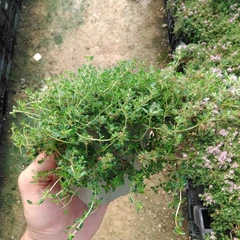
Thyme Coccineus
Seedling


Attracts pollinators 🐝
Difficulty
Diseases
Edible
Flower color
Flower color: Shade
Foliage color
Fragrant (aromatic) 👃
Frost resistance
Hardiness zone
Height
Moisture
Pests
Position
Soil
Spacing
Spacing: Plants per m²
Recommended products

Thymus citriodorus
Thyme Doone Valley

Thymus vulgaris
Thyme Compactus

Salvia pratensis
Meadow Sage Rose Rhapsody

Alchemilla mollis
Lady's mantle Irish Silk

Salvia nemorosa
Woodland Sage Schneehügel

Phlox paniculata
Phlox Franz Schubert

Thymus citriodorus
Thyme Silver King

Centaurea montana
Mountain Cornflower

Mentha spicata
Lemon mint

Dicentra spectabilis
Bleeding Heart

Thymus praecox
Creeping Thyme Albiflorus

Geum chiloense
Avens Totally Tangerine

Aquilegia vulgaris
Columbine Black Barlow

Anemone hybrida
Japanese Anemone Serenade

Luzula nivea
Snowy Woodrush

Salvia nemorosa
Woodland Sage Ostfriesland

Hydrangea arborescens
Smooth Hydrangea Annabelle

Phlox paniculata
Phlox Sweet Summer Sensation

Leucanthemum vulgare
Daisy Maikönigin

Echinacea purpurea
Coneflower White Swan

Geum chiloense
Avens Tempest Scarlet

Achillea millefolium
Yarrow Lachsschönheit

Lavandula angustifolia
Lavender Rosea

Sidalcea
Checkerbloom Wine Red

Lythrum salicaria
Loosestrife Robert

Alcea rosea plena
Hollyhock Chaters Rosa

Achillea filipendulina
Yarrow Parkers Varietät

Aquilegia vulgaris
Columbine Kristall

Sanguisorba officinalis
Great Burnet

Achillea millefolium
Yarrow Summer Pastels
Cultivation
Plant the thyme seedling in full sun, because that is where it will thrive best and create the most aromatic leaves. It requires very well-drained, poorer, and sandy soil. Heavy or permanently waterlogged clay soils do not suit this plant; there is a risk of root rot. Given that it is a creeping perennial reaching a height of only five to ten centimeters, it fits perfectly on the edges of sunny flowerbeds, in dry stone walls, or in rock gardens. If you only have ordinary garden soil, we recommend mixing gravel or coarse sand into the planting hole to ensure necessary drainage.
Planting the grown seedling itself is simple and even an absolute beginner can handle it. Plant the plants at a spacing of approximately thirty-five centimeters apart, which corresponds to about nine pieces per square meter. This spacing will ensure that the thyme soon connects into a continuous green cushion, but will also have enough room for air circulation. Watering is necessary only in the first weeks after transplanting, before the plant reliably roots. Once established, it becomes fully resistant to drought and requires virtually no further watering or fertilizing. Furthermore, you will be pleased that it does not suffer from any common diseases and is completely avoided by pests.
During the season, specifically from June to August, the Coccineus cultivar will enchant you with a flood of crimson-pink flowers that smell intensely and attract bees and butterflies. To keep the plant in a compact shape and ensure it blooms richly in future years, it is advisable to perform a slight prune after flowering, i.e., trim the spent shoots. Since the flowers and leaves are edible, you can pick fresh sprigs at any time to flavor dishes. Thyme is also excellent for growing in containers or window boxes on balconies. Here, however, ensure the pot has drainage holes and a sufficient layer of drainage material at the bottom. It requires no special protection for winter, as it is fully hardy down to minus twenty-eight degrees (zone 5a); it just needs to be protected from winter waterlogging.
The information given is based on our experience, please use it as a guide only. Times may vary depending on the season, climate, location, sowing and transplanting dates and possibly also the conditions in the greenhouse/greenhouse. We always recommend testing how the plant performs in your conditions. Please do not take this as a guarantee.
Frequently
asked
questions
Harvest
When and how is the best way to prune and harvest thyme for drying?
Is thyme edible and can it be used in the kitchen?
Diseases & pests
Does thyme suffer from any diseases or pests?
Propagation
How can I propagate thyme in the garden once it grows out well?
Characteristics
Does this herb attract bees and other pollinators to the garden?
Can this perennial be cut for bouquets in a vase?
When exactly does this cultivar bloom and what color are the flowers?
Planting site
Where is the best place to plant Thymus 'Coccineus'?
Is this plant suitable for growing in containers on a balcony?
Growing
What is the recommended spacing for planting in a flower bed?
How often do I need to water the thyme?
Does it need any protection from winter and frost?
Troubleshooting
Why has my thyme in the garden started turning black and rotting from the bottom?
Basic information
Can a complete beginner handle caring for thyme?
Photos
in time
See how the seedling looks over the course of a year.


More products in category Wild thyme

Thymus serpyllum
Thyme Albus

Thymus citriodorus
Thyme Lemon
Thymus citriodorus
Thyme Doone Valley

Thymus citriodorus
Creeping Thyme Silver Queen
Thymus praecox
Creeping Thyme Albiflorus

Thymus praecox
Creeping Thyme Red Carpet
Thymus citriodorus
Thyme Silver King

Thymus
Creeping Thyme Caborn Wine and Roses

Thymus spp.
Thyme Rose

Thymus pseudolanuginosus
Woolly Thyme

Thymus citriodorus
Thyme Aureus

Thymus citriodorus
Creeping Thyme Prostrate

Thymus serpyllum
Thyme Snowdrift

Thymus pulegioides
Thyme Archer's Gold

Thymus serpyllum
Thyme Pink Chintz
More products in category Herbs

Mentha spicata
Moroccan mint
Thymus vulgaris
Thyme Compactus
Thymus serpyllum
Thyme Albus
Thymus citriodorus
Thyme Lemon

Satureja montana
Winter Savory

Mentha piperita citrata
Chocolate mint

Artemisia abrotanum var. maritima
Artemisia Coca Cola

Lippia citriodora
Lemon verbena

Helichrysum angustifolia
Curry plant Tall Curry

Valeriana officinalis
Valerian

Origanum vulgare
Oregano Compactum

Levisticum officinale
Lovage
Thymus citriodorus
Thyme Doone Valley

Coriandrum sativum
Coriander

Mentha spicata
Spanish Mint

Salvia officinalis
Sage Maxima

Petroselinum hortense
Garden Parsley

Origanum rotundifolia
Ornamental oregano Kent Beauty

Anethum graveolens
Dill
Thymus citriodorus


