Ireland
🟢 The e-shop for seedlings is open again. 🌱 I also have dahlia seedlings and eucalyptus. 🟢
Ireland
🟢 The e-shop for seedlings is open again. 🌱 I also have dahlia seedlings and eucalyptus. 🟢
Sage Maxima, Loukykvět

Salvia officinalis

Sage Maxima

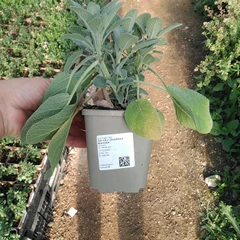
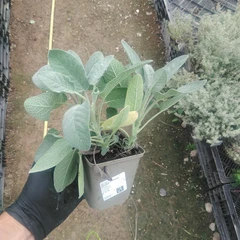
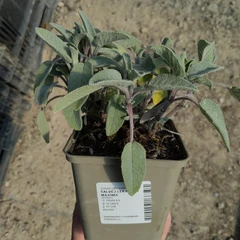
Common sage is an indispensable perennial for any lover of herb gardens and naturalistic planting. Its native home is the dry Mediterranean region, where it naturally colonizes sunny rocky slopes. It requires the same conditions here, so give it full sun and well-drained, rather poor soil. The established potted seedling you receive will quickly bulk up after planting, forming a vigorous shrub that easily tolerates winter frosts down to minus twenty-three degrees. The Maxima cultivar is exceptional for its velvety, grayish-green leaves, which grow up to three times larger than those of standard varieties. We grow it primarily for these massive, highly aromatic leaves, which have a wide range of uses in the kitchen and in tea blends. During June and July, it produces violet-blue flowers that draw in pollinators. However, if you want to retain maximum aroma in the foliage, we recommend pinching out the emerging flowers. The sturdy stems are brilliant for cutting into summer bouquets, lasting around a week, or drying for winter floristry displays. Show full description

Seedling

Květináč K9 (9×9×9,5 cm)
1-2 kusy
2,99/ks
3-8 kusů
2,69/ks
9-17 kusů
2,39/ks
18+ kusů
2,09/ks
Skladem 0 ks
Připravujeme 180 ks

Attracts pollinators 🐝

Ano

Difficulty

Beginner

Diseases

Disease-free 🙂

Edible

Ano
?
Information on whether the plant is edible.

Flower color

Blue, purple

Foliage color

Grey-green

Fragrant (aromatic) 👃

Ano

Frost resistance

-23
?
The temperature down to which the plant is frost hardy.

Hardiness zone

6a (-23.3 °C to -20.6 °C)

Height

50-80 cm

Moisture

Pests

Pest-free 🙂

Position

Sun

Soil

Poor, well-drained

Spacing

40-40 cm
?
Recommended planting spacing.

Spacing: Plants per m²

6
1
2
3
4
5
6
7
8
9
10
11
12
Flowering
June
July

Recommended products

Lippia citriodora

Lemon verbena, also known as aloysia, will immediately enchant you with its intense and refreshing lemon scent. It originally comes from the warm regions of South America, and therefore it requires full sun and well-drained soil in our climate too. Because it only tolerates frosts down to minus twelve degrees, it is most often grown here as a portable container plant that you hide in a cooler, bright room for the winter. You will receive a grown seedling in a pot from us, which you just need to transplant into a larger container or a protected flowerbed. During July and August, the plant blooms with tiny white flowers, which act as a reliable attraction for bees and other pollinators. Verbena does not suffer from pests or diseases, so even beginners can handle growing it. Since the seventeenth century in Europe, it has been used as a valuable source of essential oils for perfume production. You can harvest the green leaves and use them as a culinary herb in summer dishes or as a fragrant addition to teas. Aromatic sprigs can also be cut and added to summer bouquets.
3,29
More from 2,29
Coming Soon
Fragrant

Salvia officinalis

Grower's Friend common sage is an aromatic and extremely hardy perennial that is a must-have for any herb garden. Its native habitat is the sunny, dry slopes of the Mediterranean, which is why it thrives best in direct sun and well-drained, rather poor soil. You will receive a beautifully established seedling in a pot, ready to be planted straight into the border, where it will quickly form a compact bush reaching about half a meter in height. It is a completely low-maintenance plant that is free from diseases and pests, effortlessly handles frosts down to minus twenty-three degrees, and is easy for complete beginners to care for. During June and July, it blooms with tiny violet-blue flowers that act as an absolute magnet for bees, bumblebees, and butterflies. It fits perfectly into drought-tolerant gravel beds, where it naturally complements ornamental grasses and other herbs. The flowers on sturdy stems are excellent for cutting into summer bouquets and for drying for floristry. The Grower's Friend variety stands out with its velvety, grayish-green leaves that have an exceptionally high concentration of essential oils. These edible leaves are fantastic in the kitchen and in homemade tea blends. If you want to maximize the aromatic strength of the leaves, we recommend regularly removing the emerging flowers.
2,79
More from 1,99
Coming Soon
Fragrant

Mentha spicata

Mentha spicata, known as Moroccan mint, will bring not only a wonderful fragrance to your garden but also a piece of honest herbalist tradition. In the wild, it seeks out slightly moist habitats in partial shade, but it can also handle direct sun without problems. At your home, it will thrive best in humous and loamy soil with plenty of moisture. We will deliver an already mature seedling in a pot, which you can easily transplant to the flowerbed after unpacking. The plant grows to a height of up to sixty centimeters and is extremely resistant to severe frost and common diseases, so it brings joy without unnecessary effort. It will require your attention perhaps only in the event of an unexpected occurrence of the mint leaf beetle. It is an indispensable part of fragrant herbal compositions, but it will also fit perfectly alongside other ornamental perennials. Throughout the summer, stems with tiny purple flowers rise from the clumps. These not only look nice but attract a wide range of pollinators from bees to colorful butterflies. Its fresh green and highly aromatic leaves are edible and directly invite use in the summer kitchen. Gardeners and florists swear by it. The stems of Moroccan mint are excellent for cutting into live arrangements, giving them an unmistakable scent and delicate structure. In a summer vase, this green beauty will keep you company for about a week.
3,09
More from 2,19
Coming Soon
Fragrant

Salvia officinalis

Common sage 'Nazareth' is an indispensable perennial for every lover of herbs and sun-drenched gardens. It originally comes from the dry, rocky slopes of the Mediterranean, which is why it also seeks full sun and rather poor, well-drained soil here. From the seedling in a pot you receive, a nice bush thirty to forty centimeters tall will grow. It is an undemanding plant that can handle frosts down to minus twenty-three degrees and does not suffer from diseases or pests. In the garden, it is perfectly suited for drought-tolerant plantings, where it complements lower ornamental grasses. During June and July, it blooms with blue-violet flowers that act as a reliable magnet for bees and butterflies. The flowering stems can be used for cutting into summer bouquets. The 'Nazareth' variety stands out with its velvety grey-green leaves with a pleasant marzipan aroma. They can be used in the kitchen as well as in tea blends. For maximum aromatic content, we recommend removing the forming flowers in time.
2,99
More from 2,09
Unavailable
Pro rok 2026 nedostupné
Fragrant

Satureja montana

Winter savory is an essential part of every sunny herb garden, where it delights as a useful culinary ingredient as well as an ornamental perennial. It originally comes from the dry rocky hillsides of the Mediterranean. Thanks to its origin, it will do best in your garden in full sun in poorer, well-drained soil. You will receive a grown seedling in a pot from us, which you just need to transplant straight into the flower bed, where it will quickly form a dense bush reaching a height of around thirty centimeters. In appearance and growth, it is very reminiscent of thyme. During August and September, it blooms with a flood of tiny white and purple flowers that act as a magnet for pollinators. The plant is undemanding, withstands frosts down to minus twenty-three degrees, and does not suffer from diseases or pests. The tiny green leaves and flowers are edible and form the basis of Mediterranean dishes, perfectly enhancing legume meals. Furthermore, savory is excellently suited for cutting into summer bouquets, giving them a delicate structure and spicy scent.
2,79
More from 1,99
Coming Soon

Verbena bonariensis

A verbena species originally from South America. In our country, it is often used as an annual, but in mild winters it can overwinter and reproduce by self-seeding. The firm, airy stems beautifully soften perennial beds and make them special with their purple color. It beautifully complements steppe plantings with grasses and rose beds.
3,29
More from 2,29
In Stock
Fragrant

Rosmarinus officinalis

Rosemary originates from the Mediterranean and North Africa, where it grows wild in dry, rocky, and fully sunny habitats. In the Mediterranean, it is grown for extracting fragrant essential oils and as an ornamental plant used for stabilizing slopes and for hedges. Here, we most often grow it as a portable plant in a pot; alternatively, in a protected spot, we can try growing hardier species in an open flower bed. Barbecue is an upright growing cultivar with narrower, distinctly aromatic leaves.
2,99
More from 2,09
Coming Soon

Sedum spectabile

Showy stonecrop is one of the longest-living and hardiest perennials you can treat your garden to. It originally comes from the Far East, where it colonizes sunny and dry slopes. For successful cultivation, you simply need to find it a spot in direct sun with well-drained sandy soil. The 'Matrona' cultivar catches the eye at first glance with its fleshy, grayish-green leaves with a burgundy tinge and sturdy stems that do not break and need no support. We will deliver a mature potted seedling that you can easily transplant straight into the flowerbed after unpacking. We recommend planting five to seven plants per square meter; they will soon join into a solid stand around seventy centimeters tall. From August to October, it will then delight you with rich, flat inflorescences in an old rose color. It is an ideal choice for those looking for beauty without unnecessary effort. This stonecrop easily survives harsh winters with frosts dropping to minus twenty-eight degrees, and pests and diseases avoid it. The 'Matrona' variety differs from others in that it will reliably grow even in more nutritious soil, provided it is not waterlogged. In perennial compositions, it creates a beautiful contrast next to delicate ornamental grasses and other autumn flowers. During sunny days, bees, butterflies, and other pollinators constantly take turns over its flowers. You can boldly use the sturdy stems with pink umbels for cutting. They stay fresh in a vase for quite a long time and will bring a touch of the slowly ending summer into your home. It might surprise you that the leaves of this stonecrop are edible and can be used to garnish dishes. If you decide not to cut the plant back in the autumn, you will get a perfect structure in the flowerbed that will last all winter. Especially when the old flowers are covered in frost, they provide a breathtaking spectacle right until the spring months.
2,99
More from 2,89
In Stock
New
Fragrant

Rosmarinus officinalis

Rosemary originates from the Mediterranean and North Africa, where it grows wild in dry, rocky, and fully sunny habitats. In the Mediterranean, it is grown for extracting fragrant essential oils and as an ornamental plant used for stabilizing slopes and for hedges. Here, we most often grow it as a portable plant in a pot; alternatively, in a protected spot, we can try growing hardier species in an open flower bed. Hishtil Perigord is a fast-growing variety with greyish-green leaves and blue flowers.
1,49
Coming Soon
Fragrant

Mentha spicata

Spanish mint, also known as spearmint, is an indispensable perennial for all lovers of herbs and fragrant gardens. It naturally grows in wetter meadows and on the banks of watercourses across Europe, so it does best in the garden in loamy and humous soil with plenty of moisture. It thrives in full sun as well as in partial shade, where it quickly forms a dense clump of fresh green leaves reaching a height of forty to sixty centimeters. You will receive a beautifully grown seedling in a pot from us, which you just need to transplant directly into the flower bed or a spacious container. When planting in the soil, we recommend maintaining a spacing of about forty centimeters so that it has enough space to grow. It is an exceptionally resilient and undemanding plant that even complete beginners can handle without problems. It can even withstand severe frosts dropping down to minus twenty-eight degrees and does not suffer from common diseases; it is only occasionally necessary to watch out for the mint leaf beetle. During the summer, from July to September, the flower bed turns into a feast for pollinators. The mint blooms with tiny purple flowers that act as a magnet for bees and bumblebees. The entire plant contains strong essential oils, giving it an unmistakable and strong mint aroma. The leaves and flowers are fully edible, so you can use them in the preparation of refreshing drinks, teas, or as a garnish for summer desserts. However, Spanish mint also has a firm place in floristry. Its straight stems are very popular filler greenery for fresh bouquets, to which they add not only an interesting structure but above all a wonderful fragrance. In addition, you can easily dry the flowers and leaves for later use in herbal blends or small fragrant decorations.
3,09
More from 2,19
Unavailable
Pro rok 2026 nedostupné

Alchemilla mollis

Alchemilla mollis, known as lady's mantle, is an indispensable perennial for anyone who wants to bring harmony and softness to the garden. Its home is the moister environments of mountain meadows and light forests, making it a very adaptable plant that will survive even severe frosts without problems in our climate. The 'Irish Silk' cultivar is prized for its vitality and abundant blooming, where clouds of tiny, yellow-green flowers float above clumps of gray-green leaves. It is precisely this neutral color that can work wonders in a flower bed – it softens overly sharp contrasts between other flowers and beautifully unifies the entire composition. Besides its ornamental function, lady's mantle also has practical uses. Thanks to its clumping growth and ability to quickly fill in, it is ideal for edging pathways or as an underplanting beneath taller shrubs and roses. Water droplets catch on its leaves, creating a magical spectacle in the garden. If you enjoy making bouquets, you will love lady's mantle as versatile filler greenery that matches almost anything. It will last beautiful for about ten days in a vase, and its inflorescences can also be easily dried without losing too much of their color or shape. Moreover, it is a magnet for pollinators, and its young leaves are even edible, so it also finds use in a natural kitchen.
2,99
More from 2,09
In Stock posledních 74 kusů

Salvia nemorosa

This species of sage originates from the steppe regions of Central and Eastern Europe. It forms abundantly flowering small clumps with straight upright stems. In beds, it looks best in groups. Traditionally, it is planted as a companion to roses due to the matching flowering time. However, it will look equally good in mixed drought-loving steppe plantings with grasses. It is an excellent food source for bees. It lasts 7 days in a vase. The cultivar Ostfriesland blooms with a strikingly dark violet-blue color.
2,99
More from 2,09
In Stock

Echinacea purpurea

A valuable garden and medicinal perennial, originally from North America. It blooms in summer with dark purple-pink flowers. The spiky flower discs are an irresistible lure for butterflies. Lasts 7–10 days in a vase. After plucking the petals, the stems with the central discs can be dried or used in fresh bouquets as an interesting element. Rubinstern is very similar to the Magnus cultivar; the petals are darker and firmer. As they fade, they gradually pale and droop downwards.
2,99
More from 2,09
In Stock
Fragrant

Thymus vulgaris

Common thyme is an indispensable herb and a small perennial that will scent any sun-drenched garden. Its original home is the sunny Mediterranean, where it grows on dry, rocky hillsides. Therefore, it will also grow best in your garden in full sun and well-drained, rather sandy soil. Once planted, it becomes a hardy plant that can even withstand our frosts down to minus twenty-three degrees. In flower beds, it acts as a ground cover and reliably complements drought-tolerant plantings. During June and July, it transforms into a flood of tiny lilac-purple flowers that act as a magnet for bees, bumblebees, and butterflies. It is a completely undemanding plant suitable for beginners, which does not suffer from diseases or pests. You will receive a beautifully grown seedling in a pot from us, which you can simply transplant right away. The 'Compactus' variety is characterized by its dense growth, reaching a height of only ten to twenty centimeters. It impresses with its light purple flowers and very tiny, deep green leaves with an extraordinarily intense fragrance. The entire plant is edible and has a wide range of uses in the kitchen. It responds very well to pruning, so you can easily shape it into a firm mound. You can dry the cut aromatic sprigs to stock up, or use them fresh.
3,29
More from 2,29
Coming Soon

Hyssopus officinalis

The Roseus hyssop is an aromatic subshrub whose structure and requirements strongly resemble the popular lavender. It originally comes from the sunny and dry regions of the Mediterranean and Asia Minor, so it thrives best in direct sun here as well. It favors well-drained, sandy, and even nutrient-poor soil, where it easily copes with a lack of moisture. You will receive a grown seedling in a pot from us, which you simply transplant straight into the flower bed, where it will very soon form a neat, richly branched bush reaching a height of around fifty centimeters. It is an absolutely undemanding plant that is not bothered by diseases or pests, so its cultivation can be easily handled even by complete beginners. It comfortably withstands severe frosts down to minus twenty-three degrees Celsius. In the garden, hyssop finds wide application. It fits perfectly into steppe-character gravel beds and beautifully complements roses or lower ornamental grasses. During the summer until early autumn, the Roseus variety will delight you with a flood of tiny flowers in a delicate light pink shade. These flowers, as well as the narrow green leaves, emit a pleasant spicy fragrance and reliably act as a huge lure for bees, bumblebees, and butterflies. Since all parts of the plant are edible, you can also use hyssop in the kitchen as a herb to flavor dishes or prepare a medicinal tea from it. You can also cut the long flowering stems for a vase, where they will add a fine texture and lightness to summer bouquets. Although the flowers are not suitable for drying for floral purposes, the plant will please you in the flower bed even out of season. The inflorescences form an interesting structure which, after the leaves fall and are covered by morning frost, creates a beautiful winter effect. Furthermore, if you provide hyssop with ideal conditions, it will reliably self-seed in its location and remain a solid part of your garden for many years.
2,79
More from 1,99
In Stock

Salvia nemorosa

This species of sage originally comes from the steppe regions of Central and Eastern Europe. It forms profusely flowering small clumps with straight upright stems. In flower beds, it looks best in groups. Traditionally, due to the identical flowering time, it is planted as a companion to roses. However, it will look just as good in mixed drought-loving steppe plantings with grasses. It lasts 7 days in a vase. The cultivar Caradonna stands out with a long flowering period and dark, almost black-purple stems with tiny purple flowers and dark purple bracts. If we cut it back after flowering, it will bloom again in late August and September.
2,99
More from 2,09
In Stock s doručením od 20. 7. 2026

Helichrysum angustifolia

Curry plant Tall Curry is an indispensable herb and ornamental perennial for every sun-drenched garden. Its homeland is the dry slopes of Southern Europe, which is why it requires full sun and well-drained, rather poor soil. From our grown seedling, a fifty-centimeter tall small bush will quickly grow for you after transplanting. The curry plant is a popular aromatic plant that emits an intense fragrance resembling curry. It also captivates with its silvery-grey foliage, which will add structure to the garden. Even beginners can easily handle its cultivation. It does not suffer from diseases or pests and can easily withstand frosts down to minus eighteen degrees. From July to September, tiny yellow inflorescences bloom, acting as a magnet for bees, bumblebees, and butterflies. In flowerbeds, the curry plant is perfect in combination with drought-tolerant perennials and herbs. Moreover, you can use its edible flowers and leaves in summer cooking. The Tall Curry variety stands out for its upright growth, making it an ideal plant for cutting. The yellow flowers will bring an interesting color element to bouquets and will last fresh in a vase for many days. They are also great for drying for floristry, as they retain their shape and color for a long time.
2,99
More from 2,09
Coming Soon
Fragrant

Melissa officinalis

Lemon balm is an essential part of any herb garden, immediately enchanting you with its fresh lemon scent. It originally comes from the Mediterranean and Asia Minor, where it grows in sunny locations. In our climate, it will do great in ordinary loamy soil in full sun or partial shade. We send customers a grown seedling in a pot, which just needs to be transplanted directly into the flowerbed with a spacing of forty-five centimeters. It will soon form a vigorous clump reaching a height of up to eighty centimeters. The plant is completely undemanding to grow, easily handling severe frosts dropping even below thirty degrees, and does not suffer from diseases or pests. Furthermore, from June to August, tiny white little flowers appear on the stems, acting as a magnet for bees, bumblebees, and butterflies. The green leaves are fully edible and you can use them in refreshing drinks and soothing teas. For drying, collect them before blooming; that is when they have the most valuable essential oils. The long green stems have also found their place in floristry as a fragrant bouquet filler, and you can cut them practically anytime during the summer.
3,09
More from 2,19
Coming Soon

Achillea millefolium

A native wild perennial with a large distribution range from Europe to Siberia. Suitable for natural and wild plantings. It grows in meadows and dry grassy places. A very adaptable and undemanding plant, it grows in clumps and spreads via runners. Cutting back after the first bloom encourages a new set of flowers. Harvest for bouquets when the tiny flowers are fully open. It lasts 10 days in a vase. Terracotta features ochre, shades of orange and yellow, and gray-green foliage.
2,99
More from 2,89
In Stock

Stipa tenuissima

Feather grass flowers capture attention in beds and bouquets with their lightness and delicacy. All feather grasses love full sun and dry, stony, well-drained soil. To look most natural in beds, it is good to plant them in loose groups of several pieces together with other drought-loving perennials and bulbs. Only then do their stems and inflorescences, set in motion by the slightest breath of wind, truly stand out. Stipa 'Ponny Tails' is a species native to the steppes of Mexico, Texas, and Patagonia. Airy, dense clumps of hair-like delicate leaves resemble horsehair. The leaves are green, turning up to straw-colored towards the flowers. In a suitable location, it also self-seeds.
3,79
More from 2,69
In Stock

Gaura lindheimeri

Gaura Siskiyou Pink is a charming perennial that brings lightness and airiness to the garden. Its original native area is in the warm regions of Texas and Louisiana, which is why it thrives in full sun and well-drained sandy soil. It grows in clumps and from June until the autumn frosts produces tiny raspberry-pink flowers that resemble fluttering butterflies. An interesting detail of this variety is the green leaves with a bronze tint and red spots. It is an absolutely undemanding plant, does not suffer from diseases or pests, and even beginners can handle its care. You will receive a grown seedling in a pot from us, which you simply need to transplant directly into the flowerbed. Here it complements ornamental grasses perfectly and acts as an attraction for bees and bumblebees. Although it grows more as a short-lived perennial in our climate, in a suitable place it reliably self-seeds. Occasional pinching will encourage richer branching. Gaura is excellent for summer bouquets. We cut the stems for a vase as soon as the first two to three little flowers open.
2,99
More from 2,09
In Stock

Calamintha nepeta ssp. nepeta

An undemanding and modest perennial that blooms with a large number of tiny flowers. It blooms for a record-breaking length of time throughout late summer and autumn. It forms smaller, compact, airy bushes that release a minty-spicy scent. The thyme-like flowers attract bees, bumblebees, and butterflies. It will look good among roses as well as in naturalistic steppe beds, perhaps with lower grasses. This calamint is generally more vigorous. It differs from other calamints with felted leaves by its record flowering length, stiff and shiny leaves, and also a larger number of flowers that do not form seeds and are therefore maximally durable. Sometimes sold under the cultivar name 'Triumphator'.
2,79
More from 1,99
In Stock

Salvia nemorosa

This species of sage originates from the steppe regions of Central and Eastern Europe. It forms profusely flowering small clumps with straight, upright stems. In flower beds, it looks best in groups. It is traditionally planted as a companion to roses due to the matching flowering time. However, it looks equally good in mixed drought-tolerant steppe plantings with grasses. It is an excellent food source for bees. Lasts 7 days in a vase. Amethyst is an elegant variety with long stems and a pink flower color that is unusual for sages.
2,99
More from 2,09
In Stock posledních 95 kusů

Gaura lindheimeri

The charming gaura comes from the sun-drenched plains of Texas and Louisiana and represents exactly the plant that can liven up any drought-tolerant planting. It is a naturally profusely blooming perennial that delights in full sun and well-drained, sandy, and nutrient-poor soil. You will receive from us an already grown seedling in a pot, which will quickly form a vigorous clump after being transplanted into the garden. From early summer until late autumn, it will delight you with a flood of tiny flowers in pure white and delicate pink tones. The flowers gently sway in the breeze and with their appearance resemble a flock of tiny butterflies, which also really like to land on the plant, as do bees and bumblebees. Although gaura is known as a short-lived perennial, thanks to its willing self-seeding, it will last for many years in your garden. Caring for it is completely undemanding, it is avoided by most diseases and pests, and it can handle frosts down to eighteen degrees below zero without any problems. It is often used in mixed borders, where it beautifully softens the overall impression, and perfectly matches various types of ornamental grasses. The Summer Breeze variety is popular for its strong and healthy growth as well as its exceptionally generous set of flowers, which grow to about one meter. If you like to create your own bouquets, do not hesitate to cut gaura for a vase. Harvesting is best done the moment the first small flowers on the stem begin to open. These delicate flowers are not suitable for drying into dried arrangements, but they will beautifully lighten up fresh bouquets.
2,99
More from 2,09
Coming Soon

Lavandula angustifolia

Lavender is a necessity for every sunny herb garden. We classify them as subshrubs, and they are valuable for gardens due to their winter habit. They add not only color and structure to flower beds but also an unmistakable scent. They will look good with lower drought-loving grasses and perennials. A compact cultivar with a dark flower.
5,29
More from 3,89
In Stock
Fragrant

Mentha spicata

Kentucky Colonel spearmint is a popular perennial that brings life to any outdoor space. Originating from moister temperate regions, it appreciates a semi-shady or sunny spot with well-drained, humus-rich, loamy soil. You will receive a well-rooted seedling in a pot, which you can easily transplant directly into your border. The Kentucky Colonel cultivar features large green leaves and a strong minty aroma. It grows to around half a meter tall and forms a vigorous patch. Cultivation is incredibly easy and perfect for beginners. The plant overwinters without issues, withstanding frosts down to minus twenty-eight degrees. In summer, tiny white inflorescences appear above the foliage, acting as a beacon for bees and bumblebees. Mints are highly sought after in floristry as fragrant foliage for bouquets. Both the green leaves and flowers are edible, perfect for mixing into summer drinks. This perennial is disease-free; occasionally, the mint leaf beetle might appear, which can simply be picked off.
3,09
More from 2,19
Coming Soon

Valeriana officinalis

Valerian is an important medicinal herb that has accompanied humanity with its effects for centuries. In nature, you will most often find it in damper meadows and light forests of Europe. Therefore, it will grow best for you in a sunny location with humus-rich and loamy soil. It handles our winters and frosts down to minus twenty-three degrees with ease. From us, you will receive a grown seedling in a pot, which you just need to transplant directly into the flowerbed, ideally with a spacing of sixty centimeters. Thanks to its unpretentiousness, valerian is ideal for beginners, though it occasionally attracts aphids. During the summer, it forms sturdy stems with green leaves reaching a height of up to one hundred and fifty centimeters. Tiny white and pink inflorescences bloom on them. The plant is highly aromatic and emits a specific scent favored by cats. The flowers are edible and reliably attract bees. Valerian is excellently suited for damper herb beds, where it willingly self-seeds. For bouquets, we collect the stems when the first little flowers open; they will last five days in a vase.
2,79
More from 1,99
In Stock posledních 19 kusů

Cultivation

Výběr stanoviště a výsadba Šalvěj lékařská je původem ze suchého a teplého Středomoří a její pěstování je naštěstí velmi snadné, což zaručeně ocení zejména zahradníci začátečníci. Obdrženou silnou sazenici vysazujte vždy na plné slunce, kde se jí daří naprosto nejlépe a tvoří nejvíce vonných silic. Půda by měla být spíše chudá a velmi dobře propustná, ideálně písčitá nebo přímo štěrkovitá. Těžkým, jílovitým a trvale přemokřeným půdám se obloukem vyhněte. Při výsadbě do bylinkového nebo trvalkového záhonu dodržujte spon zhruba 40 centimetrů, tedy asi šest rostlin na metr čtvereční. Tento rozestup spolehlivě zajistí dobrou cirkulaci vzduchu a podpoří zdravý růst mohutných šedozelených listů.

Zálivka, hnojení a odolnost Tato trvalka výborně snáší sucho, proto ji zalévejte spíše střídmě. Zvýšenou zálivku vyžaduje pouze čerstvě přesazená sazenice, dokud plně nezakoření. Šalvěj nepotřebuje téměř žádné přihnojování, v chudé půdě si tvoří ty nejaromatičtější listy. Velkou výhodou kultivaru Maxima je, že naprosto netrpí na žádné běžné choroby a vyhýbají se jí i škůdci, pěstování se tak obejde bez chemie. Během června a července se objevují fialovomodré květy, které lákají opylovače. Pokud však šalvěj pěstujete primárně pro kulinářské využití jejích obřích listů, doporučujeme květy včas odstraňovat, aby rostlina vkládala veškerou energii do olistění a neztrácela své výrazné aroma.

Přezimování a pěstování v nádobách Pro udržení pěkného a kompaktního tvaru keříku je klíčový pravidelný řez. Provádějte ho vždy na jaře, kdy rostlinu seřízněte zhruba na třetinu až polovinu. Nikdy ale neřežte do starého dřeva, odkud by už hůře obrážela. Šalvěj je plně mrazuvzdorná až do -23 °C. Jediné, co jí v zimě může uškodit, je nadměrné vlhko, proto je propustná půda opravdu zásadní. Velmi dobře se jí daří i při pěstování v nádobách na balkonech či terasách. V takovém případě nezapomeňte na dno květináče nasypat štěrk nebo keramzit pro vytvoření silné drenážní vrstvy, aby kořeny nestály ve vodě.

The information given is based on our experience, please use it as a guide only. Times may vary depending on the season, climate, location, sowing and transplanting dates and possibly also the conditions in the greenhouse/greenhouse. We always recommend testing how the plant performs in your conditions. Please do not take this as a guarantee.

Show all

Click to view the full growing instructions.

Frequently
asked
questions

Problémy

Základní informace

Pěstování

Nemoci & škudci

Sklizeň

Vlastnosti

Stanoviště

Množení

Photos
in time

See how the seedling looks over the course of a year.

Sage Maxima - 27. 3. 2026
27. 3. 2026
Sage Maxima - 10. 9. 2025
10. 9. 2025
Sage Maxima - 19. 8. 2025
19. 8. 2025
Sage Maxima - 19. 8. 2025
19. 8. 2025
Sage Maxima - 17. 7. 2025
17. 7. 2025
Sage Maxima - 1. 7. 2025
1. 7. 2025
Sage Maxima - 2024
2024

More products in category Sage

Fragrant

Salvia officinalis

Grower's Friend common sage is an aromatic and extremely hardy perennial that is a must-have for any herb garden. Its native habitat is the sunny, dry slopes of the Mediterranean, which is why it thrives best in direct sun and well-drained, rather poor soil. You will receive a beautifully established seedling in a pot, ready to be planted straight into the border, where it will quickly form a compact bush reaching about half a meter in height. It is a completely low-maintenance plant that is free from diseases and pests, effortlessly handles frosts down to minus twenty-three degrees, and is easy for complete beginners to care for. During June and July, it blooms with tiny violet-blue flowers that act as an absolute magnet for bees, bumblebees, and butterflies. It fits perfectly into drought-tolerant gravel beds, where it naturally complements ornamental grasses and other herbs. The flowers on sturdy stems are excellent for cutting into summer bouquets and for drying for floristry. The Grower's Friend variety stands out with its velvety, grayish-green leaves that have an exceptionally high concentration of essential oils. These edible leaves are fantastic in the kitchen and in homemade tea blends. If you want to maximize the aromatic strength of the leaves, we recommend regularly removing the emerging flowers.
2,79
More from 1,99
Coming Soon
Fragrant

Salvia officinalis

Common sage 'Nazareth' is an indispensable perennial for every lover of herbs and sun-drenched gardens. It originally comes from the dry, rocky slopes of the Mediterranean, which is why it also seeks full sun and rather poor, well-drained soil here. From the seedling in a pot you receive, a nice bush thirty to forty centimeters tall will grow. It is an undemanding plant that can handle frosts down to minus twenty-three degrees and does not suffer from diseases or pests. In the garden, it is perfectly suited for drought-tolerant plantings, where it complements lower ornamental grasses. During June and July, it blooms with blue-violet flowers that act as a reliable magnet for bees and butterflies. The flowering stems can be used for cutting into summer bouquets. The 'Nazareth' variety stands out with its velvety grey-green leaves with a pleasant marzipan aroma. They can be used in the kitchen as well as in tea blends. For maximum aromatic content, we recommend removing the forming flowers in time.
2,99
More from 2,09
Unavailable
Pro rok 2026 nedostupné

Salvia officinalis

Common sage is a classic that you will utilize in both herb and ornamental gardens. It originally comes from the sunny and rocky slopes of the Mediterranean. In our gardens too, it will appreciate direct sun and well-draining, rather poorer soil. You will receive a mature seedling in a pot from us, which you simply transplant straight into the flowerbed. Caring for it is easy and even a beginner can handle it, because it does not suffer from pests or diseases and survives even severe frosts. It forms neat little bushes up to sixty centimeters tall. In June and July, it blooms with bluish-purple flowers, which are an attraction for bees and butterflies. The Purple Beauty variety is interesting for the purplish tinge of its grey-green leaves. These look very beautiful in combination with other drought-tolerant perennials all season long until late into winter. They are edible and highly aromatic. To maximize the content of fragrant substances in the leaves, we remove the flowers. The plant is exceptionally well-suited for cutting. You can use its leaves and stems with flowers in summer bouquets, or you can easily dry them for further crafting.
2,99
More from 2,09
Unavailable
Pro rok 2026 nedostupné
Fragrant

Salvia officinalis

Common sage is an essential part of every herb and ornamental garden. Its original homeland is the sunny and dry slopes of southern Europe, which is why it thrives best here in direct sun in well-drained and rather poor soil. You will receive a grown seedling in a pot from us, which you simply transplant directly into the flowerbed, ideally at a distance of forty centimeters apart, where it will very quickly form a stable clump reaching a height of forty to sixty centimeters. During June and July, it blooms with tiny purple to blue flowers, which act as a reliable attraction for bees, bumblebees, and other pollinators. It is an absolutely undemanding perennial for beginners, which easily tolerates frosts down to minus twenty-three degrees and does not suffer from any diseases or pests. We can grow it in containers or freely in flowerbeds. Its grayish-green aromatic leaves look very nice in combination with other drought-loving perennials throughout the season and long into the winter. For maximum content of aromatic substances in the leaves, we recommend removing the flowers. The entire plant is edible and will find wide use in the kitchen. In addition, its stems are perfect for cutting into summer bouquets and for drying into dry arrangements, where they will retain their shape and spicy fragrance for a long time.
3,09
More from 2,19
Unavailable
Pro rok 2026 nedostupné

More products in category Herbs

Fragrant

Mentha spicata

Mentha spicata, known as Moroccan mint, will bring not only a wonderful fragrance to your garden but also a piece of honest herbalist tradition. In the wild, it seeks out slightly moist habitats in partial shade, but it can also handle direct sun without problems. At your home, it will thrive best in humous and loamy soil with plenty of moisture. We will deliver an already mature seedling in a pot, which you can easily transplant to the flowerbed after unpacking. The plant grows to a height of up to sixty centimeters and is extremely resistant to severe frost and common diseases, so it brings joy without unnecessary effort. It will require your attention perhaps only in the event of an unexpected occurrence of the mint leaf beetle. It is an indispensable part of fragrant herbal compositions, but it will also fit perfectly alongside other ornamental perennials. Throughout the summer, stems with tiny purple flowers rise from the clumps. These not only look nice but attract a wide range of pollinators from bees to colorful butterflies. Its fresh green and highly aromatic leaves are edible and directly invite use in the summer kitchen. Gardeners and florists swear by it. The stems of Moroccan mint are excellent for cutting into live arrangements, giving them an unmistakable scent and delicate structure. In a summer vase, this green beauty will keep you company for about a week.
3,09
More from 2,19
Coming Soon
Fragrant

Thymus vulgaris

Common thyme is an indispensable herb and a small perennial that will scent any sun-drenched garden. Its original home is the sunny Mediterranean, where it grows on dry, rocky hillsides. Therefore, it will also grow best in your garden in full sun and well-drained, rather sandy soil. Once planted, it becomes a hardy plant that can even withstand our frosts down to minus twenty-three degrees. In flower beds, it acts as a ground cover and reliably complements drought-tolerant plantings. During June and July, it transforms into a flood of tiny lilac-purple flowers that act as a magnet for bees, bumblebees, and butterflies. It is a completely undemanding plant suitable for beginners, which does not suffer from diseases or pests. You will receive a beautifully grown seedling in a pot from us, which you can simply transplant right away. The 'Compactus' variety is characterized by its dense growth, reaching a height of only ten to twenty centimeters. It impresses with its light purple flowers and very tiny, deep green leaves with an extraordinarily intense fragrance. The entire plant is edible and has a wide range of uses in the kitchen. It responds very well to pruning, so you can easily shape it into a firm mound. You can dry the cut aromatic sprigs to stock up, or use them fresh.
3,29
More from 2,29
Coming Soon
Fragrant

Mentha piperita citrata

Chocolate mint is an indispensable herb for all lovers of unusual scents and dark colors. Originally, these moisture-loving perennials inhabited the banks of streams across the temperate zone, so in your garden, they will also appreciate loamy and humous soil. A strong bush will quickly grow from our mature seedling, which you can easily transplant from the pot directly into the bed. The cultivar captivates with deeply reddish leaves and black stems that bring an unusual look to herb plantings. The sweet menthol scent directly invites culinary use; the edible leaves will perfectly flavor lemonades and desserts. During the summer, purple flowers appear, on which butterflies and bees love to feast. It easily survives our winters, not even minding frosts down to minus twenty-eight degrees. It is exceptionally undemanding and does not suffer from diseases; you just need to watch out for the mint leaf beetle. Chocolate mint is excellent for floristic purposes and works as wonderfully fragrant supplementary greenery in a vase.
3,09
More from 2,19
In Stock posledních 10 kusů
Fragrant

Satureja montana

Winter savory is an essential part of every sunny herb garden, where it delights as a useful culinary ingredient as well as an ornamental perennial. It originally comes from the dry rocky hillsides of the Mediterranean. Thanks to its origin, it will do best in your garden in full sun in poorer, well-drained soil. You will receive a grown seedling in a pot from us, which you just need to transplant straight into the flower bed, where it will quickly form a dense bush reaching a height of around thirty centimeters. In appearance and growth, it is very reminiscent of thyme. During August and September, it blooms with a flood of tiny white and purple flowers that act as a magnet for pollinators. The plant is undemanding, withstands frosts down to minus twenty-three degrees, and does not suffer from diseases or pests. The tiny green leaves and flowers are edible and form the basis of Mediterranean dishes, perfectly enhancing legume meals. Furthermore, savory is excellently suited for cutting into summer bouquets, giving them a delicate structure and spicy scent.
2,79
More from 1,99
Coming Soon
New
Fragrant

Thymus serpyllum

Wild thyme, better known by its Latin name Thymus serpyllum, is a tiny aromatic perennial that intrinsically belongs to sunny summer days. Its original homeland is the dry, sandy, and sunny hillsides and rocky steppes across Europe. Therefore, it will thrive best in full sun in well-draining and rather poor soil. From the supplied seedling in a pot, a low and dense cushion will grow very quickly in your garden, reaching a height of barely five centimeters. It is an extremely resilient plant, effortlessly handling harsh frosts and not suffering from diseases or pests. The Albus cultivar stands out with tiny, pure white flowers that appear during July and August. These flowers, combined with tiny dark green leaves, create a beautiful compact carpet. Its delicate appearance makes it an ideal choice for planting between stepping stones, in paving joints, or on green roofs. In addition, it emits a typical spicy scent that reliably attracts bees. Given its height, it is not suitable for cutting into a vase, but you can dry the flowering stems.
2,79
More from 1,99
Unavailable
Pro rok 2026 nedostupné
Fragrant

Thymus citriodorus

Lemon creeping thyme is a fragrant perennial that will instantly surprise you with its fresh citrus scent. The native species grow on sunny, dry rocky slopes, which is why it performs best here in full sun and well-drained, rather sandy soil. It forms dense, low cushions twenty to thirty centimeters high, which become covered in a profusion of tiny pink flowers from June to July. These provide a rich source of nectar, attracting bees, bumblebees, and other pollinators. You will receive an established seedling in a pot, ready to be planted directly into the border or a large patio container. Creeping thyme is low-maintenance, pest- and disease-free, and easy for beginners to look after. It survives frosts down to minus eighteen degrees, provided it is planted in a drier spot to avoid winter waterlogging. It pairs beautifully with other herbs and finer drought-tolerant perennials in borders. Its green leaves are edible and useful in the kitchen for summer drinks and flavoring dishes. You can also dry them, as they retain excellent aroma. In the garden, it functions wonderfully as both a ground cover and a fragrant sensory element.
3,29
More from 2,29
Coming Soon

Lippia citriodora

Lemon verbena, also known as aloysia, will immediately enchant you with its intense and refreshing lemon scent. It originally comes from the warm regions of South America, and therefore it requires full sun and well-drained soil in our climate too. Because it only tolerates frosts down to minus twelve degrees, it is most often grown here as a portable container plant that you hide in a cooler, bright room for the winter. You will receive a grown seedling in a pot from us, which you just need to transplant into a larger container or a protected flowerbed. During July and August, the plant blooms with tiny white flowers, which act as a reliable attraction for bees and other pollinators. Verbena does not suffer from pests or diseases, so even beginners can handle growing it. Since the seventeenth century in Europe, it has been used as a valuable source of essential oils for perfume production. You can harvest the green leaves and use them as a culinary herb in summer dishes or as a fragrant addition to teas. Aromatic sprigs can also be cut and added to summer bouquets.
3,29
More from 2,29
Coming Soon
Fragrant

Thymus citriodorus

Doone Valley creeping thyme is a fragrant ground-cover perennial that will enliven any sunny spot in the garden. The native species grow on dry hillsides, so this variety also thrives best in direct sun and well-drained, rather sandy soil. It is a completely low-maintenance plant that even beginners can easily grow. It is disease-free, avoided by pests, and easily survives frosts down to minus twenty-three degrees. From the potted seedling you receive, it will quickly establish into a dense carpet after planting. This variety catches the eye immediately with its yellow-green variegated foliage and lemon scent. From June to July, the display is enhanced by pink flowers, which act as a reliable magnet for bees and other pollinators. It is perfectly suited for edging borders, dry stone walls, or softening pathway edges. Both flowers and leaves are excellent for drying and culinary use. A major bonus is its changing winter appearance, when low temperatures turn the entire plant into stunning dusty pink tones.
3,29
More from 2,29
Coming Soon

Helichrysum angustifolia

Curry plant Tall Curry is an indispensable herb and ornamental perennial for every sun-drenched garden. Its homeland is the dry slopes of Southern Europe, which is why it requires full sun and well-drained, rather poor soil. From our grown seedling, a fifty-centimeter tall small bush will quickly grow for you after transplanting. The curry plant is a popular aromatic plant that emits an intense fragrance resembling curry. It also captivates with its silvery-grey foliage, which will add structure to the garden. Even beginners can easily handle its cultivation. It does not suffer from diseases or pests and can easily withstand frosts down to minus eighteen degrees. From July to September, tiny yellow inflorescences bloom, acting as a magnet for bees, bumblebees, and butterflies. In flowerbeds, the curry plant is perfect in combination with drought-tolerant perennials and herbs. Moreover, you can use its edible flowers and leaves in summer cooking. The Tall Curry variety stands out for its upright growth, making it an ideal plant for cutting. The yellow flowers will bring an interesting color element to bouquets and will last fresh in a vase for many days. They are also great for drying for floristry, as they retain their shape and color for a long time.
2,99
More from 2,09
Coming Soon

Valeriana officinalis

Valerian is an important medicinal herb that has accompanied humanity with its effects for centuries. In nature, you will most often find it in damper meadows and light forests of Europe. Therefore, it will grow best for you in a sunny location with humus-rich and loamy soil. It handles our winters and frosts down to minus twenty-three degrees with ease. From us, you will receive a grown seedling in a pot, which you just need to transplant directly into the flowerbed, ideally with a spacing of sixty centimeters. Thanks to its unpretentiousness, valerian is ideal for beginners, though it occasionally attracts aphids. During the summer, it forms sturdy stems with green leaves reaching a height of up to one hundred and fifty centimeters. Tiny white and pink inflorescences bloom on them. The plant is highly aromatic and emits a specific scent favored by cats. The flowers are edible and reliably attract bees. Valerian is excellently suited for damper herb beds, where it willingly self-seeds. For bouquets, we collect the stems when the first little flowers open; they will last five days in a vase.
2,79
More from 1,99
In Stock posledních 19 kusů
Fragrant

Artemisia abrotanum var. maritima

Southernwood, also known as Lad's Love. Originally a heat-loving perennial from southern Europe. Interesting not only for its scent but also for its delicate airy appearance and silvery coloring. It will act nicely in combination with herbs and delicate drought-tolerant perennials and grasses.
3,79
More from 2,19
Coming Soon
Fragrant

Origanum vulgare

Oregano Compactum represents an ideal choice for the sunny and drier corners of your garden. The original species come from rocky hillsides, so it is accustomed to modest conditions and will appreciate poorer, well-draining soil in full sun. It does not require complex care, avoids pests, and resists severe frosts. We will deliver a well-rooted seedling in a pot ready for planting in the flowerbed. During the summer, it forms a flood of tiny pink flowers that attract plenty of pollinators. It works excellently in gravel plantings alongside drought-tolerant perennials, where it creates dense green carpets, especially if you plant the seedlings about twenty-five centimeters apart. Both the green leaves and flowers are edible and form the aromatic base of many dishes. The flowering stems serve very well as cut flowers in fresh bouquets and retain their color even after drying in floristic arrangements. The Compactum cultivar differs from the basic species primarily by its disciplined growth. It is much lower, grows in neat cushions, and, unlike the wild form, does not tend to self-seed into its surroundings.
2,99
More from 2,09
Coming Soon
Fragrant

Thymus serphyllus

Creeping thyme Coccineus is a tiny but unmissable perennial that brings a wonderful fragrance and a flood of colors to the garden. In the wild, it grows on sunny and dry hillsides, rocks, and sandy places, so it will appreciate similar conditions in your garden as well. It thrives best in full sun in well-draining, poorer sandy soil. It is a completely low-maintenance plant that even beginners can handle without worry. It requires almost no watering, does not suffer from diseases or pests, and easily withstands severe frosts down to minus twenty-eight degrees. This creeping plant reaches a height of only five to ten centimeters and quickly forms dense green cushions. From June to August, the Coccineus cultivar is draped in striking crimson-pink flowers that smell intensely. It is a huge attraction for bees, bumblebees, and butterflies, providing them with a rich pasture. It is excellently suited for rock gardens, dry stone walls, troughs, or as a fragrant edging for sunny beds and walkways. You will receive a grown seedling in a pot from us, which just needs to be transplanted straight to your chosen spot. Furthermore, the flowers and aromatic leaves of this creeping thyme are edible. They will serve excellently in the kitchen when flavoring summer dishes, preparing herbal teas, or as an edible decoration on the plate. Although it is not a typical plant for cutting into large vases due to its small height, you can add tiny fragrant sprigs to small summer bouquets or dry them, because they retain their unmistakable aroma for a long time even after drying.
3,29
More from 2,29
Coming Soon

Levisticum officinale

The strongly aromatic lovage represents a classic from our grandmothers' gardens, and even a complete beginner can handle growing it. Its natural home is the moister edges of meadows in the Middle East, so here it does best in loamy soil rich in humus, in full sun or light partial shade. You will receive a well-rooted seedling in a pot from us, which you simply transplant straight into a bed, where it very quickly forms a massive clump. This robust plant does not require special care, doesn't suffer from pests, and withstands deep frosts without any problems. Due to its vigorous growth, it is best planted as a solitary specimen; otherwise, it might suppress more delicate neighboring plants. If you only have a balcony available, plant it in a spacious container with a volume of at least fifteen liters. During the summer, lovage blooms abundantly with tiny yellow flowers that are a great attraction for bees and bumblebees. Its tasty, fragrant green leaves will enliven many dishes, while the sturdy stems with flowers perfectly complement rustic vases, where they last for about a week, and after drying, they will scent any floral arrangement.
2,16
1,39
More from 0,99
In Stock posledních 39 kusů

Coriandrum sativum

Coriander is a popular annual for all lovers of diverse gastronomy, from Asian and Indian to Latin American cuisine. It originates in the warm regions of the Middle East and the Mediterranean, where it grows in sunny and drier places. The history of this herb is shrouded in mystery; in the Middle Ages, it was an important ingredient in love potions, and in ancient China, it was even worshipped as a plant of immortality. You will receive a grown seedling in a pot from us, which you simply transplant directly into the garden at your chosen spot. It will thrive best in full sun with humus-rich and well-draining soil, where it has adequate watering. In the garden bed, it grows to a height of around forty to sixty centimeters and forms fresh green, distinctly aromatic leaves. These are popular for their unmistakable culinary use, where they enrich many recipes. During June and July, tiny white flowers arranged in delicate umbels appear above the clump of leaves. These flowers act as a great attraction for bees, bumblebees, and other pollinators. Growing coriander is very undemanding; it does not suffer from common diseases or pests, so even beginners can handle the care. Maintain a planting distance of about forty centimeters. Although coriander is grown mainly as an herb, its delicate white inflorescence also has a firm place in floristry. It is excellent for cutting into summer bouquets, giving them a natural and airy look in a vase. If you leave the flowers in the bed until autumn, you can later harvest the aromatic seeds as well, which will perfectly complement your home spice collection.
2,16
1,39
More from 0,99
Unavailable
Pro rok 2026 nedostupné
Fragrant

Mentha spicata

Spanish mint, also known as spearmint, is an indispensable perennial for all lovers of herbs and fragrant gardens. It naturally grows in wetter meadows and on the banks of watercourses across Europe, so it does best in the garden in loamy and humous soil with plenty of moisture. It thrives in full sun as well as in partial shade, where it quickly forms a dense clump of fresh green leaves reaching a height of forty to sixty centimeters. You will receive a beautifully grown seedling in a pot from us, which you just need to transplant directly into the flower bed or a spacious container. When planting in the soil, we recommend maintaining a spacing of about forty centimeters so that it has enough space to grow. It is an exceptionally resilient and undemanding plant that even complete beginners can handle without problems. It can even withstand severe frosts dropping down to minus twenty-eight degrees and does not suffer from common diseases; it is only occasionally necessary to watch out for the mint leaf beetle. During the summer, from July to September, the flower bed turns into a feast for pollinators. The mint blooms with tiny purple flowers that act as a magnet for bees and bumblebees. The entire plant contains strong essential oils, giving it an unmistakable and strong mint aroma. The leaves and flowers are fully edible, so you can use them in the preparation of refreshing drinks, teas, or as a garnish for summer desserts. However, Spanish mint also has a firm place in floristry. Its straight stems are very popular filler greenery for fresh bouquets, to which they add not only an interesting structure but above all a wonderful fragrance. In addition, you can easily dry the flowers and leaves for later use in herbal blends or small fragrant decorations.
3,09
More from 2,19
Unavailable
Pro rok 2026 nedostupné
New
Fragrant

Rosmarinus officinalis

Rosemary originates from the Mediterranean and North Africa, where it grows wild in dry, rocky, and fully sunny habitats. In the Mediterranean, it is grown for extracting fragrant essential oils and as an ornamental plant used for stabilizing slopes and for hedges. Here, we most often grow it as a portable plant in a pot; alternatively, in a protected spot, we can try growing hardier species in an open flower bed. Hishtil Perigord is a fast-growing variety with greyish-green leaves and blue flowers.
1,49
Coming Soon
New
Fragrant

Thymus praecox

The 'Albiflorus' Creeping Thyme is a beautiful, low-growing perennial that will scent your garden and create a dense green carpet. It naturally grows on sunny and dry rocky slopes or pastures, so it will appreciate full sun and poorer, well-drained soil at your home as well. It is a completely undemanding plant that even beginners can easily handle. It does not mind drought, does not suffer from diseases or pests, and easily copes with severe frosts. From the received seedling in a pot, a cushion-like bush growing to a height of up to ten centimeters will soon grow after transplanting to the flowerbed. During June and July, the green leaves literally hide under a flood of tiny, pure white flowers, which are typical for the 'Albiflorus' cultivar. In the garden, it is perfect for rockeries, on the edges of dry low walls, or as underplanting beneath taller plants in very dry places. It perfectly complements other drought-loving perennials and becomes an attraction for bees and butterflies. You can easily cut and dry its aromatic stems to create fragrant sachets for wardrobes or small herbal decorations.
1,69
Coming Soon

Anethum graveolens

Dill is an indispensable annual whose fragrance belongs to summer. It originates from the Mediterranean and the Middle East, where it grows in sunny locations. In our gardens, it thrives best in direct sun in well-draining, humus-rich soil with moderate watering. You will receive a grown seedling in a pot from us, which you simply transplant directly to your chosen spot with a spacing of about forty centimeters. The plant grows to a height of fifty to one hundred centimeters. Dill appreciates slight shading of its roots, so it does excellently in mixed plantings together with vegetables and ornamental perennials. During the summer, it forms striking umbels composed of tiny yellow edible flowers. These are a strong attraction for beneficial insects and reliably attract pollinators. It is a completely undemanding plant for beginners, and it does not suffer from pests or diseases. You can use the sturdy stems for cutting into fresh summer bouquets, or you can easily dry them for floristry purposes. In suitable places, it will maintain itself through natural self-seeding.
2,16
1,39
More from 0,99
Unavailable
Pro rok 2026 nedostupné
Fragrant

Melissa officinalis

Lemon balm is an essential part of any herb garden, immediately enchanting you with its fresh lemon scent. It originally comes from the Mediterranean and Asia Minor, where it grows in sunny locations. In our climate, it will do great in ordinary loamy soil in full sun or partial shade. We send customers a grown seedling in a pot, which just needs to be transplanted directly into the flowerbed with a spacing of forty-five centimeters. It will soon form a vigorous clump reaching a height of up to eighty centimeters. The plant is completely undemanding to grow, easily handling severe frosts dropping even below thirty degrees, and does not suffer from diseases or pests. Furthermore, from June to August, tiny white little flowers appear on the stems, acting as a magnet for bees, bumblebees, and butterflies. The green leaves are fully edible and you can use them in refreshing drinks and soothing teas. For drying, collect them before blooming; that is when they have the most valuable essential oils. The long green stems have also found their place in floristry as a fragrant bouquet filler, and you can cut them practically anytime during the summer.
3,09
More from 2,19
Coming Soon