Ireland
⚠️ The seedling e-shop will open on Tuesday, May 12, 2026 after 18:00. Inventory checks are still ongoing... ⚠️

Pulmonaria hybrida

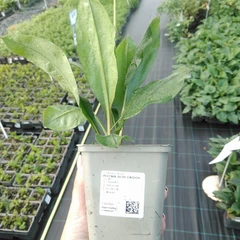
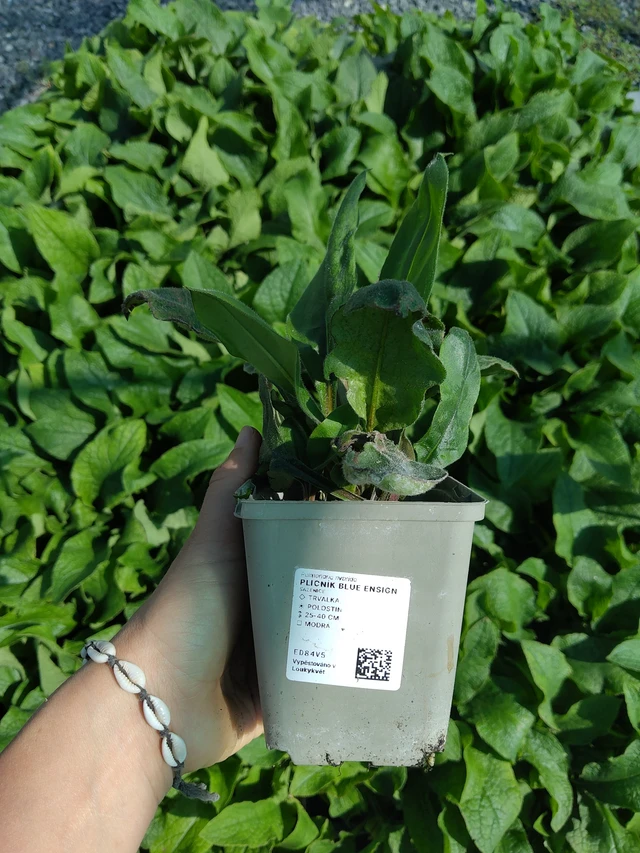
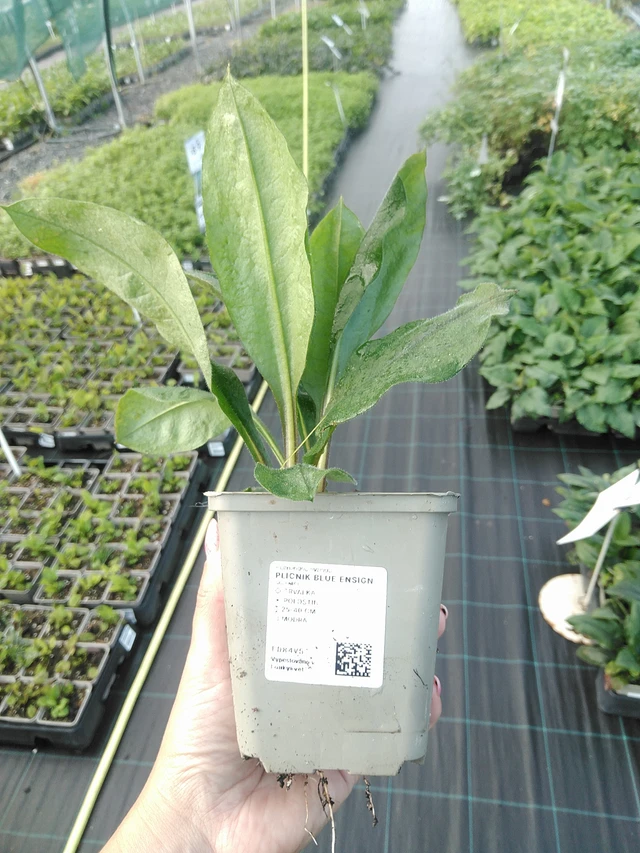
Plicník Blue Ensign

Trvalky do stínu nemusí být jen zelené a nenápadné, což dokazuje plicník 'Blue Ensign' svými nepřehlédnutelnými květy. V přírodě tyto rostliny obývají vlhčí háje a lužní lesy, díky čemuž jsou perfektní volbou pro podsadbu vzrostlých stromů nebo pro severní strany domů, kde se jiným trvalkám příliš nedaří. Vyžadují humózní, hlinitou půdu, která úplně nevysychá, a za to se odmění velkou vitalitou. Sazenice jsou plně mrazuvzdorné až do -30 °C, takže bez problémů přečkají i tuhé zimy a na jaře znovu spolehlivě obrazí. Kultivar 'Blue Ensign' vyniká mezi ostatními pravděpodobně nejtmavším a nejčistším odstínem modré barvy, která se na rozdíl od jiných plicníků po rozvití nemění do růžova. Jeho listy jsou celistvě tmavě zelené bez tečkování, což rostlině dodává elegantní vzhled i po odkvětu. Ačkoliv se nehodí k řezu do vázy ani k sušení, na záhoně udělá velkou parádu v kombinaci s jarními cibulovinami, nebo čemeřicemi. Navíc jde o rostlinu, která je v lidovém léčitelství známá a její mladé listy jsou jedlé. Show full description

Sazenice

Květináč K9 (9×9×9,5 cm)
1-2 kusy
4,29/ks
3-8 kusů
3,89/ks
9-17 kusů
3,39/ks
18+ kusů
3,19/ks
Add to cart
Skladem 90 ks s doručením od 15. 6. 2026
Na prodejně máme 90 ks na místě UA-10.1
Připravujeme 0 ks

Attracts pollinators 🐝

Ano

Difficulty

Beginner

Diseases

Disease-free 🙂

Edible

Ano
?
Information on whether the plant is edible.

Flower color

Blue

Flower color: Shade

Royal blue

Foliage color

Dark green

Fragrant (aromatic) 👃

Ne

Frost resistance

-30 °C
?
The temperature down to which the plant is frost hardy.

Hardiness zone

4a (-34.4 °C to -31.7 °C)

Height

25-40 cm

Moisture

💧💧

Pests

Pest-free 🙂

Position

Partial shade, shade

Soil

Loamy, humus-rich

Spacing

30-40 cm
?
Recommended planting spacing.

Spacing: Plants per m²

7-9

Species

Perennial

Suitable for cutting

Ne

Suitable for drying

Ne
1
2
3
4
5
6
7
8
9
10
11
12
Flowering
March
½ May

Cultivation

Pro úspěšné pěstování plicníku 'Blue Ensign' vyberte chladnější místo na zahradě, kam nedopadají přímé sluneční paprsky, zejména ne v poledne. Ideální je severní strana domu nebo stinný kout u plotu či pod stromy. Půda by měla být výživná, hlinitá a bohatá na humus. Pokud máte na zahradě těžkou jílovitou půdu, odlehčete ji přimícháním kompostu; naopak příliš písčitou půdu obohatťe organickou hmotou, aby lépe držela vodu. Sazenice sázejte do připravených jamek tak, aby krček rostliny nebyl utopený hluboko pod zemí, a po výsadbě důkladně zalijte.

Jelikož má tento plicník rád stabilní vlhkost, zálivka je nejdůležitější částí péče. Rostlina vám svěšenými listy sama ukáže, že má žízeň, ale snažte se tomuto stavu předcházet. Přestože je 'Blue Ensign' velmi vitální, nesnáší sucho. Hnojení není nezbytně nutné, pokud je půda dobře připravena, ale jarní dávka kompostu nebo hnojiva pro trvalky podpoří bohaté kvetení sytě modrými květy. Vzhledem k tomu, že se rostlina může přesévat, doporučujeme po odkvětu ostříhat květenství, pokud si nepřejete, aby se samovolně šířila po okolí.

Z hlediska údržby se jedná o dlouhověkou trvalku, která na jednom místě vydrží mnoho let. Staré a nevzhledné listy ostříhejte brzy z jara, ještě předtím, než začnou rašit nové květy. Díky mrazuvzdornosti až do zóny 4 (cca -34 °C) není třeba rostlinu na zimu zakrývat chvojím, zimu přečká bez úhony. Obrovskou výhodou je absence chorob a škůdců, což z plicníku dělá bezstarostnou rostlinu pro ekologické zahrady, kde navíc poslouží jako potrava pro včely a čmeláky.

Pěstování v květináči je u tohoto druhu možné, ale volte raději keramické nebo plastové nádoby, které drží vlhkost lépe než terakota. Dno nádoby musí mít odtokové otvory, aby kořeny nestály ve vodě, ale substrát udržujte stále vlhký. Rostlina v nádobě je náchylnější na promrznutí kořenového balu, proto ji na zimu buď zapusťte i s květináčem do záhonu, nebo nádobu obalte izolací a postavte na chráněné místo.

The information given is based on our experience, please use it as a guide only. Times may vary depending on the season, climate, location, sowing and transplanting dates and possibly also the conditions in the greenhouse/greenhouse. We always recommend testing how the plant performs in your conditions. Please do not take this as a guarantee.

Show all

Click to view the full growing instructions.

Frequently
asked
questions

Pěstování

Vlastnosti

Nemoci & škudci

Základní informace

Stanoviště

Množení

More products in category Lungwort

Pulmonaria dacica

Narrow-leaved lungwort is a plant native to the deciduous forests of the Balkans. It slowly spreads into sparse carpet-like stands. Unlike the common lungwort, its leaves are without the typical spots. Its original natural habitats predispose it for planting in light shade under trees and shrubs. In spring, it complements bulbous plants perfectly and attracts attention at a time when most perennials are just beginning to sprout. It blooms from March and is valuable pasture for bees and bumblebees. After flowering, its leaves retreat and new ones sprout. However, summer stands of lungwort are rather sparse, so we combine it with other perennials.
3,49
Více ks od 2,39
Coming Soon
Dostupné od 10. 8. 2026
New

Pulmonaria officinalis

Pulmonaria officinalis, známá spíše jako plicník lékařský, je vděčnou trvalkou, která si své místo v zahradách drží po staletí nejen pro svou krásu, ale i historické využití v léčitelství. Latinský název odkazuje na skvrnité listy, které středověkým bylinkářům připomínaly lidské plíce. Dnes ji oceňujeme především jako spolehlivou rostlinu do stinných a polostinných partií, kde se jiným druhům příliš nedaří. Vykvétá v březnu a dubnu záplavou drobných květů, přičemž na jedné rostlině můžete často pozorovat růžové, fialové i modré květy současně. Tato barevná hra nádherně kontrastuje se svěží zelení listů. Plicník miluje humózní, hlinitou půdu s dostatkem vláhy, ale jakmile zakoření, je velmi odolný. Skvěle se hodí do přírodních a lesních zahrad jako podrost pod opadavé stromy. I když se příliš nehodí k řezu do vázy, na záhoně vám udělá obrovskou službu tím, že brzy z jara přiláká první hladové opylovače. Rostlina se snadno rozrůstá a může se i přesévat, čímž postupně vyplní prázdná místa v záhonech.
3,49
Více ks od 2,39
Coming Soon
Dostupné od 17. 8. 2026

More products in category Perennials

Alchemilla mollis

Lady's mantle naturally grows on mountain pastures and meadows and in mixed forests. It is ornamental in both leaf and flower. The leaves have fine hairs giving the plant a velvety character. It is a perennial sought after by ancient alchemists for the drops of dew that appear in the pleated leaves. Valuable for florists for its multitude of tiny greenish-yellow flowers. Important in flower beds for its ground-covering character. Lasts 10 days in a vase.
2,99
Více ks od 2,09
In Stock posledních 554 kusů

Achillea millefolium

An original wild perennial with a large distribution area from Europe to Siberia. Suitable for natural and wild plantings. It grows in meadows and dry grassy places. A very adaptable and undemanding plant, it grows in clumps and spreads by runners. By cutting back after the first flowering, we encourage a set of new flowers. For bouquets, we harvest when the florets are fully open. It lasts 10 days in a vase. Summer Pastels is characterized by a changeable and soft range of colors from white and vanilla to salmon, brick red, and bronze.
3,09
Více ks od 1,99
In Stock posledních 450 kusů

Verbena bonariensis

A verbena species originally from South America. In our country, it is often used as an annual, but in mild winters it can overwinter and reproduce by self-seeding. The firm, airy stems beautifully soften perennial beds and make them special with their purple color. It beautifully complements steppe plantings with grasses and rose beds.
1,69
Více ks od 2,29
Skladem
Doručení od 1. 6. 2026

Gaura lindheimeri

Gaura is a clump-forming perennial native to Texas and Louisiana. Here, it behaves more like a short-lived perennial. It combines beautifully with grasses and adds lightness and airiness to flower beds. It is an excellent food source for insects. Tiny flowers resembling small butterflies bloom tirelessly from June until the first frosts. For bouquets, harvest as soon as the first two or three flowers open on the stem. Siskiyou Pink is a beautiful variety with pink-red flowers on slightly arching stems. It is less hardy than the white-flowering varieties. The red-spotted leaves are also interesting.
2,99
Více ks od 2,09
In Stock posledních 930 kusů

Echinacea purpurea

A valuable garden and medicinal perennial, native to North America. It blooms in summer with dark purple-pink flowers. The spiky flower centers are an irresistible attraction for butterflies. They last 7–10 days in a vase. After removing the petals, the stems with the central disks can be dried or used in fresh bouquets as an interesting element. Magnus features distinctive deep pink flowers with an orange-brown center.
2,99
Více ks od 2,09
Coming Soon
Dostupné od 29. 6. 2026
For Drying

Eryngium planum

A perennial that finds its place in naturalistic steppe and gravel beds. It attracts bees, bumblebees, and butterflies. It is floristically valuable for its flowers with striking bracts, which are also perfect for drying. The roots of some species were formerly eaten candied as sweets in England and France and added to pastries and jellies. In herbal medicine, it was used as an aphrodisiac, among other things, hence its folk name "male fidelity".
2,79
Více ks od 1,99
In Stock posledních 700 kusů

Echinacea pallida

A valuable garden and medicinal perennial, native to North America. It blooms in late summer and captivates with long drooping petals. The spiky flower centers are an irresistible attraction for butterflies. It lasts 7–10 days in a vase. After removing the petals, the stems with the central discs can be dried or used in fresh bouquets as an interesting element.
2,99
Více ks od 2,09
Coming Soon
Dostupné od 29. 6. 2026

Perovskia atriplicifolia

Perovskia are sparsely branched subshrubs, native to regions from Afghanistan to Tibet. They grow in open, sunny, rocky, and stony habitats. Their white felted shoots and grayish aromatic leaves are striking. They are suitable for sunny flower beds alongside other drought-loving perennials, where they create interesting structures even in the winter months.
2,99
Více ks od 2,09
In Stock posledních 959 kusů

Salvia nemorosa

This species of sage originally comes from the steppe regions of Central and Eastern Europe. It forms profusely flowering small clumps with straight upright stems. In flower beds, it looks best in groups. Traditionally, due to the identical flowering time, it is planted as a companion to roses. However, it will look just as good in mixed drought-loving steppe plantings with grasses. It lasts 7 days in a vase. The cultivar Caradonna stands out with a long flowering period and dark, almost black-purple stems with tiny purple flowers and dark purple bracts. If we cut it back after flowering, it will bloom again in late August and September.
2,99
Více ks od 2,09
In Stock posledních 550 kusů

Echinacea purpurea

A valuable garden and medicinal perennial, originally from North America. It blooms in summer with dark purple-pink flowers. The spiky flower discs are an irresistible lure for butterflies. Lasts 7–10 days in a vase. After plucking the petals, the stems with the central discs can be dried or used in fresh bouquets as an interesting element. Rubinstern is very similar to the Magnus cultivar; the petals are darker and firmer. As they fade, they gradually pale and droop downwards.
2,99
Více ks od 2,09
In Stock posledních 34 kusů

Rudbeckia fulgida

Rudbeckia, also known as coneflowers, originates from North America; they are robust and abundantly blooming perennials of late summer and autumn. They are suitable for prairie plantings with tall grasses as well as for cottage gardens. The central disks look very effective even after flowering and decorate perennial beds throughout the winter. Harvest for the vase as soon as they bloom. Vase life is 7 to 10 days. We can also use the dry central disks. Goldsturm is a reliable and long-proven cultivar. It has bright golden-yellow flowers with dark centers.
2,79
Více ks od 1,99
In Stock posledních 105 kusů

Gaura lindheimeri

Gaura is a clump-forming perennial native to Texas and Louisiana. Here, it behaves more like a short-lived perennial. It combines beautifully with grasses and adds lightness and airiness to flower beds. It is excellent pasture for insects. Tiny flowers resembling small butterflies bloom tirelessly from June until the first frosts. For bouquets, harvest as soon as the first two or three flowers on the stem open. Summer Breeze has a rich abundance of flowers in white and pink. It is robust and hardy.
2,99
Více ks od 2,09
Skladem
Doručení od 1. 6. 2026

Leucanthemum vulgare

A classic perennial for early summer bouquets and cottage gardens. For bouquets, we harvest flowers with firm, smooth central disks. Then they last 7–10 days in a vase. Maikönigin is an exceptionally abundantly flowering garden form.
2,79
Více ks od 1,99
In Stock posledních 868 kusů

Achillea millefolium

A native wild perennial with a large distribution range from Europe to Siberia. Suitable for natural and wild plantings. It grows in meadows and dry grassy places. A very adaptable and undemanding plant, it grows in clumps and spreads via runners. Cutting back after the first bloom encourages a new set of flowers. Harvest for bouquets when the tiny flowers are fully open. It lasts 10 days in a vase. Terracotta features ochre, shades of orange and yellow, and gray-green foliage.
2,99
Více ks od 2,89
In Stock

Calamintha nepeta

An undemanding and modest perennial that blooms with a large number of tiny flowers. It blooms for a record-breaking length of time throughout late summer and autumn. It forms smaller, compact, airy bushes that emit a minty-spicy fragrance. The thyme-like flowers attract bees, bumblebees, and butterflies. It will look good among roses as well as in natural-style steppe beds, perhaps with lower grasses.
2,79
Více ks od 1,99
In Stock

Salvia nemorosa

This species of sage originates from the steppe regions of Central and Eastern Europe. It forms abundantly flowering small clumps with straight upright stems. In beds, it looks best in groups. Traditionally, it is planted as a companion to roses due to the matching flowering time. However, it will look equally good in mixed drought-loving steppe plantings with grasses. It is an excellent food source for bees. It lasts 7 days in a vase. The cultivar Ostfriesland blooms with a strikingly dark violet-blue color.
2,99
Více ks od 2,09
In Stock

Salvia nemorosa

This species of sage originates from the steppe regions of Central and Eastern Europe. It forms profusely flowering small clumps with straight, upright stems. In flower beds, it looks best in groups. It is traditionally planted as a companion to roses due to the matching flowering time. However, it looks equally good in mixed drought-tolerant steppe plantings with grasses. It is an excellent food source for bees. Lasts 7 days in a vase. Amethyst is an elegant variety with long stems and a pink flower color that is unusual for sages.
2,99
Více ks od 2,09
Coming Soon
Dostupné od 22. 6. 2026

Calamintha nepeta ssp. nepeta

An undemanding and modest perennial that blooms with a large number of tiny flowers. It blooms for a record-breaking length of time throughout late summer and autumn. It forms smaller, compact, airy bushes that release a minty-spicy scent. The thyme-like flowers attract bees, bumblebees, and butterflies. It will look good among roses as well as in naturalistic steppe beds, perhaps with lower grasses. This calamint is generally more vigorous. It differs from other calamints with felted leaves by its record flowering length, stiff and shiny leaves, and also a larger number of flowers that do not form seeds and are therefore maximally durable. Sometimes sold under the cultivar name 'Triumphator'.
2,79
Více ks od 1,99
In Stock posledních 110 kusů
For Drying

Achillea filipendulina

Fernleaf Yarrow originates from the Caucasus and Central Asia. Unlike Common Yarrow, it grows in clumps and is also suitable for drying. Cutting back soon after flowering encourages re-blooming. However, if you decide to leave the spent stems in the beds, you gain a perfect structure that remains impressive long into winter. The leaves of this species emit a typical bitter Yarrow aroma. It lasts 10 days in a vase.
2,79
Více ks od 1,99
In Stock posledních 37 kusů

Anemone hybrida

Anemones come from the same family as buttercups. With their elegant flowers on long slender stems, they can liven up and brighten late summer and autumn beds. They stand out against the darker background of shrub groups and will also be grateful for their partial shade. The Czech Perennial Association chose autumn Anemones as the perennial of the season for 2022. They last 7 days in a vase. Whirlwind is a historical variety bred in 1887 in the USA. It has a semi-double pure white flower, often with inner twisted petals, and compact, strictly upright growth. The flowers are very durable.
3,49
Více ks od 3,59
Skladem
Doručení od 15. 6. 2026