Ireland
🌷 Pre-orders for bulbs are in full swing! Check out this year's selection. 🌷
Ireland
🌷 Pre-orders for bulbs are in full swing! Check out this year's selection. 🌷
Common lungwort, Loukykvět

Pulmonaria officinalis

Common lungwort

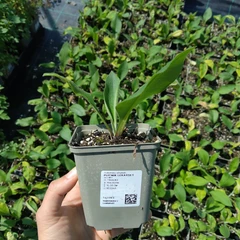
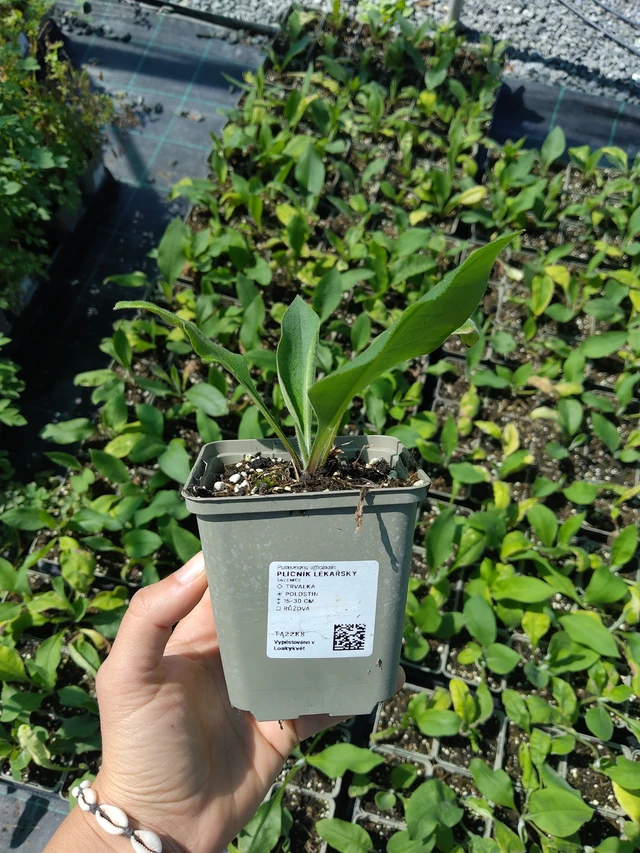
Pulmonaria officinalis, better known as common lungwort, is a rewarding perennial that has held its place in gardens for centuries, not only for its beauty but also for its historical use in medicine. The Latin name refers to its spotted leaves, which reminded medieval herbalists of human lungs. Today, we appreciate it primarily as a reliable plant for shady and semi-shady areas where other species do not thrive well. It blooms in March and April with a flood of tiny flowers, and you can often observe pink, purple, and blue flowers simultaneously on a single plant. This play of colors beautifully contrasts with the fresh green leaves. Lungwort loves humus-rich, loamy soil with plenty of moisture, but once established, it is very hardy. It is perfectly suited for natural and woodland gardens as an underplanting for deciduous trees. Although it is not very suitable for cutting into a vase, it will do a tremendous service in the flowerbed by attracting the first hungry pollinators early in the spring. The plant spreads easily and can also self-seed, gradually filling empty spaces in the beds. Show full description

Seedling

Květináč K9 (9×9×9,5 cm)
1-2 kusy
3,49/ks
3-8 kusů
3,09/ks
9-17 kusů
2,79/ks
18+ kusů
2,39/ks
Add to cart
Skladem 126 ks s doručením od 24. 8. 2026

Attracts pollinators 🐝

Ano

Difficulty

Beginner

Diseases

Disease-free 🙂

Edible

Ano
?
Information on whether the plant is edible.

Flower color

Blue, pink, purple

Flower color: Shade

Blue-violet, light pink

Foliage color

Green, silvery green

Fragrant (aromatic) 👃

Ne

Frost resistance

-34
?
The temperature down to which the plant is frost hardy.

Hardiness zone

4a (-34.4 °C to -31.7 °C)

Height

15-30 cm

Moisture

💧💧

Pests

Pest-free 🙂

Position

Partial shade, shade

Soil

Loamy, humus-rich

Spacing

25-30
?
Recommended planting spacing.

Spacing: Plants per m²

9-12

Species

Perennial

Suitable for cutting

Ne

Suitable for drying

Ne
1
2
3
4
5
6
7
8
9
10
11
12
Flowering
March
½ May

Recommended products

Sweet woodruff, Loukykvět
New

Galium odoratum

Sweet woodruff is a jewel of spring beech forests and an ideal choice for the shady corners of your garden. This low perennial naturally grows in moist and shady groves, where it forms continuous carpets of fresh green leaves. Thanks to its low maintenance and ability to spread quickly, it acts as a perfect groundcover plant that effectively suppresses weeds and retains moisture in the soil under the canopies of trees or shrubs. In May and June, the cover lights up with a flood of tiny, pure white flowers that bring light and softness to darker corners. In addition to its ornamental function, woodruff is valued for its unmistakable aroma. It contains coumarin, a substance reminiscent of the smell of freshly cut hay with notes of vanilla, which fully develops only when the plant wilts. It is therefore traditionally used to flavor spring drinks, such as May wine, or to season desserts. The plant is fully frost-resistant and cultivation is easy even for beginners; just provide it with humus-rich, loose soil and plenty of moisture.
3,29
More from 2,29
In Stock
Cranesbill Samobor, Loukykvět
New

Geranium phaeum

The Dusky Cranesbill grows in wetter meadows and light forests. The leaves of the 'Samobor' cultivar are divided, with brownish-purple spots at the notches. Flowers are in a dark bordeaux shade. It sprouts early in the spring and spreads into dense carpets. Suitable for naturalistic plantings.
3,49
More from 2,39
Unavailable
Pro rok 2026 nedostupné
Creeping bugleweed, Loukykvět
New

Ajuga reptans

Creeping bugleweed is the unappreciated hero of shady and semi-shady corners of the garden, where it forms dense and closed carpets. Originally a woodland plant, it occurs naturally in moist forests and meadows across Europe, making it an exceptionally hardy and adaptable perennial. Its main advantage is the ability to spread quickly using creeping runners, thereby suppressing weed growth without being aggressive toward larger plants. In May and June, racemes of blue-purple flowers rise above the rosettes of often bronze or purple-tinged leaves, literally magnetizing bees and bumblebees searching for nectar. Although it is not suitable for cutting, it fulfills its function perfectly in the garden as a lawn alternative under trees or on slopes where ordinary grass fails to thrive. Thanks to its high frost resistance and low maintenance, it is an ideal choice even for beginner gardeners who want to liven up darker and damper parts of their property.
3,29
More from 2,29
In Stock posledních 83 kusů
Spiked Speedwell Alba, Loukykvět

Veronica spicata

A carpet-forming species of speedwell. In the warmest and driest areas, it grows naturally even here. Ideal for south-facing slopes, rock gardens, but also for containers on roof gardens and dry lawns. A cultivar of the native species with pure white flowers arranged in candle-like inflorescences.
2,99
More from 2,09
Unavailable
Pro rok 2026 nedostupné
Yarrow Cassis, Loukykvět

Achillea millefolium

A native wild perennial with a large distribution range from Europe to Siberia. Suitable for natural and wild plantings. It grows in meadows and dry grassy places. A very adaptable and undemanding plant, it grows in clumps and spreads via runners. Cutting back after the first bloom encourages a new set of flowers. Harvest for bouquets when the tiny flowers are fully open. It lasts 10 days in a vase. The Cassis cultivar has flowers colored in shades from cherry-red to burgundy.
2,79
More from 1,99
In Stock
Coreopsis Moonbeam, Loukykvět

Coreopsis verticillata

If you are looking for a delicate and long-blooming plant for full sun, whorled tickseed is a great choice. The basic species originates from North America, and here it thrives best in a sunny spot and well-drained, rather drier loamy soil. Although it is a short-lived perennial, with the right care and a well-chosen location, it can bring joy for several years. A distinctive feature of this species is its rich foliage of very tiny leaves, which form low, about forty-centimeter-tall bushes. After transplanting from the pot, the mature seedling is perfectly suited for the edges of flower beds or mixed drought-tolerant compositions, where it beautifully softens the overall look. In addition, the plant is fully frost-hardy, requires no special care, and is free from diseases. The 'Moonbeam' variety stands out with countless smaller, creamy-yellow flowers. These appear in mid-summer and continue to decorate the garden until early autumn, providing rich pasture for pollinators. You can easily cut the delicate stems with flowers to bring home. They will add an informal meadow touch to bouquets and will maintain their freshness in a vase for about seven days.
2,99
More from 2,09
In Stock
Geranium Rozanne, Loukykvět
New

Geranium hybrida

A unique cultivar of hardy geranium. An exceptionally long flowering period from May to November. The flowers are violet-blue. Suitable for beds and containers. If growth becomes too vigorous, it can be cut back; it will soon regrow and bloom profusely again. It is frost-hardy, yet it is good to protect it in winter with a light covering of brushwood.
4,79
More from 3,59
In Stock
Smooth Hydrangea Annabelle, Loukykvět

Hydrangea arborescens

A dense hemispherical shrub with smooth fresh green leaves that are lighter on the underside. Flowers in convex to hemispherical inflorescences with a diameter of 15–30 cm gradually change color from pale green and cream to pure white.
4,29
More from 3,89
In Stock
Sedum Brilliant, Loukykvět

Sedum spectabile

A very hardy and long-lived perennial with an almost year-round effect. It forms upright clumps, and the flowers attract bees and butterflies. The cultivar Brilliant is characterized by shrubby growth and a distinct pink color.
2,99
More from 2,89
In Stock
Anemone Praecox, Loukykvět

Anemone hupehensis

Anemones come from the same family as buttercups. With their elegant flowers on long, slender stems, they can brighten up and illuminate late summer and autumn flower beds. They stand out against a darker background of shrub groups and will also be grateful for their partial shade. The Czech Perennials Association chose autumn anemones as the perennial of the 2022 season. They last 7 days in a vase. Anemone Praecox is a compactly growing cultivar with a rich set of flowers. Due to its lower stature, it is perfectly suitable even for smaller gardens and for growing in containers. A big plus is the early flowering time, and the slightly darker coloring of the underside of the petals adds an interesting touch.
3,49
More from 3,59
In Stock
Astilbe Diamant, Loukykvět

Astilbe simplicifolia

Delicate decorative, long-lived shade-loving perennials with pinnate leaves and magnificent feathery inflorescences. They originate primarily from East Asia, but also from eastern North America. They look best in large-scale plantings. Due to relatively late sprouting, it is good to combine them with early-flowering bulbs. They last 4–10 days in a vase. We harvest as soon as half of the inflorescence is in bloom. They are very sensitive to ethylene released from ripening fruit. Flowers of the Diamant cultivar have a white color.
4,29
More from 3,19
In Stock

Cultivation

Plicník lékařský je ideální volbou pro každého, kdo hledá nenáročnou a přitom vizuálně atraktivní rostlinu do stinných či polostinných koutů zahrady. Tato trvalka přirozeně roste v listnatých lesích, proto jí nejvíce vyhovuje stanoviště pod korunami stromů nebo v blízkosti keřů, kde je chráněna před přímým poledním sluncem. Půda by měla být hlinitá a bohatá na humus, ideálně s přídavkem kompostu nebo listovky, která zajistí potřebné živiny a strukturu. Důležité je, aby zemina zůstávala stále mírně vlhká, protože plicník špatně snáší sucho. Na druhou stranu by půda neměla být trvale podmáčená, aby nedocházelo k zahnívání kořenů. Vzhledem k tomu, že obdržíte již vzrostlou sazenici, můžete ji vysadit prakticky kdykoliv během vegetační sezóny, pokud není půda zamrzlá. Při výsadbě dodržujte spon zhruba 25 až 30 cm (9–12 rostlin na m²), což rostlinám poskytne dostatek prostoru, ale zároveň jim umožní se časem zapojit a vytvořit souvislý porost, který potlačí plevel.

Péče o plicník je velmi snadná a zvládne ji i úplný začátečník. Na jaře, často už v březnu, vás potěší záplavou drobných květů, které mění barvu z růžové na modrou či fialovou, a tím lákají první čmeláky a včely. Po odkvětu doporučujeme sestřihnout staré listy, což rostlinu povzbudí k tvorbě nových, zdravých a stříbřitě skvrnitých listů, které budou ozdobou záhonu až do zimy. Pokud jde o hnojení, rostlině postačí na jaře přidat k trsům trochu vyzrálého kompostu. Plicník je také velmi odolný – podle dostupných informací netrpí na choroby ani škůdce, takže se nemusíte obávat náročné chemické ochrany. Navíc je plně mrazuvzdorný (zóna 4a, až do -34 °C) a naši zimu přečká bez nutnosti jakékoliv přikrývky. Díky své schopnosti se přesévat může časem vyplnit prázdná místa v záhonech, aniž by byl invazivní.

Pokud nemáte zahradu, můžete plicník pěstovat i v nádobách či truhlících umístěných na stinném balkoně či terase. Pro pěstování v květináči je zásadní vybrat dostatečně velkou nádobu s odtokovými otvory a použít kvalitní substrát smíchaný s kompostem, který dobře drží vláhu. V nádobách vysychá zemina mnohem rychleji než ve volné půdě, proto je nutné dbát na pravidelnou a častější zálivku, a to zejména v teplejších dnech. Dejte však pozor na přelití. I v nádobě je rostlina mrazuvzdorná, ale u menších květináčů je vhodné na zimu obalit nádobu jutou nebo polystyrenem, aby nepromrzl kořenový bal ze stran. Plicník je vděčná dlouhověká trvalka, která vám při minimální péči bude dělat radost mnoho let.

The information given is based on our experience, please use it as a guide only. Times may vary depending on the season, climate, location, sowing and transplanting dates and possibly also the conditions in the greenhouse/greenhouse. We always recommend testing how the plant performs in your conditions. Please do not take this as a guarantee.

Show all

Click to view the full growing instructions.

Frequently
asked
questions

Pěstování

Vlastnosti

Stanoviště

Množení

Nemoci & škudci

Problémy

More products in category Plicník

Lungwort Blue Ensign, Loukykvět
New

Pulmonaria hybrida

Shade-loving perennials do not have to be just green and inconspicuous, which lungwort 'Blue Ensign' proves with its unmissable flowers. In nature, these plants inhabit moist groves and floodplain forests, making them a perfect choice for underplanting mature trees or for the northern sides of houses, where other perennials do not do too well. They require humus-rich, loamy soil that does not completely dry out, and in return, they reward you with great vitality. The seedlings are fully frost-resistant down to -30 °C, so they will easily survive even harsh winters and reliably sprout back beautifully in the spring. The 'Blue Ensign' cultivar stands out among others with probably the darkest and purest shade of blue, which, unlike other lungworts, does not change to pink after opening. Its leaves are solid dark green without spotting, giving the plant an elegant look even after blooming. Although it is not suitable for cutting into a vase or for drying, it will make a great show in the bed combined with spring bulbs or hellebores. Furthermore, it is a plant well-known in folk medicine, and its young leaves are edible.
4,29
More from 3,19
In Stock poslední 1 kus
Lungwort Azurea, Loukykvět

Pulmonaria dacica

Azurea does honor to its name, bringing a heavenly blue color to spring days that gradually changes into purple tones. It is a lungwort cultivar that occurs naturally in moist mountain meadows and in bright forests. In the garden, it requires similar conditions, i.e., a partially shaded to shady location with well-draining, humus-rich, and constantly slightly moist soil. It grows to a height of around 20 to 30 centimeters and forms neat clumps that spread slightly over time. Its lanceolate leaves are purely green, lacking the mottling of common lungworts, which can be an advantage for calmer compositions in the undergrowth of woody plants. This long-lived perennial is an ideal choice for beginners because it does not suffer from diseases or pests and excellently handles even severe frosts. Although it is not suitable for cutting into a vase or for drying, it will do its job right in the garden bed, where it attracts beneficial insects. After the spring bloom, the plant partially dies back to create new foliage for the rest of the season. Because the summer foliage is not usually as dense, we recommend planting Azurea in small groups or mixing it with small spring bulbs and grasses, which will ensure a season-long effect.
3,49
More from 2,39
Coming Soon

More products in category Trvalky

Lady's mantle Irish Silk, Loukykvět

Alchemilla mollis

Alchemilla mollis, known as lady's mantle, is an indispensable perennial for anyone who wants to bring harmony and softness to the garden. Its home is the moister environments of mountain meadows and light forests, making it a very adaptable plant that will survive even severe frosts without problems in our climate. The 'Irish Silk' cultivar is prized for its vitality and abundant blooming, where clouds of tiny, yellow-green flowers float above clumps of gray-green leaves. It is precisely this neutral color that can work wonders in a flower bed – it softens overly sharp contrasts between other flowers and beautifully unifies the entire composition. Besides its ornamental function, lady's mantle also has practical uses. Thanks to its clumping growth and ability to quickly fill in, it is ideal for edging pathways or as an underplanting beneath taller shrubs and roses. Water droplets catch on its leaves, creating a magical spectacle in the garden. If you enjoy making bouquets, you will love lady's mantle as versatile filler greenery that matches almost anything. It will last beautiful for about ten days in a vase, and its inflorescences can also be easily dried without losing too much of their color or shape. Moreover, it is a magnet for pollinators, and its young leaves are even edible, so it also finds use in a natural kitchen.
2,99
More from 2,09
In Stock s doručením od 31. 8. 2026
Yarrow Summer Pastels, Loukykvět

Achillea millefolium

An original wild perennial with a large distribution area from Europe to Siberia. Suitable for natural and wild plantings. It grows in meadows and dry grassy places. A very adaptable and undemanding plant, it grows in clumps and spreads by runners. By cutting back after the first flowering, we encourage a set of new flowers. For bouquets, we harvest when the florets are fully open. It lasts 10 days in a vase. Summer Pastels is characterized by a changeable and soft range of colors from white and vanilla to salmon, brick red, and bronze.
3,09
More from 1,99
In Stock
Verbena, Loukykvět

Verbena bonariensis

A verbena species originally from South America. In our country, it is often used as an annual, but in mild winters it can overwinter and reproduce by self-seeding. The firm, airy stems beautifully soften perennial beds and make them special with their purple color. It beautifully complements steppe plantings with grasses and rose beds.
3,29
More from 2,29
In Stock posledních 95 kusů
Woodland Sage Caradonna, Loukykvět

Salvia nemorosa

This species of sage originally comes from the steppe regions of Central and Eastern Europe. It forms profusely flowering small clumps with straight upright stems. In flower beds, it looks best in groups. Traditionally, due to the identical flowering time, it is planted as a companion to roses. However, it will look just as good in mixed drought-loving steppe plantings with grasses. It lasts 7 days in a vase. The cultivar Caradonna stands out with a long flowering period and dark, almost black-purple stems with tiny purple flowers and dark purple bracts. If we cut it back after flowering, it will bloom again in late August and September.
2,99
More from 2,09
In Stock s doručením od 31. 8. 2026
Russian Sage, Loukykvět

Perovskia atriplicifolia

Russian sage reliably brings a touch of sunny steppes into the garden and places almost no demands on care. These sparsely branched subshrubs originally come from harsh, rocky areas from Afghanistan to Tibet, where they grow on open sun-drenched plains. Thanks to its origin, it delights in full sun and poor, well-drained sandy soil with minimal moisture. You will receive from us a well-rooted seedling in a pot, which just needs to be transplanted straight to the chosen spot in the flower bed. It does not need support, is avoided by common pests and diseases, and will survive frosts down to minus twenty-eight degrees. It grows up to one hundred and twenty centimeters and forms striking white felted shoots with silvery grey aromatic leaves. From July to October, it blooms with tiny blue-purple flowers that act as a lure for bees and butterflies and are even edible. Russian sage stands out next to drought-tolerant perennials. The flowers are suitable for cutting and drying for winter arrangements. Moreover, the silvery stems will ensure a beautiful winter effect in the flower bed.
2,99
More from 2,09
Coming Soon
Gaura Siskiyou Pink, Loukykvět

Gaura lindheimeri

Gaura Siskiyou Pink is a charming perennial that brings lightness and airiness to the garden. Its original native area is in the warm regions of Texas and Louisiana, which is why it thrives in full sun and well-drained sandy soil. It grows in clumps and from June until the autumn frosts produces tiny raspberry-pink flowers that resemble fluttering butterflies. An interesting detail of this variety is the green leaves with a bronze tint and red spots. It is an absolutely undemanding plant, does not suffer from diseases or pests, and even beginners can handle its care. You will receive a grown seedling in a pot from us, which you simply need to transplant directly into the flowerbed. Here it complements ornamental grasses perfectly and acts as an attraction for bees and bumblebees. Although it grows more as a short-lived perennial in our climate, in a suitable place it reliably self-seeds. Occasional pinching will encourage richer branching. Gaura is excellent for summer bouquets. We cut the stems for a vase as soon as the first two to three little flowers open.
2,99
More from 2,09
In Stock
Coneflower Magnus, Loukykvět

Echinacea purpurea

A valuable garden and medicinal perennial, native to North America. It blooms in summer with dark purple-pink flowers. The spiky flower centers are an irresistible attraction for butterflies. They last 7–10 days in a vase. After removing the petals, the stems with the central disks can be dried or used in fresh bouquets as an interesting element. Magnus features distinctive deep pink flowers with an orange-brown center.
2,99
More from 2,09
In Stock poslední 1 kus
Sea Holly, Loukykvět
For drying

Eryngium planum

Sea holly is an indispensable perennial for all lovers of naturally styled gardens. It earned its folk name - male fidelity - in times when it was used in herbal medicine as an aphrodisiac, and its roots were even candied as sweets in France and England. Today, however, you will appreciate it mainly for its low maintenance and unique appearance. Its home is on sunny hillsides and dry meadows, so even in our gardens, it will welcome well-drained, even poorer sandy soil and full sun. It produces upright, sturdy stems topped with blue-purple flowers with prickly bracts, which bring interesting structure and a silvery touch to the flowerbeds. It is literally a magnetic plant for bees, bumblebees, and butterflies, who find a rich food source on it. Floristically, it is extremely valuable, because its flowers are perfectly suited for cutting as well as drying for winter decorations. If you decide not to harvest it, feel free to leave it in the flowerbed all winter. Its silhouette covered in hoarfrost creates a wonderful winter effect. Although it is a short-lived perennial, in a suitable location it reliably self-seeds, so you will enjoy its beauty for many years.
2,79
More from 1,99
Coming Soon
Echinacea pallida, Loukykvět

Echinacea pallida

The pale coneflower is one of the exceptionally interesting prairie perennials of the North American continent. In its natural environment, it grows on open, sunny plains, which is why it thrives best in our gardens in full sun in drier, well-drained soil. You just need to transplant this grown seedling straight into the flower bed, where it will reliably take root. It does not need support, easily withstands severe frosts, and is avoided by common diseases and pests, making it ideal for beginner growers. During June and July, it will reward you with aromatic flowers with unusually narrow and drooping petals in light purple and pink tones. The prominent prickly centers are literally a magnet for bees and bumblebees, and the flowers themselves are surprisingly edible. The plant stands out especially in rustic plantings together with ornamental grasses. Gardeners and florists love it for its versatility. The fresh stems bring joy in a vase for about a week. Moreover, the distinctive central cones hold their shape perfectly, can be perfectly dried for winter decorations, or left in the flower bed, where they will create an eye-catching winter structure under a layer of snow.
2,99
More from 2,09
In Stock
Coneflower Rubinstern, Loukykvět

Echinacea purpurea

A valuable garden and medicinal perennial, originally from North America. It blooms in summer with dark purple-pink flowers. The spiky flower discs are an irresistible lure for butterflies. Lasts 7–10 days in a vase. After plucking the petals, the stems with the central discs can be dried or used in fresh bouquets as an interesting element. Rubinstern is very similar to the Magnus cultivar; the petals are darker and firmer. As they fade, they gradually pale and droop downwards.
2,99
More from 2,09
In Stock
Woodland Sage Amethyst, Loukykvět

Salvia nemorosa

This species of sage originates from the steppe regions of Central and Eastern Europe. It forms profusely flowering small clumps with straight, upright stems. In flower beds, it looks best in groups. It is traditionally planted as a companion to roses due to the matching flowering time. However, it looks equally good in mixed drought-tolerant steppe plantings with grasses. It is an excellent food source for bees. Lasts 7 days in a vase. Amethyst is an elegant variety with long stems and a pink flower color that is unusual for sages.
2,99
More from 2,09
In Stock
Rudbeckia Goldsturm, Loukykvět

Rudbeckia fulgida

Rudbeckia Goldsturm is a reliable and long-lived perennial that will bring the warm tones of late summer and autumn into your garden. It originally comes from the open plains and prairies of North America, so it delights most in sunny locations with common garden soil, whether it is loamy, humus-rich, or clayey. You will receive from us an already grown seedling in a pot, which you just need to transplant to the chosen spot in the flower bed. It is a completely undemanding plant, does not suffer from diseases or pests, and easily survives severe frosts. The Goldsturm cultivar grows to a height of about seventy centimeters and does not need support. From August to October, it produces a flood of golden-yellow flowers with distinctly dark centers. These edible flowers attract pollinators and fit perfectly into both prairie and rustic plantings. Rudbeckia is also great for cutting, lasting around ten days in a vase. In addition, the distinctive dark centers can be easily dried. If you leave them in the flower bed over the winter, they will provide a wonderful spectacle.
2,79
More from 1,99
In Stock
Gaura Summer Breeze, Loukykvět

Gaura lindheimeri

The charming gaura comes from the sun-drenched plains of Texas and Louisiana and represents exactly the plant that can liven up any drought-tolerant planting. It is a naturally profusely blooming perennial that delights in full sun and well-drained, sandy, and nutrient-poor soil. You will receive from us an already grown seedling in a pot, which will quickly form a vigorous clump after being transplanted into the garden. From early summer until late autumn, it will delight you with a flood of tiny flowers in pure white and delicate pink tones. The flowers gently sway in the breeze and with their appearance resemble a flock of tiny butterflies, which also really like to land on the plant, as do bees and bumblebees. Although gaura is known as a short-lived perennial, thanks to its willing self-seeding, it will last for many years in your garden. Caring for it is completely undemanding, it is avoided by most diseases and pests, and it can handle frosts down to eighteen degrees below zero without any problems. It is often used in mixed borders, where it beautifully softens the overall impression, and perfectly matches various types of ornamental grasses. The Summer Breeze variety is popular for its strong and healthy growth as well as its exceptionally generous set of flowers, which grow to about one meter. If you like to create your own bouquets, do not hesitate to cut gaura for a vase. Harvesting is best done the moment the first small flowers on the stem begin to open. These delicate flowers are not suitable for drying into dried arrangements, but they will beautifully lighten up fresh bouquets.
2,99
More from 2,09
In Stock s doručením od 17. 8. 2026
Woodland Sage Ostfriesland, Loukykvět

Salvia nemorosa

This species of sage originates from the steppe regions of Central and Eastern Europe. It forms abundantly flowering small clumps with straight upright stems. In beds, it looks best in groups. Traditionally, it is planted as a companion to roses due to the matching flowering time. However, it will look equally good in mixed drought-loving steppe plantings with grasses. It is an excellent food source for bees. It lasts 7 days in a vase. The cultivar Ostfriesland blooms with a strikingly dark violet-blue color.
2,99
More from 2,09
In Stock
Calamint Blue Cloud, Loukykvět

Calamintha nepeta

Lesser calamint Blue Cloud is an undemanding and modest perennial that reliably perfumes any sunny garden. Its original homeland is the sunny and dry slopes of Southern Europe, which is why it thrives best here in direct sun in well-drained, sandy, or poorer loamy soil. It handles winter without problems, tolerating frosts down to minus twenty-three degrees. You will receive a grown seedling in a pot from us, which you just need to transplant straight into the flowerbed, where it will very soon form a compact, airy small shrub reaching a height of up to forty centimeters. It does not suffer from any diseases or pests, so even complete beginners can easily handle caring for it. Throughout late summer and into autumn, it blooms with a record number of tiny blue flowers that are so typical of the Blue Cloud variety. The whole plant emits a pleasant minty-spicy scent, and its flowers, which resemble thyme, act as a literal magnet for bees, bumblebees, and butterflies. It will look great among roses or in naturally designed steppe flowerbeds, where it naturally complements lower ornamental grasses. Additionally, both the blue flowers and green leaves are edible, so you can use them to garnish summer dishes. Lesser calamint is also excellently suited for cutting into smaller fresh bouquets, adding a fine structure to them in a vase.
2,79
More from 1,99
In Stock s doručením od 31. 8. 2026
Daisy Maikönigin, Loukykvět

Leucanthemum vulgare

A classic perennial for early summer bouquets and cottage gardens. For bouquets, we harvest flowers with firm, smooth central disks. Then they last 7–10 days in a vase. Maikönigin is an exceptionally abundantly flowering garden form.
2,79
More from 1,99
In Stock
Calamint, Loukykvět

Calamintha nepeta ssp. nepeta

An undemanding and modest perennial that blooms with a large number of tiny flowers. It blooms for a record-breaking length of time throughout late summer and autumn. It forms smaller, compact, airy bushes that release a minty-spicy scent. The thyme-like flowers attract bees, bumblebees, and butterflies. It will look good among roses as well as in naturalistic steppe beds, perhaps with lower grasses. This calamint is generally more vigorous. It differs from other calamints with felted leaves by its record flowering length, stiff and shiny leaves, and also a larger number of flowers that do not form seeds and are therefore maximally durable. Sometimes sold under the cultivar name 'Triumphator'.
2,79
More from 1,99
In Stock
Yarrow Terracotta, Loukykvět

Achillea millefolium

A native wild perennial with a large distribution range from Europe to Siberia. Suitable for natural and wild plantings. It grows in meadows and dry grassy places. A very adaptable and undemanding plant, it grows in clumps and spreads via runners. Cutting back after the first bloom encourages a new set of flowers. Harvest for bouquets when the tiny flowers are fully open. It lasts 10 days in a vase. Terracotta features ochre, shades of orange and yellow, and gray-green foliage.
2,99
More from 2,89
In Stock
Russian sage Little Spire, Loukykvět

Perovskia atriplicifolia

Perovskia are sparsely branched subshrubs, originating from areas ranging from Afghanistan to Tibet. They grow in open, sunny, rocky, and stony habitats. Their white-felted shoots and grayish aromatic leaves are striking. They fit well in sunny flower beds with other drought-loving perennials, where they create interesting structures even in the winter months. Little Spire is a smaller cultivar suitable even for pots with a soil volume of 7 liters or more.
3,49
More from 3,59
In Stock
Woodland Sage Schneehügel, Loukykvět

Salvia nemorosa

This species of sage originates from the steppe regions of Central and Eastern Europe. It forms abundantly flowering small clumps with straight upright stems. In beds, it looks best in groups. Traditionally, it is planted as a companion to roses due to the matching flowering time. However, it will look equally good in mixed drought-loving steppe plantings with grasses. It is an excellent food source for bees. It lasts 7 days in a vase. Schneehügel blooms white.
2,99
More from 2,09
In Stock