Ireland
🌷 Pre-orders for bulbs are in full swing! Check out this year's selection. 🌷
Ireland
🌷 Pre-orders for bulbs are in full swing! Check out this year's selection. 🌷
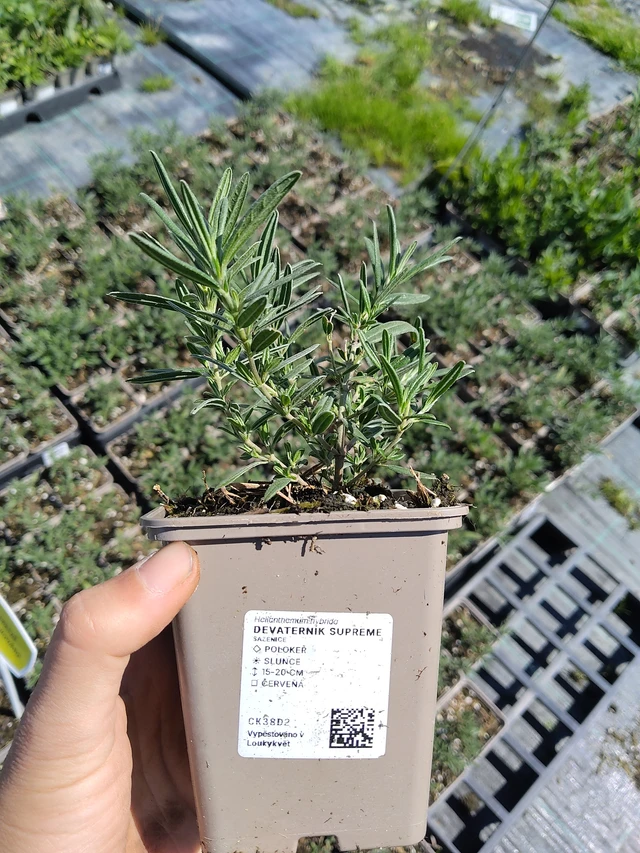
Rock rose Supreme, Loukykvět

Helianthemum hybrida

Rock rose Supreme

Třešňově červené květy a tmavě zelené listy dělají z devaterníku Supreme (Helianthemum hybrida) nepřehlédnutelný prvek každé zahrady. Zhruba dvaceticentimetrový polokeř neúnavně kvete od května do července a přináší s sebou atmosféru sluncem zalitých luk. Ačkoliv se jemné květy nedají sušit ani řezat do vázy, plně to vynahrazují na záhonu. Intenzivně lákají opylovače a jsou zcela jedlé, takže je můžete využít k oživení pokrmů v kuchyni. Devaterníku vyhovují podmínky podobné jeho přirozenému prostředí na vyhřátých skalnatých svazích. Zásadní je pro něj dostatek tepla, přímé slunce a chudá, dobře propustná písčitá půda. Díky prokořeněné sazenici v květináči, kterou od nás obdržíte, je výsadba přímo na trvalé stanoviště velmi snadná. Rostlina vyniká vysokou odolností vůči běžným chorobám i škůdcům a spolehlivě zvládá mrazy až do -23 °C. Svůj tvar si drží i v zimě, proto po ní nezůstane prázdné místo. Výborně se hodí do štěrkových ploch, k lemům cestiček a mezi další suchomilné trvalky. Největší dojem uděláte, pokud vysadíte více kusů pospolu, ideální spon pro výsadbu je 30 až 40 centimetrů. Show full description

Seedling

Květináč K9 (9×9×9,5 cm)
1-2 kusy
4,29/ks
3-8 kusů
3,89/ks
9-17 kusů
3,49/ks
18+ kusů
3,19/ks
Add to cart
Skladem 136 ks s doručením od 17. 8. 2026

Attracts pollinators 🐝

Ano

Difficulty

Beginner

Diseases

Disease-free 🙂

Edible

Ano
?
Information on whether the plant is edible.

Flower color

Red

Flower color: Shade

Cherry

Foliage color

Dark green

Fragrant (aromatic) 👃

Ne

Frost resistance

-23
?
The temperature down to which the plant is frost hardy.

Hardiness zone

6a (-23.3 °C to -20.6 °C)

Height

15-20 cm

Moisture

💧

Pests

Pest-free 🙂

Position

Sun

Soil

Sandy, poor, well-drained

Spacing

30-40 cm
?
Recommended planting spacing.

Spacing: Plants per m²

9-12

Species

Subshrub

Suitable for cutting

Ne

Suitable for drying

Ne
1
2
3
4
5
6
7
8
9
10
11
12
Flowering
May
July

Recommended products

Allium Cameleon, Loukykvět
New

Allium

The Cameleon garlic is a charming bulbous plant that has lived up to its name, playing out a subtle color transformation in the flower bed. While its small spherical inflorescences initially color in deeper dusty pink shades, over time they slowly fade to pure white with light pink veining. The flowers on sturdy stalks appear very delicate in the garden and stand out best in mixed steppe flower beds or rock gardens, where they create harmony with lower ornamental grasses. Garlics are generally a great attraction for insects, and both bees and butterflies enjoy seeking out their flowers. If you like to create your own bouquets, you will certainly appreciate the use of garlic in floristry. The inflorescences look wonderful in early summer arrangements and will delight you in a vase for up to fourteen days.
0,177
Unavailable
Pro rok 2026 nedostupné
Striped squill, Loukykvět
New

Puschkinia scilloides var. libanotica

Striped squill (Puschkinia scilloides) will bring an exceptionally delicate and elegant element to your garden. Its inflorescences consist of clusters of tiny star-shaped flowers that stand out with a specific light blue color transitioning to white. The flowers appear with the first rays of spring in March and April, growing to a height of around fifteen centimeters above deep green leaves. Not only do they look beautiful, but they also smell pleasant, attracting early spring pollinators from afar. This bulbous plant is an absolutely ideal choice for beginners because it does not suffer from any diseases and easily survives even extreme frosts down to minus forty degrees. You can easily brighten up empty spots under taller deciduous shrubs with it, and it also stands out on the edges of sunny and semi-shaded flower beds. From the bulbs you plant during the autumn, you will get a reliable perennial. Striped squill naturally complements other early flowers in the garden and will soon become a favorite plant that will decorate your garden year after year.
0,162
In Stock
Geum Mai Tai, Loukykvět

Geum rivale

Avens Mai Tai is a charming spring perennial that brings a romantic touch to the garden with its adorable cup-shaped flowers. The original species often grows near streams and in moister meadows, so it will easily settle in our gardens in sun or partial shade, where well-drained, loamy, and slightly humous soil will suit it best. You will receive a rooted seedling in a pot from us, which you just need to transplant into the flowerbed. Avens forms nice basal clumps of green leaves, which over time function as an excellent ground cover. Its growth is reliable and its care is downright undemanding, because the plant is not bothered by pests or diseases and withstands frosts down to minus twenty-eight degrees. It stands out best when you plant it in smaller groups about thirty centimeters apart. From May to July, richly branched stems bearing semi-double flowers with gently ruffled petals appear above the foliage. The Mai Tai cultivar, which was bred in the USA in 2005, is characterized by its amazing color variability. It blooms in peach tones with a pink tint and gradually transitions into more muted pastel, salmon, and apricot shades. Blooming avens is a huge attraction for insects, especially for butterflies. We cut the stems for a vase when roughly a quarter to half of the flowers on the stem are open. They will stay beautiful in water for approximately seven days and add lightness and movement to an arrangement. However, its flowers are not suitable for drying. Although it is more of a short-lived perennial, it will bring you a lot of joy in the flowerbed with its rich flowers and undemanding nature.
3,89
More from 2,89
In Stock s doručením od 10. 8. 2026
Meadowsweet Plena, Loukykvět

Filipendula vulgaris

Dropwort 'Plena' is a drought-tolerant native perennial that naturally handles even very dry habitats thanks to its tuberously thickened roots. It forms basal rosettes of finely divided leaves that resemble ferns and decorate the flower bed even when the plant is not currently in bloom. Floristically valuable are its fragrant milky-white inflorescences, which tower at the tops of the stems in June and July. Interesting are the buds themselves, looking like tiny pearls, as well as the post-bloom stage in the form of small stars. In a vase, they last about a week and perfectly complement meadow bouquets. The 'Plena' variety boasts flowers that are significantly richer and more double than the basic species, while maintaining its natural hardiness and undemanding nature.
3,89
More from 2,89
In Stock posledních 97 kusů
Navelwort Alba, Loukykvět
New

Omphalodes verna

Navelwort Alba is a charming spring perennial that resembles white forget-me-nots with its flowers. It originally comes from the mountain forests of Southern and Central Europe, where it forms extensive carpets in the undergrowth of trees. Thanks to its origin, it is perfectly suited for shady and semi-shady places in the garden, where many other plants fail to thrive. It grows in clumps and gradually spreads by means of short runners, thereby effectively suppressing weed growth and functioning as a reliable groundcover. The Alba cultivar is characterized by bright white tiny flowers that literally light up the darker corners of the garden in April and May. Although the plant is tiny, it looks very impressive and fresh in an area. It is a long-lived and completely undemanding perennial, ideal even for beginner gardeners, which furthermore does not suffer from diseases or pests. During the blooming period, it is also a welcome food source for bees and other early pollinators.
3,49
More from 2,39
Coming Soon
Phlox Sweet Summer Compact Purple Bicolor, Loukykvět

Phlox paniculata

Garden phlox, often called simply phlox, is a perennial that we immediately associate with country gardens and summer relaxation. It originally comes from the more humid regions of North America, but it naturalized in European gardens back in the nineteenth century, and an endless array of cultivars has been created since then. Phloxes are prized not only for their flood of flowers in the summer but also for their subtle spicy fragrance that wafts through the garden, especially in the early evening. It is a plant that literally magnetizes bees, bumblebees, and other pollinators, bringing a lot of life into the flower bed. In a garden composition, it perfectly complements taller perennials, covering the lower parts of their stems. This specific cultivar from the 'Sweet Summer' series stands out, as the name suggests, with a lower and compact growth of around fifty to sixty centimeters. Its flowers are bicolor with a distinct deep purple eye and edging, which looks very decorative. Despite breeding efforts for maximum resistance, it remains true that phloxes are sensitive to climate and soil conditions. They require humous, loose soil and above all, plenty of moisture. If their roots suffer from drought, they tend to be susceptible to powdery mildew, so provide them with regular watering and a spot in the sun or light partial shade. For lovers of cut flowers, phlox is a clear choice. We harvest it as soon as about half of the flowers in the inflorescence are open, and it will bring you joy in a vase for up to ten days.
3,49
More from 2,39
In Stock posledních 53 kusů
Yarrow Paprika, Loukykvět
New

Achillea millefolium

Native wild perennial with a large distribution area from Europe to Siberia. Suitable for natural and wild plantings. Grows in meadows and dry grassy places. Very adaptable and undemanding plant, grows in clumps and spreads by runners. Cutting back after the first flowering promotes a new set of flowers. We harvest for bouquets when the florets are fully open. Lasts 10 days in a vase. Cultivar Paprika has flowers in a warm red shade.
3,49
More from 2,39
In Stock posledních 65 kusů
Panicle Hydrangea Limelight, Loukykvět

Hydrangea paniculata

Panicle hydrangeas are beautiful shrubs native to China and Japan, where their bark was used, among other things, to make paper. We grow them for their impressive conical inflorescences. They are undemanding and abundantly blooming plants suitable for planting in flower beds and larger containers. Limelight has inflorescences up to 30 cm large. The color changes from greenish-white through white to bright pink.
5,19
More from 4,39
In Stock

Cultivation

Devaterník Supreme je nenáročná rostlina, kterou od nás obdržíte jako již předpěstovanou sazenici, připravenou k okamžité výsadbě. Pro úspěšné pěstování je naprosto klíčový výběr správného stanoviště. Této rostlině nejvíce vyhovuje přímé slunce a horké, dobře vyhřáté místo. Půda by měla být chudá na živiny, lehká, písčitá a především výborně propustná, aby se u kořenů nedržela přebytečná vlhkost. Sazenice sázejte do záhonů, skalek nebo štěrkových ploch na vzdálenost 30 až 40 centimetrů od sebe, což odpovídá zhruba 9 až 12 rostlinám na metr čtvereční. Tento spon zajistí dostatek prostoru pro růst do šířky a zároveň vytvoří krásně celistvý porost. Pokud nemáte k dispozici zahradu, devaterník se dá velmi snadno pěstovat i v nádobách či truhlíkech na balkóně. V takovém případě nezapomeňte na dno květináče nasypat silnou drenážní vrstvu ze štěrku nebo keramzitu, která zabrání uhnívání kořenů, a použijte substrát s velkým podílem písku.

Jakmile sazenice dobře zakoření, stává se z ní výborně suchovzdorný polokeř, který nevyžaduje téměř žádnou doplňkovou zálivku. Vláhu je potřeba hlídat pouze u rostlin pěstovaných v nádobách, protože tam substrát vysychá rychleji. Zálivka by však i tak měla být velmi mírná a vždy až po úplném proschnutí zeminy. Z hlediska výživy je devaterník naprosto soběstačný a přihnojování není nutné, ba dokonce ani žádoucí. V příliš humózní a na živiny bohaté půdě by tvořil dlouhé, vytáhlé výhony a méně by kvetl. S touto rostlinou si tak ušetříte spoustu času, a navíc vás potěší svou vynikající odolností. Netrpí na žádné běžné choroby a vyhýbají se mu i zahradní škůdci, což z něj dělá ideální volbu pro úplné začátečníky.

Pro udržení kompaktního tvaru a bohatého kvetení v následujících letech je důležitý správný řez. Devaterník bohatě kvete svými drobnými třešňově červenými květy od května do července. Tyto jedlé květy navíc velmi intenzivně přitahují včely a další opylovače. Jakmile rostlina na konci léta dokvete, doporučujeme její výhony mírně zkrátit, zhruba o jednu třetinu. Tento zpětný řez podpoří zahuštění polokeře a zabrání jeho vyholování odspodu. Během zimy pak rostlina neztrácí své tmavě zelené listy a vytváří krásný zimní efekt, takže záhon nezůstane prázdný. Devaterník je vysoce mrazuvzdorný a spolehlivě zvládá teploty až do -23 °C. V našich podmínkách přečká zimu bez problémů, důležité je pouze to, aby nestál v přemokřené půdě, která by mohla během mrazů kořeny poškodit.

The information given is based on our experience, please use it as a guide only. Times may vary depending on the season, climate, location, sowing and transplanting dates and possibly also the conditions in the greenhouse/greenhouse. We always recommend testing how the plant performs in your conditions. Please do not take this as a guarantee.

Show all

Click to view the full growing instructions.

More products in category Sunrose

Sunrose Bronzeteppich, Loukykvět

Helianthemum hybrida

Rock rose Bronzeteppich is the unassuming hero of rockeries and dry walls, which literally lights up in full sun. The original botanical species of these subshrubs can be found on sunny and rocky hillsides, where they can cope even with very poor and well-drained soil. Exactly thanks to this origin, the rock rose is exceptionally resistant to drought and loves the sun's rays, which awaken a flood of its tiny flowers. In the garden, it functions as a great ground cover element that decorates flower beds with its evergreen leaves even in the winter months when most perennials rest underground. The Bronzeteppich variety, as the name suggests, creates dense carpets dotted with numerous flowers in a warm shade of terracotta and orange. It blooms gradually from May to July, becoming an irresistible attraction for bees and other pollinators, who find a rich source of food in its flowers. It grows only to a height of about twenty centimeters, so it is perfectly suited for the edges of flower beds or rockeries, where it fills the empty spaces between stones. Although it is not suitable for cutting into a vase or drying, its value in a living garden is irreplaceable. Care for it is minimal; just provide it with well-drained sandy soil and plenty of sun, and it will take care of the rest itself.
4,29
More from 2,99
In Stock s doručením od 17. 8. 2026
Rock rose Sulphureum Plenum, Loukykvět

Helianthemum hybrida

Rock rose Sulphureum Plenum is literally a sun lover that will brighten up any rockery or dry wall. The original species of these low subshrubs are found on sunny and rocky hillsides, which is why even in the garden they require well-drained, poorer, and rather sandy soil where water does not sit. From May to July, the plant is covered with a flood of tiny double flowers in a pastel yellow shade, resembling miniature roses in shape. Thanks to its low and creeping growth, it is perfectly suited for edging flower beds or filling joints between stones. A great advantage is the winter effect, where the plant retains its fresh green foliage, so the flower bed does not remain empty even under the snow. To help this rock rose maintain its compact and dense shape, we recommend trimming it after flowering. It is fully frost-hardy and attracts a large number of pollinators.
4,29
More from 2,99
In Stock s doručením od 17. 8. 2026
Rock rose The Bride, Loukykvět

Helianthemum hybrida

Rock rose The Bride is an ideal choice for sun-drenched and dry spots in your garden where other plants would struggle. This evergreen subshrub is characterized by its creeping growth and tiny, silvery-gray leaves that retain their attractiveness even in winter, providing a year-round effect. In nature, rock roses inhabit rocky slopes and dry meadows, which is why even in the garden they require well-drained, poorer, and rather sandy soil in full sun. They handle summer droughts without problems and are rewarding residents of rockeries, dry stone walls, or the edges of perennial beds, where they form dense carpets. From May to July, the plant literally cloaks itself in a flood of pure white flowers with a yellow center, attracting numerous bees and other pollinators. The Bride cultivar stands out precisely for the elegant contrast of snow-white flowers and silvery foliage. Although the flowers are not suitable for cutting into a vase, they put on a great show in their habitat and brighten up every corner. To maintain its compact, cushion-like shape and abundant flowering in subsequent years, we recommend trimming the plant after it finishes blooming, which will boost its vitality.
4,29
More from 2,99
In Stock s doručením od 17. 8. 2026

More products in category Perennials

Lady's mantle Irish Silk, Loukykvět

Alchemilla mollis

Alchemilla mollis, known as lady's mantle, is an indispensable perennial for anyone who wants to bring harmony and softness to the garden. Its home is the moister environments of mountain meadows and light forests, making it a very adaptable plant that will survive even severe frosts without problems in our climate. The 'Irish Silk' cultivar is prized for its vitality and abundant blooming, where clouds of tiny, yellow-green flowers float above clumps of gray-green leaves. It is precisely this neutral color that can work wonders in a flower bed – it softens overly sharp contrasts between other flowers and beautifully unifies the entire composition. Besides its ornamental function, lady's mantle also has practical uses. Thanks to its clumping growth and ability to quickly fill in, it is ideal for edging pathways or as an underplanting beneath taller shrubs and roses. Water droplets catch on its leaves, creating a magical spectacle in the garden. If you enjoy making bouquets, you will love lady's mantle as versatile filler greenery that matches almost anything. It will last beautiful for about ten days in a vase, and its inflorescences can also be easily dried without losing too much of their color or shape. Moreover, it is a magnet for pollinators, and its young leaves are even edible, so it also finds use in a natural kitchen.
2,99
More from 2,09
Coming Soon
Yarrow Summer Pastels, Loukykvět

Achillea millefolium

An original wild perennial with a large distribution area from Europe to Siberia. Suitable for natural and wild plantings. It grows in meadows and dry grassy places. A very adaptable and undemanding plant, it grows in clumps and spreads by runners. By cutting back after the first flowering, we encourage a set of new flowers. For bouquets, we harvest when the florets are fully open. It lasts 10 days in a vase. Summer Pastels is characterized by a changeable and soft range of colors from white and vanilla to salmon, brick red, and bronze.
3,09
More from 1,99
In Stock
Woodland Sage Caradonna, Loukykvět

Salvia nemorosa

This species of sage originally comes from the steppe regions of Central and Eastern Europe. It forms profusely flowering small clumps with straight upright stems. In flower beds, it looks best in groups. Traditionally, due to the identical flowering time, it is planted as a companion to roses. However, it will look just as good in mixed drought-loving steppe plantings with grasses. It lasts 7 days in a vase. The cultivar Caradonna stands out with a long flowering period and dark, almost black-purple stems with tiny purple flowers and dark purple bracts. If we cut it back after flowering, it will bloom again in late August and September.
2,99
More from 2,09
Coming Soon
Verbena, Loukykvět

Verbena bonariensis

A verbena species originally from South America. In our country, it is often used as an annual, but in mild winters it can overwinter and reproduce by self-seeding. The firm, airy stems beautifully soften perennial beds and make them special with their purple color. It beautifully complements steppe plantings with grasses and rose beds.
3,29
More from 2,29
In Stock
Russian Sage, Loukykvět

Perovskia atriplicifolia

Russian sage reliably brings a touch of sunny steppes into the garden and places almost no demands on care. These sparsely branched subshrubs originally come from harsh, rocky areas from Afghanistan to Tibet, where they grow on open sun-drenched plains. Thanks to its origin, it delights in full sun and poor, well-drained sandy soil with minimal moisture. You will receive from us a well-rooted seedling in a pot, which just needs to be transplanted straight to the chosen spot in the flower bed. It does not need support, is avoided by common pests and diseases, and will survive frosts down to minus twenty-eight degrees. It grows up to one hundred and twenty centimeters and forms striking white felted shoots with silvery grey aromatic leaves. From July to October, it blooms with tiny blue-purple flowers that act as a lure for bees and butterflies and are even edible. Russian sage stands out next to drought-tolerant perennials. The flowers are suitable for cutting and drying for winter arrangements. Moreover, the silvery stems will ensure a beautiful winter effect in the flower bed.
2,99
More from 2,09
Coming Soon
Gaura Siskiyou Pink, Loukykvět

Gaura lindheimeri

Gaura Siskiyou Pink is a charming perennial that brings lightness and airiness to the garden. Its original native area is in the warm regions of Texas and Louisiana, which is why it thrives in full sun and well-drained sandy soil. It grows in clumps and from June until the autumn frosts produces tiny raspberry-pink flowers that resemble fluttering butterflies. An interesting detail of this variety is the green leaves with a bronze tint and red spots. It is an absolutely undemanding plant, does not suffer from diseases or pests, and even beginners can handle its care. You will receive a grown seedling in a pot from us, which you simply need to transplant directly into the flowerbed. Here it complements ornamental grasses perfectly and acts as an attraction for bees and bumblebees. Although it grows more as a short-lived perennial in our climate, in a suitable place it reliably self-seeds. Occasional pinching will encourage richer branching. Gaura is excellent for summer bouquets. We cut the stems for a vase as soon as the first two to three little flowers open.
2,99
More from 2,09
In Stock
Coneflower Magnus, Loukykvět

Echinacea purpurea

A valuable garden and medicinal perennial, native to North America. It blooms in summer with dark purple-pink flowers. The spiky flower centers are an irresistible attraction for butterflies. They last 7–10 days in a vase. After removing the petals, the stems with the central disks can be dried or used in fresh bouquets as an interesting element. Magnus features distinctive deep pink flowers with an orange-brown center.
2,99
More from 2,09
Coming Soon
Sea Holly, Loukykvět
For drying

Eryngium planum

Sea holly is an indispensable perennial for all lovers of naturally styled gardens. It earned its folk name - male fidelity - in times when it was used in herbal medicine as an aphrodisiac, and its roots were even candied as sweets in France and England. Today, however, you will appreciate it mainly for its low maintenance and unique appearance. Its home is on sunny hillsides and dry meadows, so even in our gardens, it will welcome well-drained, even poorer sandy soil and full sun. It produces upright, sturdy stems topped with blue-purple flowers with prickly bracts, which bring interesting structure and a silvery touch to the flowerbeds. It is literally a magnetic plant for bees, bumblebees, and butterflies, who find a rich food source on it. Floristically, it is extremely valuable, because its flowers are perfectly suited for cutting as well as drying for winter decorations. If you decide not to harvest it, feel free to leave it in the flowerbed all winter. Its silhouette covered in hoarfrost creates a wonderful winter effect. Although it is a short-lived perennial, in a suitable location it reliably self-seeds, so you will enjoy its beauty for many years.
2,79
More from 1,99
Coming Soon
Echinacea pallida, Loukykvět

Echinacea pallida

The pale coneflower is one of the exceptionally interesting prairie perennials of the North American continent. In its natural environment, it grows on open, sunny plains, which is why it thrives best in our gardens in full sun in drier, well-drained soil. You just need to transplant this grown seedling straight into the flower bed, where it will reliably take root. It does not need support, easily withstands severe frosts, and is avoided by common diseases and pests, making it ideal for beginner growers. During June and July, it will reward you with aromatic flowers with unusually narrow and drooping petals in light purple and pink tones. The prominent prickly centers are literally a magnet for bees and bumblebees, and the flowers themselves are surprisingly edible. The plant stands out especially in rustic plantings together with ornamental grasses. Gardeners and florists love it for its versatility. The fresh stems bring joy in a vase for about a week. Moreover, the distinctive central cones hold their shape perfectly, can be perfectly dried for winter decorations, or left in the flower bed, where they will create an eye-catching winter structure under a layer of snow.
2,99
More from 2,09
In Stock
Coneflower Rubinstern, Loukykvět

Echinacea purpurea

A valuable garden and medicinal perennial, originally from North America. It blooms in summer with dark purple-pink flowers. The spiky flower discs are an irresistible lure for butterflies. Lasts 7–10 days in a vase. After plucking the petals, the stems with the central discs can be dried or used in fresh bouquets as an interesting element. Rubinstern is very similar to the Magnus cultivar; the petals are darker and firmer. As they fade, they gradually pale and droop downwards.
2,99
More from 2,09
In Stock
Woodland Sage Amethyst, Loukykvět

Salvia nemorosa

This species of sage originates from the steppe regions of Central and Eastern Europe. It forms profusely flowering small clumps with straight, upright stems. In flower beds, it looks best in groups. It is traditionally planted as a companion to roses due to the matching flowering time. However, it looks equally good in mixed drought-tolerant steppe plantings with grasses. It is an excellent food source for bees. Lasts 7 days in a vase. Amethyst is an elegant variety with long stems and a pink flower color that is unusual for sages.
2,99
More from 2,09
In Stock
Rudbeckia Goldsturm, Loukykvět

Rudbeckia fulgida

Rudbeckia Goldsturm is a reliable and long-lived perennial that will bring the warm tones of late summer and autumn into your garden. It originally comes from the open plains and prairies of North America, so it delights most in sunny locations with common garden soil, whether it is loamy, humus-rich, or clayey. You will receive from us an already grown seedling in a pot, which you just need to transplant to the chosen spot in the flower bed. It is a completely undemanding plant, does not suffer from diseases or pests, and easily survives severe frosts. The Goldsturm cultivar grows to a height of about seventy centimeters and does not need support. From August to October, it produces a flood of golden-yellow flowers with distinctly dark centers. These edible flowers attract pollinators and fit perfectly into both prairie and rustic plantings. Rudbeckia is also great for cutting, lasting around ten days in a vase. In addition, the distinctive dark centers can be easily dried. If you leave them in the flower bed over the winter, they will provide a wonderful spectacle.
2,79
More from 1,99
In Stock
Gaura Summer Breeze, Loukykvět

Gaura lindheimeri

The charming gaura comes from the sun-drenched plains of Texas and Louisiana and represents exactly the plant that can liven up any drought-tolerant planting. It is a naturally profusely blooming perennial that delights in full sun and well-drained, sandy, and nutrient-poor soil. You will receive from us an already grown seedling in a pot, which will quickly form a vigorous clump after being transplanted into the garden. From early summer until late autumn, it will delight you with a flood of tiny flowers in pure white and delicate pink tones. The flowers gently sway in the breeze and with their appearance resemble a flock of tiny butterflies, which also really like to land on the plant, as do bees and bumblebees. Although gaura is known as a short-lived perennial, thanks to its willing self-seeding, it will last for many years in your garden. Caring for it is completely undemanding, it is avoided by most diseases and pests, and it can handle frosts down to eighteen degrees below zero without any problems. It is often used in mixed borders, where it beautifully softens the overall impression, and perfectly matches various types of ornamental grasses. The Summer Breeze variety is popular for its strong and healthy growth as well as its exceptionally generous set of flowers, which grow to about one meter. If you like to create your own bouquets, do not hesitate to cut gaura for a vase. Harvesting is best done the moment the first small flowers on the stem begin to open. These delicate flowers are not suitable for drying into dried arrangements, but they will beautifully lighten up fresh bouquets.
2,99
More from 2,09
In Stock s doručením od 17. 8. 2026
Woodland Sage Ostfriesland, Loukykvět

Salvia nemorosa

This species of sage originates from the steppe regions of Central and Eastern Europe. It forms abundantly flowering small clumps with straight upright stems. In beds, it looks best in groups. Traditionally, it is planted as a companion to roses due to the matching flowering time. However, it will look equally good in mixed drought-loving steppe plantings with grasses. It is an excellent food source for bees. It lasts 7 days in a vase. The cultivar Ostfriesland blooms with a strikingly dark violet-blue color.
2,99
More from 2,09
In Stock
Calamint Blue Cloud, Loukykvět

Calamintha nepeta

Lesser calamint Blue Cloud is an undemanding and modest perennial that reliably perfumes any sunny garden. Its original homeland is the sunny and dry slopes of Southern Europe, which is why it thrives best here in direct sun in well-drained, sandy, or poorer loamy soil. It handles winter without problems, tolerating frosts down to minus twenty-three degrees. You will receive a grown seedling in a pot from us, which you just need to transplant straight into the flowerbed, where it will very soon form a compact, airy small shrub reaching a height of up to forty centimeters. It does not suffer from any diseases or pests, so even complete beginners can easily handle caring for it. Throughout late summer and into autumn, it blooms with a record number of tiny blue flowers that are so typical of the Blue Cloud variety. The whole plant emits a pleasant minty-spicy scent, and its flowers, which resemble thyme, act as a literal magnet for bees, bumblebees, and butterflies. It will look great among roses or in naturally designed steppe flowerbeds, where it naturally complements lower ornamental grasses. Additionally, both the blue flowers and green leaves are edible, so you can use them to garnish summer dishes. Lesser calamint is also excellently suited for cutting into smaller fresh bouquets, adding a fine structure to them in a vase.
2,79
More from 1,99
In Stock s doručením od 31. 8. 2026
Daisy Maikönigin, Loukykvět

Leucanthemum vulgare

A classic perennial for early summer bouquets and cottage gardens. For bouquets, we harvest flowers with firm, smooth central disks. Then they last 7–10 days in a vase. Maikönigin is an exceptionally abundantly flowering garden form.
2,79
More from 1,99
In Stock
Calamint, Loukykvět

Calamintha nepeta ssp. nepeta

An undemanding and modest perennial that blooms with a large number of tiny flowers. It blooms for a record-breaking length of time throughout late summer and autumn. It forms smaller, compact, airy bushes that release a minty-spicy scent. The thyme-like flowers attract bees, bumblebees, and butterflies. It will look good among roses as well as in naturalistic steppe beds, perhaps with lower grasses. This calamint is generally more vigorous. It differs from other calamints with felted leaves by its record flowering length, stiff and shiny leaves, and also a larger number of flowers that do not form seeds and are therefore maximally durable. Sometimes sold under the cultivar name 'Triumphator'.
2,79
More from 1,99
In Stock
Yarrow Terracotta, Loukykvět

Achillea millefolium

A native wild perennial with a large distribution range from Europe to Siberia. Suitable for natural and wild plantings. It grows in meadows and dry grassy places. A very adaptable and undemanding plant, it grows in clumps and spreads via runners. Cutting back after the first bloom encourages a new set of flowers. Harvest for bouquets when the tiny flowers are fully open. It lasts 10 days in a vase. Terracotta features ochre, shades of orange and yellow, and gray-green foliage.
2,99
More from 2,89
In Stock
Woodland Sage Schneehügel, Loukykvět

Salvia nemorosa

This species of sage originates from the steppe regions of Central and Eastern Europe. It forms abundantly flowering small clumps with straight upright stems. In beds, it looks best in groups. Traditionally, it is planted as a companion to roses due to the matching flowering time. However, it will look equally good in mixed drought-loving steppe plantings with grasses. It is an excellent food source for bees. It lasts 7 days in a vase. Schneehügel blooms white.
2,99
More from 2,09
In Stock
Russian sage Little Spire, Loukykvět

Perovskia atriplicifolia

Perovskia are sparsely branched subshrubs, originating from areas ranging from Afghanistan to Tibet. They grow in open, sunny, rocky, and stony habitats. Their white-felted shoots and grayish aromatic leaves are striking. They fit well in sunny flower beds with other drought-loving perennials, where they create interesting structures even in the winter months. Little Spire is a smaller cultivar suitable even for pots with a soil volume of 7 liters or more.
3,49
More from 3,59
In Stock s doručením od 10. 8. 2026