
Coreopsis grandiflora
Coreopsis Christchurch
Seedling


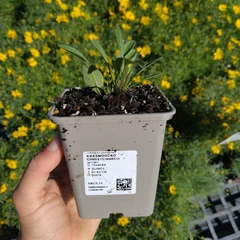
Attracts pollinators 🐝
Difficulty
Diseases
Edible
Flower color
Flower color: Shade
Foliage color
Fragrant (aromatic) 👃
Frost resistance
Hardiness zone
Height
Moisture
Pests
Position
Soil
Spacing
Spacing: Plants per m²
Species
Suitable for cutting
Suitable for drying
Recommended products

Geum chiloense
Avens Tempest Scarlet

Lychnis coronaria
Campion

Alchemilla mollis
Lady's mantle Irish Silk

Rudbeckia fulgida
Rudbeckia Goldsturm

Gypsophila paniculata
Baby's Breath Snowflake

Leucanthemum
Daisy Christine Hagemann

Limonium latifolium
Sea lavender

Solidaster hybride
Solidaster Lemore

Aquilegia vulgaris
Columbine Kristall

Dicentra spectabilis
Bleeding Heart

Coreopsis
Coreopsis Full Moon

Coreopsis verticillata
Coreopsis Moonbeam

Helianthus microcephalus
Sunflower Lemon Queen

Salvia nemorosa
Woodland sage Schwellenburg

Achillea millefolium
Yarrow Lachsschönheit

Geum chiloense
Avens Totally Tangerine

Aster ericoides
Aster Lovely

Veronicastrum virginicum
Culver's Root Album

Anemone hybrida
Japanese anemone Lorelei

Sedum telephium
Sedum Star Dust

Achillea millefolium
Yarrow Terracotta

Verbascum chaixii
Mullein Sixteen Candles

Aquilegia vulgaris
Columbine Black Barlow

Achillea millefolium
Yarrow Cassis

Malva moschata
Musk mallow

Lobelia fulgens
Lobelia Queen Victoria

Penstemon digitalis
Penstemon Husker Red

Lavandula angustifolia
Lavender Rosea

Lychnis coronaria
Campion Alba

Aquilegia vulgaris
Columbine Blue Barlow
Cultivation
For the tickseed, choose a hot, sunny spot in the garden, because that is where it will thrive best of all. A sunny location with nutrient-rich loamy soil, which must be well-draining for water, is essential. Plant the seedlings with a spacing of 40 cm apart. Proper spacing is very important as it provides each seedling with enough space for healthy development and ensures air circulation, which naturally strengthens the overall vitality and resistance of the leaves and stems.
During the summer season, keep the soil slightly moist. Tickseed appreciates regular and moderate watering rather than a one-time overwatering. So that the golden flowers delight you continuously from June all the way to September, it pays to continuously snip off wilted and faded shoots. With this simple step, you will encourage the constant formation of new buds. The strong and upright stems do not need any support at all and are excellently suited for cutting into vases. Furthermore, the edible flowers attract a huge amount of bees and butterflies, so your garden will be full of life.
Regarding its health status, this perennial is every grower's dream. It absolutely excels in its natural resistance, so you don't have to deal with any pest problems or worry about fungal diseases with it. Although it is a short-lived perennial, if you give it the right autumn care, it will last you a long time. For successful overwintering, cutting back after flowering helps; this stimulates the plant to new strong growth, then it has enough energy for wintering. Thanks to strong frost hardiness (zone 6a) it survives frosts down to -23 °C without an additional winter cover.
If you do not have a traditional garden, you can plant this seedling without any worries even in a spacious planter or a larger pot on the balcony. Here are practical tips for growing in containers:
It is crucial to ensure very good drainage and use high-quality loamy soil.
When growing in a container, it is advisable to occasionally fertilize the plant during flowering, because it depletes the available nutrients faster in a pot.
During the summer, maintain moderate moisture and check the humidity of the substrate more often than in a flowerbed.
For winter, place a piece of styrofoam under the pot and wrap it with evergreen branches or bubble wrap for protection against the frost.
The information given is based on our experience, please use it as a guide only. Times may vary depending on the season, climate, location, sowing and transplanting dates and possibly also the conditions in the greenhouse/greenhouse. We always recommend testing how the plant performs in your conditions. Please do not take this as a guarantee.
How should I prepare this plant for winter? Is it frost-hardy?
At what spacing and how far apart should I plant the seedlings?
How often and in what way should I water the plant?
Collections
The product can be found in the following collections.


Collection of perennials, grasses, and annual seeds
Radiant Mix for Dahlias
A collection of perennials and annual seeds in brightly golden tones. They stand well on their own or as a balanced selection…


Perennial and Grass Collection
Colorful Perennial Meadow
This collection is full of colors and shapes, allowing you to create a piece of wild meadow in your garden. It contains low-m…
Frequently asked questions
Planting site
What is the best location for planting this seedling?
Can I also grow Coreopsis in a pot or decorative container on the terrace?
Diseases & pests
Is Coreopsis susceptible to any specific diseases or pests?
Characteristics
Does this plant attract bees, butterflies, and other important pollinators?
Is this a perennial that will last in my garden for many years without needing to be transplanted?
Propagation
What is the best way to propagate and rejuvenate this plant once I've had it in my garden for several years?
Troubleshooting
What should I do if my Coreopsis is blooming very little or is visibly drying out?
Photos in time
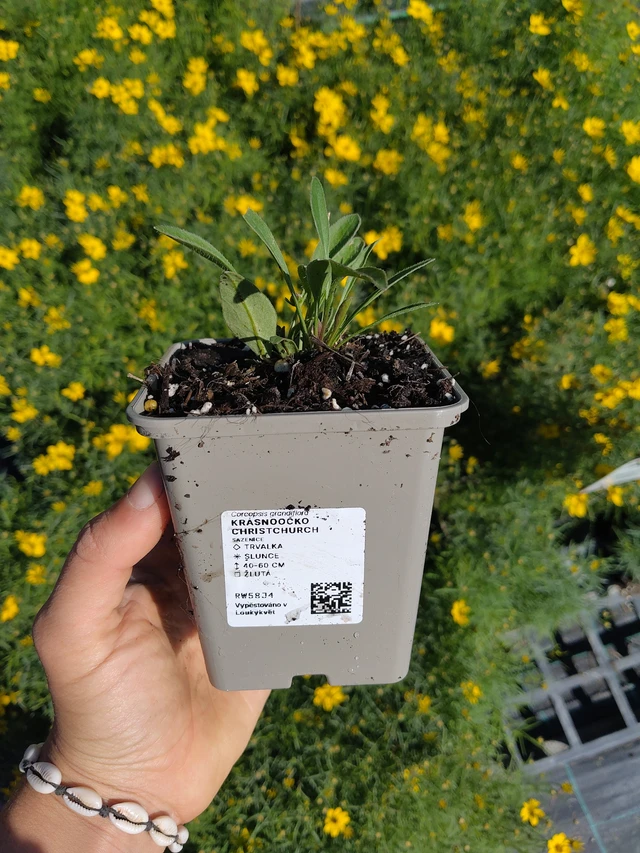
See how the seedling looks over the course of a year.


More products in category Coreopsis
Coreopsis verticillata
Coreopsis Moonbeam
Coreopsis
Coreopsis Full Moon

Coreopsis verticillata
Coreopsis Zagreb

Coreopsis
Coreopsis Limerock Dream

Coreopsis
Coreopsis Limerock Ruby

Coreopsis tripteris
Tall Coreopsis
Coreopsis palmata
Prairie Coreopsis

Coreopsis verticillata
Coreopsis El Dorado
More products in category Perennials
Alchemilla mollis
Lady's mantle Irish Silk

Achillea millefolium
Yarrow Summer Pastels

Verbena bonariensis
Verbena

Salvia nemorosa
Woodland Sage Caradonna

Perovskia atriplicifolia
Russian Sage

Gaura lindheimeri
Gaura Siskiyou Pink

Echinacea purpurea
Coneflower Rubinstern

Echinacea pallida
Echinacea pallida

Eryngium planum
Sea Holly

Echinacea purpurea
Coneflower Magnus

Salvia nemorosa
Woodland Sage Ostfriesland

Calamintha nepeta
Calamint Blue Cloud
Rudbeckia fulgida
Rudbeckia Goldsturm

Calamintha nepeta ssp. nepeta
Calamint

Gaura lindheimeri
Gaura Summer Breeze

Salvia nemorosa
Woodland Sage Amethyst

Leucanthemum vulgare
Daisy Maikönigin
Achillea millefolium
Yarrow Terracotta

Perovskia atriplicifolia
Russian sage Little Spire

Salvia nemorosa


