Ireland
🌷 Pre-orders for bulbs are in full swing! Check out this year's selection. 🌷
Ireland
🌷 Pre-orders for bulbs are in full swing! Check out this year's selection. 🌷
Sweet violet Royal Wedding, Loukykvět

Viola odorata

Sweet violet Royal Wedding

Sweet violet Royal Wedding is a messenger of spring that will perfume the shady corners of your garden with an unmistakable sweet scent. This tiny but hardy perennial naturally grows in the deciduous forests and groves of Europe, where it forms dense carpets in the spring. In the garden, it will thrive best in partial shade or shade, ideally under the canopies of trees or shrubs, where it has plenty of moisture and humus-rich, well-draining soil. Thanks to its low maintenance and extreme frost resistance, it is a great choice even for beginner growers who want to liven up darker corners of their property and create a natural ground cover. The Royal Wedding cultivar enchants with pure white flowers that contrast beautifully with the deep green, heart-shaped leaves. The plant spreads by runners and over time creates a continuous, fresh green cover. The flowers are edible and can serve as an elegant decoration for desserts, salads, or can be candied. Even though they are tiny, they are suitable for cutting into miniature vases, where their fragrance stands out best. The violet is also a valuable early food source for bees and other pollinators waking up after winter. Show full description

Seedling

Květináč K9 (9×9×9,5 cm)
Seedling
1-2 kusy
3,49/ks
3-8 kusů
3,09/ks
9-17 kusů
2,79/ks
18+ kusů
2,39/ks
Add to cart
Skladem 191 ks s doručením od 24. 8. 2026

Attracts pollinators 🐝

Ano

Difficulty

Beginner

Diseases

Disease-free 🙂

Edible

Ano
?
Information on whether the plant is edible.

Flower color

White

Flower color: Shade

Pure white

Foliage color

Green

Fragrant (aromatic) 👃

Ano

Frost resistance

-34 °C
?
The temperature down to which the plant is frost hardy.

Hardiness zone

4b (-31.7 °C to -28.9 °C)

Height

10-15 cm

Moisture

💧💧

Pests

Pest-free 🙂

Position

Partial shade, shade

Soil

Loamy, humus-rich, well-drained

Spacing

25-30 cm
?
Recommended planting spacing.

Spacing: Plants per m²

9-12

Species

Perennial

Suitable for cutting

Ano

Suitable for drying

Ne
1
2
3
4
5
6
7
8
9
10
11
12
Flowering
March
½ May

Recommended products

Rock rose Supreme, Loukykvět

Helianthemum hybrida

Třešňově červené květy a tmavě zelené listy dělají z devaterníku Supreme (Helianthemum hybrida) nepřehlédnutelný prvek každé zahrady. Zhruba dvaceticentimetrový polokeř neúnavně kvete od května do července a přináší s sebou atmosféru sluncem zalitých luk. Ačkoliv se jemné květy nedají sušit ani řezat do vázy, plně to vynahrazují na záhonu. Intenzivně lákají opylovače a jsou zcela jedlé, takže je můžete využít k oživení pokrmů v kuchyni. Devaterníku vyhovují podmínky podobné jeho přirozenému prostředí na vyhřátých skalnatých svazích. Zásadní je pro něj dostatek tepla, přímé slunce a chudá, dobře propustná písčitá půda. Díky prokořeněné sazenici v květináči, kterou od nás obdržíte, je výsadba přímo na trvalé stanoviště velmi snadná. Rostlina vyniká vysokou odolností vůči běžným chorobám i škůdcům a spolehlivě zvládá mrazy až do -23 °C. Svůj tvar si drží i v zimě, proto po ní nezůstane prázdné místo. Výborně se hodí do štěrkových ploch, k lemům cestiček a mezi další suchomilné trvalky. Největší dojem uděláte, pokud vysadíte více kusů pospolu, ideální spon pro výsadbu je 30 až 40 centimetrů.
4,29
More from 3,19
In Stock
Feather grass Pony Tails, Loukykvět

Stipa tenuissima

Feather grass flowers capture attention in beds and bouquets with their lightness and delicacy. All feather grasses love full sun and dry, stony, well-drained soil. To look most natural in beds, it is good to plant them in loose groups of several pieces together with other drought-loving perennials and bulbs. Only then do their stems and inflorescences, set in motion by the slightest breath of wind, truly stand out. Stipa 'Ponny Tails' is a species native to the steppes of Mexico, Texas, and Patagonia. Airy, dense clumps of hair-like delicate leaves resemble horsehair. The leaves are green, turning up to straw-colored towards the flowers. In a suitable location, it also self-seeds.
3,79
More from 2,69
In Stock
Fountain grass Hameln, Loukykvět

Pennisetum alopecuroides

Fountain grasses originate from East Asia, where they grow in meadows and light forests. They form hemispherical clumps of narrow leaves which, like the flowers, color up in the autumn. They are suitable for the vase and for drying. The 'Hameln' cultivar is one of the most reliable bloomers in cooler regions. The inflorescences initially have a soft pink tinge, then change color to yellow-brown or reddish-brown.
4,29
More from 3,89
In Stock
Daffodil Thalia, Loukykvět
Fragrant

Narcissus

The Thalia narcissus is a delicate and delightful piece that brings unique elegance to the spring garden. In April and May, two to three smaller flowers bloom on each of its stems. The pure white color may seem simple at first glance, but with this narcissus, it is 100% true that the greatest beauty lies in simplicity. The plant reaches a height of thirty to forty centimeters and fits perfectly into spring flower beds, where it beautifully complements colorful bulbs or lower perennials. In addition to being a feast for the eyes, it also offers a wonderful fragrance that reliably attracts the first spring bees and other pollinators looking for food after winter. Thalia is also absolutely invaluable for cutting. Florists love it and very often include it in wedding bouquets or delicate spring arrangements, to which it adds lightness and purity.
0,659
In Stock
Allium stipitatum White Giant, Loukykvět
Largest bulbs

Allium stipitatum

The 'White Giant' allium belongs to the largest alliums, featuring large white spherical flowers. Sunny but sheltered spots are ideal for it to prevent the tall stems from breaking.
2,088
In Stock
Black Allium, Loukykvět

Allium nigrum

A summer flowering allium with very good drought tolerance. Native to Southern Europe. Its inflorescences are semi-spherical, about 8-10 cm wide. The individual florets are creamy white with green centers.
0,398
In Stock
German Garlic, Loukykvět

Allium senescens

Mountain garlic (or German garlic) is an undemanding yet very valuable allium for flower beds. Its leaves remain beautifully green throughout the season until well into winter. It sprouts early in spring, filling empty spaces in the beds with its foliage. This is followed in July and August by light purple flowers. It is suitable for rock gardens and container growing. And although its stems are not very long, it is also excellent for cutting.
1,328
In Stock
Spanish Bluebell White City, Loukykvět

Hyacinthoides hispanica

The bluebell is a beautiful bulbous plant native to southwestern Europe, where it grows in light deciduous forests. Multiple leaves grow from the bulb, but usually only one flower stalk. In the right location, the plant propagates well by itself via daughter bulbs and seeds, creating colonies. It blooms in May and June. The leaves die back soon after flowering. To last as long as possible in a vase, it is best to harvest them just before the florets open. They can then last up to 14 days in a vase.
0,403
In Stock
Astilbe Washington, Loukykvět

Astilbe simplicifolia

Delicate decorative, long-lived shade-loving perennials with pinnate leaves and magnificent feathery inflorescences. They originate primarily from East Asia, but also from eastern North America. They look best in large-scale plantings. Due to relatively late sprouting, it is good to combine them with early-flowering bulbs. They last 4–10 days in a vase. We harvest as soon as half of the inflorescence is in bloom. They are very sensitive to ethylene released from ripening fruit. Washington has white flowers.
3,89
More from 2,89
In Stock
Panicle Hydrangea Silver Dollar, Loukykvět

Hydrangea paniculata

Panicle hydrangeas are beautiful shrubs originating from China and Japan, where their bark was used, among other things, to make paper. We grow them for their impressive conical inflorescences. They are undemanding and richly flowering plants suitable for planting in beds and larger containers. The large inflorescences of the Silver Dollar cultivar gradually change color from fresh green to white. In autumn, they turn only subtly pink.
3,89
More from 2,89
In Stock
Japanese forest grass Albostriata, Loukykvět
New

Hakonechloa macra

Japanese forest grass Albostriata is a true gem for the shady corners of your garden. This elegant ornamental grass comes from the moist mountain slopes of Japan, where it grows in the undergrowth of light forests and on rocky cliffs. Thanks to its cascading growth, it resembles flowing water and brings unparalleled movement and lightness to the flowerbeds whenever the wind blows. The Albostriata cultivar is prized primarily for its striking leaves, which are decorated with longitudinal white stripes on a fresh green background. This color combination can perfectly brighten up even the darkest spots under trees or taller shrubs. Although it is not suitable for cutting into vases, it fulfills its ornamental function in the garden all year round. In autumn, the leaves turn into warm golden and beige shades, creating a beautiful winter effect that stands out even under a dusting of snow. Japanese forest grass is a long-lived perennial that grows more slowly at first, but over the years forms dense and impressive clumps. It requires humus-rich, well-drained soil with plenty of moisture, but does not tolerate winter waterlogging.
4,29
More from 3,89
Unavailable
Pro rok 2026 nedostupné
Navelwort Alba, Loukykvět
New

Omphalodes verna

Navelwort Alba is a charming spring perennial that resembles white forget-me-nots with its flowers. It originally comes from the mountain forests of Southern and Central Europe, where it forms extensive carpets in the undergrowth of trees. Thanks to its origin, it is perfectly suited for shady and semi-shady places in the garden, where many other plants fail to thrive. It grows in clumps and gradually spreads by means of short runners, thereby effectively suppressing weed growth and functioning as a reliable groundcover. The Alba cultivar is characterized by bright white tiny flowers that literally light up the darker corners of the garden in April and May. Although the plant is tiny, it looks very impressive and fresh in an area. It is a long-lived and completely undemanding perennial, ideal even for beginner gardeners, which furthermore does not suffer from diseases or pests. During the blooming period, it is also a welcome food source for bees and other early pollinators.
3,49
More from 2,39
Coming Soon
Oregano Herrenhausen, Loukykvět

Origanum laevigatum

Fragrant oregano Herrenhausen belongs to the undemanding perennials that bring long-lasting colors and plenty of life to flowerbeds. The original species grows on stony and sunny slopes, so it handles drought and poorer well-drained soil absolutely without problems. It does not require any special care and will survive even very severe frosts without difficulty. The potted seedling we will deliver to you will quickly take root after transplanting and form a neat, upright clump of green leaves. During summer and early autumn, striking purple bracts appear on the stems, from which tiny pink flowers gradually bloom. This interesting detail makes it a valued plant for floristic purposes. The flowers can be cut for fresh bouquets, where they last for many days, but they also perfectly retain their shape and color after drying. In the garden, it represents an indispensable food source for pollinators and beautifully complements ornamental grasses or other sun-loving species. In addition, the plant is edible, and you can use its typical spicy aroma in summer cooking.
3,29
More from 2,19
In Stock
Creeping wire vine, Loukykvět

Acaena microphylla

Brass buttons is an inconspicuous but very reliable ground cover perennial that comes from the harsher mountainous and rocky areas of New Zealand. Thanks to its origin, it is used to both sun and partial shade and thrives very well in well-drained, sandy, or loamy soil with regular watering. You will receive an already grown seedling in a pot from us, which just needs to be transplanted to the selected spot in the garden. There it will very quickly form a dense carpet reaching a height of only five to ten centimeters. It is decorated with tiny, toothed leaves that transition from green to attractive bronze shades. During summer, from June to August, unconventional white-green spherical flowers appear. Although brass buttons is not at all suitable for cutting into a vase or for drying in dry arrangements, its main strength lies in its practical garden use. It will serve excellently as undergrowth beneath taller shrubs, in rockeries, or for edging flower beds. Even absolute beginners can handle caring for it, because it does not suffer from diseases or pests and easily survives frosts down to minus twenty-three degrees. Moreover, it retains its charm even in the cold months and will ensure an interesting winter effect on every flower bed.
4,29
More from 2,99
In Stock s doručením od 24. 8. 2026
Creeping St. John's wort, Loukykvět
New

Hypericum calycinum

Zlatavé květy třezalky kalíškaté spolehlivě rozzáří zahradu během celého léta až do podzimu. Tento polokeř pochází z horských oblastí Balkánu, kde si zvykl na rozmanité přírodní podmínky. Výborně snáší přímé slunce, ale prosperuje i v polostínu nebo úplném stínu, kde se jiným rostlinám nedaří. Má ráda propustnou hlinitou nebo písčitou půdu a průměrnou zálivku. Z dodané zakořeněné sazenice rychle vyroste kompaktní rostlina o výšce kolem třiceti centimetrů. Při výsadbě třicet až čtyřicet centimetrů od sebe brzy vytvoří zapojený porost. Výrazné žluté květy jsou během léta plné opylovačů a včel. Pro floristy nenabízí květy vhodné do vázy, její hlavní role leží v trvalkových výsadbách a jako půdopokryvný podrost pod keři. Oporu nepotřebuje, škůdců se bát nemusíte a spolehlivě odolá mrazům do minus třiadvaceti stupňů. Někdy se na listech může objevit rez. Na záhonu vytvoří i pohledný zimní efekt. Protože jde o jedovatou rostlinu, je na místě opatrnost, pokud zahradu sdílíte s domácími mazlíčky.
3,79
More from 2,69
In Stock s doručením od 24. 8. 2026
Bugbane Pink Spike, Loukykvět
New

Actaea simplex

Bugbane 'Pink Spike' is a long-lived perennial that will bring elegance and a delicate fragrance to the shady corners of the garden. It originally comes from the moist forests of East Asia, so it thrives best in partial shade or shade here. For its satisfaction, it needs humous and well-drained soil that retains enough moisture. Especially in summer, it will appreciate regular watering. You will receive a grown seedling in a pot from us, which just needs to be transplanted straight into the flower bed. There it will soon form a massive clump reaching a height of up to one hundred and eighty centimeters. Despite this height, it has sturdy stems and does not need any support. The 'Pink Spike' cultivar stands out primarily for its deeply lobed leaves, which play with dark shades of burgundy, purple, and bronze. While most of the garden slowly loses its breath at the end of summer, bugbane is just showing its best from August to October. Towering above the dark leaves are long inflorescences composed of tiny white and light pink flowers. These brush-like inflorescences also smell pleasant and act as a reliable magnet for bees and other pollinators. It is a completely undemanding plant that easily handles even bitter frosts dropping to minus thirty-four degrees. Common diseases naturally avoid it and it does not suffer from pests. However, the entire plant is poisonous, which must be kept in mind when choosing a location. After blooming, bugbane does not wilt out of sight but retains its interesting structure. If you leave the dried stems on the flower bed, they will provide a beautiful spectacle even during the winter months under a layer of snow. In garden composition, bugbane acts as a dominant feature of shady parts. It is mostly planted at one to three plants per square meter, roughly sixty to eighty centimeters apart. The long and straight inflorescences can be very well used for cutting into fresh bouquets. Conversely, it is not suitable for drying into permanent decorations because the flowers lose their shape. As a long-lived perennial, 'Pink Spike' will settle permanently in the right place and bring you joy for many years without spreading by self-seeding to the surroundings.
5,19
More from 3,89
In Stock s doručením od 24. 8. 2026
Common lungwort, Loukykvět
New

Pulmonaria officinalis

Pulmonaria officinalis, better known as common lungwort, is a rewarding perennial that has held its place in gardens for centuries, not only for its beauty but also for its historical use in medicine. The Latin name refers to its spotted leaves, which reminded medieval herbalists of human lungs. Today, we appreciate it primarily as a reliable plant for shady and semi-shady areas where other species do not thrive well. It blooms in March and April with a flood of tiny flowers, and you can often observe pink, purple, and blue flowers simultaneously on a single plant. This play of colors beautifully contrasts with the fresh green leaves. Lungwort loves humus-rich, loamy soil with plenty of moisture, but once established, it is very hardy. It is perfectly suited for natural and woodland gardens as an underplanting for deciduous trees. Although it is not very suitable for cutting into a vase, it will do a tremendous service in the flowerbed by attracting the first hungry pollinators early in the spring. The plant spreads easily and can also self-seed, gradually filling empty spaces in the beds.
3,49
More from 2,39
In Stock s doručením od 24. 8. 2026
Isodon longitubus, Loukykvět
New

Isodon longitubus

Charming perennial of Japanese origin. It blooms at the very end of the season in October. The flowers look like tiny, long, and tubular bells. Overall, it has a light and airy effect. Suitable for shady protected courtyards and front gardens.
3,49
More from 2,39
In Stock s doručením od 31. 8. 2026
White wood aster Beth Chatto, Loukykvět

Aster divaricatus

The Beth Chatto variety brings the wild beauty of North American forests into Czech gardens. The White wood aster is at home in shady clearings and along the edges of forest stands, making it an ideal plant for more demanding shady and partially shaded areas. It excellently tolerates the competition of large tree roots, under which it forms rich and exceptionally airy clumps. We will deliver a strong seedling in a pot to you, so after transplanting it into well-draining soil, you immediately get a solid foundation for a new bed. The entire care is absolutely undemanding; you won't have to fight any pests or diseases, and this perennial will survive the winter without batting an eye. The main peculiarity of this variety are its very thin, sturdy, and distinctly reddish stems. In late summer, delicate white flower heads bloom on them, reliably attracting bees and butterflies to the garden. The flowers also serve excellently in a vase, where they stay fresh for a long time and add an unseen meadow look to any floral arrangement. Even after blooming, the clumps effortlessly hold a firm structure, creating an eye-catching winter spectacle in the garden bed.
3,49
More from 2,39
In Stock s doručením od 24. 8. 2026
Isodon Tube Socks, Loukykvět
New

Isodon longitubus

Charming perennial of Japanese origin. It blooms at the very end of the season in October. The flowers look like tiny, long, and tubular bells. Overall, it has a light and airy effect. Suitable for shady protected courtyards and front gardens. Cultivar with white flowers.
3,49
More from 2,39
In Stock s doručením od 31. 8. 2026
Phlomis Russeliana, Loukykvět

Phlomis russeliana

Phlomis, sometimes nicknamed Jerusalem sage, is a valuable perennial bringing a Mediterranean atmosphere to the garden. Originally from the Greek islands and Turkey, this plant is accustomed to harsher conditions, thanks to which it perfectly handles our hot summers and poorer, well-drained soils. Its gray-green, felt-like leaves form a dense cover that works as a reliable barrier against weeds, and it surprisingly tolerates shade under tree canopies well, provided it is not too moist there. In summer, it will thrill you with pastel yellow flowers arranged in regular whorls above each other, which look very exotic and attract plenty of bees and bumblebees. For florists, phlomis is a literal treasure. The fresh flowers look very elegant in a vase, but dried stems with mature seed pods will put on an even greater show. These hold their shape for a long time and are one of the best materials for dried arrangements. Moreover, you can leave them standing in the flowerbed until spring, because their striking silhouette looks breathtaking when covered in frost. It is a rewarding and long-lived plant that even a complete beginner can easily handle.
2,99
More from 2,09
In Stock
Hyssop Roseus, Loukykvět

Hyssopus officinalis

The Roseus hyssop is an aromatic subshrub whose structure and requirements strongly resemble the popular lavender. It originally comes from the sunny and dry regions of the Mediterranean and Asia Minor, so it thrives best in direct sun here as well. It favors well-drained, sandy, and even nutrient-poor soil, where it easily copes with a lack of moisture. You will receive a grown seedling in a pot from us, which you simply transplant straight into the flower bed, where it will very soon form a neat, richly branched bush reaching a height of around fifty centimeters. It is an absolutely undemanding plant that is not bothered by diseases or pests, so its cultivation can be easily handled even by complete beginners. It comfortably withstands severe frosts down to minus twenty-three degrees Celsius. In the garden, hyssop finds wide application. It fits perfectly into steppe-character gravel beds and beautifully complements roses or lower ornamental grasses. During the summer until early autumn, the Roseus variety will delight you with a flood of tiny flowers in a delicate light pink shade. These flowers, as well as the narrow green leaves, emit a pleasant spicy fragrance and reliably act as a huge lure for bees, bumblebees, and butterflies. Since all parts of the plant are edible, you can also use hyssop in the kitchen as a herb to flavor dishes or prepare a medicinal tea from it. You can also cut the long flowering stems for a vase, where they will add a fine texture and lightness to summer bouquets. Although the flowers are not suitable for drying for floral purposes, the plant will please you in the flower bed even out of season. The inflorescences form an interesting structure which, after the leaves fall and are covered by morning frost, creates a beautiful winter effect. Furthermore, if you provide hyssop with ideal conditions, it will reliably self-seed in its location and remain a solid part of your garden for many years.
2,79
More from 1,99
In Stock
Hyssop Albus, Loukykvět

Hyssopus officinalis

The Albus hyssop is an aromatic subshrub that will bring a Mediterranean atmosphere and a flood of pure white flowers to your garden. Its original home is the sunny and rocky slopes of Southern Europe, so it will appreciate full sun and well-drained, even poorer sandy soil here as well. You will receive a grown seedling in a pot from us, which you simply transplant straight into the flower bed, where it will quickly form a dense, fragrant bush about half a meter tall. It does not suffer from diseases or pests, effortlessly handles drought and severe frosts, and even beginners can manage its care. With its appearance, it resembles lavender and looks great as an accompaniment to roses or in steppe-character gravel beds. From July to September, it is covered in tiny flowers that act as a huge lure for bees, bumblebees, and butterflies. In addition, the whole plant smells pleasantly, and its leaves and flowers are edible. Hyssop is excellent for cutting into summer bouquets, and during the winter, it creates a beautiful detail in the flower bed when its woody stems are covered in frost.
2,79
More from 1,99
In Stock posledních 93 kusů
Astilbe Fanal, Loukykvět

Astilbe arendsii

Delicate decorative, long-lived shade-loving perennials with pinnate leaves and magnificent feathery inflorescences. They originate primarily from East Asia, but also from eastern North America. They look best in large-scale plantings. Due to relatively late sprouting, it is good to combine them with early-flowering bulbs. They last 4–10 days in a vase. Harvest as soon as half of the inflorescence is in bloom. They are very sensitive to ethylene released from ripening fruit. Fanal has strikingly garnet-red flowers, and the sprouting leaves are also colored red; for the rest of the season, they have a dark green color.
2,99
More from 2,09
In Stock s doručením od 31. 8. 2026
Persicaria Superba, Loukykvět

Persicaria affinis

Persicaria 'Superba' is a tirelessly blooming perennial that will reliably liven up the damper corners of your garden. In the wild, this species most often grows in damp meadows and along the banks of watercourses, where it seeks out nitrogen-rich soils. It will appreciate similar conditions at your place, whether you have loamy, humous, or heavier clay soil. It revels in both sun and partial shade and easily survives even the severest frosts dropping to minus thirty-four degrees. You will receive a well-rooted potted seedling from us, which just needs to be transplanted to your chosen spot. It will quickly form a low and dense stand twenty to thirty centimeters tall, with the dark green leaves gradually taking on an interesting bronze tinge. From summer to autumn, upright unbranched stems topped with tiny light pink flowers tower above them. These act as a perfect magnet for bees and bumblebees. Persicaria is excellently suited for natural gardens, pond edges, or as an undergrowth in places that naturally hold moisture. It is a completely low-maintenance plant, suffering from no diseases or pests, so even a complete beginner can playfully manage growing it. If you like to decorate your home, you can use the flowers for cutting into summer bouquets, though they are not suitable for dried arrangements.
3,89
More from 3,59
In Stock s doručením od 24. 8. 2026
Cranesbill Midnight Reiter, Loukykvět
New

Geranium pratense

A clump-forming species of hardy geranium. The original species is a native perennial with striking blue flowers. The garden cultivar Midnight Reiter also meets this description, but the leaves have an unusual dark wine-purple color.
3,89
More from 2,89
In Stock posledních 93 kusů
Sunflower Lemon Queen, Loukykvět

Helianthus microcephalus

Lemon Queen is a perennial and fully frost-hardy Sunflower cultivar. It grows vigorously but not invasively. It creates firm dense clumps. It blooms from July with pastel sulphur-yellow flowers, which usually have a diameter of 5-8 cm. It looks good in cottage gardens as well as in prairie beds with grasses. Due to its long flowering time, it is very significant for pollinators. It lasts up to 10 days in a vase.
2,99
More from 2,59
In Stock s doručením od 31. 8. 2026
Rock rose The Bride, Loukykvět

Helianthemum hybrida

Rock rose The Bride is an ideal choice for sun-drenched and dry spots in your garden where other plants would struggle. This evergreen subshrub is characterized by its creeping growth and tiny, silvery-gray leaves that retain their attractiveness even in winter, providing a year-round effect. In nature, rock roses inhabit rocky slopes and dry meadows, which is why even in the garden they require well-drained, poorer, and rather sandy soil in full sun. They handle summer droughts without problems and are rewarding residents of rockeries, dry stone walls, or the edges of perennial beds, where they form dense carpets. From May to July, the plant literally cloaks itself in a flood of pure white flowers with a yellow center, attracting numerous bees and other pollinators. The Bride cultivar stands out precisely for the elegant contrast of snow-white flowers and silvery foliage. Although the flowers are not suitable for cutting into a vase, they put on a great show in their habitat and brighten up every corner. To maintain its compact, cushion-like shape and abundant flowering in subsequent years, we recommend trimming the plant after it finishes blooming, which will boost its vitality.
4,29
More from 2,99
In Stock
Sunrose Bronzeteppich, Loukykvět

Helianthemum hybrida

Rock rose Bronzeteppich is the unassuming hero of rockeries and dry walls, which literally lights up in full sun. The original botanical species of these subshrubs can be found on sunny and rocky hillsides, where they can cope even with very poor and well-drained soil. Exactly thanks to this origin, the rock rose is exceptionally resistant to drought and loves the sun's rays, which awaken a flood of its tiny flowers. In the garden, it functions as a great ground cover element that decorates flower beds with its evergreen leaves even in the winter months when most perennials rest underground. The Bronzeteppich variety, as the name suggests, creates dense carpets dotted with numerous flowers in a warm shade of terracotta and orange. It blooms gradually from May to July, becoming an irresistible attraction for bees and other pollinators, who find a rich source of food in its flowers. It grows only to a height of about twenty centimeters, so it is perfectly suited for the edges of flower beds or rockeries, where it fills the empty spaces between stones. Although it is not suitable for cutting into a vase or drying, its value in a living garden is irreplaceable. Care for it is minimal; just provide it with well-drained sandy soil and plenty of sun, and it will take care of the rest itself.
4,29
More from 2,99
In Stock
Rock rose Sulphureum Plenum, Loukykvět

Helianthemum hybrida

Rock rose Sulphureum Plenum is literally a sun lover that will brighten up any rockery or dry wall. The original species of these low subshrubs are found on sunny and rocky hillsides, which is why even in the garden they require well-drained, poorer, and rather sandy soil where water does not sit. From May to July, the plant is covered with a flood of tiny double flowers in a pastel yellow shade, resembling miniature roses in shape. Thanks to its low and creeping growth, it is perfectly suited for edging flower beds or filling joints between stones. A great advantage is the winter effect, where the plant retains its fresh green foliage, so the flower bed does not remain empty even under the snow. To help this rock rose maintain its compact and dense shape, we recommend trimming it after flowering. It is fully frost-hardy and attracts a large number of pollinators.
4,29
More from 2,99
In Stock

Cultivation

Violka vonná 'Royal Wedding' je ideální volbou pro ty části zahrady, kam sluneční paprsky dopadají jen zřídka. Jakožto typická rostlina podrostu listnatých lesů vyžaduje ke spokojenému růstu polostinné až stinné stanoviště. Nejlépe se jí bude dařit pod korunami vzrostlých stromů nebo v blízkosti keřů, kde je půda přirozeně vlhčí a chráněná před prudkým poledním úpalem. Sazenice vysazujte do humózní, propustné a hlinité půdy, která dokáže zadržet vláhu, ale není přemokřená. Před výsadbou doporučujeme do země zapracovat vyzrálý kompost nebo listovku, což rostlinám dodá potřebné živiny pro start. Protože se jedná o půdopokryvnou trvalku, která se časem rozrůstá pomocí nadzemních výběžků, dodržujte při výsadbě spon přibližně 25 až 30 cm. Pokud chcete rychle dosáhnout efektu souvislého kvetoucího koberce, počítejte s výsadbou zhruba 9 až 12 rostlin na metr čtvereční.

Péče o tuto trvalku je velmi snadná a zvládne ji i naprostý začátečník. Zásadní je především pravidelná zálivka v období po výsadbě, než sazenice plně zakoření. I v dospělosti má violka ráda mírně vlhkou půdu, proto v období delšího sucha nezapomínejte na dodávání vody, zejména pokud roste pod stromy, které jí mohou vláhu odebírat. Velkou výhodou kultivaru 'Royal Wedding' je jeho excelentní zdravotní stav; rostlina netrpí na běžné choroby ani škůdce, takže se nemusíte obávat nutnosti chemických postřiků. Díky své extrémní mrazuvzdornosti až do -34 °C nevyžaduje žádnou speciální zimní ochranu a spolehlivě přezimuje v našich podmínkách. Časně z jara můžete odstranit staré či poškozené listy, aby uvolnily místo novým svěže zeleným přírůstkům a čistě bílým květům.

Mnoho zákazníků se ptá na možnost pěstování v nádobách. Violku 'Royal Wedding' můžete bez obav vysadit i do květináčů nebo truhlíků. Je to skvělé řešení pro stinné balkony či terasy orientované na sever. Při pěstování v nádobě je však nutné dbát na to, aby substrát nikdy zcela nevyschl, protože v omezeném prostoru kořeny nemají kam sáhnout pro vodu. Dno nádoby by mělo mít drenážní otvory, aby nedocházelo k uhnívání kořenů. V nádobách vynikne nejen krása květů, ale budete mít blíže i jejich podmanivou vůni. Květy jsou navíc jedlé, takže je můžete z truhlíku sklízet přímo na ozdobu jarních dezertů.

The information given is based on our experience, please use it as a guide only. Times may vary depending on the season, climate, location, sowing and transplanting dates and possibly also the conditions in the greenhouse/greenhouse. We always recommend testing how the plant performs in your conditions. Please do not take this as a guarantee.

Show all

Click to view the full growing instructions.

Frequently
asked
questions

Vlastnosti

Pěstování

Základní informace

Stanoviště

Sklizeň

Nemoci & škudci

Množení

Photos
in time

See how the seedling looks over the course of a year.
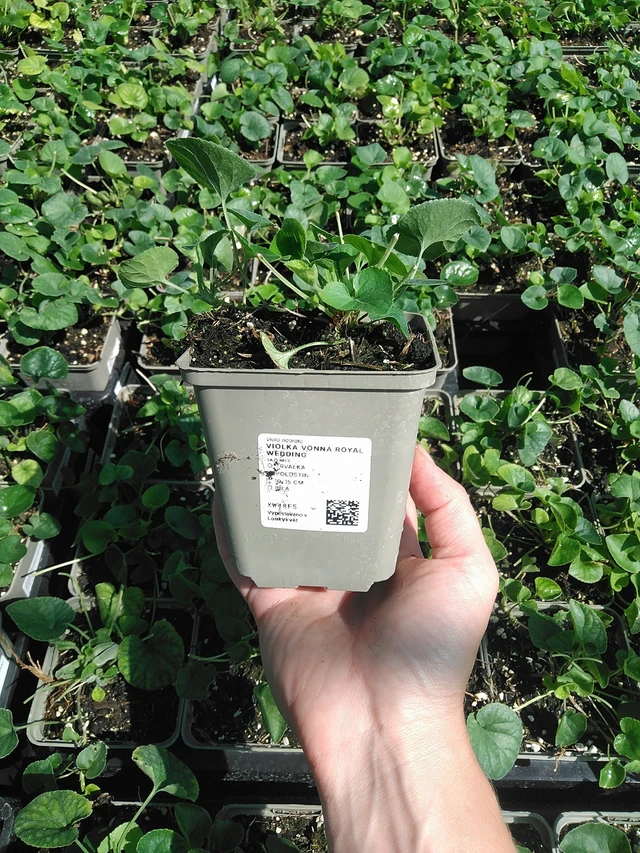
Sweet violet Royal Wedding - 11. 8. 2026
11. 8. 2026

More products in category Violet

Sweet Violet Königin Charlotte, Loukykvět
New

Viola odorata

An undemanding yet noble perennial that reliably fills empty spaces in partial shade and shade, that is the sweet violet. It naturally occurs in light forests from Europe to the Caucasus, making it perfectly adapted to our climatic conditions and fully frost-resistant. The plant forms low clumps of heart-shaped leaves and gradually spreads sideways via creeping runners, thereby effectively suppressing weeds. The Königin Charlotte cultivar is valued for its intense fragrance and dark blue-purple flowers on sturdy stems, which are also suitable for cutting into miniature spring bouquets. As one of the first blooming plants, it provides valuable food for bees and bumblebees waking up after winter. A huge advantage of this variety is repeated blooming, as it often blooms again in late summer after the main spring flush. The flowers are edible, and candied violets were formerly a popular delicacy at aristocratic courts.
3,49
More from 2,39
In Stock
Violet Purpurea, Loukykvět
New

Viola labradorica

Violet Purpurea is a tiny jewel that you will fall in love with mainly for its unconventional leaf coloring. This perennial plant, originating from North America, stands out with dark green to purple leaves, which often retain their color even during milder winters, creating an interesting effect in an otherwise empty flowerbed. In April and May, it is additionally adorned by a flood of tiny blue-purple flowers that contrast beautifully with the dark foliage. It is an ideal groundcover perennial that reliably spreads and can fill empty spaces under trees or shrubs where other plants would not thrive. Its great advantage is its extraordinary hardiness and undemanding nature. It can handle sun, partial shade, and shade, provided it has humous and well-drained soil. Thanks to its frost resistance, which reaches extreme temperatures, it is absolutely reliable in our conditions. The violet self-seeds easily, so it will gradually create dense carpets in your garden. Although it is not suitable for cutting into a vase or for drying, it will make you happy in the kitchen. Both its flowers and leaves are edible and can serve as an original decoration for spring salads or desserts. Just beware of slugs, which unfortunately also find this violet very tasty.
3,49
More from 2,39
In Stock s doručením od 14. 9. 2026

More products in category Perennials

Lady's mantle Irish Silk, Loukykvět

Alchemilla mollis

Alchemilla mollis, known as lady's mantle, is an indispensable perennial for anyone who wants to bring harmony and softness to the garden. Its home is the moister environments of mountain meadows and light forests, making it a very adaptable plant that will survive even severe frosts without problems in our climate. The 'Irish Silk' cultivar is prized for its vitality and abundant blooming, where clouds of tiny, yellow-green flowers float above clumps of gray-green leaves. It is precisely this neutral color that can work wonders in a flower bed – it softens overly sharp contrasts between other flowers and beautifully unifies the entire composition. Besides its ornamental function, lady's mantle also has practical uses. Thanks to its clumping growth and ability to quickly fill in, it is ideal for edging pathways or as an underplanting beneath taller shrubs and roses. Water droplets catch on its leaves, creating a magical spectacle in the garden. If you enjoy making bouquets, you will love lady's mantle as versatile filler greenery that matches almost anything. It will last beautiful for about ten days in a vase, and its inflorescences can also be easily dried without losing too much of their color or shape. Moreover, it is a magnet for pollinators, and its young leaves are even edible, so it also finds use in a natural kitchen.
2,99
More from 2,09
In Stock s doručením od 31. 8. 2026
Yarrow Summer Pastels, Loukykvět

Achillea millefolium

An original wild perennial with a large distribution area from Europe to Siberia. Suitable for natural and wild plantings. It grows in meadows and dry grassy places. A very adaptable and undemanding plant, it grows in clumps and spreads by runners. By cutting back after the first flowering, we encourage a set of new flowers. For bouquets, we harvest when the florets are fully open. It lasts 10 days in a vase. Summer Pastels is characterized by a changeable and soft range of colors from white and vanilla to salmon, brick red, and bronze.
3,09
More from 1,99
In Stock
Woodland Sage Caradonna, Loukykvět

Salvia nemorosa

This species of sage originally comes from the steppe regions of Central and Eastern Europe. It forms profusely flowering small clumps with straight upright stems. In flower beds, it looks best in groups. Traditionally, due to the identical flowering time, it is planted as a companion to roses. However, it will look just as good in mixed drought-loving steppe plantings with grasses. It lasts 7 days in a vase. The cultivar Caradonna stands out with a long flowering period and dark, almost black-purple stems with tiny purple flowers and dark purple bracts. If we cut it back after flowering, it will bloom again in late August and September.
2,99
More from 2,09
In Stock s doručením od 31. 8. 2026
Verbena, Loukykvět

Verbena bonariensis

A verbena species originally from South America. In our country, it is often used as an annual, but in mild winters it can overwinter and reproduce by self-seeding. The firm, airy stems beautifully soften perennial beds and make them special with their purple color. It beautifully complements steppe plantings with grasses and rose beds.
3,29
More from 2,29
Coming Soon
Russian Sage, Loukykvět

Perovskia atriplicifolia

Russian sage reliably brings a touch of sunny steppes into the garden and places almost no demands on care. These sparsely branched subshrubs originally come from harsh, rocky areas from Afghanistan to Tibet, where they grow on open sun-drenched plains. Thanks to its origin, it delights in full sun and poor, well-drained sandy soil with minimal moisture. You will receive from us a well-rooted seedling in a pot, which just needs to be transplanted straight to the chosen spot in the flower bed. It does not need support, is avoided by common pests and diseases, and will survive frosts down to minus twenty-eight degrees. It grows up to one hundred and twenty centimeters and forms striking white felted shoots with silvery grey aromatic leaves. From July to October, it blooms with tiny blue-purple flowers that act as a lure for bees and butterflies and are even edible. Russian sage stands out next to drought-tolerant perennials. The flowers are suitable for cutting and drying for winter arrangements. Moreover, the silvery stems will ensure a beautiful winter effect in the flower bed.
2,99
More from 2,09
Coming Soon
Gaura Siskiyou Pink, Loukykvět

Gaura lindheimeri

Gaura Siskiyou Pink is a charming perennial that brings lightness and airiness to the garden. Its original native area is in the warm regions of Texas and Louisiana, which is why it thrives in full sun and well-drained sandy soil. It grows in clumps and from June until the autumn frosts produces tiny raspberry-pink flowers that resemble fluttering butterflies. An interesting detail of this variety is the green leaves with a bronze tint and red spots. It is an absolutely undemanding plant, does not suffer from diseases or pests, and even beginners can handle its care. You will receive a grown seedling in a pot from us, which you simply need to transplant directly into the flowerbed. Here it complements ornamental grasses perfectly and acts as an attraction for bees and bumblebees. Although it grows more as a short-lived perennial in our climate, in a suitable place it reliably self-seeds. Occasional pinching will encourage richer branching. Gaura is excellent for summer bouquets. We cut the stems for a vase as soon as the first two to three little flowers open.
2,99
More from 2,09
Coming Soon
Coneflower Magnus, Loukykvět

Echinacea purpurea

A valuable garden and medicinal perennial, native to North America. It blooms in summer with dark purple-pink flowers. The spiky flower centers are an irresistible attraction for butterflies. They last 7–10 days in a vase. After removing the petals, the stems with the central disks can be dried or used in fresh bouquets as an interesting element. Magnus features distinctive deep pink flowers with an orange-brown center.
2,99
More from 2,09
Coming Soon
Sea Holly, Loukykvět
For drying

Eryngium planum

Sea holly is an indispensable perennial for all lovers of naturally styled gardens. It earned its folk name - male fidelity - in times when it was used in herbal medicine as an aphrodisiac, and its roots were even candied as sweets in France and England. Today, however, you will appreciate it mainly for its low maintenance and unique appearance. Its home is on sunny hillsides and dry meadows, so even in our gardens, it will welcome well-drained, even poorer sandy soil and full sun. It produces upright, sturdy stems topped with blue-purple flowers with prickly bracts, which bring interesting structure and a silvery touch to the flowerbeds. It is literally a magnetic plant for bees, bumblebees, and butterflies, who find a rich food source on it. Floristically, it is extremely valuable, because its flowers are perfectly suited for cutting as well as drying for winter decorations. If you decide not to harvest it, feel free to leave it in the flowerbed all winter. Its silhouette covered in hoarfrost creates a wonderful winter effect. Although it is a short-lived perennial, in a suitable location it reliably self-seeds, so you will enjoy its beauty for many years.
2,79
More from 1,99
Coming Soon
Echinacea pallida, Loukykvět

Echinacea pallida

The pale coneflower is one of the exceptionally interesting prairie perennials of the North American continent. In its natural environment, it grows on open, sunny plains, which is why it thrives best in our gardens in full sun in drier, well-drained soil. You just need to transplant this grown seedling straight into the flower bed, where it will reliably take root. It does not need support, easily withstands severe frosts, and is avoided by common diseases and pests, making it ideal for beginner growers. During June and July, it will reward you with aromatic flowers with unusually narrow and drooping petals in light purple and pink tones. The prominent prickly centers are literally a magnet for bees and bumblebees, and the flowers themselves are surprisingly edible. The plant stands out especially in rustic plantings together with ornamental grasses. Gardeners and florists love it for its versatility. The fresh stems bring joy in a vase for about a week. Moreover, the distinctive central cones hold their shape perfectly, can be perfectly dried for winter decorations, or left in the flower bed, where they will create an eye-catching winter structure under a layer of snow.
2,99
More from 2,09
In Stock
Coneflower Rubinstern, Loukykvět

Echinacea purpurea

A valuable garden and medicinal perennial, originally from North America. It blooms in summer with dark purple-pink flowers. The spiky flower discs are an irresistible lure for butterflies. Lasts 7–10 days in a vase. After plucking the petals, the stems with the central discs can be dried or used in fresh bouquets as an interesting element. Rubinstern is very similar to the Magnus cultivar; the petals are darker and firmer. As they fade, they gradually pale and droop downwards.
2,99
More from 2,09
In Stock
Woodland Sage Amethyst, Loukykvět

Salvia nemorosa

This species of sage originates from the steppe regions of Central and Eastern Europe. It forms profusely flowering small clumps with straight, upright stems. In flower beds, it looks best in groups. It is traditionally planted as a companion to roses due to the matching flowering time. However, it looks equally good in mixed drought-tolerant steppe plantings with grasses. It is an excellent food source for bees. Lasts 7 days in a vase. Amethyst is an elegant variety with long stems and a pink flower color that is unusual for sages.
2,99
More from 2,09
Unavailable
Pro rok 2026 nedostupné
Woodland Sage Ostfriesland, Loukykvět

Salvia nemorosa

This species of sage originates from the steppe regions of Central and Eastern Europe. It forms abundantly flowering small clumps with straight upright stems. In beds, it looks best in groups. Traditionally, it is planted as a companion to roses due to the matching flowering time. However, it will look equally good in mixed drought-loving steppe plantings with grasses. It is an excellent food source for bees. It lasts 7 days in a vase. The cultivar Ostfriesland blooms with a strikingly dark violet-blue color.
2,99
More from 2,09
In Stock
Rudbeckia Goldsturm, Loukykvět

Rudbeckia fulgida

Rudbeckia Goldsturm is a reliable and long-lived perennial that will bring the warm tones of late summer and autumn into your garden. It originally comes from the open plains and prairies of North America, so it delights most in sunny locations with common garden soil, whether it is loamy, humus-rich, or clayey. You will receive from us an already grown seedling in a pot, which you just need to transplant to the chosen spot in the flower bed. It is a completely undemanding plant, does not suffer from diseases or pests, and easily survives severe frosts. The Goldsturm cultivar grows to a height of about seventy centimeters and does not need support. From August to October, it produces a flood of golden-yellow flowers with distinctly dark centers. These edible flowers attract pollinators and fit perfectly into both prairie and rustic plantings. Rudbeckia is also great for cutting, lasting around ten days in a vase. In addition, the distinctive dark centers can be easily dried. If you leave them in the flower bed over the winter, they will provide a wonderful spectacle.
2,79
More from 1,99
In Stock
Gaura Summer Breeze, Loukykvět

Gaura lindheimeri

The charming gaura comes from the sun-drenched plains of Texas and Louisiana and represents exactly the plant that can liven up any drought-tolerant planting. It is a naturally profusely blooming perennial that delights in full sun and well-drained, sandy, and nutrient-poor soil. You will receive from us an already grown seedling in a pot, which will quickly form a vigorous clump after being transplanted into the garden. From early summer until late autumn, it will delight you with a flood of tiny flowers in pure white and delicate pink tones. The flowers gently sway in the breeze and with their appearance resemble a flock of tiny butterflies, which also really like to land on the plant, as do bees and bumblebees. Although gaura is known as a short-lived perennial, thanks to its willing self-seeding, it will last for many years in your garden. Caring for it is completely undemanding, it is avoided by most diseases and pests, and it can handle frosts down to eighteen degrees below zero without any problems. It is often used in mixed borders, where it beautifully softens the overall impression, and perfectly matches various types of ornamental grasses. The Summer Breeze variety is popular for its strong and healthy growth as well as its exceptionally generous set of flowers, which grow to about one meter. If you like to create your own bouquets, do not hesitate to cut gaura for a vase. Harvesting is best done the moment the first small flowers on the stem begin to open. These delicate flowers are not suitable for drying into dried arrangements, but they will beautifully lighten up fresh bouquets.
2,99
More from 2,09
Coming Soon
Calamint Blue Cloud, Loukykvět

Calamintha nepeta

Lesser calamint Blue Cloud is an undemanding and modest perennial that reliably perfumes any sunny garden. Its original homeland is the sunny and dry slopes of Southern Europe, which is why it thrives best here in direct sun in well-drained, sandy, or poorer loamy soil. It handles winter without problems, tolerating frosts down to minus twenty-three degrees. You will receive a grown seedling in a pot from us, which you just need to transplant straight into the flowerbed, where it will very soon form a compact, airy small shrub reaching a height of up to forty centimeters. It does not suffer from any diseases or pests, so even complete beginners can easily handle caring for it. Throughout late summer and into autumn, it blooms with a record number of tiny blue flowers that are so typical of the Blue Cloud variety. The whole plant emits a pleasant minty-spicy scent, and its flowers, which resemble thyme, act as a literal magnet for bees, bumblebees, and butterflies. It will look great among roses or in naturally designed steppe flowerbeds, where it naturally complements lower ornamental grasses. Additionally, both the blue flowers and green leaves are edible, so you can use them to garnish summer dishes. Lesser calamint is also excellently suited for cutting into smaller fresh bouquets, adding a fine structure to them in a vase.
2,79
More from 1,99
In Stock s doručením od 31. 8. 2026
Daisy Maikönigin, Loukykvět

Leucanthemum vulgare

A classic perennial for early summer bouquets and cottage gardens. For bouquets, we harvest flowers with firm, smooth central disks. Then they last 7–10 days in a vase. Maikönigin is an exceptionally abundantly flowering garden form.
2,79
More from 1,99
In Stock
Calamint, Loukykvět

Calamintha nepeta ssp. nepeta

An undemanding and modest perennial that blooms with a large number of tiny flowers. It blooms for a record-breaking length of time throughout late summer and autumn. It forms smaller, compact, airy bushes that release a minty-spicy scent. The thyme-like flowers attract bees, bumblebees, and butterflies. It will look good among roses as well as in naturalistic steppe beds, perhaps with lower grasses. This calamint is generally more vigorous. It differs from other calamints with felted leaves by its record flowering length, stiff and shiny leaves, and also a larger number of flowers that do not form seeds and are therefore maximally durable. Sometimes sold under the cultivar name 'Triumphator'.
2,79
More from 1,99
In Stock posledních 11 kusů
Yarrow Terracotta, Loukykvět

Achillea millefolium

A native wild perennial with a large distribution range from Europe to Siberia. Suitable for natural and wild plantings. It grows in meadows and dry grassy places. A very adaptable and undemanding plant, it grows in clumps and spreads via runners. Cutting back after the first bloom encourages a new set of flowers. Harvest for bouquets when the tiny flowers are fully open. It lasts 10 days in a vase. Terracotta features ochre, shades of orange and yellow, and gray-green foliage.
2,99
More from 2,89
In Stock
Russian sage Little Spire, Loukykvět

Perovskia atriplicifolia

Perovskia are sparsely branched subshrubs, originating from areas ranging from Afghanistan to Tibet. They grow in open, sunny, rocky, and stony habitats. Their white-felted shoots and grayish aromatic leaves are striking. They fit well in sunny flower beds with other drought-loving perennials, where they create interesting structures even in the winter months. Little Spire is a smaller cultivar suitable even for pots with a soil volume of 7 liters or more.
3,49
More from 3,59
In Stock s doručením od 7. 9. 2026
Woodland Sage Schneehügel, Loukykvět

Salvia nemorosa

This species of sage originates from the steppe regions of Central and Eastern Europe. It forms abundantly flowering small clumps with straight upright stems. In beds, it looks best in groups. Traditionally, it is planted as a companion to roses due to the matching flowering time. However, it will look equally good in mixed drought-loving steppe plantings with grasses. It is an excellent food source for bees. It lasts 7 days in a vase. Schneehügel blooms white.
2,99
More from 2,09
In Stock