
Geum
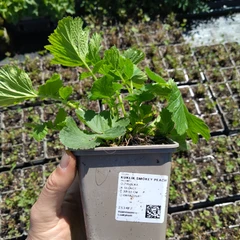
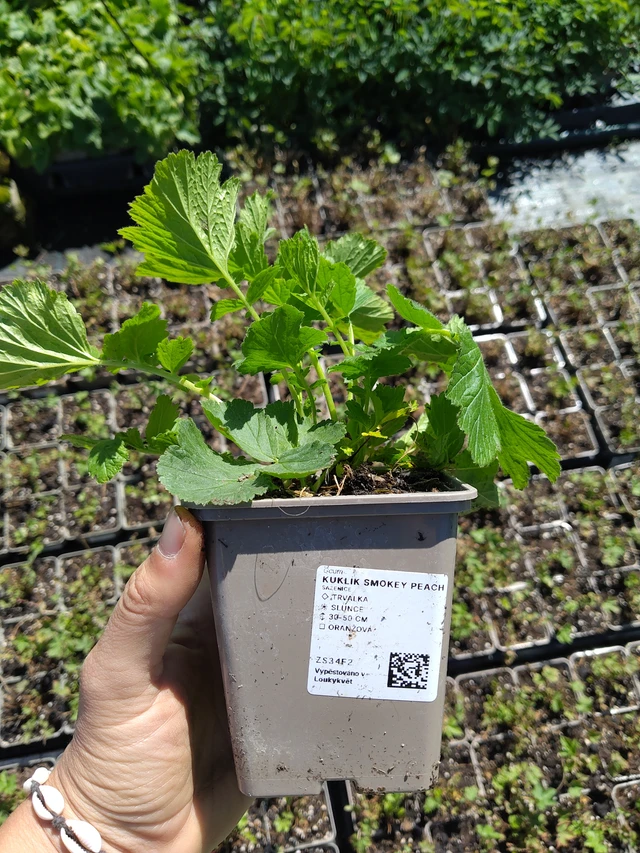
Geum Smokey Peach
Seedling


Attracts pollinators 🐝
Difficulty
Diseases
Edible
Flower color
Flower color: Shade
Foliage color
Fragrant (aromatic) 👃
Frost resistance
Hardiness zone
Height
Moisture
Pests
Position
Soil
Spacing
Spacing: Plants per m²
Species
Suitable for cutting
Suitable for drying
Recommended products

Anemone hybrida
Japanese Anemone Whirlwind

Geum
Geum Lemon Drops

Gypsophila paniculata
Baby's Breath Snowflake

Coreopsis verticillata
Coreopsis Moonbeam

Helleborus orientalis
Hellebore Double Ellen Yellow Spotted

Aquilegia vulgaris
Columbine Kristall

Helleborus orientalis
Hellebore Double Ellen Flash

Achillea millefolium
Yarrow Lachsschönheit

Aquilegia vulgaris
Columbine Nora Barlow

Aquilegia vulgaris
Columbine Rose Barlow

Catananche caerulea
Shoofly plant Blue

Knautia macedonica
Knautia Red Knight

Clematis heracleifolia
Clematis Mrs R. Brydon

Hydrangea arborescens
Smooth Hydrangea Annabelle

Anemone hupehensis
Anemone Praecox

Sedum telephium
Sedum Star Dust

Helleborus orientalis
Hellebore Pretty Ellen Pink

Stokesia laevis
Stokes' aster Träumerei

Potentilla nepalensis
Nepal Cinquefoil Shogran

Aster novi-belgii
Aster novi-belgii Fellowship

Phlomis russeliana
Phlomis Russeliana

Geum rivale
Geum Mango Lassi

Gypsophila paniculata
Baby's breath Flamingo

Anemone hybrida
Japanese anemone Lorelei

Achillea millefolium
Yarrow Summer Pastels

Pennisetum alopecuroides
Fountain Grass Hameln Gold

Brunnera sibirica
Siberian Bugloss

Geum chiloense
Avens Totally Tangerine

Aquilegia vulgaris
Columbine Blue Barlow

Helleborus orientalis
Hellebore Double Ellen White
Cultivation
Growing Geum can easily be managed even by a complete beginner. After delivery, you just need to transplant the seedling to a pre-selected spot. It will thrive best in direct sun or partial shade, ideally in well-drained, loamy, and sufficiently humus-rich soil. When planning the flower bed, remember to keep the correct spacing. We recommend planting the plants with a spacing of 30 cm, which comes out to roughly 9 to 12 seedlings per square meter. This space is very important for air circulation between the leaves. Although Geum is known for not suffering from common diseases or pests, in too dense a planting combined with permanently waterlogged soil, it could be more susceptible to powdery mildew.
From May to July, the plant will reward you with a flood of cup-shaped flowers that change from yellow to peach. These flowers act as a real magnet for beneficial pollinators. To enjoy this beauty for as long as possible, we recommend continuously cutting off the faded shoots. This will save the plant from unnecessarily exhausting itself by producing seeds and will encourage the sprouting of new buds. Additionally, the plant does not self-seed. Opt for moderate to medium watering; the soil should dry out slightly between waterings. During spring, you can treat the plants to a dose of compost. Although it is a perennial, it is not one of the long-lived ones. You can easily restore its vitality by digging up, dividing, and replanting the dense clumps in the spring approximately every three years.
One of the huge advantages of this species is its excellent frost hardiness. The plant can withstand temperatures well below freezing, specifically down to -28 °C. Before the arrival of winter, no special pruning or covering with spruce branches is needed. On the contrary, the leaf rosette remains green even during the cold months, providing the flower beds with a subtle winter effect. Customers often ask about the possibility of growing it on terraces, and the answer is yes – Geum prospers excellently even in pots and window boxes. However, make sure the container has a good drainage hole. We recommend mixing the substrate with a little sand or perlite so that the water drains quickly after watering and the roots do not start to rot in standing water.
The information given is based on our experience, please use it as a guide only. Times may vary depending on the season, climate, location, sowing and transplanting dates and possibly also the conditions in the greenhouse/greenhouse. We always recommend testing how the plant performs in your conditions. Please do not take this as a guarantee.
Is this plant suitable for growing in pots?
How far apart should I plant the seedlings?
Can I grow this even as a complete beginner?
How often do I need to water Geum in the garden?
Frequently asked questions
Harvest
Are cut flowers of Geum suitable for vases or for drying?
Planting site
What kind of location and soil should I choose for this perennial?
Characteristics
When exactly will Geum bloom and how long will I be able to enjoy it?
Does this species attract pollinators like bees and butterflies?
Do I need to protect the plant from frost during the winter?
Is Geum toxic to children or my pets?
Diseases & pests
Is Geum prone to any pests or serious diseases?
Troubleshooting
Why has an unsightly white coating appeared on the leaves of my Geum?
Propagation
I read that this is a short-lived perennial. Is there any way to extend its lifespan?
Basic information
What is Geum 'Smokey Peach' and what does it look like in the garden?
Which plants are suitable to pair with Geum in a flower bed?
How should I care for the seedling immediately after it arrives?
Photos in time
See how the seedling looks over the course of a year.


More products in category Avens
Geum rivale
Geum Mai Tai

Geum rivale
Water Avens
Geum chiloense
Avens Totally Tangerine

Geum chiloense
Avens Tempest Scarlet
Geum rivale
Geum Mango Lassi

Geum coccineum
Geum Borisii

Geum
Geum East of Eden
Geum
Geum Lemon Drops
More products in category Perennials

Alchemilla mollis
Lady's mantle Irish Silk
Achillea millefolium
Yarrow Summer Pastels

Verbena bonariensis
Verbena

Salvia nemorosa
Woodland Sage Caradonna

Perovskia atriplicifolia
Russian Sage

Gaura lindheimeri
Gaura Siskiyou Pink

Echinacea purpurea
Coneflower Rubinstern

Echinacea pallida
Echinacea pallida

Eryngium planum
Sea Holly

Echinacea purpurea
Coneflower Magnus

Salvia nemorosa
Woodland Sage Ostfriesland

Calamintha nepeta
Calamint Blue Cloud

Rudbeckia fulgida
Rudbeckia Goldsturm

Calamintha nepeta ssp. nepeta
Calamint

Gaura lindheimeri
Gaura Summer Breeze

Salvia nemorosa
Woodland Sage Amethyst

Leucanthemum vulgare
Daisy Maikönigin

Achillea millefolium
Yarrow Terracotta

Perovskia atriplicifolia
Russian sage Little Spire

Salvia nemorosa


