Ireland
🌸 Pre-sale of dahlia tubers launched. 🌸

Lamiastrum galeobdolon

Pitulník žlutý

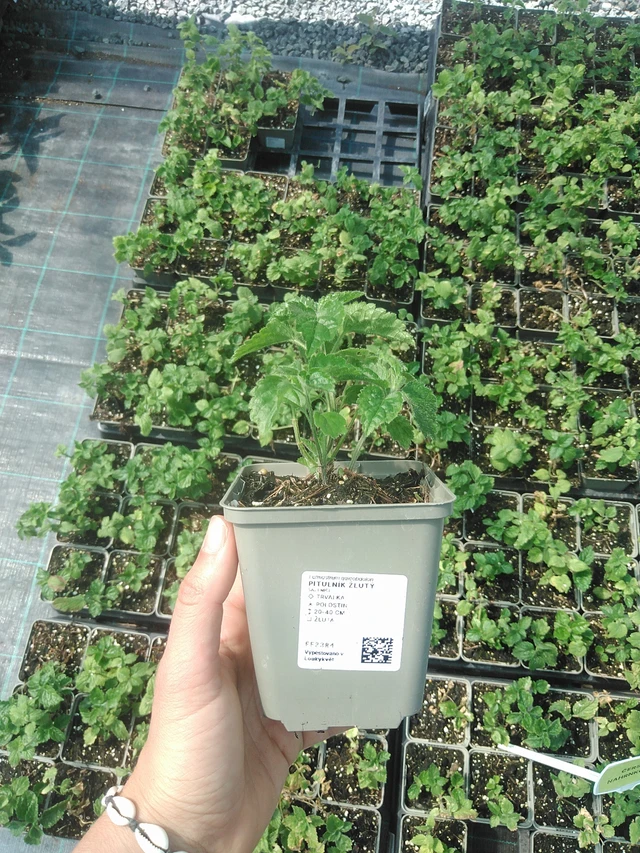
Pitulník žlutý je ideální volbou pro ty, kteří hledají způsob, jak projasnit stinná a vlhká zákoutí zahrady. Tato původní hajní bylina se v přírodě vyskytuje v listnatých a smíšených lesích napříč Evropou, kde tvoří rozsáhlé koberce pod korunami stromů. Díky své nenáročnosti a schopnosti růst i v hlubším stínu je neocenitelným pomocníkem při osazování ploch pod keři nebo vzrostlými stromy, kde se jiným trvalkám příliš nedaří. Jeho citrónově žluté pyskaté květy se objevují už v dubnu a květnu, čímž do zahrady vnášejí jarní svěžest a zároveň poskytují první cennou pastvu pro probouzející se čmeláky a včely. Okrasnou hodnotu rostlině dodávají i dekorativní listy, které jsou často zdobené stříbřitou kresbou a zůstávají atraktivní po celou vegetační sezónu. Pitulník se vitálně rozrůstá pomocí nadzemních plazivých výběžků a rychle zapojuje porost, čímž efektivně potlačuje růst plevelů a zadržuje vláhu v půdě. Jde o dlouhověkou a plně mrazuvzdornou trvalku, která nevyžaduje téměř žádnou péči a je vhodná i pro začínající zahradníky. Ačkoliv se nevyužívá k řezu do váz ani k sušení, svou funkci v přírodně pojaté zahradě plní dokonale jako spolehlivý a estetický půdopokryvný prvek. Show full description

Sazenice

Připravujeme
Na skladě máme 0 kusů
Za 18 týdnů doskladníme 200 kusů
V týdnu od 1. 8. 2026.
Květináč K9 (9×9×9,5 cm)
1+ kus
3,29
3+ kusy
2,99
9+ kusů
2,69
18+ kusů
2,29

Doskladníme ve 31. týdnu 2026.

Doskladníme ve 31. týdnu 2026.

Difficulty level

Beginner

Flower color

Yellow

Foliage color

Green, silvery green

Frost resistance

-34 °C
?
The temperature down to which the plant is frost resistant.

Hardiness zone

4a (-34.4 °C to -31.7 °C)

Height

20-40 cm

Location

Partial shade, shade

Moisture

💧💧

Soil

Loamy, humus-rich

Spacing

30-40 cm
?
Recommended planting spacing.

Spacing: Plants per m²

7-9

Species

Perennial

Suitable for cutting

Ne

Suitable for drying

Ne
1
2
3
4
5
6
7
8
9
10
11
12
Flowering
April
June

Cultivation

Pitulník žlutý je skutečným specialistou na stinná stanoviště, kde se mnoha jiným rostlinám nedaří. Pro úspěšné pěstování mu vyberte místo v polostínu nebo stínu, ideálně pod korunami vzrostlých listnatých stromů či keřů, kde napodobíte jeho přirozené lesní prostředí. Půda by měla být humózní a hlinitá, schopná udržet vlhkost, ale zároveň dostatečně propustná. Ačkoliv je pitulník velmi přizpůsobivý, nejlépe poroste v zemině bohaté na živiny. Jelikož obdržíte již zapěstované sazenice, můžete je vysazovat prakticky po celou vegetační sezónu, pokud není půda zamrzlá. Doporučený spon výsadby je 30 až 40 cm, což odpovídá přibližně 7 až 9 rostlinám na metr čtvereční. Tento rozestup zajistí, že se rostliny krásně zapojí a vytvoří souvislý koberec.

Po výsadbě je klíčová pravidelná zálivka, dokud rostliny řádně nezakoření. Jakmile se pitulník na stanovišti usadí, stává se poměrně odolným, nicméně v delších obdobích sucha ocení dodatečnou vláhu, aby si zachoval svěží vzhled listů. Rostlina se vitálně rozrůstá pomocí nadzemních plazivých výběžků, čímž efektivně potlačuje růst plevelů a funguje jako spolehlivá půdopokryvná trvalka. Pokud by se začala rozrůstat více, než si přejete, lze ji snadno omezit rýčem nebo nůžkami. Velkou výhodou tohoto druhu je jeho absolutní nenáročnost na ochranu rostlin – netrpí na choroby a díky své vitalitě odolává i běžným škůdcům.

Co se týče zimování, pitulník je plně mrazuvzdorný až do -34 °C (zóna 4a), takže v našich podmínkách nevyžaduje žádnou speciální zimní ochranu ani zakrývání chvojím. Na jaře můžete odstranit případné suché či poškozené listy, aby se podpořil růst nových, stříbřitě zelených výhonů. Rostlinu lze pěstovat i v nádobách či truhlících, kde svými převislými výhony vytvoří zajímavý efekt, zejména na stinných balkonech či terasách orientovaných na sever. V případě nádobového pěstování však dbejte na to, aby substrát nikdy zcela nevyschl, a zajistěte dostatečně velkou nádobu, protože kořenový systém se bude chtít rozrůstat.

The information given is based on our experience, please use it as a guide only. Times may vary depending on the season, climate, location, sowing and transplanting dates and possibly also the conditions in the greenhouse/greenhouse. We always recommend testing how the plant performs in your conditions. Please do not take this as a guarantee.

Show all

Click to view the full growing instructions.

Frequently
asked
questions

Vlastnosti

Pěstování

Stanoviště

Základní informace

Nemoci & škudci

More products in category Perennials

Achillea millefolium

An original wild perennial with a large distribution area from Europe to Siberia. Suitable for natural and wild plantings. It grows in meadows and dry grassy places. A very adaptable and undemanding plant, it grows in clumps and spreads by runners. By cutting back after the first flowering, we encourage a set of new flowers. For bouquets, we harvest when the florets are fully open. It lasts 10 days in a vase. Summer Pastels is characterized by a changeable and soft range of colors from white and vanilla to salmon, brick red, and bronze.
3,09
Více ks od 1,99
In Stock

Gaura lindheimeri

Gaura is a clump-forming perennial native to Texas and Louisiana. Here, it behaves more like a short-lived perennial. It combines beautifully with grasses and adds lightness and airiness to flower beds. It is an excellent food source for insects. Tiny flowers resembling small butterflies bloom tirelessly from June until the first frosts. For bouquets, harvest as soon as the first two or three flowers open on the stem. Siskiyou Pink is a beautiful variety with pink-red flowers on slightly arching stems. It is less hardy than the white-flowering varieties. The red-spotted leaves are also interesting.
2,99
Více ks od 2,09
In Stock
For Drying

Eryngium planum

A perennial that finds its place in naturalistic steppe and gravel beds. It attracts bees, bumblebees, and butterflies. It is floristically valuable for its flowers with striking bracts, which are also perfect for drying. The roots of some species were formerly eaten candied as sweets in England and France and added to pastries and jellies. In herbal medicine, it was used as an aphrodisiac, among other things, hence its folk name "male fidelity".
2,79
Více ks od 1,99
In Stock

Echinacea purpurea

A valuable garden and medicinal perennial, originally from North America. It blooms in summer with dark purple-pink flowers. The spiky flower discs are an irresistible lure for butterflies. Lasts 7–10 days in a vase. After plucking the petals, the stems with the central discs can be dried or used in fresh bouquets as an interesting element. Rubinstern is very similar to the Magnus cultivar; the petals are darker and firmer. As they fade, they gradually pale and droop downwards.
2,99
Více ks od 2,09
In Stock

Salvia nemorosa

This species of sage originally comes from the steppe regions of Central and Eastern Europe. It forms profusely flowering small clumps with straight upright stems. In flower beds, it looks best in groups. Traditionally, due to the identical flowering time, it is planted as a companion to roses. However, it will look just as good in mixed drought-loving steppe plantings with grasses. It lasts 7 days in a vase. The cultivar Caradonna stands out with a long flowering period and dark, almost black-purple stems with tiny purple flowers and dark purple bracts. If we cut it back after flowering, it will bloom again in late August and September.
2,99
Více ks od 2,09
In Stock

Leucanthemum vulgare

A classic perennial for early summer bouquets and cottage gardens. For bouquets, we harvest flowers with firm, smooth central disks. Then they last 7–10 days in a vase. Maikönigin is an exceptionally abundantly flowering garden form.
2,79
Více ks od 1,99
In Stock

Achillea millefolium

A native wild perennial with a large distribution range from Europe to Siberia. Suitable for natural and wild plantings. It grows in meadows and dry grassy places. A very adaptable and undemanding plant, it grows in clumps and spreads via runners. Cutting back after the first bloom encourages a new set of flowers. Harvest for bouquets when the tiny flowers are fully open. It lasts 10 days in a vase. Terracotta features ochre, shades of orange and yellow, and gray-green foliage.
2,99
Více ks od 2,89
In Stock

Calamintha nepeta

An undemanding and modest perennial that blooms with a large number of tiny flowers. It blooms for a record-breaking length of time throughout late summer and autumn. It forms smaller, compact, airy bushes that emit a minty-spicy fragrance. The thyme-like flowers attract bees, bumblebees, and butterflies. It will look good among roses as well as in natural-style steppe beds, perhaps with lower grasses.
2,79
Více ks od 1,99
In Stock

Calamintha nepeta ssp. nepeta

An undemanding and modest perennial that blooms with a large number of tiny flowers. It blooms for a record-breaking length of time throughout late summer and autumn. It forms smaller, compact, airy bushes that release a minty-spicy scent. The thyme-like flowers attract bees, bumblebees, and butterflies. It will look good among roses as well as in naturalistic steppe beds, perhaps with lower grasses. This calamint is generally more vigorous. It differs from other calamints with felted leaves by its record flowering length, stiff and shiny leaves, and also a larger number of flowers that do not form seeds and are therefore maximally durable. Sometimes sold under the cultivar name 'Triumphator'.
2,79
Více ks od 1,99
In Stock

Salvia nemorosa

This species of sage originates from the steppe regions of Central and Eastern Europe. It forms abundantly flowering small clumps with straight upright stems. In beds, it looks best in groups. Traditionally, it is planted as a companion to roses due to the matching flowering time. However, it will look equally good in mixed drought-loving steppe plantings with grasses. It is an excellent food source for bees. It lasts 7 days in a vase. The cultivar Ostfriesland blooms with a strikingly dark violet-blue color.
2,99
Více ks od 2,09
In Stock

Salvia nemorosa

This species of sage originates from the steppe regions of Central and Eastern Europe. It forms profusely flowering small clumps with straight, upright stems. In flower beds, it looks best in groups. It is traditionally planted as a companion to roses due to the matching flowering time. However, it looks equally good in mixed drought-tolerant steppe plantings with grasses. It is an excellent food source for bees. Lasts 7 days in a vase. Amethyst is an elegant variety with long stems and a pink flower color that is unusual for sages.
2,99
Více ks od 2,09
In Stock

Anemone hybrida

Anemones come from the same family as buttercups. With their elegant flowers on long slender stems, they can liven up and brighten late summer and autumn beds. They stand out against the darker background of shrub groups and will also be grateful for their partial shade. The Czech Perennial Association chose autumn Anemones as the perennial of the season for 2022. They last 7 days in a vase. Whirlwind is a historical variety bred in 1887 in the USA. It has a semi-double pure white flower, often with inner twisted petals, and compact, strictly upright growth. The flowers are very durable.
3,49
Více ks od 3,59
In Stock
For Drying

Echinops bannaticus

They grow naturally in the region from southern Europe to Turkey and Central Asia. These are decorative and undemanding plants suitable for natural perennial gardens. The spherical flowers attract bees and butterflies. They last a very long time in a vase and look wonderful in summer bouquets; they are also suitable for drying. Blue Glow has intensely blue flowers.
2,79
Více ks od 1,99
In Stock
For Drying

Achillea filipendulina

Fernleaf Yarrow originates from the Caucasus and Central Asia. Unlike Common Yarrow, it grows in clumps and is also suitable for drying. Cutting back soon after flowering encourages re-blooming. However, if you decide to leave the spent stems in the beds, you gain a perfect structure that remains impressive long into winter. The leaves of this species emit a typical bitter Yarrow aroma. It lasts 10 days in a vase.
2,79
Více ks od 1,99
In Stock

Anemone hybrida

Anemones come from the same family as buttercups. With their elegant flowers on long slender stems, they can enliven and brighten late summer and autumn beds. They stand out against the darker background of shrub groups and will be grateful for their partial shade. The Czech Perennial Association chose autumn Anemones as the perennial of the 2022 season. They last 7 days in a vase. 'Lorelei' has semi-double flowers in a tender light pink tone.
3,49
Více ks od 3,59
In Stock

Scabiosa caucasica

This perennial scabiosa grows wild on mountain meadows and rocky slopes of the Caucasus, northern Iran, and Turkey. In gardens, it is grown for its charming large saucer-shaped flowers. It has strong long stems, making it a perfect perennial for cutting. It is best harvested while the central florets are still firmly closed; it then lasts up to 10 days in a vase. The seed heads are also very useful and can be dried. Fama White has pure white flowers.
2,79
Více ks od 1,99
Coming Soon
Doskladníme ve 20. týdnu 2026.

Echinacea pallida

A valuable garden and medicinal perennial, native to North America. It blooms in late summer and captivates with long drooping petals. The spiky flower centers are an irresistible attraction for butterflies. It lasts 7–10 days in a vase. After removing the petals, the stems with the central discs can be dried or used in fresh bouquets as an interesting element. Hulla Dancer has white petals with a pink tinge.
2,99
Více ks od 2,09
In Stock

Helleborus orientalis

Hellebores are evergreen perennials that form slowly spreading clumps of leathery, dark green leaves. The stems usually bear four to five flowers. They bloom very early, as early as late winter and early spring. They are usable for vases only after conspicuous seed pods form in the center of the flower and the flower matures. Earlier, they tend to wilt and the stems cannot hold the flower in an upright position. All parts of the plant are poisonous. Double Ellen White is an almost pure white, double-flowered hellebore. The petals are slightly wavy and the bottom row of petals is lightly tinged with green.
4,79
Více ks od 4,69
In Stock

Perovskia atriplicifolia

Perovskia are sparsely branched subshrubs, originating from areas ranging from Afghanistan to Tibet. They grow in open, sunny, rocky, and stony habitats. Their white-felted shoots and grayish aromatic leaves are striking. They fit well in sunny flower beds with other drought-loving perennials, where they create interesting structures even in the winter months. Little Spire is a smaller cultivar suitable even for pots with a soil volume of 7 liters or more.
3,49
Více ks od 3,59
In Stock

Catananche caerulea

Cupid's dart is a medium-tall short-lived perennial. It originates from the Mediterranean and is therefore suitable for areas with milder winters. Attractive with blue flowers that resemble chicory. The unopened flower buds and silvery spent inflorescences are also nice. It is also suitable for drying. Fresh, it lasts 7 days in a vase.
2,79
Více ks od 1,99
In Stock