Ireland
🟢 The e-shop for seedlings is open again. 🌱 I also have dahlia seedlings and eucalyptus. 🟢
Ireland
🟢 The e-shop for seedlings is open again. 🌱 I also have dahlia seedlings and eucalyptus. 🟢
Betony, Loukykvět
Betony, Loukykvět

Betonica grandiflora

Betony

Jiné latinské názvyStachys macrantha, Stachys grandiflora, Betonica macrantha
Jiné rodyČistec
Známá též jakoBukvice velkokvětá, Čistec velkokvětý
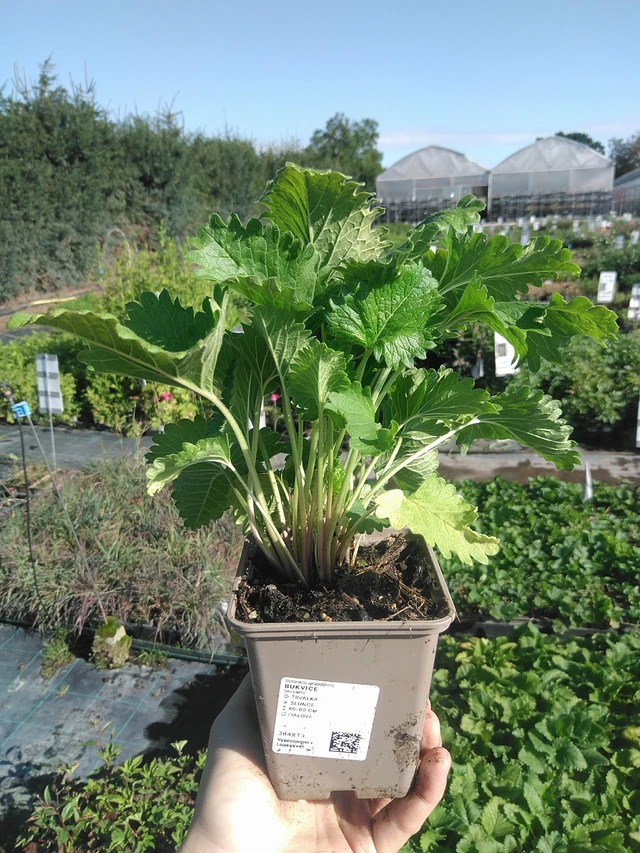
Big betony, or also large-flowered betony, belongs to the perennials that will catch your eye at first sight with their robustness and elegance. It is native to the mountain meadows of the Caucasus and northern Iran, where it decorates sunny grassy slopes. In the garden, it creates dense ground-level clumps of deep green, heart-shaped leaves with distinct crinkling, which look very decorative throughout the season and reliably suppress weeds. From June to August, sturdy upright stems rise above this green carpet, topped with spike-like inflorescences in a rich purplish-violet shade. The flowers are literally a magnet for bees, bumblebees, and other pollinators, so you will bring a lot of buzzing life to the garden with it. This long-lived and reliable perennial is an ideal choice even for beginning growers because it does not suffer from diseases or pests and handles winter frosts excellently. It thrives best in full sun or partial shade in well-drained, loamy soil that retains some moisture. Thanks to its height of about 40 to 60 cm, it is perfectly suited for the edges of flower beds or as an undergrowth beneath taller shrubs and roses. Betony is also a rewarding plant for cutting into summer bouquets, where its striking color and sturdy stem will continue to bring joy for several days. Show full description

Seedling

Květináč K9 (9×9×9,5 cm)
Seedling
1-2 kusy
2,99/ks
3-8 kusů
2,69/ks
9-17 kusů
2,39/ks
18+ kusů
2,09/ks
Add to cart
Skladem 236 ks

Attracts pollinators 🐝

Ano

Difficulty

Beginner

Diseases

Disease-free 🙂

Edible

Ano
?
Information on whether the plant is edible.

Flower color

Purple

Flower color: Shade

Magenta

Foliage color

Dark green

Fragrant (aromatic) 👃

Ne

Frost resistance

-28
?
The temperature down to which the plant is frost hardy.

Hardiness zone

5a (-28.9 °C to -26.1 °C)

Height

40-60 cm

Moisture

💧💧

Pests

Pest-free 🙂

Position

Sun, partial shade

Soil

Loamy, well-drained

Spacing

30-40 cm
?
Recommended planting spacing.

Spacing: Plants per m²

7-9

Species

Perennial

Suitable for cutting

Ano

Suitable for drying

Ne
1
2
3
4
5
6
7
8
9
10
11
12
Flowering
June
August

Recommended products

Betony Superba, Loukykvět

Betonica (Stachys) grandiflora

Betony Superba, also known as Stachys, is a perennial you will fall in love with for its low maintenance and striking inflorescences. It originally comes from the mountain meadows of the Caucasus, where it grows on sunny slopes, and thanks to this, it is completely frost-resistant and hardy here. It forms dense carpets of deep green, wrinkled leaves, above which sturdy stems with large, purplish-pink flowers stand tall in June and July. These are literally a magnet for bees, bumblebees, and butterflies, providing them with a rich source of nectar. In the garden, it is perfectly suited for mixed perennial beds or as an underplanting beneath taller shrubs, where it reliably suppresses weeds in both sun and partial shade. If you like creating bouquets, betony will also please you as a cut flower; it will last to make a show in a vase for quite a long time. It is a long-lived plant that will last in one place for many years without the need for frequent transplanting or complex care.
2,99
More from 2,09
In Stock s doručením od 27. 7. 2026
Betony Morning Blush, Loukykvět

Betonica grandiflora

Betony, or Stachys, Morning Blush is a reliable perennial that will win you over not only with its flowers but also with its leaf structure. The original species comes from the mountain meadows of the Caucasus and northern Turkey, where it grows in sunny and slightly moist habitats. In the garden, it creates dense, compact clumps of wrinkled, deep green leaves that work as great ground cover and suppress weed growth. Above them, from May to July, sturdy upright stems carrying large deadnettle-like flowers rise. It is a magnet for bees and bumblebees, which find a rich source of nectar in the flowers. The Morning Blush cultivar is exceptional for its delicate coloring. Unlike the more common purple varieties, it offers a palette from pure white to softly pinkish, bringing light and elegance to flower beds. It fits into country gardens as well as more modern perennial plantings, where it contrasts beautifully with darker plants. The inflorescences are also suitable for cutting into a vase, where they stay fresh for several days. It is a long-lived and undemanding plant that handles our winters perfectly and requires almost no care.
2,99
More from 2,09
In Stock
Woodland Sage Amethyst, Loukykvět

Salvia nemorosa

This species of sage originates from the steppe regions of Central and Eastern Europe. It forms profusely flowering small clumps with straight, upright stems. In flower beds, it looks best in groups. It is traditionally planted as a companion to roses due to the matching flowering time. However, it looks equally good in mixed drought-tolerant steppe plantings with grasses. It is an excellent food source for bees. Lasts 7 days in a vase. Amethyst is an elegant variety with long stems and a pink flower color that is unusual for sages.
2,99
More from 2,09
In Stock s doručením od 3. 8. 2026
Shoofly plant Blue, Loukykvět

Catananche caerulea

Catananche caerulea, commonly known as Cupid's dart, is a charming plant that will win you over with its lightness and airiness. Its scientific name refers to ancient Greek legends, according to which it was used in love potions; today, however, you will appreciate it more for its undemanding nature and unique appearance. It is excellently suited for natural-style gardens, gravel beds, and drought-tolerant plantings, where it beautifully complements other perennials or ornamental grasses. It grows up to ninety centimeters tall and, despite its height, needs no support. The flowers have a lavender-blue color with a darker center and toothed petals at the ends. They bloom gradually from June to September. Cupid's dart loves drought and heat, but on the contrary, it cannot stand winter dampness, which harms it more than frost. If you provide it with a well-drained spot, it will survive temperatures down to -18 °C. It is a rewarding plant for beginner growers and experienced florists alike. Fresh flowers last a week in a vase, but they will bring you the most joy when dried. Harvest them fully open in dry weather and hang them upside down. They will keep their shape and remind you of summer all winter long.
2,79
More from 1,99
In Stock
Satin flower, Loukykvět
New

Sisyrinchium striatum

A perennial originally from South America, growing in mountain meadows at altitudes up to 2500 meters. It is evergreen, with leaves similar to those of an iris, and forms rhizomes. The flowers are about 1 cm wide, pale yellow with a golden center.
2,99
More from 2,09
In Stock posledních 64 kusů
Stokes' aster Träumerei, Loukykvět

Stokesia laevis

Stokesia originates from the southeastern part of North America, where it naturally grows in light pine forests on well-drained soils. In our conditions, it will thrive in a sunny, warm place in the company of drought-loving perennials. Growing in containers, which we can better protect from excessive moisture in winter, could also be an advantage. The large striking flowers resemble cornflowers and are suitable for cutting. 'Träumerei' has creamy white flowers with a soft pink tinge.
4,29
More from 2,99
In Stock posledních 50 kusů
Cranesbill Samobor, Loukykvět
New

Geranium phaeum

The Dusky Cranesbill grows in wetter meadows and light forests. The leaves of the 'Samobor' cultivar are divided, with brownish-purple spots at the notches. Flowers are in a dark bordeaux shade. It sprouts early in the spring and spreads into dense carpets. Suitable for naturalistic plantings.
3,49
More from 2,39
Unavailable
Pro rok 2026 nedostupné
Catmint Six Hills Giant, Loukykvět

Nepeta faassenii

Catmints are ideal companions for roses, suitable for naturalistic gardens, and lower species also for boxes and pots. Some of them are an irresistible attraction for cats, caused by the hallucinogen nepetalactone. This should be present in the highest amount in the species Nepeta cataria. Conversely, lemon-scented catmints reportedly do not attract cats. The botanical name Nepeta likely comes from the name of the ancient Etruscan city Nepet - Nepi in the territory of today's Italian province of Viterbo, where the plant was once cultivated. The faassenii group is characterized by vigorous upright growth, fine foliage, and long stems suitable for cutting. Six Hills Giant has a slightly lighter flower color than Walker's Low. It grows in airy clumps and blooms very profusely. Long stems suitable for cutting.
2,99
More from 2,09
In Stock posledních 81 kusů
Nepal Cinquefoil Ron McBeath, Loukykvět

Potentilla nepalensis

*Potentilla nepalensis* is a wild mountain plant native to the western regions of the Himalayas. It has also captured the attention of gardeners and breeders. There once existed a large number of garden varieties, which are unfortunately lost and unavailable today. Potentilla fits well into mixed perennial beds. Ron McBeath is more compact than the cultivar Miss Willmott and has carmine-pink flowers.
3,29
More from 2,29
In Stock
Phlox Sweet Summer Ocean, Loukykvět

Phlox paniculata

Phlox is originally a perennial native to North America. It soon achieved great popularity in European gardens and has been systematically bred since the 19th century. It is a classic perennial for cutting into bouquets, where, in addition to colorful flowers, it also delights with a gentle fragrance. We harvest as soon as roughly half the flowers in the inflorescence have bloomed; then they last up to 10 days in a vase. Despite efforts to breed the most resistant cultivars, it remains true that Phlox reacts extremely sensitively to climate and soil conditions, so we carefully pay attention to the correct choice of site. The Sweet Summer series includes cultivars bred for greater resistance to fungal diseases. Sweet Summer Ocean is a very special cultivar introduced to the market in 2012. It is characterized by the color variability of flowers during the day. In cool mornings, the flowers are blue; as temperatures rise, they fade, and by noon they transition to purple-pink.
3,89
More from 2,89
In Stock
Agastache Mango Tango, Loukykvět

Agastache hybrida

Most hybrids available here come from plants originating in North America and Mexico. It is characterized by a delicate overall appearance. An elegant plant with small fragrant leaves, it blooms continuously during the summer with plenty of tiny florets and attracts butterflies and bees.
2,99
More from 2,09
In Stock
Mullein Sugar Plum, Loukykvět
New

Verbascum hybrida

Mullein is a classic cottage garden perennial that brings vertical structure and delicate beauty to gardens. The native species of this plant naturally grow in sunny and dry habitats, often on stony or sandy soils with a lower nutrient content. Thanks to its origin, it is extremely drought-resistant and thrives in full sun in well-draining soil. It is a short-lived perennial that does not require complex care, making it an ideal choice even for beginner growers. In flowerbeds, it works perfectly as a vertical dominant, even though this cultivar reaches a more compact height of thirty to fifty centimeters. It combines wonderfully with shorter drought-tolerant grasses or other perennials, making great company for them. Moreover, the flowers reliably attract bees, bumblebees, and other beneficial pollinators throughout the summer. They are not susceptible to pests or diseases, and interestingly, they are even edible. The flower stalks are sturdy and do not need support, which you will appreciate not only in the bed but also when cutting for summer bouquets. Although it is not suitable for drying, it can make a great show in a vase. The Sugar Plum cultivar stands out with its grayish-green leaves and above all an irresistible shade of flowers. From June to August, it blooms with a deep purple color, whose tones resemble ripe plums and give the garden an elegant and unusual look. Simply transplant the grown seedling to a sunny spot and enjoy its beauty.
4,29
More from 3,19
Unavailable
Pro rok 2026 nedostupné
Catmint Alba, Loukykvět

Nepeta faassenii

Catmint 'Alba' is an aromatic perennial whose botanical name probably refers to the ancient Etruscan city of Nepet, where it was once widely grown. Today, it is an indispensable part of sunny flower beds, where it thrives best in well-drained, sandy soil. It stands out for its extraordinary hardiness, easily handling harsh frosts down to minus thirty-four degrees, and does not suffer from diseases or pests. Even beginners can easily handle growing it. You will receive an already mature seedling in a pot from us, which you just need to transplant straight into the garden, where it will form a vigorous clump of grayish-green leaves. In the garden, it functions as an ideal companion for roses as well as for natural-style plantings. During May, June, and again in September, it becomes covered in pure white flowers that attract bees and butterflies. This variety from the faassenii group grows to a height of fifty centimeters and has long, straight stems suitable for cutting.
3,29
More from 2,29
Coming Soon
Plume poppy, Loukykvět

Macleaya microcarpa

Plume poppy is an impressive solitary perennial. It captivates with blue-green, large lobed leaves that resemble fig leaves. In summer, it blooms with fluffy panicles of flowers. These change color from cream to pink. Finally, the plant is adorned with terracotta to burgundy colored seeds. Before using in a vase, we briefly sear the ends of the stems and leaves (about 20 seconds) and immediately cool them in water. This extends their life in a bouquet to 10 days.
In Stock posledních 16 kusů
Baptisia Alba, Loukykvět

Baptisia alba

Baptisia comes from North America, belongs to the legume family, and resembles the lupine in appearance. Unlike lupines, however, it does not suffer from fungal diseases and does not taste as good to slugs. In addition to the blue flowers, the large pods are interesting, decorating the plant long after flowering. Native Americans used Baptisia roots to disinfect wounds and reduce fever, and the leaves to dye fabrics. Patience is key with Baptisia; it takes some time to fully establish and create a massive root system adapted to survive long periods of drought and fire. Then it is very long-lived. It was voted Perennial of the Year for the 2019 season. The elegant pure white 'Alba' also has slightly lighter leaves.
4,79
More from 3,59
In Stock
Bear's Breeches, Loukykvět

Acanthus mollis

A long-lived, impressive perennial. Usable as a striking specimen plant in the sun or partial shade. It takes some time to settle in a new place in the garden before it flowers. However, it is also decorative with its fresh green, shiny, and noticeably lobed leaves. These are known as the motif for the acanthus decor used in architecture and applied arts since antiquity.
4,29
More from 3,89
In Stock
Bloody Cranesbill Album, Loukykvět
New

Geranium sanguineum

The bloody cranesbill is a vigorous and undemanding perennial suitable for sunny places. Besides the flowers, the finely divided leaves have ornamental value, additionally coloring effectively in autumn. The Album cultivar, as one of the few bloody cranesbills, can handle even slight shade. The leaves turn yellow tones in autumn.
2,99
More from 2,09
In Stock
Speedwell Blue Feathers, Loukykvět

Veronica pinnata

Originally from Siberia, this is an unusual species of speedwell with fine, filigree-like foliage and light blue flowers. It grows well in rock gardens, flower beds, and containers. It is not very tall, is suitable for cutting, and thanks to its delicate leaves, remains attractive even when not in bloom.
2,99
More from 2,09
In Stock
Devil's-bit scabious, Loukykvět

Succisa pratensis

Devil's-bit scabious is a beautiful and delicate perennial, whose name is accompanied by a very strange legend. According to it, the devil, in anger over the protective power of this herb, bit off its rhizome. In the wild, it grows most often in damp meadows and pastures, but in the garden, it will thrive perfectly in a sunny spot with well-draining soil. You will receive a grown seedling in a pot from us, which you can simply transplant straight into the chosen flowerbed. It is an ideal plant for beginners, reliably withstanding frosts and not suffering from any pests or diseases. It grows to a height of thirty to eighty centimeters and from July to September forms magical spherical flowers of a blue-purple color. These act as a literal magnet for bees, hoverflies, and rare butterfly species, providing them with a rich pasture. In the garden, the devil's-bit scabious stands out perfectly in naturalistic plantings, where you will appreciate it alongside loose ornamental grasses. The sturdy stems with flowers can also be successfully used for cutting into summer bouquets, where they create a soft and playful structure, or you can dry them for winter decorations.
2,99
More from 2,09
In Stock
Lavatera White Angel, Loukykvět

Lavatera hybrida

Tree mallow 'White Angel' will enchant every lover of cottage gardens with its flood of pure white flowers, which in shape resemble hibiscuses or hollyhocks. This robust plant grows to a respectable height of up to one and a half meters and thus forms an unmissable dominant feature in the beds, adding volume and structure to the plantings. Although it is a short-lived perennial that in our conditions only handles frosts down to approximately -12 °C, its rapid growth and rich flowering from June to August make it an irreplaceable part of summer compositions. It thrives best in full sun in well-drained loamy soil, where it will reward you with a literal avalanche of flowers. The flowers of the tree mallow are not only a feast for the eyes but also for beneficial insects, which they tirelessly attract in the garden. They are also edible, so you can safely use them to unconventionally decorate summer salads or desserts. If you want to bring a piece of this fragile beauty home, the stems are excellently suited for cutting into a vase, where they will last to bring joy for several days. The 'White Angel' variety stands out for its purity and elegance, thanks to which it will brighten up even the most ordinary corner of the garden and combines wonderfully with brightly colored perennials or airy grasses.
3,49
More from 2,39
In Stock posledních 85 kusů
Checkerbloom Brilliant, Loukykvět

Sidalcea

The 'Brilliant' prairie mallow is a charming short-lived perennial that resembles miniature hollyhocks with its flowers and brings a romantic touch to the summer garden. Its homeland is the sunny plains and meadows of North America, so it will also grow best in full sun in your garden. We send customers mature potted seedlings, which simply need to be transplanted into well-drained, loamy, and sufficiently humous soil. Caring for it is very easy and can be effortlessly managed even by beginners. During the summer, it needs regular watering, and the only things you need to watch out for are slugs and the possible appearance of rust on the leaves. However, the plant is highly frost-resistant and will survive the winter without problems down to minus twenty-eight degrees. From June to September, it forms tall, straight stems heavily laden with tiny flowers. These reliably act as a magnet for bees, bumblebees, and butterflies, providing them with a rich pasture. An interesting fact is that these flowers are completely safe and even edible, so you can use them to liven up summer salads or desserts. In flowerbeds, the prairie mallow perfectly complements classic combinations with roses, but it also fits perfectly into wilder plantings in the company of ornamental grasses. It grows to a height of around one meter and does not need any support. If you like to decorate your home with fresh flowers, prairie mallow stems are great for cutting and look beautiful in summer bouquets. The 'Brilliant' cultivar stands out especially for its vibrant, richly colored flowers in shades of crimson, which you truly will not miss against the green background of the leaves.
3,49
More from 2,39
Coming Soon
Lupine Gallery Pink, Loukykvět

Lupinus

Lupins are striking for their unmistakable flowers and decorative compound leaves. Naturally, they are rather short-lived perennials. Their lifespan tends to be around five years. They are valued for their use for cutting and as pasture for bees. A smaller cultivar with flowers in pink shades.
2,99
More from 2,09
In Stock posledních 15 kusů
Phlox Sweet Summer Fantasy, Loukykvět

Phlox paniculata

Phlox is a perennial originally native to North America. It soon achieved great popularity in European gardens and has been systematically bred since the 19th century. It is a classic cut flower perennial, delighting not only with colorful blooms but also a gentle fragrance. Harvest when about half the flowers in the cluster are open, and it will last up to 10 days in a vase. A Dutch variety bred in 2010, belonging to the healthy and vital 'Sweet Summer' series. 'Sweet Summer Fantasy' is a medium-height, dark-leaved variety. The dark purple flower color with a striking white center changes saturation depending on the age of the inflorescence.
3,89
More from 2,89
In Stock posledních 6 kusů
Catmint Washfield, Loukykvět

Nepeta subsessilis

This catmint grows upright and in clumps. Its leaves and blue-violet flowers are larger than those of most better-known catmints. It fits well into mixed perennial beds. It handles drought well, but full scorching sun is not suitable for it.
3,49
More from 2,39
Unavailable
Pro rok 2026 nedostupné
Switchgrass Northwind, Loukykvět

Panicum virgatum

A perennial grass native to North American prairies. Switchgrass is very adaptable and long-lived. It adds clear structure to flower beds while also functioning as a softening element. This happens mainly after the veil-like flowers appear above the clumps of leaves. Northwind is a cultivar with an upright and slender growth habit. Its grey-blue-green leaves turn bright golden in the autumn.
4,29
More from 2,99
In Stock
Liatris Floristan White, Loukykvět

Liatris spicata

The pure white flowers of the 'Floristan White' variety bring elegant vertical lines and a completely novel look to summer beds. Blazing star is very popular among growers thanks to its peculiarity; it blooms exactly the opposite of most other plants, from the tip of the inflorescence downwards, which has earned it the fitting folk name "shorakvět" (top-flower) in our country. Its natural homeland is the North American prairies, where it grows in open sunny areas with nutritious and well-drained humous soil. Exactly such conditions will be ideal for it in your garden as well. We send customers grown seedlings directly in pots, which take root quickly after being transplanted into the ground and soon form vigorous clumps of narrow green leaves. Caring for this perennial is truly undemanding, and beginner gardeners can embark on it without worry. The plant grows to a height of sixty to ninety centimeters, has stable stems that do not require support, is avoided by diseases, and excels in reliable frost resistance, as it can withstand temperatures down to minus thirty-four degrees. The only unwanted visitor can be the field vole, which is sometimes attracted to its tubers. From mid-summer to early autumn, you can look forward to blooming, which makes the plant a living magnet for bees, bumblebees, and butterflies. In beds, it looks great in larger groups and gets along perfectly with ornamental grasses. The flowers apply excellently in floristry, because they stay fresh for a long time in a vase and liven up any bouquet. Furthermore, it pays off to leave the stems on the bed in autumn, as they provide a beautiful spectacle for winter interest.
3,29
More from 2,29
In Stock
Nepal Cinquefoil Shogran, Loukykvět

Potentilla nepalensis

*Potentilla nepalensis* is a wild mountain plant native to the western regions of the Himalayas. It has also captured the attention of gardeners and breeders. There once existed a large number of garden varieties, which are unfortunately lost and unavailable today. Potentilla fits well into mixed perennial beds. Shogran is a low-growing cultivar with pink flowers and a contrasting raspberry-red eye.
3,29
More from 2,29
Unavailable
Pro rok 2026 nedostupné
Stokes' aster Omega Skyrocket, Loukykvět

Stokesia laevis

Stokesia originates from the southeastern part of North America, where it naturally grows in light pine forests on well-drained soils. In our conditions, it will thrive in a sunny, warm place in the company of drought-loving perennials. Growing in containers, which we can better protect from excessive moisture in winter, could also be an advantage. The large striking flowers resemble cornflowers and are suitable for cutting. 'Omega Skyrocket' comes from the botanical garden in Atlanta; it has light blue flowers and is slightly taller.
4,29
More from 3,19
In Stock
Mullein Dark Eyes, Loukykvět
New

Verbascum hybrida

Mullein Dark Eyes is a charming perennial that brings the softness of pastel tones to your garden. Native mullein species originate from dry and sunny regions, where they naturally grow on poor and stony soils. Thanks to this origin, this garden beauty is exceptionally low-maintenance and copes perfectly in well-draining, sandy soil with minimal moisture. It forms compact rosettes of gray-green leaves, from which sturdy stems grow from May to July, reaching a height of around thirty to forty centimeters. In the garden, this short-lived perennial is excellent for steppe beds, gravel gardens, or mixed plantings with drought-tolerant grasses. It also enlivens its surroundings by being a great attraction for bees, bumblebees, and other beneficial pollinators. The Dark Eyes cultivar catches the eye at first glance with an unusual color combination. Its flowers glow with creamy and pastel yellow shades, hiding a striking dark eye in their center. It is perfectly suited for cutting, so you can bring a piece of summer mood home into a vase. On the other hand, it is not suitable for drying into permanent arrangements; they offer the most beauty when fresh. A small and pleasant surprise is the fact that the flowers are edible, so you can use them to decorate summer salads or sweet desserts in an unconventional and very effective way. You will receive a strong and vital seedling, which you simply transplant to a sunny location. The reward will be persistent flowering and the joy of growing without unnecessary worries.
4,29
More from 3,19
In Stock
Goldenrod Moonlight Glory, Loukykvět

Solidago canadensis

The delicately creamy 'Moonlight Glory' goldenrod will bring lightness and elegance to your garden without requiring complex care. The original species of this perennial come from North America, from where they brought extraordinary hardiness, so the plant easily withstands even very severe frosts. You don't have to worry, this modern garden cultivar is perfectly disciplined and does not spread uncontrollably through the flower beds. You just need to choose a sunny spot with humous soil, and from the supplied seedling, you will get a stable plant that does not suffer from pests or diseases. From August to October, it forms rich inflorescences in a milky white shade, which will perfectly complement bolder colors in the bed. During autumn, it becomes a sought-after stop for bees and butterflies; surprisingly, it even has edible flowers. If you belong to the enthusiasts of bouquet making, this cultivar is guaranteed to please you with its straight stems. You can cut it already in the bud stage, and it will stay fresh in a vase for a beautiful ten days. If you don't manage to use the flowers fresh, simply dry them for winter arrangements.
2,79
More from 1,99
Unavailable
Pro rok 2026 nedostupné

Cultivation

Tato okrasná trvalka je ideální volbou pro zahradníky, kteří hledají efektní rostlinu s minimální údržbou. Bukvice nejlépe prospívá v propustné, hlinité půdě, která dokáže zadržet vlhkost, ale zároveň není těžká a jílovitá. Při výsadbě sazenic dbejte na to, aby kořenový bal nebyl utopen příliš hluboko a aby měla rostlina kolem sebe dostatek prostoru pro rozrůstání. Doporučená vzdálenost mezi jednotlivými sazenicemi je 30 až 40 cm. Rostlina se na stanovišti postupně rozrůstá do šířky a tvoří husté koberce, které skvěle fungují jako půdopokryvná vrstva pod vyššími keři nebo růžemi, kde přirozeně zadržují vláhu a potlačují růst plevele.
Zálivku přizpůsobte počasí a umístění; bukvice má ráda mírně vlhkou půdu. V horkých letních měsících, zejména pokud je vysazená na slunném stanovišti, ocení pravidelný přísun vody, aby listy nezačaly vadnout. V polostínu jsou nároky na vláhu nižší. Obrovským benefitem pěstování bukvice je její vynikající zdravotní stav – rostlina je prakticky bez škůdců a netrpí chorobami, což z ní dělá bezproblémovou součást okrasných záhonů. Pro udržení vitality a krásného vzhledu je vhodné po odkvětu odstranit suchá květenství. Listy zůstávají dekorativní až do prvních mrazů, poté zhnědnou a rostlina přezimuje v kořenech.
Pokud nemáte k dispozici zahradu, bukvici lze úspěšně pěstovat i ve větších nádobách na terase či balkoně. V takovém případě použijte kvalitní zahradnický substrát smíchaný s trochou písku pro lepší drenáž a dbejte na to, aby nádoba měla otvory pro odtok přebytečné vody. V nádobách je rostlina náchylnější na promrznutí kořenového balu, proto ačkoliv je ve volné půdě mrazuvzdorná až do -28 °C, květináč doporučujeme na zimu obalit jutou nebo polystyrenem, nebo jej umístit do chráněného závětří. Na jaře pak stačí provést zpětný řez suchých částí těsně nad zemí a rostlina znovu spolehlivě obrazí.

The information given is based on our experience, please use it as a guide only. Times may vary depending on the season, climate, location, sowing and transplanting dates and possibly also the conditions in the greenhouse/greenhouse. We always recommend testing how the plant performs in your conditions. Please do not take this as a guarantee.

Show all

Click to view the full growing instructions.

Frequently
asked
questions

Pěstování

Vlastnosti

Nemoci & škudci

Sklizeň

Stanoviště

Množení

Základní informace

Photos
in time

See how the seedling looks over the course of a year.

Betony - 22. 7. 2026
22. 7. 2026

More products in category Lamb's ear

Lamb's ear Silver Carpet, Loukykvět

Stachys byzantina

Woolly hedgenettle has earned the folk names bunny or lamb's ears for its incredible softness. The 'Silver Carpet' cultivar lives up to its name, creating the densest silvery carpet you can imagine in a garden. Unlike the original botanical species, it hardly blooms at all, which is a great advantage in this case. The plant invests all its energy into forming dense, felted leaves that remain beautiful even in winter and form a compact ground-cover layer. It originally comes from the rocky and dry regions of Turkey and Iran, so it loves full sun and well-drained, sandy soil. In the garden, it perfectly serves as an unconventional and pleasant-to-touch border for flower beds or as a lawn replacement in dry areas where you don't want to worry about watering. Furthermore, its silvery color beautifully calms and unifies colorful plantings of perennials.
3,49
More from 2,39
Coming Soon
Lamb's ear Cottons Boll, Loukykvět

Stachys byzantina

Lamb's ear has earned its common name for its irresistibly soft, silvery felted leaves. The original species comes from the stony and sunny slopes of Turkey and Iran, making it an ideal candidate for drought-tolerant and gravel beds. The plant spreads willingly, creating dense, continuous carpets that act as groundcover in the garden and effectively suppress weeds. The Cottons Boll cultivar is a true unique among lamb's ears. Firm, upright stems emerge from the basal rosette of leaves, carrying striking spherical flower clusters that resemble open cotton bolls in shape. The tiny purple-pink flowers are hidden in felt-like bracts and attract large numbers of bees and bumblebees. This perennial is also highly valued in floristry. Fresh stems add interesting structure and a silvery accent to bouquets; furthermore, they are excellent for drying, as they reliably hold their shape. Even in the winter months, the foliage remains decorative and brings an interesting visual element to the garden.
3,49
More from 2,39
Coming Soon
Betony Superba, Loukykvět

Betonica (Stachys) grandiflora

Betony Superba, also known as Stachys, is a perennial you will fall in love with for its low maintenance and striking inflorescences. It originally comes from the mountain meadows of the Caucasus, where it grows on sunny slopes, and thanks to this, it is completely frost-resistant and hardy here. It forms dense carpets of deep green, wrinkled leaves, above which sturdy stems with large, purplish-pink flowers stand tall in June and July. These are literally a magnet for bees, bumblebees, and butterflies, providing them with a rich source of nectar. In the garden, it is perfectly suited for mixed perennial beds or as an underplanting beneath taller shrubs, where it reliably suppresses weeds in both sun and partial shade. If you like creating bouquets, betony will also please you as a cut flower; it will last to make a show in a vase for quite a long time. It is a long-lived plant that will last in one place for many years without the need for frequent transplanting or complex care.
2,99
More from 2,09
In Stock s doručením od 27. 7. 2026
Betony Morning Blush, Loukykvět

Betonica grandiflora

Betony, or Stachys, Morning Blush is a reliable perennial that will win you over not only with its flowers but also with its leaf structure. The original species comes from the mountain meadows of the Caucasus and northern Turkey, where it grows in sunny and slightly moist habitats. In the garden, it creates dense, compact clumps of wrinkled, deep green leaves that work as great ground cover and suppress weed growth. Above them, from May to July, sturdy upright stems carrying large deadnettle-like flowers rise. It is a magnet for bees and bumblebees, which find a rich source of nectar in the flowers. The Morning Blush cultivar is exceptional for its delicate coloring. Unlike the more common purple varieties, it offers a palette from pure white to softly pinkish, bringing light and elegance to flower beds. It fits into country gardens as well as more modern perennial plantings, where it contrasts beautifully with darker plants. The inflorescences are also suitable for cutting into a vase, where they stay fresh for several days. It is a long-lived and undemanding plant that handles our winters perfectly and requires almost no care.
2,99
More from 2,09
In Stock
Lamb's ear Silky Fleece, Loukykvět

Stachys byzantina

You will instantly fall in love with Lamb's ear 'Silky Fleece' for its incredibly soft leaves, which tempt you to stroke them and resemble animal ears. This perennial, native to the rocky and dry hillsides of the Caucasus and Iran, is a master of survival in full sun and well-drained, sandy soil. Thanks to its silvery-grey, felt-like leaves, it creates a wonderful contrast to green plants in the garden and works as a perfect groundcover carpet that does not lose its beauty in winter. It is an ideal choice for novice gardeners, as it requires almost no care, does not suffer from diseases or pests, and perfectly handles even freezing days. The 'Silky Fleece' cultivar is specific for its low and compact growth, reaching a height of only about 15 centimeters. In the summer months, from June to August, tiny lilac flowers appear above the silver cushion; although they are not suitable for cutting into a vase, they reliably attract bees and other pollinators. The plant is best suited for the edges of flower beds, rockeries, or as a filler for empty spaces, where it forms a dense, weed-suppressing cover. Although it is not suitable for drying or bouquets, its value lies in the year-round structure and tactile experience it brings to every garden.
2,99
More from 2,09
Coming Soon

More products in category Perennials

Lady's mantle Irish Silk, Loukykvět

Alchemilla mollis

Alchemilla mollis, known as lady's mantle, is an indispensable perennial for anyone who wants to bring harmony and softness to the garden. Its home is the moister environments of mountain meadows and light forests, making it a very adaptable plant that will survive even severe frosts without problems in our climate. The 'Irish Silk' cultivar is prized for its vitality and abundant blooming, where clouds of tiny, yellow-green flowers float above clumps of gray-green leaves. It is precisely this neutral color that can work wonders in a flower bed – it softens overly sharp contrasts between other flowers and beautifully unifies the entire composition. Besides its ornamental function, lady's mantle also has practical uses. Thanks to its clumping growth and ability to quickly fill in, it is ideal for edging pathways or as an underplanting beneath taller shrubs and roses. Water droplets catch on its leaves, creating a magical spectacle in the garden. If you enjoy making bouquets, you will love lady's mantle as versatile filler greenery that matches almost anything. It will last beautiful for about ten days in a vase, and its inflorescences can also be easily dried without losing too much of their color or shape. Moreover, it is a magnet for pollinators, and its young leaves are even edible, so it also finds use in a natural kitchen.
2,99
More from 2,09
Coming Soon
Yarrow Summer Pastels, Loukykvět

Achillea millefolium

An original wild perennial with a large distribution area from Europe to Siberia. Suitable for natural and wild plantings. It grows in meadows and dry grassy places. A very adaptable and undemanding plant, it grows in clumps and spreads by runners. By cutting back after the first flowering, we encourage a set of new flowers. For bouquets, we harvest when the florets are fully open. It lasts 10 days in a vase. Summer Pastels is characterized by a changeable and soft range of colors from white and vanilla to salmon, brick red, and bronze.
3,09
More from 1,99
In Stock
Woodland Sage Caradonna, Loukykvět

Salvia nemorosa

This species of sage originally comes from the steppe regions of Central and Eastern Europe. It forms profusely flowering small clumps with straight upright stems. In flower beds, it looks best in groups. Traditionally, due to the identical flowering time, it is planted as a companion to roses. However, it will look just as good in mixed drought-loving steppe plantings with grasses. It lasts 7 days in a vase. The cultivar Caradonna stands out with a long flowering period and dark, almost black-purple stems with tiny purple flowers and dark purple bracts. If we cut it back after flowering, it will bloom again in late August and September.
2,99
More from 2,09
In Stock posledních 65 kusů
Verbena, Loukykvět

Verbena bonariensis

A verbena species originally from South America. In our country, it is often used as an annual, but in mild winters it can overwinter and reproduce by self-seeding. The firm, airy stems beautifully soften perennial beds and make them special with their purple color. It beautifully complements steppe plantings with grasses and rose beds.
3,29
More from 2,29
In Stock
Russian Sage, Loukykvět

Perovskia atriplicifolia

Russian sage reliably brings a touch of sunny steppes into the garden and places almost no demands on care. These sparsely branched subshrubs originally come from harsh, rocky areas from Afghanistan to Tibet, where they grow on open sun-drenched plains. Thanks to its origin, it delights in full sun and poor, well-drained sandy soil with minimal moisture. You will receive from us a well-rooted seedling in a pot, which just needs to be transplanted straight to the chosen spot in the flower bed. It does not need support, is avoided by common pests and diseases, and will survive frosts down to minus twenty-eight degrees. It grows up to one hundred and twenty centimeters and forms striking white felted shoots with silvery grey aromatic leaves. From July to October, it blooms with tiny blue-purple flowers that act as a lure for bees and butterflies and are even edible. Russian sage stands out next to drought-tolerant perennials. The flowers are suitable for cutting and drying for winter arrangements. Moreover, the silvery stems will ensure a beautiful winter effect in the flower bed.
2,99
More from 2,09
In Stock
Gaura Siskiyou Pink, Loukykvět

Gaura lindheimeri

Gaura Siskiyou Pink is a charming perennial that brings lightness and airiness to the garden. Its original native area is in the warm regions of Texas and Louisiana, which is why it thrives in full sun and well-drained sandy soil. It grows in clumps and from June until the autumn frosts produces tiny raspberry-pink flowers that resemble fluttering butterflies. An interesting detail of this variety is the green leaves with a bronze tint and red spots. It is an absolutely undemanding plant, does not suffer from diseases or pests, and even beginners can handle its care. You will receive a grown seedling in a pot from us, which you simply need to transplant directly into the flowerbed. Here it complements ornamental grasses perfectly and acts as an attraction for bees and bumblebees. Although it grows more as a short-lived perennial in our climate, in a suitable place it reliably self-seeds. Occasional pinching will encourage richer branching. Gaura is excellent for summer bouquets. We cut the stems for a vase as soon as the first two to three little flowers open.
2,99
More from 2,09
In Stock
Coneflower Magnus, Loukykvět

Echinacea purpurea

A valuable garden and medicinal perennial, native to North America. It blooms in summer with dark purple-pink flowers. The spiky flower centers are an irresistible attraction for butterflies. They last 7–10 days in a vase. After removing the petals, the stems with the central disks can be dried or used in fresh bouquets as an interesting element. Magnus features distinctive deep pink flowers with an orange-brown center.
2,99
More from 2,09
In Stock poslední 1 kus
Sea Holly, Loukykvět
For drying

Eryngium planum

Sea holly is an indispensable perennial for all lovers of naturally styled gardens. It earned its folk name - male fidelity - in times when it was used in herbal medicine as an aphrodisiac, and its roots were even candied as sweets in France and England. Today, however, you will appreciate it mainly for its low maintenance and unique appearance. Its home is on sunny hillsides and dry meadows, so even in our gardens, it will welcome well-drained, even poorer sandy soil and full sun. It produces upright, sturdy stems topped with blue-purple flowers with prickly bracts, which bring interesting structure and a silvery touch to the flowerbeds. It is literally a magnetic plant for bees, bumblebees, and butterflies, who find a rich food source on it. Floristically, it is extremely valuable, because its flowers are perfectly suited for cutting as well as drying for winter decorations. If you decide not to harvest it, feel free to leave it in the flowerbed all winter. Its silhouette covered in hoarfrost creates a wonderful winter effect. Although it is a short-lived perennial, in a suitable location it reliably self-seeds, so you will enjoy its beauty for many years.
2,79
More from 1,99
Coming Soon
Echinacea pallida, Loukykvět

Echinacea pallida

The pale coneflower is one of the exceptionally interesting prairie perennials of the North American continent. In its natural environment, it grows on open, sunny plains, which is why it thrives best in our gardens in full sun in drier, well-drained soil. You just need to transplant this grown seedling straight into the flower bed, where it will reliably take root. It does not need support, easily withstands severe frosts, and is avoided by common diseases and pests, making it ideal for beginner growers. During June and July, it will reward you with aromatic flowers with unusually narrow and drooping petals in light purple and pink tones. The prominent prickly centers are literally a magnet for bees and bumblebees, and the flowers themselves are surprisingly edible. The plant stands out especially in rustic plantings together with ornamental grasses. Gardeners and florists love it for its versatility. The fresh stems bring joy in a vase for about a week. Moreover, the distinctive central cones hold their shape perfectly, can be perfectly dried for winter decorations, or left in the flower bed, where they will create an eye-catching winter structure under a layer of snow.
2,99
More from 2,09
In Stock s doručením od 24. 8. 2026
Coneflower Rubinstern, Loukykvět

Echinacea purpurea

A valuable garden and medicinal perennial, originally from North America. It blooms in summer with dark purple-pink flowers. The spiky flower discs are an irresistible lure for butterflies. Lasts 7–10 days in a vase. After plucking the petals, the stems with the central discs can be dried or used in fresh bouquets as an interesting element. Rubinstern is very similar to the Magnus cultivar; the petals are darker and firmer. As they fade, they gradually pale and droop downwards.
2,99
More from 2,09
In Stock
Woodland Sage Ostfriesland, Loukykvět

Salvia nemorosa

This species of sage originates from the steppe regions of Central and Eastern Europe. It forms abundantly flowering small clumps with straight upright stems. In beds, it looks best in groups. Traditionally, it is planted as a companion to roses due to the matching flowering time. However, it will look equally good in mixed drought-loving steppe plantings with grasses. It is an excellent food source for bees. It lasts 7 days in a vase. The cultivar Ostfriesland blooms with a strikingly dark violet-blue color.
2,99
More from 2,09
In Stock
Rudbeckia Goldsturm, Loukykvět

Rudbeckia fulgida

Rudbeckia Goldsturm is a reliable and long-lived perennial that will bring the warm tones of late summer and autumn into your garden. It originally comes from the open plains and prairies of North America, so it delights most in sunny locations with common garden soil, whether it is loamy, humus-rich, or clayey. You will receive from us an already grown seedling in a pot, which you just need to transplant to the chosen spot in the flower bed. It is a completely undemanding plant, does not suffer from diseases or pests, and easily survives severe frosts. The Goldsturm cultivar grows to a height of about seventy centimeters and does not need support. From August to October, it produces a flood of golden-yellow flowers with distinctly dark centers. These edible flowers attract pollinators and fit perfectly into both prairie and rustic plantings. Rudbeckia is also great for cutting, lasting around ten days in a vase. In addition, the distinctive dark centers can be easily dried. If you leave them in the flower bed over the winter, they will provide a wonderful spectacle.
2,79
More from 1,99
In Stock
Gaura Summer Breeze, Loukykvět

Gaura lindheimeri

The charming gaura comes from the sun-drenched plains of Texas and Louisiana and represents exactly the plant that can liven up any drought-tolerant planting. It is a naturally profusely blooming perennial that delights in full sun and well-drained, sandy, and nutrient-poor soil. You will receive from us an already grown seedling in a pot, which will quickly form a vigorous clump after being transplanted into the garden. From early summer until late autumn, it will delight you with a flood of tiny flowers in pure white and delicate pink tones. The flowers gently sway in the breeze and with their appearance resemble a flock of tiny butterflies, which also really like to land on the plant, as do bees and bumblebees. Although gaura is known as a short-lived perennial, thanks to its willing self-seeding, it will last for many years in your garden. Caring for it is completely undemanding, it is avoided by most diseases and pests, and it can handle frosts down to eighteen degrees below zero without any problems. It is often used in mixed borders, where it beautifully softens the overall impression, and perfectly matches various types of ornamental grasses. The Summer Breeze variety is popular for its strong and healthy growth as well as its exceptionally generous set of flowers, which grow to about one meter. If you like to create your own bouquets, do not hesitate to cut gaura for a vase. Harvesting is best done the moment the first small flowers on the stem begin to open. These delicate flowers are not suitable for drying into dried arrangements, but they will beautifully lighten up fresh bouquets.
2,99
More from 2,09
In Stock s doručením od 7. 9. 2026
Woodland Sage Amethyst, Loukykvět

Salvia nemorosa

This species of sage originates from the steppe regions of Central and Eastern Europe. It forms profusely flowering small clumps with straight, upright stems. In flower beds, it looks best in groups. It is traditionally planted as a companion to roses due to the matching flowering time. However, it looks equally good in mixed drought-tolerant steppe plantings with grasses. It is an excellent food source for bees. Lasts 7 days in a vase. Amethyst is an elegant variety with long stems and a pink flower color that is unusual for sages.
2,99
More from 2,09
In Stock s doručením od 3. 8. 2026
Calamint Blue Cloud, Loukykvět

Calamintha nepeta

Lesser calamint Blue Cloud is an undemanding and modest perennial that reliably perfumes any sunny garden. Its original homeland is the sunny and dry slopes of Southern Europe, which is why it thrives best here in direct sun in well-drained, sandy, or poorer loamy soil. It handles winter without problems, tolerating frosts down to minus twenty-three degrees. You will receive a grown seedling in a pot from us, which you just need to transplant straight into the flowerbed, where it will very soon form a compact, airy small shrub reaching a height of up to forty centimeters. It does not suffer from any diseases or pests, so even complete beginners can easily handle caring for it. Throughout late summer and into autumn, it blooms with a record number of tiny blue flowers that are so typical of the Blue Cloud variety. The whole plant emits a pleasant minty-spicy scent, and its flowers, which resemble thyme, act as a literal magnet for bees, bumblebees, and butterflies. It will look great among roses or in naturally designed steppe flowerbeds, where it naturally complements lower ornamental grasses. Additionally, both the blue flowers and green leaves are edible, so you can use them to garnish summer dishes. Lesser calamint is also excellently suited for cutting into smaller fresh bouquets, adding a fine structure to them in a vase.
2,79
More from 1,99
Coming Soon
Daisy Maikönigin, Loukykvět

Leucanthemum vulgare

A classic perennial for early summer bouquets and cottage gardens. For bouquets, we harvest flowers with firm, smooth central disks. Then they last 7–10 days in a vase. Maikönigin is an exceptionally abundantly flowering garden form.
2,79
More from 1,99
In Stock
Yarrow Terracotta, Loukykvět

Achillea millefolium

A native wild perennial with a large distribution range from Europe to Siberia. Suitable for natural and wild plantings. It grows in meadows and dry grassy places. A very adaptable and undemanding plant, it grows in clumps and spreads via runners. Cutting back after the first bloom encourages a new set of flowers. Harvest for bouquets when the tiny flowers are fully open. It lasts 10 days in a vase. Terracotta features ochre, shades of orange and yellow, and gray-green foliage.
2,99
More from 2,89
In Stock
Calamint, Loukykvět

Calamintha nepeta ssp. nepeta

An undemanding and modest perennial that blooms with a large number of tiny flowers. It blooms for a record-breaking length of time throughout late summer and autumn. It forms smaller, compact, airy bushes that release a minty-spicy scent. The thyme-like flowers attract bees, bumblebees, and butterflies. It will look good among roses as well as in naturalistic steppe beds, perhaps with lower grasses. This calamint is generally more vigorous. It differs from other calamints with felted leaves by its record flowering length, stiff and shiny leaves, and also a larger number of flowers that do not form seeds and are therefore maximally durable. Sometimes sold under the cultivar name 'Triumphator'.
2,79
More from 1,99
In Stock
Woodland Sage Schneehügel, Loukykvět

Salvia nemorosa

This species of sage originates from the steppe regions of Central and Eastern Europe. It forms abundantly flowering small clumps with straight upright stems. In beds, it looks best in groups. Traditionally, it is planted as a companion to roses due to the matching flowering time. However, it will look equally good in mixed drought-loving steppe plantings with grasses. It is an excellent food source for bees. It lasts 7 days in a vase. Schneehügel blooms white.
2,99
More from 2,09
In Stock
Japanese Anemone Whirlwind, Loukykvět

Anemone hybrida

Anemones come from the same family as buttercups. With their elegant flowers on long slender stems, they can liven up and brighten late summer and autumn beds. They stand out against the darker background of shrub groups and will also be grateful for their partial shade. The Czech Perennial Association chose autumn Anemones as the perennial of the season for 2022. They last 7 days in a vase. Whirlwind is a historical variety bred in 1887 in the USA. It has a semi-double pure white flower, often with inner twisted petals, and compact, strictly upright growth. The flowers are very durable.
3,49
More from 3,59
In Stock