
Sanguisorba tenuifolia
Sanguisorba Alba
Large seedling


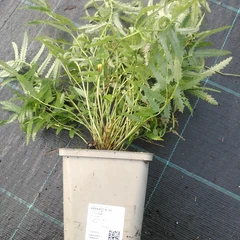
Velká sazenice je zasazená v hranatém květináči o velikosti 11×11×11 cm.
Attracts pollinators 🐝
Difficulty
Diseases
Edible
Flower color
Flower color: Shade
Foliage color
Fragrant (aromatic) 👃
Frost resistance
Hardiness zone
Height
Moisture
Pests
Position
Soil
Spacing
Spacing: Plants per m²
Species
Suitable for cutting
Suitable for drying
Recommended products

Sanguisorba
Great Burnet Rock and Roll

Sanguisorba officinalis
Great Burnet

Sanguisorba officinalis
Burnet Lum

Aquilegia vulgaris
Columbine Kristall

Achillea ptarmica
Yarrow The Pearl

Cephalaria gigantea
Giant scabious

Sanguisorba
Great Burnet Purple Tails

Alchemilla mollis
Lady's mantle Irish Silk

Salvia pratensis
Meadow Sage Rose Rhapsody

Gypsophila paniculata
Baby's Breath Snowflake

Achillea millefolium
Yarrow Summer Pastels

Papaver orientale
Oriental Poppy Royal Wedding

Rudbeckia subtomentosa
Rudbeckia Henry Eilers

Sedum spectabile
Sedum Matrona

Anemone hybrida
Japanese Anemone Whirlwind

Veronicastrum virginicum
Culver's Root Album

Achillea millefolium
Yarrow Lachsschönheit

Aster ericoides
Aster Schneetanne

Pennisetum alopecuroides
Fountain grass Hameln

Achillea millefolium
Yarrow Terracotta

Gypsophila paniculata
Baby's breath Flamingo

Filipendula hybridum
Meadowsweet Kahome

Verbascum nigrum var. album
Black Mullein

Dicentra spectabilis Alba
Bleeding Heart Alba

Liatris spicata
Liatris Floristan White

Anemone hybrida
Japanese Anemone Andrea Atkinson

Aquilegia vulgaris
Columbine Heidi

Lychnis coronaria
Campion Alba

Persicaria amplexicaulis
Persicaria Alba

Verbena hastata
Verbena hastata White Spires

Physostegia virginiana
Obedient Plant Rosea

Filipendula rubra
Meadowsweet Venusta

Phlox paniculata
Phlox Sweet Summer Fantasy

Chasmanthium latifolium
Northern Sea Oats
Cultivation
Burnet 'Alba' is an impressive perennial that will bring vertical structure and airiness to your garden. Choosing the right location is key for this plant. It seeks out sunny places, but thrives very well in partial shade too. Regarding soil, the burnet is not picky, but it has its preferences. It thrives best in humus-rich, loamy to clayey soil that can retain moisture. On the contrary, downright dry and sandy subsoil does not suit it – the plant would suffer from drought here and could be more susceptible to powdery mildew.
Provide sufficient space during planting. Given that the mature plant grows to a height of 120 to 180 cm, we recommend maintaining a planting spacing of at least 50 cm. This will ensure good air circulation around the leaves, which is a natural prevention against diseases. Plant the seedling as deep as it grew in the container, and water it thoroughly after planting. Moisture is essential for this species, so do not forget regular watering on hot summer days. If the plant drops its leaves due to drought or does not look fresh, do not be afraid to cut it back deeply during the season. It will very willingly and quickly sprout again with fresh green leaves.
This perennial is fully frost-hardy down to -34 °C (zone 4a), so it requires no special winter protection. You can leave the dry inflorescences in the flowerbed even over the winter. Pruning is performed only in early spring, when you remove all dead parts just above the ground to make room for new shoots. Fertilization does not need to be overdone; it is enough to incorporate mature compost into the soil in the spring.
If you are considering growing it in a container, keep in mind that it is a very tall plant and growing it in a window box is not very suitable. If you decide to do it anyway, it is necessary to ensure that the substrate in the container never completely dries out.
The information given is based on our experience, please use it as a guide only. Times may vary depending on the season, climate, location, sowing and transplanting dates and possibly also the conditions in the greenhouse/greenhouse. We always recommend testing how the plant performs in your conditions. Please do not take this as a guarantee.
Frequently
asked
questions
Growing
How often do I need to water the burnet?
Does a plant this tall need support?
Do I need to fertilize the plant?
How should I care for the plant before winter?
Planting site
Where is the best place to plant this perennial?
Troubleshooting
Is this plant prone to any diseases or pests?
What should I do if powdery mildew appears on the leaves?
Characteristics
Is this plant toxic to children or pets?
How much space does the plant need?
Is Sanguisorba 'Alba' frost-hardy?
Does this plant attract bees and butterflies?
Basic information
What does the Sanguisorba 'Alba' look like and why is it interesting for the garden?
Is growing Sanguisorba difficult for beginners?
Harvest
Can I use Sanguisorba flowers in bouquets?
Photos
in time
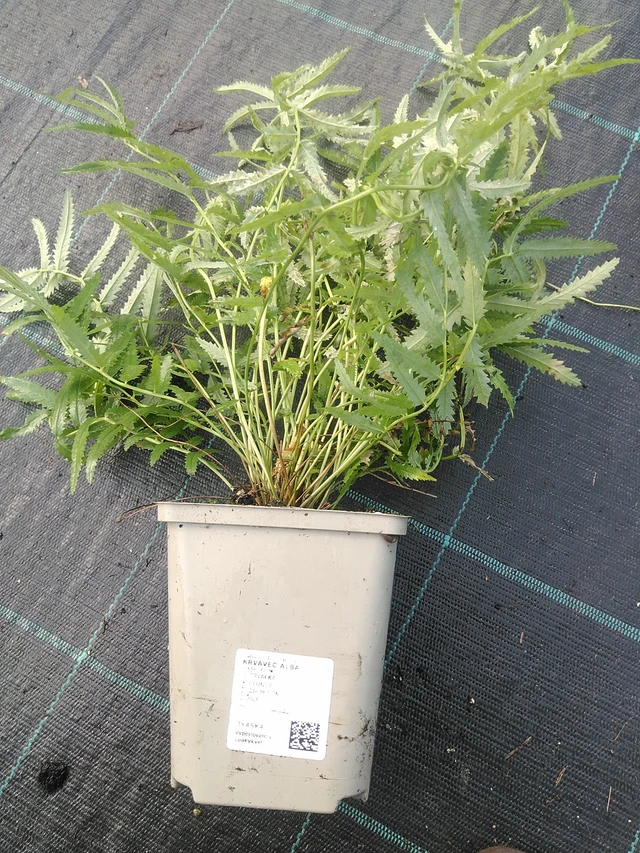
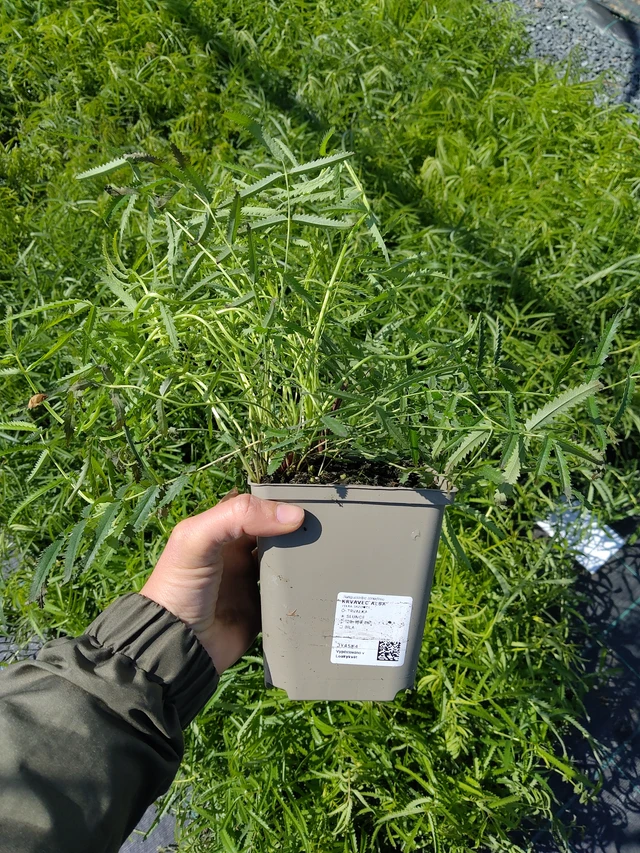
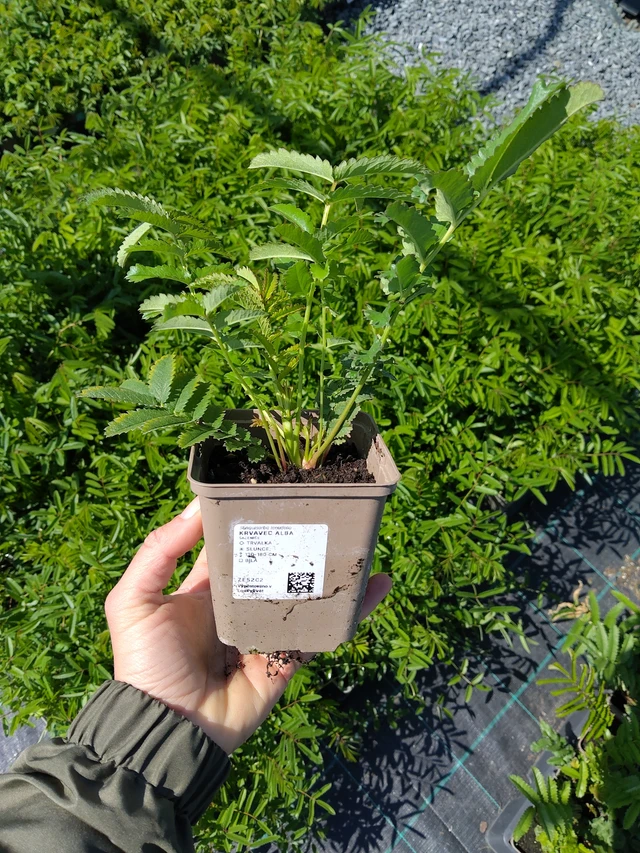
See how the seedling looks over the course of a year.




More products in category Burnet
Sanguisorba officinalis
Great Burnet

Sanguisorba officinalis
Burnet Pink Tanna

Sanguisorba obtusa
Sanguisorba obtusa
Sanguisorba officinalis
Burnet Lum

Sanguisorba officinalis
Sanguisorba Arnhem
Sanguisorba
Great Burnet Purple Tails

Sanguisorba officinalis
Burnet Tanna
Sanguisorba
Great Burnet Rock and Roll

Sanguisorba tenuifolia
Sanguisorba Pieters

Sanguisorba minor
Small Burnet

Sanguisorba
Sanguisorba Korean Snow
More products in category Perennials
Alchemilla mollis
Lady's mantle Irish Silk
Achillea millefolium
Yarrow Summer Pastels

Verbena bonariensis
Verbena

Salvia nemorosa
Woodland Sage Caradonna

Perovskia atriplicifolia
Russian Sage

Gaura lindheimeri
Gaura Siskiyou Pink

Echinacea purpurea
Coneflower Rubinstern

Echinacea pallida
Echinacea pallida

Eryngium planum
Sea Holly

Echinacea purpurea
Coneflower Magnus

Salvia nemorosa
Woodland Sage Ostfriesland

Calamintha nepeta
Calamint Blue Cloud

Rudbeckia fulgida
Rudbeckia Goldsturm

Calamintha nepeta ssp. nepeta
Calamint

Gaura lindheimeri
Gaura Summer Breeze

Salvia nemorosa
Woodland Sage Amethyst

Leucanthemum vulgare
Daisy Maikönigin
Achillea millefolium
Yarrow Terracotta

Perovskia atriplicifolia
Russian sage Little Spire

Salvia nemorosa


