
Sanguisorba minor
Small Burnet
Seedling
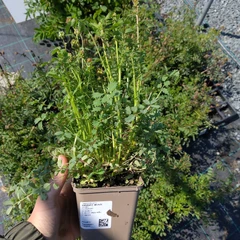
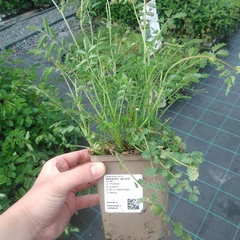

Attracts pollinators 🐝
Difficulty
Diseases
Edible
Flower color
Flower color: Shade
Foliage color
Fragrant (aromatic) 👃
Frost resistance
Hardiness zone
Height
Moisture
Pests
Position
Soil
Spacing
Spacing: Plants per m²
Species
Suitable for cutting
Suitable for drying
Recommended products

Achillea millefolium
Yarrow Terracotta

Salvia pratensis
Meadow Sage Swan Lake

Aster ericoides
Aster Lovely

Salvia pratensis
Meadow Sage Rose Rhapsody

Knautia macedonica
Knautia Red Knight

Melica ciliata
Melic grass Silky

Rudbeckia subtomentosa
Rudbeckia Henry Eilers

Geum chiloense
Avens Totally Tangerine

Nepeta racemosa
Catmint Walker’s Low

Nepeta faassenii
Catmint Alba

Caryopteris clandonensis
Bluebeard Sterling Silver

Centaurea montana
Mountain Cornflower

Sanguisorba
Great Burnet Purple Tails

Succisa pratensis
Devil's-bit scabious

Eupatorium rugosum
Eupatorium Chocolate

Sidalcea
Checkerbloom Brilliant

Verbena hastata
Verbena hastata White Spires

Anemone tomentosa
Anemone Robustissima

Coreopsis verticillata
Coreopsis Moonbeam

Thalictrum aquilegiifolium
Columbine meadow-rue

Achillea millefolium
Yarrow White Beauty

Geum chiloense
Avens Tempest Scarlet

Geum rivale
Geum Mango Lassi

Agastache hybrida
Agastache Danish Delight

Mentha spicata
Moroccan mint

Alchemilla mollis
Lady's mantle Irish Silk

Sanguisorba officinalis
Burnet Lum

Centaurea montana
Cornflower Alba

Sedum telephium
Sedum Star Dust

Achillea millefolium
Yarrow Lilac Beauty

Thymus spp.
Thyme Rose
Salvia pratensis
Meadow Sage Swan Lake

Filipendula vulgaris
Meadowsweet

Bouteloua gracilis
Mosquito Grass
Cultivation
Salad burnet (Sanguisorba minor) is a perennial that forgives almost everything, except for waterlogging. Since you will receive a pre-grown seedling from us, you can plant it practically anytime during the growing season, provided the soil is not frozen. For planting, choose a fully sunny location or light partial shade where the plant will not reach for the light. The key to success is perfectly permeable soil. Salad burnet naturally grows in dry meadows and rocky substrates, so it will thrive in poor, sandy, or stony soil. Heavy, clay soils must be loosened with gravel or sand before planting so that the roots do not sit in water, which would lead to rotting. When planting in a group, maintain a spacing of approximately 35 cm, which corresponds to a density of 9 to 12 plants per square meter, to create a closed stand while still allowing for air circulation.
In terms of care, this is an ideal plant for beginners or busy gardeners. After planting, water the seedling regularly until it is fully established, after which it becomes a master of drought tolerance. Thanks to its deep root system, it can obtain moisture even on hot summer days and requires minimal watering. Fertilization is not necessary and could actually be harmful – in soil that is too rich, the plant loses its compact shape and flops over. Salad burnet is also exceptionally healthy, suffering from neither diseases nor pests, so you do not need to use any chemicals. This is great news for herb lovers, as you can harvest its leaves with a delicate cucumber flavor for salads or spreads throughout the season without worry.
Growing in containers is possible and looks very decorative, especially in combination with ornamental grasses. For growing in a pot or window box, choose a container with drainage holes and place a thick drainage layer of expanded clay at the bottom. Use a substrate for herbs mixed with sand in a 1:1 ratio. In a container, the plant will require more frequent moisture checks than in open ground; the substrate should always dry out between waterings. Regarding overwintering, salad burnet is fully frost-resistant down to -34 °C (zone 4a). It requires no winter protection in the garden. In spring, simply remove old and dry leaves to make room for new, fresh green growth. If you do not want the plant to self-seed in the garden, we recommend cutting off faded flower heads before the seeds mature.
The information given is based on our experience, please use it as a guide only. Times may vary depending on the season, climate, location, sowing and transplanting dates and possibly also the conditions in the greenhouse/greenhouse. We always recommend testing how the plant performs in your conditions. Please do not take this as a guarantee.
Will the plant survive the winter outside, or do I need to cover it?
How far apart should I plant the seedlings?
Do I need to prune the plant at all?
Can I grow Sanguisorba in a pot on the balcony?
Does Sanguisorba need to be fertilized?
Frequently asked questions
Harvest
Can Sanguisorba be dried for the winter?
When and how should I harvest the leaves for use in the kitchen?
Characteristics
Is this plant safe for children and pets?
Is burnet edible and what does it taste like?
Is burnet beneficial for bees and butterflies?
Does salad burnet spread around the garden on its own?
Diseases & pests
Is this plant prone to any pests or diseases?
Growing
How often do I need to water the seedling?
Planting site
What kind of soil does burnet need?
Where is the best place to plant salad burnet in the garden?
Basic information
How tall will the plant grow?
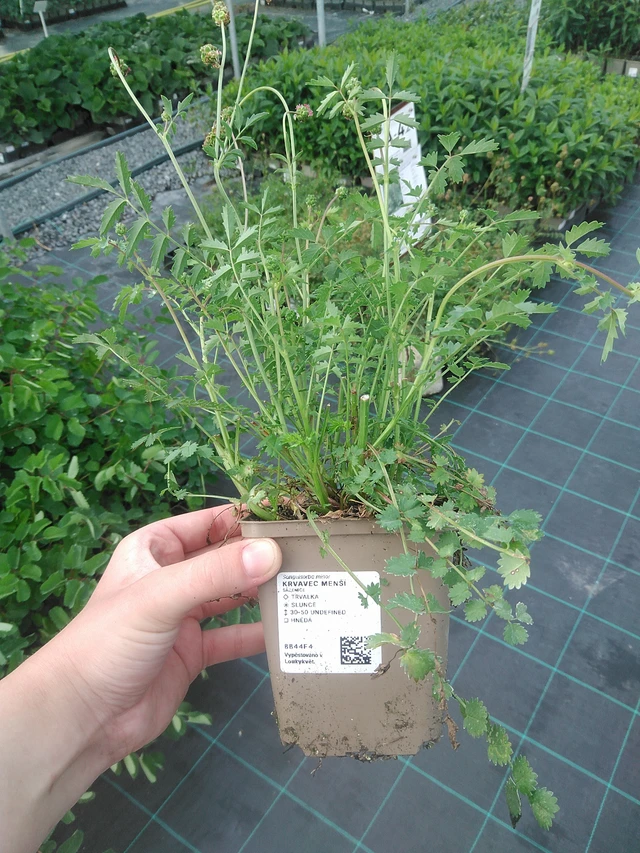
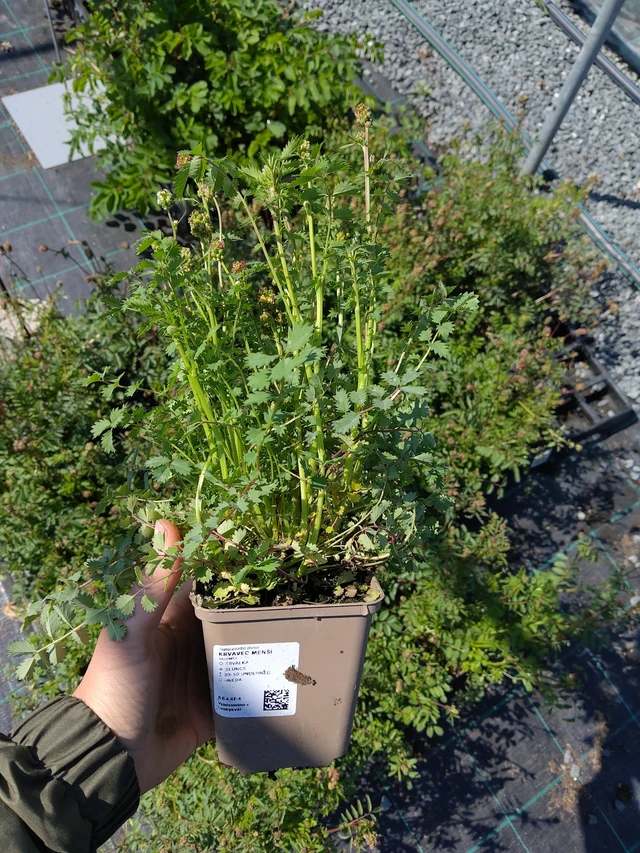
Photos in time
See how the seedling looks over the course of a year.



More products in category Burnet

Sanguisorba officinalis
Great Burnet

Sanguisorba officinalis
Burnet Pink Tanna

Sanguisorba obtusa
Sanguisorba obtusa
Sanguisorba officinalis
Burnet Lum

Sanguisorba officinalis
Sanguisorba Arnhem

Sanguisorba tenuifolia
Sanguisorba Alba
Sanguisorba
Great Burnet Purple Tails

Sanguisorba officinalis
Burnet Tanna

Sanguisorba
Great Burnet Rock and Roll

Sanguisorba tenuifolia
Sanguisorba Pieters

Sanguisorba
Sanguisorba Korean Snow
More products in category Perennials
Alchemilla mollis
Lady's mantle Irish Silk

Achillea millefolium
Yarrow Summer Pastels

Verbena bonariensis
Verbena

Salvia nemorosa
Woodland Sage Caradonna

Perovskia atriplicifolia
Russian Sage

Gaura lindheimeri
Gaura Siskiyou Pink

Echinacea purpurea
Coneflower Rubinstern

Echinacea pallida
Echinacea pallida

Salvia nemorosa
Woodland Sage Ostfriesland

Eryngium planum
Sea Holly

Echinacea purpurea
Coneflower Magnus

Calamintha nepeta
Calamint Blue Cloud

Rudbeckia fulgida
Rudbeckia Goldsturm

Calamintha nepeta ssp. nepeta
Calamint

Salvia nemorosa
Woodland Sage Amethyst

Gaura lindheimeri
Gaura Summer Breeze

Leucanthemum vulgare
Daisy Maikönigin
Achillea millefolium
Yarrow Terracotta

Perovskia atriplicifolia
Russian sage Little Spire

Salvia nemorosa


