

Sanguisorba officinalis
Burnet Pink Tanna
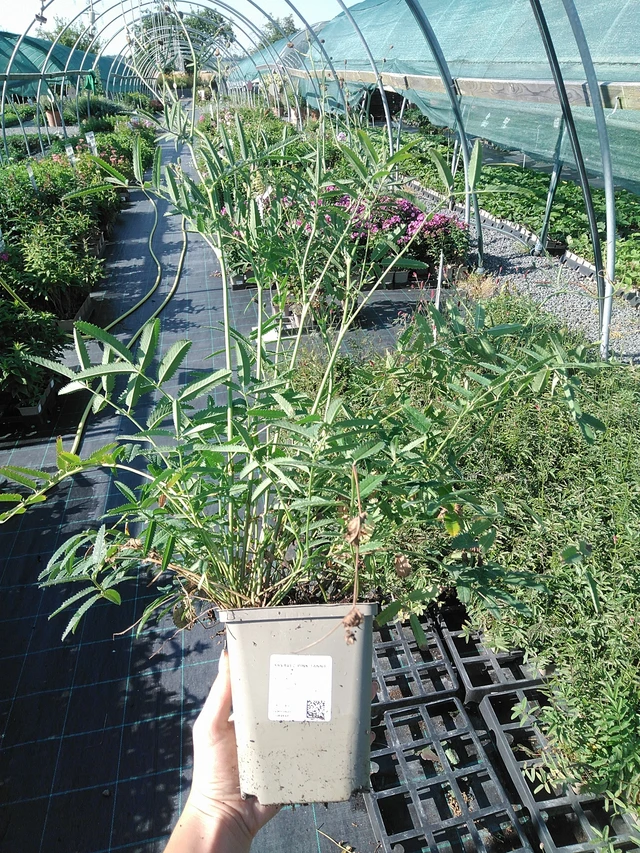
Large seedling


Velká sazenice je zasazená v hranatém květináči o velikosti 11×11×11 cm.
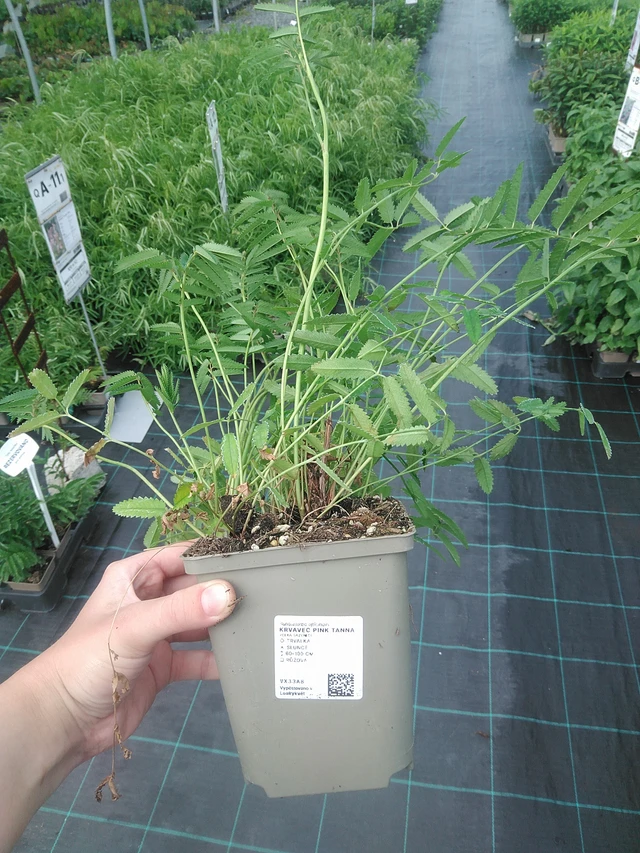
Seedling


Sazenice zasazená v hranatém květináči o velikosti 9×9×9,5 cm.
Attracts pollinators 🐝
Difficulty
Diseases
Edible
Flower color
Flower color: Shade
Foliage color
Fragrant (aromatic) 👃
Frost resistance
Hardiness zone
Height
Moisture
Pests
Position
Soil
Spacing
Spacing: Plants per m²
Species
Suitable for cutting
Suitable for drying
Recommended products

Sanguisorba officinalis
Great Burnet

Alchemilla mollis
Lady's mantle Irish Silk

Achillea millefolium
Yarrow Lilac Beauty

Achillea millefolium
Yarrow Lachsschönheit

Sanguisorba tenuifolia
Sanguisorba Alba

Lavandula angustifolia
Lavender Rosea

Anemone hybrida
Japanese anemone Lorelei

Knautia macedonica
Knautia Red Knight

Filipendula hybridum
Meadowsweet Kahome

Salvia pratensis
Meadow Sage Rose Rhapsody

Gypsophila paniculata
Baby's Breath Snowflake

Pennisetum alopecuroides
Fountain grass Hameln

Anemone hybrida
Japanese Anemone Whirlwind

Geum chiloense
Avens Totally Tangerine

Aquilegia vulgaris
Columbine Rose Barlow

Briza media
Quaking grass Tinkerbell

Achillea millefolium
Yarrow Summer Pastels

Cephalaria gigantea
Giant scabious

Nepeta racemosa
Catmint Walker’s Low

Anemone hybrida
Japanese Anemone Andrea Atkinson

Helleborus orientalis
Hellebore Double Ellen White

Caryopteris clandonensis
Bluebeard Sterling Silver

Aquilegia vulgaris
Columbine Kristall

Coreopsis verticillata
Coreopsis Moonbeam

Salvia nemorosa
Woodland sage Schwellenburg

Aquilegia vulgaris
Columbine Heidi

Sedum spectabile
Sedum Matrona

Perovskia
Russian Sage Blue Spire

Briza media
Quaking grass Limouzi

Sanguisorba
Great Burnet Purple Tails

Molinia caerulea
Purple Moor Grass Edith Dudszus

Lythrum virgatum
Loosestrife Rose Queen
Filipendula hybridum
Meadowsweet Kahome

Phlox paniculata
Phlox Sweet Summer Dream
Cultivation
Burnet 'Pink Tanna' is a rewarding and long-lived perennial that will bring you joy with a minimum of worries, provided you give it the right starting conditions. Plant the seedlings in a sunny or semi-shady location, ideally where the soil naturally stays moist. This plant loves loamy to clayey soils that do not dry out too quickly. If you have sandy soil in your garden, definitely improve it before planting with a generous dose of compost or high-quality humus-rich soil so that it retains water better. When planting, maintain a spacing of approximately 35 to 45 cm (i.e., about 5 to 7 plants per square meter), which will provide the plants with enough space for their airy growth and at the same time allow air circulation, which is important as a prevention against fungal diseases.
Watering is crucial, especially in the first year after planting and during hot summer days. The burnet originates from damp meadows, so it reacts to drought by drooping its leaves and, in extreme cases, can be prone to powdery mildew in overly dry locations. If this happens or if the leaves do not look nice after blooming, do not be afraid to cut the whole clump at the ground. The plant will very willingly and quickly sprout again with fresh green leaves. Otherwise, it is a very healthy and resilient plant that is not bothered by common pests, so you do not have to fear complicated chemical protection. Fertilizing is not strictly necessary if the soil is nutritious, but in the spring you can add a little compost or organic fertilizer to support flowering.
One of the great advantages of this variety is its excellent frost resistance. It withstands temperatures down to -34 °C, so it does not need any winter blanket and will reliably overwinter throughout the Czech Republic. In the fall, you can cut the faded stems, but many gardeners leave them until spring. Dry inflorescences look magical in the winter garden, especially when covered with hoarfrost, and provide shelter for small insects. If you would like to grow the burnet in a container, it is possible, but choose a large and deep pot with high-quality drainage. Soil in containers dries out more quickly, so you will have to ensure really regular and heavy watering so that the substrate remains constantly slightly moist.
The information given is based on our experience, please use it as a guide only. Times may vary depending on the season, climate, location, sowing and transplanting dates and possibly also the conditions in the greenhouse/greenhouse. We always recommend testing how the plant performs in your conditions. Please do not take this as a guarantee.
How often does the burnet need to be watered?
Is Sanguisorba 'Pink Tanna' frost-hardy, or does it need to be covered for the winter?
How many seedlings should I plant per square meter?
When and how should I prune Sanguisorba?
Frequently asked questions
Basic information
When will I see flowers?
Harvest
Is this plant suitable for cutting and placing in a vase?
Characteristics
Is Sanguisorba edible or poisonous?
How tall does Sanguisorba 'Pink Tanna' grow and what color is it?
Does this plant attract bees and butterflies?
Troubleshooting
Does the burnet suffer from any diseases or pests?
Planting site
Can I grow Sanguisorba in a pot on the balcony?
What type of soil does Sanguisorba need for its growth?
Where is the best place to plant Sanguisorba 'Pink Tanna' in the garden?
Propagation
How can I propagate Sanguisorba?
Photos in time
See how the seedling looks over the course of a year.


More products in category Burnet
Sanguisorba officinalis
Great Burnet

Sanguisorba obtusa
Sanguisorba obtusa

Sanguisorba officinalis
Burnet Lum

Sanguisorba officinalis
Sanguisorba Arnhem
Sanguisorba tenuifolia
Sanguisorba Alba
Sanguisorba
Great Burnet Purple Tails

Sanguisorba officinalis
Burnet Tanna

Sanguisorba
Great Burnet Rock and Roll

Sanguisorba tenuifolia
Sanguisorba Pieters

Sanguisorba minor
Small Burnet

Sanguisorba
Sanguisorba Korean Snow
More products in category Perennials
Alchemilla mollis
Lady's mantle Irish Silk
Achillea millefolium
Yarrow Summer Pastels

Verbena bonariensis
Verbena

Salvia nemorosa
Woodland Sage Caradonna

Perovskia atriplicifolia
Russian Sage

Gaura lindheimeri
Gaura Siskiyou Pink

Echinacea purpurea
Coneflower Rubinstern

Echinacea pallida
Echinacea pallida

Salvia nemorosa
Woodland Sage Ostfriesland

Eryngium planum
Sea Holly

Echinacea purpurea
Coneflower Magnus

Calamintha nepeta
Calamint Blue Cloud

Rudbeckia fulgida
Rudbeckia Goldsturm

Calamintha nepeta ssp. nepeta
Calamint

Gaura lindheimeri
Gaura Summer Breeze

Salvia nemorosa
Woodland Sage Amethyst

Leucanthemum vulgare
Daisy Maikönigin

Achillea millefolium
Yarrow Terracotta

Perovskia atriplicifolia
Russian sage Little Spire

Salvia nemorosa


