Ireland
🌷 Pre-orders for bulbs are in full swing! Check out this year's selection. 🌷
Ireland
🌷 Pre-orders for bulbs are in full swing! Check out this year's selection. 🌷
Bluebeard Hint of Gold, Loukykvět

Caryopteris clandonensis

Bluebeard Hint of Gold

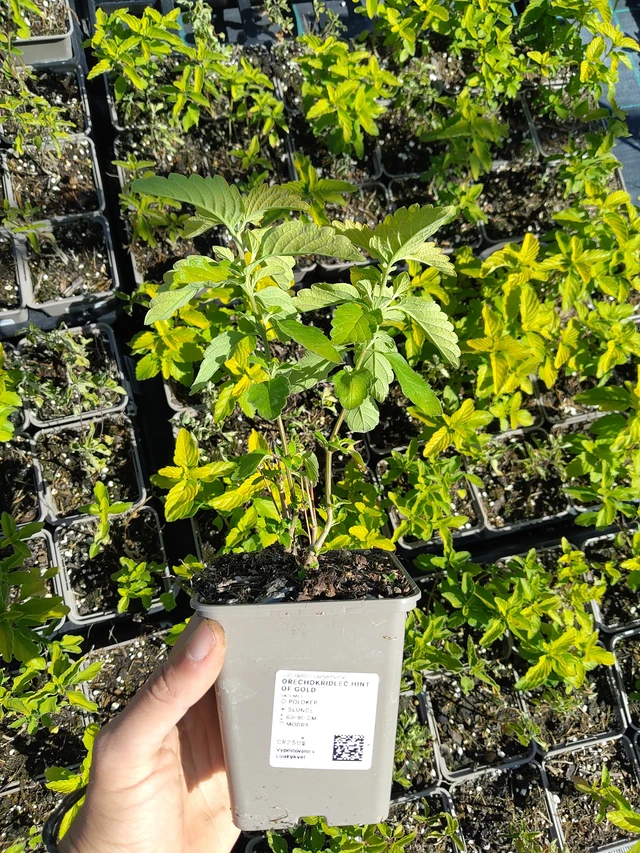
Bluebeard Hint of Gold will brighten up the garden at a time when most perennials are already finishing their bloom. This deciduous subshrub is valued primarily for the unconventional coloring of its leaves, which sprout in bright yellow tones and gradually transition into a soft yellow-green. This creates a perfect and fresh contrast to the deep blue-purple flowers that appear on the plant from August to October. The whole plant is strongly aromatic and upon touch releases a pleasant spicy scent that reminds one of a mix of herbs, conifer needles, and resin. Thanks to its compact growth around 60 to 90 centimeters, it perfectly fits into lower shrub groups or as a specimen plant in perennial beds, where it is guaranteed to draw attention to itself. The original species of bluebeard come from the dry and sunny steppe regions of East Asia, which predestines their requirements in our gardens as well. They require full sun and very well-draining, even stony or sandy soil, as they do not tolerate waterlogging, especially in the winter months. Hint of Gold is frost-resistant, yet it is advisable to cover its roots slightly with conifer branches for the winter. In the spring, a deeper cutback is needed, which will promote the bush's density and an abundant set of flowers on new shoots. The flowers are literally a magnet for bees, bumblebees, and other pollinators, representing a valuable source of nectar in late summer. The twigs can also be used for cutting into a vase, where they will spice up any autumn bouquet with their scent and the unconventional color combination of leaf and flower. Show full description

Seedling

Květináč K9 (9×9×9,5 cm)
Seedling
1-2 kusy
4,29/ks
3-8 kusů
3,89/ks
9-17 kusů
3,39/ks
18+ kusů
3,19/ks
Add to cart
Skladem 227 ks s doručením od 24. 8. 2026

Attracts pollinators 🐝

Ano

Difficulty

Beginner

Diseases

Disease-free 🙂

Edible

Ano
?
Information on whether the plant is edible.

Flower color

Blue

Flower color: Shade

Blue-violet

Foliage color

Yellow, green

Fragrant (aromatic) 👃

Ano

Frost resistance

-23
?
The temperature down to which the plant is frost hardy.

Hardiness zone

6a (-23.3 °C to -20.6 °C)

Height

60-90 cm

Moisture

💧

Pests

Pest-free 🙂

Position

Sun

Soil

Sandy, well-drained

Spacing

40-60 cm
?
Recommended planting spacing.

Spacing: Plants per m²

3-5

Species

Subshrub

Suitable for cutting

Ano

Suitable for drying

Ne
1
2
3
4
5
6
7
8
9
10
11
12
Flowering
August
½ October

Recommended products

Geranium Summer Skies, Loukykvět
New

Geranium pratense

A clump-forming species of hardy geranium. It has deep green, deeply lobed leaves. Upright stems bear double blue-violet flowers. A hardy and long-lived plant in good conditions.
4,79
More from 3,59
Coming Soon
Phlomis Tuberosa, Loukykvět

Phlomis tuberosa

Phlomis tuberosa, known in Czech as tuberous Jerusalem sage, brings an unmistakable silhouette to perennial plantings. This robust plant, originally from the European steppes, is perfectly suited for lovers of natural gardens looking for something novel. Its dark purple stems form an interesting contrast to the light pinkish-lilac flowers, which are arranged in regular whorls one above the other. This tiered structure appears very decorative and looks interesting in the bed, especially in combination with finer plants. For florists, Phlomis is a literal treasure. You can cut it for fresh summer bouquets, but its true moment comes when dried. The faded seed pods hold their shape perfectly and will continue to look spectacular in a vase all winter. If you leave it in the bed, it will provide a beautiful spectacle even in the months when the garden is sleeping. It is a completely undemanding and frost-resistant perennial that loves the sun and well-drained soil. In nature here, it belongs to the critically endangered species, so growing it in the garden is also a small contribution to the protection of biodiversity.
2,99
More from 2,09
In Stock
Betony Morning Blush, Loukykvět

Betonica grandiflora

Betony, or Stachys, Morning Blush is a reliable perennial that will win you over not only with its flowers but also with its leaf structure. The original species comes from the mountain meadows of the Caucasus and northern Turkey, where it grows in sunny and slightly moist habitats. In the garden, it creates dense, compact clumps of wrinkled, deep green leaves that work as great ground cover and suppress weed growth. Above them, from May to July, sturdy upright stems carrying large deadnettle-like flowers rise. It is a magnet for bees and bumblebees, which find a rich source of nectar in the flowers. The Morning Blush cultivar is exceptional for its delicate coloring. Unlike the more common purple varieties, it offers a palette from pure white to softly pinkish, bringing light and elegance to flower beds. It fits into country gardens as well as more modern perennial plantings, where it contrasts beautifully with darker plants. The inflorescences are also suitable for cutting into a vase, where they stay fresh for several days. It is a long-lived and undemanding plant that handles our winters perfectly and requires almost no care.
2,99
More from 2,09
In Stock
Agastache Danish Delight, Loukykvět

Agastache hybrida

Agastache Danish Delight will bring lightness and a wonderful fragrance to your summer garden. It loves full sun and very well-draining, even drier sandy or loamy soil. Once it gets used to your flowerbed, it does not require any complex care and effortlessly handles even harsher winter frosts dropping down to minus twenty-three degrees. Although it is classified as a short-lived perennial, its exceptionally abundant and persistent blooming will completely make up for it during the season. From July to September, it forms dense spikes of tiny pink and purple flowers, which are complemented by green, highly aromatic leaves. The whole plant gives a very elegant impression and grows to a height of around sixty to eighty centimeters. In the flowerbed, it looks great in larger groups, planted about half a meter apart, and gets along excellently with ornamental grasses or other drought-tolerant species. Moreover, it blooms continuously throughout the summer and acts as a huge attraction for bees, bumblebees, and butterflies, providing them with a generous pasture. A healthy clump will quickly grow from the supplied grown seedling in a pot. Fortunately, the plant does not suffer from pests or diseases at all, so even complete beginners can manage growing it. Not only will this agastache brighten up the garden, but it is also perfectly suited for cutting for home crafting. Its sturdy stems full of flowers look fantastic in summer bouquets, adding an interesting height to them, and stay fresh in a vase without problems for a little over a week. It can also be used for drying in winter arrangements, because it holds its color very well. A great bonus is that both the fragrant leaves and the flowers themselves are fully edible. You can use them to decorate summer desserts, salads, or refreshing drinks and pleasantly surprise your guests.
3,49
More from 2,39
In Stock s doručením od 24. 8. 2026
Fountain Grass Hameln Gold, Loukykvět

Pennisetum alopecuroides

Fountain grasses originate from East Asia, where they grow in meadows and light forests. They form semi-spherical clumps of narrow leaves which, like the flowers, color up in autumn. They are suitable for vases and for drying. The cultivar Hameln Gold turns golden yellow in autumn.
4,29
More from 2,99
In Stock
Blue Vervain Pink Spires, Loukykvět

Verbena hastata

A perennial species of Verbena native to North America. In natural habitats, it grows in wet meadows, pastures, and along water bodies. It is a great attractant for bees and butterflies. Although not very long-lived, it can maintain itself by self-seeding in good conditions. It blooms gradually over a long period with many tiny flowers. The spent flower heads are also effective, both in beds and bouquets. The cultivar Pink Spires stands out with a sturdy upright habit and flowers in a soft pink color.
3,09
More from 2,19
Coming Soon
Geum Mai Tai, Loukykvět

Geum rivale

Avens Mai Tai is a charming spring perennial that brings a romantic touch to the garden with its adorable cup-shaped flowers. The original species often grows near streams and in moister meadows, so it will easily settle in our gardens in sun or partial shade, where well-drained, loamy, and slightly humous soil will suit it best. You will receive a rooted seedling in a pot from us, which you just need to transplant into the flowerbed. Avens forms nice basal clumps of green leaves, which over time function as an excellent ground cover. Its growth is reliable and its care is downright undemanding, because the plant is not bothered by pests or diseases and withstands frosts down to minus twenty-eight degrees. It stands out best when you plant it in smaller groups about thirty centimeters apart. From May to July, richly branched stems bearing semi-double flowers with gently ruffled petals appear above the foliage. The Mai Tai cultivar, which was bred in the USA in 2005, is characterized by its amazing color variability. It blooms in peach tones with a pink tint and gradually transitions into more muted pastel, salmon, and apricot shades. Blooming avens is a huge attraction for insects, especially for butterflies. We cut the stems for a vase when roughly a quarter to half of the flowers on the stem are open. They will stay beautiful in water for approximately seven days and add lightness and movement to an arrangement. However, its flowers are not suitable for drying. Although it is more of a short-lived perennial, it will bring you a lot of joy in the flowerbed with its rich flowers and undemanding nature.
3,89
More from 2,89
In Stock
Hellebore Double Ellen Yellow Spotted, Loukykvět

Helleborus orientalis

Hellebores are evergreen perennials that form slowly expanding clumps of leathery, dark green leaves. The stems usually bear four to five flowers. They bloom very early, already at the end of winter and the beginning of spring. They are usable for a vase only after conspicuous seed pods form in the center of the flower and the flower matures. Earlier, they tend to wilt, and the stems cannot hold the flower upright. All parts of the plant are poisonous. The 'Double Ellen Yellow Spotted' hellebore has light yellow-green semi-double flowers with striking, dark burgundy spotting.
5,19
More from 3,89
In Stock
Hellebore Double Ellen Pink Spotted, Loukykvět

Helleborus orientalis

Hellebores are evergreen perennials that form slowly spreading clumps of leathery, dark green leaves. Stems usually bear four to five flowers. They bloom very early, already in late winter and early spring. They are usable for vases only after conspicuous seed pods form in the center of the flower and the flower matures. Earlier, they tend to wilt and the stems do not hold the flower in an upright position. All parts of the plant are poisonous. Double Ellen Pink Spotted has double, soft pink flowers with dark burgundy spots.
4,79
More from 4,69
In Stock
Baptisia Alba, Loukykvět

Baptisia alba

Baptisia comes from North America, belongs to the legume family, and resembles the lupine in appearance. Unlike lupines, however, it does not suffer from fungal diseases and does not taste as good to slugs. In addition to the blue flowers, the large pods are interesting, decorating the plant long after flowering. Native Americans used Baptisia roots to disinfect wounds and reduce fever, and the leaves to dye fabrics. Patience is key with Baptisia; it takes some time to fully establish and create a massive root system adapted to survive long periods of drought and fire. Then it is very long-lived. It was voted Perennial of the Year for the 2019 season. The elegant pure white 'Alba' also has slightly lighter leaves.
4,79
More from 3,59
In Stock
Hellebore Double Ellen Pink, Loukykvět

Helleborus orientalis

Hellebores are evergreen perennials that form slowly spreading clumps of leathery, dark green leaves. The stems usually carry four to five flowers. They bloom very early, as early as late winter and early spring. They can be used in a vase only after conspicuous seed pods form in the center of the flower and the flower matures. Picked earlier, they tend to wilt and the stems cannot hold the flower upright. All parts of the plant are poisonous. Double Ellen Pink is double-flowered. The main color is a very light pink with irregular, deeper pink marbling and spotting. As it finishes blooming, it changes to a fuller pastel old rose. The petals are pointed at the ends.
4,79
More from 4,69
In Stock
Hellebore Double Ellen Red, Loukykvět

Helleborus orientalis

Hellebores are evergreen perennials that form slowly spreading clumps of leathery, dark green leaves. The stems usually carry four to five flowers. They bloom very early, as early as late winter and early spring. They can be used in a vase only after conspicuous seed pods form in the center of the flower and the flower matures. Picked earlier, they tend to wilt and the stems cannot hold the flower upright. All parts of the plant are poisonous. Double Ellen Red is a double-flowered hellebore with rounded petals of a dark burgundy red color with a lighter undertone on the lower row of petals.
4,79
More from 4,69
In Stock
Phlox Duchess of York, Loukykvět

Phlox paniculata

Phlox is originally a perennial native to North America. It soon achieved great popularity in European gardens and has been systematically bred since the 19th century. It is a classic perennial for cutting into bouquets, where, in addition to colorful flowers, it also delights with a gentle fragrance. We harvest as soon as roughly half the flowers in the inflorescence have bloomed; then they last up to 10 days in a vase. Despite efforts to breed the most resistant cultivars, it remains true that Phlox reacts extremely sensitively to climate and soil conditions, so we carefully pay attention to the correct choice of site. A historic English variety bred before 1949. The light pink flowers fade towards the center, while the eye is more richly colored.
3,49
More from 2,39
In Stock posledních 29 kusů
Hellebore Double Ellen Flash, Loukykvět

Helleborus orientalis

Hellebores are evergreen perennials that form slowly spreading clumps of leathery, dark green leaves. Stems usually bear four to five flowers. They bloom very early, as early as late winter and early spring. They are usable for vases only after conspicuous seed pods form in the center of the flower and the flower matures. Before that, they tend to wilt and the stems do not hold the flower in an upright position. All parts of the plant are poisonous. Double Ellen Flash has semi-double, dark maroon flowers with white stamens. As they finish blooming, they fade and a more distinct color borders the edges of the petals.
4,79
More from 4,69
In Stock
Goldenrod Moonlight Glory, Loukykvět

Solidago canadensis

The delicately creamy 'Moonlight Glory' goldenrod will bring lightness and elegance to your garden without requiring complex care. The original species of this perennial come from North America, from where they brought extraordinary hardiness, so the plant easily withstands even very severe frosts. You don't have to worry, this modern garden cultivar is perfectly disciplined and does not spread uncontrollably through the flower beds. You just need to choose a sunny spot with humous soil, and from the supplied seedling, you will get a stable plant that does not suffer from pests or diseases. From August to October, it forms rich inflorescences in a milky white shade, which will perfectly complement bolder colors in the bed. During autumn, it becomes a sought-after stop for bees and butterflies; surprisingly, it even has edible flowers. If you belong to the enthusiasts of bouquet making, this cultivar is guaranteed to please you with its straight stems. You can cut it already in the bud stage, and it will stay fresh in a vase for a beautiful ten days. If you don't manage to use the flowers fresh, simply dry them for winter arrangements.
2,79
More from 1,99
In Stock posledních 66 kusů
Stock StoX Discover Mix, Loukykvět
Mix barev

Matthiola incana

✨ Color mix created at Loukykvět ✨ StoX Discover Mix blooms in 4 shades (bronze, white, yellow, and fuchsia), so you can discover, try out, and admire! The StoX series is a versatile Stock suitable for both classic spring cultivation and autumn harvest. The seed contains a high proportion of double-flowered plants, but as with every summer Stock, StoX also has pieces that flower singly. Robust stems are a great advantage, and it also withstands higher temperatures better than other Stock series.
4,79
In Stock
Aster Pink Star, Loukykvět

Aster pringlei

Forms a delicate, airy bush. Compared to Aster ericoides, the flowers are less numerous, placed singly at the ends of branch tips, which gives the plant an airy effect. The plant has a very delicate appearance. It is beautiful in combination with other late asters and ornamental grasses. Healthy and long-blooming, the pink flower is slightly larger than that of Aster ericoides. Lasts 7 to 10 days in a vase.
2,99
More from 2,09
In Stock
Woodland Sage Amethyst, Loukykvět

Salvia nemorosa

This species of sage originates from the steppe regions of Central and Eastern Europe. It forms profusely flowering small clumps with straight, upright stems. In flower beds, it looks best in groups. It is traditionally planted as a companion to roses due to the matching flowering time. However, it looks equally good in mixed drought-tolerant steppe plantings with grasses. It is an excellent food source for bees. Lasts 7 days in a vase. Amethyst is an elegant variety with long stems and a pink flower color that is unusual for sages.
2,99
More from 2,09
In Stock posledních 82 kusů
Larkspur Benary’s Pacific Blue Bird, Loukykvět
2,99
In Stock
Aster Monte Cassino, Loukykvět

Aster pringlei

It creates a delicate airy bush. Compared to Aster ericoides, the flowers are less numerous, placed individually at the ends of branchlets, which gives this perennial an effect of airiness. The plant gives a very delicate impression. It is beautiful in combination with other late asters and ornamental grasses. Monte Cassino is characterized by very late flowering, so we can enjoy its flowers even in November, often together with the first snowflakes. It lasts 7 to 10 days in a vase.
2,99
More from 2,09
In Stock
Baptisia Chocolate Chip, Loukykvět

Baptisia hybride

Baptisia comes from North America, belongs to the legume family, and resembles the lupine in appearance. Unlike it, however, it does not suffer from fungal diseases and does not taste as good to slugs. In addition to blue flowers, the large pods, which adorn the plant long after flowering, are interesting. North American Indians used Baptisia roots to disinfect wounds and reduce fever, and the leaves to dye fabrics. With Baptisia, patience is most important; it takes some time to fully establish itself and create a massive root system adapted to survive long periods of drought and fires. Then it is very long-lived. It was chosen as the perennial of the year for the 2019 season. Chocolate Chip captivates with chocolate-brown flowers with a purple tinge and a contrasting creamy yellow keel.
5,39
More from 4,09
In Stock
False indigo Pink Truffles, Loukykvět

Baptisia Decadence

Baptisia originates from North America, belongs to the legume family, and resembles the lupine in appearance. Unlike it, however, it does not suffer from fungal diseases and does not taste as good to slugs. Besides the blue flowers, the large pods are interesting, decorating the plant long after flowering. North American Indians used Baptisia roots to disinfect wounds and lower fever, and leaves to dye fabrics. Patience is most important with Baptisia; it takes some time to fully establish and create a massive root system adapted for surviving long periods of drought and fires. Then it is very long-lived.
4,79
More from 3,59
In Stock s doručením od 24. 8. 2026
Panicle Hydrangea Silver Dollar, Loukykvět

Hydrangea paniculata

Panicle hydrangeas are beautiful shrubs originating from China and Japan, where their bark was used, among other things, to make paper. We grow them for their impressive conical inflorescences. They are undemanding and richly flowering plants suitable for planting in beds and larger containers. The large inflorescences of the Silver Dollar cultivar gradually change color from fresh green to white. In autumn, they turn only subtly pink.
3,89
More from 2,89
In Stock
Panicle Hydrangea Limelight, Loukykvět

Hydrangea paniculata

Panicle hydrangeas are beautiful shrubs native to China and Japan, where their bark was used, among other things, to make paper. We grow them for their impressive conical inflorescences. They are undemanding and abundantly blooming plants suitable for planting in flower beds and larger containers. Limelight has inflorescences up to 30 cm large. The color changes from greenish-white through white to bright pink.
5,19
More from 4,39
In Stock
Speedwell First Love, Loukykvět

Veronica longifolia

Dlouhověká trvalka rozrazil First Love vnese do vašich záhonů svěží vítr díky záplavě drobných květů v netradiční žvýkačkově růžové barvě. Ve volné přírodě byste jeho příbuzné našli na světlých a mírně vlhkých loukách, takže mu i na vaší zahradě bude nejlépe na slunci či v polostínu v běžné hlinité půdě plné živin. Mrazivých zim se bát nemusíte, rostlina v klidu zvládne teploty klesající k minus čtyřiatřiceti stupňům. Od začátku léta až do konce srpna se nad porostem tyčí nápadná růžová květenství, která fungují jako spolehlivý magnet pro opylovače. V zahradě mu to nejvíce sluší po boku jiných trvalek, ideální je dodržet spon kolem čtyřiceti centimetrů. Pevné stonky si určitě nastříhejte i do vázy, kde jako čerstvá kytice nadělají spoustu parády, pro floristy vyhledávající sušené květy ale tento druh vhodný není.
3,79
More from 2,69
In Stock s doručením od 24. 8. 2026
Tulip Pink Magic, Loukykvět
Exclusive

Tulipa

The tulip 'Pink Magic' has been with us for several seasons now and has rightfully become everyone's favorite. Its color transitions from light shades of pink to warm peach tones, giving it an extraordinarily tender appearance. Furthermore, the petals have fringed edges, which lend an unusual flair and airiness to the classic tulip shape. From the firm bulb you receive from us, a medium-tall plant reaching thirty to forty-five centimeters will grow during April and May. It will enliven every awakening garden with its vibrant spring colors. In spring flower beds, 'Pink Magic' stands out best in larger groups, where it fully shows its texture. Its peach-pink tones complement white daffodils or blue grape hyacinths perfectly, and it fits seamlessly into the undergrowth beneath early-sprouting shrubs. If you enjoy decorating your home with fresh flowers, you will surely fall in love with this tulip. Its sturdy stems are made for cutting into a vase; they stay fresh for a long time indoors, and the fringed blooms will make a great show in spring bouquets.
0,446
In Stock
Tulip Foxtrot, Loukykvět

Tulipa

The Foxtrot tulip brings delicate beauty to the spring garden with its large flowers in pastel pink and white shades. It is an extremely popular spring bulb that does not need any support and fits perfectly into mixed perennial flowerbeds, where it beautifully complements earlier flowering species. Foxtrot is notable not only for its fluffy appearance but also for its very pleasant fragrance, which attracts the first spring pollinators, such as bees and bumblebees, during April and May. Thanks to its strong stems and beautifully shaped flowers, it is absolutely ideal for cutting. It stays fresh in a vase for a relatively long time and reliably softens every spring bouquet. You will enjoy this short-lived perennial without much worry; the plant does not require special care and will bring joy even to complete beginners. Just place the bulb in the soil in the autumn, and a wonderful pastel spectacle awaits you in the spring.
0,427
In Stock
Narcissus Sir Winston Churchill, Loukykvět
Fragrant

Narcissus

The Sir Winston Churchill daffodil has rightfully earned the title of king among daffodils. This unmistakable cultivar blooms a little later, usually during April and May, filling your garden with a strong and very pleasant fragrance. On sturdy stems that grow to a height of around fifty centimeters, you will not find just one flower, but a cluster of several smaller ones. Elegant creamy-white outer petals are perfectly complemented by a rich, double-flowered center in soft orange tones. From the green leaves grows a spring splendor that reliably attracts bees and other early pollinators. You will receive quality large bulbs from us, which will easily grow into richly flowering clumps in a sunny or partially shaded bed. In the garden, it complements earlier bulbs and sprouting perennials perfectly. Thanks to its sturdy stems and lack of need for support, it is an ideal choice for cutting. It stays fresh in a vase for a long time, and its intoxicating scent will fragrance any interior.
0,532
In Stock
Purple Allium, Loukykvět

Allium atropurpureum

Purple garlic, Latin name Allium atropurpureum, originally traveled to us from the sunny regions of the Balkans. At first glance, it captures attention with its exceptionally dark, deep burgundy color, which acts as a perfect contrast in the garden to lighter perennials and ornamental grasses. During May and June, striking semi-spherical inflorescences composed of tiny star-shaped flowers bloom on sturdy stems reaching sixty to ninety centimeters in height. They look beautiful, emit a pleasant fragrance, and attract bees, bumblebees, and other pollinators from afar. After flowering, the plant gradually goes dormant in the ground, so it is ideal to combine it with species that will subtly fill its space over the summer. The flowers also stand out in summer bouquets, where they remain fresh for many days. You can also dry them or leave them in the bed through the winter, as their snow-covered silhouettes create a magical sight. Additionally, the flowers are edible and make a great garnish for dishes.
0,512
In Stock

Cultivation

Ořechokřídlec 'Hint of Gold' je milovníkem slunce a tepla, proto pro něj na zahradě hledejte to nejteplejší a nejslunnější místo, ideálně orientované na jih. Jeho nároky na půdu jsou specifické v tom, že nesnáší přemokření. Zemina by měla být lehká, propustná, spíše sušší a chudší na živiny. Pokud máte na zahradě těžkou hlínu, je nutné ji při výsadbě vylehčit přimícháním písku nebo drobného štěrku, aby voda mohla rychle odtékat. Sazenice vysazujte do sponu 40–60 cm, což rostlinám zajistí dostatek světla ze všech stran a podpoří jejich typické žluto-zelené vybarvení listů. Tento kultivar výborně funguje jako solitér i ve skupinové výsadbě v trvalkových záhonech.
Klíčem k bohatému kvetení a hustému růstu je pravidelný zpětný řez. Ořechokřídlec se chová jako polokeř, což znamená, že jeho nadzemní části mohou v zimě částečně namrzat nebo zasychat, což je zcela přirozené. Každé jaro (zpravidla v dubnu, když už nehrozí silné mrazy) vezměte nůžky a celou rostlinu seřízněte zhruba na 10–15 cm nad zemí. Tímto řezem odstraníte staré a poškozené větve a nastartujete bujný růst nových výhonů, na kterých se od srpna objeví sytě modré květy. Bez tohoto řezu by keř ve spodní části vyholoval, řídnul a kvetl by méně.
Zálivka a hnojení vyžadují u této rostliny střídmost. Jakmile sazenice po výsadbě zakoření, stává se ořechokřídlec velmi odolným vůči suchu a zálivku vyžaduje jen v obdobích extrémně dlouhých letních veder. Přehnaná péče v podobě častého zalévání a hnojení mu spíše škodí – rostlina by sice bujně rostla, ale pletiva by byla měkká a náchylná k vymrzání. Díky silnému aroma listů je 'Hint of Gold' přirozeně chráněn proti škůdcům i chorobám, takže se nemusíte obávat nutnosti chemických postřiků. 
Pokud se rozhodnete pěstovat ořechokřídlec v květináči nebo truhlíku, je to možné, ale musíte simulovat jeho přirozené suché podmínky. Nádoba musí mít odtokové otvory a silnou drenážní vrstvu. Substrát by měl být smíchaný s pískem v poměru 1:1. V nádobě rostlina potřebuje o něco častější kontrolu vlhkosti než v záhonu, ale substrát nechte mezi zálivkami vždy proschnout. Na zimu je nutné nádobu izolovat, nebo ji zapustit do země, protože kořeny v květináči jsou citlivější na mráz. I přes svou mrazuvzdornost do -23 °C ocení rostlina v záhonu na zimu „peřinu“ z chvojí u kořenů, která ji ochrání před zimním vlhkem, jež je pro ni nebezpečnější než samotný mráz.

The information given is based on our experience, please use it as a guide only. Times may vary depending on the season, climate, location, sowing and transplanting dates and possibly also the conditions in the greenhouse/greenhouse. We always recommend testing how the plant performs in your conditions. Please do not take this as a guarantee.

Show all

Click to view the full growing instructions.

Frequently
asked
questions

Pěstování

Sklizeň

Základní informace

Vlastnosti

Stanoviště

Nemoci & škudci

Problémy

Photos
in time

See how the seedling looks over the course of a year.

Bluebeard Hint of Gold - 12. 8. 2026
12. 8. 2026

More products in category Caryopteris

Bluebeard Heavenly Blue, Loukykvět

Caryopteris clandonensis

Bluebeard Heavenly Blue is a charming smaller shrub that will prolong the summer atmosphere of your garden deep into autumn. The original species of this shrub come from the dry and warm regions of East Asia, which is why it enjoys full sun and well-drained, sandy or loamy soil the most here too. It tolerates drought and heat excellently, so it fits perfectly into steppe and Mediterranean-style plantings. It forms compact small shrubs reaching a height of around one meter. It is adorned with fragrant gray-green leaves and shoots, which in themselves bring an interesting texture to flowerbeds. During August and September, it then blooms with striking blue flowers clustered in dense panicles. These are a literal magnet for bees, bumblebees, and butterflies. It is an exceptionally resilient plant that even complete beginners can manage to grow. It does not suffer from any diseases or pests and easily handles frosts down to -23 °C. You will receive a grown seedling in a pot from us, which you simply need to transplant straight into your chosen spot. Bluebeard Heavenly Blue is also an excellent choice for florists. It is suitable for cutting into summer and autumn bouquets, where its blue flowers will stand out beautifully. If you do not harvest the flowers, the shrub remains ornamental even after fading, thanks to its decorative seed heads, which create a beautiful winter effect in the flowerbed.
3,89
More from 2,89
In Stock
Bluebeard Kew Blue, Loukykvět

Caryopteris clandonensis

Bluebeard Kew Blue is an exceptionally attractive shrub that will bring the atmosphere of the sun-drenched Mediterranean to your garden. It naturally grows in dry and warm habitats, which is why it will appreciate full sun and well-drained, even loamy or sandy soil here too. As soon as you transplant the seedling into the flowerbed, it quickly establishes itself and requires almost no care. It easily handles summer droughts and winters without problems in frosts down to minus twenty-three degrees. It does not suffer from diseases or pests, so even beginners can easily handle growing it. It forms compact small shrubs growing to a height of around one meter. They are adorned with gray-green leaves that emit a pleasant spicy scent when rubbed. During August and September, rich panicles of tiny flowers in a deep blue color appear, which is very typical for the Kew Blue cultivar. The flowers are a magnet for bees, bumblebees, and butterflies, providing them with valuable food. It will fit perfectly into drought-tolerant flowerbeds. You can also use the fragrant shoots for cutting into summer bouquets. The shrub remains ornamental even after fading, when its dried seed heads covered in frost create a wonderful winter effect.
4,29
More from 3,89
In Stock
Bluebeard Sterling Silver, Loukykvět

Caryopteris clandonensis

Caryopteris clandonensis is an undemanding smaller shrub that will bring a summer mood to your garden and maintain it until autumn. The original species come from East Asia, where they grow in sunny and drier places. Therefore, here it will appreciate full sun and well-drained, even sandy soil. It handles drought excellently and loves warmth. From August to September, it blooms with dense panicles of blue flowers that smell pleasant and act as an attraction for pollinators. It is a problem-free plant, does not suffer from diseases, and can withstand frosts down to minus twenty-three degrees. The 'Sterling Silver' cultivar stands out with its silvery gray-green leaves. It will perfectly fit into Mediterranean-style drought-tolerant beds. You will receive a mature potted seedling from us, which you just need to transplant outdoors. The blue flowers are suitable for cutting into bouquets. The shrub does not lose its ornamental function even after blooming; you can use the dried seed heads for floristic purposes, and they create a nice winter effect in the flowerbed.
5,19
More from 3,19
In Stock
Bluebeard Pagoda Dark Pink, Loukykvět

Caryopteris clandonensis

Small shrubs with fragrant gray-silver shoots and leaves. Strikingly colored flowers are clustered in dense panicles. In the garden, it can evoke a summer atmosphere well into autumn. It tolerates drought very well and loves heat. It fits perfectly into Mediterranean-style plantings. It is popular with bees, bumblebees, and butterflies. Pagoda Dark pink is an interspecific hybrid appreciated by florists for its perfectly long and straight stems, striking rich pink flower color.
3,89
More from 2,89
Unavailable
Pro rok 2026 nedostupné
Bluebeard Pagoda Ocean, Loukykvět

Caryopteris clandonensis

Small shrubs with fragrant gray-silver shoots and leaves. Strikingly colored flowers are clustered in dense panicles. In the garden, it can evoke a summer atmosphere well into autumn. It tolerates drought very well and loves heat. It fits perfectly into Mediterranean-style plantings. It is popular with bees, bumblebees, and butterflies. Pagoda Ocean is an interspecific hybrid appreciated by florists for its perfectly long and straight stems, striking rich dark blue flower color.
3,89
More from 2,89
Unavailable
Pro rok 2026 nedostupné
Bluebeard Pagoda Blush, Loukykvět

Caryopteris clandonensis

Small bushes with fragrant grey-silver shoots and leaves. Strikingly colored small flowers are clustered in dense panicles. In the garden, it can induce a summer atmosphere long into autumn. It tolerates drought very well and loves heat. It fits perfectly into Mediterranean-style plantings. It is popular with bees, bumblebees, and butterflies. 'Pagoda Blush' is an interspecific hybrid appreciated by florists for its perfectly long and straight stems, gently light pink flower color.
3,89
More from 2,89
Unavailable
Pro rok 2026 nedostupné
Bluebeard Pagoda Lagoon, Loukykvět

Caryopteris clandonensis

Small shrubs with fragrant gray-silver shoots and leaves. Strikingly colored flowers are clustered in dense panicles. In the garden, it can evoke a summer atmosphere well into autumn. It tolerates drought very well and loves heat. It fits perfectly into Mediterranean-style plantings. It is popular with bees, bumblebees, and butterflies. Pagoda Lagoon is an interspecific hybrid appreciated by florists for its perfectly long and straight stems, striking rich blue flower color.
3,89
More from 2,89
Unavailable
Pro rok 2026 nedostupné
Bluebeard Dark Knight, Loukykvět
New

Caryopteris clandonensis

Bluebeard Dark Knight brings a deep blue color to the garden just as most summer perennials are slowly finishing their bloom. This deciduous subshrub, created by crossing species native to East Asia, loves full sun and well-draining, even sandy soil. It tolerates drought and scorching heat excellently, so it is suitable for gravel beds or sunny slopes. The entire plant is strongly aromatic and when the leaves are rubbed, it releases a spicy scent reminiscent of resin and lavender. The Dark Knight cultivar stands out with particularly dark, indigo-purple flowers that create a beautiful contrast with the silvery-green leaves. Thanks to its late blooming time in August and September, it acts as a significant magnet for bees, bumblebees, and butterflies, providing them with valuable food before the approaching winter. It is advisable to leave the faded inflorescences on the plant over the winter, not only for their ornamental effect but also as root protection; the cutback is performed only in the spring. The sturdy stems with flowers can also be used for cutting into fresh bouquets, where they stay fresh for several days.
4,29
More from 2,99
In Stock s doručením od 24. 8. 2026
Bluebeard Stephi, Loukykvět

Caryopteris clandonensis

Bluebeard 'Stephi' will bring a summer mood to your garden that lasts until late autumn. This smaller shrub is derived from species originally growing on the sunny and dry slopes of East Asia. Therefore, even in our conditions, it thoroughly enjoys full sun, heat, and excellently drained sandy-loam soil. It easily handles drought and does not suffer from diseases or pests. From August to September, it forms dense panicles of flowers, which in the 'Stephi' cultivar have an unusual light pink color. This creates a delicate contrast with the fragrant grayish-green leaves. During bloom, the shrub is besieged by bees and butterflies, for whom it provides valuable late pasture. It perfectly fits into gravel and Mediterranean-style beds. You will receive a mature seedling in a pot from us, which you can simply transplant outside. Even beginners can easily manage its care. The twigs are suitable for cutting for vases, and the ornamental seed heads decorate the garden or dried arrangements even during winter.
4,29
More from 3,89
Unavailable
Pro rok 2026 nedostupné

More products in category Perennials

Lady's mantle Irish Silk, Loukykvět

Alchemilla mollis

Alchemilla mollis, known as lady's mantle, is an indispensable perennial for anyone who wants to bring harmony and softness to the garden. Its home is the moister environments of mountain meadows and light forests, making it a very adaptable plant that will survive even severe frosts without problems in our climate. The 'Irish Silk' cultivar is prized for its vitality and abundant blooming, where clouds of tiny, yellow-green flowers float above clumps of gray-green leaves. It is precisely this neutral color that can work wonders in a flower bed – it softens overly sharp contrasts between other flowers and beautifully unifies the entire composition. Besides its ornamental function, lady's mantle also has practical uses. Thanks to its clumping growth and ability to quickly fill in, it is ideal for edging pathways or as an underplanting beneath taller shrubs and roses. Water droplets catch on its leaves, creating a magical spectacle in the garden. If you enjoy making bouquets, you will love lady's mantle as versatile filler greenery that matches almost anything. It will last beautiful for about ten days in a vase, and its inflorescences can also be easily dried without losing too much of their color or shape. Moreover, it is a magnet for pollinators, and its young leaves are even edible, so it also finds use in a natural kitchen.
2,99
More from 2,09
In Stock s doručením od 31. 8. 2026
Yarrow Summer Pastels, Loukykvět

Achillea millefolium

An original wild perennial with a large distribution area from Europe to Siberia. Suitable for natural and wild plantings. It grows in meadows and dry grassy places. A very adaptable and undemanding plant, it grows in clumps and spreads by runners. By cutting back after the first flowering, we encourage a set of new flowers. For bouquets, we harvest when the florets are fully open. It lasts 10 days in a vase. Summer Pastels is characterized by a changeable and soft range of colors from white and vanilla to salmon, brick red, and bronze.
3,09
More from 1,99
In Stock
Woodland Sage Caradonna, Loukykvět

Salvia nemorosa

This species of sage originally comes from the steppe regions of Central and Eastern Europe. It forms profusely flowering small clumps with straight upright stems. In flower beds, it looks best in groups. Traditionally, due to the identical flowering time, it is planted as a companion to roses. However, it will look just as good in mixed drought-loving steppe plantings with grasses. It lasts 7 days in a vase. The cultivar Caradonna stands out with a long flowering period and dark, almost black-purple stems with tiny purple flowers and dark purple bracts. If we cut it back after flowering, it will bloom again in late August and September.
2,99
More from 2,09
In Stock s doručením od 31. 8. 2026
Verbena, Loukykvět

Verbena bonariensis

A verbena species originally from South America. In our country, it is often used as an annual, but in mild winters it can overwinter and reproduce by self-seeding. The firm, airy stems beautifully soften perennial beds and make them special with their purple color. It beautifully complements steppe plantings with grasses and rose beds.
3,29
More from 2,29
In Stock posledních 70 kusů
Russian Sage, Loukykvět

Perovskia atriplicifolia

Russian sage reliably brings a touch of sunny steppes into the garden and places almost no demands on care. These sparsely branched subshrubs originally come from harsh, rocky areas from Afghanistan to Tibet, where they grow on open sun-drenched plains. Thanks to its origin, it delights in full sun and poor, well-drained sandy soil with minimal moisture. You will receive from us a well-rooted seedling in a pot, which just needs to be transplanted straight to the chosen spot in the flower bed. It does not need support, is avoided by common pests and diseases, and will survive frosts down to minus twenty-eight degrees. It grows up to one hundred and twenty centimeters and forms striking white felted shoots with silvery grey aromatic leaves. From July to October, it blooms with tiny blue-purple flowers that act as a lure for bees and butterflies and are even edible. Russian sage stands out next to drought-tolerant perennials. The flowers are suitable for cutting and drying for winter arrangements. Moreover, the silvery stems will ensure a beautiful winter effect in the flower bed.
2,99
More from 2,09
Coming Soon
Gaura Siskiyou Pink, Loukykvět

Gaura lindheimeri

Gaura Siskiyou Pink is a charming perennial that brings lightness and airiness to the garden. Its original native area is in the warm regions of Texas and Louisiana, which is why it thrives in full sun and well-drained sandy soil. It grows in clumps and from June until the autumn frosts produces tiny raspberry-pink flowers that resemble fluttering butterflies. An interesting detail of this variety is the green leaves with a bronze tint and red spots. It is an absolutely undemanding plant, does not suffer from diseases or pests, and even beginners can handle its care. You will receive a grown seedling in a pot from us, which you simply need to transplant directly into the flowerbed. Here it complements ornamental grasses perfectly and acts as an attraction for bees and bumblebees. Although it grows more as a short-lived perennial in our climate, in a suitable place it reliably self-seeds. Occasional pinching will encourage richer branching. Gaura is excellent for summer bouquets. We cut the stems for a vase as soon as the first two to three little flowers open.
2,99
More from 2,09
In Stock posledních 38 kusů
Coneflower Magnus, Loukykvět

Echinacea purpurea

A valuable garden and medicinal perennial, native to North America. It blooms in summer with dark purple-pink flowers. The spiky flower centers are an irresistible attraction for butterflies. They last 7–10 days in a vase. After removing the petals, the stems with the central disks can be dried or used in fresh bouquets as an interesting element. Magnus features distinctive deep pink flowers with an orange-brown center.
2,99
More from 2,09
Coming Soon
Sea Holly, Loukykvět
For drying

Eryngium planum

Sea holly is an indispensable perennial for all lovers of naturally styled gardens. It earned its folk name - male fidelity - in times when it was used in herbal medicine as an aphrodisiac, and its roots were even candied as sweets in France and England. Today, however, you will appreciate it mainly for its low maintenance and unique appearance. Its home is on sunny hillsides and dry meadows, so even in our gardens, it will welcome well-drained, even poorer sandy soil and full sun. It produces upright, sturdy stems topped with blue-purple flowers with prickly bracts, which bring interesting structure and a silvery touch to the flowerbeds. It is literally a magnetic plant for bees, bumblebees, and butterflies, who find a rich food source on it. Floristically, it is extremely valuable, because its flowers are perfectly suited for cutting as well as drying for winter decorations. If you decide not to harvest it, feel free to leave it in the flowerbed all winter. Its silhouette covered in hoarfrost creates a wonderful winter effect. Although it is a short-lived perennial, in a suitable location it reliably self-seeds, so you will enjoy its beauty for many years.
2,79
More from 1,99
Coming Soon
Echinacea pallida, Loukykvět

Echinacea pallida

The pale coneflower is one of the exceptionally interesting prairie perennials of the North American continent. In its natural environment, it grows on open, sunny plains, which is why it thrives best in our gardens in full sun in drier, well-drained soil. You just need to transplant this grown seedling straight into the flower bed, where it will reliably take root. It does not need support, easily withstands severe frosts, and is avoided by common diseases and pests, making it ideal for beginner growers. During June and July, it will reward you with aromatic flowers with unusually narrow and drooping petals in light purple and pink tones. The prominent prickly centers are literally a magnet for bees and bumblebees, and the flowers themselves are surprisingly edible. The plant stands out especially in rustic plantings together with ornamental grasses. Gardeners and florists love it for its versatility. The fresh stems bring joy in a vase for about a week. Moreover, the distinctive central cones hold their shape perfectly, can be perfectly dried for winter decorations, or left in the flower bed, where they will create an eye-catching winter structure under a layer of snow.
2,99
More from 2,09
In Stock
Coneflower Rubinstern, Loukykvět

Echinacea purpurea

A valuable garden and medicinal perennial, originally from North America. It blooms in summer with dark purple-pink flowers. The spiky flower discs are an irresistible lure for butterflies. Lasts 7–10 days in a vase. After plucking the petals, the stems with the central discs can be dried or used in fresh bouquets as an interesting element. Rubinstern is very similar to the Magnus cultivar; the petals are darker and firmer. As they fade, they gradually pale and droop downwards.
2,99
More from 2,09
In Stock
Woodland Sage Amethyst, Loukykvět

Salvia nemorosa

This species of sage originates from the steppe regions of Central and Eastern Europe. It forms profusely flowering small clumps with straight, upright stems. In flower beds, it looks best in groups. It is traditionally planted as a companion to roses due to the matching flowering time. However, it looks equally good in mixed drought-tolerant steppe plantings with grasses. It is an excellent food source for bees. Lasts 7 days in a vase. Amethyst is an elegant variety with long stems and a pink flower color that is unusual for sages.
2,99
More from 2,09
In Stock posledních 82 kusů
Woodland Sage Ostfriesland, Loukykvět

Salvia nemorosa

This species of sage originates from the steppe regions of Central and Eastern Europe. It forms abundantly flowering small clumps with straight upright stems. In beds, it looks best in groups. Traditionally, it is planted as a companion to roses due to the matching flowering time. However, it will look equally good in mixed drought-loving steppe plantings with grasses. It is an excellent food source for bees. It lasts 7 days in a vase. The cultivar Ostfriesland blooms with a strikingly dark violet-blue color.
2,99
More from 2,09
In Stock
Rudbeckia Goldsturm, Loukykvět

Rudbeckia fulgida

Rudbeckia Goldsturm is a reliable and long-lived perennial that will bring the warm tones of late summer and autumn into your garden. It originally comes from the open plains and prairies of North America, so it delights most in sunny locations with common garden soil, whether it is loamy, humus-rich, or clayey. You will receive from us an already grown seedling in a pot, which you just need to transplant to the chosen spot in the flower bed. It is a completely undemanding plant, does not suffer from diseases or pests, and easily survives severe frosts. The Goldsturm cultivar grows to a height of about seventy centimeters and does not need support. From August to October, it produces a flood of golden-yellow flowers with distinctly dark centers. These edible flowers attract pollinators and fit perfectly into both prairie and rustic plantings. Rudbeckia is also great for cutting, lasting around ten days in a vase. In addition, the distinctive dark centers can be easily dried. If you leave them in the flower bed over the winter, they will provide a wonderful spectacle.
2,79
More from 1,99
In Stock
Gaura Summer Breeze, Loukykvět

Gaura lindheimeri

The charming gaura comes from the sun-drenched plains of Texas and Louisiana and represents exactly the plant that can liven up any drought-tolerant planting. It is a naturally profusely blooming perennial that delights in full sun and well-drained, sandy, and nutrient-poor soil. You will receive from us an already grown seedling in a pot, which will quickly form a vigorous clump after being transplanted into the garden. From early summer until late autumn, it will delight you with a flood of tiny flowers in pure white and delicate pink tones. The flowers gently sway in the breeze and with their appearance resemble a flock of tiny butterflies, which also really like to land on the plant, as do bees and bumblebees. Although gaura is known as a short-lived perennial, thanks to its willing self-seeding, it will last for many years in your garden. Caring for it is completely undemanding, it is avoided by most diseases and pests, and it can handle frosts down to eighteen degrees below zero without any problems. It is often used in mixed borders, where it beautifully softens the overall impression, and perfectly matches various types of ornamental grasses. The Summer Breeze variety is popular for its strong and healthy growth as well as its exceptionally generous set of flowers, which grow to about one meter. If you like to create your own bouquets, do not hesitate to cut gaura for a vase. Harvesting is best done the moment the first small flowers on the stem begin to open. These delicate flowers are not suitable for drying into dried arrangements, but they will beautifully lighten up fresh bouquets.
2,99
More from 2,09
In Stock s doručením od 17. 8. 2026
Calamint Blue Cloud, Loukykvět

Calamintha nepeta

Lesser calamint Blue Cloud is an undemanding and modest perennial that reliably perfumes any sunny garden. Its original homeland is the sunny and dry slopes of Southern Europe, which is why it thrives best here in direct sun in well-drained, sandy, or poorer loamy soil. It handles winter without problems, tolerating frosts down to minus twenty-three degrees. You will receive a grown seedling in a pot from us, which you just need to transplant straight into the flowerbed, where it will very soon form a compact, airy small shrub reaching a height of up to forty centimeters. It does not suffer from any diseases or pests, so even complete beginners can easily handle caring for it. Throughout late summer and into autumn, it blooms with a record number of tiny blue flowers that are so typical of the Blue Cloud variety. The whole plant emits a pleasant minty-spicy scent, and its flowers, which resemble thyme, act as a literal magnet for bees, bumblebees, and butterflies. It will look great among roses or in naturally designed steppe flowerbeds, where it naturally complements lower ornamental grasses. Additionally, both the blue flowers and green leaves are edible, so you can use them to garnish summer dishes. Lesser calamint is also excellently suited for cutting into smaller fresh bouquets, adding a fine structure to them in a vase.
2,79
More from 1,99
In Stock s doručením od 31. 8. 2026
Daisy Maikönigin, Loukykvět

Leucanthemum vulgare

A classic perennial for early summer bouquets and cottage gardens. For bouquets, we harvest flowers with firm, smooth central disks. Then they last 7–10 days in a vase. Maikönigin is an exceptionally abundantly flowering garden form.
2,79
More from 1,99
In Stock
Calamint, Loukykvět

Calamintha nepeta ssp. nepeta

An undemanding and modest perennial that blooms with a large number of tiny flowers. It blooms for a record-breaking length of time throughout late summer and autumn. It forms smaller, compact, airy bushes that release a minty-spicy scent. The thyme-like flowers attract bees, bumblebees, and butterflies. It will look good among roses as well as in naturalistic steppe beds, perhaps with lower grasses. This calamint is generally more vigorous. It differs from other calamints with felted leaves by its record flowering length, stiff and shiny leaves, and also a larger number of flowers that do not form seeds and are therefore maximally durable. Sometimes sold under the cultivar name 'Triumphator'.
2,79
More from 1,99
In Stock posledních 67 kusů
Yarrow Terracotta, Loukykvět

Achillea millefolium

A native wild perennial with a large distribution range from Europe to Siberia. Suitable for natural and wild plantings. It grows in meadows and dry grassy places. A very adaptable and undemanding plant, it grows in clumps and spreads via runners. Cutting back after the first bloom encourages a new set of flowers. Harvest for bouquets when the tiny flowers are fully open. It lasts 10 days in a vase. Terracotta features ochre, shades of orange and yellow, and gray-green foliage.
2,99
More from 2,89
In Stock
Russian sage Little Spire, Loukykvět

Perovskia atriplicifolia

Perovskia are sparsely branched subshrubs, originating from areas ranging from Afghanistan to Tibet. They grow in open, sunny, rocky, and stony habitats. Their white-felted shoots and grayish aromatic leaves are striking. They fit well in sunny flower beds with other drought-loving perennials, where they create interesting structures even in the winter months. Little Spire is a smaller cultivar suitable even for pots with a soil volume of 7 liters or more.
3,49
More from 3,59
Coming Soon
Woodland Sage Schneehügel, Loukykvět

Salvia nemorosa

This species of sage originates from the steppe regions of Central and Eastern Europe. It forms abundantly flowering small clumps with straight upright stems. In beds, it looks best in groups. Traditionally, it is planted as a companion to roses due to the matching flowering time. However, it will look equally good in mixed drought-loving steppe plantings with grasses. It is an excellent food source for bees. It lasts 7 days in a vase. Schneehügel blooms white.
2,99
More from 2,09
In Stock