

Caryopteris clandonensis
Bluebeard Kew Blue
Large seedling


Seedling


Attracts pollinators 🐝
Difficulty
Diseases
Edible
Flower color
Flower color: Shade
Foliage color
Fragrant (aromatic) 👃
Frost resistance
Hardiness zone
Height
Moisture
Pests
Position
Soil
Spacing
Spacing: Plants per m²
Species
Suitable for cutting
Suitable for drying
Recommended products

Caryopteris clandonensis
Bluebeard Sterling Silver

Leucanthemum vulgare
Daisy Maikönigin

Achillea millefolium
Yarrow Lilac Beauty

Anemone hybrida
Japanese anemone Lorelei

Achillea millefolium
Yarrow Summer Pastels

Geum chiloense
Avens Totally Tangerine

Echinops bannaticus
Globe thistle Blue Glow

Papaver orientale
Oriental Poppy Royal Wedding

Anemone hybrida
Japanese Anemone Whirlwind

Gypsophila paniculata
Baby's breath Flamingo

Salvia nemorosa
Woodland Sage Schneehügel

Phlomis russeliana
Phlomis Russeliana

Echinacea purpurea
Coneflower White Swan

Centaurea montana
Mountain Cornflower

Aquilegia vulgaris
Columbine Kristall

Deschampsia cespitosa
Tufted hairgrass Palava

Briza media
Quaking grass Tinkerbell

Perovskia
Russian Sage Blue Spire

Anemone hybrida
Japanese Anemone Andrea Atkinson

Nepeta racemosa
Catmint Walker’s Low

Delphinium hybrida
Larkspur Benary’s Pacific Black Knight

Verbena hastata
Blue Vervain Pink Spires

Anemone tomentosa
Anemone Robustissima

Hydrangea arborescens
Smooth Hydrangea Annabelle

Nepeta faassenii
Catmint Six Hills Giant

Alchemilla mollis
Lady's mantle Irish Silk

Calamintha nepeta ssp. nepeta
Calamint

Hydrangea paniculata
Panicle Hydrangea Silver Dollar

Sanguisorba officinalis
Great Burnet

Sedum telephium
Sedum Herbstfreude
Cultivation
This plant loves hot, sunny locations and, above all, needs very well-drained soil to thrive. Ideal is loamy or sandy soil that is rather poor in nutrients. Avoid heavy and waterlogged soils, where the roots could rot. Plant the seedling with a spacing of approximately 80 centimeters from surrounding plants. This spacing corresponds to about one to two plants per square meter and ensures the shrub has enough room for healthy growth and the necessary air circulation.
After planting, it is important to water the seedling regularly until it is well-rooted. Once it has established itself in its new place, it becomes a very undemanding shrub that can handle summer drought perfectly and requires only minimal watering. As for nutrition, the rule for Caryopteris is that less is more. Excessive fertilization actually reduces flower production, and the plant will then produce long, leggy shoots at the expense of beautiful royal-blue flowers. Furthermore, you won't have to fight any pests or diseases during the season, as this cultivar is highly resistant to them and completely trouble-free, which will be especially appreciated by gardening beginners.
An essential step in caring for Caryopteris is regular pruning. Spring pruning promotes flower production and overall vitality, as the shrub blooms on new shoots. Don't be afraid to cut it back quite low in the spring; it will quickly resprout and form a compact shape with a height of around 80 to 100 centimeters. During its blooming period in August and September, it will attract many bees and butterflies, while for the winter, it retains its dried seed heads. These, when covered in frost, create a beautiful winter effect. The shrub is frost-resistant down to -23°C, although light winter protection in the form of mulch or evergreen boughs is recommended, especially when planting in the autumn.
If you don't have a garden, you can easily grow Caryopteris on a balcony or terrace. It also suits containers with a volume of at least 10 liters. For the plant to thrive in a pot, we recommend following a few simple steps:
Quality drainage: Put a layer of expanded clay (leca) or stones at the bottom of the container so that excess water can drain away freely.
Watering: A plant in a container is more dependent on your care. Do not let the substrate dry out completely, but always avoid overwatering.
Winter protection: For the winter, it is advisable to wrap the pot in insulating material so the roots do not freeze from cold paving and the plant survives the frost unharmed. You can also cut the branches with gray-green leaves into bouquets during the summer, where they smell wonderful.
The information given is based on our experience, please use it as a guide only. Times may vary depending on the season, climate, location, sowing and transplanting dates and possibly also the conditions in the greenhouse/greenhouse. We always recommend testing how the plant performs in your conditions. Please do not take this as a guarantee.
Can it handle our frost, or do I need to cover it for the winter?
Should I trim the flowers immediately after they finish blooming in the autumn?
How and when should I prune the Caryopteris?
How far apart should I plant the seedlings?
What kind of care and watering does the seedling require?
Collections
The product can be found in the following collections.


Perennial and Ornamental Grass Collection with Alliums and Annual Seeds
Hot Summer in Blue
A collection for south-facing gardens with a full dose of daily sun. Dry, rocky, gravelly, and well-drained soil is not a dis…


Hot Summer in Pink
A drought-tolerant and fragrant herbal collection for the sunniest spots in your garden or on your terrace. Tested in the flo…
Frequently asked questions
Characteristics
Does this shrub attract insects and pollinators?
Is Caryopteris toxic to children or pets?
Does this bluebeard have a fragrance and what color are its leaves?
Harvest
Can I use the flowers for cut bouquets or for drying?
Basic information
What month does it bloom and what do the flowers look like?
How long after planting will I see the first blue flowers?
Planting site
Where is the best place to plant the Caryopteris 'Kew Blue'?
Growing
Can Caryopteris be grown in a pot on a patio?
Troubleshooting
Is there a risk that the shrub will spread like a weed and start self-seeding?
Diseases & pests
Is the plant prone to any pests or diseases?
Interesting facts
Where does the 'Kew Blue' cultivar originate from and why is it named that?
What exactly does it mean when a shrub has a so-called winter effect?
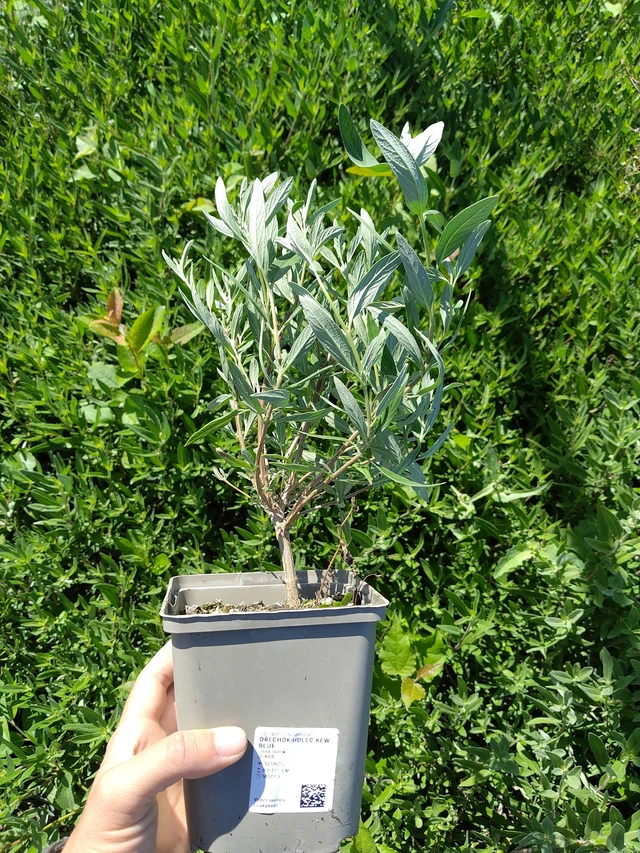
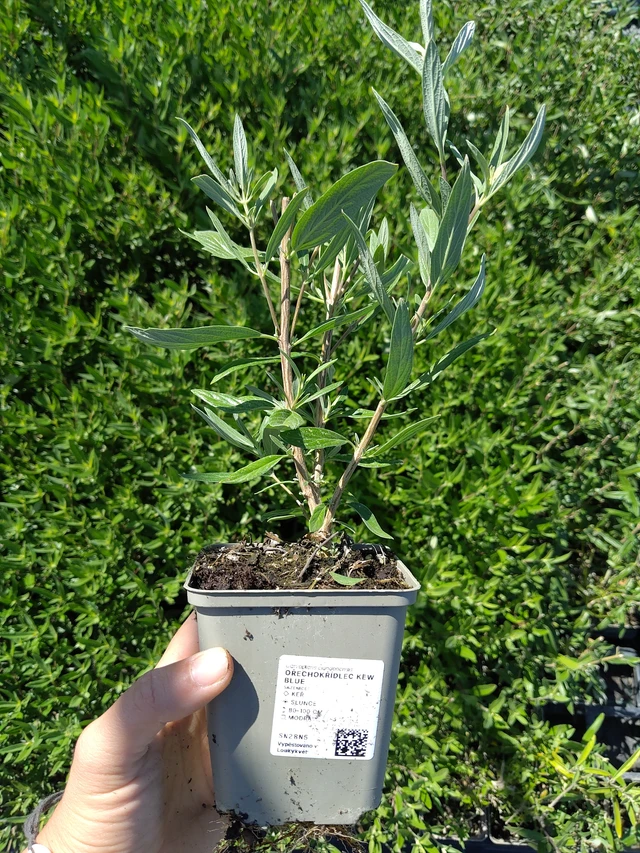
Photos in time
See how the seedling looks over the course of a year.


More products in category Caryopteris
Caryopteris clandonensis
Bluebeard Heavenly Blue
Caryopteris clandonensis
Bluebeard Sterling Silver

Caryopteris clandonensis
Bluebeard Stephi

Caryopteris incana
Bluebeard Pagoda Dark Pink

Caryopteris clandonensis
Bluebeard Dark Knight

Caryopteris incana
Bluebeard Pagoda Ocean

Caryopteris incana
Bluebeard Pagoda Blush

Caryopteris clandonensis
Bluebeard Hint of Gold

Caryopteris incana
Bluebeard Pagoda Lagoon
More products in category Perennials
Alchemilla mollis
Lady's mantle Irish Silk
Achillea millefolium
Yarrow Summer Pastels

Verbena bonariensis
Verbena

Salvia nemorosa
Woodland Sage Caradonna

Perovskia atriplicifolia
Russian Sage

Gaura lindheimeri
Gaura Siskiyou Pink

Echinacea purpurea
Coneflower Rubinstern

Echinacea pallida
Echinacea pallida

Eryngium planum
Sea Holly

Echinacea purpurea
Coneflower Magnus

Salvia nemorosa
Woodland Sage Ostfriesland

Calamintha nepeta
Calamint Blue Cloud

Rudbeckia fulgida
Rudbeckia Goldsturm
Calamintha nepeta ssp. nepeta
Calamint
Salvia nemorosa
Woodland Sage Amethyst
Gaura lindheimeri
Gaura Summer Breeze
Leucanthemum vulgare
Daisy Maikönigin

Achillea millefolium
Yarrow Terracotta

Perovskia atriplicifolia
Russian sage Little Spire
Salvia nemorosa


