Ireland
🟢 The e-shop for seedlings is open again. 🌱 I also have dahlia seedlings and eucalyptus. 🟢
Ireland
🟢 The e-shop for seedlings is open again. 🌱 I also have dahlia seedlings and eucalyptus. 🟢
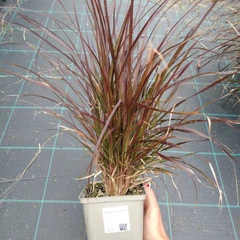
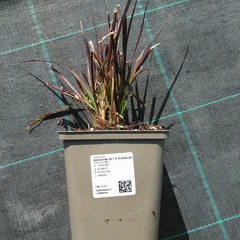
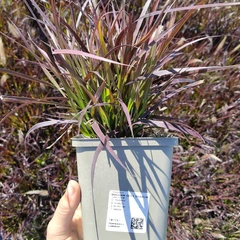
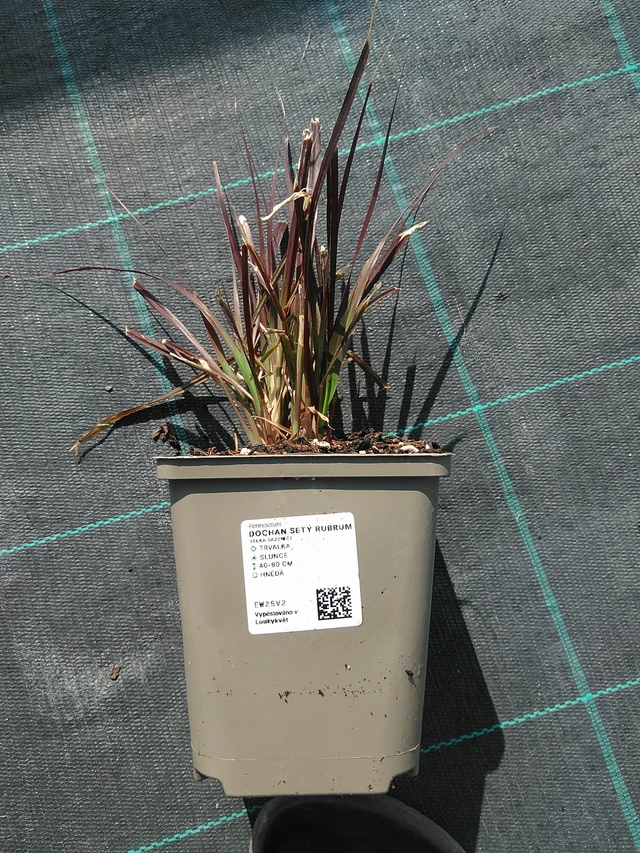
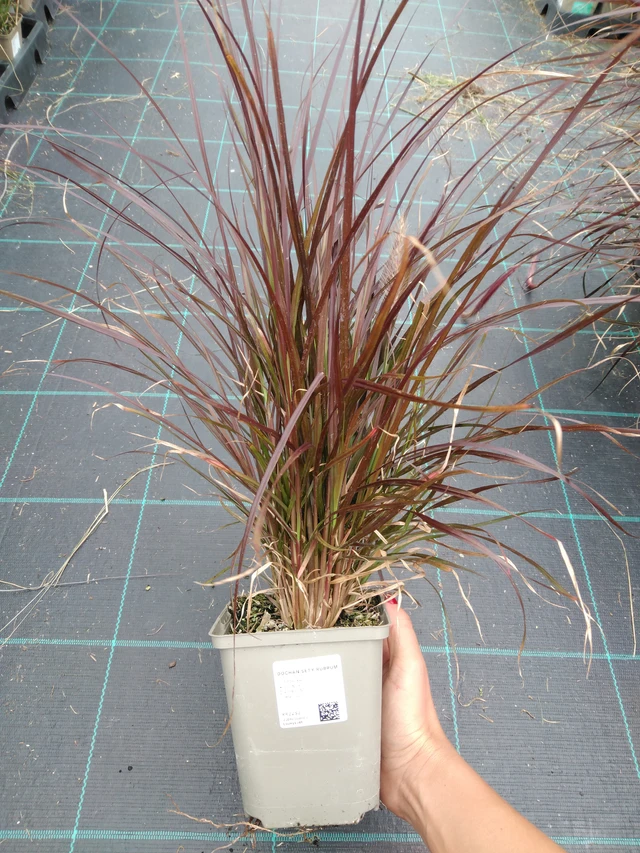
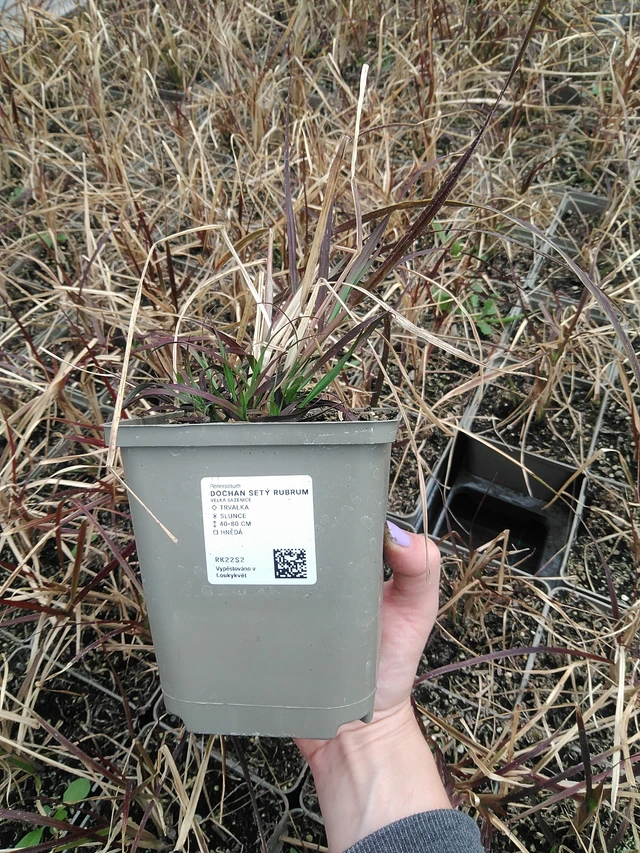
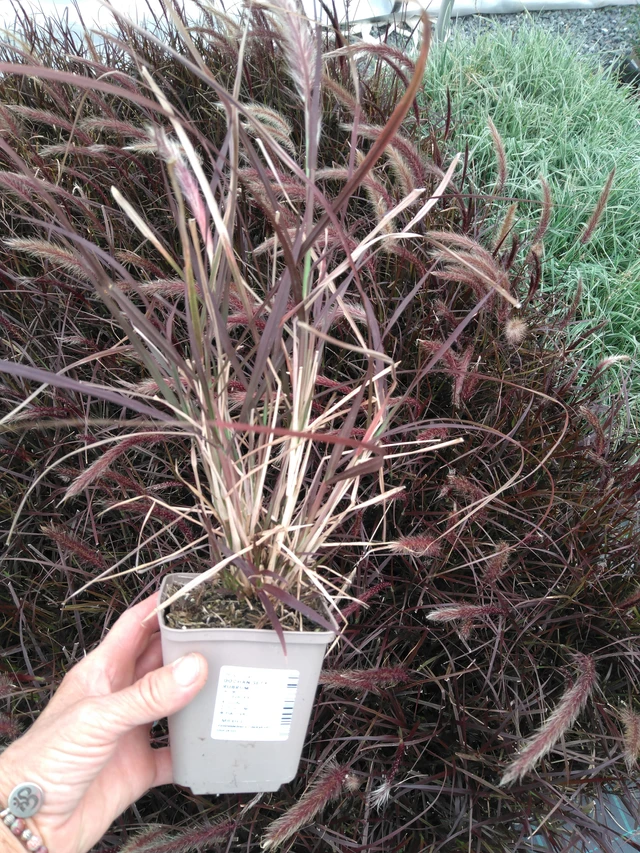
Fountain grass Rubrum, Loukykvět

Pennisetum

Fountain grass Rubrum

A fast-growing ornamental grass with strikingly colored dark burgundy foliage. It blooms from July to October with pink to burgundy spikes that gradually fade to beige. It is interesting not only for its flowers but also for its overall habit and striking color contrast. Show full description

Large seedling

Květináč K11 (11×11×12 cm)
1-2 kusy
5,29/ks
3-8 kusů
4,69/ks
9-14 kusů
4,19/ks
15+ kusů
3,89/ks
Add to cart
Skladem 203 ks s doručením od 3. 8. 2026

Difficulty

Beginner

Diseases

Disease-free 🙂

Flower color

Red, brown

Flower color: Shade

Dark purple, burgundy

Foliage color

Burgundy

Frost resistance

-18
?
The temperature down to which the plant is frost hardy.

Hardiness zone

7a (-17.8 °C to -15 °C)

Height

40-80 cm

Moisture

💧💧

Pests

Pest-free 🙂

Position

Sun

Soil

Loamy, humus-rich, well-drained

Spacing

70-70 cm
?
Recommended planting spacing.

Spacing: Plants per m²

2

Species

Perennial

Suitable for cutting

Ano

Suitable for drying

Ano
1
2
3
4
5
6
7
8
9
10
11
12
Flowering
July
October

Recommended products

Pennisetum alopecuroides

Fountain grasses originate from East Asia, where they grow in meadows and light forests. They form hemispherical clumps of narrow leaves which, like the flowers, color up in the autumn. They are suitable for the vase and for drying. The 'Hameln' cultivar is one of the most reliable bloomers in cooler regions. The inflorescences initially have a soft pink tinge, then change color to yellow-brown or reddish-brown.
4,29
More from 3,89
In Stock

Gaura lindheimeri

Gaura Siskiyou Pink is a charming perennial that brings lightness and airiness to the garden. Its original native area is in the warm regions of Texas and Louisiana, which is why it thrives in full sun and well-drained sandy soil. It grows in clumps and from June until the autumn frosts produces tiny raspberry-pink flowers that resemble fluttering butterflies. An interesting detail of this variety is the green leaves with a bronze tint and red spots. It is an absolutely undemanding plant, does not suffer from diseases or pests, and even beginners can handle its care. You will receive a grown seedling in a pot from us, which you simply need to transplant directly into the flowerbed. Here it complements ornamental grasses perfectly and acts as an attraction for bees and bumblebees. Although it grows more as a short-lived perennial in our climate, in a suitable place it reliably self-seeds. Occasional pinching will encourage richer branching. Gaura is excellent for summer bouquets. We cut the stems for a vase as soon as the first two to three little flowers open.
2,99
More from 2,09
In Stock

Verbena bonariensis

A verbena species originally from South America. In our country, it is often used as an annual, but in mild winters it can overwinter and reproduce by self-seeding. The firm, airy stems beautifully soften perennial beds and make them special with their purple color. It beautifully complements steppe plantings with grasses and rose beds.
3,29
More from 2,29
In Stock

Stipa tenuissima

Feather grass flowers capture attention in beds and bouquets with their lightness and delicacy. All feather grasses love full sun and dry, stony, well-drained soil. To look most natural in beds, it is good to plant them in loose groups of several pieces together with other drought-loving perennials and bulbs. Only then do their stems and inflorescences, set in motion by the slightest breath of wind, truly stand out. Stipa 'Ponny Tails' is a species native to the steppes of Mexico, Texas, and Patagonia. Airy, dense clumps of hair-like delicate leaves resemble horsehair. The leaves are green, turning up to straw-colored towards the flowers. In a suitable location, it also self-seeds.
3,79
More from 2,69
In Stock

Echinacea purpurea

A valuable garden and medicinal perennial, native to North America. The spiky flower centers are an irresistible attraction for butterflies. They last 7–10 days in a vase. After removing the petals, the stems with the central disks can be dried or used in fresh bouquets as an interesting element. White Swan blooms with milky white flowers and brownish-orange centers. The petals are not spread entirely horizontally; they bend slightly downwards.
3,79
More from 3,89
In Stock s doručením od 10. 8. 2026
New

Pennisetum

A fast-growing ornamental grass with strikingly colored dark burgundy foliage. It blooms from July to October with pink to burgundy spikes that gradually fade to beige. It is interesting not only for its flowers but also for its overall habit and striking color contrast.
4,29
More from 3,89
Unavailable
Pro rok 2026 nedostupné

Echinacea purpurea

A valuable garden and medicinal perennial, originally from North America. It blooms in summer with dark purple-pink flowers. The spiky flower discs are an irresistible lure for butterflies. Lasts 7–10 days in a vase. After plucking the petals, the stems with the central discs can be dried or used in fresh bouquets as an interesting element. Rubinstern is very similar to the Magnus cultivar; the petals are darker and firmer. As they fade, they gradually pale and droop downwards.
2,99
More from 2,09
In Stock

Sedum spectabile

Showy stonecrop is one of the longest-living and hardiest perennials you can treat your garden to. It originally comes from the Far East, where it colonizes sunny and dry slopes. For successful cultivation, you simply need to find it a spot in direct sun with well-drained sandy soil. The 'Matrona' cultivar catches the eye at first glance with its fleshy, grayish-green leaves with a burgundy tinge and sturdy stems that do not break and need no support. We will deliver a mature potted seedling that you can easily transplant straight into the flowerbed after unpacking. We recommend planting five to seven plants per square meter; they will soon join into a solid stand around seventy centimeters tall. From August to October, it will then delight you with rich, flat inflorescences in an old rose color. It is an ideal choice for those looking for beauty without unnecessary effort. This stonecrop easily survives harsh winters with frosts dropping to minus twenty-eight degrees, and pests and diseases avoid it. The 'Matrona' variety differs from others in that it will reliably grow even in more nutritious soil, provided it is not waterlogged. In perennial compositions, it creates a beautiful contrast next to delicate ornamental grasses and other autumn flowers. During sunny days, bees, butterflies, and other pollinators constantly take turns over its flowers. You can boldly use the sturdy stems with pink umbels for cutting. They stay fresh in a vase for quite a long time and will bring a touch of the slowly ending summer into your home. It might surprise you that the leaves of this stonecrop are edible and can be used to garnish dishes. If you decide not to cut the plant back in the autumn, you will get a perfect structure in the flowerbed that will last all winter. Especially when the old flowers are covered in frost, they provide a breathtaking spectacle right until the spring months.
2,99
More from 2,89
In Stock

Panicum virgatum

A perennial grass native to North American prairies. Switchgrass is very adaptable and long-lived. It adds clear structure to flower beds while also functioning as a softening element. This happens mainly after the veil-like flowers appear above the clumps of leaves. Characteristic for the cultivar Rehbraun are fluffy brown-red spikes and leaf tips, colored to copper and brown-red from August.
4,29
More from 2,99
In Stock

Pennisetum alopecuroides

Fountain grasses originate from East Asia, where they grow in meadows and light forests. They form semi-spherical clumps of narrow leaves which, like the flowers, color up in autumn. They are suitable for vases and for drying. The cultivar Hameln Gold turns golden yellow in autumn.
4,29
More from 2,99
In Stock

Anemone tomentosa

Anemones come from the same family as buttercups. With their elegant flowers on long slender stems, they can enliven and brighten late summer and autumn beds. They stand out against the darker background of shrub groups and will be grateful for their partial shade. The Czech Perennial Association chose autumn Anemones as the perennial of the 2022 season. They last 7 days in a vase. Anemone 'Robustissima' is a proven, vital, vigorous, and richly flowering species bred in 1900. It forms strong clumps and blooms with light pink, large flowers in late summer to early autumn. 'Robustissima' is, as the name suggests, one of the most resilient autumn Anemones and spreads very well and vigorously.
3,49
More from 3,59
In Stock s doručením od 10. 8. 2026

Coreopsis verticillata

If you are looking for a delicate and long-blooming plant for full sun, whorled tickseed is a great choice. The basic species originates from North America, and here it thrives best in a sunny spot and well-drained, rather drier loamy soil. Although it is a short-lived perennial, with the right care and a well-chosen location, it can bring joy for several years. A distinctive feature of this species is its rich foliage of very tiny leaves, which form low, about forty-centimeter-tall bushes. After transplanting from the pot, the mature seedling is perfectly suited for the edges of flower beds or mixed drought-tolerant compositions, where it beautifully softens the overall look. In addition, the plant is fully frost-hardy, requires no special care, and is free from diseases. The 'Moonbeam' variety stands out with countless smaller, creamy-yellow flowers. These appear in mid-summer and continue to decorate the garden until early autumn, providing rich pasture for pollinators. You can easily cut the delicate stems with flowers to bring home. They will add an informal meadow touch to bouquets and will maintain their freshness in a vase for about seven days.
2,99
More from 2,09
In Stock

Phlox paniculata

Phlox, known as 'plamenka' in Czech, is originally a native perennial from the moister meadows and forest edges of North America. It soon achieved great popularity in European gardens and has been systematically bred since the nineteenth century. It is a classic garden perennial that brings a romantic mood and abundant floods of flowers to summer beds. The approximately one meter tall straight stems are adorned with deep green leaves and bear dense inflorescences on top from July to August. At the same time, the whole plant smells very pleasantly, which acts as a reliable magnet for bees, bumblebees, and butterflies from the wide surroundings. Although phlox is very easy to grow and even complete beginners can manage the care, it pays to pay attention to the correct choice of location. We send customers already mature seedlings in a pot, which you can easily transplant directly into the garden. Here, phlox thrives best in a sunny to semi-shady location with loamy, humous, and well-drained soil. It is ideal to keep a spacing of about fifty centimeters when planting so that each clump has enough space to grow. They like plenty of moisture, and stable humidity is important to them. During severe drought, they can react sensitively and be more susceptible to powdery mildew, so they will welcome more abundant watering in the hot summer. Fortunately, you don't have to worry about pests; they avoid it. As for winter, you can throw your worries behind you, because the plant can handle severe frosts down to minus thirty-four degrees. In ornamental beds, phlox stands out both individually in larger groups and in combination with other summer perennials or shorter ornamental grasses. Furthermore, it is an absolutely ideal plant for cutting into vases. It will lend your home not only beautiful pastel colors but also its unmistakable sweet scent. We recommend harvesting stems for bouquets when approximately half of the flowers in the main inflorescence are already fully open. If you provide them with clean water, they will reward you with extraordinary durability and will easily last ten days in a vase. The Franz Schubert variety attracts with purple to pink flowers that fade towards the edges. The pastel color stands out in the vicinity of darker-colored plants.
2,99
More from 2,89
In Stock

Anemone hybrida

Anemones come from the same family as buttercups. With their elegant flowers on long slender stems, they can enliven and brighten up late summer and autumn flowerbeds. They stand out against the darker background of shrub groups and will also appreciate their partial shade. The Czech Perennial Association chose autumn anemones as the perennial of the season for 2022. They last 7 days in a vase. Königin Charlotte is a massive taller variety bred as early as 1898. It has strong, firm stems and semi-double large violet-pink flowers. The outer sides of the silky smooth petals are colored violet.
3,49
More from 3,59
In Stock

Origanum rotundifolia

Ornamental oregano Kent Beauty is an unmissable herb that brings Mediterranean elegance and a wonderful fragrance to gardens. Originally, this species comes from the sunny and rocky slopes of the eastern Mediterranean, where it naturally grows in dry and poor soils. It is an exceptionally undemanding perennial that reliably withstands frosts. It applies itself perfectly in rockeries, dry stone walls, or on the edges of well-drained steppe beds, where it brings lightness and delicate structure. During the summer, from July to September, it forms trailing cascades of striking leafy bracts, from which tiny pink flowers peek out. These flowers act as an irresistible lure for bees, butterflies, and other pollinators. Although the Kent Beauty variety is primarily grown for its exceptional appearance, its green leaves are fully edible and carry a typical spicy aroma. It looks gorgeous not only in the flower bed, but it is also excellent for drying. If you cut the whole stems in full bloom and hang them in a shady and airy place, they will retain their interesting shape and become an original element of floral arrangements. For successful growing, we will deliver a beautifully rooted seedling, which you simply plant in full sun at a distance of thirty centimeters from other plants.
2,99
More from 2,09
Coming Soon

Tulipa

A tulip that needs to be planted in larger groups for the full effect. The color is a richer pink, with petal tips that are fringed and pale pink. The result is delicate and unique. It is definitely suitable for wedding floristry!
6,39
Sold Out

Agastache rugosa

The Agastache 'Black Adder' cultivar is a sturdy and attractive perennial that you will simply not overlook in the garden. Its wild ancestors come from the sun-drenched regions of East Asia, primarily Japan and China. Therefore, it is best suited here to a sunny location and well-drained sandy or loamy soil, where unnecessary moisture will not be retained around it. A beautifully mature potted seedling will arrive at your home from us, which simply needs to be transplanted directly outside into the flowerbed, ideally with a spacing of fifty centimeters. It will quickly take root and soon form massive upright stems almost one meter tall. It does not need any support and perfectly complements other drought-tolerant perennials. Even though the leaves strikingly resemble nettle leaves, you don't have to be afraid of them. They offer only a refreshing mint and anise scent. Moreover, these aromatic leaves and the blue flowers themselves are edible and suitable for garnishing your culinary creations. 'Black Adder' is exceptional for its very dark flower coloration and an unusually long blooming period from July to September. The blue flowers act literally as a magnet for bees and butterflies. The plant is excellent for cutting into fresh arrangements, maintaining its freshness in a vase for about seven days. The fading spike-like inflorescences do not lose their shape and look constantly very captivating. You can later use them for floristic purposes and drying, where they will add an interesting vertical structure to bouquets. It is an ideal choice even for complete beginners, as it does not suffer from diseases and easily survives harsh frosts.
2,99
More from 2,09
Coming Soon

Anemone hybrida

Anemones come from the same family as buttercups. With their elegant flowers on long slender stems, they can enliven and brighten late summer and autumn beds. They stand out against the darker background of shrub groups and will be grateful for their partial shade. The Czech Perennial Association chose autumn Anemones as the perennial of the 2022 season. They last 7 days in a vase. 'Lorelei' has semi-double flowers in a tender light pink tone.
3,49
More from 3,59
In Stock

Knautia macedonica

Macedonian scabious is an abundantly and long-blooming, undemanding perennial that will bring the untamed charm of summer meadows to the garden. Its wild form originates from the sun-drenched Balkans, where it naturally grows on sunny hillsides and in warm thickets. You will receive from us a mature seedling in a pot, which just needs to be transplanted into well-drained loamy or sandy soil in the sun or partial shade. Here it will quickly take root and form a vigorous clump. The Red Knight cultivar enchants with slender stems up to ninety centimeters tall, which all summer from June to September carry a flood of dark burgundy to deep wine-red flowers. These edible flowers act as a huge attraction for bees, bumblebees, and other insects. The plant is an ideal choice for beginners because it reliably resists frosts down to minus twenty-eight degrees and does not suffer from any pests or diseases. Although it belongs to short-lived perennials, in a suitable place it gladly self-seeds. It will fit perfectly into naturalistically designed plantings with ornamental grasses and is popularly used in sweeping meadow bouquets. We recommend cutting the flowers fully open; they will then stay beautifully fresh in a vase for several days.
2,79
More from 1,99
In Stock

Salvia nemorosa

This species of sage originates from the steppe regions of Central and Eastern Europe. It forms abundantly flowering small clumps with straight upright stems. In beds, it looks best in groups. Traditionally, it is planted as a companion to roses due to the matching flowering time. However, it will look equally good in mixed drought-loving steppe plantings with grasses. It is an excellent food source for bees. It lasts 7 days in a vase. The cultivar Ostfriesland blooms with a strikingly dark violet-blue color.
2,99
More from 2,09
In Stock

Gaura lindheimeri

The charming gaura comes from the sun-drenched plains of Texas and Louisiana and represents exactly the plant that can liven up any drought-tolerant planting. It is a naturally profusely blooming perennial that delights in full sun and well-drained, sandy, and nutrient-poor soil. You will receive from us an already grown seedling in a pot, which will quickly form a vigorous clump after being transplanted into the garden. From early summer until late autumn, it will delight you with a flood of tiny flowers in pure white and delicate pink tones. The flowers gently sway in the breeze and with their appearance resemble a flock of tiny butterflies, which also really like to land on the plant, as do bees and bumblebees. Although gaura is known as a short-lived perennial, thanks to its willing self-seeding, it will last for many years in your garden. Caring for it is completely undemanding, it is avoided by most diseases and pests, and it can handle frosts down to eighteen degrees below zero without any problems. It is often used in mixed borders, where it beautifully softens the overall impression, and perfectly matches various types of ornamental grasses. The Summer Breeze variety is popular for its strong and healthy growth as well as its exceptionally generous set of flowers, which grow to about one meter. If you like to create your own bouquets, do not hesitate to cut gaura for a vase. Harvesting is best done the moment the first small flowers on the stem begin to open. These delicate flowers are not suitable for drying into dried arrangements, but they will beautifully lighten up fresh bouquets.
2,99
More from 2,09
Coming Soon

Lychnis flos-cuculi

Originally a native perennial from wet meadows. The delicate ragged flowers of the ragged robin add lightness and airiness to plantings. It fits perfectly into plantings around ponds and in damper places in the garden. It is suitable for naturalistic gardens and compositions. We can also use it well for cutting for vases.
2,79
More from 1,99
Unavailable
Pro rok 2026 nedostupné

Hydrangea paniculata

Panicle hydrangeas are beautiful shrubs originally from China and Japan, where their bark was used, among other things, to make paper. We grow them for their impressive cone-shaped inflorescences. They are undemanding and abundantly flowering plants suitable for planting in flower beds and large containers. The cultivar Phantom is an airily built shrub. The cone-shaped inflorescences keep their creamy white color throughout the flowering period, turning light pink only at the very end.
4,29
More from 3,89
In Stock

Pennisetum alopecuroides

Fountain grasses originate from East Asia, where they grow in meadows and light forests. They form hemispherical clumps of narrow leaves which, like the flowers, color up in autumn. They are suitable for vases and for drying. Cassian is a variety valued for early and exceptionally abundant flowering; early in autumn, it reliably turns golden-orange with a red tinge.
4,29
More from 4,29
Unavailable
Pro rok 2026 nedostupné

Panicum virgatum

A perennial grass native to North American prairies. Switchgrass is very adaptable and long-lived. It adds clear structure to flower beds and simultaneously functions as a softening element. This is especially true after veil-like flowers appear above the clumps of leaves. Heavy Metal is characterized by firm upright growth and blue-green, metallic grey-green foliage. The strict austerity is beautifully balanced and softened by airy inflorescences.
4,29
More from 2,99
In Stock

Panicum virgatum

A perennial grass native to North American prairies. Switchgrass is very adaptable and long-lived. It adds clear structure to flower beds and simultaneously functions as a softening element. This is especially true after veil-like flowers appear above the clumps of leaves. The cultivar Squaw attracts attention at first glance with wine-red colored leaves and brown-pink flowers.
4,29
More from 2,99
In Stock posledních 44 kusů

Cultivation

V našich podmínkách tento pěstujeme nejčastěji jako letničku. Zvládá sice teploty až do -18 °C ale nesvědčí mu průběh naší zimy s častými výkyvy teplot a problémem je i přebytek vláhy v zimě. Proto se doporučuje zimování ve světlé chladné místnosti. To je další důvod pro pěstování dochanu v nádobách.

The information given is based on our experience, please use it as a guide only. Times may vary depending on the season, climate, location, sowing and transplanting dates and possibly also the conditions in the greenhouse/greenhouse. We always recommend testing how the plant performs in your conditions. Please do not take this as a guarantee.

Show all

Click to view the full growing instructions.

Photos
in time

See how the seedling looks over the course of a year.
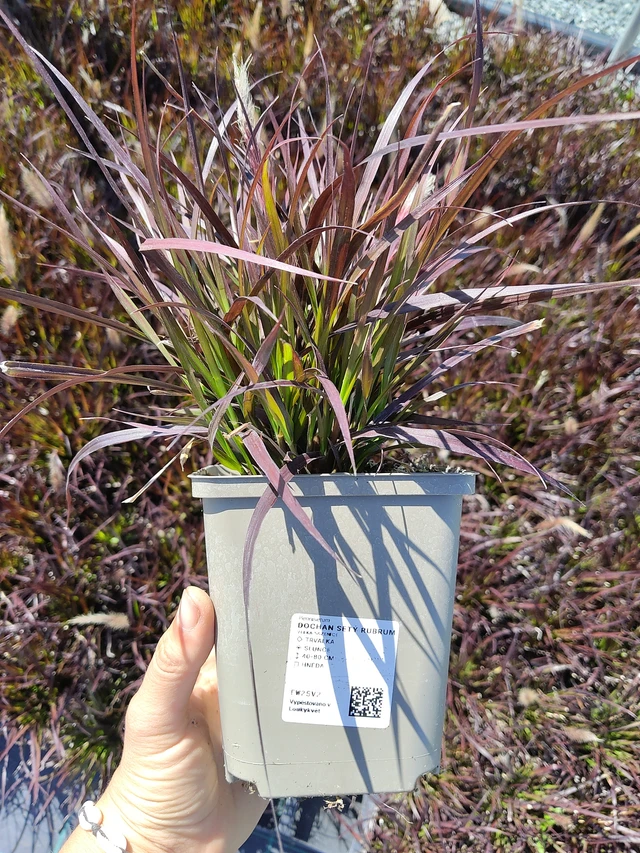
Fountain grass Rubrum - 16. 7. 2026
16. 7. 2026
Fountain grass Rubrum - 10. 9. 2025
10. 9. 2025
Fountain grass Rubrum - 9. 6. 2025
9. 6. 2025
Fountain grass Rubrum - 2024
2024

More products in category Fountain grass

Pennisetum alopecuroides

Fountain grasses originate from East Asia, where they grow in meadows and light forests. They form hemispherical clumps of narrow leaves which, like the flowers, color up in the autumn. They are suitable for the vase and for drying. The 'Hameln' cultivar is one of the most reliable bloomers in cooler regions. The inflorescences initially have a soft pink tinge, then change color to yellow-brown or reddish-brown.
4,29
More from 3,89
In Stock

Pennisetum alopecuroides

Fountain grasses originate from East Asia, where they grow in meadows and light forests. They form semi-spherical clumps of narrow leaves which, like the flowers, color up in autumn. They are suitable for vases and for drying. The cultivar Hameln Gold turns golden yellow in autumn.
4,29
More from 2,99
In Stock

Pennisetum alopecuroides

Fountain grasses originate from East Asia, where they grow on meadows and in light forests. They form hemispherical clumps of narrow leaves, which, like the flowers, gain color in the autumn. They are suitable for vases and for drying.
4,29
More from 2,99
Coming Soon

Pennisetum alopecuroides var. viridescens

Fountain grasses originate from East Asia, where they grow in meadows and light forests. They form hemispherical clumps of narrow leaves which, like the flowers, color up in the autumn. They are suitable for the vase and for drying. We grow this cultivar for its distinctively dark flowers, which appear in large numbers especially after warm summers.
4,29
More from 2,99
In Stock
New

Pennisetum

A fast-growing ornamental grass with strikingly colored dark burgundy foliage. It blooms from July to October with pink to burgundy spikes that gradually fade to beige. It is interesting not only for its flowers but also for its overall habit and striking color contrast.
4,29
More from 3,89
Unavailable
Pro rok 2026 nedostupné

Pennisetum alopecuroides

Fountain grasses originate from East Asia, where they grow in meadows and light forests. They form hemispherical clumps of narrow leaves which, like the flowers, color up in autumn. They are suitable for vases and for drying. Cassian is a variety valued for early and exceptionally abundant flowering; early in autumn, it reliably turns golden-orange with a red tinge.
4,29
More from 4,29
Unavailable
Pro rok 2026 nedostupné

Pennisetum alopecuroides

Fountain grasses originate from East Asia, where they grow in meadows and light forests. They form hemispherical clumps of narrow leaves that, like the flowers, change color in autumn. They are suitable for vases and for drying. Moudry is a compact, lower-growing cultivar. The flowers are dark purple to almost black. The leaves are deep green.
4,29
More from 3,89
Unavailable
Pro rok 2026 nedostupné

More products in category Ornamental grasses

Stipa tenuissima

Feather grass flowers capture attention in beds and bouquets with their lightness and delicacy. All feather grasses love full sun and dry, stony, well-drained soil. To look most natural in beds, it is good to plant them in loose groups of several pieces together with other drought-loving perennials and bulbs. Only then do their stems and inflorescences, set in motion by the slightest breath of wind, truly stand out. Stipa 'Ponny Tails' is a species native to the steppes of Mexico, Texas, and Patagonia. Airy, dense clumps of hair-like delicate leaves resemble horsehair. The leaves are green, turning up to straw-colored towards the flowers. In a suitable location, it also self-seeds.
3,79
More from 2,69
In Stock

Sesleria autumnalis

Autumn moor grass is an exceptionally hardy ornamental grass that introduces fresh greenery to the garden right from early spring. Native to the rocky slopes of the Balkans, it is well-adapted to free-draining soils, making it an ideal choice for novice gardeners. It forms neat clumps growing thirty to fifty centimeters tall. Its greatest asset is its bright green foliage, which emerges early and remains in pristine condition in the borders well into winter. The plant is untouched by diseases or pests and handles severe frosts superbly. In August and September, delicate creamy-beige flowers appear above the foliage. These rather subtle spikelets give the plant an elegant, refined look. In the garden, it acts as a perfect filler perennial for sunny or partially shaded spots. It looks absolutely stunning paired with calamint, airy gaura, or flowering oregano. Its delicate flowers and leaves are easily used as foliage filler in fresh bouquets, or they can be dried for small-scale floristry projects.
3,79
More from 2,69
Coming Soon

Calamagrostis acutiflora

A tufted, upright growing grass. It sprouts very early. It is decorative due to its overall vertical habit and fine flower panicles, which bloom silvery-grey, turn yellow in summer, and transition to sandy beige. It decorates the garden until winter. You can plant it in mixed beds or use it as an element to rhythmically divide the space. Usable for bouquets and drying.
4,29
More from 3,89
In Stock s doručením od 20. 7. 2026

Pennisetum alopecuroides

Fountain grasses originate from East Asia, where they grow in meadows and light forests. They form hemispherical clumps of narrow leaves which, like the flowers, color up in the autumn. They are suitable for the vase and for drying. The 'Hameln' cultivar is one of the most reliable bloomers in cooler regions. The inflorescences initially have a soft pink tinge, then change color to yellow-brown or reddish-brown.
4,29
More from 3,89
In Stock

Deschampsia cespitosa

Tufted hairgrass is an undemanding native grass that remains green even in winter. In nature, it grows in meadows and forest clearings. It forms a compact tuft of leaves, from which grow fine, thin stems with transparent clouds of flowers. It adapts even to more difficult conditions, such as dry shade or compacted soil, and can handle waterlogging. Goldschleier has very tiny spikelets in light yellow panicles. The inflorescence forms a fluffy light yellow cloud above the tuft of leaves.
3,79
More from 2,69
In Stock

Sporobolus heterolepis

Prairie dropseed originates from the vast North American prairies, where it forms a natural part of the wild and unbridled landscape. This ornamental grass grows in neat and very dense clumps of fresh green leaves, which turn bright yellow shades in autumn. During August and September, delicate clouds of pink and beige flowers hover above the clumps on sturdy stalks, reaching a height of up to seventy centimeters. The flowers also spread a very pleasant and unmistakable fragrance into their surroundings. In the garden, prairie dropseed stands out best when planted in a sunny spot in groups of multiple plants accompanied by other drought-tolerant perennials, with which it will create an impressive steppe scenery. The seedlings do not require any complicated care, they easily handle frosts down to minus twenty-eight degrees, and do not suffer from any diseases or pests. The airy and fragrant inflorescences are also perfectly suited for cutting into summer bouquets, to which they add unusual lightness and texture.
4,29
More from 2,99
Coming Soon

Deschampsia cespitosa

Tufted hairgrass is an undemanding native grass that remains green even in winter. In nature, it grows in meadows and forest clearings. It forms a neat clump of leaves, from which grow delicate thin stems with transparent clouds of flowers. It adapts even to more difficult conditions, such as dry shade or compacted soil, and can handle waterlogging too. The Czech cultivar 'Pálava' is valuable for its extra-long flowering time from July to October. Unlike other cultivars, its flowers are sterile and do not create any seedlings. It is stated that it resists drought best of all tufted hairgrasses.
3,49
More from 2,39
In Stock

Sesleria caerulea

Blue moor grass is an elegant and undemanding native grass that livens up the spring garden at a time when other plants are just waking up. In the wild, it naturally grows in warmer areas on rocks and sunny slopes with well-drained soil. It forms dense, neat clumps growing to a height of about thirty centimeters. Its main advantage is its striking grayish-green and dark green leaves, which, with sufficient moisture, remain evergreen all year round. During April and May, the moor grass blooms with interesting brown spikelets. Over time, these flowers naturally fade into soft beige tones, and when dried, they are perfectly suited as a delicate addition to small dry arrangements. In flowerbeds, it represents an ideal companion for spring bulbs, with which it forms very harmonious compositions. Cultivation can easily be managed even by a beginner, as the plant does not suffer from any diseases or pests and can withstand frosts down to minus twenty-eight degrees without damage. Simply transplant the supplied mature seedling to a sunny or partially shaded location, ideally maintaining a planting distance of around forty centimeters.
4,29
More from 2,99
In Stock posledních 85 kusů

Calamagrostis acutiflora

A tufted, upright growing grass. It sprouts very early. Decorative with its overall vertical habit and fine panicles of flowers, which bloom silvery grey. Striking with its white variegated leaves. It adorns the garden until winter. You can plant it in mixed beds or use it as an element rhythmically dividing the space. Usable for bouquets and drying.
4,29
More from 3,89
In Stock

Muhlenbergia capillaris

A beautiful fine grass originating from the southern parts of North America. It has narrow gray-green leaves. The flowers bloom in fluffy clouds of deep pink color, creating the impression of a light haze over the flower bed. Beautiful for bouquets too.
3,79
More from 2,69
In Stock

Panicum virgatum

A perennial grass native to North American prairies. Switchgrass is very adaptable and long-lived. It adds clear structure to flower beds while also functioning as a softening element. This happens mainly after the veil-like flowers appear above the clumps of leaves. Northwind is a cultivar with an upright and slender growth habit. Its grey-blue-green leaves turn bright golden in the autumn.
4,29
More from 2,99
In Stock

Eragrostis spectabilis

Lovegrass originates from the sun-drenched plains of North America, where it naturally grows on dry and well-drained soils. This undemanding tufted grass is an ideal choice for beginner growers, as it does not suffer from any diseases or pests and easily handles frosts down to minus twenty-three degrees. During the season, its green leaves will catch your eye, gradually acquiring a warm orange to wine-red hue as autumn approaches. It stands out primarily in group plantings or in combination with drought-tolerant perennials, where it can beautifully soften and visually connect the entire composition. The real magic, however, lies in its blooming. During August and September, it creates literal clouds of tiny pink flower panicles above the leaf clumps, hovering at a height of around fifty centimeters. For its airiness and elegance, lovegrass is also exceptionally popular for cutting. Florists love to use it in summer and autumn bouquets, to which it adds lightness and volume. It is also perfect for drying, so you can preserve its charm for winter arrangements as well.
3,79
More from 2,69
In Stock

Melica ciliata

Melica ciliata grows wild on sunny and warm stony slopes. It blooms as early as May to June with creamy to silvery-white panicles; as they fade, they turn gray and thus harmonize with the gray-green leaves. Valuable for florists due to its early flowering and usability in both fresh and dried states.
3,79
More from 2,69
In Stock

Pennisetum alopecuroides

Fountain grasses originate from East Asia, where they grow in meadows and light forests. They form semi-spherical clumps of narrow leaves which, like the flowers, color up in autumn. They are suitable for vases and for drying. The cultivar Hameln Gold turns golden yellow in autumn.
4,29
More from 2,99
In Stock

Muhlenbergia reverchonii

A beautiful fine grass originating from Oklahoma and Texas. It has narrow gray-green leaves. The flowers bloom in fluffy clouds of pink color, creating the impression of a light haze over the flower bed. Beautiful for bouquets too.
3,79
More from 2,69
Unavailable
Pro rok 2026 nedostupné

Stipa capillata

Feather grass flowers captivate in beds and bouquets with their lightness and delicacy. All Feather grasses love full sun and dry, stony, well-drained soil. To look most natural in beds, it is good to plant them in several pieces in loose groups together with other drought-loving perennials and bulbs. Only then will their stems and inflorescences, set in motion by the slightest breeze, stand out. *Stipa capillata* is a native steppe grass also widespread elsewhere in southern, central, and eastern Europe. It forms solid grey-green clumps with upright stems. The flowers, in the form of beige awns, stand almost horizontally away from the stem when ripening and twist interestingly.
4,29
More from 2,99
Coming Soon

Deschampsia cespitosa

Tufted hairgrass is an undemanding native grass that remains green even in winter. In nature, it grows in meadows and forest clearings. It forms a neat clump of leaves, from which grow delicate thin stems with transparent clouds of flowers. It adapts even to more difficult conditions, such as dry shade or compacted soil, and can handle waterlogging too. 'Tardiflora' is, after 'Pálava', one of the most richly flowering tufted hairgrasses. It blooms a bit later than the others.
3,49
More from 2,39
In Stock

Deschampsia cespitosa

Tufted hairgrass is an undemanding native grass that remains green even in winter. In nature, it grows in meadows and forest clearings. It forms a neat clump of leaves, from which grow delicate thin stems with transparent clouds of flowers. It adapts even to more difficult conditions, such as dry shade or compacted soil, and can handle waterlogging too. The flowers of the 'Schottland' cultivar are brown at the beginning of flowering, later turning gold. The leaf clumps grow up to 60 centimeters, the flower stems up to 120.
3,49
More from 2,39
In Stock

Briza media

Quaking grass 'Limouzi' is an undemanding and very charming native grass that naturally grows in sunny meadows and pastures with poorer and well-drained soil. From May onwards, long thin stalks sprout from its dense green clumps, carrying delicate spikelets in the shape of small hearts swaying on them. They are colored in inconspicuous green and brown tones. It is their constant movement and rustling at the slightest breeze that gives the flower beds extraordinary dynamics and lightness. This short-lived perennial, growing to a height of around half a meter, is perfectly suited to complement colorful steppe plantings, where it creates a soft filler between more prominently flowering species. It will also find its use among beginner growers, as it does not suffer from diseases or pests and handles strong frosts without problems. The airy inflorescences of quaking grass are perfect for cutting into summer bouquets and for drying for various floristry purposes. After blooming, roughly at the end of summer, it is good to trim the clumps, which will encourage their fresh appearance. The 'Limouzi' cultivar is characterized by its abundant flower set and slightly more compact growth, which maintains its shape even in more demanding conditions.
3,49
More from 2,39
Coming Soon

Briza media

Quaking grass 'Tinkerbell' is an undemanding native grass whose delicate appearance will enchant in any natural garden. It naturally grows in drier meadows across Europe, where it seeks poorer and well-drained soils. It easily handles less nutritious substrates, does not suffer from diseases, and effortlessly survives severe frosts. It forms dense green clumps from which thin stalks carrying unmistakable inflorescences sprout from May to July. The tiny spikelets in the shape of small plump hearts play with yellow and brown tones. They are famous for their trembling at the slightest breeze, which adds dynamics and lightness to flower beds. The compact 'Tinkerbell' variety grows to a height of fifty centimeters and behaves as a short-lived perennial. It perfectly complements drought-tolerant perennials in full sun. It remains very attractive until August, when it is good to trim it after blooming. For florists, it is an absolute treasure. The stalks are beautiful in fresh summer bouquets and are perfectly suited for drying, retaining their shape long-term in floristry arrangements.
3,49
More from 2,39
Coming Soon