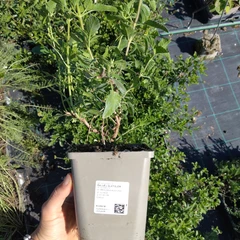
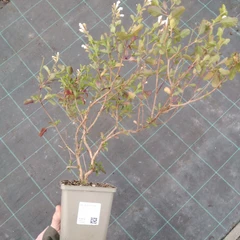
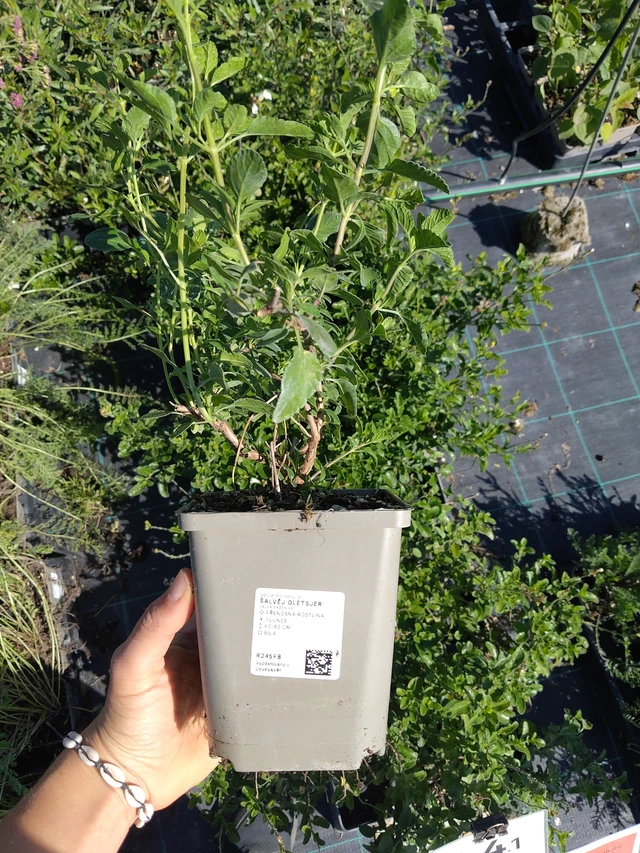
Ireland
€
The shop is closed for this season 🔴, it is only possible to collect orders placed via the e-shop.
Ireland
€
The shop is closed for this season 🔴, it is only possible to collect orders placed via the e-shop.
Salvia Gletsjer, Loukykvět

Salvia microphylla

Salvia Gletsjer

The 'Gletsjer' Sage is a charming, pure white blooming variety of baby sage, which originally comes from the mountainous regions of Mexico and the southern United States. Thanks to its origin, it loves the sun and well-drained soil, but in our conditions, it requires a little more care during the winter. Although it can withstand frost down to -12 °C, we recommend growing it primarily as a portable plant in containers that you can hide in a frost-free room for the winter, or plant it in a very protected, warm location with quality winter covering. The reward for this care will be an incredibly long flowering period, which starts in May and often ends only with the arrival of the first stronger frosts in November. This compact plant grows to a height of about half a meter and forms dense bushes with tiny, deep green leaves. These are strongly aromatic and release a pleasant fragrance when rubbed. The flowers attract a large number of bees and other beneficial insects, bringing every corner of the terrace or balcony to life. Because it is a sage, its flowers and leaves are edible and will serve perfectly as an unconventional garnish for summer salads or desserts. The 'Gletsjer' cultivar stands out with its elegance and the purity of its white color, which literally glows even at dusk. Show full description

Large seedling

K11 pot (11×11×12 cm)
Large seedling
Large seedling
Large seedling
1-2 pieces
€5,41
€4,29each
3-8 pieces
€4,87
€3,89each
9-14 pieces
€4,33
€3,39each
15+ pieces
€4,06
€3,19each
Watch availability
0 pcs in stock

Seedling

K9 pot (9×9×9.5 cm)
Seedling
1-2 pieces
€4,29each
3-8 pieces
€3,89each
9-17 pieces
€3,39each
18+ pieces
€3,19each
Watch availability
0 pcs in stock

Attracts pollinators 🐝

Yes

Difficulty

Beginner

Diseases

Disease-free 🙂

Edible

Yes
?
Information on whether the plant can be used in floristry for decorating food.

Flower color

White

Flower color: Shade

Pure white

Foliage color

Green

Fragrant (aromatic) 👃

Yes

Frost resistance

-12
?
The temperature down to which the plant is frost hardy.

Hardiness zone

8a (-12.2 °C to -9.4 °C)

Height

40-60 cm

Moisture

💧

Pests

Pest-free 🙂

Position

Sun

Soil

Well-drained

Spacing

50 cm
?
Recommended planting spacing.

Spacing: Plants per m²

4-6

Species

Container plant

Suitable for cutting

No

Suitable for drying

No
1
2
3
4
5
6
7
8
9
10
11
12
Flowering
May
½ November

Recommended products

Salvia Joy, Loukykvět
Special offer

Salvia gregii

The 'Joy' Sage brings to plantings exactly what its name suggests – the joy of untiring blooming that lasts from late spring to autumn. This subshrub species differs from classic herbaceous sages by its woody base and requires specific conditions mimicking its homeland in the southwestern part of North America. Excellent drainage is crucial for successful cultivation, as the plant cannot tolerate winter waterlogging, and therefore it thrives in gravel beds or in containers with good water drainage. The 'Joy' variety will enchant you with its delicate shade of light pink flowers, which look very tender and airy. The leaves are tiny, stiff, and emit an intense fragrance when rubbed, making any sitting area nearby more pleasant. The plant grows to a height of around 40 to 60 centimeters and forms compact bushes, which should be pruned in the spring to maintain a dense shape. Although it is not intended for cutting into a vase, its value lies in its long-lasting visual effect and ability to attract beneficial insects to the garden.
€3,89
€3,09
More from €3,19
In Stock
Lavender Rosea, Loukykvět

Lavandula angustifolia

Lavenders are a must for every sunny herb garden. We classify them as sub-shrubs, and they are valuable for gardens due to their winter habit. They add not only color and structure to flower beds but also an unmistakable fragrance. They will look good with lower-growing drought-loving grasses and perennials. Rosea blooms a sweet pink.
€4,29
More from €3,89
In Stock
Baby's Breath Snowflake, Loukykvět
For drying

Gypsophila paniculata

Baby's breath Snowflake is an absolute classic that should not be missing in any traditional or modern garden. This perennial plant originally comes from the sandy steppes and sunny slopes of southern Europe and Central Asia, which predestines it to love full sun and well-drained, even sandy soil. It has been grown in botanical gardens since the eighteenth century, and thanks to its low maintenance, it quickly found its way into private gardens as well. It forms rich, airy clumps that look like white clouds when in bloom and bring a unique lightness to flower beds. The Snowflake variety stands out with a flood of pure white, mostly double flowers that appear from June to August. It is an ideal plant for modern steppe plantings, where it perfectly complements ornamental grasses and drought-tolerant perennials, but it is also traditionally planted as a delicate companion to roses. For florists, baby's breath is indispensable. It is excellent for cutting into fresh bouquets, where it adds volume and softens the overall impression, and it can just as well be dried for winter decorations. The plant is frost-hardy and long-lived, so it will bring you joy in the garden for many years.
€3,09
More from €2,19
In Stock
Blue Vervain Pink Spires, Loukykvět

Verbena hastata

A perennial species of Verbena native to North America. In natural habitats, it grows in wet meadows, pastures, and along water bodies. It is a great attractant for bees and butterflies. Although not very long-lived, it can maintain itself by self-seeding in good conditions. It blooms gradually over a long period with many tiny flowers. The spent flower heads are also effective, both in beds and bouquets. The cultivar Pink Spires stands out with a sturdy upright habit and flowers in a soft pink color.
€3,09
More from €2,19
In stock with delivery from 19. 4. 2027
Cranesbill Midnight Reiter, Loukykvět
New

Geranium pratense

A clump-forming species of hardy geranium. The original species is a native perennial with striking blue flowers. The garden cultivar Midnight Reiter also meets this description, but the leaves have an unusual dark wine-purple color.
€3,89
More from €2,89
In StockIn stock – only 48 left
Japanese Anemone Whirlwind, Loukykvět

Anemone hybrida

Anemones come from the same family as buttercups. With their elegant flowers on long slender stems, they can liven up and brighten late summer and autumn beds. They stand out against the darker background of shrub groups and will also be grateful for their partial shade. The Czech Perennial Association chose autumn Anemones as the perennial of the season for 2022. They last 7 days in a vase. Whirlwind is a historical variety bred in 1887 in the USA. It has a semi-double pure white flower, often with inner twisted petals, and compact, strictly upright growth. The flowers are very durable.
€3,49
More from €3,59
In Stock
Agastache Alabaster, Loukykvět

Agastache rugosa f. albiflora

Agastache Alabaster, also known as wrinkled agastache, comes from regions of China and Japan, where it naturally grows in sunny and drier habitats. Its deep green toothed leaves resemble a nettle at first glance, but don't worry, it certainly doesn't sting. On the contrary, it will pleasantly surprise you, because when rubbed between your fingers, it releases a very pleasant minty-anise scent. Furthermore, these fragrant leaves and white flowers are edible, and you can use them to decorate summer dishes or drinks. You will receive an already mature seedling in a pot from us, which you just need to transplant directly into your garden, where it will bring joy for many years. It will thrive in full sun in well-drained, loamy or sandy soil. It is a stable, upright-growing perennial that reaches a height of eighty to one hundred centimeters in full vigor. During the summer and early autumn, roughly from July to the end of September, it produces dense spike-like inflorescences. These act as a reliable magnet for bees, bumblebees, and butterflies, so your garden will gain a lot of useful life thanks to it. Agastache is a very hardy and robust plant that successfully handles our winters, as it tolerates frosts down to minus twenty-three degrees. At the same time, it is completely undemanding, naturally does not suffer from diseases or pests, and therefore its cultivation is easily managed even by complete beginners. It looks excellent in perennial beds when planted in larger groups, maintaining a spacing of about half a meter. For lovers of fresh flowers, Agastache is an incredibly rewarding choice for cutting into a vase. The freshly cut stems will last beautifully in your home for about seven days and bring a light spicy scent with them. The flowers are also floristically very interesting even after blooming, when the long inflorescences retain their firm structure. They can be easily dried and used in various dried arrangements or autumn decorations. The specific Alabaster cultivar stands out with the pure white color of its flowers. Thanks to this neutral and fresh shade, it looks very delicate and easily matches absolutely any color combination, whether directly in the flowerbed or later in a tied bouquet.
€2,99
More from €2,09
In Stock
Meadow Sage Sky Dance, Loukykvět

Salvia pratensis

Meadow Sage occurs in our country primarily in warmer regions, especially in southern Moravia and northern and central Bohemia. It grows on sunny meadows, slopes, and along roadsides. The fragrant leaves form a basal rosette, from which several sparsely leafy, branched stems grow. The inflorescences consist of striking lipped flowers, which are a huge attraction for bees and bumblebees. Sky Dance has light blue flowers.
€2,79
More from €1,79
In StockIn stock – only 81 left
Aster novi-belgii Fellowship, Loukykvět

Aster novi-belgii

It originates from the northeastern USA and southern Canada, where it grows in damp areas, scrublands, and on coasts. It crosses very willingly with other aster species, resulting in an inexhaustible number of varieties. Unlike New England asters, they do not close their flowers at night or during unfavorable weather, making them perfect for cutting into vases. We must keep in mind their susceptibility to mildew, which can be prevented by choosing a suitable location. They last 7 to 10 days in a vase. Fellowship is large-flowered, profusely blooming, and of taller growth. The pink-colored flowers with yellow centers have a diameter of up to 3 cm.
€2,99
More from €2,89
In Stock
Aster White Ladies, Loukykvět

Aster novi-belgii

It originates from the northeastern USA and southern Canada, where it grows in damp areas, scrublands, and on coasts. It crosses very willingly with other aster species, resulting in an inexhaustible number of varieties. Unlike New England asters, they do not close their flowers at night or during unfavorable weather, making them perfect for cutting into vases. We must keep in mind their susceptibility to mildew, which can be prevented by choosing a suitable location. They last 7 to 10 days in a vase. The white variety White Ladies is large-flowered, profusely blooming, and of taller growth.
€2,99
More from €2,89
In Stock
Meadow Sage Swan Lake, Loukykvět

Salvia pratensis

Meadow Sage occurs in our country primarily in warmer regions, especially in southern Moravia and northern and central Bohemia. It grows on sunny meadows, slopes, and along roadsides. The fragrant leaves form a basal rosette, from which several sparsely leafy, branched stems grow. The inflorescences consist of striking lipped flowers, which are a huge attraction for bees and bumblebees. Swan Lake blooms white.
€2,79
More from €1,99
In StockIn stock – only 1 left
Lavender Grosso, Loukykvět

Lavandula intermedia

Grosso is a taller lavender bred in 1972 and named after its breeder. It is one of the types grown for extracting valuable oil used in cosmetics and the food industry. It grows in almost all lavender fields in Provence and thrives well in our conditions. It is prized for its robust habit and long flowering period, which starts roughly two weeks later than common lavender varieties.
€4,29
More from €3,89
In Stock
Phlox Fujiyama, Loukykvět

Phlox paniculata

Phlox is originally a native perennial of North America. In European gardens, it soon reached great popularity and has been systematically bred since the 19th century. It is a classic perennial for cutting into bouquets, where besides colorful flowers, it also delights with a gentle fragrance. We harvest as soon as roughly half of the flowers in the cluster have bloomed, then it lasts up to 10 days in a vase. Despite efforts to breed the most resistant cultivars possible, it is still true that phlox reacts extremely sensitively to climate and soil conditions, so we carefully ensure the correct choice of site. Fujiyama is now a classic and still popular variety bred in the USA in 1965. The elegant flowers are tiny, pure white. It blooms very abundantly.
€3,29
More from €3,19
In Stock
Phlox Franz Schubert, Loukykvět

Phlox paniculata

Phlox, known as 'plamenka' in Czech, is originally a native perennial from the moister meadows and forest edges of North America. It soon achieved great popularity in European gardens and has been systematically bred since the nineteenth century. It is a classic garden perennial that brings a romantic mood and abundant floods of flowers to summer beds. The approximately one meter tall straight stems are adorned with deep green leaves and bear dense inflorescences on top from July to August. At the same time, the whole plant smells very pleasantly, which acts as a reliable magnet for bees, bumblebees, and butterflies from the wide surroundings. Although phlox is very easy to grow and even complete beginners can manage the care, it pays to pay attention to the correct choice of location. We send customers already mature seedlings in a pot, which you can easily transplant directly into the garden. Here, phlox thrives best in a sunny to semi-shady location with loamy, humous, and well-drained soil. It is ideal to keep a spacing of about fifty centimeters when planting so that each clump has enough space to grow. They like plenty of moisture, and stable humidity is important to them. During severe drought, they can react sensitively and be more susceptible to powdery mildew, so they will welcome more abundant watering in the hot summer. Fortunately, you don't have to worry about pests; they avoid it. As for winter, you can throw your worries behind you, because the plant can handle severe frosts down to minus thirty-four degrees. In ornamental beds, phlox stands out both individually in larger groups and in combination with other summer perennials or shorter ornamental grasses. Furthermore, it is an absolutely ideal plant for cutting into vases. It will lend your home not only beautiful pastel colors but also its unmistakable sweet scent. We recommend harvesting stems for bouquets when approximately half of the flowers in the main inflorescence are already fully open. If you provide them with clean water, they will reward you with extraordinary durability and will easily last ten days in a vase. The Franz Schubert variety attracts with purple to pink flowers that fade towards the edges. The pastel color stands out in the vicinity of darker-colored plants.
€2,99
More from €2,89
In Stock
Phlox Sweet Summer Fragrance, Loukykvět

Phlox paniculata

Phlox is originally a perennial native to North America. It soon achieved great popularity in European gardens and has been systematically bred since the 19th century. It is a classic perennial for cutting into bouquets, where, in addition to colorful flowers, it also delights with a gentle fragrance. We harvest as soon as roughly half the flowers in the inflorescence have bloomed; then they last up to 10 days in a vase. Despite efforts to breed the most resistant cultivars, it remains true that Phlox reacts extremely sensitively to climate and soil conditions, so we carefully pay attention to the correct choice of site. The Sweet Summer series includes cultivars bred for greater resistance to fungal diseases. The Sweet Summer Fragrance cultivar has sweet pink flowers, lighter to white in the center with a purple eye.
€3,89
More from €2,89
In Stock
Lavender Edelweiss, Loukykvět

Lavandula intermedia

A cultivar of intermediate lavender with elegant white flowers. It is the tallest of the white-flowering lavenders and is one of the types grown for extracting valuable oil used in cosmetics and the food industry. It thrives well in our conditions. It is prized for its robust habit and long flowering period, which starts roughly two weeks later than common lavender varieties.
€4,29
More from €3,89
In Stock
Calamint, Loukykvět

Calamintha nepeta ssp. nepeta

An undemanding and modest perennial that blooms with a large number of tiny flowers. It blooms for a record-breaking length of time throughout late summer and autumn. It forms smaller, compact, airy bushes that release a minty-spicy scent. The thyme-like flowers attract bees, bumblebees, and butterflies. It will look good among roses as well as in naturalistic steppe beds, perhaps with lower grasses. This calamint is generally more vigorous. It differs from other calamints with felted leaves by its record flowering length, stiff and shiny leaves, and also a larger number of flowers that do not form seeds and are therefore maximally durable. Sometimes sold under the cultivar name 'Triumphator'.
€2,79
More from €1,99
In stock with delivery from 19. 4. 2027
Woodland Sage Schneehügel, Loukykvět

Salvia nemorosa

This species of sage originates from the steppe regions of Central and Eastern Europe. It forms abundantly flowering small clumps with straight upright stems. In beds, it looks best in groups. Traditionally, it is planted as a companion to roses due to the matching flowering time. However, it will look equally good in mixed drought-loving steppe plantings with grasses. It is an excellent food source for bees. It lasts 7 days in a vase. Schneehügel blooms white.
€2,99
More from €2,09
In StockIn stock – only 24 left
Verbena hastata Blue Spires, Loukykvět

Verbena hastata

A perennial species of Verbena native to North America. In natural habitats, it grows in wet meadows, pastures, and along water bodies. It is a great attraction for bees and butterflies. Although not very long-lived, it can maintain itself in good conditions by self-seeding. It blooms gradually over a long period with many tiny flowers. The spent inflorescences are also effective, both in beds and in bouquets. The Blue Spires cultivar blooms violet-blue.
€3,09
More from €2,19
In stock with delivery from 19. 4. 2027
Shoofly plant Blue, Loukykvět
Special offer

Catananche caerulea

Catananche caerulea, commonly known as Cupid's dart, is a charming plant that will win you over with its lightness and airiness. Its scientific name refers to ancient Greek legends, according to which it was used in love potions; today, however, you will appreciate it more for its undemanding nature and unique appearance. It is excellently suited for natural-style gardens, gravel beds, and drought-tolerant plantings, where it beautifully complements other perennials or ornamental grasses. It grows up to ninety centimeters tall and, despite its height, needs no support. The flowers have a lavender-blue color with a darker center and toothed petals at the ends. They bloom gradually from June to September. Cupid's dart loves drought and heat, but on the contrary, it cannot stand winter dampness, which harms it more than frost. If you provide it with a well-drained spot, it will survive temperatures down to -18 °C. It is a rewarding plant for beginner growers and experienced florists alike. Fresh flowers last a week in a vase, but they will bring you the most joy when dried. Harvest them fully open in dry weather and hang them upside down. They will keep their shape and remind you of summer all winter long.
€2,81
€2,59
More from €1,79
In Stock
Yarrow Lilac Beauty, Loukykvět

Achillea millefolium

An original wild perennial with a large distribution area from Europe to Siberia. Suitable for natural and wild plantings. It grows in meadows and dry grassy places. A very adaptable and undemanding plant, it grows in clumps and spreads via runners. Cutting back after the first flowering encourages a new set of flowers. We harvest for bouquets when the florets are fully open. They last 10 days in a vase.
€3,49
More from €2,39
In Stock
Catmint Six Hills Giant, Loukykvět

Nepeta faassenii

Catmints are ideal companions for roses, suitable for naturalistic gardens, and lower species also for boxes and pots. Some of them are an irresistible attraction for cats, caused by the hallucinogen nepetalactone. This should be present in the highest amount in the species Nepeta cataria. Conversely, lemon-scented catmints reportedly do not attract cats. The botanical name Nepeta likely comes from the name of the ancient Etruscan city Nepet - Nepi in the territory of today's Italian province of Viterbo, where the plant was once cultivated. The faassenii group is characterized by vigorous upright growth, fine foliage, and long stems suitable for cutting. Six Hills Giant has a slightly lighter flower color than Walker's Low. It grows in airy clumps and blooms very profusely. Long stems suitable for cutting.
€2,99
More from €2,09
In Stock
Speedwell Schneeriesin, Loukykvět

Veronica longifolia

The original species of this speedwell would be found in nature on wet meadows and on the banks of watercourses. It is perfectly suitable for cutting, and in beds, depending on conditions, it finds use in combination with roses or, conversely, in naturalistic plantings. It belongs among hardy and long-lived perennials. It lasts about 7 days in a vase. Its slender spikes look especially beautiful in combination with Daisy or Yarrow flowers. Excellent pasture for bees and butterflies. Schneeriesin is a white-flowering variety grown in gardens since 1956.
€2,99
More from €2,09
In StockIn stock – only 61 left
Verbena hastata White Spires, Loukykvět

Verbena hastata

A perennial species of Verbena native to North America. In natural habitats, it grows in wet meadows, pastures, and along water bodies. It is a great attraction for bees and butterflies. Although not very long-lived, it can maintain itself in good conditions by self-seeding. It blooms gradually over a long period with many tiny flowers. The spent inflorescences are also effective, both in beds and in bouquets. White Spires is an elegant cultivar with pure white flowers.
€3,09
More from €2,19
In stock with delivery from 19. 4. 2027
Hellebore Pretty Ellen White, Loukykvět

Helleborus orientalis

Hellebores are evergreen perennials that form slowly expanding clumps of leathery, dark green leaves. The stems usually bear four to five flowers. They bloom very early, already at the end of winter and the beginning of spring. They are usable for a vase only after striking seed pods form in the middle of the flower and the flower matures. Before that, they tend to wilt and the stems will not hold the flower in an upright position. All parts of the plant are poisonous. Hellebore Pretty Ellen White has single white flowers, with a slight burgundy tinge in the center, on which the white stamens beautifully stand out.
€3,89
More from €4,09
In Stock
Penstemon Husker Red, Loukykvět

Penstemon digitalis

Penstemon 'Husker Red' is a reliable and visually attractive perennial for sunny gardens. Growing naturally on the plains of the North American continent, it prefers full sun and well-drained loamy soil. It is completely undemanding to grow, is free from diseases and pests, and easily survives winters with temperatures as low as -40°C. Beginners can handle its care without any worries. We will send you a well-rooted potted seedling for easy transplanting. The 'Husker Red' variety captivates with its bronze to purple leaves. In summer, it sends up upright stems up to a meter tall, bearing bell-shaped white-violet flowers. These create a beautiful contrast to the leaves and represent a valuable source of food for pollinators. If you like making bouquets, you will love this Penstemon; the flowers last five to seven days in a vase. They are not suitable for drying, but the spent flower structure ensures a beautiful winter effect in the flower bed. Alternatively, we recommend pruning the plant after flowering so that it can regrow healthily and delight you with new growth.
€2,79
More from €1,99
In Stock
Agastache Danish Delight, Loukykvět

Agastache hybrida

Agastache Danish Delight will bring lightness and a wonderful fragrance to your summer garden. It loves full sun and very well-draining, even drier sandy or loamy soil. Once it gets used to your flowerbed, it does not require any complex care and effortlessly handles even harsher winter frosts dropping down to minus twenty-three degrees. Although it is classified as a short-lived perennial, its exceptionally abundant and persistent blooming will completely make up for it during the season. From July to September, it forms dense spikes of tiny pink and purple flowers, which are complemented by green, highly aromatic leaves. The whole plant gives a very elegant impression and grows to a height of around sixty to eighty centimeters. In the flowerbed, it looks great in larger groups, planted about half a meter apart, and gets along excellently with ornamental grasses or other drought-tolerant species. Moreover, it blooms continuously throughout the summer and acts as a huge attraction for bees, bumblebees, and butterflies, providing them with a generous pasture. A healthy clump will quickly grow from the supplied grown seedling in a pot. Fortunately, the plant does not suffer from pests or diseases at all, so even complete beginners can manage growing it. Not only will this agastache brighten up the garden, but it is also perfectly suited for cutting for home crafting. Its sturdy stems full of flowers look fantastic in summer bouquets, adding an interesting height to them, and stay fresh in a vase without problems for a little over a week. It can also be used for drying in winter arrangements, because it holds its color very well. A great bonus is that both the fragrant leaves and the flowers themselves are fully edible. You can use them to decorate summer desserts, salads, or refreshing drinks and pleasantly surprise your guests.
€3,49
More from €2,39
In Stock
Goldenrod Fireworks, Loukykvět
New

Solidago rugosa

A native North American species. Exceptional among other goldenrods. It has horizontally and arching stems on which fireworks of tiny bright yellow star-shaped florets gradually bloom. It spreads via short rhizomes into moderate clumps. It never spreads invasively by seeds. This is its great advantage verified by long-term testing.
€2,99
More from €2,09
In StockIn stock – only 87 left
Yarrow Summer Pastels, Loukykvět

Achillea millefolium

An original wild perennial with a large distribution area from Europe to Siberia. Suitable for natural and wild plantings. It grows in meadows and dry grassy places. A very adaptable and undemanding plant, it grows in clumps and spreads by runners. By cutting back after the first flowering, we encourage a set of new flowers. For bouquets, we harvest when the florets are fully open. It lasts 10 days in a vase. Summer Pastels is characterized by a changeable and soft range of colors from white and vanilla to salmon, brick red, and bronze.
€3,09
More from €1,99
In Stock
Smooth Hydrangea Annabelle, Loukykvět

Hydrangea arborescens

A dense hemispherical shrub with smooth fresh green leaves that are lighter on the underside. Flowers in convex to hemispherical inflorescences with a diameter of 15–30 cm gradually change color from pale green and cream to pure white.
€4,29
More from €3,89
In Stock

Cultivation

Since you will receive an already grown seedling, you can get straight to planting. Gletsjer sage is a perennial, but given its origin, in our climate it is most often grown as a potted plant on terraces and balconies. If you desire to do so, you can also plant it in the open ground, but only in the warmest regions of the country (zone 8a) and in a carefully selected spot protected from the wind, ideally on the south side of the house. The soil must be permeable, gravelly, or stony. Heavy and clayey soil that holds moisture in winter would mean certain death for the plant, because the roots easily rot in wet conditions. When planting in a bed, maintain a spacing of approximately 50 cm so the small shrub has enough space and air around it, which works as natural prevention against fungal diseases.

Baby sage is a very rewarding plant that offers maximum effect for minimal care. Thanks to its long blooming period, which lasts from spring until the first frosts, it will constantly be an ornament of your garden. It requires rather moderate watering – it is a plant that handles short-term drought better than permanent waterlogging. Check plants in containers more often; the substrate should always be slightly moist, but never wet. During the summer, you can shape the plant and use its edible flowers and leaves in the kitchen; their aroma is pleasant and refreshing. Excellent news for every grower is that this cultivar is practically pest- and disease-free, so you will avoid the need to use chemical sprays and can safely enjoy the presence of bees and butterflies, which the white flowers attract.

Overwintering is specific for this sage and requires your attention. If you are growing the plant in a container, move it in autumn to a cool indoor space (winter garden, bright hallway, garage with a window). If you risked planting outside, it is necessary to thoroughly mulch the root neck for the winter and cover the above-ground part with white non-woven fabric or evergreen branches, especially if temperatures drop to -10 °C. A crucial task for a beautiful appearance in the next season is the spring pruning. We perform this at the time when new leaves begin to sprout (March/April). Remove all damaged, dry, or weak twigs and shorten the healthy shoots so the shrub thickens. With this intervention, you will support the vitality of the plant and ensure a flood of pure white flowers in the coming year as well.

The information given is based on our experience, please use it as a guide only. Times may vary depending on the season, climate, location, sowing and transplanting dates and possibly also the conditions in the greenhouse/greenhouse. We always recommend testing how the plant performs in your conditions. Please do not take this as a guarantee.

Show all

Click to view the full growing instructions.

Frequently asked questions

Diseases & pests

Characteristics

Planting site

Basic information

Propagation

Troubleshooting

Harvest

Photos in time

See how the seedling looks over the course of a year.
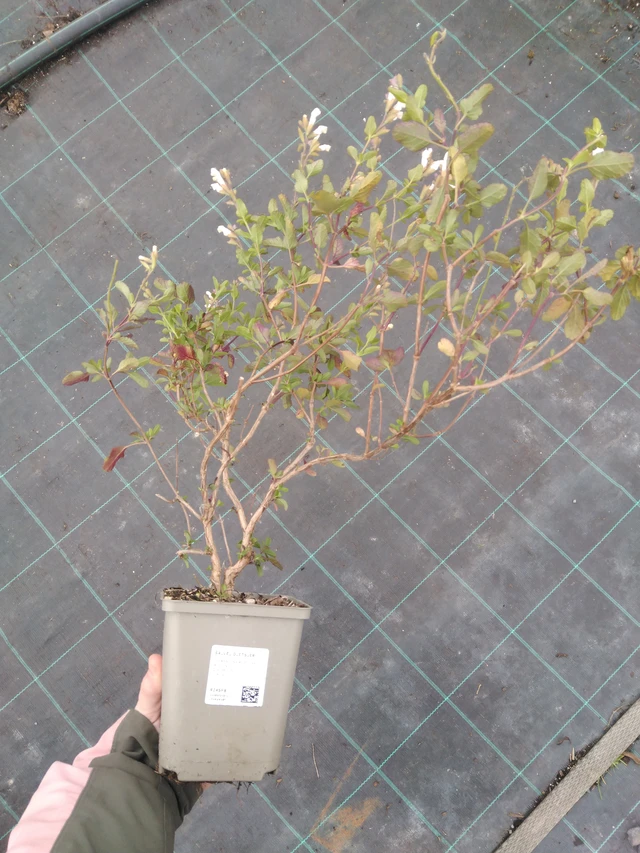
Salvia Gletsjer - 30. 10. 2026
30. 10. 2026
Salvia Gletsjer - 12. 8. 2026
12. 8. 2026
Salvia Gletsjer - 21. 7. 2026
21. 7. 2026
Salvia Gletsjer - 11. 6. 2026
11. 6. 2026
Salvia Gletsjer - 30. 6. 2025
30. 6. 2025

More products in category Sage

Woodland Sage Caradonna, Loukykvět

Salvia nemorosa

This species of sage originally comes from the steppe regions of Central and Eastern Europe. It forms profusely flowering small clumps with straight upright stems. In flower beds, it looks best in groups. Traditionally, due to the identical flowering time, it is planted as a companion to roses. However, it will look just as good in mixed drought-loving steppe plantings with grasses. It lasts 7 days in a vase. The cultivar Caradonna stands out with a long flowering period and dark, almost black-purple stems with tiny purple flowers and dark purple bracts. If we cut it back after flowering, it will bloom again in late August and September.
€2,99
More from €2,09
Unavailable
Pro rok 2026 nedostupné
Woodland Sage Ostfriesland, Loukykvět

Salvia nemorosa

This species of sage originates from the steppe regions of Central and Eastern Europe. It forms abundantly flowering small clumps with straight upright stems. In beds, it looks best in groups. Traditionally, it is planted as a companion to roses due to the matching flowering time. However, it will look equally good in mixed drought-loving steppe plantings with grasses. It is an excellent food source for bees. It lasts 7 days in a vase. The cultivar Ostfriesland blooms with a strikingly dark violet-blue color.
€2,99
More from €2,09
Unavailable
Pro rok 2026 nedostupné
Woodland Sage Amethyst, Loukykvět

Salvia nemorosa

This species of sage originates from the steppe regions of Central and Eastern Europe. It forms profusely flowering small clumps with straight, upright stems. In flower beds, it looks best in groups. It is traditionally planted as a companion to roses due to the matching flowering time. However, it looks equally good in mixed drought-tolerant steppe plantings with grasses. It is an excellent food source for bees. Lasts 7 days in a vase. Amethyst is an elegant variety with long stems and a pink flower color that is unusual for sages.
€2,99
More from €2,09
Unavailable
Pro rok 2026 nedostupné
Woodland Sage Schneehügel, Loukykvět

Salvia nemorosa

This species of sage originates from the steppe regions of Central and Eastern Europe. It forms abundantly flowering small clumps with straight upright stems. In beds, it looks best in groups. Traditionally, it is planted as a companion to roses due to the matching flowering time. However, it will look equally good in mixed drought-loving steppe plantings with grasses. It is an excellent food source for bees. It lasts 7 days in a vase. Schneehügel blooms white.
€2,99
More from €2,09
In StockIn stock – only 24 left
Woodland Sage Adrian, Loukykvět

Salvia nemorosa

This species of sage originates from the steppe regions of Central and Eastern Europe. It forms profusely flowering small clumps with straight, upright stems. In flower beds, it looks best in groups. It is traditionally planted as a companion to roses due to the matching flowering time. However, it looks equally good in mixed drought-tolerant steppe plantings with grasses. It is an excellent food source for bees. Lasts 7 days in a vase. Adrian is a white-flowering cultivar.
€2,99
More from €2,09
Unavailable
Pro rok 2026 nedostupné
Salvia Mainacht, Loukykvět

Salvia nemorosa

Woodland sage 'Mainacht' is an aromatic perennial originating from the sunny steppes and dry meadows of Central and Eastern Europe. It is a very resilient and undemanding plant that thrives best here in full sun in well-drained and poorer soil. From the supplied grown seedling, a sturdy clump reaching a height of about half a meter will quickly grow. In flower beds, it stands out best when planted in larger groups, for example as a traditional companion to roses or in mixed drought-tolerant plantings with ornamental grasses. The 'Mainacht' cultivar is popular for its striking dark violet-blue flowers, which appear as early as May and June. If you cut it back after the first bloom, it will willingly bloom again at the end of August. During flowering, the sage is literally a magnet for bees and butterflies. It is an ideal choice for beginners, needs no support, and does not suffer from diseases. It is perfectly suited for cutting into fresh bouquets, where its stems stay fresh for approximately seven days. A surprising bonus is that the fragrant flowers are edible.
€2,99
More from €2,09
Unavailable
Pro rok 2026 nedostupné
Meadow Sage Rose Rhapsody, Loukykvět

Salvia pratensis

Meadow sage occurs here primarily in warmer regions, especially in southern Moravia and northern and central Bohemia. It grows on sunny meadows and hillsides and along paths. Fragrant leaves form a basal rosette, from which several less leafy branched stems grow. The inflorescences are composed of striking bilabiate flowers, which are a great attraction for bees and bumblebees. Rose Rhapsody has light pink flowers.
€2,79
More from €1,99
In Stock
Salvia Blauhügel, Loukykvět

Salvia nemorosa

This species of Salvia originally comes from the steppe regions of Central and Eastern Europe. It forms richly flowering small clumps with straight upright stems. In beds, it looks best in groups. Traditionally, it is planted as a companion to roses due to the same flowering time. However, it will look equally good in mixed drought-loving steppe plantings with grasses. It lasts 7 days in a vase. 'Blauhügel' blooms blue.
€4,29
More from €3,89
Unavailable
Pro rok 2026 nedostupné
Meadow Sage Swan Lake, Loukykvět

Salvia pratensis

Meadow Sage occurs in our country primarily in warmer regions, especially in southern Moravia and northern and central Bohemia. It grows on sunny meadows, slopes, and along roadsides. The fragrant leaves form a basal rosette, from which several sparsely leafy, branched stems grow. The inflorescences consist of striking lipped flowers, which are a huge attraction for bees and bumblebees. Swan Lake blooms white.
€2,79
More from €1,99
In StockIn stock – only 1 left
Woodland sage Schwellenburg, Loukykvět

Salvia nemorosa

This species of sage originates from the steppe regions of Central and Eastern Europe. It forms profusely flowering small clumps with straight, upright stems. In flower beds, it looks best in groups. Traditionally, it is planted as a companion to roses due to the matching flowering time. However, it will look equally good in mixed drought-loving steppe plantings with grasses. It is excellent pasture for bees. It lasts 7 days in a vase. 'Schwellenburg' is a very special variety with a richly branched inflorescence. The little flowers have purple bracts and a wine-colored calyx.
€3,49
More from €2,39
In StockIn stock – only 21 left
Whorled Sage Purple Rain, Loukykvět

Salvia verticilata

Salvia verticillata, also known as whorled sage, looks interesting due to its bright purple flower color. The flowers are arranged on the stem in whorls, protruding from the green foliage, and appear as delicate colorful sprays in plantings. Purple Rain has a color even slightly more saturated than the basic species.
€2,99
More from €2,09
In StockIn stock – only 66 left
Salvia Feathers Flamingo, Loukykvět

Salvia hybrida

The Feathers series, which includes the Flamingo cultivar, represents a small breakthrough in sage breeding, primarily thanks to its unique, deeply cut leaves. Thus, this sage acts decoratively with its structure in flower beds even before the first buds appear. As the name Flamingo suggests, the flowers have a beautiful pink shade and bloom on the plant in large numbers throughout the summer. The original botanical species of sage come from dry and sunny steppe regions, and this garden beauty also retains a love for the sun and well-drained soils. It cannot stand waterlogging, but it handles summer droughts and poorer habitats excellently. In a garden composition, it stands out in group plantings on the front edge of perennial borders or in modern gravel beds. Its aromatic leaves and nectar-filled flowers attract beneficial insects, so the garden literally comes alive with it. If you cut back the spent inflorescences, you will promote the density of the clump, and the plant often reblooms, flowering again at the end of summer. Thanks to its resilience and frost hardiness down to -28 °C, it is a reliable component of Czech gardens. The flowers can also be used in a vase, where they form a delicate, romantic element.
€3,49
More from €2,39
Unavailable
Pro rok 2026 nedostupné
Salvia Dancing Dolls, Loukykvět

Salvia gregii

*Salvia greggii*, often called autumn sage, is, in the case of the 'Dancing Dolls' cultivar, a tireless bloomer that will adorn your garden containers with flowers from late spring until freezing. Its homeland is the semi-desert regions of North America, so it loves sun, heat, and a drier, well-drained substrate. It grows as a low, densely branched subshrub that is easy to shape and maintain. Although cultivation is undemanding and suitable even for beginners, it is necessary to keep its limited frost hardiness in mind. In Czech conditions, this sage is best used as a dominant feature in pots on terraces, which you can easily move to a frost-free space for the winter, or it can be planted in very sheltered, sunny flower beds with high-quality drainage and a winter cover. The 'Dancing Dolls' variety brings playfulness and softness to plantings thanks to the unique coloration of its flowers, which alternate tones of pastel pink with creamy white. The tiny lipped flowers grow in abundance at the ends of upright stems and create a very airy impression. In addition to its aesthetic value, this plant is also useful – its strongly aromatic leaves and sweet flowers are edible and can be used in the kitchen as an original garnish for dishes. At the same time, it is a valuable honey-bearing plant that will reliably attract beneficial insects to your garden. The plant does not suffer from diseases or pests, so you can enjoy its beauty without the need for complex protection.
€3,89
€3,09
More from €3,19
Unavailable
Pro rok 2026 nedostupné
Salvia Nachtvlinder, Loukykvět
Special offer

Salvia gregii

Sage 'Nachtvlinder' is a true jewel among portable container plants, which will win you over with its unusual color and endurance. The original species *Salvia greggii* comes from the sunny and dry semi-desert regions of Texas and Mexico, where it grows on rocky and poor soils. Thanks to this, it is very undemanding regarding watering here as well and loves full sun. In our conditions, we most often grow it as a portable plant in pots on terraces or balconies, because its frost resistance reaches only -12 °C. For the winter, we therefore recommend hiding it in a frost-free bright place, or carefully covering it in the warmest regions of the country. The 'Nachtvlinder' variety, whose name translates as night moth, will enchant you with velvety flowers in a deep shade of plum purple. Its huge advantage is the incredibly long flowering period, which starts in May and often ends only with the arrival of stronger frosts in November. The entire plant is strongly aromatic and releases a pleasant spicy scent when touched. Furthermore, the flowers are edible and sweet, so they are perfectly suited as an unconventional garnish for summer salads or desserts. It will also attract a large number of bees and other beneficial insects to your garden.
€3,89
€3,09
More from €4,49
Unavailable
Pro rok 2026 nedostupné
Meadow Sage Sweet Esmeralda, Loukykvět

Salvia pratensis

Meadow Sage occurs in our country primarily in warmer regions, especially in southern Moravia and northern and central Bohemia. It grows on sunny meadows, slopes, and along roadsides. The fragrant leaves form a basal rosette, from which several sparsely leafy, branched stems grow. The inflorescences consist of striking lipped flowers, which are a huge attraction for bees and bumblebees. Sweet Esmeralda has deep pink flowers.
€2,79
More from €1,99
Unavailable
Pro rok 2026 nedostupné
Salvia Blue Note, Loukykvět
Special offer

Salvia gregii

Sage 'Blue Note' is a truly tireless bloomer among flowering plants, which will delight you with its flowers from May until the first frosts in November. The original species of this sage come from the dry and sunny regions of Texas and Mexico, making it a lover of sun and heat. In our conditions, it is best utilized as a portable plant in containers on terraces and balconies, where its compact growth and flood of tiny blue-purple flowers will stand out. Although it can withstand temperatures dropping to -12 °C, in colder areas we recommend wintering it in a protected frost-free place, or providing careful winter covering if you plant it in the ground in a sheltered spot. The leaves have a pleasant spicy scent, and the entire plant acts as a magnet for bees and other pollinators. 'Blue Note' is valued primarily for its unique flower shade, which hovers on the border between dark blue and purple. Growing it is easy even for beginners; it just needs well-drained soil, a sunny location, and occasional watering. Thanks to its edible flowers, you can also colorfully enliven summer salads or desserts.
€3,88
€3,09
More from €2,29
Unavailable
Pro rok 2026 nedostupné
Meadow Sage Twilight Serenade, Loukykvět

Salvia pratensis

Meadow Sage occurs in our country primarily in warmer regions, especially in southern Moravia and northern and central Bohemia. It grows on sunny meadows, slopes, and along roadsides. The fragrant leaves form a basal rosette, from which several sparsely leafy, branched stems grow. The inflorescences consist of striking lipped flowers, which are a huge attraction for bees and bumblebees. Twilight Serenade blooms violet-blue.
€2,79
More from €1,99
Unavailable
Pro rok 2026 nedostupné
Meadow sage, Loukykvět

Salvia pratensis

The meadow sage occurs here primarily in warmer regions, especially in southern Moravia and northern and central Bohemia. It grows on sunny meadows and slopes and along paths. Fragrant leaves form a ground rosette, from which several less leafy branched stems grow. The inflorescences are composed of striking bilabiate flowers, which are a great attraction for bees and bumblebees.
€2,79
More from €1,99
Coming in 2027
Salvia Joy, Loukykvět
Special offer

Salvia gregii

The 'Joy' Sage brings to plantings exactly what its name suggests – the joy of untiring blooming that lasts from late spring to autumn. This subshrub species differs from classic herbaceous sages by its woody base and requires specific conditions mimicking its homeland in the southwestern part of North America. Excellent drainage is crucial for successful cultivation, as the plant cannot tolerate winter waterlogging, and therefore it thrives in gravel beds or in containers with good water drainage. The 'Joy' variety will enchant you with its delicate shade of light pink flowers, which look very tender and airy. The leaves are tiny, stiff, and emit an intense fragrance when rubbed, making any sitting area nearby more pleasant. The plant grows to a height of around 40 to 60 centimeters and forms compact bushes, which should be pruned in the spring to maintain a dense shape. Although it is not intended for cutting into a vase, its value lies in its long-lasting visual effect and ability to attract beneficial insects to the garden.
€3,89
€3,09
More from €3,19
In Stock
Salvia Cherry Lips, Loukykvět

Salvia gregii

An ideal choice for brightening up a sunny terrace or balcony, where it will bring you joy with an untiring flood of flowers from late spring to November. The 'Cherry Lips' Sage forms compact, partially woody bushes that are literally dotted with bi-colored flowers in a playful combination of cherry red and white. Because the original botanical species Salvia greggii comes from semi-desert and steppe regions, this cultivar also requires full sun and excellently drained, sandy soil, where it is not at risk of waterlogging. Due to its lower frost resistance, we recommend growing it primarily in a pot and moving it to a cool, bright, frost-free room for the winter. If you decide to plant it in the open ground, choose the south-facing side by the house wall and carefully cover the plant with conifer branches for the winter. In addition to the visual experience, this sage also offers an olfactory and gustatory one. The leaves have a specific fruity-spicy aroma, and you can boldly use the sweet flowers in the kitchen as an edible decoration for dishes.
€3,89
€3,09
More from €3,19
Unavailable
Pro rok 2026 nedostupné

More products in category Perennials

Lady's mantle Irish Silk, Loukykvět

Alchemilla mollis

Alchemilla mollis, known as lady's mantle, is an indispensable perennial for anyone who wants to bring harmony and softness to the garden. Its home is the moister environments of mountain meadows and light forests, making it a very adaptable plant that will survive even severe frosts without problems in our climate. The 'Irish Silk' cultivar is prized for its vitality and abundant blooming, where clouds of tiny, yellow-green flowers float above clumps of gray-green leaves. It is precisely this neutral color that can work wonders in a flower bed – it softens overly sharp contrasts between other flowers and beautifully unifies the entire composition. Besides its ornamental function, lady's mantle also has practical uses. Thanks to its clumping growth and ability to quickly fill in, it is ideal for edging pathways or as an underplanting beneath taller shrubs and roses. Water droplets catch on its leaves, creating a magical spectacle in the garden. If you enjoy making bouquets, you will love lady's mantle as versatile filler greenery that matches almost anything. It will last beautiful for about ten days in a vase, and its inflorescences can also be easily dried without losing too much of their color or shape. Moreover, it is a magnet for pollinators, and its young leaves are even edible, so it also finds use in a natural kitchen.
€2,99
More from €2,09
In stock with delivery from 19. 4. 2027
Yarrow Summer Pastels, Loukykvět

Achillea millefolium

An original wild perennial with a large distribution area from Europe to Siberia. Suitable for natural and wild plantings. It grows in meadows and dry grassy places. A very adaptable and undemanding plant, it grows in clumps and spreads by runners. By cutting back after the first flowering, we encourage a set of new flowers. For bouquets, we harvest when the florets are fully open. It lasts 10 days in a vase. Summer Pastels is characterized by a changeable and soft range of colors from white and vanilla to salmon, brick red, and bronze.
€3,09
More from €1,99
In Stock
Verbena, Loukykvět
Special offer

Verbena bonariensis

A verbena species originally from South America. In our country, it is often used as an annual, but in mild winters it can overwinter and reproduce by self-seeding. The firm, airy stems beautifully soften perennial beds and make them special with their purple color. It beautifully complements steppe plantings with grasses and rose beds.
€3,03
€2,59
More from €1,79
Coming in 2027
Woodland Sage Caradonna, Loukykvět

Salvia nemorosa

This species of sage originally comes from the steppe regions of Central and Eastern Europe. It forms profusely flowering small clumps with straight upright stems. In flower beds, it looks best in groups. Traditionally, due to the identical flowering time, it is planted as a companion to roses. However, it will look just as good in mixed drought-loving steppe plantings with grasses. It lasts 7 days in a vase. The cultivar Caradonna stands out with a long flowering period and dark, almost black-purple stems with tiny purple flowers and dark purple bracts. If we cut it back after flowering, it will bloom again in late August and September.
€2,99
More from €2,09
Unavailable
Pro rok 2026 nedostupné
Russian Sage, Loukykvět

Perovskia atriplicifolia

Russian sage reliably brings a touch of sunny steppes into the garden and places almost no demands on care. These sparsely branched subshrubs originally come from harsh, rocky areas from Afghanistan to Tibet, where they grow on open sun-drenched plains. Thanks to its origin, it delights in full sun and poor, well-drained sandy soil with minimal moisture. You will receive from us a well-rooted seedling in a pot, which just needs to be transplanted straight to the chosen spot in the flower bed. It does not need support, is avoided by common pests and diseases, and will survive frosts down to minus twenty-eight degrees. It grows up to one hundred and twenty centimeters and forms striking white felted shoots with silvery grey aromatic leaves. From July to October, it blooms with tiny blue-purple flowers that act as a lure for bees and butterflies and are even edible. Russian sage stands out next to drought-tolerant perennials. The flowers are suitable for cutting and drying for winter arrangements. Moreover, the silvery stems will ensure a beautiful winter effect in the flower bed.
€2,99
More from €2,09
Sold Out
Gaura Siskiyou Pink, Loukykvět
Special offer

Gaura lindheimeri

Gaura Siskiyou Pink is a charming perennial that brings lightness and airiness to the garden. Its original native area is in the warm regions of Texas and Louisiana, which is why it thrives in full sun and well-drained sandy soil. It grows in clumps and from June until the autumn frosts produces tiny raspberry-pink flowers that resemble fluttering butterflies. An interesting detail of this variety is the green leaves with a bronze tint and red spots. It is an absolutely undemanding plant, does not suffer from diseases or pests, and even beginners can handle its care. You will receive a grown seedling in a pot from us, which you simply need to transplant directly into the flowerbed. Here it complements ornamental grasses perfectly and acts as an attraction for bees and bumblebees. Although it grows more as a short-lived perennial in our climate, in a suitable place it reliably self-seeds. Occasional pinching will encourage richer branching. Gaura is excellent for summer bouquets. We cut the stems for a vase as soon as the first two to three little flowers open.
€3,03
€2,59
More from €1,79
Unavailable
Pro rok 2026 nedostupné
Coneflower Rubinstern, Loukykvět

Echinacea purpurea

A valuable garden and medicinal perennial, originally from North America. It blooms in summer with dark purple-pink flowers. The spiky flower discs are an irresistible lure for butterflies. Lasts 7–10 days in a vase. After plucking the petals, the stems with the central discs can be dried or used in fresh bouquets as an interesting element. Rubinstern is very similar to the Magnus cultivar; the petals are darker and firmer. As they fade, they gradually pale and droop downwards.
€2,99
More from €2,09
Unavailable
Pro rok 2026 nedostupné
Echinacea pallida, Loukykvět

Echinacea pallida

The pale coneflower is one of the exceptionally interesting prairie perennials of the North American continent. In its natural environment, it grows on open, sunny plains, which is why it thrives best in our gardens in full sun in drier, well-drained soil. You just need to transplant this grown seedling straight into the flower bed, where it will reliably take root. It does not need support, easily withstands severe frosts, and is avoided by common diseases and pests, making it ideal for beginner growers. During June and July, it will reward you with aromatic flowers with unusually narrow and drooping petals in light purple and pink tones. The prominent prickly centers are literally a magnet for bees and bumblebees, and the flowers themselves are surprisingly edible. The plant stands out especially in rustic plantings together with ornamental grasses. Gardeners and florists love it for its versatility. The fresh stems bring joy in a vase for about a week. Moreover, the distinctive central cones hold their shape perfectly, can be perfectly dried for winter decorations, or left in the flower bed, where they will create an eye-catching winter structure under a layer of snow.
€2,99
More from €2,09
Coming in 2027
Sea Holly, Loukykvět
For drying

Eryngium planum

Sea holly is an indispensable perennial for all lovers of naturally styled gardens. It earned its folk name - male fidelity - in times when it was used in herbal medicine as an aphrodisiac, and its roots were even candied as sweets in France and England. Today, however, you will appreciate it mainly for its low maintenance and unique appearance. Its home is on sunny hillsides and dry meadows, so even in our gardens, it will welcome well-drained, even poorer sandy soil and full sun. It produces upright, sturdy stems topped with blue-purple flowers with prickly bracts, which bring interesting structure and a silvery touch to the flowerbeds. It is literally a magnetic plant for bees, bumblebees, and butterflies, who find a rich food source on it. Floristically, it is extremely valuable, because its flowers are perfectly suited for cutting as well as drying for winter decorations. If you decide not to harvest it, feel free to leave it in the flowerbed all winter. Its silhouette covered in hoarfrost creates a wonderful winter effect. Although it is a short-lived perennial, in a suitable location it reliably self-seeds, so you will enjoy its beauty for many years.
€2,79
More from €1,99
Unavailable
Pro rok 2026 nedostupné
Coneflower Magnus, Loukykvět

Echinacea purpurea

A valuable garden and medicinal perennial, native to North America. It blooms in summer with dark purple-pink flowers. The spiky flower centers are an irresistible attraction for butterflies. They last 7–10 days in a vase. After removing the petals, the stems with the central disks can be dried or used in fresh bouquets as an interesting element. Magnus features distinctive deep pink flowers with an orange-brown center.
€2,99
More from €2,09
Coming in 2027
Woodland Sage Ostfriesland, Loukykvět

Salvia nemorosa

This species of sage originates from the steppe regions of Central and Eastern Europe. It forms abundantly flowering small clumps with straight upright stems. In beds, it looks best in groups. Traditionally, it is planted as a companion to roses due to the matching flowering time. However, it will look equally good in mixed drought-loving steppe plantings with grasses. It is an excellent food source for bees. It lasts 7 days in a vase. The cultivar Ostfriesland blooms with a strikingly dark violet-blue color.
€2,99
More from €2,09
Unavailable
Pro rok 2026 nedostupné
Calamint Blue Cloud, Loukykvět

Calamintha nepeta

Lesser calamint Blue Cloud is an undemanding and modest perennial that reliably perfumes any sunny garden. Its original homeland is the sunny and dry slopes of Southern Europe, which is why it thrives best here in direct sun in well-drained, sandy, or poorer loamy soil. It handles winter without problems, tolerating frosts down to minus twenty-three degrees. You will receive a grown seedling in a pot from us, which you just need to transplant straight into the flowerbed, where it will very soon form a compact, airy small shrub reaching a height of up to forty centimeters. It does not suffer from any diseases or pests, so even complete beginners can easily handle caring for it. Throughout late summer and into autumn, it blooms with a record number of tiny blue flowers that are so typical of the Blue Cloud variety. The whole plant emits a pleasant minty-spicy scent, and its flowers, which resemble thyme, act as a literal magnet for bees, bumblebees, and butterflies. It will look great among roses or in naturally designed steppe flowerbeds, where it naturally complements lower ornamental grasses. Additionally, both the blue flowers and green leaves are edible, so you can use them to garnish summer dishes. Lesser calamint is also excellently suited for cutting into smaller fresh bouquets, adding a fine structure to them in a vase.
€2,79
More from €1,99
Sold Out
Rudbeckia Goldsturm, Loukykvět

Rudbeckia fulgida

Rudbeckia Goldsturm is a reliable and long-lived perennial that will bring the warm tones of late summer and autumn into your garden. It originally comes from the open plains and prairies of North America, so it delights most in sunny locations with common garden soil, whether it is loamy, humus-rich, or clayey. You will receive from us an already grown seedling in a pot, which you just need to transplant to the chosen spot in the flower bed. It is a completely undemanding plant, does not suffer from diseases or pests, and easily survives severe frosts. The Goldsturm cultivar grows to a height of about seventy centimeters and does not need support. From August to October, it produces a flood of golden-yellow flowers with distinctly dark centers. These edible flowers attract pollinators and fit perfectly into both prairie and rustic plantings. Rudbeckia is also great for cutting, lasting around ten days in a vase. In addition, the distinctive dark centers can be easily dried. If you leave them in the flower bed over the winter, they will provide a wonderful spectacle.
€2,79
More from €1,99
In stock with delivery from 19. 4. 2027
Calamint, Loukykvět

Calamintha nepeta ssp. nepeta

An undemanding and modest perennial that blooms with a large number of tiny flowers. It blooms for a record-breaking length of time throughout late summer and autumn. It forms smaller, compact, airy bushes that release a minty-spicy scent. The thyme-like flowers attract bees, bumblebees, and butterflies. It will look good among roses as well as in naturalistic steppe beds, perhaps with lower grasses. This calamint is generally more vigorous. It differs from other calamints with felted leaves by its record flowering length, stiff and shiny leaves, and also a larger number of flowers that do not form seeds and are therefore maximally durable. Sometimes sold under the cultivar name 'Triumphator'.
€2,79
More from €1,99
In stock with delivery from 19. 4. 2027
Gaura Summer Breeze, Loukykvět

Gaura lindheimeri

The charming gaura comes from the sun-drenched plains of Texas and Louisiana and represents exactly the plant that can liven up any drought-tolerant planting. It is a naturally profusely blooming perennial that delights in full sun and well-drained, sandy, and nutrient-poor soil. You will receive from us an already grown seedling in a pot, which will quickly form a vigorous clump after being transplanted into the garden. From early summer until late autumn, it will delight you with a flood of tiny flowers in pure white and delicate pink tones. The flowers gently sway in the breeze and with their appearance resemble a flock of tiny butterflies, which also really like to land on the plant, as do bees and bumblebees. Although gaura is known as a short-lived perennial, thanks to its willing self-seeding, it will last for many years in your garden. Caring for it is completely undemanding, it is avoided by most diseases and pests, and it can handle frosts down to eighteen degrees below zero without any problems. It is often used in mixed borders, where it beautifully softens the overall impression, and perfectly matches various types of ornamental grasses. The Summer Breeze variety is popular for its strong and healthy growth as well as its exceptionally generous set of flowers, which grow to about one meter. If you like to create your own bouquets, do not hesitate to cut gaura for a vase. Harvesting is best done the moment the first small flowers on the stem begin to open. These delicate flowers are not suitable for drying into dried arrangements, but they will beautifully lighten up fresh bouquets.
€2,99
More from €2,09
Unavailable
Pro rok 2026 nedostupné
Woodland Sage Amethyst, Loukykvět

Salvia nemorosa

This species of sage originates from the steppe regions of Central and Eastern Europe. It forms profusely flowering small clumps with straight, upright stems. In flower beds, it looks best in groups. It is traditionally planted as a companion to roses due to the matching flowering time. However, it looks equally good in mixed drought-tolerant steppe plantings with grasses. It is an excellent food source for bees. Lasts 7 days in a vase. Amethyst is an elegant variety with long stems and a pink flower color that is unusual for sages.
€2,99
More from €2,09
Unavailable
Pro rok 2026 nedostupné
Daisy Maikönigin, Loukykvět

Leucanthemum vulgare

A classic perennial for early summer bouquets and cottage gardens. For bouquets, we harvest flowers with firm, smooth central disks. Then they last 7–10 days in a vase. Maikönigin is an exceptionally abundantly flowering garden form.
€2,79
More from €1,99
In Stock
Yarrow Terracotta, Loukykvět

Achillea millefolium

A native wild perennial with a large distribution range from Europe to Siberia. Suitable for natural and wild plantings. It grows in meadows and dry grassy places. A very adaptable and undemanding plant, it grows in clumps and spreads via runners. Cutting back after the first bloom encourages a new set of flowers. Harvest for bouquets when the tiny flowers are fully open. It lasts 10 days in a vase. Terracotta features ochre, shades of orange and yellow, and gray-green foliage.
€2,99
More from €2,89
In Stock
Russian sage Little Spire, Loukykvět

Perovskia atriplicifolia

Perovskia are sparsely branched subshrubs, originating from areas ranging from Afghanistan to Tibet. They grow in open, sunny, rocky, and stony habitats. Their white-felted shoots and grayish aromatic leaves are striking. They fit well in sunny flower beds with other drought-loving perennials, where they create interesting structures even in the winter months. Little Spire is a smaller cultivar suitable even for pots with a soil volume of 7 liters or more.
€3,49
More from €3,59
Unavailable
Pro rok 2026 nedostupné
Woodland Sage Schneehügel, Loukykvět

Salvia nemorosa

This species of sage originates from the steppe regions of Central and Eastern Europe. It forms abundantly flowering small clumps with straight upright stems. In beds, it looks best in groups. Traditionally, it is planted as a companion to roses due to the matching flowering time. However, it will look equally good in mixed drought-loving steppe plantings with grasses. It is an excellent food source for bees. It lasts 7 days in a vase. Schneehügel blooms white.
€2,99
More from €2,09
In StockIn stock – only 24 left